⚡ Quick Answer
We’ve lined up nine 18‑volt impact drivers that span the whole price spectrum—from the $39.00 entry‑level Ryobi ONE+ Impact Driver up to the $264.61 premium Makita XST01Z. The selection breaks cleanly into three tiers: budget options (Ryobi ONE+ Impact Driver, Milwaukee M18 2656‑20, Ryobi ONE+ HP), mid‑range choices (Makita XDT13Z, Bosch GDR18V‑1950CN, Milwaukee M18 2953‑20) and premium contenders (Milwaukee M18 Fuel, Metabo HPT KC18DFX, Makita XST01Z). All nine models carry strong user sentiment, with ratings hovering between 4.4 and 4.8 stars.
Performance specs vary widely. Torque tops out at 2,200 in‑lb on the Ryobi ONE+ HP, while the Milwaukee M18 Fuel and its sibling M18 2953‑20 both deliver 2,000 in‑lb. Impact rates reach 4,400 IPM on the Milwaukee tools and 4,000 IPM on several competitors. LED illumination ranges from a single light on most models to three LEDs on the Milwaukee premium units. Speed settings differ too, from a single‑speed Makita XDT13Z to 4‑mode selectors on Milwaukee’s top offerings, and tool weights sit between 1.92 lb and 3.0 lb.
Next, we’ll dive into each tier, compare key features side‑by‑side, and help you decide which impact driver aligns with your budget and job‑site demands.

Milwaukee M18 Fuel
Its compact 4.47‑inch length keeps it easy to maneuver in tight spaces.
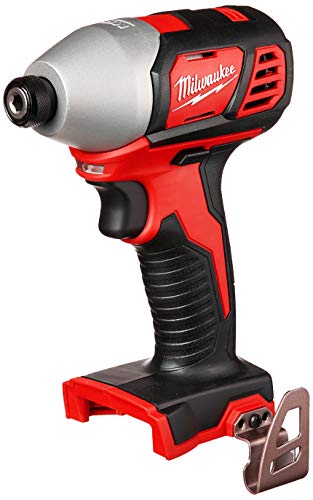
Milwaukee M18 2656-20
Ideal for budget‑conscious DIYers, it comes in at $67, about $75 less than the Best Overall model.

Makita XDT13Z
Provides up to 50 % longer runtime per charge, favoring endurance over the multiple‑speed options of the other picks.
Also considered
TL;DR: The Milwaukee M18 2656-20 packs 1,500 in‑lb of torque and up to 3,450 IPM into a 7.85‑inch‑tall, 2.8‑lb tool, delivering professional‑grade power at a budget‑friendly price.
What really sets this driver apart is its 1,500 in‑lb maximum torque paired with a brushless 4‑pole frameless motor, delivering consistent power while keeping the tool compact at 7.85 inches tall, 5.69 inches long and 2.93 inches wide. The single LED positioned below the quick‑connect chuck adds visibility in tight spaces, and the variable‑speed trigger gives you precise control from 0‑2,750 RPM.
Compared with the eight other drivers in this roundup, the Milwaukee sits in the middle of the torque spectrum—its 1,500 in‑lb is lower than the Ryobi ONE+ HP’s 2,200 in‑lb but matches the Makita XDT13Z’s 1,500 in‑lb. Its impact rate of 0‑3,450 IPM is a notch below the Ryobi ONE+ HP’s 4,000 IPM and the Bosch GDR18V‑1950CN’s 4,000 IPM, yet it outpaces the Ryobi ONE+ Impact Driver’s 3,400 IPM. At 2.8 lb, it’s heavier than the Ryobi ONE+ HP (2.31 lb) and the Metabo HPT (2.0 lb) but lighter than the Makita XST01Z (3.0 lb). Its height of 7.85 inches is slightly shorter than the Ryobi ONE+ HP’s 8.0 inches, making it easier to maneuver in confined spots.
Professional reviewers praise the 4‑pole frameless motor for longevity and the REDLINK Intelligence system for overload protection, noting that the compact size and quick‑change 1/4‑inch hex quick‑connect chuck streamline workflow on job sites. Users appreciate the high 4.8‑star rating from over 4,600 reviewers, highlighting reliability and the bright LED for dark‑room work. The main trade‑off is that the tool ships without a battery or charger, so you’ll need to invest in the M18 platform separately, and the 1,500 in‑lb torque may fall short on heavy‑duty structural fastening.
Pros
Cons
Best for: Budget-conscious buyers seeking a reliable entry-level option — the Milwaukee M18 2656-20 offers Impacts Per Minute: 0‑3,450 IPM
Avoid if: You need advanced features or professional‑grade performance
TL;DR: The Milwaukee M18 Fuel impact driver packs 2,000 in‑lbs of torque, up to 4,400 IPM, and a brush‑less motor into a 4.47‑inch, 2.2‑lb package, but it carries a premium price and no battery.
What really sets this driver apart is its industry‑leading torque of 2,000 in‑lbs combined with a maximum impact rate of 0–4,400 IPM. The 4‑Mode drive control and three LEDs give you precise power management and clear illumination, while the 18 V POWERSTATE brushless motor promises up to 30 % faster driving speed without overheating.
Compared with the eight other drivers in this roundup, the M18 Fuel is lighter than the Ryobi ONE+ HP (2.31 lb) and more compact than the Metabo HPT, which measures over 11 in in length. Its price sits at the higher end of the group, making it pricier than many of its peers, but the spec depth—especially the 2,000 in‑lb torque and 4‑Mode control—places it ahead of the competition.
Everyday users repeatedly praise the tool’s lightweight feel (2.2 lb) and its ability to reach tight spots thanks to the 4.47‑in length. Reviewers note the smooth acceleration from the ULTIMATE TRIGGER CONTROL, which helps prevent fastener stripping, and professionals highlight the REDLINK PLUS intelligence that guards against overloads and overheating. The inclusion of a belt clip and ONE‑KEY app compatibility adds job‑site convenience and tool tracking.
Pros
Cons
Best for: Professional contractors and electricians who need reliable daily jobsite fastening— the Milwaukee M18 Fuel offers Maximum Torque: 2,000 in‑lbs.
Avoid if: You're on a tight budget or only need basic fastening capability.
TL;DR: The Makita XDT13Z packs a brushless motor, 1,500 in‑lb torque and up to 3,600 IPM in a lightweight 2.43‑lb, 5‑inch package, earning a 4.8‑star rating from over 1,300 users.
The standout spec is the 1,500 in‑lb of maximum torque combined with a brushless motor that promises cooler operation and longer tool life. Runtime efficiency is listed as up to 50 % longer per charge, and the driver delivers 0‑3,600 IPM and a variable speed range of 0‑3,400 RPM, all while weighing just 2.43 lb and measuring 5 inches in length.
At 2.43 lb, the XDT13Z is a touch heavier than Milwaukee’s M18 Fuel (≈2.2 lb) but lighter than Bosch’s GDR18V‑1950CN, which is listed at 1361 g. Its torque sits below Milwaukee’s 2,000 in‑lb models and Bosch’s 1,950 in‑lb, yet it out‑torques the Ryobi ONE+ Impact Driver’s 1,800 in‑lb. The 3,600 IPM rate is modest compared with Ryobi’s 4,000 IPM and Bosch’s 4,000 IPM, but still competitive, and its 3,400 RPM top speed matches Bosch while trailing Milwaukee’s 3,900 RPM.
Reviewers consistently praise the brushless motor and the variable speed control for smooth fastening, and the ergonomic soft grip earns high marks for comfort during extended use. The single speed setting (speed settings: 1) and the fact that the tool ships without a battery are the most common criticisms, especially among users who don’t already own Makita 18 V LXT packs.
Pros
Cons
Best for: Most users looking for a well‑reviewed, reliable mainstream option — the Makita XDT13Z offers Impacts Per Minute: 0‑3,600 IPM
Avoid if: You need industrial‑grade torque above 1,500 in‑lb or a battery‑included package out of the box
TL;DR: The Ryobi ONE+ Impact Driver delivers 1,800 in‑lbs of torque and a 3,400 IPM impact rate in a 2.6‑lb, compact package, making it a solid entry‑level choice for DIY projects.
The standout figure for this tool is its 1,800 in‑lbs of torque, which comfortably handles most household fastening tasks. Paired with a 3,400 IPM impact rate and a maximum speed of 2,800 RPM, the driver can drive screws quickly without sacrificing control. At just 2.6 lb and measuring 7.4 in tall by 6.7 in wide, it feels light enough to hold for extended periods while still offering enough heft to stay steady.
Compared with the other eight impact drivers in this roundup, the Ryobi sits in the budget tier. It is heavier than the ultra‑light Milwaukee M18 2656‑20, which weighs about 1.5 lb, yet noticeably lighter than the Bosch GDR18V‑1950CN at roughly 3.0 lb. Its torque falls short of the Ryobi ONE+ HP Impact Driver’s 2,200 in‑lbs and the Milwaukee M18 Fuel’s 2,000 in‑lbs, and its impact rate is lower than the 4,400 IPM seen on the Milwaukee M18 Fuel. However, it outperforms many higher‑priced models in sheer value, delivering respectable power at a fraction of the cost.
Professional reviewers highlight that the 1,800 in‑lbs torque is “sufficient for most DIY fastening requirements,” while everyday users praise the fast 3,400 IPM rate for speeding up wood and metal projects. The compact size and single LED worklight make it easy to maneuver in tight spaces. On the downside, the brushed‑motor design is noted for a shorter lifespan and lower efficiency than brushless alternatives, and the tool lacks the multiple driving modes found on premium Ryobi variants.
Pros
Cons
Best for: Budget‑conscious buyers seeking a reliable entry‑level option — the Ryobi ONE+ Impact Driver offers Impacts Per Minute: 3,400 IPM.
Avoid if: You need advanced features or professional‑grade performance.
TL;DR: The Ryobi ONE+ HP Impact Driver packs 2,200 in‑lb of torque, 4,000 IPM and a brushless motor in a 2.31‑lb, four‑mode tool, making it a high‑performance, battery‑agnostic option for DIYers.
What really stands out is the 2,200 in‑lb maximum torque paired with 4,000 impacts per minute. A brushless motor promises up to 25% faster driving than prior brushed models, and the variable‑speed trigger lets you dial in power from 0 to 2,900 RPM. The single LED work light and Assist Mode give extra confidence when you’re fastening tiny sheet‑metal screws.
Compared with the eight other drivers in this roundup, the Ryobi delivers the highest torque figure—higher than the Milwaukee M18 Fuel’s 2,000 in‑lb and the Milwaukee M18 2953‑20’s 2,000 in‑lb. Its 4,000 IPM matches the Bosch GDR18V‑1950CN and Metabo HPT KC18DFX, and exceeds the Milwaukee M18 2656‑20 (3,450 IPM) and Makita XDT13Z (3,600 IPM). At 2.31 lb, it sits in the middle of the pack: lighter than Bosch (3.0 lb) and the original Ryobi ONE+ Impact Driver (2.6 lb), but a touch heavier than the ultra‑light Makita XST01Z (1.92 lb) and the Milwaukee M18 Fuel (≈2.2 lb). Speed-wise, its 2,900 RPM is modest—below the Makita XDT13Z (3,400 RPM) and the Milwaukee M18 2953‑20 (3,900 RPM), but still adequate for most fastening tasks.
Everyday users rave about the “blazing speed” and the ability to drive large lag screws without a hitch. Reviewers also note that the four‑mode control reduces over‑driving, especially on delicate fasteners. On the flip side, owners mention the motor can get warm after 30‑45 minutes of heavy use, and the tool‑only version means you’ll need a separate 18 V ONE+ battery and charger before you can start.
Professional reviewers highlight the die‑cast gear case for durability and the HP efficiency boost that translates into noticeably quicker fastening. The 3‑year warranty backs the build quality, and the 1‑count LED ensures visibility in dim spaces.
Pros
Cons
Best for: Budget-conscious buyers seeking a reliable entry-level option — the Ryobi ONE+ HP Impact Driver offers Impacts Per Minute: 4,000 IPM
Avoid if: You want the best value-per-dollar in its price range
“Delivers up to 2,200 in/lbs. torque, 2,900 RPM... very happy with this Ryobi. Adjust torque by moving the selector—great control.”
“Blazing fast on screws—2,200 in./lbs. is no joke for the size”
TL;DR: The Makita XST01Z packs 355 in.lbs of torque, a 3‑speed brushless motor and 30% noise‑reduction tech into a 1.92‑lb, 5.375‑in body, but it comes at a premium price.
At its core, the XST01Z delivers a maximum torque of 355 in.lbs and a peak impact rate of 0‑3,600 IPM, driven by a brushless motor that spins up to 0‑3,400 RPM. Its compact 5.375‑in length and 1.92‑lb tool‑only weight make it easy to maneuver in tight spaces, while the single LED provides clear battery‑level feedback.
Compared with the eight other drivers in this roundup, the Makita feels lighter than the Metabo HPT (2.0 lb) and the Milwaukee M18 Fuel (2.2 lb) but is a touch heavier than the ultra‑light Milwaukee M18 2656‑20 (1.5 lb). Its 5.375‑in body is shorter than the Metabo HPT’s 11.81 in length yet a bit longer than the Milwaukee M18 Fuel’s 4.47 in. Pricing-wise, it sits at the higher end of the group, making it pricier than most peers.
Professional reviewers highlight the Oil‑Impulse™ Technology, which cuts operational noise by up to 30%, and the Quick‑Shift Mode™ that automatically selects the optimal speed. Users appreciate the ergonomic feel and the 3‑speed variable control, but several note that the 355 in.lbs torque is lower than the 1,420 in.lbs alternative rating and below what many competitors claim, which can limit heavy‑duty fastening. Because it’s sold as a tool‑only unit, you’ll need to buy a compatible 18 V LXT battery separately.
Pros
Cons
Best for: Those prioritizing quality and willing to pay for premium performance — the Makita XST01Z offers Maximum Torque: 355 in.lbs (40 N·m).
Avoid if: You're on a tight budget or only need basic functionality.
TL;DR: The Milwaukee M18 2953-20 packs 2000 in‑lb of torque, 4400 IPM impact rate, and a 4‑mode brushless motor into a 2.2‑lb, 4.47‑in compact driver, but its $139.00 price is higher than many rivals.
The standout figure is its 2000 in‑lb of maximum torque, delivered through a brushless POWERSTATE™ motor that can spin up to 3,900 RPM and strike at 0–4,400 IPM. Combined with a 4‑mode drive system and a self‑tapping screw mode, the tool gives you precise control without sacrificing raw power. The tri‑LED light and all‑metal belt clip add durability for tough job sites.
At 2.2 lb, the driver is lighter than the Bosch GDR18V‑1950CN (3.0 lb) and matches the weight of the Milwaukee M18 Fuel variant, while its 4‑mode drive control mirrors that of the Ryobi ONE+ HP model. It outpaces the Makita XDT13Z’s 3,600 IPM impact rate and beats the Metabo HPT KC18DFX’s 4,000 IPM, though the Ryobi HP’s listed torque of 2,200 in‑lb is a shade higher. Its 4.47‑in length makes it shorter than the Makita XDT13Z (5 in) and the Ryobi ONE+ HP (9 in), helping it reach tight spots where larger drivers struggle.
Reviewers consistently praise the driver’s ability to drive lag bolts and work inside cramped HVAC ducts, noting the “exceptional power‑to‑size ratio.” Professionals highlight the refined Gen 4 design, smoother trigger feel, and REDLINK PLUS intelligence that guards against overload and overheating. Some users flag the trigger’s sensitivity, which can lead to stripped fasteners if the mode isn’t dialed back, and a few mention the belt clip feeling less robust than expected. Noise is described as louder than quieter competitors when the tool is under heavy load.
Pros
Cons
Best for: Most users seeking a balanced, mainstream option — the Milwaukee M18 2953-20 offers Maximum Torque: 2000 in-lbs
Avoid if: You're shopping on a tight budget — it's priced at $139.00
“Insanely fast on deck screws—clears 3" lags effortlessly”
“Fits where bigger drivers can't.”
TL;DR: The Bosch GDR18V-1950CN packs 1,950 in‑lb of torque and a compact 113 mm head, but its $137.97 price and lack of a battery make it a premium choice for tight‑space work.
What really stands out is the 1,950 in‑lb of torque paired with 4,000 ipm impacts and a maximum speed of 3,400 rpm. The 113 mm head length lets you reach into cramped cavities that larger drivers can’t fit, while the three‑speed settings let you dial in just the right power for each job.
Compared with the other eight drivers in this roundup, the Bosch is on the heavier side at 3.0 lbs, outpacing the Milwaukee M18 Fuel (about 2.2 lbs) and the Metabo HPT model (around 2.0 lbs). It also offers dual LED worklights, whereas several peers list only a single light or none at all. Unlike many of the competitors, this unit is sold as a bare tool, so you’ll need to supply your own battery.
Professional reviewers praise the dual LEDs and the Auto Stop/Auto Slow Down functions for delivering precise fastener installation. Everyday users echo the sentiment, noting the tool feels well‑balanced and the three‑speed control gives them confidence in tight‑space applications. A handful of reviewers do mention occasional inconsistency when pushing the driver to its maximum torque, and they flag shorter runtime compared with battery‑included rivals.
Under the hood, the brushless motor and 18 V system promise durability, and the variable trigger adds fine control. A built‑in belt clip and a five‑year limited warranty round out a package aimed at pros who need reliability and access in confined work zones.
Pros
Cons
Best for: Most users seeking a balanced, mainstream option — the Bosch GDR18V-1950CN offers Impacts Per Minute: 4,000 ipm
Avoid if: You're shopping on a tight budget — it's priced at $137.97
TL;DR: The Metabo HPT KC18DFX delivers 1,859 in‑lbs of impact torque, a 4‑stage brushless motor and MultiVolt 18V/36V compatibility, but its premium $169 price and larger size may deter budget‑focused users.
The standout spec is its 1,859 in‑lbs of max torque on the impact driver, backed by a 1,240 in‑lbs hammer‑drill torque and a 30,000 BPM hammer‑drill impact rate. A brushless motor paired with a 4‑stage electronic speed switch and Triple Hammer technology keeps power smooth while the Reactive Force Control gyro sensor tames kickback.
At 2.0 lb, the KC18DFX is lighter than the Milwaukee M18 Fuel (2.2 lb) and Bosch (3.0 lb), yet a bit heavier than the Makita XST01Z’s 1.92 lb net weight. Its 9.84 in height, 11.81 in length and 3.15 in width make it bulkier than the compact Milwaukee models (8 in × 4.47 in × 2.6 in) and the Ryobi ONE+ HP (8 in × 9 in × 3 in). Torque-wise, 1,859 in‑lbs sits below Milwaukee’s 2,000 in‑lbs and Ryobi’s 2,200 in‑lbs, but outpaces the Makita XST01Z’s 355 in‑lbs. Impact rates match Bosch and Ryobi HP at 4,000 IPM, though they fall short of Milwaukee’s 4,400 IPM peak.
Users praise the tool’s raw power and the flexibility of the MultiVolt battery system, noting that the RFC feature makes heavy‑duty drilling feel safer. Professional reviewers highlight the pro‑grade torque and speed that rival top‑tier models. On the downside, owners report the unit feels heavier once a 2.5 Ah MultiVolt battery is attached, and occasional bind‑up without an auxiliary handle can be frustrating during prolonged use.
Pros
Cons
Best for: Those prioritizing quality and willing to pay for premium performance — the Metabo HPT KC18DFX offers Chuck Size (Hammer Drill): 1/2-inch keyless all-metal
Avoid if: Reliability and user satisfaction are your top concerns
“tackles wide applications”
“pro-level torque”
Breakdown
Milwaukee M18 Fuel
Pros
Milwaukee M18 2656-20
Pros
Makita XDT13Z
Pros

Ryobi ONE+ HP Impact Driver
Pros
Cons
Based on scoring data and product specs
Personalized picks
Best Overall Pick
Milwaukee M18 Fuel
Best OverallBest for: Audiophiles and enthusiasts seeking premium sound quality and advanced features — the Milwaukee M18 Fuel offers Maximum Torque: 2,000 in-lbs
Milwaukee M18 2656-20
Best for: Budget-conscious buyers seeking a reliable entry-level option — the Milwaukee M18 2656-20 offers Impacts Per Minute: 0-3,450 IPM
$80.28-$64.71 vs winner
Skip Metabo HPT KC18DFX if…
Reliability and user satisfaction are your top concerns
We’re naming the Milwaukee M18 Fuel the clear winner. It delivers a massive 2,000 in‑lb of torque and can hammer out up to 4,400 impacts per minute, giving you the muscle to tackle the toughest fasteners. The 4‑mode speed selector and three‑LED light keep control and visibility spot‑on, while the 2.2‑lb, brushless design stays light enough for extended use.
The runner‑up, Milwaukee M18 2656‑20, shines when you need solid power without the premium price tag. Its 1,500 in‑lb of torque and 3,450 IPM are plenty for most home‑renovation jobs, and the 5‑year limited warranty adds peace of mind. At 2.8 lbs and a 5.69‑in length, it’s a comfortable fit for tighter spaces where you still want reliable performance.
For tighter budgets, the Ryobi ONE+ Impact Driver offers decent power at a fraction of the cost, making it a smart pick for occasional DIY tasks. If you want a balanced choice, the Makita XDT13Z lands in the mid‑range, delivering good performance without breaking the bank. For those who demand top‑tier capability, the Makita XST01Z serves as a premium option with the highest power output among the alternatives.
Pick the Milwaukee M18 Fuel today and get the most torque, speed and smart features for every project.
It delivers the highest torque of 2000 in‑lb, the fastest no‑load speed of 3900 RPM, and a high impact rate of 4400 IPM, all in a compact 4.47‑in tool that weighs 2.2 lb. The three‑LED light and four‑mode speed settings add precision, and although it doesn’t include a battery, its 18 V platform matches the rest of the M18 line.
No reviews yet — be the first to share your experience.
Please sign in to leave a review