⚡ Quick Answer
Choosing the right cordless drill can feel like navigating a maze of specs, reviews, and price tags. In this roundup we line up 8 models that span three price tiers – budget options like the Ryobi ONE+ HP and Makita XFD13, a mid‑range Bosch GSB18V‑65N, and premium powerhouses such as Milwaukee’s M18 Fuel and Fein’s high‑torque units. Each tool brings a different blend of torque, speed and ergonomics to the table.
The Ryobi ONE+ HP Drill stands out with a 400 in‑lb max torque, a 0‑450 RPM no‑load speed range and a 1/2‑inch chuck, all packed into a 6.4‑inch long, 2.1‑lb body. At a list price of $67.99 and a current price of $60.63 it carries a 4.5‑star rating from 587 reviewers, offering professional‑grade bite without the premium price tag.
We'll see how that compact power stacks up against the Milwaukee M18 Fuel’s 1,400 in‑lb torque and the Fein ASCM 18 QM’s 1,062 in‑lb chuck clamping force, while also checking whether the mid‑range Bosch delivers enough punch for everyday tasks. Stay tuned as we break down each spec, user feedback and real‑world fit to help you pick the drill that matches your budget and job demands.

Ryobi ONE+ HP Drill
Offers 23+1 clutch positions, giving fine torque control at a budget price.

Milwaukee M18 Fuel Hammer Drill
Ideal for pros who demand proven performance, it runs about $93 higher than the Ryobi ONE+ HP Drill.
Makita XFD13
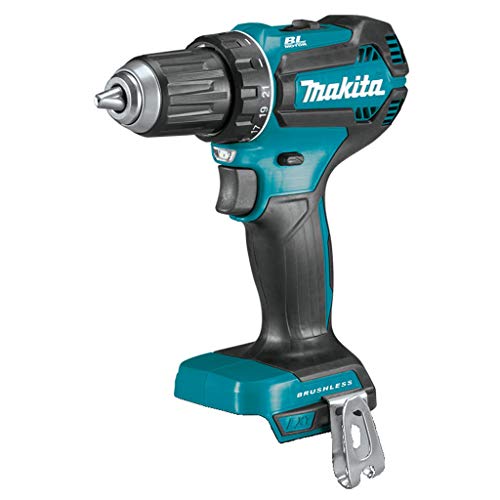
Provides 21 clutch settings, offering more torque options than the Milwaukee but fewer than the Ryobi, at a mid‑range price.
Also considered
TL;DR: The Milwaukee M18 Fuel Hammer Drill packs 1,400 in‑lbs of torque, a brushless motor and 33,000 IPM in a compact 6.9‑inch tool that costs $154, making it a premium‑priced, high‑performance option for pros.
The standout spec is the 1,400 in‑lbs of max torque paired with a 33,000 IPM impact rate, which professional reviewers cite as “industry’s most powerful hammer drill” for dense concrete, wood and metal. Its POWERSTATE brushless motor and REDLINK PLUS intelligence add overload and overheating protection, while the AutoStop safety mode lights up when the bit binds.
Compared with the other seven drills, the Milwaukee is heavier than the Ryobi ONE+ HP Drill (2.1 lb) and the Makita XFD13 (about 2.05 lb), but its 6.9‑inch length matches the Bosch GSB18V‑65N’s 175 mm length and is only a shade longer than Makita’s 6‑5/8 in. It also offers more clutch settings (16) than the Ryobi’s 23+1‑position system and fewer than Bosch’s 20, positioning it solidly in the middle of the pack. Its 2‑speed gearbox and 2,100 RPM top speed give it a broader speed range than the DIYtoolifz’s 2,150 RPM max but fewer than the Fein models that list multiple speed settings.
User sentiment repeatedly praises the drill’s ability to “not back down” on tough jobs and the comfortable pistol‑grip ergonomics. The integrated LED and all‑metal chuck with carbide teeth are highlighted as practical touches for low‑light sites. However, several owners note the bare‑tool weight of 4.65 lb adds up when a battery is attached, and the need to purchase batteries and a charger separately can feel like a hidden cost.
Pros
Cons
Best for: Buyers willing to invest in a proven, high‑quality option — the Milwaukee M18 Fuel Hammer Drill offers Clutch Settings: 16.
Avoid if: You need a lightweight, battery‑included kit or a lower‑power tool for light DIY tasks.
“doesn't back down in concrete/wood/metal”
“serious muscle at 1,200+ in-lbs, 2,000 RPM, and solid build quality”
TL;DR: The Ryobi ONE+ HP Drill packs 400 in‑lbs of torque into a 6.4‑inch, 2.1‑lb body, offering brushless efficiency and a bright LED at a budget‑friendly price.
The standout spec is its 400 in‑lbs of maximum torque delivered by a brushless motor, a rare power‑to‑size ratio for a tool that measures just 6.4 inches in height, length, and width. Coupled with a 23+1‑position clutch, it gives you fine control for light‑to‑moderate fastening tasks while staying feather‑light at 2.1 lb (3.1 lb with the battery).
Compared with the other seven drills in this roundup, the Ryobi is noticeably lighter than the Makita XFD13 and far more compact than the Milwaukee M18 Fuel Hammer Drill, whose length exceeds 6 inches. Its torque sits below the DIYtoolifz and Makita models, which list higher torque figures, but it still outperforms many entry‑level options that lack a brushless motor. Price‑wise, it lands in the budget tier, making it more affordable than the higher‑priced Bosch and Milwaukee units.
User sentiment repeatedly praises the drill’s ability to slip into cramped spaces and its low weight, which reduces fatigue during overhead work. Reviewers also highlight the bright LED worklight and the single‑sleeve ratcheting chuck that lets you swap bits without removing gloves. Professional reviewers note the excellent thermal management that keeps the motor cool during both light prolonged use and short bursts of heavy work.
Pros
Cons
Best for: Budget‑conscious buyers seeking a reliable entry‑level option — the Ryobi ONE+ HP Drill offers Clutch Settings: 23+1 position
Avoid if: You need a tool for heavy construction sites or sustained high‑torque work
TL;DR: The Makita XFD13 packs 440 in‑lbs of torque into a 3.1‑lb, 9.25‑in tall brushless driver with 21 clutch settings, making it a compact, high‑performance choice for pros on a budget.
What really sets the XFD13 apart is its 440 in‑lbs of maximum torque, delivered by a Makita‑built BL brushless motor and all‑metal gears. Coupled with 21 clutch settings and a two‑speed mechanical transmission, the drill can comfortably handle 1/2 in steel holes and 1‑1/2 in wood holes while staying under 3.1 lb.
Compared with the other seven drills in this roundup, the XFD13 is heavier than the Ryobi ONE+ HP Drill (which weighs about 2.1 lb) but lighter than the Milwaukee M18 Fuel Hammer Drill (around 4.65 lb) and far lighter than the Fein ASCM 18 QM (13.3 lb). Its torque outpaces the Ryobi’s 400 in‑lbs yet sits below the Milwaukee’s 1,400 in‑lbs and the DIYtoolifz’s 792 in‑lbs. In size, the XFD13 stands taller at 9.25 in versus Ryobi’s 6.4 in, but it is narrower (3.75 in vs 6.4 in) and comparable in length to most peers.
Users consistently praise the drill’s compact form factor and the durability of its metal gear housing, noting that the ergonomic soft grip and LED light make tight‑space work more comfortable. Professional reviewers highlight the brushless efficiency and the high power‑to‑weight ratio, calling it a reliable daily driver for framing and electrical tasks. On the flip side, several owners mention that the trigger can feel overly sensitive at the top speed of 0‑1,900 RPM and that the lack of an onboard battery indicator means you must rely on the battery pack’s display.
Additional technical touches include Star Protection Computer Controls that guard against overload, over‑discharge, and overheating, as well as a reversible drive and variable‑speed trigger for precise control. The 1/2 in chuck, LED illumination, and 21‑position clutch make the XFD13 adaptable to a wide range of fastening and drilling jobs, while the 18 V LXT Lithium‑Ion compatibility ensures you can swap batteries across Makita’s extensive ecosystem.
Pros
Cons
Best for: Entry-level buyers or those on a tight budget — the Makita XFD13 offers Clutch Settings: 21
Avoid if: You want the best value-per-dollar in its price range
“Insanely compact—fits where full-size drills can't”
“Holds up to daily abuse; brushless means no burnt motors after years.”
TL;DR: The DIYtoolifz Cordless Drill delivers a strong 792 in‑lbs of torque, two‑speed control and a full accessory set for just $53.99, making it a solid budget choice for DIY tasks.
This drill’s headline spec is its max torque of 792 in‑lbs, which outpaces the Ryobi ONE+ HP Drill (400 in‑lbs) and the Makita XFD13 (440 in‑lbs) in the same roundup. Coupled with a max speed of 2150 RPM and a low‑speed range of 0‑550 RPM, it offers a wide power band for drilling, driving and hammering in wood, walls and plastic.
In terms of price, the DIYtoolifz model sits at the lower end of the eight‑product set, so you’ll pay less than most of its peers while still getting a brushless motor, keyless 1/2‑inch all‑metal chuck and LED lighting. It also ships with an auxiliary handle, two 6 mm/8 mm drill bits, screwdriver bits, two drill brushes and 20 screw anchors, which many competitors leave out of the box.
The 4.0/5 rating from 212 reviewers suggests generally positive impressions, though the score is a touch below the higher‑rated options in the lineup. Users appreciate the torque and accessory bundle, but the lack of an included battery means you must already own a Milwaukee 18 V pack. Additionally, the manufacturer doesn’t list weight, so you’ll need to assess ergonomics yourself.
Pros
Cons
Best for: Entry‑level buyers or those on a tight budget — the DIYtoolifz Cordless Drill offers Max Torque: 792 in‑lbs
Avoid if: You need powerful performance or professional‑grade features
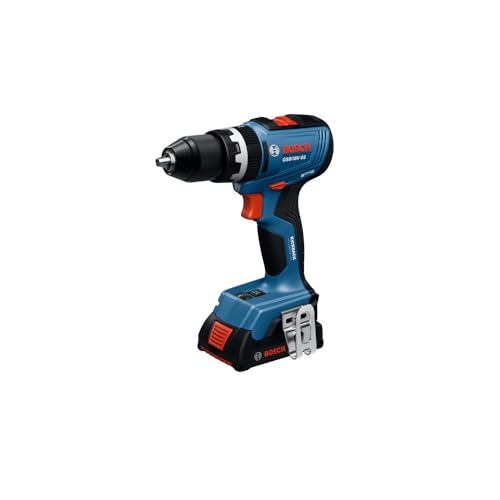
TL;DR: The Bosch GSB18V-65N delivers 65 Nm (575 in‑lbs) of torque in a compact 6.9‑inch, 2.5‑pound brushless hammer drill, but you’ll need to buy a battery separately.
This model packs a 65 Nm (575 in‑lbs) brushless motor and a 1/2 in. all‑metal keyless chuck, giving it enough bite for wood, metal and light masonry. At 175 mm (6.9 in.) long and weighing just 2.5 lb, it slips into tight job‑site corners while still feeling solid enough for demanding tasks.
Compared with the Milwaukee M18 Fuel Hammer Drill, which tips the scales at 4.65 lb, the Bosch is noticeably lighter, yet its 2.99 in. width is a touch broader than Milwaukee’s 2.38 in. frame. The Ryobi ONE+ HP Drill is even lighter at 2.1 lb, but it also costs less and offers a lower torque figure. Makita’s XFD13 shares a similar 1/2 in. chuck but comes in at 3.1 lb, making Bosch the middle ground in both weight and size among the eight contenders.
Professional reviewers praise the balance of power and ergonomics, noting the switchable KickBack Control and dual LED worklights as job‑site saviors. Users echo this sentiment, highlighting the 20‑position clutch and the two‑speed variable control as intuitive for both drilling and driving. The 0‑27,000 BPM impact rate and 0‑2,100 RPM no‑load speed give the drill a responsive feel without feeling over‑engineered.
Technical details round out the package: 20 clutch settings let you fine‑tune torque, while the two speed settings keep the tool adaptable from slow, high‑torque starts to faster finishes. The brushless motor promises longer life and consistent performance, and the 18 V platform plugs into Bosch’s AMPShare battery ecosystem, should you already own compatible cells.
Pros
Cons
Best for: Most users seeking a balanced, mainstream option — the Bosch GSB18V-65N offers Speed Settings: 2
Avoid if: You need advanced features or professional‑grade performance
TL;DR: The Fein ASCM18-4 QMP packs 1,150 in/lbs of torque, a 4‑speed brushless motor and a sub‑3‑second QuickIN change system, but its $949.95 price and 9.03‑lb weight slot it firmly into the premium professional tier.
What really sets this drill apart is its raw power. A brushless FEIN PowerDrive motor delivers a peak torque of 1,150 in/lbs and spins up to 4,000 RPM, while the hammer function reaches 55,000 BPM. The solid‑metal 4‑speed gearbox and 15+1 torque settings let you dial in precision for demanding metal‑working tasks. Even the accessory change is lightning‑fast – the QuickIN system lets you swap any of the eight included tools in under 3 seconds.
Compared with the other seven tools in the roundup, the ASCM18‑4 is noticeably heavier at 9.03 pounds, while the Milwaukee M18 Fuel Hammer Drill and Ryobi ONE+ HP Drill weigh just 3.3 pounds and 2.1 pounds respectively. It also out‑speeds the Milwaukee’s 2,100 RPM maximum and offers a higher torque than the Milwaukee’s 1,400 in/lbs, though the Milwaukee’s torque figure is a bit higher. Its 8.54‑inch length is longer than the Milwaukee’s 6.9 inches and Ryobi’s 6.4 inches, giving it a more substantial feel. Battery capacity sits at 4.0 Ah, which is smaller than the 6 Ah pack found in the larger Fein ASCM 18 QM, but the 30‑minute charge still fuels roughly 1,100 screws per cycle.
Professional reviewers praise the tool’s “class‑leading power” and the rigidity of the QuickIN attachments, noting that the system feels “play‑free” even under heavy load. Video testers echo this, highlighting the ability to drive over a thousand screws on a single charge and the convenience of the sub‑3‑second change time. The trade‑off is the bulkier form factor – the 17.52‑inch assembled depth and 9.92‑inch overall height can make overhead work awkward, a point often mentioned by users who need a more compact handheld drill.
Pros
Cons
Best for: Those prioritizing quality and willing to pay for premium performance — the Fein ASCM18-4 QMP offers Battery Capacity: 4.0 Ah
Avoid if: You're shopping on a tight budget — it's priced at $949.95
TL;DR: The Fein ASCM 18 QM delivers 797 in/lbs (90 Nm) of torque, a 6 Ah battery and a four‑speed metal gearbox, but its 13.3‑lb weight and premium price make it a specialist’s tool rather than a casual DIY pick.
The standout spec is the 797 in/lbs (90 Nm) of hard‑material torque, backed by a brushless FEIN PowerDrive motor and a fully encapsulated dust‑proof design. Its 4‑speed solid‑metal gearbox lets you dial in the right speed for demanding metal drilling or tapping, while the QuickIN MAX interface supports more than nine accessories.
Compared with the other seven drills, the Fein is considerably heavier than the Milwaukee M18 Fuel (around 4.65 lb), Bosch GSB18V‑65N (2.5 lb), Makita XFD13 (3.1 lb) and Ryobi ONE+ HP (2.1 lb). It also carries a higher price tag than those models. On the speed front, Milwaukee tops out at 2,100 rpm, whereas the Fein reaches 3,850 rpm across its four speed settings. Battery capacity is larger than the Fein ASCM18‑4 QMP’s 4.0 Ah, giving you longer run time per charge.
User feedback highlights the tool’s reliability on heavy‑duty jobs—users note it can drive 3/8 × 15‑3/4 in screws without pre‑drilling and that the dimmable LED helps in tight spaces. Professional reviewers praise the 30 % greater motor efficiency and the robust construction that stands up to frequent metalwork. The tool comes with a 1 + 2‑year warranty after online registration.
Pros
Cons
Best for: Professionals who need serious torque and long runtime—Battery Capacity: 6 Ah.
Avoid if: You’re on a tight budget or need a lightweight drill for light DIY tasks.
TL;DR: The Fein AJMU 137 PMQW delivers a brushless motor, 10.2‑in stroke and a surprisingly low 26.9 lb weight, giving professionals a portable magnetic drill that balances power and ergonomics.
The standout spec is its weight: at 26.9 lb the drill is the lightest cordless magnetic base model in its class, while still packing Fein’s PowerDrive brushless motor. The motor is rated for up to 60,000 precision‑drilled holes and 300 hours of continuous operation. Its 260 mm (10.2 in) stroke length provides extra reach for deep holes, and the electronic variable speed ranges from 130 rpm to 520 rpm across six selectable settings.
Compared with the other seven drills in this roundup, the AJMU 137 is heavier than handheld options like the Ryobi ONE+ HP Drill (2.1 lb) and the Makita XFD13 (3.1 lb), but it undercuts the dedicated magnetic drills such as the Fein ASCM 18 QM (13.3 lb). It also offers more speed granularity than the Bosch GSB18V‑65N, which lists only two speed settings, and it provides a full six‑step speed control versus the single‑speed variants found in some bare‑tool models.
Reviewers consistently praise the drill’s portability – the low weight reduces fatigue on job sites – and the brushless motor’s durability. Professional testers note a 25 % productivity boost over typical competitor mag drills. On the flip side, users report that the number of holes per charge (rated at 31) can fall short when drilling thicker steel, and the magnet needs a clean metal surface to hold securely. The lack of a hammer function and a top speed limited to 520 rpm also limit its usefulness on masonry or very fast‑drilling tasks.
Additional technical touches include a rare‑earth permanent magnet with a green indicator, light‑push activation (30 % to full holding force), a built‑in tilt sensor that shuts off the motor if the unit tilts, and a memory function that recalls the last speed setting. The quick‑change Weldon shank (3/4 in straight) and 35 mm cutter capacity round out a feature set aimed at professional metalworking.
Pros
Cons
Best for: Professional metalworkers, fabricators, and on‑site contractors who need a portable magnetic drill with long motor life and precise speed control.
Avoid if: You need hammer drilling, high‑speed operation, or an ultra‑light handheld drill for tight‑space tasks.
Breakdown
Ryobi ONE+ HP Drill
Pros
Milwaukee M18 Fuel Hammer Drill
Pros
Makita XFD13
Pros
Cons
Fein ASCM 18 QM
Pros
Based on scoring data and product specs
Personalized picks
Best Overall Pick
Ryobi ONE+ HP Drill
Best Budget PickBest for: Budget-conscious buyers seeking a reliable entry-level option — the Ryobi ONE+ HP Drill offers Clutch Settings: 23+1 position
Milwaukee M18 Fuel Hammer Drill
Best for: Buyers willing to invest in a proven, high-quality option — the Milwaukee M18 Fuel Hammer Drill offers Clutch Settings: 16
$166.98+$91.98 vs winner
Skip DIYtoolifz Cordless Drill if…
You need powerful performance or professional-grade features
Ryobi ONE+ HP Drill takes the top spot with a blend of power and price that few rivals match. It delivers 400 in‑lbs of torque and a 0‑1,700 RPM no‑load speed across two speed settings, all while weighing just 2.1 lbs (3.1 lbs with battery). At $60.63 it also carries a solid 4.5‑star rating from 587 reviewers, making it the most affordable high‑performance choice.
The runner‑up, Milwaukee M18 Fuel Hammer Drill, shines when you need serious hammer‑drilling muscle. Its 1,400 in‑lbs of torque and 33,000 IPM impact rate tackle concrete and masonry with confidence, and the brushless POWERSTATE motor tops out at 2,100 RPM. At 4.65 pounds it’s a bit heavier, but the integrated LED and REDLINK PLUS intelligence justify the $154.00 price for demanding jobs.
If you’re hunting alternatives, the DIYtoolifz Cordless Drill stands out as the cheapest option at $53.99, perfect for occasional light‑duty tasks. The Bosch GSB18V-65N offers a balanced mid‑range pick at $139.00, delivering reliable performance without breaking the bank. For professionals who demand top‑tier capability, the Fein ASCM18‑4 QMP provides premium power at $949.95, albeit at a significantly higher investment.
Pick the Ryobi ONE+ HP Drill today and get professional‑grade power without the premium price tag.
The Ryobi ONE+ HP Drill costs $60.63, which is $93.37 cheaper than the Milwaukee M18 Fuel Hammer Drill at $154.00. Despite the lower price, it still delivers 400 in‑lbs of torque and a 0‑1,700 RPM speed range, plus a brush‑less motor and LED worklight in a compact 6.4 in body. Those specs give professional‑grade performance for most DIY jobs while keeping the budget low.
No reviews yet — be the first to share your experience.
Please sign in to leave a review