
The most surprising fact in our hunt for 2‑in‑1 laptops with Wi‑Fi 6E or Wi‑Fi 7 is that the cheapest option also carries the highest user rating. The HP OmniBook X Flip, priced at $746.99, earned a 4.7 / 5 score from five reviewers, showing that a lower price tag doesn’t always mean a compromise.
Seven convertible models span three price tiers. The budget lane includes the HP OmniBook X Flip (14‑inch) at $809.19, Lenovo Yoga 7i 16‑inch 83DL for $754.00 and its Storm Grey sibling at $768.00, all offering Wi‑Fi 6E and battery capacities around 71 Wh. The mid‑range pick, Lenovo Yoga 7i 16‑inch 83JT ($779.90), balances a 71 Wh battery with a 300‑nit, 16‑inch display. Premium contenders—Dell’s 16 Plus Ice Blue ($954.99), ASUS Vivobook Flip OLED ($924.99) and HP’s 14‑inch OmniBook X Flip ($809.19)—bring higher brightness (up to 400 nits) and faster refresh rates (120 Hz on the Dell).
Below is a breakdown of each model’s Wi‑Fi capabilities, performance quirks, and ideal use‑cases so you can pick the convertible that fits your workflow.

Lenovo Yoga 7i 16-inch 83DL
A 71 Wh battery gives solid endurance at $754, supporting the strong value and rating that earned it the top spot.

Dell 16 Plus Ice Blue
Ideal for buyers demanding premium quality, the Dell 16 Plus costs $954.99—about $200 more than the Lenovo Yoga—catering to those willing to invest for top-tier features.
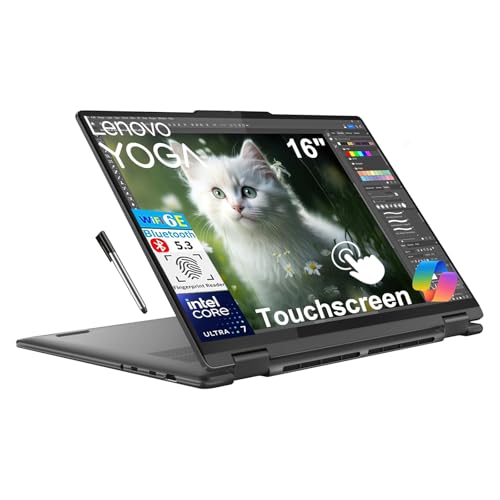
Lenovo Yoga 7i 16-inch Storm Grey
Stands out with an 18.4‑hour light‑use battery life, offering longer unplugged sessions than the other picks while keeping the same 71 Wh capacity.
Also considered
Score Analysis
Key score advantages vs. runner-up (Dell 16 Plus)
Price Range
Lenovo Yoga 7i 16-inch 83DL
$789.00
Dell 16 Plus Ice Blue
$954.99
Lenovo Yoga 7i 16-inch Storm Grey
$766.00

Lenovo Yoga 7i 16-inch 83JT
$788.00

HP OmniBook X Flip 14-inch
$809.19

ASUS Vivobook Flip 14-inch OLED
$924.99
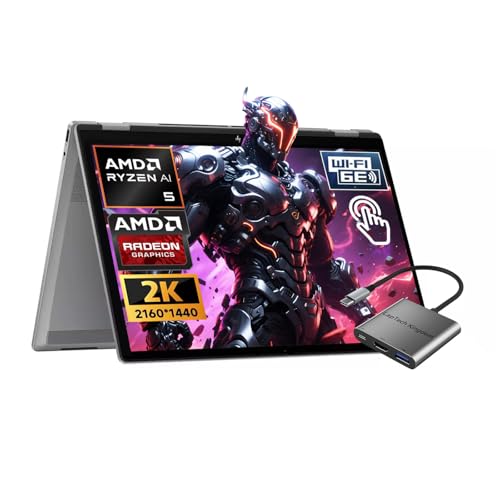
HP OmniBook X Flip
$746.99
Spec Comparison
TL;DR: The Lenovo Yoga 7i 16‑inch 83DL packs a 12‑core 4.8 GHz CPU, 16 GB RAM and a 71 Wh battery into a sturdy aluminum 4.63‑lb convertible, but its glossy 300‑nit screen can feel dim in bright rooms.
This model’s standout spec is the Intel Core Ultra 7 155U with 12 cores, 16 threads and a max boost of 4.8 GHz, paired with 16 GB of LPDDR5 RAM and a fast 1 TB PCIe 4.0 SSD. The 16.0‑inch IPS touchscreen fills 91 % of the chassis and the CNC‑milled aluminum body feels premium while the 360° hinge lets you flip into tablet, tent or stand mode.
At 4.63 pounds, it’s heavier than the 4.18‑lb HP OmniBook X Flip but lighter than the 6.0‑lb Lenovo Yoga 7i Storm Grey and the 5.0‑lb Yoga 7i 83JT. Its 71 Wh battery matches the Storm Grey and 83JT models and exceeds the 68 Wh pack in the HP OmniBook X Flip and the 64 Wh unit in the Dell 16 Plus, giving it a solid edge in endurance. Brightness is 300 nits typical (400 nits on select trims), which is on par with the Dell and ASUS flip models but lower than the 400‑nit peak on the HP OmniBook X Flip.
Professional reviewers praise the strong CPU performance and the all‑day battery life, while everyday users love the comfortable backlit keyboard and the premium feel of the aluminum chassis. Common complaints focus on the glossy display’s glare and modest 300‑nit brightness, the 4.63‑lb weight that feels bulky in tablet mode, occasional Bluetooth 5.2 dropouts, and audible fan noise when the CPU ramps up. The memory comes soldered, so you can’t upgrade it later.
Pros
Cons
Best for: Entry‑level buyers or those on a tight budget
Avoid if: You need advanced features or professional‑grade performance
TL;DR: Dell’s 16‑inch Ice Blue 2‑in‑1 packs a 120 Hz IPS screen, Wi‑Fi 7, and a 64 Wh battery in a 4.52‑pound chassis, but its $954.99 price limits budget‑conscious buyers.
The standout spec is the 16‑inch IPS panel with a 1920 × 1200 resolution and a 120 Hz refresh rate, delivering smooth visuals for scrolling and media. Under the hood sits an Intel Core Ultra 5 226V processor with 8 cores, a max turbo of 4.5 GHz, and a 40 TOPS NPU for AI tasks. Connectivity includes Wi‑Fi 7 (Intel BE201) and Bluetooth 5.4, while the integrated 2 MP RGB‑IR camera offers Windows Hello authentication.
Compared with the six other laptops in this roundup, the Dell is heavier than the ASUS Vivobook Flip 14‑inch at 3.46 pounds but lighter than the HP OmniBook X Flip 14‑inch, which tips the scales at 7.01 pounds. Its 300‑nit brightness matches the ASUS and Lenovo Yoga models, yet its 120 Hz refresh rate outpaces their 60 Hz panels. Battery capacity sits at 64 Wh, a notch below the ASUS's 70 Wh and the Lenovo Yoga's 71 Wh, but reviewers still note all‑day endurance thanks to the efficient Lunar Lake CPU.
Consumer feedback highlights the vivid 120 Hz display and solid build quality, especially the recycled aluminum and ocean‑bound plastic finish. Users appreciate the dual‑level white backlit keyboard and the fingerprint reader tucked into the power button. However, common complaints mention noisy fans under load, a stiff touchpad that requires firm clicks, and the 16 GB of LPDDR5X RAM comes soldered, leaving no upgrade path. The single HDMI 2.1 port and one Thunderbolt 4 USB‑C port also feel limiting for power users.
Additional technical notes include a 1 TB PCIe NVMe SSD, stereo speakers with Realtek and Dolby Atmos delivering 5 W of power, and a 64 Wh lithium‑ion polymer battery. The device runs Windows 11 Home with Copilot AI, and the IR camera with privacy shutter adds a layer of security for remote work.
Pros
Cons
Best for: Those prioritizing quality and willing to pay for premium performance
Avoid if: You're shopping on a tight budget — it's priced at $954.99
TL;DR: The Lenovo Yoga 7i 16‑inch Storm Grey packs a 16‑inch 1920×1200 touchscreen, Intel Core Ultra 7 up to 4.8 GHz, 71 Wh battery delivering up to 18.4 hours of light‑use, all in a sturdy aluminum convertible.
The standout feature is its 16‑inch IPS LCD panel with a 1920 × 1200 resolution, 10‑point multi‑touch, and brightness ranging from 300 to 400 nits. Powered by an Intel Core Ultra 7 155U that boosts to 4.8 GHz, the laptop also offers 16 GB of LPDDR5X RAM and a fast 1 TB PCIe 4.0 NVMe SSD.
At 6.0 lb, it's heavier than the HP OmniBook X Flip (4.18 lb) and the ASUS Vivobook Flip 14‑inch OLED (3.46 lb), but its 71 Wh battery matches the Lenovo Yoga 7i 83JT and 83DL and exceeds the HP OmniBook X Flip’s 68 Wh, Dell 16 Plus’s 64 Wh, and the HP OmniBook X Flip 14‑inch’s 59 Wh. Connectivity is generous with two Thunderbolt 4 ports, two USB‑A 3.2 Gen 1 ports, HDMI 2.1, a headphone/mic combo jack and a microSD card reader, outpacing many peers that list fewer ports.
Professional reviewers praise the device’s all‑day battery life and the strength of the Ultra 7 processor for multitasking, while everyday users love the premium aluminum chassis and the 360‑degree hinge. Common complaints focus on the glossy screen’s glare in bright rooms, occasional Bluetooth instability, and the fact that the RAM and SSD are soldered, limiting future upgrades. The integrated Intel Arc graphics are sufficient for casual use but fall short for gaming or heavy creative workloads.
Additional technical context includes Dolby Atmos stereo speakers, a 1080p webcam with an optional privacy shutter, Bluetooth 5.3, and MIL‑STD‑810H military‑grade durability, making it a well‑rounded choice for mobile productivity.
Pros
Cons
Best for: Students, hybrid workers and light creatives who need a versatile 2‑in‑1 with strong CPU power, long battery life and solid build quality.
Avoid if: You need a lightweight tablet, dedicated graphics, upgradeable memory/storage, or a matte display to avoid glare.
TL;DR: The Lenovo Yoga 7i 16‑inch (model 83JT) blends a 71 Wh battery, 16 GB LPDDR5X RAM and a 16‑inch 2K touchscreen in a sturdy aluminum chassis, though its dim 300‑nit display and 5‑lb weight may limit tablet use.
The standout feature is the AI‑driven Copilot+ platform, powered by a 40+ TOPS neural processing unit alongside an Intel Core Ultra 5 125U that clocks a 2.1 GHz base and 4.5 GHz boost. Coupled with 16 GB of 5200 MHz LPDDR5X memory and a fast 512 GB PCIe Gen4 SSD, the machine promises smooth multitasking and quick app launches. Manufacturer rates its 71 Wh battery for up to 13 hours of MobileMark usage, while reports list an average of about 7 hours in mixed use.
Compared with the other six laptops in this roundup, the Yoga 7i sits in the middle of the weight spectrum: it’s lighter than the Storm Grey Yoga (6.0 lb) and the bulky HP OmniBook X Flip (7.01 lb), but a touch heavier than the 83DL Yoga (4.63 lb) and the ultra‑light HP OmniBook X Flip (4.18 lb). Battery capacity matches the other Yoga 7i variants at 71 Wh, giving it comparable endurance. It also offers two Thunderbolt 4 ports, matching the other Yoga models and providing more high‑speed connectivity than the HP and Dell entries, which list fewer or no Thunderbolt ports.
User sentiment praises the premium aluminum build and the solid 360° hinge, with professional reviewers highlighting the chassis rigidity and the inclusion of a stylus pen. Audio gets a nod thanks to dual Dolby Atmos speakers, and the 1080p IR webcam with fingerprint and facial recognition satisfies video‑call needs. The downsides that keep surfacing are the modest 300‑nit brightness and ~67 % sRGB gamut, which reviewers call “dim” for color‑critical work, and a keyboard that feels “mushy” with wobbling keys. At 5.0 lb, the device feels a bit heavy when used in tablet mode.
Displaying a 1920 × 1200 IPS panel at 60 Hz, it offers crisp 2K visuals but limited HDR (Dolby Vision) support. With Wi‑Fi 6E and Bluetooth 5.3, wireless connectivity is future‑proof. The integrated Intel Arc Graphics handle everyday graphics tasks, though they aren’t aimed at heavy gaming or intensive GPU workloads.
Pros
Cons
Best for: Most users seeking a balanced, mainstream option
Avoid if: You need a bright, color‑accurate display or a lightweight tablet‑only experience
TL;DR: The HP OmniBook X Flip 14‑inch packs 24 GB DDR5 RAM, a 1 TB SSD, and a 22 h 45 m claimed battery life into a 14‑inch 400‑nit IPS convertible for $809.
What really stands out is the 24 GB of DDR5 memory running at 7500 MHz, a rare amount for a 14‑inch convertible, paired with a 1 TB NVMe SSD that keeps the system snappy for demanding workloads.
At 7.0106999316 pounds, it's heavier than every other model in this roundup, which range from 3.46 to 6.0 pounds. Its 59 Wh battery's smaller than the 71 Wh packs in the Lenovo Yoga 7i models and the 70 Wh in the ASUS, and also below the 68 Wh of the other HP OmniBook variant. The 400‑nit IPS panel matches the brightest screens in the group and outshines the 300‑nit displays of the ASUS and Dell units, though it's a modest 14.0‑inch screen compared with the 16‑inch panels on most competitors. Connectivity is a strong point: a single Thunderbolt 4 port, HDMI 2.1, two USB‑A 3.2 Gen 2 ports and a USB‑C Power Jack give it a richer port selection than many peers, many of which list fewer USB‑A options.
Reviewers praise the 360° hinge, the included HP Rechargeable MPP2.0 Tilt Pen and the solid port lineup, but they note that the 400‑nit brightness can feel dim in bright outdoor settings and that the keyboard feels cramped without inverted‑T arrow keys. Professional reviewers also point out noticeable heat buildup under load, and everyday users report that real‑world battery endurance falls short of the 22 h 45 m claim, especially when the machine is taxed.
Pros
Cons
Best for: Those prioritizing quality and willing to pay for premium performance
Avoid if: You need advanced features or professional‑grade performance
TL;DR: The ASUS Vivobook Flip 14‑inch OLED packs a vivid 14″ 2K OLED screen, 47 TOPS AI NPU and Wi‑Fi 7 into a 3.46‑lb convertible, but its glossy display and non‑upgradable RAM keep the $924.99 price high.
What really sets this machine apart is the 14.0‑inch OLED touchscreen that delivers 1920 × 1200 resolution, 95–100 % DCI‑P3 colour coverage and a lightning‑quick 0.2 ms response time, all at 300 nits peak HDR brightness. The display is Pantone‑validated and comes with an ASUS Pen SA205H‑MPP2.6 that charges wirelessly, making sketching and note‑taking feel natural.
At 3.46 pounds, the Vivobook Flip is noticeably lighter than the Dell 16 Plus Ice Blue (4.52 lb) and the HP OmniBook X Flip 14‑inch (over 7 lb). Its 70 Wh battery gives up to 11.5 hours of MobileMark‑rated use, a capacity that sits between the Dell’s 64 Wh and the Lenovo Yoga 7i models’ 71 Wh. The laptop also brings Wi‑Fi 7 tri‑band connectivity—something the peer specs don’t list—so you’ll enjoy faster wireless speeds without needing an external adapter.
Professional reviewers praise the OLED panel’s colour accuracy and the premium look of the antimicrobial‑coated chassis, while everyday users love the responsive stylus and the privacy‑shutter webcam. The trade‑offs show up in a glossy screen that reflects in bright rooms and a battery that can drain quickly when you crank up OLED brightness. Because ASUS solders the 16 GB LPDDR5X RAM, you can’t upgrade memory later, which some power users see as a limitation.
Pros
Cons
Best for: Those prioritizing quality and willing to pay for premium performance
Avoid if: You're shopping on a tight budget — it's priced at $924.99
TL;DR: The HP OmniBook X Flip offers a 16‑inch 2K IPS display, 68 Wh battery lasting up to 21 hours, and a 50 TOPS AI NPU for $746.99, making it a solid AI‑focused 2‑in‑1.
The standout spec is the on‑device AI accelerator delivering 50 TOPS of NPU performance, which professional reviewers highlight as “excellent on‑device AI performance.” Coupled with a 4.8 GHz boost clock on its 6‑core AMD Ryzen AI 5 340 processor, the laptop feels responsive for everyday tasks and AI‑enhanced workflows. The 16.0‑inch IPS LCD shines at 400 nits and 62.5% sRGB, while the 5 MP IR webcam with an integrated privacy shutter satisfies video‑call security.
In this seven‑product roundup the OmniBook X Flip weighs less than the Lenovo Yoga 7i 16‑inch Storm Grey and the 14‑inch HP OmniBook variant, yet it weighs a bit more than the ASUS Vivobook Flip 14‑inch OLED. Its 68 Wh battery ranks just below the 71 Wh cells in the Lenovo Yoga 7i models and the 70 Wh pack in the ASUS, yet it still outlasts the Dell 16 Plus’s 64 Wh battery. It matches the maximum 400 nits of the Yoga 83DL and beats the 300‑nits panels of other competitors. The 60 Hz refresh rate stays standard, though Dell offers a faster 120 Hz panel.
User sentiment repeatedly praises the long battery life, the high‑quality webcam, and the convenience of the 360° hinge with optional stylus support. Reviewers also note the solid build of the recycled‑aluminum chassis. On the downside, everyday users mention the limited 62.5% sRGB gamut for color‑critical work, the fixed 60 Hz refresh without adaptive sync, and the soldered 16 GB LPDDR5x RAM that can’t be upgraded.
Pros
Cons
Best for: Remote professionals, AI enthusiasts, and creators who value strong on‑device AI performance and long battery life in a portable 2‑in‑1.
Avoid if: You need a wide‑gamut display for color‑critical work, adaptive‑sync gaming, or the ability to upgrade RAM later.
Breakdown
Lenovo Yoga 7i 16-inch 83DL
Pros
Dell 16 Plus Ice Blue
Cons
Lenovo Yoga 7i 16-inch Storm Grey
Pros
Lenovo Yoga 7i 16-inch 83JT
Cons
Based on scoring data and product specs
Personalized picks
Best Overall Pick
Lenovo Yoga 7i 16-inch 83DL
Best Budget PickBest for: Entry-level buyers or those on a tight budget
Dell 16 Plus Ice Blue
Best for: Those prioritizing quality and willing to pay for premium performance
$954.99+$165.99 vs winner
Skip HP OmniBook X Flip if…
You need advanced features or professional-grade performance
We’re naming the Lenovo Yoga 7i 16‑inch 83DL the clear winner of our Wi‑Fi 6E/7 2‑in‑1 roundup. It ships for $754.00, scores a solid 4.4 / 5 from 160 reviewers, and packs a 71 Wh battery that the maker claims can stretch to 31 hours of ideal‑use endurance. Its 12‑core Intel Core Ultra 7 155U, 16 GB of LPDDR5 RAM and a 1 TB PCIe 4.0 SSD give it desktop‑class performance while staying under 4.63 lb, and the Wi‑Fi 6E connectivity promises low‑latency links in crowded networks.
The Dell 16 Plus Ice Blue lands as the runner‑up, and it shines if you need a buttery‑smooth 120 Hz touchscreen for scrolling, light gaming or creative work. It upgrades to Wi‑Fi 7 for the fastest wireless speeds, carries a 64 Wh battery, and weighs a modest 4.52 lb, making it a sleek, high‑refresh option for users who value visual fluidity and the newest Wi‑Fi standard.
For other buying personas, the Lenovo Yoga 7i 16‑inch 83JT serves as a solid mid‑range choice, offering the same convertible layout and a numeric keypad at $779.90. If you’re after a premium experience, the HP OmniBook X Flip 14‑inch stands out with a higher‑end build and features for $809.19.
Pick the Lenovo Yoga 7i 83DL today and enjoy a balanced, budget‑friendly 2‑in‑1 that doesn’t compromise on performance or connectivity.
The Lenovo Yoga 7i 16‑inch 83DL retails for $754.00 and packs a 71 Wh battery, 16 GB of LPDDR5X RAM and Wi‑Fi 6E, making it a solid value compared with higher‑priced alternatives. Its price‑to‑features balance beats the Dell 16 Plus Ice Blue, which costs $954.99.
Please sign in to leave a review
No reviews yet. Be the first to review!
