Choosing a 2.1 speaker set can feel overwhelming, but our look at 11 models narrows it down. The Logitech Z625 stands out with a THX‑certified design and a measured SPL >103 dBC, while its 4.5‑star rating from 5,389 reviewers shows strong user approval. Prices stretch from $35.99 for the Nylavee SK400 up to $329.95 for the Harman Kardon SoundSticks 4‑2.1, giving you plenty of options.
We’ve grouped the lineup into three price tiers so you can match budget to need. In the budget corner sit the Nylavee SK400 ($35.99, 4.4‑star rating), Logitech Z313 ($42.99) and Creative Pebble Plus ($52.24), all offering solid sound without breaking the bank. Mid‑range picks like the Logitech Z407 ($109.99) and Creative Pebble X Plus ($119.99) add features such as Bluetooth or higher SPL. Premium choices—including the SteelSeries Arena 7 ($199.72), Razer Nommo V2 ($299.99) and the Z625 ($220.31)—deliver 65 W to 150 W RMS power and premium driver sizes for immersive audio.
Below you’ll see how each system stacks up on performance, connectivity and design, helping you pick the perfect 2.1 speakers for your desk.
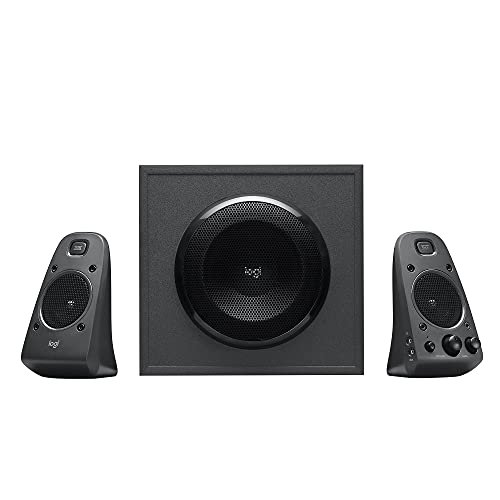
Logitech Z625
Its 177.8 mm subwoofer driver delivers deep bass, supporting its premium sound quality.
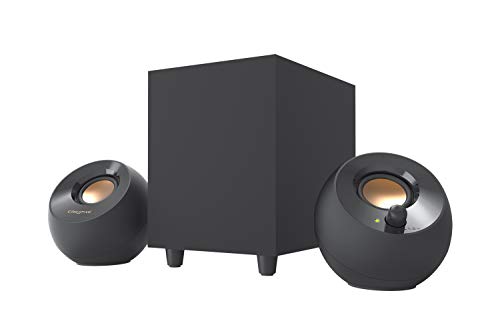
Creative Pebble Plus
Ideal for budget‑conscious gamers or small‑room listeners, it costs about $168 less than the Logitech Z625.
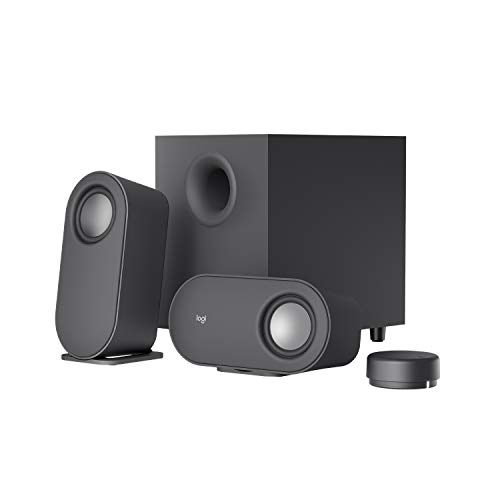
Logitech Z407
Offers a 40 Hz–20 kHz frequency response, delivering clearer highs and tighter lows than the Pebble Plus while staying well below the Z625’s price.
Also considered
Score Analysis
Key score advantages vs. runner-up (Creative Pebble Plus)
Price Range
Logitech Z625
$209.88
Creative Pebble Plus
$52.24
Logitech Z407
$109.99
Nylavee SK400
$35.99

Creative Pebble X Plus
$119.99

Harman Kardon SoundSticks 4.2
$329.95

Razer Nommo V2
$299.99
Creative SBS E2900
$99.99

SteelSeries Arena 7
$191.60

Logitech Z313
$42.99
Edifier G1500 MAX
$119.99
Spec Comparison
TL;DR: The Logitech Z625 is a THX‑certified 2.1 system with 200 W RMS power, a 7‑inch subwoofer, and multiple digital inputs, delivering cinema‑level bass for a desktop price of $220.31.
The standout spec is the 200 W RMS total output, split into 130 W RMS for the subwoofer and 35 W RMS per satellite. Coupled with a THX certification, the system promises studio‑accurate reproduction across a 35 Hz‑20 kHz frequency range. Its satellite drivers measure 63.5 mm (about 2.5 in) and the subwoofer’s 177.8 mm (about 7 in) diaphragm, giving a solid low‑end punch that most rivals can’t match.
Compared with the other ten entries, the Z625 outpaces the Logitech Z407’s modest 20 W RMS total and the Creative Pebble X Plus’s 8 W RMS high‑gain mode. It also offers a larger subwoofer than the Razer Nommo V2’s 5.5‑inch driver and the Edifier G1500’s 4‑inch unit, while its 92 dB satellite SNR beats the SteelSeries Arena 7’s unspecified satellite SNR and the Harman Kardon SoundSticks’ 80 dB overall level. The cable lengths (2 m for audio‑in, power, and satellite‑to‑subwoofer) are on par with the SteelSeries Arena 7, giving you flexibility in desk placement.
User feedback highlights the dramatic volume boost and deep bass that turn a typical gaming rig into a mini‑theater. Reviewers praise the optical input for clean digital audio and the handy control pod on the right satellite. On the flip side, several owners note the subwoofer’s bulk—its 6.5 kg weight and 264 mm height can crowd small desks, and some report tinny mids when cranking the volume. Professional critics also point out the lack of balanced inputs and magnetic shielding, which can cause interference with certain monitors.
Pros
Cons
Best for: Gamers and movie enthusiasts who want powerful, bass‑rich audio and flexible connectivity on a desktop.
Avoid if: You have limited desk space, need a flat, audiophile‑grade response, or prefer a lightweight speaker system.
“Best computer speakers I've ever owned!”
“Booming bass and crystal-clear audio”
TL;DR: The Creative Pebble Plus delivers 2‑inch satellite sound and a 4‑inch down‑firing subwoofer with 8 W RMS output in a compact USB‑powered package for under $60.
What sets this system apart is its 2‑inch full‑range satellite drivers paired with a 4‑inch down‑firing subwoofer, delivering a rated 8 W RMS output and a signal‑to‑noise ratio of ≥ 75 dB. The drivers sit at a 45° angle, aiming sound directly at the listener, while the subwoofer’s passive radiators add a noticeable bass boost despite the modest power envelope.
Compared with the other ten speakers in the roundup, the Pebble Plus shares the same 2‑inch satellite size as the Logitech Z313, but its SNR is a few decibels lower than the Z313’s 80 dB and its peak power (16 W) is far below the Z313’s 50 W. It is lighter than the Creative SBS E2900 and the Logitech Z407, yet heavier than the Nylavee SK400, which weighs just 1.94 lb. Its subwoofer driver matches the 4‑inch size of the Z313 and the Edifier G1500 MAX, but it lacks the larger 5.25‑inch drivers that the Creative SBS E2900 and Logitech Z407 use.
Reviewers consistently praise the clear, distortion‑free audio that the ≥ 75 dB SNR provides, and they love how the minimalist black chassis fits on cramped desks. Professional outlets note the easy plug‑and‑play setup via a 1.2 m USB‑A power cable and a 1.2 m 3.5 mm stereo cable, with a hard‑wired 1.8 m RCA link to the subwoofer. On the downside, users mention the lack of bass or treble EQ knobs, the need for a dedicated USB‑A port, and the three cables that can create a modest amount of desk clutter. The subwoofer’s bass, while present, doesn’t reach the depth of larger 2.1 systems.
The system is a true 2.1‑channel setup with a frequency response of 50 Hz – 20 kHz, offering enough low‑end for casual gaming, video streaming, or desktop music listening. The high‑gain mode switch lets you push the 8 W max power when needed, and the front‑mounted volume knob gives quick level adjustments without software.
Pros
Cons
Best for: Students, professionals, and casual gamers who need a space‑saving, plug‑and‑play speaker upgrade on a modest budget.
Avoid if: You have a large room, want deep audiophile‑grade bass, or lack a free USB‑A port for power.
“Crystal clear sound, no distortion at full volume”
“Best computer speakers till date”
TL;DR: The Logitech Z407 delivers 40 W RMS of 2.1‑channel sound, Bluetooth 5.0 connectivity and a 12‑month battery life for $109.99, making it a solid mid‑range desktop speaker set.
The system’s most eye‑catching spec is its 40 W RMS total power output, split into two 10 W RMS satellite drivers (2.5 in each) and a 20 W RMS subwoofer (5.25 in driver). With a frequency response of 40 Hz – 20 kHz and a maximum SPL of 93 dB, it promises clear highs and respectable bass for a compact desktop setup. Bluetooth 5.0 (BLE) gives a wireless range of up to 20 m, and the included AAA batteries last up to 12 months.
At $109.99, the Z407 sits above the Logitech Z313 in price but adds Bluetooth, a higher RMS output and a larger subwoofer driver. It’s lighter than the Creative SBS E2900, which weighs 10.8 pounds, and its satellite drivers are smaller (2.5 in vs. the SBS E2900’s 3 in drivers). Compared with the Creative Pebble X Plus, the Z407 offers a dedicated subwoofer rather than a single‑enclosure design, giving it deeper low‑end response.
Reviewers consistently praise the “rich bass” and “bright highs” that stem from the 20 W RMS subwoofer and the >75 dB signal‑to‑noise ratio. Professional reviewers note the wireless control dial as a handy desktop remote, and users love the straightforward plug‑and‑play setup with included satellite stands. The most common criticism is subwoofer distortion when pushed to maximum volume, and a few users mention that the 1.86 m satellite cable can feel short for larger desks.
Pros
Cons
Best for: Buyers in the mid price range seeking the best quality at that price point
Avoid if: You need advanced features or professional‑grade performance
“Powerful audio performance with rich lows and bright highs”
“The ease of setup and plug‑and‑play functionality is a major plus”
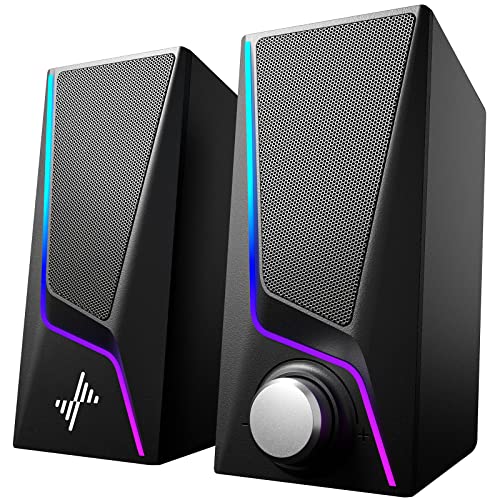
TL;DR: The Nylavee SK400 delivers 28 W of USB‑powered 2.1 sound with a 3‑inch subwoofer and six RGB lighting modes for just $35.99, earning a solid 4.4‑star rating from over 5,600 reviewers.
The standout spec is its 28 W total output power paired with a 3‑inch (76 mm) woofer, giving the SK400 a punchy bass response that many users describe as “bass‑rich” for the price. Its signal‑to‑noise ratio of 73 dB and 4 Ohms impedance keep the audio clear, while six customizable lighting modes add a gamer‑friendly glow.
At $35.99, the SK400 is cheaper than the Logitech Z313 and considerably lighter than the Creative Pebble Plus, which weighs over five pounds. Compared with the Creative SBS E2900, the SK400 lists fewer technical details, but it still offers a solid feature set for a budget tier. Its SNR of 73 dB is lower than Logitech’s 80 dB, so audiophiles seeking the cleanest signal may notice a slight difference.
Reviewers consistently praise the plug‑and‑play USB setup and the eye‑catching RGB lighting, calling the design “modern” and the audio “immersive.” Professional reviewers highlight the enhanced bass and compact desktop footprint. The main complaints revolve around the lack of Bluetooth connectivity and a volume that can feel low without external EQ.
The system runs on a 5 V USB input, eliminating the need for a wall adapter, and it includes an 18‑month warranty. Touch‑controlled lighting and a volume knob let you make quick on‑desk adjustments, and the dimensions (107 mm depth × 82 mm height × 178 mm width) keep it easy to fit on most workspaces.
Pros
Cons
Best for: Budget‑conscious buyers seeking a reliable entry‑level option
Avoid if: You have limited desk space or need portability
“Great sound for the price”
“Easy to set up”
TL;DR: The Creative Pebble X Plus offers Bluetooth 5.3, 8 W RMS output and vibrant RGB lighting in a compact 179 mm‑high desktop package, but its modest bass and dual‑cable power setup may limit some users.
What really stands out is the built‑in Bluetooth 5.3 and the ability to display up to 16.8 million colors via six RGB presets. The system measures just 179 mm tall, 178 mm deep and 464 mm wide, so it fits neatly on a clutter‑free desk while still delivering 8 W RMS (16 W peak) in High Gain mode.
Compared with other 2.1 sets in this roundup, the Pebble X Plus provides a lower RMS output than the Logitech Z407’s 20 W total RMS, but it adds Bluetooth where the Logitech model relies on a wired connection. Its satellite drivers are 2 inches, a touch smaller than the Edifier G1500 MAX’s 2.5‑inch drivers, and its subwoofer’s 3.5‑inch driver is also smaller than Edifier’s 4‑inch unit. The signal‑to‑noise ratio of ≥75 dB is solid, though a few competitors list ≥80 dB, indicating a modest edge for those with quieter environments.
Users consistently note a clear upgrade over built‑in laptop speakers and appreciate the tiny footprint. However, many mention the need for both a USB‑A power source and a separate 3.5 mm audio jack, which can be inconvenient on newer laptops. The subwoofer’s 3.5‑inch driver delivers decent punch for its size, but audiophiles looking for deep bass may find it lacking.
From a technical standpoint, the system features front‑firing, 45°‑angled 2‑inch satellite drivers, a frequency response of 50 Hz – 20 kHz, and a High Gain mode that pushes the RMS power to 8 W when you need extra volume. The included cables (1.2 m USB‑A, 1.2 m AUX, 1.2 m USB‑C, and 1.8 m RCA) keep the setup tidy, though the cable management comes across as “hardwired, messy.”
Pros
Cons
Best for: Most users looking for a well‑reviewed, reliable mainstream option
Avoid if: You're shopping on a tight budget — it's priced at $119.99
“Crystal clear sound, no distortion at full volume”
“Best computer speakers till date”
TL;DR: The Harman Kardon SoundSticks 4 deliver 140 W RMS of clear 2.1‑channel sound in a striking transparent design, but their $329.95 price and older Bluetooth 4.2 may deter budget‑focused buyers.
The system delivers 140 W total RMS power, paired with a 5.25‑inch down‑firing subwoofer driver and a frequency response of 40 Hz–20 kHz. A signal‑to‑noise ratio of 80 dB gives decent clarity, and the built‑in digital amplifier powers the two satellite speakers, each housing eight full‑range transducers.
Compared with the other ten entries, the SoundSticks 4 sit near the top of the power curve—only the SteelSeries Arena 7’s 150 W RMS exceeds it. Their 80 dB SNR is lower than the Razer Nommo V2’s 98 dB and the Logitech Z625’s subwoofer SNR of 105 dB, but higher than the Logitech Z407’s “>75 dB” figure. At 9.8 pounds, they are lighter than the heavyweight Logitech Z625 (18.1 pounds) yet a bit heftier than the compact Z407 (≈8.8 pounds). Some users note that Bluetooth 4.2 is older than the Razer Nommo V2’s Bluetooth 5.3, a minor connectivity trade‑off.
Reviewers consistently applaud the iconic clear‑acrylic dome satellites for turning a desk into a mini‑studio, and they highlight the deep bass that the 5.25‑inch subwoofer delivers. Users also praise the reliable Bluetooth pairing and the touch‑control surface. Consumer feedback points to downsides: lack of modern digital inputs such as USB‑C or optical, a sizable subwoofer that demands solid placement, and a premium price tag.
Pros
Cons
Best for: Audiophiles and enthusiasts seeking premium sound quality and advanced features
Avoid if: You're shopping on a tight budget — it's priced at $329.95
“Best computer speakers ever”
TL;DR: The Razer Nommo V2 packs 65 W RMS power, THX Spatial Audio and 5.5″ bass with vibrant RGB, but its $299.99 price and cable‑heavy design suit gamers who value immersion over minimalism.
At the heart of the Nommo V2 are two 3‑inch full‑range satellite drivers and a 5.5‑inch down‑firing subwoofer, delivering a combined RMS output of 65 W. The system’s 98 dB signal‑to‑noise ratio and 98 dB maximum SPL mean the sound stays clear even at higher volumes, while the 40 Hz–20 kHz frequency response covers the full audible spectrum.
Compared with the other ten speakers in this roundup, the Nommo V2 stands out for its THX Spatial Audio virtual 7.1 surround and Bluetooth 5.3 connectivity with a 10 meter range—features that competitors don’t list. Its rear‑projection Razer Chroma RGB lighting also adds a visual flair that most peers lack, though it does increase the overall footprint.
Reviewers consistently praise the crisp mids, punchy highs and the “room‑filling” bass from the 5.5‑inch subwoofer, noting that the immersive surround makes single‑player games and movies feel more engaging. Common complaints focus on the lack of an auto‑power‑off function, the absence of a built‑in headphone jack, and the amount of cabling required for power, USB and speaker interconnects, which can look cluttered on tighter desks.
Pros
Cons
Best for: PC gamers and multimedia enthusiasts who want immersive audio, virtual surround and RGB lighting.
Avoid if: You have a tight budget, a small‑desk setup, or need precise, low‑latency audio for competitive esports.
“The 5.5” subwoofer is described as “room‑thumping” and capable of delivering physical feedback.”
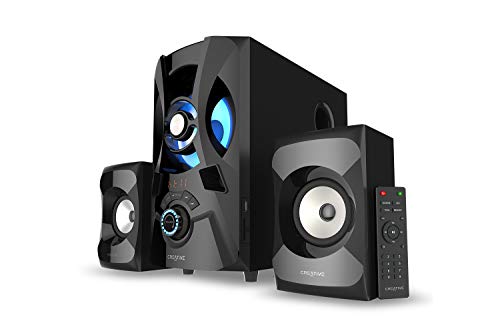
TL;DR: The Creative SBS E2900 delivers 60 W RMS power, Bluetooth 5.0, and RGB lighting for $99.99, making it a feature‑rich, budget‑friendly 2.1 desktop speaker set.
The system’s standout spec is its 60 W total RMS output, split into 15 W per satellite and 30 W for the 5.25‑inch front‑firing subwoofer. A 3‑inch satellite driver and a frequency response of 50 Hz – 20 kHz give a full‑range sound that many entry‑level users find surprisingly loud. The Bluetooth 5.0 module supports ADP and AVRCP, and the unit adds 8 RGB lighting effects plus a four‑digit orange‑backlit display.
Compared with the other ten speakers, the SBS E2900 is heavier than the Logitech Z313 and the ultra‑light Nylavee SK400, but its 3‑inch satellite drivers are larger than the 2.5‑inch drivers on the Logitech Z407 and the 2‑inch driver on the Creative Pebble Plus. It also offers more connectivity options than the Nylavee SK400, which lists fewer inputs. However, the 1.3 m satellite speaker cable is shorter than the longer cables some rivals provide, limiting placement flexibility.
Users consistently praise the loud, bass‑rich sound and the convenience of Bluetooth, USB/SD playback, and FM radio. Professional reviewers note the stable Bluetooth 5.0 implementation and the rarity of FM radio in this price range. The most common complaints focus on the blinking orange 7‑segment display, the short satellite cables, and the lack of higher‑quality Bluetooth codecs such as aptX or AAC.
Pros
Cons
Best for: Entry‑level buyers or those on a tight budget
Avoid if: Audiophiles or users who need premium Bluetooth codecs and flawless display aesthetics
TL;DR: The SteelSeries Arena 7 delivers 150 W RMS power, a 6.5‑inch down‑firing subwoofer and 4‑zone RGB lighting, but its premium $199.72 price and Xbox USB quirks may limit budget‑focused buyers.
The Arena 7’s headline is its 150 watts RMS output paired with a 6.5‑inch organic‑fiber subwoofer and 2‑way satellite drivers (3‑inch woofer, 0.75‑inch tweeter). This combination produces the “deep, punchy bass” and “clear mids and highs” that professional reviewers highlight as a solid gaming‑focused soundstage.
At $199.72 it sits at the higher end of the 2.1 speaker market, making it pricier than many of the other eleven options in this roundup. Its total system weight of 11,000 g also makes it heavier than several competitors, while the 2000 mm speaker‑to‑subwoofer and power cables match the longer lengths other rivals use.
User sentiment repeatedly praises the dramatic audio upgrade and the hassle‑free Bluetooth 5.0 pairing, noting the “rich bass” and “eye‑catching lighting” as standout features. However, everyday owners report Xbox Series X USB compatibility issues, a volume dial that resets to default after power‑off, and RGB lighting requires PrismSync software to turn off.
Beyond raw power, the Arena 7 offers a full connectivity suite: 3.5 mm aux, optical (TOSLINK), USB‑C for data and power, and Bluetooth 5.0. The 16.8 million‑color, 4‑zone reactive RGB lighting can sync with on‑screen action via PrismSync, while the SteelSeries Sonar app provides a 10‑band EQ, spatial audio and echo cancellation. The system ships with a 1‑year limited warranty.
Pros
Cons
Best for: Those prioritizing quality and willing to pay for premium performance
Avoid if: You're shopping on a tight budget — it's priced at $199.72
“Transformed my desk setup”
“Best sound I’ve ever had on a desktop system”
TL;DR: The Logitech Z313 offers a 2‑inch satellite pair and a 4‑inch subwoofer delivering 25 W RMS at a budget‑friendly $42.99, with simple 3.5 mm plug‑and‑play connectivity and solid build quality.
The standout hardware features a 4‑inch down‑firing subwoofer paired with two 2‑inch metal satellite drivers, together providing a total RMS output of 25 W (15 W to the subwoofer and 5 W per satellite). The system’s signal‑to‑noise ratio of 80 dB and total harmonic distortion of just 0.1 % promise clean, low‑noise playback across the 48 Hz–20 kHz frequency range.
Compared with the other ten speakers in this roundup, the Z313’s subwoofer is larger than the 3‑inch woofer that Nylavee SK400 uses, and its 80 dB SNR beats the SK400’s 73 dB rating. Its 25 W RMS power also tops the Creative Pebble Plus, which lists an RMS output of 8 W, though the Z313 is heavier than the SK400’s 1.94 lb but lighter than the Creative SBS E2900’s 10.8 lb. Driver‑size wise it matches the Creative Pebble Plus’s 4‑inch subwoofer and 2‑inch satellites, yet it offers more power than that model.
Users consistently note a clear step up from built‑in laptop speakers, praising the compact satellite design and the handy headphone jack. Professional reviewers point out the active crossover and the tight bass from the 15 W subwoofer as strong points. Common complaints revolve around the lack of independent bass/treble knobs, a volume knob that doesn’t affect headphone output, and occasional hardware quirks like a power button that may not stay engaged.
Beyond the audio specs, the Z313 runs on a standard AC 120 VAC, 60 Hz power supply, presents a straightforward 3.5 mm stereo input, and carries a 90‑day limited warranty. Its dimensions—254 mm depth, 279.4 mm height, and 254 mm width—make it a space‑saving choice for desks or small rooms.
Pros
Cons
Best for: Entry-level buyers or those on a tight budget
Avoid if: You need advanced features or professional‑grade performance
“deep and tight bass”
“solid budget 2.1 speaker system”
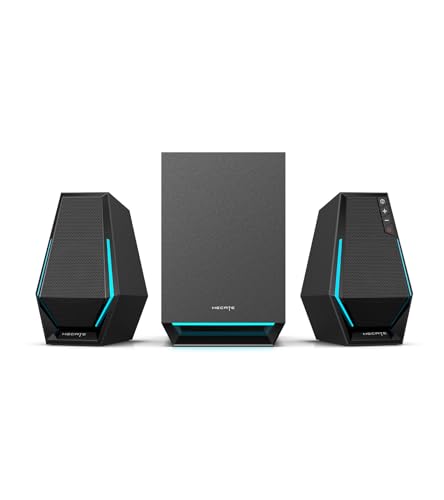
TL;DR: The Edifier G1500 MAX delivers 30 W RMS power, a 4‑inch wooden subwoofer, Bluetooth 5.3 and vivid RGB lighting, making it a solid mid‑range 2.1 desktop set for gamers and remote workers.
At the heart of the G1500 MAX is a 30 W RMS output that drives dual 2.5‑inch satellite drivers and a 4‑inch wooden subwoofer, covering a frequency range from 60 Hz to 20 kHz. The system also includes a built‑in digital amplifier with DSP and an electronic crossover, helping to keep highs, mids and lows balanced. Bluetooth 5.3 provides low‑latency streaming up to 10 m (33 ft), while the RGB panel offers 16.8 million color options and ten preset lighting effects.
Compared with the other ten speakers in this roundup, the G1500 MAX sits at a higher price point than the Logitech Z313 and Creative Pebble Plus, both of which lack Bluetooth and RGB lighting. It also packs more connectivity—USB‑C, USB‑A and a 3.5 mm AUX—where many peers list fewer input options. While the Logitech Z407 includes a larger 5.25‑inch subwoofer, the G1500 MAX compensates with a wooden cabinet that many reviewers say adds warmth to the bass response.
Professional reviewers praise the system’s clear soundstage, balanced mids and tight bass, especially for a compact desktop footprint. Everyday users echo this sentiment, noting the loud, distortion‑free performance in small rooms and the rock‑solid Bluetooth connection. The most common complaints focus on the downward‑firing bass port, which feels less punchy on carpeted floors, and the absence of a dedicated volume knob on the subwoofer, requiring adjustments via the satellite controls or source device. The RGB lighting, while eye‑catching, doesn't offer app control.
Pros
Cons
Best for: Gamers who need low‑latency audio, students and remote workers who want a balanced 2.1 system with eye‑catching lighting.
Avoid if: You require app‑controlled RGB lighting, flexible speaker placement without a fixed satellite cable, or a quieter bass response on carpet.
“Perfect for small rooms – loud and clear without distortion”
“Bass is surprisingly deep for such a small subwoofer”
Breakdown
Logitech Z625
Pros
Creative Pebble Plus
Pros
Logitech Z407
Pros
Nylavee SK400
Pros
Based on scoring data and product specs
Personalized picks
Best Overall Pick
Logitech Z625
Best OverallBest for: Audiophiles and enthusiasts seeking premium sound quality and advanced features
Creative Pebble Plus
Best for: Budget-conscious buyers seeking a reliable entry-level option
$52.24-$157.64 vs winner
Skip Edifier G1500 MAX if…
You have limited desk space or need portability
The Logitech Z625 takes the top spot thanks to its THX certification, a massive 200 W RMS output, and a wide 35 Hz‑20 kHz frequency response that delivers deep bass from its 177.8 mm subwoofer and clear mids from its 63.5 mm satellite drivers.
If you need a compact desk solution that won’t break the bank, the Creative Pebble Plus lands as the runner‑up. Its 2.1‑channel design packs a 16 W peak (8 W RMS) output into a USB‑powered package, and the 50.8 mm satellite drivers paired with a 101.6 mm down‑firing subwoofer give surprisingly full sound for a system that weighs just 2.54 kg and costs $52.24.
For tighter budgets, the Nylavee SK400 shines at $35.99 as the most affordable option with decent audio for casual listening. The Logitech Z407, priced at $109.99, offers a solid mid‑range balance of power and connectivity for a typical home office. If premium aesthetics and performance matter most, the Harman Kardon SoundSticks 4‑2.1 stand out at $329.95, delivering a striking design and high‑end sound.
Pick the Logitech Z625 now and enjoy cinema‑grade audio from your computer.
The Logitech Z625 costs $220.31, which is about $168 more than the $52.24 Creative Pebble Plus, but it brings TH X certification, a much larger 177.8 mm subwoofer and a total RMS power of 200 W versus the Pebble’s modest 8 W RMS. If you value high‑output, cinema‑grade sound and the ability to connect multiple sources at once, the price premium is justified.
Please sign in to leave a review
No reviews yet. Be the first to review!
