⚡ Quick Answer
If you’re hunting for the best bang for your buck, the Chuwi Hi10 X2 8GB draws immediate attention. At $259.99 it carries a 4.2‑star rating from 85 reviewers, weighs just 1.34 lb, and packs 8 GB of RAM, a 256 GB SSD and a 10.1‑inch HD touchscreen. Its magnetic detachable keyboard and included stylus give it laptop‑like flexibility without the price tag of a full‑size notebook.
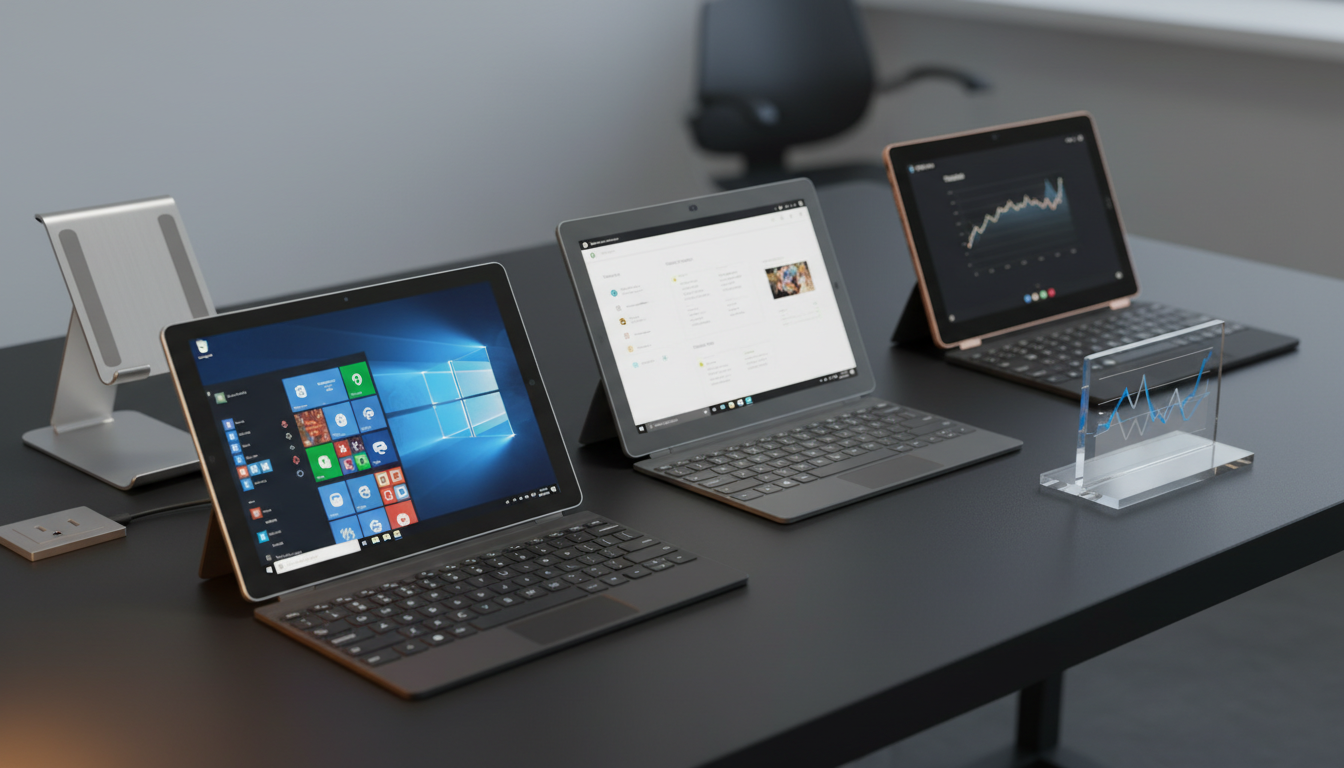
We review five 2‑in‑1 Windows tablets across three price tiers. The budget corner offers the Sztps Windows Tablet at $175.99 and the Naxa NID‑1080 at $211.61, both with 10.1‑inch screens and modest RAM (6 GB and 4 GB respectively). Moving up, the mid‑range Tpspad Windows Tablet sits at $249.99, features an 11.6‑inch display, 8 GB RAM and a 256 GB drive, but tips the scales at about 3.46 lb. The premium tier includes the Chuwi Hi10 X2 8GB at $259.99 and its sibling, the Chuwi Hi10 X2 8GB 2‑in‑1, priced at $289.99, both delivering a sleek 10.1‑mm profile and connectivity.
Below we break down each model’s strengths, quirks, and ideal use cases, helping you match a tablet to your workflow.

Chuwi Hi10 X2 8GB
Offers solid performance with a 3400 mAh battery at a $259.99 price, delivering strong value.

Naxa NID-1080
Ideal for entry‑level buyers or tight‑budget users, the Naxa NID‑1080 comes in at $211.61—about $48 less than the Chuwi Hi10 X2.

Tpspad Windows Tablet
Stands out with a 6.9 in tall form factor, offering a larger screen footprint while keeping a mid‑range price of $249.99.
Also considered
Score Analysis
Key score advantages vs. runner-up (Naxa NID-1080)
Price Range
Chuwi Hi10 X2 8GB
$259.99
Naxa NID-1080
$228.10
Tpspad Windows Tablet
$249.99
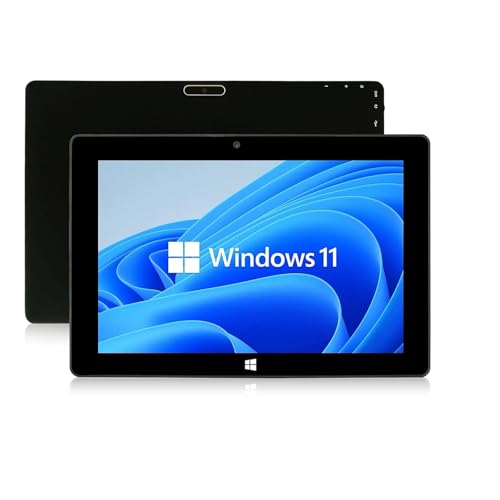
Sztps Windows Tablet
$179.99
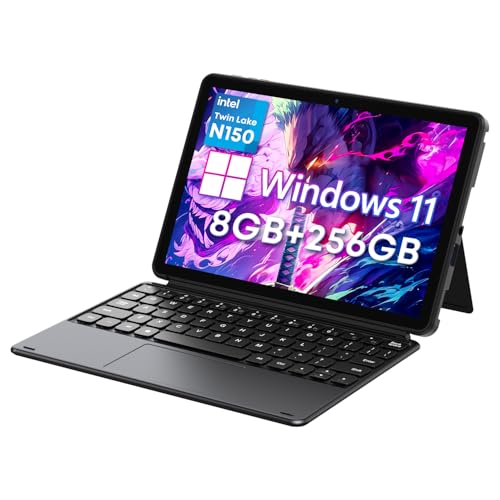
Chuwi Hi10 X2 8GB 2-in-1
$289.99
Spec Comparison
TL;DR: The Chuwi Hi10 X2 8GB packs a detachable magnetic keyboard, a 256 GB SSD and a 10.1‑inch HD screen into a 1.34 lb metal tablet that runs Windows 11, but its older i3 CPU and modest battery may limit heavy use.
The standout feature of the Chuwi Hi10 X2 is the magnetic detachable keyboard, which comes included and turns the 10.1‑inch HD tablet into a ready‑to‑type Windows 11 laptop. At just 1.34 lb (610 g) the device feels featherlight, and a 256 GB M.2 SATA SSD gives you fast boot‑up and plenty of room for apps.
Compared with the four other tablets in this roundup, the Hi10 X2 is among the lightest – only the Sztps model (about 1.2 lb) is a shade lighter, while the Tpspad (3.46 lb) and Naxa (2.42 lb) feel substantially heavier. Its 3400 mAh battery falls short of the 5000 mAh pack in the Tpspad and the 6000 mAh cells in both the Naxa and Sztps, which may affect endurance. On the performance side, the 3.9 GHz Intel Core i3‑10100Y outpaces the 2.70 GHz CPU in the Tpspad, the 2.8 GHz chip in the Naxa, and the 1.10 GHz processor in the Sztps, while the 8 GB of LPDDR3 RAM matches the Tpspad and exceeds the 4 GB and 6 GB in the Naxa and Sztps respectively. Storage‑wise, the Hi10 X2’s 256 GB SSD equals the Tpspad’s capacity and doubles the 128 GB in the Sztps.
User reviews repeatedly praise the solid metal chassis and the convenience of the included keyboard and stylus, noting that web browsing, Office work and media playback feel smooth enough for daily use. Professional reviewers, however, point out that the dual‑core i3‑10100Y uses an older 14 nm process and can feel sluggish under heavier multitasking, and they criticize the 1280 × 800 resolution as modest for media consumption or detailed work. The 2 MP front and 5 MP rear cameras are adequate for video calls but far from high‑quality photography.
The tablet sports an anti‑glare IPS panel with a 16:10 aspect ratio and a 73 % screen‑to‑body ratio, delivering decent viewing angles for on‑the‑go use. Wi‑Fi 6 (802.11ax) and Bluetooth 5.3 promise fast, reliable wireless connections, and the integrated Intel UHD Graphics 615 runs up to 1 GHz for basic graphics tasks. An M.2 SATA slot lets you upgrade the SSD later, while the Micro HDMI port supports 4K 60 Hz output for occasional external‑display work.
Pros
Cons
Best for: Students, travelers, and casual Windows users who value a lightweight 2‑in‑1 with a built‑in keyboard and solid SSD storage.
Avoid if: You need high‑performance CPU, high‑resolution screen, or long battery life for gaming, video editing, or heavy multitasking.
TL;DR: The Naxa NID-1080 offers a 10.1‑inch IPS touchscreen, detachable keyboard and 6000 mAh battery in a 2.42‑lb package for basic Windows 11 tasks at a budget price.
The standout spec is the 2.8 GHz Intel Gemini Lake N4020 processor paired with 4 GB RAM, giving the tablet enough juice for web browsing, document editing and media playback. Its 10.1‑inch IPS LCD displays an 800 × 1280 resolution, and the device packs a 6000 mAh battery that the manufacturer says lasts up to 5 hours. At 2.42 lb, it’s sturdier than the 1.2‑lb Sztps Windows Tablet but lighter than the 3.46‑lb Tpspad model.
Compared with its peers, the Naxa’s processor speed outpaces the Sztps’s 1.10 GHz and the Tpspad’s 2.70 GHz, while its battery capacity matches the Sztps and exceeds the Tpspad’s 5000 mAh. It offers 64 GB eMMC storage, versus 128 GB or 256 GB on the other tablets, and its 4 GB RAM falls short of the 6 GB and 8 GB found elsewhere. The device includes a USB‑C port, a USB 3.0 host, and a micro‑USB interface for versatile connectivity.
Reviewers appreciate the included detachable keyboard, which turns the tablet into a lightweight laptop, and the bundled Bluetooth headphones and travel pouch that add real‑world value for on‑the‑go use. However, users note that the “up to 5 hours” battery life can feel short for a full day of work, and the low‑resolution 800 × 1280 screen may look less sharp when watching high‑definition video. Its modest 4 GB RAM also limits heavy multitasking.
Under the hood, the Naxa runs Windows 11, supports SDHC/SDXC cards for storage expansion, and handles common audio (MP3, FLAC, AAC) and video (MP4, MKV, MOV) formats. Connectivity includes Bluetooth 4.0 and 802.11 b/g/n Wi‑Fi, while the dual 1 W speakers provide basic audio output for casual listening.
Pros
Cons
Best for: Entry‑level buyers or those on a tight budget
Avoid if: You need advanced features or professional‑grade performance
TL;DR: The Tpspad Windows Tablet offers an 11.6‑inch Full HD IPS screen, detachable keyboard, 8 GB RAM and 256 GB storage for $249.99, but its 3‑5 hour battery and Celeron CPU limit heavy use.
This 2‑in‑1 packs an 11.6‑inch 1920 × 1080 IPS display and a built‑in Type Cover, letting you switch from tablet to laptop in a snap. At 3.46 lbs it feels solid, while 8 GB of RAM and 256 GB of storage give you more headroom than many rivals.
Compared with the other four tablets, the Tpspad is the heaviest (all peers weigh 1.34 lb to 2.42 lb). Its 5000 mAh battery sits between the 3400 mAh cells in the Chuwi models and the 6000 mAh packs in the Naxa and Sztps units. The 2.70 GHz Celeron processor is slower than the Chuwi’s 3.9 GHz chip but a touch quicker than the Sztps’s 1.10 GHz CPU, and it outpaces the Naxa’s 2.8 GHz in raw clock speed. RAM is the highest at 8 GB, matching the Chuwi but beating the Naxa’s 4 GB and Sztps’s 6 GB.
Professional reviewers praise the crisp IPS panel and the convenience of the detachable keyboard, noting that Windows 11 runs smoothly for web browsing and streaming. Everyday users echo the sentiment, especially appreciating the HDMI and USB‑C ports for external displays. However, the short 3‑5 hour battery window and the modest Celeron chip draw consistent criticism, and the 3.3/5 star rating reflects mixed satisfaction.
The tablet supports dual‑band Wi‑Fi (2.4 GHz / 5 GHz) and Bluetooth 4.0, includes a gravity sensor for orientation, and offers HDMI, USB‑C, 3.5 mm audio jack and a MicroSD slot for expansion.
Pros
Cons
Best for: Students, travelers, and casual home users who need a portable Windows device for light productivity.
Avoid if: You require long battery life, high‑performance processing, or a ultra‑lightweight tablet for intensive work.
TL;DR: The Sztps Windows Tablet packs a 10.1‑inch IPS display, 6 GB RAM and a 6000 mAh battery into a 1.2‑lb metal shell, offering a lightweight 2‑in‑1 experience for budget‑conscious users.
The standout spec is the 6000 mAh battery that delivers roughly 8.5 hours of mixed‑use time, paired with a 10.1‑inch IPS panel at 800 × 1280 resolution. At 1.10 GHz, the Intel Celeron N4120 processor and 6 GB of RAM give you enough juice for web browsing, Office work and media playback, while the 128 GB internal storage (expandable via microSD) keeps your files within reach.
Compared with the other four tablets in this roundup, the Sztps weighs notably less at 1.2 pounds, while the Naxa NID‑1080 weighs 2.42 pounds and the Tpspad tips the scales at over 3 pounds. Battery capacity matches the Naxa’s 6000 mAh but falls short of the Tpspad’s 5000 mAh, and the Sztps’s 1.10 GHz clock speed is lower than the Naxa’s 2.8 GHz and the Chuwi Hi10 X2’s 3.9 GHz, meaning it won’t sprint through demanding tasks. It also offers less RAM than the Chuwi models (8 GB) and half the storage of the Tpspad’s 256 GB, positioning it as the most budget‑friendly but less performance‑heavy option.
Everyday users appreciate the tablet’s quick boot‑up and the premium feel of its metal chassis; professional reviewers echo that the build quality resists fingerprints. The detachable keyboard adds true 2‑in‑1 flexibility, and the Micro HDMI and USB 3.0 ports cover basic connectivity needs. However, reviewers consistently call out an overly sensitive trackpad and a keyboard/stand mechanism that may feel unstable under pressure. The 128 GB storage and Intel UHD Graphics 600 also limit heavy‑media editing or gaming, and the modest screen brightness can struggle in bright environments.
Pros
Cons
Best for: Entry-level buyers or those on a tight budget
Avoid if: You want the best value‑per‑dollar in its price range
TL;DR: The Chuwi Hi10 X2 2‑in‑1 packs a 10.1‑inch IPS display, 8 GB RAM, 256 GB SSD and a detachable magnetic keyboard into a 10.1 mm, 610 g aluminum chassis for $289.99.
The tablet’s most eye‑catching spec is its ultra‑thin 10.1 mm profile combined with a full‑metal aluminum alloy body that weighs just 610 g. It includes a detachable magnetic keyboard and a 145° adjustable stand, turning the device into a compact laptop without extra accessories.
Against the four other contenders, the Hi10 X2 matches the original Chuwi Hi10 X2 on weight (610 g) and battery capacity (3400 mAh), but it offers a faster processor clock of up to 3.9 GHz—well above the Tpspad’s 2.70 GHz, Naxa’s 2.8 GHz and Sztps’s 1.10 GHz. Its 8 GB of LPDDR3 RAM and 256 GB SATA SSD also outpace the Naxa’s 4 GB and the Sztps’s 6 GB, while matching the Tpspad’s 8 GB. Battery capacity is lower than the 5000 mAh found in the Tpspad and the 6000 mAh units in both Naxa and Sztps, which translates to roughly 7 hours of mixed use according to reviewers.
Professional reviewers praise the premium feel of the metal chassis and the convenience of the bundled magnetic keyboard, noting that Windows 11 runs smoothly for everyday tasks. Consumer feedback echoes the portability and value of the included stand, but repeatedly calls out the 1280 × 800 HD resolution as a downside for detailed work, and mentions that the 3400 mAh battery often drops to about 6‑8 hours, with fan noise becoming noticeable under sustained load.
The device also ships with Wi‑Fi 6 (802.11ax), Bluetooth 5.3, a micro HDMI port that supports 4K, two USB‑C 3.2 Gen‑1 ports (one full‑featured) and a USB‑A 3.2 Gen‑1 slot, giving it a desktop‑class connectivity suite in a tablet‑sized package.
Pros
Cons
Best for: Those prioritizing quality and willing to pay for premium performance
Avoid if: You're shopping on a tight budget — it's priced at $289.99
Breakdown
Chuwi Hi10 X2 8GB
Pros
Naxa NID-1080
Pros
Tpspad Windows Tablet
Pros
Cons
Sztps Windows Tablet
Pros
Cons
Based on scoring data and product specs
Personalized picks
Best Overall Pick
Chuwi Hi10 X2 8GB
Best ValueBest for: Those prioritizing quality and willing to pay for premium performance
Naxa NID-1080
Best for: Entry-level buyers or those on a tight budget
$228.10-$31.89 vs winner
Skip Chuwi Hi10 X2 8GB 2-in-1 if…
You're shopping on a tight budget — it's priced at $289.99
We’re naming the Chuwi Hi10 X2 8GB the clear winner. It packs 8 GB of LPDDR3 RAM and a fast 256 GB M.2 SATA SSD, giving you desktop‑class responsiveness in a 10.1‑inch IPS display. The tablet also ships with a magnetic detachable keyboard, a protective case and a stylus right out of the box, while its Wi‑Fi 6 and Bluetooth 5.3 radios keep you connected at the latest standards—all for $259.99.
The Naxa NID‑1080 lands as the runner‑up, especially if you need longer battery life for a full day of work or travel. Its 6000 mAh battery delivers up to 5 hours of use, and the device still manages a lightweight 2.42 lb profile at a budget‑friendly $211.61.
Grab the Chuwi Hi10 X2 8GB now and enjoy a full‑featured 2‑in‑1 Windows tablet that won’t break the bank.
The Chuwi Hi10 X2 8GB stands out with an Intel Core i3‑10100Y processor, 8 GB of LPDDR3 RAM and a fast 256 GB SATA SSD, all for $259.99. Those specs give it a clear edge in speed and storage over the other models in the roundup.
No reviews yet — be the first to share your experience.
Please sign in to leave a review