⚡ Quick Answer
Choosing a 4K streaming device that includes a wired Ethernet port can keep your picture smooth when the Wi‑Fi gets crowded. We’ve lined up five contenders, covering the budget, mid‑range and premium segments, so you can see exactly what each price tier brings to the table.
The Roku Ultra leads the budget class at $79.00, has a 4.5‑star rating from 7,366 reviewers, and packs 2 GB of RAM plus Gigabit Ethernet for rock‑solid streaming. Right behind it, the Dune HD AV1 also sits in the budget range at $99.00, offers 2 GB RAM, 16 GB storage and a 10/100 Mbit/s Ethernet link, and weighs just 0.44 lb. Stepping up, the It's Brazilian onn 4K Pro costs $100.00, carries a 4.4‑star rating from 27 users, and includes 3 GB RAM with a full Ethernet port. In the premium tier, the Formuler Z10 ($114.00) and TiVo MINI VOX ($249.99) round out the list, with the latter earning a 4.2‑star score from 556 reviews and featuring HDMI 2.0 and a 0.78‑lb chassis.
Read on to discover how each device’s specs and pricing stack up for your streaming needs.

Roku Ultra
Its compact depth of 127 mm lets it sit discreetly behind any TV, contributing to its value and feature set that earned it top marks.
It's Brazilian onn 4K Pro
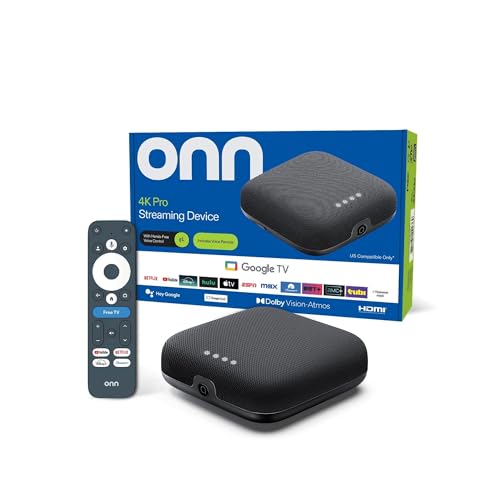
Ideal for home or office users who want balanced features, it costs $100, about $21 more than the Roku Ultra.

Formuler Z10
With an ultra‑thin 16.5 mm profile, the Formuler Z10 delivers premium performance in a sleek form factor that the other picks don’t match.
Also considered
Score Analysis
Key score advantages vs. runner-up (It's Brazilian onn)
Price Range
Roku Ultra
$79.00
It's Brazilian onn 4K Pro
$100.49
Formuler Z10
$124.99

TiVo MINI VOX
$242.99
Dune HD AV1
$89.00
Spec Comparison
TL;DR: The Roku Ultra 2024 streams 4K HDR at 60 fps, adds a 30% speed boost, includes gigabit Ethernet, and retails for $79.00, making it a fast, feature‑rich budget choice.
The standout spec is the advertised 30% faster performance compared with prior Roku models, which includes 2 GB of RAM and 4 GB of internal storage. Coupled with HDMI 2.1, Dolby Vision at 60 fps, HDR10+, and Dolby Atmos, it delivers a cinema‑grade picture and sound experience while drawing just 3‑4 W for 1080p playback.
Against the four other devices in this roundup, the Ultra is lighter at roughly 0.04 lb versus Dune HD AV1’s 0.44 lb and the Brazilian onn 4K Pro’s 2.0 lb. It’s deeper than Dune’s 105 mm chassis but offers a gigabit Ethernet port that the Brazilian onn lists only as “yes” without speed detail, while the Formuler Z10 and TiVo MINI VOX don’t specify Ethernet at all. RAM matches Dune and Formuler, but falls short of the Brazilian onn’s 3 GB, and its storage is smaller than Dune’s 16 GB and the Brazilian onn’s 32 GB.
Professional reviewers praise the Ultra’s lightning‑fast app launches and smooth 4K streaming over Wi‑Fi 6, noting the premium Voice Remote Pro with backlit buttons, USB‑C charging, a finder feature, and a headphone jack for private listening. Everyday users echo the speed praise but flag occasional Wi‑Fi range limits in larger homes and the inconvenience of the barrel‑style power connector. The device draws low power for HD content, keeping it quiet.
Pros
Cons
Best for: Budget‑friendly cord‑cutters who want fast 4K streaming with wired Ethernet and a premium remote.
Avoid if: You rely heavily on Apple AirPlay 2/HomeKit or need the widest possible Wi‑Fi coverage without a wired connection.
TL;DR: The It’s Brazilian onn 4K Pro streams true 4K HDR with Dolby Vision and Dolby Atmos, adds Wi‑Fi 6 and Ethernet, and packs 3 GB RAM plus 32 GB storage for $100.
The standout spec is its native 4096 × 2160 resolution paired with HDR10, HDR10+ and Dolby Vision, delivering true 4K HDR at up to 60 fps and 60 Hz refresh. Audio isn’t left behind either – Dolby Atmos and Dolby Digital Plus come built‑in, and the Android TV 12/Google TV platform gives you the full Google Assistant experience.
Compared with the four other contenders, the onn 4K Pro is noticeably heavier than the Roku Ultra (under 0.04 lb) and the Dune HD AV1 (about 0.44 lb). It also outpaces them on memory – 3 GB RAM versus 2 GB on Dune, Formuler Z10 and Roku – and doubles the internal storage of Dune (16 GB) and triples Roku’s 4 GB. While the TiVo MINI VOX lists a 0.78‑lb chassis, it still trails the onn’s 2.0‑lb build, which many users find sturdy for a set‑top box. All five models include an Ethernet port, but the onn 4K Pro adds Wi‑Fi 6 alongside older Wi‑Fi 5 and Wi‑Fi 4, a newer wireless standard than the older Wi‑Fi versions listed for the peers.
Users rave about the low price, true 4K HDR performance and the convenience of a built‑in Google Assistant hub. Professional reviewers call it “a $50 streamer that rivals $100‑priced competitors,” noting the value of Dolby Vision at this price point. The most common criticism points to the 2019‑era Amlogic S905X4 processor, which raises concerns about future software updates, and the Google TV UI’s recommendation‑heavy layout that can feel cluttered. Audiophiles also miss DTS:X support, which isn’t listed among the supported audio formats.
Beyond streaming, the device offers a USB 3.0 port for expandable storage, a customizable remote button, a Find My Remote shortcut and a microphone privacy switch that lights red when muted – features that add practical convenience for everyday use.
Pros
Cons
Best for: Budget‑conscious streamers who want true 4K HDR, Dolby Vision and a built‑in Google Assistant hub.
Avoid if: You need the latest processor for future‑proofing or require DTS:X audio for high‑end home‑theater setups.
TL;DR: The Formuler Z10 delivers native 4K @ 60 fps AV1 and HDR10+ decoding in a compact 94 mm × 94 mm × 16.5 mm box, but its 8 GB storage and 10/100 Mbps Ethernet keep it from being the cheapest option.
The Z10’s standout feature is its ability to decode 4K @ 60 fps video—including AV1, HDR10+ and HEVC Main10—directly from Android 10; it uses an ARM G31 MP2 GPU and a Realtek RTD1319 quad‑core Cortex‑A55 processor. Its chassis measures just 94 mm long, 94 mm wide and 16.5 mm thick, so it slips behind most TVs without crowding the shelf.
Compared with the other four devices, the Z10 offers less RAM than the Brazilian onn 4K Pro’s 3 GB but matches the 2 GB that Dune HD AV1 and Roku Ultra have. Its 8 GB eMMC storage sits between Roku Ultra’s 4 GB and the Brazilian onn’s 32 GB, while Dune HD provides 16 GB. The Z10 limits Ethernet to 10/100 Mbps, slower than Roku Ultra’s gigabit port; the Brazilian onn also lists an Ethernet port without specifying speed.
Reviewers praise the Z10’s compact size and native 4K @ 60 fps support, noting that the dual‑color LED indicator makes network status easy to see. Users appreciate the Widevine L1/L3 DRM support for premium streaming services, but several mention that the 8 GB internal storage fills quickly when installing many apps, and the 2 GB RAM can feel tight with heavy multitasking. The device runs Android 10, includes Bluetooth 5.0, and draws a maximum of 12 W, dropping to just 0.5 W in standby.
Pros
Cons
Best for: Those prioritizing quality and willing to pay for premium performance
Avoid if: You're shopping on a tight budget — it's priced at $114.00
TL;DR: The TiVo Mini VOX delivers 4K HDR10 streaming with voice control and multi‑room DVR access, but it needs a wired connection and a primary TiVo box, and it sits at a premium price point.
The Mini VOX’s standout spec is its 4K UHD upscaling paired with HDR10 support, which professional reviewers say produces sharp, high‑contrast images. It measures 5.7 inches deep, 5.5 inches tall and only 1.1 inch wide, and it weighs 0.78 pounds, making it a compact addition to any entertainment center. A voice‑enabled remote (TiVo VOX) lets you search and control playback hands‑free.
Compared with the four other streamers in this roundup, the Mini VOX is considerably pricier than the Formuler Z10 and the Roku Ultra, and it’s heavier than the ultra‑light Roku Ultra (which weighs under 0.04 pounds). Its depth of 5.7 inches is taller than the Brazilian onn 4K Pro’s 4.0‑inch height, yet its overall footprint remains modest. While the Formuler Z10 and Dune HD AV1 list RAM and internal storage, available specs don't list the Mini VOX’s RAM or storage, underscoring its reliance on a TiVo DVR for all media handling.
User sentiment highlights the ease of extending live TV and recordings to secondary rooms without adding extra tuners. Reviewers praise the seamless multi‑room experience and the convenient voice remote. However, many users note that the lack of built‑in Wi‑Fi forces a wired Ethernet link via a TiVo Bridge MoCa 2.0 Adapter, and the device’s streaming capacity is limited by the DVR’s tuner count, leading to occasional conflicts when multiple live streams run simultaneously.
Technically, the Mini VOX offers HDMI 2.0 (one port) and component/composite video through a breakout cable, but it doesn't include an optical audio output. Audio formats are limited to Dolby Digital and Dolby Digital Plus up to 7.1 channels. The manufacturer doesn't list internal storage, RAM, or Ethernet speed, so those details remain unspecified.
Pros
Cons
Best for: Existing TiVo Bolt or similar DVR owners who want to extend their DVR’s live TV and recording library to additional rooms.
Avoid if: You need a standalone streaming box, rely on Wi‑Fi, or are looking for a budget‑friendly option.
“watch live TV on each of the Minis and still from Bolt”
“can count on one hand how many times”
TL;DR: The Dune HD AV1 delivers native AV1 decoding and 4Kp60 HDR10+ playback in a compact Android 11 box for $99, but its 10/100 Mbps Ethernet and modest storage keep it in the budget tier.
The AV1’s standout feature is native AV1 decoding, letting it handle the newest codec without extra processing power. It also upscales any source to 4Kp60 HDR10+ and automatically switches frame rates and HDR modes, so you get smooth, high‑dynamic‑range video straight from YouTube or local files. Under the hood sits a 1.8 GHz Amlogic S905W2 processor, 2 GB of RAM, and 16 GB of internal storage, all running Android 11.
When you line it up against the four other devices in this roundup, the AV1 is noticeably lighter at 0.44 lb versus the Brazilian onn 4K Pro’s 2.0 lb and far slimmer than the TiVo MINI VOX’s bulkier chassis. It matches the Formuler Z10’s 2 GB RAM but offers double the storage (16 GB vs 8 GB). Compared with the Roku Ultra, the AV1’s Ethernet limits speeds to 10/100 Mbps while the Ultra provides Gigabit Ethernet, and the AV1 weighs more than the Ultra’s 0.04 lb. The Roku Ultra and the AV1 both ship HDMI 2.1, but the TiVo MINI VOX only has HDMI 2.0.
Professional reviewers highlight the AV1’s native AV1 decoding as a key advantage, noting that it can cut bitrate by up to 50 % without sacrificing picture quality. While no consumer reviews appear, the device’s 4.1‑star rating suggests mixed reception, and the lack of user feedback means you’ll be relying on the spec sheet.
The unit draws 5 V DC at 2 A from an external power supply and offers a solid set of connections: HDMI 2.1, two USB 2.0 hosts, a micro‑SD slot, optical S/PDIF, and a 3.5 mm analog A/V jack. Wireless connectivity includes Wi‑Fi 802.11b/g/n/ac dual‑band 2.4/5 GHz with a 2T2R antenna setup and Bluetooth 5.x for remote or speaker pairing.
Pros
Cons
Best for: Entry-level buyers or those on a tight budget
Avoid if: Reliability and user satisfaction are your top concerns
Breakdown
Roku Ultra
Pros
It's Brazilian onn 4K Pro
Pros
Formuler Z10
Pros
Cons
TiVo MINI VOX
Pros
Cons
Based on scoring data and product specs
Personalized picks
Best Overall Pick
Roku Ultra
Best OverallBest for: Budget-conscious buyers seeking a reliable entry-level option
It's Brazilian onn 4K Pro
Best for: Home and office users seeking a balance of features and value
$100.49+$21.49 vs winner
Skip Dune HD AV1 if…
Reliability and user satisfaction are your top concerns
The Roku Ultra takes the top spot as the best 4K streaming device with an Ethernet port. It ships for $79.00, carries a strong 4.5‑star rating from 7,366 reviews, and includes Gigabit Ethernet for rock‑solid wired performance. With Dolby Atmos audio, 2 GB of RAM and a claimed 30 % speed boost over previous Roku models, it offers a fast, feature‑rich experience.
Coming in second, the Brazilian onn 4K Pro shines if you want an Android TV/Google TV platform with plenty of local storage. It runs Android TV 12, provides 32 GB of internal storage and 3 GB of RAM, and supports Dolby Vision, HDR10+ and Dolby Atmos. Its Ethernet port and Wi‑Fi 6 connectivity make it a solid choice for a flexible, high‑quality streaming setup.
For other budgets, the Dune HD AV1 serves as the most affordable entry point at $99.00, delivering basic 4K streaming without the premium frills. If you’re willing to invest in a high‑end solution, the TiVo MINI VOX stands out as the premium contender at $249.99, offering a more upscale ecosystem for demanding users.
Pick the Roku Ultra now for the most reliable, feature‑packed 4K streaming experience.
The Roku Ultra offers a Gigabit Ethernet port, which is faster than the 10/100 Mbps Ethernet found on most of the other options. Combined with HDMI 2.1 support for HDR10+, Dolby Vision and 4K @ 60 fps, it delivers a rock‑solid wired experience for a dedicated home‑theater box.
No reviews yet — be the first to share your experience.
Please sign in to leave a review