⚡ Quick Answer
We compared 9 4K streaming devices that all pack at least 32 GB of internal storage, spanning a price range from $79.99 for the Google TV Streamer 4K up to $469.00 for the Zidoo Z30 PRO‑8K. Ratings cluster around 4.4 out of 5 for several models, reflecting that average rating.
The lineup splits neatly into three price tiers. Budget‑friendly choices include the Google TV Streamer 4K, the Mecool KM9PRO MAX, and the It's Brazilian onn 4K Pro, each offering 32 GB of storage and a sub‑$100 price tag. Mid‑range options—Dune HD Pro Vision 4K, Minix U8K‑Ultra, and Zidoo Z9X PRO—boost internal storage to 64 GB and add features like gigabit Ethernet and higher‑speed Wi‑Fi. Premium contenders such as TiVo Edge, Dune HD Pro 8K Plus, and Zidoo Z30 PRO‑8K push storage, RAM, and connectivity further, catering to audiophiles and 8K enthusiasts.
Below, we break down each device’s strengths, so you can match the right specs to your viewing habits.

Google TV Streamer 4K
Its compact 25.4 mm height keeps it unobtrusive while delivering full‑feature Google TV at $79.99.

Dune HD Pro Vision 4K
Ideal for mainstream streamers who want a sturdier device; at $189 it’s about $109 more than the Google TV Streamer 4K, offering a balanced feature set.

Dune HD Pro 8K Plus
Stands out with a 115 mm depth, accommodating 8K processing that the other two lack, though it carries a $349 price tag.
Score Analysis
Key score advantages vs. runner-up (Dune HD Pro)
Price Range
Google TV Streamer 4K
$79.99
Dune HD Pro Vision 4K
$199.00
Dune HD Pro 8K Plus
$389.00

Zidoo Z9X PRO
Out of Stock

Minix U8K-Ultra
$195.90

Zidoo Z30 PRO-8K
$469.00

Mecool KM9PRO MAX
$94.99
It's Brazilian onn 4K Pro
$102.52
TiVo Edge
$199.99
Spec Comparison
TL;DR: Google TV Streamer 4K packs 4 GB RAM, 32 GB storage and Dolby Vision HDR into a compact 0.35625‑pound box for $79.99, delivering smooth 4K streaming with a handy voice remote.
The standout spec is its 4 GB RAM paired with 32 GB of internal storage, giving you quick app launches and room for several streaming apps without a hitch. It outputs 4K HDR at 60 FPS through HDMI 2.1 and supports Dolby Vision, HDR10+, HDR10 and HLG, while the built‑in Dolby Atmos audio adds a cinema‑like soundstage. The device also includes gigabit Ethernet (10/100/1000 Mbps) for a rock‑solid wired connection, and Bluetooth 5.1 for peripheral pairing.
Compared with the eight other streamers in this roundup, the Google TV Streamer sits in the middle of the weight range—lighter than the Brazilian onn 4K Pro (2.0 lb) and TiVo Edge (4.98 lb) but heavier than the Mecool KM9PRO MAX (0.22 lb). Its 32 GB storage matches the Mecool and Brazilian onn, yet falls short of the Minix U8K‑Ultra’s 128 GB and the Dune HD Pro Vision’s 64 GB. In the RAM department it outpaces the Mecool’s 2 GB and the Brazilian onn’s 3 GB, tying with the Dune HD Pro Vision and Zidoo Z9X PRO, both at 4 GB. While the Mecool limits itself to 100 Mbps Ethernet, the Google TV Streamer’s gigabit port puts it on par with the Minix, Zidoo Z9X PRO and other higher‑priced models.
User sentiment highlights the device’s fluid 4K playback and rapid app switching—professional reviewers even noted it “did not skip a beat.” The voice‑remote, powered by Google’s Gemini assistant, earns praise for hands‑free control and seamless integration with Matter‑compatible smart‑home devices. However, several reviewers point out the lack of Wi‑Fi 6 (the unit runs on Wi‑Fi 5) as a bottleneck for wireless 4K streams, and the fixed 32 GB storage with no expansion slot limits heavy users. Reviewers describe gaming performance as modest, suggesting the hardware isn’t built for demanding titles.
Additional technical context: the streamer measures 25.4 mm in height, 162.56 mm in length and 76.2 mm in width, and it comes with a 1.8 m power cable. Its chassis uses 65 % recycled plastic, reinforcing Google’s sustainability push. The device runs Android TV OS, receives five years of security updates, and supports both Dolby Vision and Dolby Atmos for a premium audiovisual experience.
Pros
Cons
Best for: Budget-conscious buyers seeking a reliable entry-level option
Avoid if: You need advanced features or professional‑grade performance
“did not skip a beat”
TL;DR: The Dune HD Pro Vision 4K packs a 4 GB RAM, 64 GB internal flash drive and a Dolby Vision VS10 engine into a metal‑case that weighs 1.10 lb, delivering smooth Android‑based 4K HDR streaming.
The standout spec is the combination of 4 GB of RAM and 64 GB of built‑in storage, which lets you keep a sizable local library and run Android media apps without lag. Its Dolby Vision VS10 processor handles SDR‑to‑HDR conversion and 12‑bit processing, so you’ll see reduced banding on compatible displays. AV1 support and HDMI 2.1 4Kp60 HDR/HDR10+ output round out a feature set aimed at high‑end home‑theater setups.
Compared with the eight rivals in this roundup, the Pro Vision 4K is heavier than the Minix U8K‑Ultra’s 0.56 lb chassis, but it offers more internal storage than the Google TV Streamer, Mecool KM9PRO MAX, Brazilian onn 4K Pro and Zidoo Z9X PRO, all of which ship with 32 GB of flash. Its 4 GB RAM matches the Google TV and Zidoo models while surpassing the 2‑GB and 3‑GB configurations used by Mecool and the Brazilian device. In height, the 1.02 in (26 mm) profile is almost the same as Zidoo’s 26.4 mm, yet its 6.30 in depth is deeper than the Minix’s 128 mm case.
Reviewers consistently note the smooth multitasking thanks to the 4 GB RAM and the “flawless” Dolby Vision playback, praising the metal case’s passive heatsink for staying quiet. The downside that pops up is the need for an external 12 V DC power brick, which can limit where you place the unit, and the absence of an HDMI input, meaning the box can’t act as a video processor for other sources.
Pros
Cons
Best for: Home‑theater enthusiasts who need flawless 4K Dolby Vision/HDR10+ playback from local NAS/SMB shares.
Avoid if: You need a plug‑and‑play box with an integrated power supply or an HDMI input for processing external video sources.
TL;DR: The Dune HD Pro 8K Plus packs a powerful Amlogic S928X‑K/J processor, 8 GB RAM and 64 GB storage, delivering native 8K p60 HDR with Dolby Vision, but its premium price and fixed antennas suit dedicated home‑theater setups.
What really sets this box apart is its ability to decode native 8K p60 HDR video, backed by a Dolby Vision VS10 engine and AV1 codec support. The Android platform runs on a 4‑core 2.0 GHz ARM A55 plus a 1‑core 1.9 GHz ARM A76 CPU, paired with 8 GB LPDDR4X RAM and 64 GB eMMC storage, giving you plenty of headroom for apps and offline media. Connectivity isn’t an afterthought either – you get Wi‑Fi 6 (802.11ax), Bluetooth 5.2, a gigabit Ethernet port and HDMI 2.1a, while the metal case provides passive cooling.
In the context of the nine‑device roundup, the Pro 8K Plus is on the heavier side at 1.11 kg, making it heavier than the compact Minix U8K‑Ultra (0.56 lb) and Google TV Streamer (0.36 lb) but lighter than the TiVo Edge (4.98 lb) and Zidoo Z30 (5.1 lb). Its 160 mm width is wider than most rivals – broader than the Z9X PRO (129.5 mm) and Minix (128 mm) – while the 115 mm depth keeps it comparable to the slimmer Google model. Storage sits at 64 GB, matching the Zidoo Z30 and Dune HD Pro Vision 4K, and doubling the 32 GB found in several competitors, though it trails the Minix’s 128 GB. The 8 GB RAM is the highest in the group, tied only with Minix, and well above the 6 GB in Zidoo Z30 and the 4 GB or less in the rest.
Reviewers consistently praise the flawless 8K playback and the future‑proof AV1 and HDR10+ support, noting that the box feels “like a high‑end home‑theater component” rather than a budget streamer. The downside most users mention is the non‑detachable external Wi‑Fi/BT antennas, which can limit placement in tighter cabinets and sometimes lead to weaker signal strength. Additionally, the need for a separate 12 V 2 A power adapter adds another cable to manage.
Beyond the headline specs, the Pro 8K Plus offers a multi‑segment LED front display that shows the time, full‑bit‑per‑frame audio passthrough for Dolby TrueHD and DTS:X via HDMI and optical S/PDIF, and broad file‑system compatibility (FAT16/32, exFAT, NTFS, HFS+, EXT2/3/4, BTRFS). The passive metal chassis acts as a heatsink, keeping the unit quiet while handling the heavy processing load of 8K video.
Pros
Cons
Best for: High‑end home‑theater enthusiasts who need native 8K HDR/Dolby Vision playback, AV1 support, and top‑tier performance.
Avoid if: You’re on a tight budget, only watch 4K or lower content, or need a compact device with built‑in massive storage.
TL;DR: The Zidoo Z9X PRO packs a quad‑core Realtek processor, 4 GB RAM and 32 GB eMMC storage into a sleek aluminum shell, delivering 4K @ 60 Hz HDR10+, Dolby Vision and Wi‑Fi 6 for about $212.
The standout spec is its combination of 4 GB DDR4 RAM and a Realtek RTD1619BPD quad‑core ARM Cortex‑A55 processor running Android 11, backed by 32 GB eMMC storage. This hardware enables smooth 4K @ 60p HEVC/H.265 and AV1 (12‑bit) decoding, plus HDR10+, Dolby Vision and HLG support. It provides solid connectivity with Gigabit Ethernet RJ‑45 (10/100/1000 Mbps) and dual‑band Wi‑Fi 6 up to 1,200 Mbps, and Bluetooth 5.2 adds wireless flexibility. The device also offers an external SATA port for up to 16 TB of HDD/SSD storage, which is useful for large media libraries.
At $211.75, the Z9X PRO sits above the Minix U8K‑Ultra ($189.90) and the Mecool KM9PRO MAX ($94.99), but below the Zidoo Z30 PRO‑8K ($469.00) and TiVo Edge ($299.99). Its 4 GB RAM matches the Google TV Streamer and Dune HD Pro Vision 4K, yet it offers less internal storage than the Minix (128 GB) and Dune HD Pro Vision (64 GB). Compared with the Brazilian onn 4K Pro ($100.00) and Mecool, the Z9X PRO provides a higher‑end Wi‑Fi 6 speed (1,200 Mbps vs no Wi‑Fi spec listed for those) and a premium aluminum alloy chassis, making it heavier than the lightweight Mecool but still more compact than the TiVo Edge.
Users consistently praise the vivid colors and Dolby Vision performance, noting that the VS10 image engine and 12‑bit color depth (~68 billion colors) produce a striking picture. The side HDD bay and USB 3.0 port receive frequent mentions for easy library expansion. On the downside, reviewers point out the lack of an internal hard‑drive bay, which forces reliance on external SATA drives, and some customers report confusion over varying RAM/storage specifications in different listings. Professional reviewers also highlight the device’s automatic frame‑rate switching, which smoothly matches source rates like 23.976 Hz.
Pros
Cons
Best for: Home‑theater enthusiasts with large media collections who want a standalone 4K HDR/Dolby Vision player.
Avoid if: You're shopping on a tight budget — it's priced at $211.75.
TL;DR: The Minix U8K‑Ultra packs 8 GB RAM, 128 GB internal storage and AI‑enhanced 8K @ 60 Hz playback into a fan‑less box, but its larger chassis and 10 W thermal ceiling may limit ultra‑long sessions.
The standout spec is the combination of an Amlogic S928X‑K processor with 8 GB LPDDR4X RAM and a 128 GB eMMC drive (≈113 GB usable). This hardware lets the device decode true 8K @ 60 Hz video, while AI‑PQ and AI‑SR upscaling (2× for 1080p, 3× for 720p, 4× for 480p) boosts lower‑resolution sources.
Compared with the other eight streamers, the Minix is heavier than the Google TV Streamer 4K (0.36 lb vs 0.56 lb) and larger than that unit’s 162.56 mm length. It also outpaces the Google TV Streamer’s 32 GB storage and the Mecool KM9PRO MAX’s 32 GB capacity, offering more than four times the built‑in space. Against the Dune HD Pro Vision 4K, it provides double the RAM (8 GB vs 4 GB) and twice the internal storage (128 GB vs 64 GB), though it sits in a similarly sized chassis.
Users consistently applaud the flawless high‑resolution playback and the ability to add up to a 1 TB micro‑SD card or USB drives. Reviewers note the AI upscaling improves visual quality, even if it isn’t a dramatic overhaul. The most common complaints focus on the bulkier box and the fan‑less design’s 10 W power ceiling, which can lead to throttling during extended 8K decoding sessions.
On the connectivity side, the U8K‑Ultra includes Wi‑Fi 6 (802.11ax, 2×2 MIMO, dual‑band) and Gigabit Ethernet, ensuring a stable stream for HDR content. The device runs Android AOSP 11, upgradeable to Android 14, and supports Dolby Vision, HDR10+, HDR10, HLG plus Dolby Atmos and Widevine L1 for Netflix HD playback. An INT8 NPU adds AI inference capability for future‑proofing.
Pros
Cons
Best for: Home‑theater enthusiasts with 8K/HDR displays who need local playback of ultra‑high‑resolution files.
Avoid if: You have limited cabinet space or require sustained heavy‑load performance without any throttling risk.
“It does what it says and plays back 8K video... supports HD streaming with all popular apps.”
“Bigger chassis but appreciate the dedicated hardware decoder for modern codecs.”
TL;DR: The Zidoo Z30 PRO‑8K delivers native 8K @ 60p playback, 6 GB DDR4 RAM and a massive 24 TB external‑HDD ceiling, but its $469 price and 5.1‑lb chassis make it a premium‑only choice.
The standout spec is its ability to decode 8K @ 60p video—including AV1, VP9, H.265, AVS3 and AVS2—while running Android 11 on a 6 GB DDR4 RAM platform. It ships with 64 GB eMMC internal storage and can host up to 24 TB of external drives, with a dedicated 16 TB SATA bay integrated into the chassis. HDR support spans HDR10, HDR10+, HLG and Dolby Vision, and the audio stack handles Dolby TrueHD Atmos and DTS:X.
Compared with the eight other devices in this roundup, the Z30 PRO‑8K is noticeably heavier at 5.1 Pounds and larger at 7.76 Inches square, whereas most peers weigh under 2 Pounds and sit under 5 Inches on a side. It also carries more RAM than the Minix U8K‑Ultra (8 GB) and Dune HD Pro Vision 4K (4 GB), but offers far greater external‑storage capacity than the TiVo Edge’s 2 TB or the Google TV Streamer’s modest USB limits. The internal 64 GB matches the Dune HD Pro 8K Plus, yet the Z30 PRO‑8K’s 24 TB external ceiling dwarfs the 20 TB maximum of that same competitor.
User sentiment highlights the “flawless 8K playback” a YouTube reviewer praised, while audiophiles applaud the Dolby Vision engine and the full suite of Dolby Atmos/DTS:X passthrough options. Professional commentary notes the unique 16 TB HDD bay as a major advantage for large media libraries. The device also supports iOS/Android app control, auto frame‑rate switching, dual‑subtitle rendering with special effects, and RS‑232/TCP‑IP wake‑on‑LAN for remote power management.
Pros
Cons
Best for: Those prioritizing quality and willing to pay for premium performance
Avoid if: You're shopping on a tight budget — it's priced at $469.00
TL;DR: The Mecool KM9PRO MAX offers 4K HDR streaming, HDMI 2.1, and 32 GB of eMMC storage in a ultra‑compact 0.22‑lb box, but its 2 GB RAM can feel sluggish with many apps.
This streaming box packs a Realtek RTD1325 quad‑core CPU, 2 GB LPDDR4 RAM and 32 GB eMMC flash, delivering 4K (3840 × 2160) video through an HDMI 2.1 port. It also includes a 100 Mbps Ethernet port, Wi‑Fi 5, Bluetooth 5.0 and dual USB 2.0 ports, all within a 20 mm‑high, 98 mm × 98 mm footprint that weighs just 0.22 pounds.
Compared with the other eight devices, the KM9PRO MAX is lighter than the Brazilian onn 4K Pro (2.0 lb) and the Google TV Streamer 4K (0.356 lb). Its 32 GB storage matches the Google TV Streamer and the Brazilian onn, but it falls short on RAM—those two models list 4 GB, while the Dune HD Pro Vision offers 4 GB as well. In short, it’s a compact, well‑connected option that sits toward the lower‑end of the RAM spectrum.
Everyday users praise the reliable 4K playback, intuitive Google TV 12.0 UI and voice control via Google Assistant. Professional reviewers highlight the extensive codec support (Dolby Audio, DTS‑HD, AV1, VP9, H.265) and the Auto Frame Rate feature that adapts to 24 fps content. However, many note that the modest 2 GB RAM can cause occasional lag when switching between apps, and the 32 GB storage fills quickly if you install many games or large streaming apps.
Technical enthusiasts will appreciate the built‑in Chromecast, optical S/PDIF output, and legacy 3.5 mm AV jack for older receivers. The device runs Android TV 12.0 (Google TV) and supports the major 4K streaming services—Netflix, Disney+, Prime Video and YouTube—right out of the box.
Pros
Cons
Best for: Entry-level buyers or those on a tight budget
Avoid if: You want the best value-per-dollar in its price range
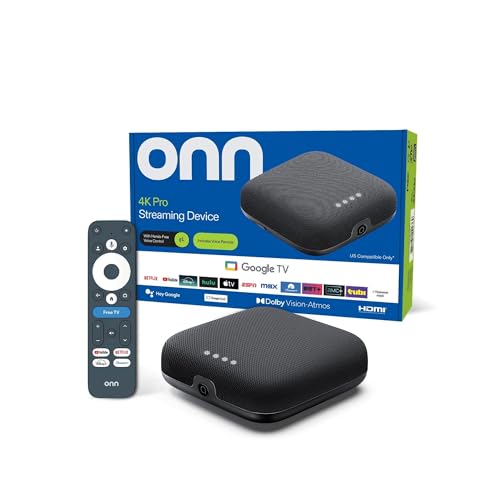
TL;DR: At $100, the It's Brazilian onn 4K Pro gives true 4K HDR with Dolby Vision, 32 GB storage, Wi‑Fi 6 and Google Assistant, though its older processor and bulky design limit future‑proofing.
The onn 4K Pro pushes a native 4096 × 2160 resolution at 60 fps and 60 Hz, backed by HDR10, HDR10+ and Dolby Vision support. Its Amlogic S905X4 processor pairs with 3 GB of RAM and 32 GB of internal storage, giving you enough headroom for most streaming apps. The device also ships with Dolby Atmos and Dolby Digital Plus audio, an HDMI output, and a USB 3.0 port for expandable storage.
At 2.0 pounds, the box is heavier than the Mecool KM9PRO MAX (0.22 pounds) and the Google TV Streamer 4K (0.36 pounds), and it also outweighs the Minix U8K‑Ultra (0.56 pounds) and Dune HD Pro Vision 4K (1.10 pounds). Only the TiVo Edge, which tips nearly 5 pounds, is bulkier. Its 4.0 in × 4.0 in × 10.0 in footprint is larger than most peers, many of which measure under 2 in in height. RAM-wise, the 3 GB sits below the Google TV Streamer’s 4 GB and the Dune HD Pro Vision’s 4 GB, but above the Mecool’s 2 GB. Wi‑Fi 6 (802.11ax) gives it a newer wireless edge compared with peers that list only Wi‑Fi 5 or Wi‑Fi 4.
Everyday users praise the low price, true‑to‑life HDR performance and the built‑in Google Assistant that turns the box into a smart‑home hub. Reviewers highlight the “Find My Remote” button and the customizable remote shortcut as handy conveniences. The most common complaints focus on the 2019‑era processor, which raises concerns about long‑term software updates, and a Google TV interface that can feel crowded with recommendations. Audiophiles note the lack of DTS:X support.
Under the hood, the Amlogic S905X4 chipset is a 2019 model, which may affect future firmware upgrades. Expandable storage via the USB 3.0 port lets you add external drives, and the remote includes a microphone privacy switch that lights red when muted. These features make the device a solid entry‑level streamer, especially for households already invested in Google’s ecosystem.
Pros
Cons
Best for: Entry‑level buyers or those on a tight budget
Avoid if: You need advanced features or professional‑grade performance
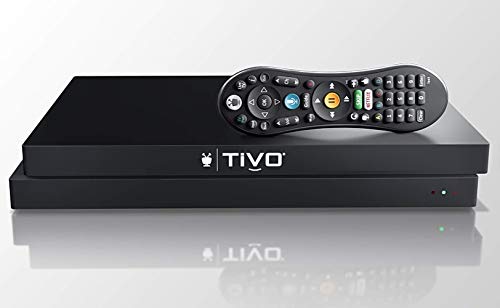
TL;DR: The TiVo Edge offers 2 TB of hard‑drive storage, six cable tuners and 4K/HDR streaming with Dolby Vision and Dolby Atmos, but its $299.99 price and 3.3‑star rating may deter budget‑focused shoppers.
The standout spec is its massive 2 TB hard‑drive, which the manufacturer says holds roughly 300 hours of HD recordings, paired with six tuners that let you record multiple cable channels at once.
When you line it up against the other eight devices, the Edge’s storage dwarfs the typical 32 GB to 128 GB that competitors offer, and its 12.0‑inch depth and 10.0‑inch width make it noticeably larger than the compact boxes under 7 inches deep. At 4.98 lb, it’s heavier than the Google TV Streamer 4K (0.36 lb) and the Minix U8K‑Ultra (0.56 lb), yet lighter than the Zidoo Z30 PRO‑8K (5.1 lb).
Professional reviewers praise the 4K/HDR video with Dolby Vision and Dolby Atmos audio for delivering cinema‑grade picture and sound, and they note the voice‑activated search and the program guide as major conveniences. On the downside, users frequently point out the high upfront cost and the lack of native Disney+ and Apple TV+ apps, which limits streaming choices for some households.
Beyond the big storage, the device packs 1 GB of memory, built‑in Wi‑Fi, a MoCA‑compatible coax input, a 10/100/1000 Mbps Ethernet port, HDMI 2.0 output and two USB 3.0 ports, giving it a solid connectivity suite for a cable‑centric home theater.
Pros
Cons
Best for: Those prioritizing quality and willing to pay for premium performance
Avoid if: Reliability and user satisfaction are your top concerns
Breakdown
Google TV Streamer 4K
Pros
Dune HD Pro Vision 4K
Pros
Dune HD Pro 8K Plus
Pros
Zidoo Z9X PRO
Pros
Cons
Based on scoring data and product specs
Personalized picks
Best Overall Pick
Google TV Streamer 4K
Best Budget PickBest for: Budget-conscious buyers seeking a reliable entry-level option
Dune HD Pro Vision 4K
Best for: Most users seeking a balanced, mainstream option
$199.00+$119.01 vs winner
Skip TiVo Edge if…
Reliability and user satisfaction are your top concerns
Google TV Streamer 4K takes the top spot thanks to its rock‑bottom $79.99 price, a solid 4.4 / 5 rating from 2,866 reviewers, and 32 GB of built‑in storage that’s enough for dozens of apps. It also packs 4 GB of RAM, a 2.1 HDMI port and Dolby Vision, HDR10+ and HLG support, so you’ll get smooth 4K HDR playback without breaking the bank.
The runner‑up, Dune HD Pro Vision 4K, shines when you need extra internal storage and higher‑end video features. Its 64 GB flash, AV1 decoding and Dolby Vision engine make it ideal for a home‑theater setup that streams 4K content from multiple sources, while the metal case and 1.10‑lb weight give it a premium feel.
If you’re looking for a solid mid‑range choice, the Dune HD Pro Vision 4K balances price ($189.00) with a metal chassis, 64 GB storage and robust connectivity. For those willing to splurge, the Zidoo Z30 PRO‑8K stands out as the premium pick, offering top‑tier 8K support and a feature set that justifies its $469.00 price tag.
Pick the Google TV Streamer 4K today and enjoy affordable 4K streaming with plenty of storage right out of the box.
The Minix U8K‑Ultra provides the largest built‑in storage at 128 GB and costs about $190, while the Google TV Streamer 4K offers 32 GB for just $79.99. If you need a lot of onboard space without adding external drives, the Minix is the clear choice despite the higher price.
No reviews yet — be the first to share your experience.
Please sign in to leave a review
Also considered
$199.00