⚡ Quick Answer
Choosing a 4K streaming device that can keep up with Wi‑Fi 6 can feel overwhelming, especially when 11 options line up from budget sticks to full‑blown media boxes. Prices stretch from the Amazon Fire TV Stick 4K Plus at $24.99 up to the Dune HD Pro 8K Plus at $349.00, and ratings range from a perfect 5.0/5 on the Onn 4K Plus (based on two reviews) to a solid 4.7/5 on the Fire TV Stick with over 105,000 voices.
We’ve grouped the lineup into three price tiers so you can spot the right fit quickly. The budget tier covers the Fire TV Stick, Greva Android TV Stick 4K, Onn 4K Plus, and Xiaomi TV Stick 4K 2nd Gen Black. Mid‑range includes the Roku Ultra and the Brazilian onn 4K Pro, while the premium tier features the RockTek GX1, Minix U8K‑Ultra, Zidoo Z9X PRO and Dune HD Pro 8K Plus. Each brings its own blend of specs, from 2 GB RAM on the Roku Ultra to 8 GB RAM on the Minix.
Below you’ll find how they compare on performance, connectivity and feature set, so you can pick the device that matches your TV, network and budget.

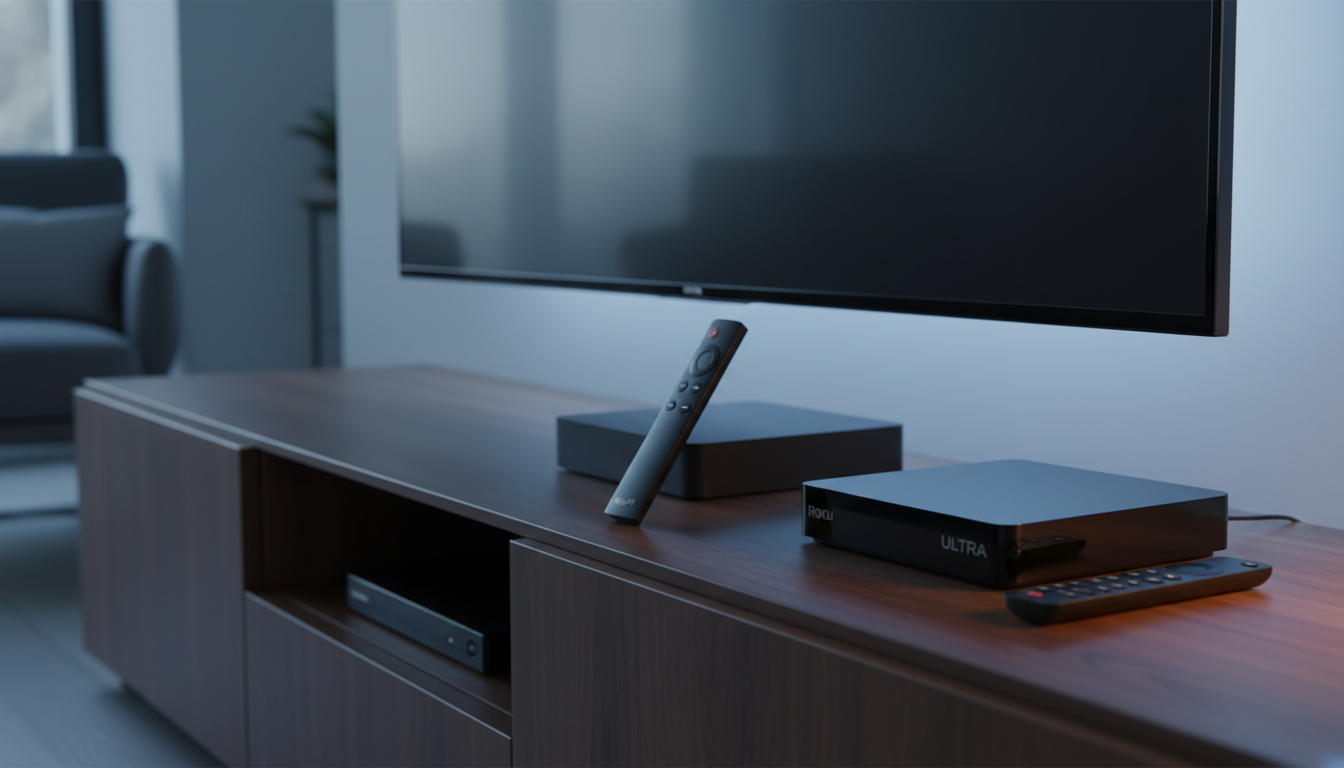
Roku Ultra
Its compact depth of 127 mm lets it fit neatly behind most TVs, contributing to its strong value, rating and feature set for mainstream users.
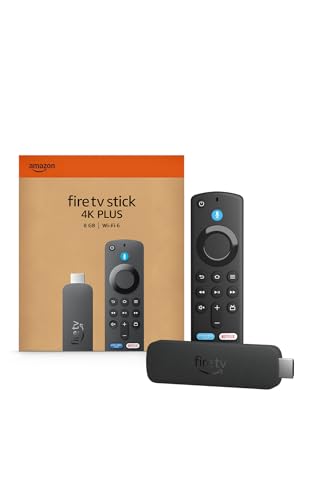
Amazon Fire TV Stick 4K Plus
Ideal for budget‑conscious streamers, the Fire TV Stick 4K Plus comes in at $24.99, about $54 cheaper than the $79 Roku Ultra, while still delivering solid performance.

Zidoo Z9X PRO
Stands out with a built‑in Gigabit Ethernet RJ‑45 port and Wi‑Fi speeds up to 1200 Mbps, offering the premium connectivity the other two devices lack.
Also considered
Score Analysis
Key score advantages vs. runner-up (Amazon Fire TV)
Price Range
Roku Ultra
$79.00
Amazon Fire TV Stick 4K Plus
$29.99
Zidoo Z9X PRO
Out of Stock

Onn 4K Plus
$68.94

RockTek GX1
$109.99

Dune HD Pro 8K Plus
$389.00
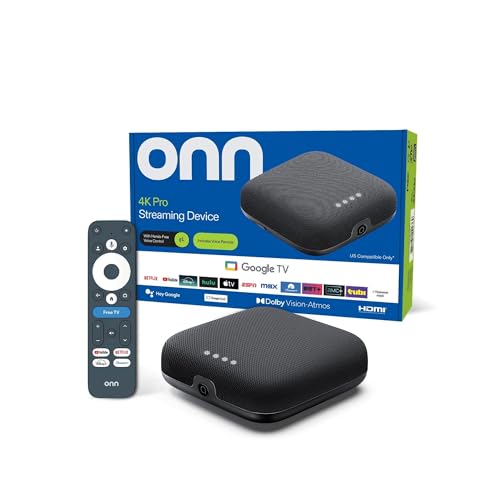
It's Brazilian onn 4K Pro
$102.65
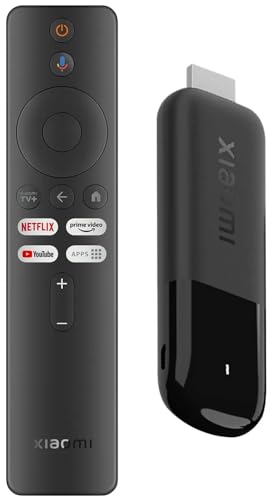
Xiaomi TV Stick 4K 2nd Gen Black
$69.99

Minix U8K-Ultra
$195.90
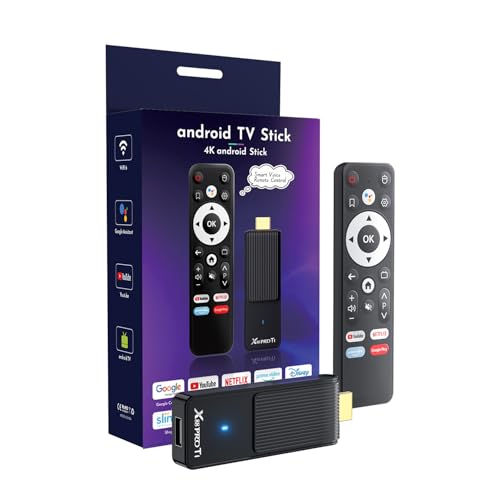
Greva Android TV Stick 4K
Out of Stock

X88 Screencast TV Stick 4K
$31.99
Spec Comparison
TL;DR: The Roku Ultra 2024 delivers 30% faster performance, 4K 3840×2160 HDR with Dolby Vision and Atmos, and a rechargeable Voice Remote Pro, all for $79.00 with a 2‑year warranty.
The standout spec delivers a 30% performance boost over prior Roku models, using 2 GB of system RAM and 4 GB of internal storage. Combined with Wi‑Fi 6 (802.11ax) and an HDMI 2.1 (HDCP 2.2) port, it streams 4K 3840×2160 at 60 fps with Dolby Vision, HDR10+, HLG, and Dolby Atmos sound. The included rechargeable Voice Remote Pro adds backlit buttons, a headphone jack, remote finder, and USB‑C charging.
At 0.03968320716 pounds, the Ultra is lighter than the Xiaomi TV Stick 4K (0.06172943336 pounds) and the RockTek GX1 (0.2535316013 pounds). Its 127 mm depth is deeper than the Onn 4K Plus (101.6 mm), while its 124.5 mm width exceeds the RockTek’s 93.98 mm width. The 25.4 mm height matches the Greva Android TV Stick, making it comparable in vertical profile to that device. Across the lineup, the Ultra offers a balanced footprint and the lightest weight among the listed peers.
Reviewers consistently praise the ultra‑fast app launches and smooth 4K streaming over Wi‑Fi 6, noting that the premium remote lets private listening happen easily with its headphone jack. Professional reviewers highlight the “lightning‑fast performance” and vibrant picture quality from Dolby Vision and HDR10+. Some users point out that Apple AirPlay 2 or HomeKit are missing, which can be a drawback for Apple‑centric households. A few mention the barrel‑style power connector as less convenient than a pure USB‑C solution, and some buyers have reported shipping restrictions to PO boxes.
Pros
Cons
Best for: Cord‑cutters and families who want the quickest streaming performance, cinematic 4K/HDR/Atmos playback, and a feature‑rich remote.
Avoid if: You rely heavily on Apple AirPlay 2/HomeKit or need a device with a USB‑C‑only power solution.
TL;DR: The Amazon Fire TV Stick 4K Plus delivers 4K Ultra HD with Dolby Vision, Wi‑Fi 6, and AI‑powered search at a budget‑friendly $24.99, though its 8 GB storage may feel tight for power users.
At just 45.4 g and 141.2 mm long, this stick packs a Mediatek MT8696D processor, Wi‑Fi 6, and AI‑powered Fire TV Search into a compact black body. It streams 2160p Ultra HD video with Dolby Vision, HDR10+ and Dolby Atmos audio, and includes an Alexa Voice Remote that's powered by two AAA batteries.
Compared with other sticks in the roundup, it’s lighter than the X88 Screencast (45.4 g vs 50 g) and more compact than the Xiaomi TV Stick 4K 2nd Gen (141.2 mm vs 165 mm). Its 8 GB internal storage holds less space than the 16 GB in several peers, but the price point sits at the budget tier, making it a cost‑effective entry.
Reviewers consistently praise the device’s fast 4K streaming, easy setup, and the convenience of AI‑driven voice search. Professional reviewers note the Wi‑Fi 6 connection stays reliable under network congestion. A few users mention occasional lag during heavy usage and point out that the remote’s button layout can differ between batches.
Pros
Cons
Best for: Budget-conscious buyers seeking a reliable entry-level option
Avoid if: You need advanced features or professional‑grade performance
“fast streaming, easy to setup, great apps”
“Works fast... perfect for streaming.”
TL;DR: The Zidoo Z9X PRO delivers premium 4K HDR and Dolby Vision playback with Wi‑Fi 6, 4 GB RAM and a sleek aluminum body, though its $211.75 price tags it as a high‑end streamer.
The Z9X PRO leans on a Realtek RTD1619BPD quad‑core processor paired with Android 11, 4 GB DDR4 RAM and 32 GB of internal eMMC storage. It pushes 4K@60 Hz video with HDR10+, Dolby Vision, AV1 and a 12‑bit color pipeline (about 68 billion colors). Network‑wise, the device offers Wi‑Fi 6 up to 1200 Mbps and a Gigabit Ethernet RJ‑45 10/100/1000 Mbps port, which ensures plenty of bandwidth for high‑bitrate streams.
Compared with the other streamers in this roundup, the Z9X PRO sits at the premium end of the price spectrum—more expensive than the Roku Ultra and Xiaomi TV Stick, and comparable to the Dune HD Pro 8K Plus. It outstrips the RockTek GX1’s 100 Mbps Ethernet by providing true gigabit connectivity, and it matches the RockTek’s Wi‑Fi 6 capability while offering a higher advertised Wi‑Fi speed. In terms of memory, the Z9X PRO’s 4 GB RAM tops the Roku Ultra’s 2 GB and the Xiaomi stick’s 2 GB, though it falls short of the Minix U8K‑Ultra’s 8 GB. Storage‑wise, its 32 GB eclipses the Roku Ultra’s 4 GB and the Xiaomi stick’s 8 GB, aligning with the higher‑end devices.
User sentiment highlights the vivid colors and smooth Dolby Vision performance, with many noting the convenience of the side‑mounted external SATA bay for massive libraries. Professional reviewers praise the VS10 image engine and the automatic frame‑rate switching that keeps playback buttery smooth. The main trade‑off that surfaces in consumer feedback is the lack of an internal hard‑drive bay, meaning you’ll need an external SATA drive for large collections, and the $211.75 price point feels steep for budget‑focused buyers.
Beyond the core specs, the Z9X PRO packs two high‑gain external antennas, Bluetooth 5.2, and a front LED indicator on an aluminum alloy shell that feels solid on any home‑theater shelf. HDMI 2.1 output supports 4K@60 Hz with full HDR stack, and the device can drive external HDDs or SSDs up to 16 TB via its SATA 3.0 port, making it flexible for both streaming and local media.
Pros
Cons
Best for: Those prioritizing quality and willing to pay for premium performance
Avoid if: You're shopping on a tight budget — it's priced at $211.75
TL;DR: The Onn 4K Plus streams 4K UHD with Dolby Vision and Dolby Atmos at $65.99, offering 2 GB RAM, 16 GB storage, Wi‑Fi 6 and a voice‑controlled Google TV remote.
The standout spec is its 4K UHD (2160p) picture paired with Dolby Vision, HDR10+, HDR10 and HLG, plus Dolby Atmos sound, all come in a $65.99 package. Under the hood you get a quad‑core 2.1 GHz processor, 2 GB RAM and 16 GB internal storage, which reviewers say makes navigation feel “snappy” on Google TV (Android 14).
Physically, the device measures 177.8 mm in height, 101.6 mm deep and 63.5 mm wide—significantly taller than the Xiaomi TV Stick 4K (40 mm tall) and the Roku Ultra (25.4 mm tall). RAM matches the 2 GB found in the Xiaomi, Roku, Greva, and X88 sticks, while its 16 GB storage equals Greva and X88 and exceeds Roku Ultra’s 4 GB and Amazon Fire TV Stick 4K Plus’s 8 GB. Like Greva and X88, it supports Wi‑Fi 6, though the Roku Ultra lists an Ethernet port that the Onn lacks.
Consumer sentiment highlights a quick setup, vibrant 4K visuals and reliable Google Assistant voice control. Users appreciate the dedicated Netflix and YouTube buttons on the remote, but several note occasional buffering when Wi‑Fi is weak—a point echoed by professional reviewers who've criticized the absence of an Ethernet port for more stable connections. The limited port selection (only HDMI output) also appears as a common drawback.
Technical context adds that the device runs Google TV with Android 14, includes Bluetooth 5.0 for wireless audio, and offers access to over 10,000 apps, 800+ free live TV channels and 700,000+ movies and shows. The combination of Dolby Atmos audio and a voice‑remote with Google Assistant rounds out a feature‑rich experience for its price tier.
Pros
Cons
Best for: Entry-level buyers or those on a tight budget
Avoid if: You want the best value‑per‑dollar in its price range
“fast streaming, easy to setup, great apps”
“Works fast... perfect for streaming.”
TL;DR: The RockTek GX1 delivers 4K UHD video with Dolby Vision and HDR10+, packs 4 GB RAM and 32 GB storage in a compact 115 g box, but its 100 Mbps Ethernet may limit high‑bitrate local streaming.
The standout spec is the 4K UHD 2160p60 video engine that supports Dolby Vision, HDR10+ and AV1, backed by a Realtek RTD1325TPV quad‑core Cortex‑A55 and Mali‑G57 GPU. Combined with Wi‑Fi 6 and Bluetooth 5.2, the GX1 handles wireless streaming smoothly, while the 4 GB LPDDR4 RAM gives apps a quick launch feel. At just 115 g (about 0.25 lb) it’s light enough to slip behind a TV without a bulky bracket.
Compared with the other ten devices, the GX1 sits in the middle of the weight spectrum: it’s heavier than the ultra‑slim Roku Ultra (≈0.04 lb) and Xiaomi TV Stick (≈0.06 lb), but far lighter than the Brazilian onn 4K Pro (2.0 lb). Its 4 GB of RAM tops the typical 2 GB found in most sticks and even exceeds the Brazilian onn’s 3 GB, while the 32 GB eMMC matches the Brazilian onn’s storage and dwarfs the 4 GB‑to‑16 GB range of the rest. Ethernet caps at 100 Mbps, slower than Roku Ultra’s gigabit port but matching the Greva stick’s link.
User sentiment repeatedly praises the vivid picture quality and immersive Dolby Atmos sound, noting the compact form factor and responsive Google TV 12 interface as major pluses. Professional reviewers highlight the impressive Dolby Vision performance at 2160p60 and the smooth AV1 playback, while also flagging the lack of VC‑1 codec support and the modest 100 Mbps Ethernet as hurdles for heavy‑duty Plex or Kodi users. Some users have mentioned limited ventilation could affect long‑term heat management.
Under the hood, the GX1’s Realtek processor delivers 20K DMIPS of compute power, and the HDMI 2.1 port offers eARC and dynamic HDR. An included voice remote integrates Google Assistant for smart‑home control, and the device supports OTA live TV via an antenna. The package comes with an HDMI cable, 12 V 1 A power supply, user manual and a protective sleeve.
Pros
Cons
Best for: Casual streamers who want premium 4K HDR video, Google TV integration, and a compact form factor.
Avoid if: You rely on gigabit Ethernet, need VC‑1 codec support, or run demanding local media servers.
“topline product with great RTD1325 performance.”
“"Ok" rating due to this.”
TL;DR: The Dune HD Pro 8K Plus delivers native 8K p60 HDR playback with Dolby Vision, 64 GB storage and 8 GB RAM, but its premium $349 price and external antenna design suit only high‑end home‑theater setups.
What really sets this box apart is its ability to decode native 8K p60 HDR video, backed by a Dolby Vision VS10 engine and AV1 support. The Android‑based platform runs on an Amlogic S928X‑K/J processor, paired with 8 GB LPDDR4X RAM and 64 GB of internal eMMC storage, giving you plenty of headroom for large libraries and future‑proof codecs.
Compared with the other ten devices in this roundup, the Pro 8K Plus is heavier at 1.11 kg and larger—115 mm deep, 26 mm high and 160 mm wide—so it won’t slip into a tiny TV cabinet the way the sub‑$100 Roku Ultra or Xiaomi TV Stick can. It also carries a higher price tag than most peers, including the budget‑friendly Zidoo Z9X PRO and RockTek GX1, but it outstrips them in storage (64 GB vs. 32 GB) and RAM (8 GB vs. 4 GB or less). Its Wi‑Fi 6 (802.11ax) and Gigabit Ethernet match the connectivity of the Minix U8K‑Ultra, while the passive metal case provides silent cooling unlike the fan‑cooled designs of some rivals.
User sentiment highlights the flawless 8K picture quality and smooth AV1 playback, with reviewers praising the Dolby Vision engine for “seamless high‑resolution performance.” The same reviews note a downside: the built‑in Wi‑Fi and Bluetooth antennas stay fixed, making placement tricky in cramped rooms, and the required external 12 V 2 A power brick adds to cable clutter.
In practice, the device’s full‑metal chassis acts as a heatsink, keeping temperatures low without a fan. It also offers HDMI 2.1a, Dolby TrueHD and DTS:X passthrough via both HDMI and optical S/PDIF, and dual‑band Wi‑Fi 6 for reliable streaming of bandwidth‑heavy 8K content.
Pros
Cons
Best for: High‑end home‑theater enthusiasts who need native 8K HDR/Dolby Vision playback, AV1 support, and robust connectivity.
Avoid if: You only watch 4K or lower content, need a compact budget device, or require built‑in massive storage without external drives.
TL;DR: The It's Brazilian onn 4K Pro streams true 4K HDR with Dolby Vision and Atmos, packs 3 GB RAM and 32 GB storage, and adds Wi‑Fi 6, all for $100.
The standout spec is its native 4096 × 2160 resolution paired with HDR10, HDR10+ and Dolby Vision, delivering cinema‑grade picture quality. Under the hood sits a 3 GB RAM module and 32 GB of internal storage, enough for a solid app library while still supporting expandable storage via USB 3.0. Audio isn’t left behind either – Dolby Atmos comes built in, and the device runs Android TV 12/Google TV with a full Google Assistant remote.
At 2.0 pounds, the onn 4K Pro is considerably heavier than the Roku Ultra (≈0.04 lb) and the Xiaomi TV Stick (≈0.06 lb), but its size of 4.0 in × 10.0 in gives it a more traditional box form factor. Its 3 GB RAM lands between the Roku Ultra’s 2 GB and the RockTek GX1’s 4 GB, while the 32 GB storage matches the RockTek GX1 and dwarfs the 4 GB in the Roku Ultra, the 8 GB in the Xiaomi stick, and the 16 GB in the Greva stick (0.28 lb). RockTek, Greva and X88 also offer Wi‑Fi 6, putting the onn 4K Pro on equal footing for fast, stable streaming.
Users appreciate the low price point for a device that truly supports 4K HDR, Dolby Vision and Dolby Atmos, and they like the added Google Home hub features like Find My Remote and a customizable button. Professional reviewers cite the $100 price as strong value compared with pricier competitors, praising the Wi‑Fi 6 and HDR support. The most common complaints focus on the 2019‑era Amlogic S905X4 processor, which raises concerns about future software updates, and the lack of DTS:X audio for audiophiles. Some find the Google TV interface a bit recommendation‑heavy.
Beyond the specs, the remote includes a microphone privacy switch that lights red when muted, and a dedicated Find My Remote button that triggers a locate signal via the companion app. These small touches improve daily convenience, especially in households with multiple devices. The Ethernet port provides a wired fallback for those who prefer a hard‑line connection, complementing the Wi‑Fi 6 radios.
Pros
Cons
Best for: Most users seeking a balanced, mainstream option
Avoid if: You're shopping on a tight budget — it's priced at $100.00
“Fast setup, vibrant 4K colors/detail on YouTube/Netflix, reliable Google Assistant voice search, and value for smooth streaming without lag”
TL;DR: The Xiaomi TV Stick 4K 2nd Gen offers 4K HDR streaming, Wi‑Fi 6, and a performance‑boosted quad‑core CPU in a feather‑light 0.06‑lb dongle, making it a solid mid‑range choice.
What really sets this stick apart is its upgraded processing power: a quad‑core Cortex‑A55 CPU running at 2.5 GHz and an ARM G310 V2 GPU clocked at 850 MHz. Reviewers note an 80 % CPU boost and a 150 % GPU rendering increase over the previous generation, which translates to smoother 4K playback and quicker app navigation.
In the context of the other ten devices, the Xiaomi stick weighs less than the Greva Android TV Stick 4K (0.28 lb) but a touch more than the Roku Ultra (0.04 lb). Its 165 mm length exceeds the Roku Ultra’s 127 mm depth, while its 2 GB of RAM matches the Onn 4K Plus and X88 Screencast sticks. However, its 8 GB of internal eMMC storage is half of the 16 GB found in Onn 4K Plus and X88, giving it fewer offline‑app options.
Everyday users consistently praise the device for lag‑free 4K streaming, the responsive Google TV interface, and the convenience of the Bluetooth 5.2 voice remote with Google Assistant. Professional reviewers highlight the “absolutely crazy smooth” browsing experience, but they also point out the absence of an AI super‑resolution feature that some rivals tout. The lack of an Ethernet port means you’ll rely on Wi‑Fi 6 for connectivity, which is fine for most households but could be a drawback in congested networks.
Beyond performance, the stick supports Dolby Vision and HDR10+ for vivid colors, and audio decoders include DTS:X, DTS HD, and Dolby Atmos, ensuring an immersive sound experience. It runs Google TV, giving you access to a wide app ecosystem, and ships with an HDMI extension cable, power adapter, and a Bluetooth voice remote right out of the box.
Pros
Cons
Best for: Most users seeking a balanced, mainstream option
Avoid if: You need advanced features or professional‑grade performance
“fast streaming, easy to setup, great apps”
“Works fast... perfect for streaming.”
TL;DR: The Minix U8K‑Ultra delivers true 8K 60 Hz playback with AI‑enhanced upscaling, 8 GB RAM and 128 GB storage, but its bulkier chassis and premium price may limit its appeal for tight spaces.
The standout feature is the AI‑PQ and AI‑SR upscaler that can boost 1080p video 2×, 720p 3× and 480p 4×, paired with an Amlogic S928X‑K processor that handles native 8K 60 Hz streams. The unit packs 8 GB of LPDDR4X RAM and 128 GB of internal eMMC storage, giving plenty of headroom for large media libraries and multitasking. It also supports HDMI 2.1, Dolby Vision, HDR10+, HDR10, HLG and Dolby Atmos, while Wi‑Fi 6 (802.11ax) and a Gigabit Ethernet port keep the connection rock‑solid. Power draw stays under 10 W thanks to a fanless design, and the box weighs about 0.56 lb (253 g).
Compared with the other ten entries, the U8K‑Ultra is heavier than the ultra‑light Roku Ultra and larger than the RockTek GX1, whose depth is only 93.98 mm. It’s also a bit taller than the Zidoo Z9X PRO, which measures 26.4 mm in height. In terms of memory, its 8 GB RAM outstrips the 4 GB found in both the Zidoo and RockTek, and its 128 GB storage dwarfs the 32 GB or 16 GB capacities of most peers. Wi‑Fi 6 is a common trait, but the Minix sits at the premium end of the price spectrum.
User sentiment repeatedly praises the flawless high‑resolution playback and the flexibility of USB and micro‑SD expansion (up to 1 TB). Reviewers note the AI upscaling improves lower‑resolution sources, though they caution it isn’t a magic transformation. Professionals highlight the reliable 8K decoding and Widevine L1 certification that unlocks HD Netflix streaming. Reviewers mention the fanless 10 W thermal limit as a possible throttling point during long 8K sessions, and the bulkier chassis draws criticism from those with cramped cabinet space.
Pros
Cons
Best for: Those prioritizing quality and willing to pay for premium performance
Avoid if: You're on a tight budget or only need basic functionality
“It does what it says and plays back 8K video... supports HD streaming with all popular apps.”
“Bigger chassis but appreciate the dedicated hardware decoder for modern codecs.”
TL;DR: The Greva Android TV Stick 4K packs 8K/HDR10 video, Wi‑Fi 6 and a 100 Mbps Ethernet port into a 25.4 mm square stick for $32.99, but its 3.5‑star rating signals mixed user satisfaction.
The standout spec is its 8K video support paired with HDR10—it's a rare combination at this price point. Under the hood you get a Rockchip RK3518 quad‑core Cortex‑A53 CPU, Mali‑450 GPU, 2 GB RAM and 16 GB internal storage, all running Android 14.0. The unit weighs just 0.28 lb (128 g) and measures 25.4 mm on each side, making it easy to slip into any TV’s HDMI port.
Compared with the other ten sticks in this roundup, Greva is heavier than the X88 Screencast (50 g) and the Amazon Fire TV Stick 4K Plus (45.4 g), but it matches the RAM of most peers—X88, Onn 4K Plus, Xiaomi and Roku Ultra all list 2 GB. Its 16 GB internal storage outpaces Roku Ultra’s 4 GB, yet is on par with X88 and Onn. Wi‑Fi 6 is a common feature across the group, while Greva’s 100 Mbps Ethernet port gives it a wired option that the Fire and X88 sticks lack; however, Roku Ultra’s Gigabit Ethernet is faster.
User feedback averages 3.5 / 5 stars from 26 reviews, with commenters noting occasional UI lag and questioning long‑term reliability. The lack of a warranty also shows up as a concern. On the positive side, reviewers appreciate the 8K/HDR10 capability and the convenience of a voice‑assistant remote, especially at a $32.99 price tag.
Beyond the core specs, Greva adds Bluetooth 5.0, a USB 3.0 port, an optical audio output and a microSD slot that expands storage up to 64 GB. The device also supports wireless screen projection and mouse input, giving it a versatile edge for casual streaming and light productivity.
Pros
Cons
Best for: Entry‑level buyers or those on a tight budget
Avoid if: Reliability and user satisfaction are your top concerns
“fast streaming, easy to setup, great apps”
“Works fast... perfect for streaming.”
TL;DR: The X88 Screencast TV Stick 4K offers Android 13, Wi‑Fi 6, 2 GB RAM and 16 GB storage in a feather‑light 50 g, 13 mm stick for $31.99, making it a solid budget streaming dongle.
At just 13 mm tall and weighing only 50 g, the X88 packs Wi‑Fi 6, Bluetooth 5.0 and a quad‑core RK3528 processor into an ultra‑compact form factor. The HDMI 2.0b port and HDR support let it output up to 4K@60 Hz, while the included remote and HDMI extender keep setup simple.
Compared with the Greva Android TV Stick 4K, which weighs 128 g and measures 25.4 mm on each side, the X88 feels noticeably lighter and slimmer. It's only slightly heavier than the Amazon Fire TV Stick 4K Plus (45.4 g) but offers double the internal storage at 16 GB versus 8 GB. Against the Xiaomi TV Stick 4K 2nd Gen, the X88 weighs more (the Xiaomi is 28 g) yet provides more storage. The Roku Ultra is considerably lighter at 18 g, but its storage caps at 4 GB, so the X88 gives you more room for apps.
Everyday users love how easy the stick is to slip behind a TV and appreciate the clear picture on streaming services, even on older sets. Professional reviewers note the Wi‑Fi 6 and Bluetooth 5.0 connections feel rock‑steady. In practice, the advertised 8K claim falls short, with most content limited to 1080p‑4K, and the 2 GB of RAM can feel tight when juggling several apps.
Running Android 13, the device supports HDR, 3D visuals and a full suite of streaming apps. Its HDMI 2.0b output can handle 4K@60 Hz, and the built‑in remote plus HDMI extender make placement flexible. Bluetooth 5.0 lets you pair a keyboard or controller for light gaming, while the dual‑band Wi‑Fi 6 keeps buffering to a minimum.
Pros
Cons
Best for: Entry-level buyers or those on a tight budget
Avoid if: You need advanced features or professional‑grade performance
“fast streaming, easy to setup, great apps”
“Works fast... perfect for streaming.”
Breakdown
Roku Ultra
Pros
Amazon Fire TV Stick 4K Plus
Pros
Zidoo Z9X PRO
Pros
Cons
Onn 4K Plus
Pros
Cons
Based on scoring data and product specs
Personalized picks
Best Overall Pick
Roku Ultra
Best OverallBest for: Most users looking for a well-reviewed, reliable mainstream option
Amazon Fire TV Stick 4K Plus
Best for: Budget-conscious buyers seeking a reliable entry-level option
$29.99-$49.01 vs winner
Skip X88 Screencast TV Stick 4K if…
You need advanced features or professional-grade performance
The Roku Ultra takes the top spot as the best 4K streaming device with Wi‑Fi 6. It ships for $79.00, comes with a 2‑year manufacturer warranty, and its 2 GB of RAM delivers a performance boost that the manufacturer lists as 30 % faster than prior Roku models. Supporting Dolby Atmos, Dolby Vision (60 fps), HDR10+ and Wi‑Fi 6 (802.11ax) delivers a rich, future‑proof picture and sound experience.
The runner‑up is the Amazon Fire TV Stick 4K Plus, perfect if you need an ultra‑affordable, portable solution for a bedroom or secondary TV. At $24.99 it still offers Wi‑Fi 6, Dolby Vision, HDR10+, Dolby Atmos and Alexa voice control via its included remote, plus AI‑powered search and Xbox Game Pass cloud gaming.
For shoppers focused on price tiers, the best budget option remains the Amazon Fire TV Stick 4K Plus – it bundles Wi‑Fi 6 and Alexa for under $25. The top premium pick is the Dune HD Pro 8K Plus, which adds 8K support and a solid warranty at $349.00.
Pick the Roku Ultra for the most capable all‑round 4K streaming experience today.
The Roku Ultra is equipped with HDMI 2.1 (HDCP 2.2), which supports higher bandwidth needed for smooth 4K @ 60 Hz HDR formats like Dolby Vision and HDR10+. Devices that only have HDMI 2.0 may be limited to lower frame rates or lack full HDR compatibility.
No reviews yet — be the first to share your experience.
Please sign in to leave a review