⚡ Quick Answer
Creating video, editing photos, or designing graphics demands a crisp 4K canvas, but the market offers a crowded selection of options that vary wildly in price and performance. In this roundup we compared 9 monitors, spanning three price tiers. The budget tier starts at $229.99 and includes the InnoView 14‑inch OLED Portable Monitor, while the mid‑range tier covers models like the Samsung ViewFinity S8, which provides 350 cd/m² brightness and a 4.7/5 rating from 190 reviews. The Dell S2725QS, priced at $278.99, offers a 120 Hz refresh rate and a 4.5/5 rating from 682 reviewers, representing the sweet spot for many creators.
On the premium side, the BenQ EW3290U commands $459.99 and delivers 98% P3 coverage plus 65 W power delivery, while the Asus PA279CRV USB‑C adds factory‑calibrated color accuracy at $349.00. Mid‑range choices such as the LG 32UR550K‑B ($305.76) bring ergonomic height, tilt and pivot adjustments, and the Dell S3225QS offers a 31.5‑inch VA panel with 120 Hz refresh for $334.99. Whether you need a portable OLED companion, a desk‑bound workhorse, or a feature‑rich flagship, the lineup covers a range of workflows and budgets. Keep reading to discover which monitor aligns best with your creative routine.

Dell S2725QS
Includes dual 5 W built‑in speakers, delivers decent sound without extra audio gear, while staying compact at 7.89 in depth.

Samsung ViewFinity S8
Ideal for creators who want a mainstream monitor with a sleek stand; it’s just $14.01 pricier than the Dell budget pick.

BenQ EW3290U
Stands out with a generous 19.0‑inch depth and 23.0‑inch height, offering a larger viewing area that the other two more compact models lack.
Also considered
Score Analysis
Key score advantages vs. runner-up (Samsung ViewFinity S8)
Price Range
Dell S2725QS
$279.99
Samsung ViewFinity S8
$298.00
BenQ EW3290U
$459.99

InnoView 14-inch OLED Portable Monitor
$199.97
LG 32UR550K-B
$299.99

InnoView 27-inch Portable Monitor
$399.99

Innocn 4K USB-C Monitor
$259.99

Asus PA279CRV USB-C
$399.00

Dell S3225QS Ash White
$329.99
Spec Comparison
TL;DR: The Dell S2725QS delivers a crisp 27‑inch 4K IPS panel with 120 Hz refresh, 99% sRGB coverage and eye‑comfort features at a budget‑friendly price.
The standout spec is the 120 Hz refresh rate paired with a 0.03 ms response time, delivering smoother motion on a 27‑inch 4K screen without the lag typical of many entry‑level monitors. Its 10‑bit IPS panel covers 99% of the sRGB color space, giving creators accurate colors straight out of the box.
Compared with the other eight monitors in this roundup, the S2725QS is heavier than the Samsung ViewFinity S8 (13.45 lb) but lighter than Dell’s own S3225QS (19.33 lb). Its 7.89‑inch depth exceeds the 66 mm depth of the Innocn 4K USB‑C Monitor, while its 24.08‑inch width and 15.3‑inch height keep it compact enough for a desk. The 120 Hz panel outpaces the 60 Hz refresh of most peers, such as Samsung ViewFinity S8 and LG 32UR550K‑B. Brightness ranges from 287 to 383 cd/m², sitting just below the 350 cd/m² typical of several competitors, and the contrast ratio of 1500:1 is modest for an IPS display.
Reviewers consistently praise the monitor’s color accuracy and the added eye‑comfort of ComfortView Plus, reducing blue‑light emission by up to 35%. Users also like the built‑in dual 5 W speakers for basic audio. However, the lack of local dimming means blacks can appear gray in dark rooms, and some note noticeable motion blur during fast‑moving scenes despite the quick response time. HDR impact is limited, reflecting the modest peak brightness.
Pros
Cons
Best for: Productivity professionals, content creators, and home workers who need 4K sharpness and accurate sRGB color without breaking the bank.
Avoid if: You require ultra‑fast pixel response for competitive gaming or strong HDR performance with local dimming.
TL;DR: The Samsung ViewFinity S8 offers a 27‑inch 4K VA panel with 350 cd/m² brightness, 3000:1 contrast, and an ergonomic stand for $293, earning a 4.7‑star rating.
What really stands out is the 27‑inch 3840 × 2160 display that delivers 1.07 billion colors, 99‑100% sRGB coverage and a static contrast ratio of 3000:1. Combined with 350 cd/m² brightness and HDR10 support, the screen provides sharp detail and decent depth for design and office work.
At 13.45 pounds, the ViewFinity S8 is lighter than the LG 32UR550K‑B (15.4 lb) and the Dell S2725QS (14.26 lb), though it’s heavier than the Innocn 4K USB‑C Monitor, which lists its weight in kilograms. Its 60 Hz refresh rate matches most peers but falls short of the Dell S2725QS’s 120 Hz, and the 5 ms response time is slower than the Dell S2725QS’s 0.03 ms. Brightness of 350 cd/m² is on par with the Innocn model but lower than the Asus PA279CRV’s 400 cd/m² HDR peak.
Reviewers consistently praise the monitor’s crisp 4K resolution and the tool‑free Easy Setup Stand that lets you adjust height, tilt, swivel and pivot without tools. Eye‑care features like TÜV‑certified low‑blue‑light and flicker reduction prove helpful during long editing sessions. However, users also point out that the modest 350 cd/m² peak and limited DCI‑P3/Adobe RGB coverage can make HDR content feel subdued, and the 60 Hz panel isn’t ideal for fast‑motion gaming.
Pros
Cons
Best for: Office professionals and content creators who work primarily within the sRGB color space and value an ergonomic, energy‑efficient 4K monitor.
Avoid if: You need high refresh rates, wider‑gamut color accuracy, or strong HDR performance for gaming or intensive media production.
“"impressive" contrast and sRGB performance for business use but noted color accuracy "falls behind" competitors”
TL;DR: The BenQ EW3290U offers a 31.5‑inch 4K IPS panel with 98% P3 coverage, built‑in 2.1 speakers and 65 W USB‑C power delivery, making it a solid all‑rounder for creators who value color and convenience.
At the heart of the EW3290U is a 31.5‑inch 4K UHD IPS screen that delivers 1.07 billion colors and a 98% P3 color gamut, which professional reviewers praise for “sharp, vibrant 4K IPS panel with excellent text legibility.” The monitor also packs a 350 cd/m² typical brightness, a 1000:1 contrast ratio and VESA DisplayHDR 400 support, while AI Contrast and Brightness Intelligence Plus Gen2 automatically adjust the picture for ambient lighting.
Compared with the other eight monitors in this roundup, the BenQ is noticeably larger than the 27‑inch InnoView portable and the 27‑inch Innocn 4K USB‑C model, and it offers more built‑in audio power than the dual‑speaker Dell S3225QS. It's heavier than the ultra‑light InnoView 14‑inch OLED (1.24 lb) but lighter than the Asus PA279CRV (18.25 lb). Brightness matches the Samsung ViewFinity S8 at 350 cd/m², yet its HDR ceiling of DisplayHDR 400 sits below the higher‑peak HDR displays that some competitors claim.
User sentiment highlights the convenience of the 2.1‑channel speakers with a dedicated woofer and the 65 W USB‑C upstream port that can both deliver video and charge a laptop. Consumers also like the scenario presets—Dialog/Vocal, Live/POP, Cinema, Game—that let you switch modes without digging through menus. However, both everyday users and experts note that GameHDRi can appear oversaturated and that the fixed 60 Hz refresh rate limits the monitor for fast‑paced competitive gaming.
Beyond the core specs, the EW3290U includes Flicker‑free technology, Low Blue Light Plus and a matte anti‑glare surface, which together meet TUV eye‑care standards and help reduce strain during long editing sessions. The stand offers height adjustment, a 0°‑90° pivot range and ±20° swivel, giving you flexibility to dial in an ergonomic setup.
Pros
Cons
Best for: Buyers willing to invest in a proven, high‑quality option
Avoid if: You need advanced features or professional‑grade performance
“Sharp, vibrant 4K IPS panel with excellent text legibility and 98% P3 coverage for work/design.”
TL;DR: The InnoView 14‑inch OLED Portable Monitor delivers a 3840 × 2400 OLED panel with 100% DCI‑P3 color, 1 ms response and a feather‑light 1.24 lb body for $229.99.
The standout spec is its 4K UHD OLED screen (3840 × 2400) that covers 100% DCI‑P3 with ΔE < 2, a contrast ratio of 100,000:1 and a rapid 1 ms response time, all packed into a 14‑inch panel that measures 8.4 in high, 11.88 in wide and only 0.15 in thick.
At 1.24 lb, it's dramatically lighter than the Innocn 4K USB‑C Monitor (5.88 kg) and the Dell S2725QS (14.26 lb), and its 14‑inch footprint's far smaller than the 27‑inch and larger models that dominate this list. Brightness matches many larger peers at 350 nits, though it falls short of the LG 32UR550K‑B’s 500 nits. The 60 Hz refresh rate is on par with Samsung ViewFinity S8 and Asus PA279CRV, but slower than Dell’s 120 Hz panels.
Professional reviewers praise the “stunning 4K UHD OLED panel” and “ultra‑fast 1 ms response time,” noting that the built‑in speakers provide sufficient sound for presentations. Users frequently highlight the ultra‑portable 0.15‑in slim design and 180° adjustable stand for on‑the‑go productivity, while also mentioning the need for a source that can drive 4K @ 60 Hz and the absence of touch input.
Pros
Cons
Best for: Creative professionals and gamers who prioritize color‑accurate 4K OLED visuals and low latency in a compact, travel‑ready package.
Avoid if: You need high‑frame‑rate competitive gaming performance or rely on older devices that cannot drive 4K @ 60 Hz.
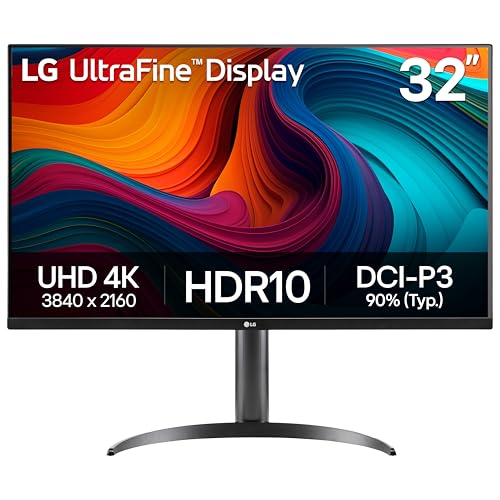
TL;DR: The LG 32UR550K‑B offers a 31.5‑inch 4K VA panel with HDR10, 90% DCI‑P3 coverage and ergonomic adjustments at $305.76, making it a solid mid‑range choice for creators and casual gamers.
The monitor’s standout spec is its 3840 × 2160 resolution on a 31.5‑inch VA panel, paired with HDR10 support and 90% DCI‑P3 color gamut, delivering vivid detail and accurate colors for content creation.
At $305.76 it lands in the mid‑range tier, weighing 15.4 lbs with the stand – heavier than the Samsung ViewFinity S8 (13.45 lbs) but lighter than Dell’s S3225QS Ash White (19.33 lbs). Its typical brightness of 250 cd/m² is lower than the 350 cd/m² seen on Samsung, Asus, Innocn and BenQ models, while the 60 Hz refresh rate matches Samsung and Asus but falls short of the 120 Hz offered by Dell S2725QS and the InnoView 27‑inch Portable Monitor.
Reviewers praise the razor‑sharp 4K image and the HDR10‑enhanced color range, noting the built‑in Waves MaxxAudio speakers add useful sound without extra hardware. The stand’s height, tilt and pivot adjustments make long editing sessions comfortable. However, the 60 Hz panel can feel limiting for fast‑paced competitive games, and the VA technology, while delivering a strong 3000:1 contrast ratio, may not provide the widest viewing angles some users expect.
The monitor also offers a 4 ms (GtG) response time, 1.07 billion‑color depth, ENERGY STAR certification, HDMI and DisplayPort inputs, and VESA‑mount compatibility, rounding out a well‑equipped package for creators on a budget.
Pros
Cons
Best for: Most users seeking a balanced, mainstream option
Avoid if: You have limited desk space or need portability
TL;DR: The InnoView 27‑inch portable monitor packs a 4K 120 Hz/Full‑HD 288 Hz dual‑mode Fast IPS panel, 500 nits brightness, and ultra‑thin 18.3 mm design, but its weak speakers and occasional refresh‑rate stalls may bother some users.
What really sets this monitor apart is its dual‑mode display: you can run native 4K 3840 × 2160 at 120 Hz for detailed work, or switch to Full HD 1920 × 1080 at a blistering 288 Hz for high‑refresh gaming. The Fast IPS panel delivers 10‑bit color and 100 % sRGB coverage, while a 500‑nit matte surface keeps the picture bright without glare. A 1500:1 contrast ratio rounds out the picture quality, and HDR support adds extra punch for creative tasks.
In size and weight it feels surprisingly portable. At just 5.69 kg (12.54 lb) it’s lighter than the Asus PA279CRV (18.25 lb) and far lighter than the Dell S3225QS (19.33 lb), yet only a shade heavier than the Innocn 4K USB‑C monitor (5.88 kg). Its 18.3 mm depth makes it dramatically slimmer than the 221 mm depth of the Dell S3225QS or the 220 mm depth of the Samsung ViewFinity S8, and even the 66 mm depth of the Innocn model. Brightness is another win: 500 nits tops the 400 cd/m² peak of the Asus and the typical 350 cd/m² of most rivals. Refresh‑rate options also outpace the competition, which generally caps at 60 Hz, with only the Dell S3225QS matching a 120 Hz ceiling at lower resolution.
Professional reviewers praise the large 27‑inch screen, HDR compatibility, and color accuracy, calling the dual‑mode capability “rare and useful” for a portable monitor. Users love the connectivity suite—HDMI 2.1, DP 1.4, and two full‑function USB‑C ports—plus the built‑in kickstand and 100 × 100 mm VESA mount. However, many describe the built‑in dual speakers as “weak” or “anemic,” and several owners report the monitor often stalls at 60 Hz instead of the advertised high rates, especially on consoles.
Pros
Cons
Best for: Hybrid gamers and mobile professionals who need a single portable display for both high‑resolution work and high‑refresh gaming.
Avoid if: Deep black levels, strong built‑in audio, or guaranteed high‑refresh performance on consoles are top priorities.
TL;DR: The Innocn 27‑inch 4K IPS monitor packs HDR400‑level brightness, 100% sRGB coverage and a 65 W USB‑C link into a budget‑friendly package, though it stays at 60 Hz and lacks speakers.
The standout spec is its 400 nits peak brightness paired with HDR400, which gives noticeably vivid highlights on a 27‑inch 3840 × 2160 IPS panel. Factory‑calibrated colour accuracy of ΔE < 2 and full 100% sRGB coverage make it a solid choice for photo or video work, while the 65 W USB‑C port lets you power a laptop and drive the display with a single cable.
At 5.88 kg, it's roughly on par with the InnoView 27‑inch Portable Monitor (5.69 kg) and lighter than the Dell S2725QS (14.26 lb) or the LG 32UR550K‑B (15.4 lb). Its 400 nits peak brightness exceeds the 350 nits of the Samsung ViewFinity S8 and the 250 cd/m² typical brightness of the LG model, though it falls short of the 500 nits reported for the InnoView 27‑inch. The 60 Hz refresh rate matches the InnoView 14‑inch OLED and the Asus PA279CRV, but is slower than the 120 Hz panels found in the Dell S2725QS and Dell S3225QS.
Users consistently praise the single‑cable USB‑C setup for decluttering desks and note the crisp 4K image for both work and casual media. Professional reviewers highlight the colour fidelity and bright HDR performance, while the same reviewers call out the fixed 60 Hz rate as a drawback for fast‑paced gaming. The lack of built‑in speakers and a slightly thicker bezel also show up in consumer comments.
Pros
Cons
Best for: Creatives on a budget who need accurate colours and a tidy USB‑C connection.
Avoid if: You prioritize high refresh rates for gaming or need integrated speakers for multimedia.
“The 400 nits brightness is a lot brighter than my previous monitor.”
TL;DR: The Asus PA279CRV USB‑C is a 27‑inch 4K IPS monitor with factory‑calibrated ΔE < 2 color accuracy, 99% DCI‑P3 coverage and 96 W USB‑C power delivery, but it tops out at 60 Hz and a $349 price tag.
What really stands out is the colour fidelity. Asus ships the PA279CRV pre‑calibrated to ΔE < 2, covering 99% of both Adobe RGB and DCI‑P3 gamuts and displaying 1073.7 million 10‑bit colours. At 27 inches and 3840 × 2160 resolution, the panel delivers 163 PPI, which translates to razor‑sharp text and detail for design work. HDR10 support peaks at 400 cd/m², while typical brightness sits at 350 cd/m².
Compared with the other eight monitors in this roundup, the PA279CRV is heavier at 18.25 lbs, out‑weighing the InnoView 27‑inch portable’s 12.54 lbs but lighter than Dell’s S3225QS at 19.33 lbs. Its typical brightness of 350 cd/m² exceeds Dell S3225QS’s 300 cd/m² and LG’s 250 cd/m² typical level, matching Samsung ViewFinity’s 350 cd/m². However, the 60 Hz refresh rate trails the 120 Hz panels found in Dell S3225QS, Dell S2725QS and the InnoView portable monitor, which may matter for fast‑motion editing or gaming. The pixel density of 163 PPI also beats Dell S3225QS’s 139 PPI, giving you a slightly sharper image at the same resolution.
User sentiment leans positive: reviewers praise the out‑of‑the‑box colour accuracy and the convenience of a 96 W USB‑C power delivery that can charge a laptop while driving the display. Professional reviewers note the Calman‑Verified certification and the 6‑axis colour adjustment as real workflow boosters. The main criticisms focus on the limited 60 Hz refresh and HDR400 peak brightness, which some creators feel falls short of cinematic HDR expectations. 458 reviews give the monitor a 4.3‑star rating, indicating solid approval despite the premium price.
Beyond colour, the PA279CRV offers an IPS panel with 5 ms GTG response, Adaptive‑Sync support, a cable‑lock slot for security, and full VESA‑mount compatibility. The ErgoStand lets you swivel, pivot, tilt and adjust height, while the ProArt palette provides ten preset colour modes for quick workflow switches.
Pros
Cons
Best for: Creative professionals who need precise colour reproduction, wide gamut coverage and a reliable USB‑C docking solution.
Avoid if: You're shopping on a tight budget — it's priced at $349.00 and its 60 Hz refresh may disappoint fast‑action gamers.
“perfect for designers, video editors, and colorists due to Adobe certification and wide gamut.”
“high 4K resolution for sharp text and multitasking”
TL;DR: The Dell S3225QS Ash White offers a 31.5‑inch 4K VA panel with 120 Hz refresh, 3000:1 contrast and built‑in speakers at $334.99, making it a solid all‑rounder for creators and casual gamers.
The monitor’s 31.5‑inch VA screen delivers true 4K UHD (3840 × 2160) resolution with a pixel density of 139 ppi and a pixel pitch of 0.18159 mm, giving crisp text and detailed images. Its native contrast ratio of 3000:1 and 300 cd/m² brightness produce deep blacks while the anti‑glare coating keeps reflections in check. A 120 Hz refresh rate paired with FreeSync Premium helps smooth motion, and the dual 5 W speakers add convenient audio without extra gear.
At 19.33 lb, the S3225QS is heavier than the LG 32UR550K‑B (15.4 lb) and the Samsung ViewFinity S8 (13.45 lb), but comparable to the Asus PA279CRV (18.25 lb). Most peers stick to a 60 Hz refresh rate, so Dell’s 120 Hz stands out for smoother casual gaming. Its 139 ppi pixel density is lower than Asus’s 163 ppi, and its 300 cd/m² brightness trails the Asus HDR peak of 400 cd/m² and Samsung’s 350 cd/m², meaning HDR looks modest.
Professional reviewers note the monitor’s “sharp 4K text” and “vibrant colors” that suit productivity, while everyday users praise the large screen and strong contrast for photo and video work. Reviewers frequently mention the built‑in speakers as a handy perk. On the downside, the edge‑LED backlight lacks local dimming, so HDR performance feels basic, and the 8 ms response time can introduce motion blur in fast‑paced games.
Color‑wise, the panel covers 99% of the sRGB space and 95% of DCI‑P3, providing a wide gamut for accurate editing. Dell’s ComfortView Plus technology reduces blue‑light emission by up to 35%, easing eye strain during long sessions. The ultra‑thin bezel and VESA‑mount compatibility give flexibility for multi‑monitor setups.
Pros
Cons
Best for: Most users seeking a balanced, mainstream option
Avoid if: You have limited desk space or need portability
Breakdown
Dell S2725QS
Pros
Samsung ViewFinity S8
Pros
BenQ EW3290U
Pros
InnoView 14-inch OLED Portable Monitor
Pros
Cons
Based on scoring data and product specs
Personalized picks
Best Overall Pick
Dell S2725QS
Best Budget PickBest for: Budget-conscious buyers seeking a reliable entry-level option
Samsung ViewFinity S8
Best for: Most users seeking a balanced, mainstream option
$298.00+$18.01 vs winner
Skip Dell S3225QS Ash White if…
You have limited desk space or need portability
The Dell S2725QS takes the top spot thanks to its 27‑inch 4K IPS panel that delivers 10‑bit color and 99 % sRGB coverage, a 120 Hz refresh rate, and a lightning‑quick 0.03 ms response time. At $278.99 it’s the most affordable 4K option with a solid 4.5‑star rating from 682 reviewers, and its ultra‑thin bezel and full ergonomic stand (tilt, swivel, height, pivot) make it comfortable for long editing sessions.
The Samsung ViewFinity S8 lands as the runner‑up, especially if you need a monitor that handles a wider color gamut and high contrast for photo or video work. It offers 99‑100 % sRGB and 84.1 % DCI‑P3 coverage, a 350 cd/m² brightness level and a static 3000:1 contrast ratio, plus HDR10 support. Its VA panel, multiple HDMI, DisplayPort, USB‑C and USB‑A ports, and a three‑year warranty give you flexibility and peace of mind.
For those on a tighter budget, the InnoView 14‑inch OLED portable monitor is the cheapest pick at $229.99, while the Samsung ViewFinity S8 also serves as a solid mid‑range choice with its color performance of 99‑100 % sRGB and 84.1 % DCI‑P3 coverage. If you’re ready to invest in a premium setup, the BenQ EW3290U stands out as the most popular high‑end option at $459.99.
Grab the Dell S2725QS now for the best value in 4K content‑creation monitors.
The Dell S2725QS is a solid choice for tight desks thanks to its 27‑inch size, ultra‑thin bezel and a full range of ergonomic adjustments (tilt, swivel, height, pivot). Its 120 Hz IPS panel and 99 % sRGB coverage give smooth, color‑accurate visuals without taking up extra space.
No reviews yet — be the first to share your experience.
Please sign in to leave a review