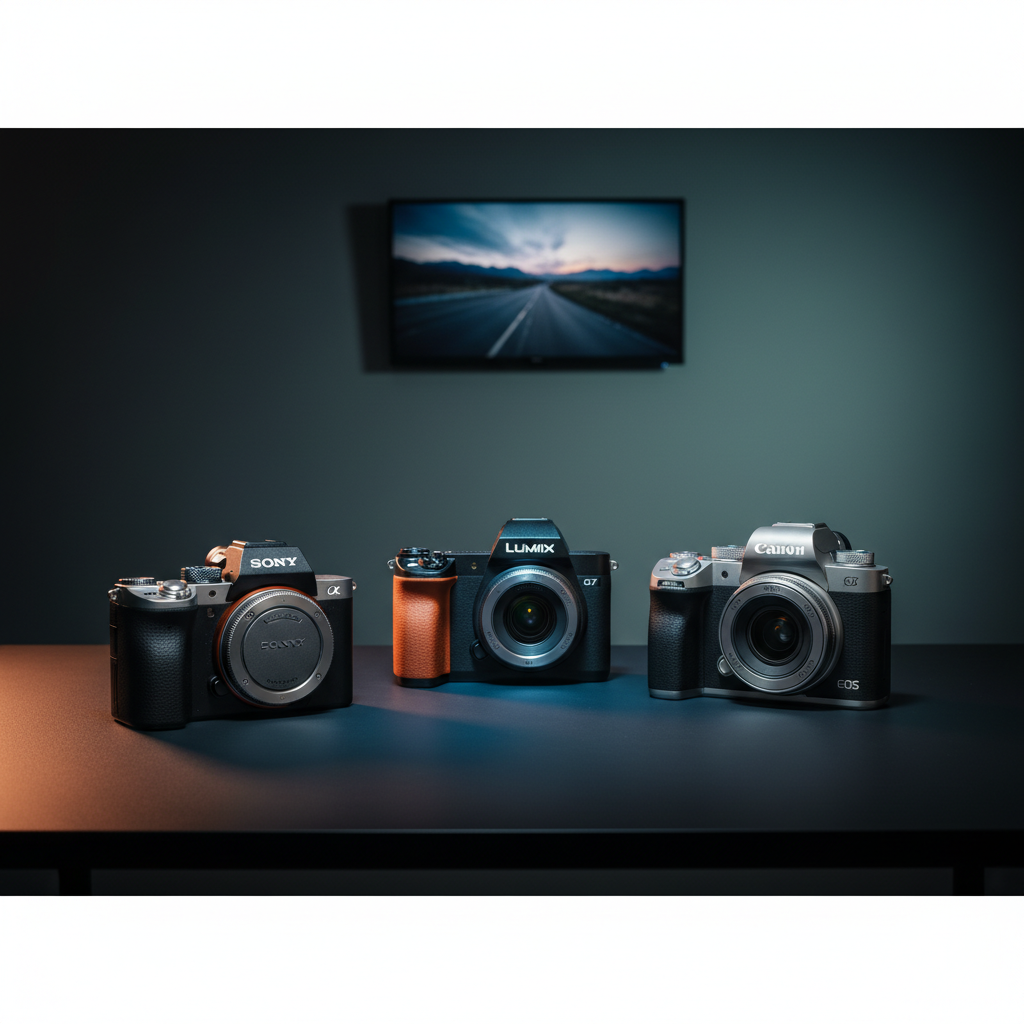
Choosing a 4K video camera for the Micro Four Thirds system can feel overwhelming, especially when 13 models are vying for attention. Prices stretch from $547.99 for the Panasonic LUMIX G7 up to $1449.00 for the Canon EOS R7, and user ratings hover between 4.4 and 4.7 stars. The Sony a6400 leads with a 4.6/5 rating from 1,146 reviews and a lightning‑fast 0.02‑second autofocus that covers 84% of the frame.
We've grouped the lineup into three price tiers so you can quickly spot a fit. The budget bucket—Panasonic LUMIX G7, Canon EOS R100, Nikon Z50 Body, and OM SYSTEM Olympus E‑M10 Mark IV—offers solid 4K capability at sub‑$800 price points. Mid‑range choices like the Canon EOS R50 and Panasonic LUMIX G85 add features such as dual pixel AF and in‑body stabilization. Premium options—Sony a6400, Panasonic LUMIX G95, OM System OM‑5 Mark II, Canon EOS R7—push performance with higher‑speed burst rates and a more robust build.
Below we break down each model’s strengths, so you can match the camera to your shooting style and budget.
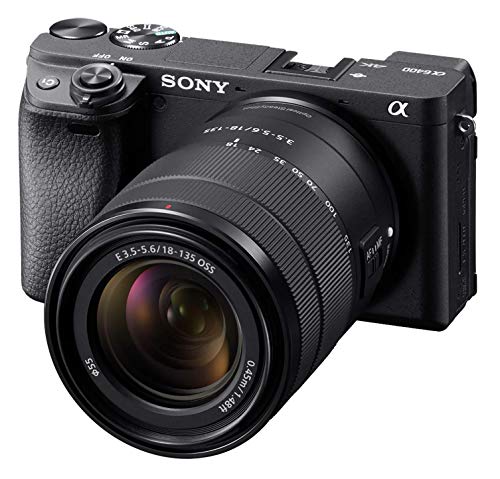
Sony a6400
Provides 89 assignable functions, letting you fine‑tune controls for virtually any shooting scenario.

Panasonic LUMIX G7
Ideal for budget‑conscious beginners, it costs $547.99—about $700 less than the Sony a6400.

Canon EOS R100
Stands out with 100% vertical AF coverage, delivering precise focus across the frame—something the Sony and Panasonic don’t list.
Also considered
Score Analysis
Key score advantages vs. runner-up (Panasonic LUMIX G7)
Price Range
Sony a6400
$1,498.00
Panasonic LUMIX G7
$713.71
Canon EOS R100
$549.99

Panasonic LUMIX G85
$897.99

Canon EOS R7
$1,449.00

Panasonic LUMIX G95
$1,048.00

OM SYSTEM Olympus E-M10 Mark IV Silver Micro Four Thirds
$699.99

Canon EOS R50 Black
$799.00

OM System OM-5 Mark II
$1,199.99
Nikon Z50 Body
$699.99

Panasonic LUMIX G100
$747.99

Panasonic LUMIX GH4
$799.99
Nikon Z30
$1,049.00
Spec Comparison
TL;DR: The Sony a6400 delivers ultra‑fast 0.02 s autofocus, 425 AF points, 4K video and a flip‑up screen at $1,248, making it a solid, though ergonomically tight, choice for creators.
The a6400’s standout spec is its 0.02‑second AF acquisition speed paired with 425 phase‑detect and 425 contrast‑detect points that cover 84% of the frame. That speed, combined with Real‑time Eye AF for humans and animals, lets you lock focus on moving subjects in a flash. Video‑wise, the camera records 4K 3840 × 2160 at 30 fps using full‑pixel readout, so you get sharp footage without the crop that many competitors apply.
At 1.61 pounds, the a6400 is heavier than the OM‑5 Mark II’s 0.9 pound body but lighter than the Canon EOS R7’s 1.1 pound chassis. Its 425 AF points outnumber the Panasonic LUMIX G95’s 49 points, though they fall short of the OM‑5’s 1,053 cross‑type points. Battery life of 540 LCD shots sits just above the OM‑5’s 520‑shot CIPA rating and well below its 1,100‑shot Eco mode, giving you a respectable endurance for a day of shooting.
Reviewers consistently praise the camera’s lightning‑fast focus and the fully 180° upward‑tilting 3.0‑inch touchscreen, which vloggers love for framing themselves. The 2,359,296‑dot EVF offers 100% coverage and 1.07× magnification, while the LCD’s 921,600 dots keep playback clear. Users do note that the grip feels cramped during long handheld sessions and that the touchscreen can feel less responsive than expected. The body resists dust and moisture but lacks full weather sealing, so you’ll need a weather‑protected lens for harsh conditions.
Beyond the core specs, the a6400 packs 89 assignable functions and 8 custom buttons, giving you deep control over shooting parameters. Clear Image Zoom provides up to 2× digital zoom, and built‑in interval shooting lets you create time‑lapse sequences without extra gear. Continuous shooting reaches 8 fps electronically and 11 fps mechanically, with a buffer that holds up to 116 JPEG or 46 RAW frames, ensuring you don’t miss a beat during action.
Pros
Cons
Best for: Buyers willing to invest in a proven, high‑quality option
Avoid if: You're on a tight budget or only need basic functionality
TL;DR: The Panasonic LUMIX G7 delivers 4K video, a 2.36‑million‑dot EVF and a fully articulating 3‑inch touchscreen at a $547.99 price, making it a strong budget choice for vloggers and hybrid shooters.
Its standout spec is 4K/UHD video capability, recording up to 30 p in MP4 format, paired with a high‑resolution OLED viewfinder that shows 2,360,000 dots. Its 16.0 MP MOS sensor (17.3 × 13.0 mm) feeds a 49‑point contrast‑detection AF system and a 3.0‑inch vari‑angle LCD with 1,040,000 dots, so you get precise framing and focus control.
At roughly 0.9 pounds (364 g body‑only), the G7 is lighter than the Nikon Z50 (0.88 pounds) and considerably lighter than the Olympus E‑M10 Mark IV (1.1 pounds), the Panasonic LUMIX G100 (1.3 pounds), the Canon EOS R50 (1.0 pounds) and many full‑frame rivals. Its dimensions (125 mm × 86 mm × 77 mm) make it more compact than the Nikon Z50’s larger body, while being only a few millimetres deeper than the Olympus’s 122 mm depth. The G7’s 49 AF points match the older GH4 but fall short of the Nikon Z50’s 209 points and Olympus’s 121 points, so it offers fewer focus positions than those newer models. Its EVF resolution is lower than the G100’s roughly 3.68 million dots, yet its LCD resolution matches the Nikon Z50’s 1,040,000‑dot screen. Battery capacity stands at 1,200 mAh, a slight edge over Olympus’s 1,175 mAh cell.
Reviewers consistently praise the camera’s 4K video quality, the innovative 4K Photo and Post Focus modes that pull stills from video bursts, and the high‑resolution EVF plus dual control dials that feel DSLR‑like. Everyday users love the affordable 4K entry point and the Wi‑Fi‑enabled app for remote shooting. Common criticisms focus on the plastic‑filled body, the lack of a headphone jack for audio monitoring, and a noticeable slowdown of autofocus in low‑light scenes, with continuous AF capped at 8.6 fps—limits that can hinder fast‑action work.
Pros
Cons
Best for: Content creators, vloggers, and hybrid shooters who prioritize affordable 4K video and flexible controls.
Avoid if: You need professional‑grade audio monitoring, high‑speed sports shooting, or robust low‑light autofocus performance.
TL;DR: The Canon EOS R100 packs a 24.1 MP APS‑C sensor, Dual Pixel CMOS AF with 143 zones, 4K video and a feather‑light 0.0055 lb body for just $549, making it a solid entry‑level mirrorless choice.
The standout spec is the 24.1 MP APS‑C CMOS sensor paired with the DIGIC 8 processor, delivering detailed stills and 4K video at up to 24 fps. Dual Pixel CMOS AF covers a full 143‑zone grid (13×11) and includes face, eye and subject detection, while the camera can shoot up to 6.5 fps with electronic first‑curtain shutter.
At roughly 0.0055 lb (2.5 g), it's lighter than the Panasonic LUMIX G7 (0.9 lb) and Nikon Z50 (0.88 lb), and considerably lighter than the Olympus E‑M10 Mark IV (1.1 lb). Its 2.36‑million‑dot EVF offers full‑frame coverage, a higher AF zone count than the G7’s 49‑point contrast system, and comparable price to the G7’s $547.99 list. The LCD’s 1.04‑million‑dot resolution and 100 % coverage match the Nikon’s screen specs, while the EOS R100’s 7‑level brightness control adds flexibility.
Reviewers appreciate the camera’s compact dimensions (85.6 mm × 108.7 mm × 68.8 mm) and its user‑friendly modes, noting the Dual Pixel AF’s reliability for beginners and vloggers. Common critiques focus on the lack of in‑body image stabilization, the absence of a touch‑screen LCD, and the modest flash guide number of GN 6 m, which limits reach in low‑light situations. The basic 5‑pin hot shoe also draws comments from users wanting more advanced accessories.
Additional technical notes include a 100 % viewfinder coverage with 0.95× magnification, a built‑in flash covering an 18 mm angle, and support for both RF and RF‑S lenses as well as EF/EF‑S lenses via adapter. Video options span 4K (3840×2160) and Full HD up to 60 fps, with selectable AF positions reaching 3,975 for stills. The camera ships with a one‑year manufacturer warranty.
Pros
Cons
Best for: Budget-conscious buyers seeking a reliable entry‑level option
Avoid if: You need in‑body stabilization, a touch‑screen interface, or advanced low‑light performance
TL;DR: The Panasonic LUMIX G85 packs a 16 MP Live MOS sensor, 5‑axis IBIS (up to 5 stops), and uncropped 4K video in a weather‑sealed body for $897.99.
The standout feature is its 5‑axis in‑body image stabilization, which the manufacturer claims can reduce shake by up to 5 stops when paired with POWER O.I.S. lenses. Coupled with a 16,000,000‑pixel (16 MP) sensor and a 2,360,000‑dot electronic viewfinder, the G85 delivers sharp, steady frames both in stills and 4K video (30 p, 25 p, 24 p) without the usual sensor crop.
Compared with the Panasonic LUMIX GH4, the G85 is a bit pricier (the GH4 lists at $799.99) but offers the same 49 AF points and a similar weather‑sealed magnesium‑alloy front. Battery life is lower, however—320 shots on the EVF versus the GH4’s 500‑shot CIPA rating—so you’ll need to carry spares for long shoots. It’s also slightly heavier than the Panasonic LUMIX G95 (which weighs 1.06 pounds) at 1.11 pounds, but still lighter than many APS‑C rivals.
User feedback consistently praises the effective stabilization and the fully articulating 3.0‑inch LCD (1,040,000 dots) for vloggers and travel shooters. The pop‑up GN 9.0 flash and dust‑ and splash‑proof construction receive frequent mentions for outdoor reliability. Professional reviewers note the rolling‑shutter effect when using the electronic shutter at high speeds, and reviewers see the battery’s 330‑shot LCD life as a modest trade‑off for the feature set.
Technical context rounds out the package: a 4/3" Live MOS sensor (17.3 mm × 13.0 mm) feeds a Venus Engine, while the 1728‑zone multi‑pattern metering and ±5 EV exposure compensation give good control in varied lighting. The camera supports 4K Photo Mode at 30 fps (8 MP) and a 9 fps mechanical burst (45+ RAW images), making it versatile for both video creators and still‑photo enthusiasts.
Pros
Cons
Best for: Enthusiast photographers, travel shooters, vloggers and content creators who want a weather‑sealed, stabilized 4K mirrorless camera.
Avoid if: You need ultra‑fast burst rates, longer battery endurance, or a tighter budget—the G85’s price and battery limits make it less ideal for those scenarios.
TL;DR: The Canon EOS R7 packs a 32.5 MP APS‑C sensor, 651‑point AF and up to 30 fps electronic shooting into a 530 g body that earns 4.7 / 5 stars from 375 reviewers.
What really sets the R7 apart is its 32.5 MP APS‑C CMOS sensor paired with Canon’s DIGIC X processor, delivering 100 % horizontal and vertical AF coverage across 651 zones. The camera can burst at up to 30 fps electronically and 15 fps mechanically, with deep buffers of 224 JPEG and 51 RAW frames, making it suitable for fast‑action stills.
At 530 g (about 1.17 lb) the R7 is lighter than the Sony a6400 but heavier than the Nikon Z30’s 350 g body and the OM‑5’s sub‑pound chassis. Its dual SD slots, 4K 60p recording (oversampled from 7K) and 10‑bit C‑Log video give it more video‑centric features than the Panasonic G95 and G85, which top out at 9 fps still bursts and lack 10‑bit internal recording.
Reviewers consistently praise the camera’s dynamic range and colour science, noting that the 8‑stop in‑body image stabilization works well even in low light. Professional testers highlight reliable subject tracking for humans, animals and vehicles, while many users point out the recessed rear AF joystick and the rolling‑shutter effect that appears in some 4K modes. Many note the limited native RF‑S lens lineup at launch.
Technical extras include a 2.95‑inch vari‑angle touchscreen with 1.62 million‑dot LCD resolution, an EVF that offers 2.36 million dots and 100 % coverage, and connectivity options like USB‑C, Bluetooth LE, HDMI Micro and both headphone and mic jacks. The included LP‑E6NH battery (612 g) supports over 30 minutes of continuous video recording.
Pros
Cons
Best for: Those prioritizing quality and willing to pay for premium performance
Avoid if: You need a large native RF‑S lens ecosystem, a higher‑resolution EVF, or a camera without any rolling‑shutter video limitations
TL;DR: The Panasonic LUMIX G95 packs a 20.3 MP Four‑Thirds sensor, 5‑axis Dual I.S. 2 and unlimited 4K 30p recording into a weather‑sealed, 1.06‑lb body for hybrid creators willing to invest in premium video performance.
What really sets the G95 apart is its 5‑axis Dual I.S. 2 system, which Panasonic rates as delivering up to five stops of shake reduction—handy for handheld 4K shooting. Pair that with a 30‑fps 4K video engine, unlimited recording length and a pre‑installed V‑Log L profile, and you have a camera that feels more like a budget cinema rig than a consumer mirrorless.
Compared with the other twelve contenders, the G95 is a bit heavier than the Nikon Z30’s 350 g body and the Canon EOS R50’s 375 g, but it matches the Panasonic G85’s 1.11‑pound weight. Its 49 contrast‑detection AF points and 0.07‑second focus speed give it a solid focusing foundation, comparable to the 49‑area focusing mode listed for the G85. While the OM‑5 Mark II boasts over a thousand phase‑detect points, the G95’s contrast‑based DFD system still earns praise for low‑light AF down to –4 EV. The G95 also offers a high‑resolution electronic viewfinder with 2,360,000 dots—detail that many rivals don’t disclose.
User feedback repeatedly highlights the camera’s rugged, weather‑sealed construction and the flip‑up OLED touchscreen (250° tilt) that makes vlogging on the go a breeze. Reviewers note the “exceptionally effective” stabilization for 4K video and appreciate the 3.5 mm mic input and headphone jack for better audio control. On the downside, owners mention the smaller Micro‑Four‑Thirds sensor can limit low‑light performance and the ability to achieve a shallow depth of field, and the battery typically lasts around 290 shots per charge, which's modest for extended shoots.
Pros
Cons
Best for: Hybrid creators who need strong stills performance and professional‑grade video features, such as vloggers and indie filmmakers.
Avoid if: You prioritize full‑frame low‑light quality, ultra‑shallow bokeh, or need extended battery endurance without extra spares.
TL;DR: The OM SYSTEM Olympus E‑M10 Mark IV offers a 20.3 MP Micro Four Thirds sensor, 5‑axis IBIS, and 4K video in a compact 1.1‑lb body, earning 4.5‑star ratings from over 500 users.
The camera’s standout feature is its 5‑axis in‑body image stabilization, rated for up to 4.5 EV steps, which helps keep handheld 4K footage and 20.3 MP stills sharp even when you’re on the move.
At 1.1 lb, it's lighter than the Panasonic LUMIX G100 (1.30 lb) but a touch heavier than the Nikon Z50 (0.88 lb) and the Canon EOS R50 (1.0 lb). Its 121 contrast‑detect AF points sit between the Nikon’s 209 points and the Panasonic GH4’s 49 points, giving it solid coverage without reaching the high‑end AF counts of some rivals. The EVF magnification of ≈1.23× also outstrips the Canon EOS R50’s 0.96×, and the 2,360,000‑dot OLED viewfinder provides a crisp preview compared with the lower‑resolution EVFs other models list.
Everyday users praise the camera’s portability, the detailed 20.3 MP images, and the intuitive tilting 3.0‑in touchscreen (1,037,000‑dot resolution) for street and travel shooting. Professional reviewers note that the contrast‑detect AF can lag with fast‑moving subjects, and the lack of an external microphone input keeps audio quality basic. Battery life of roughly 360 shots per charge is adequate for short outings but may require a spare for longer sessions.
Technical highlights include a continuous‑shooting speed of 5.0 fps with C‑AF and 8.7 fps with S‑AF, a top electronic shutter speed of 1/16000 sec, and a versatile lens ecosystem thanks to the Micro Four Thirds mount. The camera also offers creative modes such as 16 art filters, HDR, panorama, silent shooting, live composite, and multi‑exposure, plus keystone compensation for video.
Pros
Cons
Best for: Budget-conscious buyers seeking a reliable entry-level option
Avoid if: You want the best value-per-dollar in its price range
TL;DR: The Canon EOS R50 packs a 24.2 MP APS‑C sensor, 651‑point Dual Pixel AF and uncropped 6K‑oversampled 4K video into a 1‑pound, $799 body that’s ideal for vloggers.
What really sets the R50 apart is its 24.2 MP CMOS sensor paired with the DIGIC X processor, delivering uncropped 6K‑oversampled 4K 30p video and Full HD up to 120 fps. The camera also offers a full‑frame‑covering Dual Pixel CMOS AF II system with 651 focus zones, and a 2.36‑million‑dot EVF refreshed at 120 fps, giving you precise framing even in bright conditions.
At 1.0 pound the R50 is lighter than the Panasonic GH4, G85, G95 and Olympus E‑M10 Mark IV, which all tip the scale above 1.1 pounds. It's also cheaper than the GH4’s $799.99 list price, while offering a higher‑resolution EVF than the Panasonic G100’s roughly 3.68‑million‑dot viewfinder. Battery endurance delivers about 450 LCD shots or 230–250 EVF shots, which is modest compared with the GH4’s 500‑shot CIPA rating.
Reviewers repeatedly praise the camera’s autofocus accuracy and the convenience of vertical video mode and built‑in UVC/UAC webcam support—features that make it a natural fit for daily vlogging. Users also like the vari‑angle 3.0‑in LCD and the 3.5 mm headphone and microphone jacks for monitoring sound on the go. The most common criticisms focus on the lack of in‑body image stabilization, a battery that drains quickly when using the EVF, and the kit lens’s variable f/4.5–6.3 aperture, which can feel slow in low‑light situations.
Beyond the headline specs, the R50’s 22.3 × 14.9 mm sensor carries a 1.6× crop factor, giving a familiar field‑of‑view for APS‑C users. The ISO range of 100–32 000 (expandable to 51 200) provides decent flexibility in mixed lighting, while the 0.96× EVF magnification and 1.62‑million‑dot LCD keep detail clear during composition. Connectivity includes Bluetooth 4.2, Wi‑Fi 2.4 GHz and a USB‑C port for charging and data transfer.
Pros
Cons
Best for: Vloggers and content creators who need a lightweight, well‑reviewed camera with strong autofocus, vertical video and webcam capability.
Avoid if: You need advanced low‑light performance, in‑body stabilization, or a weather‑sealed rugged body.
TL;DR: The OM System OM‑5 Mark II packs 1,053 cross‑type AF points, 8.5 EV of in‑body stabilization and 120 fps burst into a 0.9‑lb Micro Four Thirds body for $1,099.99.
The standout spec is the 1,053 cross‑type phase‑detection AF points combined with subject‑detection for birds, vehicles and mammals, and up to 8.5 EV of 5‑axis IBIS backs it when you pair a lens. That AF grid and stabilization give you the confidence to chase fast action while keeping handheld shake under control.
At $1,099.99 the OM‑5 Mark II is pricier than the Nikon Z30 and sits above the entry‑level Panasonic G95 in cost. It also feels heavier than the Nikon Z30’s 350 g body‑only weight, while matching the heft of many full‑frame competitors. With 1,053 AF points it dwarfs the 49‑point systems that Panasonic lists for the G95 and G85, and its 213‑frame RAW buffer at 120 fps far exceeds the JPEG‑only buffers of those models.
Reviewers consistently applaud the camera’s lightning‑fast AF and the 120 fps blackout‑free burst, noting that professional photographers love the bird‑detection accuracy. Users also enjoy the creative flexibility of Live GND (1–3 stop graduated ND) and Live ND (up to ND128). The downside is a steep learning curve—over 100 menu items can overwhelm newcomers—and the lack of a built‑in flash forces you to carry an external unit. Battery life tops out at 520 CIPA shots, which some users find modest for extended shoots.
Under the hood sits a 20.4 MP stacked BSI Live MOS sensor with a 2× crop factor, and the TruePic X processor drives it. Video‑savvy creators get unlimited 4K recording at up to 60 p, high‑speed 1080p up to 240 fps, and vertical‑video support, all viewable through a 100 % coverage EVF that refreshes up to 120 fps. In‑camera focus stacking can merge up to 999 shots, and the vari‑angle 3.0‑inch touchscreen offers 1.62 million‑dot resolution for clear framing.
Pros
Cons
Best for: Professional wildlife and sports shooters who need ultra‑fast AF and high‑speed burst in a compact Micro Four Thirds body.
Avoid if: You prefer a simple menu, built‑in flash, or prioritize low‑light performance over size.
TL;DR: The Nikon Z50 packs a 20.9 MP APS‑C sensor, 209‑point hybrid AF and a 75‑minute video battery into a compact, ergonomically‑designed body for solid 4K shooting on a modest budget.
The standout spec is its 209‑point hybrid autofocus system, which covers 90 % of the sensor and can track subjects at up to 11 fps AF/AE speed. Coupled with a 20.9 MP BSI‑CMOS sensor, the camera delivers strong dynamic range and low‑light performance that rivals many larger‑sensor rivals.
Compared with the other 12 cameras in this roundup, the Z50 is heavier than the ultra‑light Canon EOS R100 (0.00551155655 lb) but lighter than the Panasonic LUMIX G100 (1.3007273458 lb). Its 209 AF points outnumber the Panasonic LUMIX G7’s 49‑point contrast‑detect system, and its 3.2‑inch tilting LCD (1,040,000‑dot resolution) is slightly larger than the Olympus E‑M10 Mark IV’s 3.0‑inch screen. However, its EVF resolution of 2,360,000 dots sits below the Panasonic G100’s approx 3.68 million‑dot viewfinder.
Reviewers consistently praise the Z50’s deep‑grip ergonomics and intuitive handling, noting that the body feels comfortable for extended handheld shooting and vlogging. Professionals highlight the fast, accurate AF with face and eye detection, while everyday users love the portable size for travel and street work. The main criticisms revolve around the lack of in‑body image stabilization, a single UHS‑I SD slot that limits burst depth, and a 1.5× crop in 4K video that narrows the field of view for wide‑angle lenses.
On the video side, the Z50 records 4K UHD (3840 × 2160) at 23.976/25/29.97 fps with a 1.5× crop, offers digital stabilization only, and caps each clip at 30 minutes. An external 3.5 mm mic input adds flexibility for vloggers, though there’s no headphone jack for real‑time audio monitoring. The battery lasts about 75 minutes of continuous video, which's respectable for a camera in this price tier.
Pros
Cons
Best for: Travel shooters, vloggers and Nikon enthusiasts who value compact ergonomics and solid image quality without breaking the bank.
Avoid if: You need in‑body stabilization, dual card slots, unlimited video recording, or professional‑grade video features.
“Great for hiking and travel—small and light but produces DSLR-quality images.”
“Colors are beautiful straight out of camera; shoot in RAW and you need no filters.”
TL;DR: The Panasonic LUMIX G100 packs a 20.3 MP sensor, 4K 30p video at 100 Mbps, and three‑mic OZO audio in a compact 303 g body, but it lacks IBIS for stills and limits 4K clips to 10 minutes.
The standout feature is its built‑in three‑mic OZO audio system with face‑aware tracking, a rarity in a camera that also delivers 4K video at 30 p with a 100 Mbps bitrate. The 20.3 MP Live MOS sensor feeds an EVF that shows approximately 3.68 million dots, and the 3.0‑inch fully articulating touchscreen offers about 1.84 million dots of resolution.
Compared with the Olympus E‑M10 Mark IV, the G100 is heavier (about 1.30 pounds versus 1.1 pounds) and offers fewer AF points (49‑area versus 121). Its LCD size matches the Olympus’s 3.0‑inch panel, but the G100’s overall dimensions (54.2 mm depth, 82.5 mm height, 115.6 mm width) make it a bit deeper and taller. Against the Canon EOS R50, the G100 also carries more mass (1.30 pounds versus 1.0 pounds) while providing a higher‑resolution EVF.
Critics praise the camera’s audio capabilities and its lightweight, vlog‑friendly design.
Pros note the 4K 30p stream at a solid 100 Mbps and the ease of framing with the side‑hinged screen.
Critics point to the lack of in‑body image stabilization for stills, a 10‑minute ceiling on 4K recording due to heat, and the missing headphone jack for real‑time audio monitoring.
A 5‑axis hybrid image‑stabilization system works only in video mode, ISO ranges span 100–25,600 for stills and 100–6,400 for video, and an electronic shutter reaches 10 fps (mechanical 6 fps). Battery life rates roughly 250–270 shots per charge, and the camera can record up to 90 minutes of 1080p video on a single charge.
Pros
Cons
Best for: Vloggers, social‑media creators, and hybrid shooters who need a lightweight camera with strong built‑in audio.
Avoid if: You need long continuous 4K recordings, in‑body stabilization for stills, or a headphone output for audio monitoring.
TL;DR: The Panasonic LUMIX GH4 delivers internal 4K video, a weather‑sealed magnesium body, and a fully articulated OLED screen, but its contrast‑detect AF and 2× 4K crop may limit fast shooting.
The GH4’s standout spec is its ability to record internal Cinema 4K (4096 × 2160) at 24 fps with a 100 Mbps bitrate, and it offers a clean 10‑bit 4:2:2 HDMI output for external recorders. Its 3.0‑inch fully articulated OLED touchscreen (1,036,000 dots) and 100 % EVF coverage (2,359,000 dots) give you clear framing, while the magnesium‑alloy, weather‑sealed chassis adds durability for outdoor shoots. The camera weighs 560 g and houses a 16.05 MP Four‑Thirds sensor.
Compared with the other 12 cameras in this roundup, the GH4 is heavier than the Canon EOS R50, Panasonic G85, Olympus E‑M10 Mark IV, and Nikon Z50, but lighter than the Panasonic G100’s overall weight. Its EVF resolution of 2.36 million dots is lower than the Olympus E‑M10 Mark IV’s approx 3.68 million‑dot EVF, and its LCD resolution is lower than the G100’s approx 1.84 million dots. The GH4’s 49 focus points match the G85 but fall short of the Olympus (121 points) and Nikon (209 points) offerings.
Professional reviewers praise the GH4 for pioneering affordable internal 4K video and its robust manual controls. Users love the weather‑sealed body and the flexibility of the articulating screen, yet many note the contrast‑detect‑only AF can feel slow for fast subjects, the 2× crop in 4K limits wide‑angle lenses, and the lack of in‑body image stabilization means you’ll rely on lens OIS. Battery life is modest at 500 CIPA shots, which aligns with typical user complaints about endurance.
Pros
Cons
Best for: Most users seeking a balanced, mainstream option
Avoid if: You prefer products with extensive real-world feedback and proven track records
TL;DR: The Nikon Z30 packs a 20.8 MP APS‑C sensor, full‑width 4K/30p video and a 3.0‑inch fully articulating touchscreen into a 350 g, compact body for $1,049.99.
The Z30’s standout spec is its 20.8 MP APS‑C CMOS sensor paired with the EXPEED 6 processor, delivering 3840 × 2160 4K video at up to 30 fps without a crop. Its 3.0‑inch fully articulating touchscreen offers 1.04 million dots of resolution, and the hybrid AF system provides a 209‑point detection array with face, eye and animal detection. Continuous shooting reaches up to 11 fps with AF/AE tracking, and the camera supports a photo ISO range of 100–51,200 and video ISO up to 25,600, while recording at a bitrate of up to 144 Mbps.
Compared with the other 12 cameras in this roundup, the Z30 is notably lighter than the Panasonic LUMIX G95 (1.06 lb) and the Sony a6400 (1.61 lb), and its 2.3‑inch depth and 2.9‑inch height make it more pocket‑friendly than the OM System OM‑5 Mark II, which is larger and heavier (0.9 lb). Its 209 AF points outnumber the 49 points on the G95 and G85, though it falls short of the OM‑5’s 1,053 cross‑type points. The Z30 also lacks an electronic viewfinder, a feature found on several peers, placing it in a niche for selfie‑style creators who rely on the flip‑out screen.
Professional reviewers praise the Z30 for delivering full‑width 4K video without a crop and for its reliable hybrid autofocus that tracks faces, eyes and pets. Everyday users echo this sentiment, highlighting the ease of vlogging with the flip‑out screen and the convenience of the 3.5 mm mic jack. Common complaints focus on the absence of a headphone jack for audio monitoring, the lack of in‑body image stabilization (IBIS) which forces reliance on lens VR or digital e‑VR, and the single UHS‑I SD slot that may limit write speeds for high‑bitrate footage. The camera also doesn’t include an EVF, which some creators miss when shooting in bright light.
Pros
Cons
Best for: Beginner to intermediate vloggers and content creators who want full‑width 4K video, a flip‑out screen and reliable autofocus in a lightweight package.
Avoid if: You need professional‑grade features such as IBIS, a headphone jack, an EVF, or uninterrupted long‑duration 4K recording.
Breakdown
Sony a6400
Pros
Panasonic LUMIX G7
Pros
Panasonic LUMIX G85
Pros
Cons
Based on scoring data and product specs
Personalized picks
Best Overall Pick
Sony a6400
Best OverallBest for: Buyers willing to invest in a proven, high-quality option
Panasonic LUMIX G7
Best for: Budget-conscious buyers seeking a reliable entry-level option
$713.71-$784.29 vs winner
Skip Nikon Z30 if…
You need advanced features or professional-grade performance
The Sony a6400 takes the top spot thanks to its fast 0.02‑second AF acquisition, a strong 425‑point hybrid autofocus system, and 4K video at 3840 × 2160 px up to 30 fps. Its 4.6‑star rating from 1,146 reviewers and a solid battery life of 540 LCD shots further underline its value.
The Panasonic LUMIX G7 lands as the runner‑up, especially if you need a budget‑friendly kit that still delivers 4K video (3840 × 2160 px at 24/25/30 fps) and a fully articulating 3.0‑inch touchscreen. Its 4.5‑star rating from 1,997 reviews and around 350 shots per charge make it a practical choice for travel or vloggers.
At $547.99, the Panasonic LUMIX G7 remains the best‑value pick for tighter budgets. The mid‑range sweet spot is the Panasonic LUMIX G85 at $897.99, offering a step up in price and feature set. If you’re after a premium option, the Canon EOS R7 tops the list at $1,449.00, representing the highest price tier and the most advanced capabilities among the alternatives.
Pick the Sony a6400 for the most capable 4K Micro Four Thirds experience today.
The Sony a6400 costs $1,248 versus $547.99 for the G7, so it’s roughly $700 more expensive. It offers a faster hybrid AF system, higher continuous‑shoot speed, and a larger APS‑C sensor, which can justify the higher price for users who need those performance gains.
Please sign in to leave a review
No reviews yet. Be the first to review!
