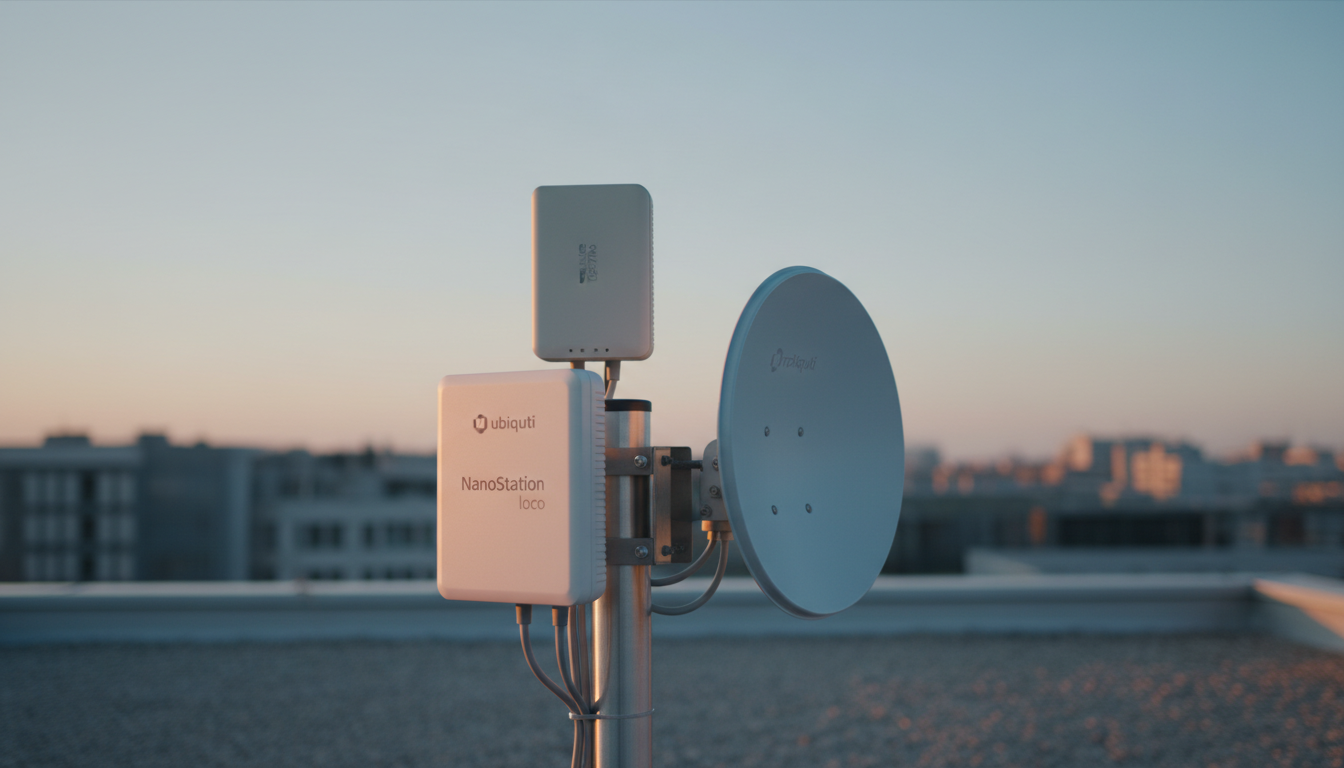
Choosing a 5 GHz network bridge can feel like navigating a maze of specs, prices, and use‑case claims. In this roundup we've looked at 11 options, from the $42.92 Vonets VAP11S‑5G that tops the budget tier to the $208.99 Ubiquiti LOCO5AC positioned in the premium segment. Ratings hover between 3.5 and 4.6 stars, with the Ubiquiti NanoStation loco M5 and NanoBeam ac Gen2 both earning a solid 4.6/5 from hundreds of reviewers.
Our selection spans three price tiers. Budget picks include the NanoStation loco M5 at $63.99, the Vonets VAP11S‑5G, and the BrosTrend bridge, all under $80 and offering antenna gains from 13 dBi to 23 dBi. Mid‑range choices like the TP‑Link CPE710 and KuWFi Wireless Bridge push gains up to 23 dBi and support speeds of 400 Mbps and 900 Mbps respectively. Premium contenders—such as the NanoBeam ac Gen2 with a 19 dBi antenna and the AdaLov Gigabit Bridge with 16 dBi gain—bring higher data rates and longer transmission distances for demanding setups.
Below we break down each model’s strengths, so you'll match the right bridge to your environment and budget.
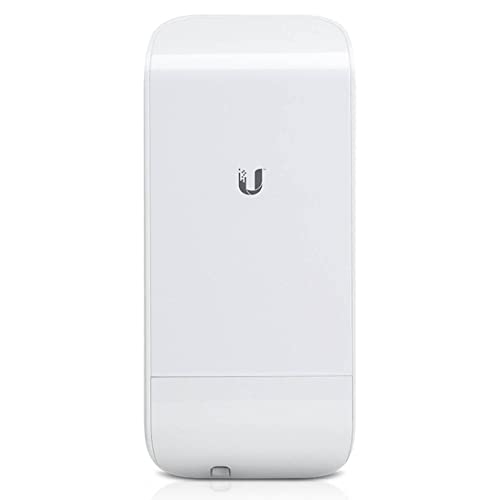
Ubiquiti NanoStation loco M5
Its 13 dBi antenna gain delivers reliable range while keeping the unit light at 499 g, offering great value for budget‑focused setups.

Ubiquiti NanoBeam ac Gen2
Ideal for users who need higher gain, the NanoBeam ac Gen2 serves pros seeking stronger links, and at $95.99 it sits about $32.00 above the Best Overall.

TP-Link CPE710
The CPE710’s 207 mm height and 366 mm length give it a sturdier mounting profile, catering to users who prefer a more robust outdoor antenna without the premium price of the NanoBeam.
Also considered
Price Range
Ubiquiti NanoStation loco M5
$63.99
Ubiquiti NanoBeam ac Gen2
$95.99
TP-Link CPE710
$74.99

AdaLov Gigabit Wireless Bridge with Mounts
$191.99

Vonets VAP11S-5G
$42.92

UeeVii CPE452
$139.99

BrosTrend Wireless Bridge
$59.99

Vonets VAP11AC
$45.28
KuWFi Wireless Bridge
$84.99
Ubiquiti LOCO5AC
$208.99

KuWFi Outdoor Wireless Bridge
$76.49
Spec Comparison
TL;DR: The Ubiquiti NanoStation Loco M5 delivers up to 150 Mbps real‑world throughput with a 13 dBi antenna in a compact, weather‑proof package, earning a 4.6‑star rating from 867 reviewers.
The standout spec is its integrated 13 dBi dual‑linear polarized antenna, paired with a 45° beamwidth and a maximum output power of 23 dBm. Ubiquiti lists a rated data rate of up to 300 Mbps and a real‑world ceiling of 150 Mbps, all packed into a 76.2 × 63.5 × 177.8 mm enclosure that weighs 1.1 pounds.
At 1.1 pounds, the NanoStation Loco M5 is heavier than the BrosTrend Wireless Bridge (about 0.22 lb) but it's lighter than the TP‑Link CPE710 (around 2.2 lb). It offers a single 10/100 BASE‑TX Ethernet port, which is fewer than some peers that provide higher‑speed or multiple ports, making the wired backhaul a potential bottleneck for its wireless ceiling.
Users praise the device’s long‑range capability and the ease of pole‑mount installation, noting that the compact form factor blends unobtrusively into outdoor setups. Common complaints focus on the 100 Mbps Ethernet limit, the older 802.11n chipset that caps peak speeds, and occasional overheating when the unit runs in very hot conditions. Professional reviewers highlight the airMAX TDMA protocol and built‑in airView spectrum analysis as useful tools for mitigating interference.
Beyond the antenna, the NanoStation runs on a 24 V, 0.5 A passive PoE supply, drawing 5.5 W of power. It meets ETSI300‑019‑1.4 shock and vibration standards and operates from –30 °C to +75 °C, making it suitable for most outdoor environments.
Pros
Cons
Best for: Hobbyists, small ISPs, rural homeowners, and urban point‑to‑point links needing an affordable 5 GHz bridge.
Avoid if: You need gigabit‑speed wired backhaul, indoor deployment, or an enterprise‑grade enclosure for harsh environments.
“covers multitudes of devices”
“ideal for residential or small building use”
TL;DR: Ubiquiti NanoBeam ac Gen2 delivers 19 dBi directional gain in a compact 96 mm‑high, 907 g unit, offering 450 Mbps throughput, dual Gigabit Ethernet and rugged outdoor durability for point‑to‑point links.
The standout spec is its 19 dBi antenna gain, packed into a chassis only 96.52 mm tall, 226.06 mm long and 241.30 mm wide. At 907.18 g, the device stays lightweight enough for pole mounting while still housing a 720 MHz processor, 128 MB DDR2 RAM and 8 MB flash.
Compared with the other ten bridges, the NanoBeam’s gain outpaces the 12 dBi of both KuWFi models, the 13 dBi of the NanoStation loco M5, and the 14 dBi of the UeeVii CPE452, though it sits below the TP‑Link CPE710’s 23 dBi. Its weight is lighter than the TP‑Link unit (≈1 kg) and the KuWFi bridge (≈2.05 lb), but heavier than the NanoStation (≈0.5 kg) and far heavier than the ultra‑light BrosTrend bridge (≈0.1 kg). The inclusion of two Gigabit Ethernet ports also gives it a connectivity edge that many peers simply don’t list.
Users consistently highlight the “extremely compact and lightweight design with the highest gain‑to‑footprint ratio” and praise the 3‑axis ball‑joint mount for quick alignment. Professional reviewers note the directional beam’s excellent noise immunity in RF‑congested sites, while the 4.6‑star rating from 563 reviewers reinforces high satisfaction. The main drawback is the directional antenna, which confines the device to point‑to‑point or focused point‑to‑multipoint scenarios and demands clear line‑of‑sight.
Operating from –40 °C to 80 °C, the unit survives winds up to 200 km/h (125 mph) and includes ±24 kV ESD/EMP protection. Power consumption peaks at 8.5 W, with a 25 dBm output and passive 2‑pair PoE input (24 V, 0.5 A).
Pros
Cons
Best for: Buyers willing to invest in a proven, high‑quality option
Avoid if: You're on a tight budget or only need basic functionality
TL;DR: The TP‑Link CPE710 packs a 23 dBi directional antenna, IP65‑rated housing and up to 867 Mbps on 5 GHz, making it a solid mid‑range outdoor bridge for long‑haul links.
The standout spec is its 23 dBi high‑gain antenna, which together with 2×2 MIMO and a 27 dBm transmit power lets the unit claim up to 867 Mbps when using an 80 MHz channel. The device is built for outdoor deployment – it’s IP65‑rated, weighs about 2.20 lb (1000 g) and includes a free PoE injector for easy power delivery.
Compared with the other ten bridges in this roundup, the CPE710 sits toward the higher end of the gain spectrum: its 23 dBi gain dwarfs the 12 dBi of the KuWFi Outdoor Bridge and the 13 dBi of the Ubiquiti NanoStation loco M5, and it also exceeds the 19 dBi offered by the NanoBeam ac Gen2. It’s a bit heavier than the NanoStation (1.1 lb) and the BrosTrend bridge (0.22 lb), but still lighter than the 2‑lb Vonets VAP11AC. Price‑wise it lands in the mid‑tier, above the entry‑level models but below the premium NanoBeam, giving it a balanced value proposition.
Professional reviewers note that the 23 dBi antenna and the Qualcomm MIPS 74Kc 750 MHz processor deliver “cut‑through noise” performance for point‑to‑point links, while the Pharos Control web interface simplifies large‑scale management. Users appreciate the snap‑lock three‑axis alignment that helps keep the narrow 9° / 7° beamwidth steady in windy conditions. The main trade‑off is the exclusive 5 GHz operation, which can be a limitation for devices that still rely on 2.4 GHz, and the tight beam requires precise aiming during installation.
Pros
Cons
Best for: Businesses, rural ISPs, and enterprises that need a well‑reviewed, reliable outdoor bridge with strong directional gain.
Avoid if: You need 2.4 GHz compatibility, a wider beam for casual indoor use, or a lower‑cost entry‑level solution.
TL;DR: The AdaLov Gigabit Wireless Bridge packs a 16 dBi directional antenna, 900 Mbps peak throughput and PoE flexibility into a weatherproof unit, but its premium $159.98 price may deter budget‑focused buyers.
The bridge’s standout spec is its 16 dBi antenna gain, which the manufacturer says supports a transmission distance of 3 km on the 5.8 GHz band. Coupled with a listed wireless throughput of 900 Mbps, it aims to replace long Ethernet runs with a high‑speed point‑to‑point link.
Compared with other bridges in this roundup, the AdaLov’s antenna gain sits between the 14 dBi of the UeeVii CPE452 and the 19 dBi of the Ubiquiti NanoBeam ac Gen2, offering solid range without the extreme gain of the latter. Its 900 Mbps throughput matches the peak speed of the KuWFi Outdoor Wireless Bridge, and it outpaces the 450 Mbps throughput of the Ubiquiti LOCO5AC. At roughly 3.75 lb, it is heavier than the feather‑light UeeVii (≈0.01 lb) and the 2 lb Ubiquiti NanoBeam, but still lighter than many bulkier outdoor units.
Everyday users praise the one‑key bridge pairing via the front LED display, calling the setup “extremely quick” and ideal for non‑technical homeowners. Professional reviewers echo this, noting the rapid plug‑and‑play experience. However, both reviewers and consumers report that real‑world speeds often settle around 300‑350 Mbps, well below the advertised 900 Mbps peak, especially on congested channels.
Beyond the antenna, the unit includes a 1 × Gigabit LAN port and a 1 × 100 Mbps LAN port, both PoE‑enabled (24 V for the 100 Mbps port, 48 V for the Gigabit port). Features like APSD, Dynamic MIMO Power Saving and low‑latency operation aim to keep power use low when traffic is light, making it a flexible choice for outdoor cameras or remote office links.
Pros
Cons
Best for: Those prioritizing quality and willing to pay for premium performance
Avoid if: You're shopping on a tight budget — it's priced at $159.98
“internet connection well... cameras not getting problem”
“really really well”
TL;DR: The Vonets VAP11S-5G offers an industrial‑grade 5 GHz bridge with up to 500 m range, 900 Mbps speed and robust power protection for a budget‑friendly $42.92.
What really stands out is the claimed point‑to‑point reach of up to 500 m (barrier‑free) while delivering a maximum Wi‑Fi rate of 900 Mbps on the 5 GHz band. The unit packs two 3 dBi external whip antennas and runs on a wide DC5‑24 V input, protected by two‑stage over‑voltage shielding up to 29 V.
At 94 g, its chassis is heavier than the 72 g VAP11AC but lighter than the 99.2 g BrosTrend bridge, and its 24 mm height makes it far more compact than the BrosTrend’s 132 mm profile. Unlike the bulkier Ubiquiti NanoStation (499 g) or the TP‑Link CPE710 (1000 g), the VAP11S‑5G stays unobtrusive for tight installations. It also provides two 10/100 Mbps Ethernet ports, a feature not always present on the other models.
Reviewers appreciate the industrial‑grade durability, noting the wide voltage tolerance and the optional enhanced RF power of 23 dBm for tougher environments. Users also like the intelligent auto‑start/stop cooling fan and clear LED status indicators (yellow for Ethernet, green for Wi‑Fi, blue for system). However, several comments point out the lack of gigabit Ethernet, which can bottleneck high‑bandwidth wired devices, and the relatively modest number of consumer reviews compared with higher‑rated peers.
Pros
Cons
Best for: Industrial or professional deployments that need robust Wi‑Fi‑to‑Ethernet conversion such as video surveillance or PLC connectivity.
Avoid if: You need gigabit wired speeds, a device with extensive consumer reviews, or a higher‑end performance tier for home entertainment.
TL;DR: The UeeVii CPE452 is a compact 5.8 GHz bridge with a 14 dBi antenna, 300 Mbps wireless rate and 3 km range, ideal for point‑to‑point links where you can keep a clear line‑of‑sight.
What really stands out is the 14 dBi directional antenna, which the manufacturer claims can reach up to 3 km in clear line‑of‑sight conditions. Coupled with a 300 Mbps transmission rate, the bridge moves a decent amount of data across a backyard or between a house and a detached garage without needing a wired run.
Compared with the other ten entries, the CPE452 is considerably lighter – at roughly 0.01 lb (5.8 g) it’s far lighter than the AdaLov Gigabit Wireless Bridge, which tips the scales at over 3 lb. Its antenna gain is modest; peers such as the Ubiquiti NanoBeam and TP‑Link CPE710 sport 19 dBi and 23 dBi respectively, so the CPE452 sits in the middle of the range hierarchy. The 300 Mbps wireless rate also trails the AdaLov’s 780 Mbps receive rate and the NanoBeam’s 450 Mbps, indicating a trade‑off between price and raw throughput.
Professional reviewers note the unit boots up ready to pair, and the built‑in LEDs make alignment straightforward – a big help when you’re climbing a ladder to mount the device. Users, however, frequently mention the 100 Mbps Ethernet ceiling as a bottleneck; even though the wireless side can handle 300 Mbps, the wired backhaul caps at 100 Mbps, which can limit high‑bandwidth applications. Users also complain when trees or walls intervene, blocking the required line‑of‑sight.
Pros
Cons
Best for: Expanding network coverage to secondary buildings such as barns, shops, warehouses or garages where you can maintain a clear line‑of‑sight.
Avoid if: You need gigabit‑rated wired backhaul, have obstructed mounting locations, or are on a tight budget.
TL;DR: The BrosTrend 5 GHz Wireless Bridge delivers up to 867 Mbps over a 1 km line‑of‑sight link, packs two Gigabit LAN ports into a weather‑proof 0.22‑lb shell, and stays under $60.
What really stands out is the advertised maximum throughput of 867 Mbps on the 5 GHz band, paired with a PoE‑powered cable run of 60 m. The unit measures just 5.2 in × 2.8 in × 1.7 in (H × L × W) and weighs only 0.22 lb, making it easy to mount on a wall or pole while staying protected behind an IP65 rating and 6 kV lightning protection.
Compared with the other ten bridges in this roundup, the BrosTrend is notably lighter than the Ubiquiti NanoStation (which tips the scales at about 1.1 lb) and far more compact than the TP‑Link CPE710, whose height and length run into the hundreds of millimetres. Its 867 Mbps ceiling sits between the 900 Mbps rating of the Vonets VAP11AC and the 300 Mbps ceiling of both the Ubiquiti NanoStation and the KuWFi Outdoor Bridge, giving it a solid middle‑ground performance without the bulk of higher‑gain models.
Users repeatedly praise the plug‑and‑play nature of the kit: the two units arrive pre‑paired, so you can establish the wireless link in minutes without digging into a web UI. Reviewers also highlight the sturdy, weather‑proof enclosure and the reliable high‑speed link over several hundred feet. The main complaints focus on the single‑band design—only 5 GHz is supported, which can struggle to penetrate walls or foliage—and the need for a clear line‑of‑sight, as the 60° alignment angle and 60° antenna beamwidth demand careful pointing.
Additional technical notes include dual 1000 Mbps LAN ports per unit, WPA2 security, and compliance with the 802.11ac Wave 2 standard. Power draw stays modest at 4.7 W, and the bridge powers via passive PoE (up to 60 m), 802.3af PoE, or a DC adapter, giving installers flexibility for outdoor deployments.
Pros
Cons
Best for: Entry-level buyers or those on a tight budget
Avoid if: You need powerful performance or professional‑grade features
“internet connection well... cameras not getting problem”
“really really well”
TL;DR: The Vonets VAP11AC is a compact, industrial‑grade dual‑band bridge that delivers up to 1.2 Gbps total Wi‑Fi speed, reaches 300 m on 5 GHz, and includes built‑in cooling and video‑surveillance support for around $45.
What sets the VAP11AC apart is its simultaneous 2.4 GHz (300 Mbps) and 5 GHz (900 Mbps) operation, giving a combined Wi‑Fi data rate of 1 200 Mbps. It can transmit up to 23 dBm on the 5 GHz band and reach as far as 300 m, while the 2.4 GHz side runs at 15 dBm. The unit measures 9.4 × 4.5 × 1.5 cm and weighs about 0.26 lb (72 g), making it easy to mount in tight spaces.
Compared with the other ten bridges in this roundup, the VAP11AC is a bit heavier than the Vonets VAP11S-5G (0.22 lb) and offers a shorter maximum range than that model’s 500 m claim. However, its total Wi‑Fi speed of 1 200 Mbps exceeds the VAP11S-5G’s 900 Mbps maximum. It's roughly the same weight as the BrosTrend Wireless Bridge (about 0.22 lb) but adds an intelligent auto‑start cooling fan that the BrosTrend unit lacks. While the price sits in the budget tier, it provides more dual‑band bandwidth than many similarly priced competitors.
Reviewers appreciate the device’s industrial‑grade chassis and the TAFC (digital‑analog temperature compensation frequency stabilization) that keeps the signal steady in fluctuating environments. Users also note the built‑in video‑surveillance support as a handy feature for security cameras. On the downside, some consider the 2.4 GHz transmit power of 15 dBm modest, which can limit coverage in crowded Wi‑Fi spaces, and the 3.5‑star rating from 14 reviews suggests mixed satisfaction.
Technical extras include an adaptive 10/100 Mbps Ethernet port, over‑voltage protection up to 29 V, reverse‑polarity protection, and a fan that only kicks in after 5‑10 minutes of operation. Power can be supplied anywhere between 5 V and 24 V DC at a typical 1 A draw, and the unit ships with a 30 cm Ethernet cable and a 12 V / 1 A power adapter.
Pros
Cons
Best for: Entry-level buyers or those on a tight budget
Avoid if: Reliability and user satisfaction are your top concerns
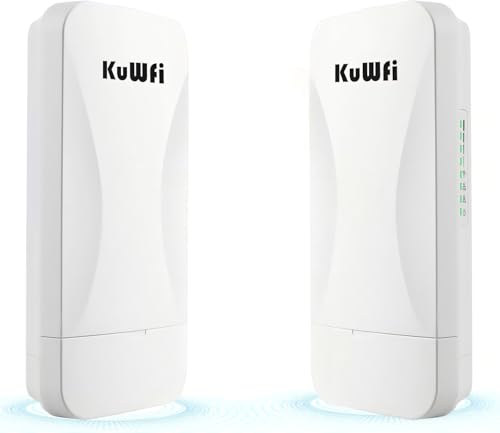
TL;DR: The KuWFi Wireless Bridge delivers 12dBi antenna gain, 900Mbps Wi‑Fi speed and a weather‑proof IP65 housing in a compact 10.0 in × 8.0 in × 3.5 in unit weighing 2.05 lb.
This bridge uses a 12dBi antenna paired with a maximum Wi‑Fi speed of 900Mbps, letting you push gigabit‑class traffic across a line‑of‑sight link that the manufacturer advertises up to 2 km. The device houses two Gigabit Ethernet ports, supports 5.8 GHz operation and offers 4KV lightning protection, which is unusual for a bridge at this price point.
Compared with the other contenders in the Best 5 GHz Network Bridges roundup, the KuWFi sits in the middle of the pack on antenna gain—matching the KuWFi Outdoor Bridge’s 12dBi but falling short of the TP‑Link CPE710’s 23dBi and the Ubiquiti NanoBeam ac Gen2’s 19dBi. Its weight of 2.05 lb is comparable to the Ubiquiti NanoBeam ac Gen2 (about 2.0 lb) and noticeably heavier than the ultra‑light BrosTrend Bridge (under 0.22 lb). Speed‑wise, its 900Mbps tops the Vonets VAP11AC’s 5 GHz rate and outpaces the 300Mbps figures listed for the KuWFi Outdoor Bridge and the Ubiquiti NanoStation loco M5.
Users praise the one‑click pairing and the clear LED indicator for quick setup, and the IP65 rating gives confidence that rain or dust won’t short the unit out. Professional reviewers note its “enterprise‑level stability” for rural deployments, while consumer comments often flag the need for a clear line‑of‑sight to reach the full 2 km range. The bridge runs on 48V PoE (or optional 12V DC), but it doesn’t include a power supply, so you’ll need a PoE‑capable switch or a separate adapter.
Pros
Cons
Best for: Rural homeowners, farms, and small businesses that need to extend a gigabit network 1‑2 km outdoors
Avoid if: You need advanced features or professional‑grade performance, have many physical obstructions, or lack PoE infrastructure
“internet connection well... cameras not getting problem”
“really really well”
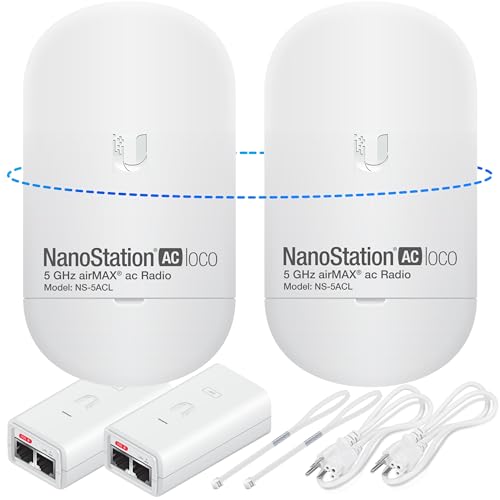
TL;DR: The Ubiquiti LOCO5AC packs a 13 dBi antenna, 450+ Mbps throughput and rugged UV‑stabilized housing into a 179 mm ultra‑compact unit, ideal for point‑to‑point links where space and reliability matter.
At the heart of the LOCO5AC is an integrated 13 dBi dual‑polarized antenna that delivers up to 450+ Mbps throughput. The whole radio fits into a 179 × 77.5 × 59.1 mm enclosure and weighs just 2.0 pounds, making it one of the smallest outdoor 5 GHz bridges on the market. It runs on a 560 MHz processor with 64 MB of memory and draws a maximum of 8.5 W from a passive PoE supply.
Compared with other options in the roundup, the LOCO5AC is lighter than the AdaLov Gigabit Wireless Bridge (3.747858454 pounds) and slightly lighter than the KuWFi Wireless Bridge (2.05 pounds). Its 13 dBi gain sits below the AdaLov’s 16 dBi and the NanoBeam’s 19 dBi, but it tops the KuWFi models that list 12 dBi. While the price sits at a premium level, the combination of compact size and solid build often justifies the extra cost for installers who need a discreet solution.
Professional reviewers say the device’s reliability shines for simple PtP bridges and point‑to‑multipoint CPEs, noting the ease of configuration via the mobile app and the benefit of passive PoE. Users point out a minor confusion around memory size—some sources list 64 MB while others claim 128 MB—so buyers should verify the exact configuration. The unit also offers a 45° beamwidth, minimum 20 dB cross‑polar isolation, and a max VSWR of 1.8:1, which together support stable links in challenging outdoor environments.
Pros
Cons
Best for: Those prioritizing quality and willing to pay for premium performance
Avoid if: You're on a tight budget or only need basic functionality
TL;DR: The KuWFi Outdoor Wireless Bridge offers a 12 dBi antenna, 300 Mbps throughput and IP65 weatherproofing for $76.49, making it a solid mid‑range choice for simple point‑to‑point links.
This bridge’s standout spec is its 12 dBi antenna gain combined with a 23 dBm RF output, which the manufacturer says supports up to 3 km of line‑of‑sight distance. It also includes three 10/100 Mbps Ethernet ports and a dual‑voltage PoE option (24 V standard, optional 48 V), so you can power it from most existing PoE injectors.
Compared with other options in the roundup, its antenna gain is lower than the TP‑Link CPE710’s 23 dBi, but it matches the Ubiquiti NanoStation loco M5’s 13 dBi gain. Its rated wireless speed of 300 Mbps ties the NanoStation’s maximum data rate, yet it falls short of the BrosTrend model’s 867 Mbps claim and the other KuWFi bridge’s 900 Mbps rating. On the power side, both the KuWFi and NanoStation share a 23 dBm output, while the NanoStation’s listed maximum power consumption is 5.5 W; the KuWFi’s power draw isn’t listed, but the dual‑voltage PoE gives flexibility.
User feedback highlights the LED pairing indicator and the pre‑programmed 2‑pack setup as real time‑savers, especially for installers who dislike web‑based configuration. Reviewers also appreciate the rugged IP65 rating and the wide operating temperature range of –30 °C to 65 °C, making the unit reliable in harsh outdoor environments. The only recurring complaint is that the 300 Mbps ceiling can become a bottleneck when trying to stream multiple high‑definition CCTV feeds.
Pros
Cons
Best for: Most users seeking a balanced, mainstream option
Avoid if: You need advanced features or professional‑grade performance
“internet connection well... cameras not getting problem”
“really really well”
Breakdown
Ubiquiti NanoStation loco M5
Pros
Ubiquiti NanoBeam ac Gen2
Pros
TP-Link CPE710
Pros
AdaLov Gigabit Wireless Bridge with Mounts
Pros
Cons
Based on scoring data and product specs
Personalized picks
Best Overall Pick
Ubiquiti NanoStation loco M5
Best OverallBest for: Budget-conscious buyers seeking a reliable entry-level option
Ubiquiti NanoBeam ac Gen2
Best for: Buyers willing to invest in a proven, high-quality option
$95.99+$32.00 vs winner
Skip KuWFi Outdoor Wireless Bridge if…
You need advanced features or professional-grade performance
Ubiquiti’s NanoStation loco M5 takes the top spot as the best 5 GHz network bridge. It pulls a solid 4.6‑star rating from 867 reviewers, offers a 13 dBi antenna gain and a quoted outdoor range of over 15 km, and still comes in at a modest $63.99. Those specs give you reliable long‑range links without breaking the bank.
The runner‑up is the NanoBeam ac Gen2, which shines when you need extra reach and higher throughput. Its 19 dBi antenna and 450 Mbps 5 GHz data rate outpace the loco, and the built‑in 3‑axis ball‑joint mount plus two Gigabit Ethernet ports make it ideal for mounting on poles or walls in demanding point‑to‑point setups.
For tighter budgets, the Vonets VAP11S‑5G delivers basic 5 GHz bridging at just $42.92. If you want a step up without splurging, the TP‑Link CPE710 balances performance and price at $74.99. And for premium‑class features, the Ubiquiti LOCO5AC rounds out the lineup at $208.99, offering top‑tier specs for professional installations.
Pick the NanoStation loco M5 today and get the most dependable 5 GHz bridge for everyday use.
The Ubiquiti NanoStation loco M5 is designed for outdoor use with a UV‑stabilized plastic enclosure, an operating temperature range down to –30 °C and up to +75 °C, and a rated range of over 15 km. Its passive PoE design and 13 dBi antenna make it a reliable, weather‑tolerant choice for long links.
No reviews yet — be the first to share your experience.
Please sign in to leave a review
