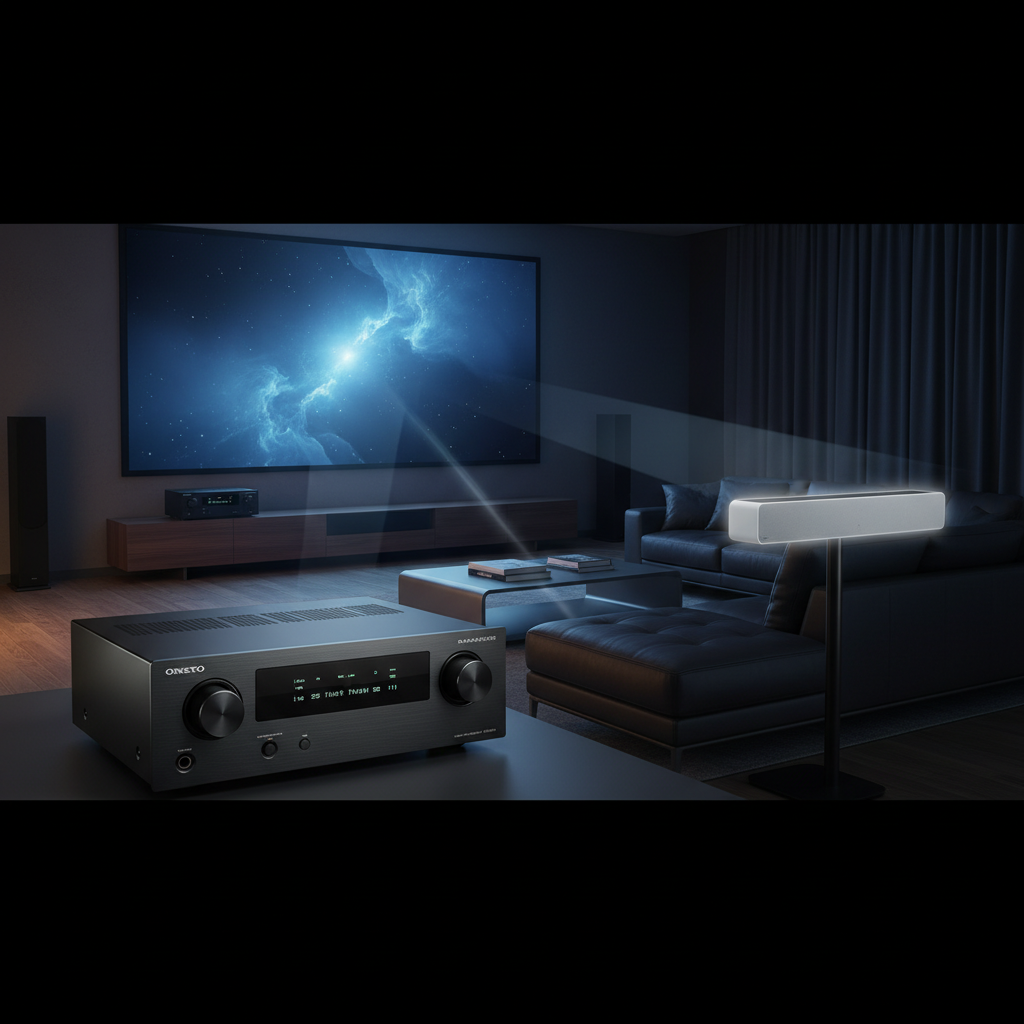
Building a home‑theater that can fill a room with immersive sound used to mean picking a single receiver or soundbar and hoping for the best. This roundup evaluates 12 different 7.1+ channel solutions, from full‑stack AV receivers to all‑in‑one soundbars. The Polk Audio MagniFi Max AX SR leads the pack with a 4.4‑star rating from 797 reviewers and a list price of $899.00, showing that high‑end Atmos performance can sit in the mid‑range.
The field is organized into three price tiers. Budget‑friendly choices include the LG SP7R at $159.99, the Pioneer VSX‑935 for $549.00, and the Onkyo TX‑NR6050 at $599.99, each carrying a 4‑plus rating. Mid‑range options feature the Onkyo TX‑NR5100 ($629.30), the same Polk MagniFi system ($899.00), and the Onkyo TX‑RZ30 ($960.00). Premium powerhouses are the Denon AVR‑X2800H ($1,299.00), JBL Bar 1300X ($1,699.95) and the top‑tier Denon AVR‑X4800H at $2,519.00, all scoring above 4.3 stars.
Below you’ll find each model presented by performance, connectivity and value, so you can match the system that fits your room and budget.

Onkyo TX-NR6050
Its compact depth of 379.5 mm lets it fit easily under most TVs, delivering full‑range 7.1+ sound without crowding your setup.

Polk Audio MagniFi Max AX SR
Ideal for cinephiles who want richer connectivity, it adds HDMI eARC and three 4K HDMI ports, and costs about $299 more than the budget pick.

Onkyo TX-RZ30
Stands out with a 24‑bit/192 kHz DAC, delivering finer audio detail that the other two models don’t specify, catering to audiophiles seeking higher fidelity.
Also considered
Score Analysis
Key score advantages vs. runner-up (Polk Audio MagniFi)
Price Range
Onkyo TX-NR6050
$599.99
Polk Audio MagniFi Max AX SR
$769.00
Onkyo TX-RZ30
$979.49

Denon AVR-X2800H
$1,299.00

Pioneer VSX-935
$549.00

Onkyo TX-NR5100 7.2-Channel AV Receiver
$598.00

Denon AVR-X4800H
$2,799.00

JBL Bar 1300X
$1,149.95

LG SP7R
$159.99

Sony STRDH770
-$0.01
JBL Bar 1000
$899.95

JBL Bar 9.1
$599.99
Spec Comparison
TL;DR: The Onkyo TX‑NR6050 delivers 90 W RMS per channel, 7 HDMI 2.1 inputs and strong Dolby Atmos support for a solid home‑theater experience at $599.99.
The receiver’s standout spec is its 90 W per channel RMS output into 8 Ω, paired with a low 0.08 % THD+N, which gives clean, distortion‑free sound. It also packs seven HDMI inputs and two HDMI outputs, all supporting HDMI 2.1 features such as VRR, ALLM, QFT, DSC, QMS and eARC, plus 8K/60p and 4K/120Hz video pass‑through.
Compared with other options in this roundup, the TX‑NR6050 offers more HDMI inputs than the Onkyo TX‑NR5100, which lists four inputs. It shares the $599.99 price point with the JBL Bar 9.1, yet it provides a full‑receiver architecture rather than a soundbar‑only solution.
Everyday owners praise the receiver’s clear, powerful audio and the ease of streaming from services like Spotify, Amazon Music HD, TIDAL and Deezer. Professional reviewers note the precise room calibration from AccuEQ and the low‑distortion performance that the 0.08 % THD+N figure highlights.
The unit measures 379.5 mm deep, 173.5 mm high and 435 mm wide, weighing 9800 g, and includes a phono MM input, one coaxial, one optical and a USB port for convenient source connections. Its 40 AM/FM presets and dual‑band Wi‑Fi round out a feature‑rich package.
Pros
Cons
Best for: Home‑theater enthusiasts, gamers who need HDMI 2.1 features, and audiophiles seeking precise room calibration.
Avoid if: You want the best value‑per‑dollar in its price range or require a built‑in voice assistant.
TL;DR: Polk Audio’s MagniFi Max AX SR delivers a true 7.1.2‑channel sound experience with an 11‑driver soundbar, wireless 10‑inch subwoofer, and dual surround speakers for $899, earning 4.4‑star praise from 797 reviewers.
The system’s headline spec is its 7.1.2 channel layout, built around an 11‑driver soundbar that houses 76.2 mm left/right mid‑woofer drivers, 63.5 mm center mids, and a 254 mm (10‑inch) subwoofer driver. Connectivity includes 1 HDMI eARC 4K (60 Hz) port, 3 additional HDMI 4K (60 Hz) ports, Bluetooth 5.0, and dual‑band Wi‑Fi (2.4 GHz & 5 GHz). The soundbar measures 1143 mm wide, 71.1 mm high, and 116.8 mm deep, while the subwoofer weighs 11921 g.
Compared with the other eleven entries, the MagniFi Max AX SR is lighter than the 14‑kg Onkyo TX‑RZ30 and the 20.7‑lb Pioneer VSX‑935, yet it’s wider than the compact Onkyo TX‑NR6050 (435 mm width) and the Onkyo TX‑NR5100 (435 mm width). It offers fewer HDMI inputs than the Onkyo TX‑NR6050’s seven ports, but its Bluetooth 5.0 is newer than the JBL Bar 9.1’s 4.2 version. The 45‑inch (1143 mm) soundbar also out‑sizes many rivals, making it a more substantial visual presence.
Users consistently highlight that VoiceAdjust technology delivers crystal‑clear dialogue and that the wireless subwoofer provides powerful bass. The wireless setup of the two surround speakers receives praise for its simplicity, while professional reviewers note the system’s rare true 7.1.2 performance in a soundbar package. The most frequent complaints revolve around the IR remote’s need for line‑of‑sight, occasional Wi‑Fi dropouts because there’s no Ethernet port, and the bulk of the 45‑inch bar in tighter rooms.
The MagniFi Max AX SR supports a full suite of immersive audio formats—including Dolby Atmos, Atmos True HD, DTS‑X, and DTS‑HD Master Audio—while its video pass‑through handles 4K HDR and Dolby Vision. Apple AirPlay 2, Google Chromecast for Audio, Spotify Connect, and Alexa integration handle streaming, all managed through the deluxe IR remote and on‑screen OLED display.
Pros
Cons
Best for: Home‑theater enthusiasts who want true Dolby Atmos/DTS:X immersion, larger living rooms where a substantial soundbar fits comfortably.
Avoid if: You have limited desk space, need portability, or require a wired Ethernet connection for network stability.
“Dialogue is crystal clear”
“Bass is powerful and deep”
TL;DR: The Onkyo TX‑RZ30 is a 9.2‑channel, THX‑certified AV receiver with 100 W per channel, Dirac Live room correction, and six HDMI 2.1a inputs, priced at $960.00.
What really sets the TX‑RZ30 apart is its 9.2‑channel Class AB discrete amplification delivering a rated 100 W per channel into 8 Ω, while the maximum dynamic output reaches 170 W per channel into 4 Ω. The receiver offers an ultra‑wide frequency response of 5 Hz – 100 kHz (+1/‑3 dB) and a low total harmonic distortion of 0.08 % at rated power. A native 24‑bit/192 kHz DAC and Dirac Live Full Bandwidth room‑correction system further boost audio fidelity.
In the context of this 12‑product roundup, the TX‑RZ30 provides more HDMI inputs (six HDMI 2.1a) than the Onkyo TX‑NR5100’s four, yet one fewer than the Onkyo TX‑NR6050’s seven. It costs more than the Polk Audio MagniFi Max AX SR ($899.00) but sits below the JBL Bar 1000’s $1199.95 price point. At 14 kg gross, it is heavier than the Polk unit’s 13 pounds but lighter than the JBL Bar 9.1’s 45.5 pounds, giving it a solid, appliance‑grade presence without being overly bulky.
Reviewers consistently highlight the dramatic sound lift after running Dirac calibration, calling the audio “crystal clear” and “cinema‑like.” Professional reviewers also note the clean dialogue and reference‑grade performance backed by THX Certified Select and IMAX Enhanced badges. The downsides that surface in user feedback revolve around the finicky nature of the Dirac calibration process, an on‑screen menu that feels dated, and a remote control that feels cluttered. The built‑in Wi‑Fi (dual‑band 2.4 GHz & 5 GHz), Bluetooth 5.1, and eARC‑ready HDMI ports round out a connectivity suite that satisfies most modern streaming needs.
Pros
Cons
Best for: Audiophiles and home‑theater enthusiasts who want high‑performance 9.2‑channel sound with advanced room correction.
Avoid if: You're shopping on a tight budget — it's priced at $960.00.
“Night and day improvement in sound quality after Dirac calibration – even my spouse, who isn’t an audiophile, could clearly hear the difference.”
“The remote feels outdated and crowded, making navigation a pain.”
TL;DR: The Denon AVR‑X2800H delivers 7.2‑channel discrete power, 185 W single‑channel output, and full HDMI 2.1 support, making it a solid mid‑tier choice for immersive home‑theater and gaming setups.
At the heart of the AVR‑X2800H is a high‑current discrete amplifier delivering up to 185 W (1‑channel driven, 6 Ω, 1 kHz, THD 10%). It runs a 32‑bit/192 kHz DAC on every channel and handles DSD files up to 5.6 MHz, so high‑resolution audio streams without compromise. Video‑wise, the unit passes 8K/60 Hz and 4K/120 Hz signals through its six HDMI 2.1 inputs and two HDMI 2.1 outputs with eARC, plus HDR10, HDR10+, Dolby Vision and HLG.
Compared with the other eleven entries, the Denon sits at the higher end of the price band – it’s pricier than the JBL Bar 1000 soundbar – but it also offers more HDMI inputs than the Onkyo TX‑NR5100, which lists only four. In terms of weight, the AVR‑X2800H is dramatically lighter than the JBL Bar 1000’s 41.5 pounds, making installation easier. Its 7.2‑channel layout also outpaces the 7.2‑channel but lower‑power Onkyo TX‑NR6050, giving you more headroom for demanding surround formats.
Reviewers consistently praise the receiver’s immersive soundstage and the reliable HEOS multi‑room streaming. The built‑in phono stage earns frequent mentions from vinyl enthusiasts, and reviewers highlight the Audyssey MultEQ XT with Dynamic EQ for fine‑tuning room acoustics. On the downside, users report occasional firmware hiccups and Wi‑Fi drops, and the lack of front‑panel HDMI inputs limits convenience for some setups. Professional reviewers note the refined high‑frequency response and strong gaming performance thanks to VRR and ALLM.
Pros
Cons
Best for: Medium‑size home‑theater rooms and gamers who need HDMI 2.1 features, plus audiophiles who value high‑resolution audio and a built‑in phono stage.
Avoid if: You need front‑panel HDMI connectivity, bi‑amp capability, or a tighter budget.
TL;DR: The Pioneer VSX‑935 delivers 7.2‑channel Dolby Atmos sound with 80 W per channel, HDMI 2.1 pass‑through on three inputs, and MCACC calibration, all for a mid‑range price.
The standout feature is its 7.2‑channel architecture paired with Dolby Atmos and DTS:X support, plus a Dolby Atmos Height Virtualizer that creates height effects without ceiling speakers. It also offers 80 W per channel into 8 Ω with a low THD of 0.08%, and a 192 kHz / 24‑bit DAC for high‑resolution audio.
Compared with its peers, the VSX‑935 provides six HDMI inputs—fewer than the Onkyo TX‑NR6050’s seven but more than the Onkyo TX‑NR5100’s four. Its weight of 20.7 lb sits just under the Onkyo TX‑NR6050’s 9800 g and is considerably lighter than the JBL Bar 9.1’s 45.49900163156 lb. In terms of power, Pioneer’s 80 W per channel falls short of the Onkyo TX‑RZ30’s 170 W per channel, yet it meets the budget‑tier expectations set by the LG SP7R’s modest output.
User sentiment highlights a rich, room‑filling soundstage and the convenience of the built‑in phono MM input. Reviewers repeatedly praise the MCACC room‑calibration system for dialing in balanced bass and clear dialogue. However, several owners note Bluetooth pairing can be finicky, the remote doesn't have backlighting, and occasional HDMI handshake glitches appear after firmware updates.
From a technical standpoint, the receiver uses Direct Energy amplification and a digital quad‑core 32‑bit DSP from Cirrus Logic. It supports a full suite of immersive formats—Dolby TrueHD, Dolby Digital Plus, DTS‑HD Master Audio, and DTS‑X—plus virtual surround modes like DTS Virtual:X. Network features include dual‑band Wi‑Fi, Bluetooth 4.2, Amazon Alexa and Google Assistant integration, and streaming services such as Spotify and TuneIn.
Pros
Cons
Best for: Entry‑level buyers or those on a tight budget
Avoid if: You want the best value‑per‑dollar in its price range
TL;DR: The Onkyo TX‑NR5100 delivers 7.2‑channel Dolby Atmos sound, 80 W RMS per channel into 8 Ω, HDMI 2.1 support and a rich streaming suite for $629.30.
The TX‑NR5100 packs a 7.2‑channel layout with HDMI 2.1 capability, offering four HDMI inputs and two HDMI outputs, plus 8K/60p and 4K/120p video pass‑through. Its dynamic front‑channel power reaches 160 W at 3 Ω, while RMS output is 80 W per channel into 8 Ω and 135 W per channel into 6 Ω, giving you headroom for immersive Atmos and DTS:X playback.
At 328 mm deep, the unit is shorter than the Onkyo TX‑NR6050’s 379.5 mm depth, and it weighs 18.52 lb, making it lighter than the JBL Bar 9.1’s 45.5 lb chassis but heavier than the Pioneer VSX‑935’s 20.7 lb build. It also has fewer HDMI inputs than the TX‑NR6050’s seven, yet its two HDMI outputs still cover most dual‑display setups. Compared with the Polk Audio MagniFi Max AX SR, the TX‑NR5100 is a bit heavier, but it offers more dedicated channel power and full‑range HDMI 2.1 features that the soundbar‑oriented competitor lacks.
Professional reviewers highlight the receiver’s “immersive audio with Dolby Atmos and DTS:X support and AccuEQ calibration,” and everyday users echo that sentiment, praising the easy AccuEQ setup and the breadth of built‑in streaming services like Spotify, TIDAL, Amazon Music HD, AirPlay 2 and Chromecast. The same reviews note a few hiccups: the remote can feel unresponsive, the companion app sometimes crashes, and Bluetooth 5.0 streaming may drop out. The unit’s signal‑to‑noise ratio of 106 dB and THD+N of 0.08 % round out a solid technical foundation.
Pros
Cons
Best for: Home‑theater enthusiasts who want Dolby Atmos/DTS:X, gamers needing HDMI 2.1 8K/60p or 4K/120p support, and anyone who values a wide built‑in streaming lineup.
Avoid if: You need a ultra‑compact chassis, rely heavily on flawless Bluetooth audio, or demand professional‑grade performance beyond mid‑range specs.
TL;DR: The Denon AVR‑X4800H delivers 9‑channel, 235 W per‑channel power, 7 HDMI 2.1 inputs and four subwoofer outputs, but its $2519.00 price and bulky 34.833037396 pounds chassis suit audiophiles who prioritize performance over space.
The standout spec is its 235 W per channel (6 Ω, 1‑ch) amplification paired with a measured 0.05 % THD, giving you clean, dynamic sound across nine amplified channels and 11.4‑channel pre‑amp outputs. Four independent, assignable subwoofer outputs let you fine‑tune bass placement for immersive formats like Dolby Atmos and DTS:X.
Compared with the other 11 contenders, the X4800H offers far more HDMI connectivity—seven rear HDMI 2.1 inputs and three HDMI outputs versus the JBL Bar 1300X’s three HDMI inputs. It also weighs 34.833037396 pounds, making it noticeably lighter than the 59.0‑pound JBL Bar 1300X, though its size is still a consideration for compact rooms. Its price tag of $2519.00 places it at the premium end of the lineup.
Reviewers consistently praise the receiver’s powerful, detailed audio and the convenience of four subwoofer outputs. Professional outlets highlight the clean amplification and future‑proof 8K/60 Hz and 4K/120 Hz video support. On the downside, users note the HEOS app feels dated, the unit lacks a front‑panel HDMI input, and the 34.8‑pound chassis can feel bulky in smaller setups.
Pros
Cons
Best for: Buyers willing to invest in a proven, high‑quality option
Avoid if: You're shopping on a tight budget — it's priced at $2519.00
TL;DR: The JBL Bar 1300X delivers 11.1.4‑channel, 1170 W immersive sound with detachable wireless surrounds that run up to 12 hours, but its $1,699 price and bulky subwoofer suit larger spaces.
What really sets this system apart is its 11.1.4‑channel layout backed by a maximum speaker power output of 1170 W, including a 650 W soundbar and a 300 W subwoofer. The two detachable surrounds each pack a 6600 mAh battery that can play for 12 hours, letting you place them anywhere without running cables.
At 59.0 pounds, the Bar 1300X's heavier than the JBL Bar 1000’s 41.5 pounds, yet it pushes considerably more power (1170 W vs 880 W) and higher surround output per speaker (110 W vs 140 W total on the Bar 1000). It also outweighs the Polk Audio MagniFi Max AX SR (13.0 pounds) and the Denon AVR‑X4800H (≈34.8 pounds). Compared with the ultra‑light Denon AVR‑X2800H (≈0.02 pounds), the Bar 1300X is dramatically bulkier, but it offers three HDMI inputs and one HDMI eARC output—features the Denon’s specs don’t list. The Onkyo TX‑NR5100 provides four HDMI inputs, so the Bar 1300X’s three inputs sit in the middle of the pack.
Reviewers rave about the “room‑filling” Dolby Atmos and DTS:X experience, noting that the wireless surrounds double as portable Bluetooth speakers around the house. Professional notes highlight the deep impact of the 12‑inch subwoofer and the flexibility of JBL MultiBeam processing. Most users complain they need to recharge the surrounds after about a day of use, and several users point out that the subwoofer’s 15.65 kg weight makes placement a bit of a chore. USB playback only supports MP3 files with a bitrate range of 80–320 kbps, which some find restrictive.
Pros
Cons
Best for: Those prioritizing quality and willing to pay for premium performance
Avoid if: You need advanced features or professional‑grade performance
TL;DR: The LG SP7R packs a 7.1‑channel system with 580 W total output, 24‑bit/96 kHz high‑res audio and wireless rear speakers for $159.99, but a 3‑star rating hints at mixed user experiences.
The standout figure is the 580 W total output, driven by a 40 W center channel, 140 W rear speakers, 45 W × 2 surrounds and a 220 W wireless subwoofer. High‑resolution audio supports up to 24 bit/96 kHz, and the package includes HDMI 1.4 input and output (one each), Bluetooth with a 10 m range, and Wi‑Fi connectivity.
Compared with peers, the SP7R offers a true 7.1 channel layout versus Sony’s 7.2‑channel configuration, and its per‑channel power (40 W center) offers modest output next to Sony’s 145 W per channel. JBL’s Bar 9.1 lists a maximum of 820 W total output, so the LG’s 580 W sits lower on the power scale. In terms of weight, the subwoofer’s 5.8 kg (5800 g) net weight weighs less than the Pioneer VSX‑935’s overall 20.7 pounds, making the rear speakers easier to position.
User feedback praises the immersive wireless surround experience and the value of Meridian Audio tuning, yet many reviewers flag an aggressive auto‑off after about 5 minutes of inactivity, muffled dialogue, and bass that feels under‑whelming despite the 220 W subwoofer. Professional reviewers also note the lack of Dolby Atmos, which limits future‑proofing for premium content.
Pros
Cons
Best for: Shoppers on a tight budget who want the most for their money
Avoid if: Reliability and user satisfaction are your top concerns
“Amazing surround sound”
“Muddy sound”
TL;DR: The Sony STR‑DH770 packs 145 W per channel into a lightweight 1.0 lb chassis, offers 7.2‑channel sound, D.C.A.C. calibration and full‑stack 4K HDR video through four HDMI inputs.
The standout spec is its 145 W per channel RMS output (0.9 % THD) on a single‑channel drive, giving you room‑filling dynamics without a bulky amp. Coupled with a 7.2‑channel layout, dual subwoofer pre‑outs and front‑surround processing, the receiver can drive a full home‑theater setup. It also includes Sony’s Digital Cinema Auto Calibration (D.C.A.C.) and Bluetooth 4.2 with NFC, so pairing a phone or tablet takes just a tap.
Compared with the other eleven entries, the STR‑DH770 is dramatically lighter at 1.0 lb, while most rivals tip the scales at 13 lb or more. It provides four HDMI inputs—more than the single HDMI input on the LG SP7R and matching the Onkyo TX‑NR5100—but fewer than the seven HDMI inputs offered by the Onkyo TX‑NR6050. Its dual subwoofer pre‑outs line up with the Pioneer VSX‑935, yet the JBL Bar 9.1 carries a far larger 300 W subwoofer. The Sony’s Bluetooth version (4.2) matches the JBL’s, but the LG lists a 10 m range, which Sony doesn't specify.
Reviewers consistently praise the powerful 145 W amplification and the hassle‑free D.C.A.C. calibration, noting that the system delivers “strong, dynamic sound” and “smooth Bluetooth/NFC pairing.” Users also like the full‑stack 4K HDR pass‑through, HDMI ARC and support for Dolby TrueHD, DTS‑HD and LPCM up to 192 kHz/24‑bit. The most common complaints focus on the absence of built‑in Wi‑Fi or Ethernet, the lack of newer HDMI features such as HDR10+ or Dolby Vision, and a basic remote that can feel limited during extensive tweaking. Some owners report the HDMI board heating under prolonged high‑volume use.
Pros
Cons
Best for: Home‑theater beginners and 4K/HDR enthusiasts who want strong amplification and an easy‑to‑calibrate receiver.
Avoid if: You need advanced networked audio, multi‑room integration, or the latest HDMI streaming protocols.
“Powerful sound—easily drives my floor‑standing speakers.”
“Bluetooth pairing with NFC is seamless.”
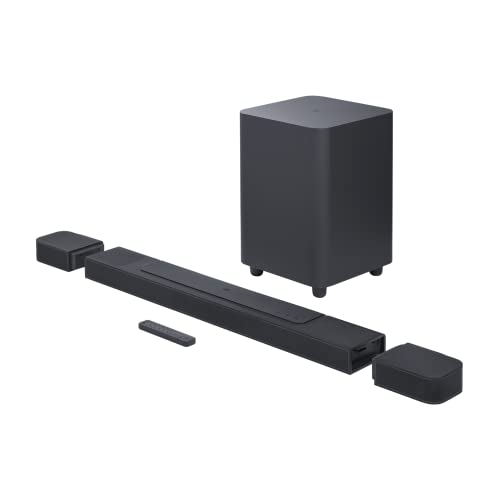
TL;DR: The JBL Bar 1000 delivers a 7.1.4‑channel, 880 W immersive sound experience with wireless surrounds, but its premium price and lack of HDMI 2.1 may limit appeal for hardcore gamers.
This soundbar system packs a 7.1.4 channel layout, 440 W soundbar output and a 300 W subwoofer, adding up to a peak 880 W total speaker power. The detachable wireless surrounds each house a 0.75″ tweeter and a 2.75″ up‑firing driver, while the subwoofer features a 10″ (260 mm) transducer for deep bass. The surrounds list a battery capacity of 3283 mAh, and the main unit weighs 41.5 pounds.
Compared with the other eleven contenders, the JBL Bar 1000 weighs significantly more than the Denon AVR‑X2800H (which weighs just over 0.02 pounds) but less than JBL’s own Bar 1300X, which tips the scales at 59.0 pounds. It offers three HDMI inputs and one HDMI output—fewer than the Onkyo TX‑NR5100’s four inputs, yet more than some budget models that list only one or two. Compared with the Polk Audio MagniFi Max AX SR, it’s at the premium end of the price spectrum while providing more channel depth (7.1.4 versus a typical 5.1 setup).
Reviewers consistently praise the system’s “room‑filling” sound, noting the deep bass and clear dialogue that make movies feel cinematic. Professional reviewers highlight the immersive Atmos performance and the solid build quality. On the downside, users point out that the wireless surrounds need regular charging and can suffer occasional drop‑outs, and the lack of HDMI 2.1 features (no 120 Hz, VRR, or 4K @ 120 Hz support) is a common complaint among gamers.
Beyond power, the Bar 1000 supports Dolby Atmos and DTS:X, includes Bluetooth 5.0 with A2DP 1.2 and AVRCP 1.5 profiles, and runs on Wi‑Fi 802.11 a/b/g/n/ac/ax. The system also integrates AirPlay, Chromecast built‑in, and Alexa Multi‑Room Music, giving you multiple streaming options without extra hardware.
Pros
Cons
Best for: Those prioritizing quality and willing to pay for premium performance
Avoid if: You need advanced features or professional‑grade performance
TL;DR: The JBL Bar 9.1 packs 820 W total output, a 300 W subwoofer and detachable wireless surrounds, delivering immersive Atmos sound, though its single HDMI input and hot chassis may limit some users.
The system’s headline spec delivers 820 W maximum output (THD 1 %). The soundbar itself contributes 400 W, while the wireless subwoofer adds a solid 300 W, and each detachable surround speaker supplies 60 W. With a frequency response of 34 Hz – 20 kHz and a peak SPL of 103 dB, the bar can fill a medium‑sized room with deep bass and clear highs. The battery‑powered surrounds charge in about 3 hours and promise up to 10 hours of playback, letting you place them wherever you like without worrying about cords.
Compared with the other eleven entries, the JBL Bar 9.1 sits at the higher end of power but offers fewer connectivity options. It provides only one HDMI input and one HDMI eARC output, whereas the Onkyo TX‑NR6050 lists seven HDMI inputs. Its Bluetooth version 4.2 is older than the Bluetooth 5.1 found in the Onkyo TX‑RZ30. In terms of weight, the bar‑and‑sub package comes in at 45.49900163156 Pounds, which is noticeably heavier than the 9800 g chassis of the Onkyo TX‑NR6050.
Users consistently praise the thunderous bass from the 300 W subwoofer and the freedom of the detachable surrounds, calling the Atmos effects “window‑shaking” and “cinema‑like.” Professional reviewers echo this, noting the “high‑quality sound with strong bass.” However, the same reviewers point out that the remote lacks a backlight and relies on line‑of‑sight, and several owners report the soundbar becoming noticeably hot during extended movies or gaming sessions.
Beyond raw power, the Bar 9.1 supports Dolby Atmos and DTS:X, AirPlay 2, Chromecast built‑in, and Wi‑Fi 802.11 a/b/g/n/ac, covering most streaming needs. The optical input and a USB Type‑A port (5 V/500 mA) add legacy connectivity, while the 90‑day limited warranty gives a brief safety net for early issues.
Pros
Cons
Best for: Home‑theater enthusiasts, gamers, and audiophiles who want powerful, immersive Atmos sound without the need for multiple HDMI sources.
Avoid if: You need several HDMI inputs, a backlit remote, or are sensitive to device heat during long sessions.
Breakdown
Onkyo TX-NR6050
Pros
Cons
Polk Audio MagniFi Max AX SR
Pros
Onkyo TX-RZ30
Pros
Cons
Denon AVR-X2800H
Pros
Based on scoring data and product specs
Personalized picks
Best Overall Pick
Onkyo TX-NR6050
Best Budget PickBest for: Entry-level buyers or those on a tight budget
Polk Audio MagniFi Max AX SR
Best for: Most users looking for a well-reviewed, reliable mainstream option
$769.00+$169.01 vs winner
Skip JBL Bar 9.1 if…
You need advanced features or professional-grade performance
We’re naming the Onkyo TX‑NR6050 the clear winner of our 7.1+ channel home‑theater roundup. It delivers 90 W per channel into 8 Ω loads, supports Dolby Atmos (5.2.2) and DTS:X, and offers a generous seven HDMI inputs for all your sources. At $599.99 it also carries a 4.1‑star rating from 584 reviewers and a solid two‑year parts‑and‑labor warranty.
The Polk Audio MagniFi Max AX SR lands as the runner‑up, especially if you want an all‑in‑one soundbar system that fills a living‑room with immersive 7.1.2‑channel audio. It ships with a 63‑inch soundbar, a dedicated subwoofer and two powered surrounds, and a 4.4‑star rating from 797 reviews backs it; it also handles 4K HDR video with Dolby Vision through its three HDMI inputs.
Looking beyond the top two, the best budget alternative is the LG SP7R at $159.99, a compact option for tight spaces. For a mid‑range upgrade, the Polk Audio MagniFi Max AX SR (already highlighted) offers a complete package at $899.00. If you crave premium performance, the Denon AVR‑X4800H at $2,519.00 provides high‑end features and scalability for larger setups.
Pick the Onkyo TX‑NR6050 today and enjoy a powerful, future‑ready home‑theater without breaking the bank.
The JBL Bar 1300X provides a full‑featured soundbar with detachable wireless surround speakers and a dedicated subwoofer, delivering an 11.1.4 channel experience in a single package. Its built‑in Wi‑Fi 6, Bluetooth 5.0, and eARC HDMI connection make it ideal for tight spaces where a traditional receiver and separate speakers would be cumbersome.
Please sign in to leave a review
No reviews yet. Be the first to review!
