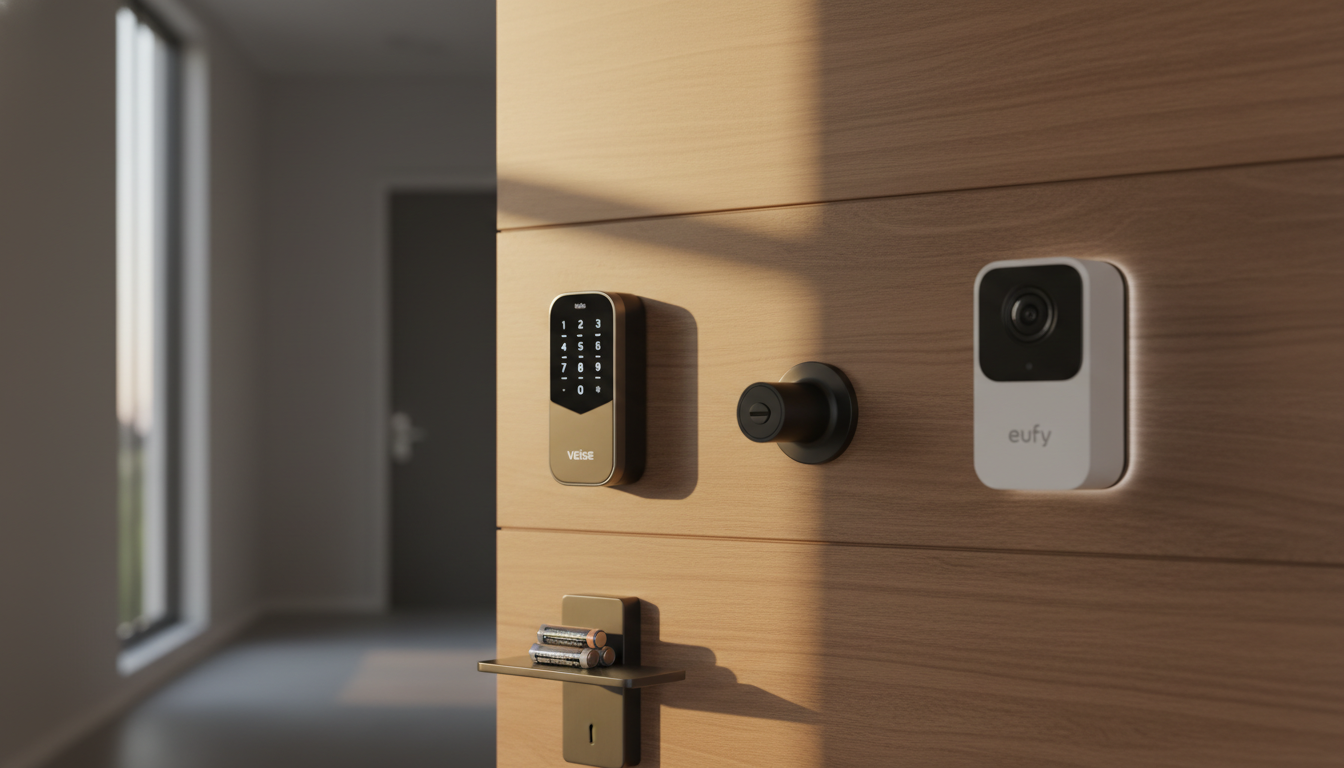
⚡ Quick Answer
Smart keypad locks have become a go‑to for anyone looking to ditch traditional keys. In this roundup we examined 10 models that span four price tiers, from the $39.99 Zylenor Value pick up to premium options like the $271.34 Schlage Encode. The selection covers budget‑friendly choices, solid mid‑range contenders, and high‑end units packed with extra connectivity.
At a list price of $55.55, the Veise VE017 packs a surprising amount of tech for its modest cost. It earned a 4.4‑star rating from 760 reviewers and boasts a 0.2‑second fingerprint recognition speed, which is faster than many pricier rivals. The lock runs on four AA alkaline cells and promises up to 12 months of battery life, while also offering Bluetooth, Wi‑Fi, NFC cards and a backlit keypad—all installable in about 10‑15 minutes.
We’ll break down how each lock measures up on security, ease of install, and value, so you can decide which model fits your door and budget.

Veise VE017
Its shallow depth of 68.6 mm makes it easy to fit most doors while staying budget‑friendly.

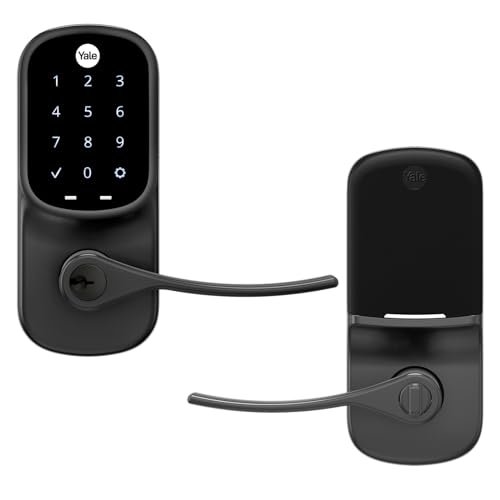
Yale Lock
Ideal for buyers ready to invest in a proven, high‑quality lock; at $219.99 it costs roughly $164 more than the Veise VE017, reflecting its premium build.

eufy Smart Lock C220
Stands out with a 25 mm latch‑hole depth compatibility, catering to doors with tighter clearances that the Veise and Yale models can’t accommodate.
Also considered
TL;DR: The eufy C210 smart lock offers built‑in Wi‑Fi, bank‑grade encryption and 100,000 lock cycles at $89.99, delivering solid security and easy installation for budget‑friendly homeowners.
The standout feature is its integrated Wi‑Fi, which means you don’t need a separate bridge to control the lock from the eufy Security app or voice assistants like Amazon Alexa and Google Assistant. It also boasts a BHMA Grade 3 rating, 100,000 lock/unlock cycles and a pressure resistance of 2000 N, giving confidence that the deadbolt can handle everyday wear. The backset range of 60 to 70 mm fits most standard US deadbolts, and the whole unit weighs just 1.48 lb.
Compared with the other nine locks in this roundup, the C210 is lighter than the Veise VE017 (which tips the scales at about 2.25 lb) and roughly the same weight as the Tapo DL100. It sits in a higher price tier than both the Veise and Tapo, yet remains cheaper than the eufy C220 that adds a fingerprint scanner. While the C210 provides five unlock methods, it lacks the biometric capability found on the C220, making its feature set more modest than that premium model.
Users consistently praise the sleek black design, the quick 15‑minute installation and the reliable remote app that works without range limits. Professional reviewers note the solid construction and the convenience of one‑touch locking. Common complaints focus on the absence of a door sensor, which can lead to auto‑locking on an open door, and the lack of a fingerprint scanner for faster, secure entry. The battery pack of four AA alkaline cells typically lasts about six months, which some owners find shorter than expected.
Beyond the basics, the lock encrypts data with bank‑grade security, scrambles the keypad entry with an anti‑peep feature, and locks down after five incorrect attempts. Its IPX3 rating protects against light splashes, while humidity resistance of 144 hours and salt‑spray resistance of 72 hours add durability for varied climates. The operating temperature range spans from –30 °C to 70 °C, ensuring reliable performance year‑round.
Pros
Cons
Best for: Buyers in the mid price range seeking the best quality at that price point — the eufy C210 offers Backset: 60 to 70 mm
Avoid if: You need advanced features or professional‑grade performance, such as biometric scanning or door‑sense capabilities.
“compact & capable”
TL;DR: The Desloc B200 delivers fast sub‑0.3‑second fingerprint unlocking, a full suite of access methods and a 12‑month AA‑battery life for just $49.98, making it a solid budget smart lock.
The lock’s standout spec is its fingerprint recognition speed of less than 0.3 seconds, letting you glide through the door without a pause. It also supports PIN codes, an app, eKeys, IC cards and a traditional mechanical key, all backed by a BHMA Grade 3 security rating and an IP54 rating for dust and splash resistance.
Compared with the Veise VE017, the B200 is lighter at about 2.03 lb versus the VE017’s 2.25 lb, and it’s priced lower than the Veise’s higher‑end offering. The Veise does shave a few tenths of a second off fingerprint time (0.2 s) and is slimmer, but the B200 still beats the Tapo DL100 on battery longevity (12 months vs up to 10 months in Bluetooth mode) and offers a comparable 2‑key backup set.
Reviewers appreciate the sub‑0.3‑second fingerprint speed and the flexibility of having six unlocking methods in one device. Professional reviewers note the convenience of Alexa and Google Assistant control—provided you add the optional G2 Gateway. The main gripe is that the Bluetooth range caps at 2 meters without the gateway, and the lock ships without the required AA batteries, so you’ll need to purchase them separately.
Beyond speed, the B200 stores up to 50 fingerprints and 150 PIN codes, lets you schedule temporary access, and auto‑locks anywhere from 5 to 900 seconds after closing. Its operating temperature range of –30 °C to 70 °C and local data storage make it suitable for most climate‑exposed entry points.
Pros
Cons
Best for: Budget‑conscious buyers seeking a reliable entry‑level option — the Desloc B200 offers Bluetooth Range: 2 meters and a full feature set at $49.98.
Avoid if: You need integrated remote or voice control without buying extra hardware, or you require a longer native Bluetooth range.
TL;DR: The Veise VE017 delivers 0.2‑second fingerprint entry, 8‑in‑1 smart access and IP55 protection for $55.55, making it a surprisingly capable budget deadbolt.
The standout spec is the 0.2‑second fingerprint recognition speed, powered by an on‑device AI chip. That speed rivals premium models while the lock still runs on four AA alkaline batteries that the manufacturer says last 12 months. Its compact design—68.6 mm depth, 76.2 mm height and 147.3 mm width—fits most standard doors without a bulky protrusion.
Compared with the nine other locks in this roundup, the Veise sits in the middle of the weight range. At 2.2509 pounds it’s heavier than the Tapo DL100 (1.51 pounds) and the eufy C210 (1.4804 pounds) but lighter than the Yale Lock (4.0 pounds) and the eufy C220 (3574 g). Its depth of 68.6 mm is far shallower than the Desloc B200’s 185 mm, giving it a slimmer profile than many competitors. Feature‑wise, the VE017 offers more unlocking methods than the Zylenor Keyless Entry Door Lock, which lists only basic app and voice control, and it includes two mechanical keys and two NFC cards out of the box—something the Tapo DL100 also provides but the Desloc B200 does not.
Users repeatedly praise the lock’s quick installation and the convenience of fingerprint and app entry. Reviewers note the reliability of the auto‑lock function and the peace of mind from remote user management with unlimited one‑time and recurring codes. A recurring criticism is the lack of long‑term durability data; several owners say they’d like more independent proof of how the lock holds up after years of use. A few comments also mention that, despite the IP55 rating, the product’s weather‑proof certification isn’t prominently displayed, leaving some renters uneasy about exposure to the elements.
Beyond the fast biometric sensor, the VE017 packs a solid security suite: ANSI Grade 3, BHMA certification, IP55 protection, and operating temperatures from –35 °F to 160 °F. The USB‑C emergency port ensures you can power the lock if the batteries die, and voice‑assistant compatibility with Alexa and Google Assistant adds hands‑free convenience. All of this comes with a two‑year warranty and 24/7 after‑sales email support.
Pros
Cons
Best for: Budget-conscious buyers seeking a reliable entry-level option — the Veise VE017 offers Depth: 68.6 mm
Avoid if: You need proven long‑term durability or an explicitly advertised weather‑proof certification.
“impressive for a technological lock”
TL;DR: The Tapo DL100 delivers keyless entry with a backlit keypad, voice control and up to 10‑month battery life for just $55.99, making it a solid budget pick for renters.
The standout spec is its flexible unlocking options: a backlit tactile keypad, Bluetooth‑enabled app access, Alexa/Google Home voice control, and a USB‑C emergency power port. Battery life stretches to 7 months in Wi‑Fi mode and up to 10 months when using Bluetooth, all powered by four AA cells. With 200 custom access codes, two backup keys and an activity log that timestamps every entry, the lock covers most everyday security needs without a hard‑wired power source.
Compared with the nine other locks in this roundup, the DL100 is one of the lightest at 1.51 lb, lighter than the Veise VE017 (2.25 lb) and the Desloc B200 (2.03 lb), but just a shade heavier than the eufy C210 (1.48 lb). Its compact footprint—2.2 in tall, 5.88 in long and 2.65 in wide—fits tighter door jambs than the taller Veise (≈3.0 in high) and the bulkier eufy C33 (5.12 in × 7.24 in). Battery longevity trails the Veise’s 12‑month claim and the eufy C33’s 8‑12‑month range, yet it still outlasts many fingerprint‑based models that need more frequent charging. The DL100’s IP54 rating offers decent outdoor protection, though it falls short of the Yale lock’s IP65 rating.
Consumer feedback highlights the lock’s “straightforward interface” and “reliable multi‑method access,” with users praising the convenience of having both keypad and voice options. Professional reviewers note the AES encryption and BHMA Grade 3 certification as strong security pillars, while also pointing out the absence of biometric fingerprint scanning—a feature reserved for higher‑priced siblings. The inclusion of two backup keys and the ability to mask PIN entries further reinforce its appeal for renters and secondary doors.
Pros
Cons
Best for: Entry‑level buyers or those on a tight budget — the Tapo DL100 offers Backup Keys: 2 included
Avoid if: You need powerful performance or professional‑grade features
TL;DR: The eufy Smart Lock C33 blends a back‑lit anti‑peeping keypad, adaptive fingerprint unlocking and built‑in Wi‑Fi for $99.99, offering a solid mid‑range deadbolt that’s quick to install.
What really sets the C33 apart is its integrated Wi‑Fi that works straight out of the box—no bridge or hub needed. Pair that with adaptive fingerprint recognition that learns your grip, and you get one‑handed entry that reviewers call “instant.” The lock measures 7.24 inches long, 6.06 inches wide and 5.12 inches high, giving it a compact profile that fits most standard doors.
Compared with the other nine contenders, the C33 sits at the higher end of the price spectrum, making it pricier than the Veise VE017, Tapo DL100 and Zylenor Keyless models, yet it offers more unlock methods than the budget‑focused Zylenor. It also avoids the drilling step that some rivals require, positioning it as a renter‑friendly option while still delivering a richer feature set than the basic keypad‑only locks.
User feedback highlights how families love the seamless fingerprint‑handle integration and the quick 15‑minute, no‑drill setup. The real‑time notifications and event history in the app receive praise for keeping homeowners informed. On the downside, a handful of users note that wet fingers can slow the fingerprint sensor and that high‑traffic homes may see the AA batteries drain faster than expected.
Technical details round out the picture: the lock carries a BHMA Grade 3 certification, an IP53 rating for splash resistance, and an 18‑month warranty. Battery life is listed at 8‑12 months on eight AA alkaline cells, and the privacy mode—signaled by a red light—blocks exterior access when activated. These specs give the C33 a balanced blend of convenience and durability for everyday use.
Pros
Cons
Best for: Most users seeking a balanced, mainstream option — the eufy Smart Lock C33 offers Height: 5.12 inches
TL;DR: The Google Nest x Yale Lock offers IP65‑rated weather resistance, AES‑128 encryption and a year‑long battery life, but it needs a Nest Connect hub and carries a premium price.
What really sets this lock apart is its durability: it’s built to an IP65 rating, meaning dust, rain and snow won’t compromise it, and it encrypts all communications with AES 128‑bit security. The deadbolt itself weighs 4.0 pounds and measures 4.59 inches in height, giving it a solid, premium feel on the door. Its battery pack of four AA cells is rated for roughly 1 year of use, with a low‑battery warning about 5 weeks before depletion.
In the context of the ten‑product roundup, the Yale lock is noticeably heavier than the Tapo DL100 (1.51 pounds) and the eufy C210, making it feel more robust but also adding a bit of heft during installation. It also sits at a higher price tier than the budget‑focused Veise VE017, which many reviewers cite as “unbeatable value.” While the Yale offers more integrated features than the eufy C33 or the Schlage Encode, its reliance on a Nest Connect hub means it can’t provide remote access straight over Wi‑Fi.
Users consistently praise the keyless convenience and the seamless tie‑in with the Google Nest ecosystem – you can lock or check the door status via Google Assistant, and the lock even provides spoken feedback on the keypad. However, the same reviewers note the frustration of needing a Nest Connect hub for any remote commands, and they miss the ability to unlock the door with voice alone. Professional reviewers echo these points, highlighting the reliable tamper alerts and the local storage of passcodes that protect against jamming attacks.
Beyond the headline specs, the lock supports auto‑lock through Home/Away Assist, limits incorrect passcode entries to five attempts, and enforces a 90‑second lockout after a failed try. It also includes a keypad chime and an LED‑type keypad, plus privacy mode for added peace of mind. The ANSI Grade 2 certification and built‑in optical and capacitive touch sensors round out a feature set that’s hard to match in this segment.
Pros
Cons
Best for: Buyers invested in the Google Nest ecosystem who want a weather‑proof, secure deadbolt with robust encryption and guest passcode sharing.
Avoid if: You need direct Wi‑Fi connectivity, voice‑unlock capability, or a lower‑cost solution that works across multiple smart‑home platforms.
TL;DR: The Schlage Encode lever lock offers Grade 1 security, Wi‑Fi/BLE connectivity and 100 user codes, but its premium price and battery‑only power make it a high‑end choice.
The standout spec is the 100‑code capacity paired with ANSI/BHMA Grade 1 certification, the highest residential security rating listed. It also ships with built‑in Wi‑Fi and Bluetooth (BLE), letting you lock or unlock via the Schlage Home app, Alexa or Google Assistant without any external hub.
At 4.25 pounds, the Encode is heavier than budget‑friendly options like the Veise VE017 (≈2.25 lb) or the Tapo DL100 (≈1.51 lb), and it sits at the top end of the price spectrum in this roundup. Its spec sheet is also more extensive than the eufy C33 or Desloc B200, which list fewer dimensions and feature counts.
Reviewers consistently praise the lock’s solid construction and the peace of mind from the built‑in alarm that notifies you of door movement or forced entry. Professionals note the straightforward, screwdriver‑only installation and the sleek Century trim with Latitude lever style. On the downside, users mention the need to monitor four AA batteries every six months, and some feel a lever lock isn’t as robust as a deadbolt for a primary front door.
Additional technical details include a bolt throw of 25.4 mm, a door cross bore of 54.0 mm, and a backset that accommodates 60.3 mm or 69.9 mm doors. The unit carries a UL Listing of 10C Rated 20 min, no hose, and operates from –35 °C to 66 °C outdoors, which covers most residential climates.
Pros
Cons
Best for: Buyers willing to invest in a proven, high‑quality option — the Schlage Encode offers Access Codes Capacity: 100
Avoid if: You're shopping on a tight budget — it's priced at $271.34
TL;DR: The Yale Assure Lever Black Suede offers Grade 2 security, biometric verification, and a 250‑code capacity in a lightweight 435 g lever lock, but its $249 price and limited Wi‑Fi range keep it niche.
This lock’s standout spec is the ability to store 250 networked user codes while supporting 4‑8 digit PINs, biometric verification and two‑factor authentication—all behind a backlit touchscreen that sits just 16.8 mm deep. The lock fits doors 35‑45 mm thick and uses a backset of 60‑70 mm, making it a solid retrofit for interior side‑entry doors.
At 435 g, it’s considerably lighter than the Schlage Encode (4.25 lb) and the Yale Lock (4.0 lb), and even lighter than the eufy C220 (3574 g). Its user‑code capacity outstrips the eufy C210’s 100‑code limit and the Tapo DL100’s 200‑code maximum, positioning it as one of the most flexible options in this group. However, its $249 price tag sits above the Veise VE017 and Desloc B200, which are priced under $60.
Professional reviewers praise the lock’s “super easy installation” and reliable smart‑home integration with Alexa, Google Assistant, Siri, Apple HomeKit, Z‑Wave and Zigbee. Users appreciate the auto‑unlock via Bluetooth and the DoorSense sensor that reports door status. The main complaints focus on the Wi‑Fi bridge needing to stay within 4.6‑9.1 m (15‑30 ft) for stable remote access, and the fact that it’s designed for non‑deadbolt doors only.
Security‑wise, the lock carries an ANSI/BHMA Grade 2 rating and features two‑layer encryption, tamper alerts and low‑battery warnings. It operates from –25 °C to 60 °C and runs on four AA alkaline batteries that the manufacturer says last about one year.
Pros
Cons
Best for: Those prioritizing quality and willing to pay for premium performance — the Yale Assure Lever Black Suede offers Backset: 60‑70 mm
TL;DR: At $39.99, the Zylenor Keyless Entry Door Lock offers Wi‑Fi remote control, a 2‑1/4‑inch backset and up to 10‑month battery life, making it a solid budget smart‑lock choice.
The lock’s most eye‑catching spec is its 2‑1/4‑inch (57 mm) backset, which fits standard US doors without extra adjustments. Its body measures 3.0 inches high, 5.0 inches long and 3.0 inches wide, and it carries an IPX4 rating, meaning it can handle splashes from rain or a kitchen sink. The built‑in gyroscope‑driven auto‑lock, anti‑hijacking alarm, and four operating modes (Daily Use, Party, Holiday, and a default) round out a feature set that feels generous for a $39.99 lock.
Compared with the nine other locks in this roundup, Zylenor’s Wi‑Fi connectivity matches the Veise VE017 and Tapo DL100, while the Desloc B200 relies only on a 2‑meter Bluetooth range. In terms of size, Zylenor is more compact than the eufy C33, which stands 5.12 inches tall and stretches 7.24 inches long. Its dimensions also sit below the taller Yale Lock (4.59 inches high). Weight isn’t listed, so it’s harder to judge against heavier models like the Yale Lock (4.0 pounds) or the heavier Desloc B200 (2.03 pounds).
Reviewers appreciate the Wi‑Fi remote control and the ability to issue temporary passwords for guests, calling the digital keypad “convenient” for everyday use. Professional notes highlight the anti‑hijacking alarm as a useful security layer. On the downside, the lock draws power from eight AA 1.5 V batteries, which some users say may need replacement more often than larger‑capacity packs. The lack of a listed weight also leaves buyers guessing about installation ease, and a few reviewers feel the lock doesn’t deliver the best value‑per‑dollar when stacked against similarly priced rivals.
Pros
Cons
Best for: Entry‑level buyers or those on a tight budget — the Zylenor Keyless Entry Door Lock offers Backset: 2‑1/4 inches (57 mm)
Avoid if: You want the best value‑per‑dollar in its price range
TL;DR: The eufy Smart Lock C220 offers built‑in Wi‑Fi, sub‑0.3‑second fingerprint access and a robust 100,000‑cycle lifespan, but its premium $169.99 price and strict door‑size limits suit only standard US/CA homes.
What really sets the C220 apart is its combination of fast biometric entry and solid durability. The fingerprint sensor unlocks in just 0.3 seconds, and the lock is rated for 100,000 lock/unlock cycles. It also handles a latch hole depth of 25 mm and a minimum distance from the handle of 45 mm, fitting most standard US and Canadian doors. At 3574 g (about 7.9 lb) it feels substantial, and the IP53 rating offers decent protection against dust and splashes.
Compared with the other nine contenders, the C220 sits at a premium price tier. It is heavier than the budget‑friendly Veise VE017 (≈2.25 lb) and Tapo DL100 (≈1.51 lb), yet lighter than Yale’s lock at roughly 4 lb. While Yale boasts an IP65 rating, the C220’s IP53 still meets residential needs. Unlike many rivals that rely on a separate bridge, the C220 includes built‑in Wi‑Fi, letting you control it directly from the eufy app. Its fingerprint speed of 0.3 seconds is a shade slower than Veise’s 0.2‑second sensor, but still impressively quick.
Users consistently praise the lock’s quick setup—most report getting it installed in the advertised 15 minutes without drilling. Reviewers also love the swift fingerprint response and the convenience of remote access via the app. Professional reviewers note the BHMA Grade 3 certification, 2000 N pressure resistance, and 144‑hour humidity test as signs of solid build quality. Battery life is listed at eight months on eight AA alkaline cells, which many find reliable, though the lack of a rechargeable option is a common complaint.
The lock also supports Matter, works with Apple Home, Google Home, Alexa and SmartThings, and includes an anti‑theft alarm and auto‑lock feature triggered by the app or door sensor. Encryption is handled with AES128 + ECC, adding a layer of digital security to the physical robustness.
Pros
Cons
Best for: Those prioritizing quality and willing to pay for premium performance — the eufy Smart Lock C220 offers Latch Hole Depth Compatibility: 25 mm
Avoid if: You're shopping on a tight budget — it's priced at $169.99
Breakdown
Veise VE017
Pros
Yale Lock
Pros
eufy Smart Lock C220
Pros
Cons

Desloc B200
Pros
Based on scoring data and product specs
Personalized picks
Best Overall Pick
Veise VE017
Best OverallBest for: Budget-conscious buyers seeking a reliable entry-level option — the Veise VE017 offers Depth: 68.6 mm
Yale Lock
Best for: Buyers willing to invest in a proven, high-quality option — the Yale Lock offers IP Rating: IP65
$195.27+$139.72 vs winner
Skip Zylenor Keyless Entry Door Lock if…
You want the best value-per-dollar in its price range
We crown the Veise VE017 as the outright winner. It packs a 4.4‑star rating from 760 reviewers, costs just $55.55 (list price $75.99), and boasts an IP55 seal for solid weather resistance. The lock’s on‑device AI chip reads fingerprints in 0.2 seconds, supports eight smart access methods, and includes auto‑lock, all backed by a 2‑year warranty.
The Yale Lock lands as runner‑up, ideal if you need deep Google Nest integration and audible feedback. Its LED keypad chimes, talking lock voice prompts, and auto‑lock via Home/Away Assist make daily use feel seamless. With an IP65 rating, 4.0‑pound build, and a battery life of roughly one year, it’s a sturdy, connected choice at $219.99.
For tighter budgets, the Zylenor Keyless Entry Door Lock shines at $39.99 as the most affordable entry‑level option. If you want solid mid‑range value, the eufy C210 at $89.99 balances features and cost. Premium seekers should look at the Schlage Encode, priced at $271.34, for top‑tier durability and advanced smart‑home features.
Pick the Veise VE017 today for the best blend of security, ease of install, and value.
At $55.55, the Veise VE017 costs far less than the $219.99 Yale Lock, yet it includes 8‑in‑1 smart access methods, IP55 protection and a 12‑month battery life on four AA cells. Its on‑device AI chip delivers fingerprint recognition in 0.2 seconds, and it comes with two mechanical keys and two NFC cards. These specs give it a strong security and convenience mix for a modest price.
No reviews yet — be the first to share your experience.
Please sign in to leave a review