When you need a Wi‑Fi 7 or Wi‑Fi 6E access point that can handle a multi‑gigabit uplink, raw speed matters. The Zyxel BE6500 tops the list with an advertised 6.5 Gbps aggregate wireless throughput and a list price of $87.29, while still holds a solid 4.7/5 rating from eight reviewers.
Ten models span three price tiers. The budget tier includes the Arris Surfboard W6U at $39.99, the TP‑Link EAP720 for $89.98 (4.4/5 from 118 reviews), the Zyxel BE6500 and the TRENDnet TEW‑923DAP at $97.31. Mid‑range choices feature the Asus ZenWiFi BD5 at $129.99 and the MikroTik hAP ax3 at $132.00. Premium options range from the wall‑mount TP‑Link EAP725‑Wall at $134.99 up to the HPE Instant On AP25 at $239.99, with the Netgear WAX610Y and EnGenius Fit EWS850‑FIT in between.
Below is a breakdown of each unit’s key specs, strengths and potential drawbacks, helping you match the right multi‑gig uplink access point to your environment.

TP-Link EAP720
Its ultra‑compact 1.4 in (35.6 mm) height lets you mount it discreetly while delivering strong performance.

Arris Surfboard W6U
Ideal for budget‑conscious shoppers needing solid Wi‑Fi, it comes in at $39.99—about $50 less than the TP‑Link EAP720.

TP-Link EAP725-Wall
Stands out with a dedicated wall‑mount form, featuring a 40 mm depth that fits tight spaces where the other models’ bulkier designs won’t.
Also considered
Score Analysis
Key score advantages vs. runner-up (Arris Surfboard W6U)
Price Range
TP-Link EAP720
$89.98
Arris Surfboard W6U
$39.99
TP-Link EAP725-Wall
$134.99

MikroTik hAP ax3
$129.05

Netgear WAX610Y
$213.22

HPE Instant On AP25
$239.99
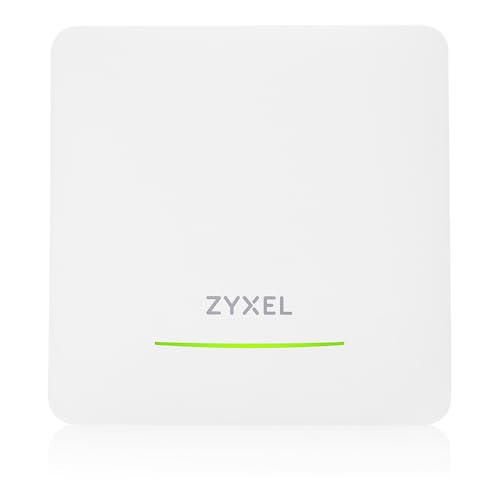
Zyxel WiFi 7 BE6500
$87.29

Asus ZenWiFi BD5
$129.99

TRENDnet TEW-923DAP
$70.06

EnGenius Fit EWS850-FIT
$173.31
Spec Comparison
TL;DR: The TP‑Link EAP720 delivers up to 5 Gbps aggregate Wi‑Fi 7 throughput, a 2.5 GbE uplink, and a compact 1.4‑in profile for budget‑friendly high‑density indoor networks.
What really stands out is the 5.0 Gbps aggregate wireless speed – 4,324 Mbps on the 5 GHz band plus 688 Mbps on 2.4 GHz – backed by 4096‑QAM modulation and a 2.5 Gbps PoE+ Ethernet port. The unit weighs only 0.9 lb, measures 1.4 in in height and 6.3 in in width, and draws just 6.7 W in idle mode, making it a lightweight, low‑profile option for ceiling or wall mounting.
Compared with the other nine access points, the EAP720 is lighter than the Zyxel BE6500 (1.8 lb) and far lighter than the Asus ZenWiFi BD5 (2.59 lb). It’s slightly heavier than the Trendnet TEW‑923DAP (0.84 lb) and the EAP725‑Wall (0.78 lb), but its 5 GHz speed matches Zyxel’s 4,324 Mbps and far exceeds the 2.4 Gbps offered by the Trendnet or the 1.2 Gbps of the MikroTik hAP ax3. While its 5.0 Gbps aggregate falls short of Zyxel’s 6.5 Gbps, it still outpaces most peers in the list.
Reviewers appreciate the strong performance in dense office or classroom settings, noting the seamless roaming and mesh support as real‑world benefits. The only recurring theme is that regional regulatory limits can trim the advertised 5 Gbps down to roughly 3.6 Gbps in some markets, and a few users point out that a power adapter isn’t always supplied, meaning a separate purchase may be needed.
On the technical side, the EAP720 runs Wi‑Fi 7 (802.11be) with 240 MHz channel bandwidth, Multi‑Link Operation, OFDMA, and a full suite of enterprise features like band steering, airtime fairness, load balancing, and integrated Bluetooth for IoT devices. TP‑Link’s Omada Cloud platform handles management, supporting remote provisioning and AI‑driven analytics.
Pros
Cons
Best for: Entry-level buyers or those on a tight budget
Avoid if: You want the best value‑per‑dollar in its price range
TL;DR: The Arris Surfboard W6U adds a dedicated 6 GHz Wi‑Fi 6E access point with up to 4,800 Mbps speed and a 2.5 Gbps Ethernet uplink, all for under $40.
Its compact 5.16 in‑high, 1.53 lb chassis lets it fit easily on a desk or shelf. The W6U’s standout feature is its exclusive 6 GHz radio, which the manufacturer lists as capable of 4,800 Mbps maximum wireless speed. It also includes a 2.5 Gbps Multi‑Gig Ethernet port, letting you backhaul to an existing router without sacrificing wired bandwidth.
Within this ten‑product roundup, the W6U is the most budget‑friendly choice. Its 2.5 Gbps Ethernet matches the Zyxel BE6500, while its 4,800 Mbps ceiling sits below Zyxel’s 6.5 Gbps aggregate and the 5.0 Gbps figures of the TP‑Link EAP720 and EAP725‑Wall, but still exceeds many mid‑range models. At 1.53 lb it’s lighter than Zyxel’s 1.8 lb unit yet a bit heavier than the 0.9 lb TP‑Link EAP720, offering a middle ground in size and weight.
Reviewers praise the plug‑and‑play setup – the unit ships with an Ethernet cable and power supply, and a mobile app (iOS 9.0+ / Android 5.0+) handles configuration. Professionals note the reliable 6 GHz performance even with the band’s lower transmit power. Common complaints focus on the lack of Power over Ethernet, meaning you still need a wall adapter, and the fact that it only broadcasts on 6 GHz, leaving older 2.4 GHz/5 GHz devices without coverage.
It supports 20/40/80/160 MHz channel widths and offers seven 160 MHz channels, which a quad‑core ARM Cortex‑A53 processor manages. Firmware is at version V1.0.0.16, and the device carries a two‑year limited warranty.
Pros
Cons
Best for: Shoppers on a tight budget who want the most for their money
Avoid if: You have older Wi‑Fi devices that need 2.4 GHz/5 GHz coverage, require a guest network, or need PoE power
TL;DR: The TP‑Link EAP725‑Wall packs a 5.0 Gbps Wi‑Fi 7 aggregate rate, 2.5 G PoE uplink with dual Gigabit pass‑through, and a compact wall‑plate design for high‑density indoor spaces.
The standout spec is the 5 GHz data rate of 4324 Mbps and an aggregate throughput of 5.0 Gbps, powered by Wi‑Fi 7 features like MLO, 240 MHz channel bandwidth, and 16 SSIDs. Its dimensions—40 mm depth, 143 mm height, and 86 mm width—let it blend into a wall without crowding a ceiling grid, and it weighs just 0.78 lb, making installation effortless.
Compared with the nine other APs in this roundup, the EAP725‑Wall is lighter than the MikroTik hAP ax3, which tips the scales at roughly 2.40 lb. Its 5 GHz speed of 4324 Mbps also exceeds the TRENDnet TEW‑923DAP’s 2402 Mbps ceiling, and it outpaces the Asus ZenWiFi BD5’s listed 4323 Mbps 5 GHz figure. While many peers, such as the Arris Surfboard W6U, offer a 2.5 Gbps Ethernet port, only the TP‑Link model combines that with PoE input and two Gigabit pass‑through ports, simplifying cabling for both wired and wireless devices.
Users consistently praise the ease of PoE installation and the wall‑plate’s space‑saving profile, noting that multiple HD streams run smoothly thanks to the high aggregate rate. Professional reviewers highlight the inclusion of Wi‑Fi 7 technologies like MLO and 240 MHz bandwidth as future‑proof for business networks. However, several users mention that the wall‑mounted antenna placement can trim range compared to ceiling‑mounted units, and the lack of a 6 GHz band may limit scalability in ultra‑dense environments where tri‑band Wi‑Fi 7 is desired.
From a technical standpoint, the AP supports up to 250+ concurrent users, operates between 0–40 °C, and draws between 6.7 W and 7.6 W when idle. Its transmit power stays under 25 dBm, and it can function at altitudes up to 2000 m, giving it flexibility for high‑rise installations.
Pros
Cons
Best for: Those prioritizing quality and willing to pay for premium performance
Avoid if: You're on a tight budget or only need basic functionality
TL;DR: The MikroTik hAP ax³ delivers a quad‑core 1.8 GHz CPU, 1 GB RAM, and a 2.5 GbE PoE‑capable port in a compact 251 mm box for $132, earning 4.4‑star praise.
The standout feature is its 2.5 GbE RJ45 port that also supports PoE‑in/out, paired with a quad‑core IPQ‑6010 ARM 64‑bit processor clocked at 1.8 GHz and 1 GB of RAM. This combination gives the unit the horsepower to handle VPN tunnels, multiple SSIDs, and heavy traffic without a fan, thanks to its passive cooling design.
At 2.40 lb, the hAP ax³ is heavier than the TP‑Link EAP725‑Wall (0.78 lb) and the TRENDnet TEW‑923DAP (0.84 lb), but lighter than the Asus ZenWiFi BD5 (2.59 lb) and the Netgear WAX610Y (2.75 lb). Its 5 GHz max data rate of 1 200 Mbit/s trails many peers that list speeds above 4 300 Mbit/s, yet it matches the Netgear WAX610Y’s 5 GHz rate and exceeds the EnGenius Fit’s unspecified speed. Only Zyxel BE6500 and Arris W6U list a 2.5 GbE Ethernet port, putting the hAP ax³ in a small group of APs with that capability.
Reviewers appreciate the high‑end CPU and RAM for demanding home or small‑office setups, noting the device feels like a “blue gem” for power users. However, the 2×2 MIMO design on both bands can bottleneck throughput when many devices compete for Wi‑Fi, and users echo that point when they want a plug‑and‑play experience. The unit operates from –40 °C to +70 °C, draws up to 38 W with attachments (15 W idle), and its PoE output delivers 0.625 A per port for up to 15 W total.
Pros
Cons
Best for: Value-conscious buyers seeking quality at $132.00
Avoid if: you need a simple plug‑and‑play router with minimal configuration
TL;DR: The Netgear WAX610Y delivers AX1800 (1.8 Gbps) Wi‑Fi 6 performance, a 2.5 GbE PoE+ uplink, and IP55 ruggedness, making it a solid outdoor AP for demanding small‑to‑medium sites.
What really stands out is the AX1800 aggregate wireless speed—600 Mbps on 2.4 GHz and 1 200 Mbps on 5 GHz—paired with a single 2.5GBASE‑T (PoE+) port for a high‑capacity uplink. The unit weighs 1248 g (2.75 lb) and carries an IP55 rating, so it can handle rain, dust, and temperatures from –10 °C to 50 °C without a hitch.
In practice, its 2 500 sq ft coverage outpaces the 1 500 sq ft claimed by the HPE Instant On AP25 and lines up with the Asus ZenWiFi BD5’s coverage claim. While many peers list only 1 GbE Ethernet or leave port details blank, the WAX610Y’s 2.5 GbE uplink matches the Zyxel BE6500’s 2.5 GbE port, giving it a clear edge for bandwidth‑hungry backhaul.
Professional reviewers note the device’s “no slowdowns or blind spots” thanks to OFDMA and MU‑MIMO, and everyday users consistently praise up to 1 200 Mbps speed on 5 GHz, WPA3 security, and straightforward PoE installation. The only recurring critique is the 2×2 MIMO configuration, which caps per‑client throughput compared with 4×4 rivals, and the relatively hefty chassis for tight mounting spots.
Pros
Cons
Best for: Those prioritizing quality and willing to pay for premium performance
Avoid if: You're on a tight budget or only need basic functionality
TL;DR: The HPE Instant On AP25 delivers up to 5.374 Gbps aggregate Wi‑Fi 6 throughput, 2.5 GbE uplink, and 1,500 ft² coverage, but its premium $239.99 price and 775 g weight may limit appeal for budget‑focused or lightweight installs.
The standout spec is the 5.374 Gbps aggregate max data rate, which uses a 4.8 Gbps 5 GHz channel and a 574 Mbps 2.4 GHz channel, and employs 1024‑QAM modulation with up to 160 MHz bandwidth. Coupled with a 2.5 GbE uplink, the AP25 pushes wired speeds that match its wireless ceiling, making it a solid choice for dense office or café environments where 100+ devices are expected.
Compared with its peers, the AP25 sits in the mid‑weight range at 775 g—lighter than the Netgear WAX610Y (1,248 g), MikroTik hAP ax3 (1,089 g), Asus ZenWiFi BD5 (1,176 g) and Zyxel BE6500 (816 g), but heavier than the EnGenius Fit (720 g), TP‑Link EAP725‑Wall (354 g), TRENDnet TEW‑923DAP (380 g), TP‑Link EAP720 (408 g) and the Zyxel model’s 2.5 GbE port. Its single 2.5 GbE uplink also outpaces most rivals that only offer 1 GbE, though the Netgear and Zyxel units also list 2.5 GbE. In price terms the AP25 sits at the higher end of the round‑up, positioning it as a premium contender rather than a budget pick.
Users consistently praise the AP25’s ability to handle high‑density traffic without noticeable slowdowns, noting the 4x4 MU‑MIMO on the 5 GHz band and OFDMA as real‑world benefits for simultaneous streams. Reviewers also highlight the inclusion of Bluetooth support and Target Wake Time as useful for IoT devices. On the downside, several comments mention the 775 g chassis as a mounting challenge on ceilings, and the $239.99 price tag as a hurdle for small businesses that could opt for cheaper models with sufficient performance for lighter loads.
Pros
Cons
Best for: High‑density small‑business environments where premium Wi‑Fi 6 performance and a robust wired uplink justify the cost.
Avoid if: You need a lightweight, low‑cost solution for low‑density or outdoor deployments.
TL;DR: Zyxel’s BE6500 packs Wi‑Fi 7 speeds up to 6.5 Gbps, a 2.5 GbE uplink and 2‑stream 6 GHz radios into a 1.8‑lb unit for under $87.29, making it a solid budget AP.
The BE6500 advertises an aggregate maximum speed of 6.5 Gbps, with 688 Mbps on 2.4 GHz, 4 324 Mbps on 5 GHz and a peak 5 764 Mbps on the 6 GHz band. You can mount its dual‑optimized antennas on walls or ceilings, and the unit measures 63.5 mm tall, 231.1 mm long and 155.4 mm wide.
At 1.8 lb, the Zyxel AP is heavier than the 0.9‑lb TP‑Link EAP720 but lighter than the 2.59‑lb Asus ZenWiFi BD5. Its 2.5 GbE Ethernet port matches the Arris Surfboard W6U’s uplink speed, giving it more headroom than many 1 GbE‑only rivals. Priced under $100, it sits below the typical cost of comparable Wi‑Fi 7 units in this roundup.
Users have awarded the BE6500 a 4.7‑star rating from eight reviews, praising the high‑speed wireless throughput and the efficient 16‑21.5 W PoE power draw. Professional reviewers highlight the inclusion of a 2.5 GbE uplink and NebulaFlex cloud management as strong value points. However, the lack of independent third‑party performance data and the absence of Automatic Frequency Coordination (AFC) for 6 GHz deployments represent drawbacks.
Under the hood, a Qualcomm quad‑core CPU drives BandFlex selection between 5 GHz and 6 GHz, while features such as 802.1X/RADIUS authentication, band steering, rogue AP detection and MLO support round out its enterprise‑grade toolkit. You can power the device via 802.3at/bt PoE, drawing between 16 W and 21.5 W.
Pros
Cons
Best for: Small businesses, high‑density office spaces, or budget‑conscious deployments that need Wi‑Fi 7 performance.
Avoid if: You need enterprise‑grade multiple uplinks, AFC compliance, or extensive third‑party validation.
TL;DR: The Asus ZenWiFi BD5 delivers Wi‑Fi 7 speeds up to 5 Gbps, IP65‑rated outdoor durability, and dual 2.5 Gbps PoE ports, but its dual‑band design and 2 500 sq ft coverage may fall short for very large homes.
Asus builds the chassis from high‑heat‑resistant PC plastic, seals it to an IP65 rating, and measures 4.2 in × 7.9 in × 4.2 in, weighing 2.59 lb.
Compared with the nine other access points in this roundup, the BD5 is heavier than the 0.9‑lb TP‑Link EAP720 but lighter than the 2.75‑lb Netgear WAX610Y. Its 5 000 Mbps total throughput outpaces the TRENDnet TEW‑923DAP (≈2 402 Mbps) and the Arris Surfboard W6U (4 800 Mbps). While many peers offer 2.4 GHz speeds around 688 Mbps, the BD5 pairs that with a 5 GHz rate of 4 323 Mbps, well above the 1 200 Mbps seen on the Netgear model. The dual 2.5 Gbps ports also exceed the single‑gigabit Ethernet found on most competitors.
Reviewers consistently praise the unit’s outdoor resilience and the convenience of PoE power, noting that the enhanced heatsink and graphite sheets keep temperatures low even in harsh weather. Professional reviewers highlight the 4096‑QAM and Multi‑Link Operation as delivering roughly 20 % faster transfers than Wi‑Fi 6 devices. On the flip side, users point out the lack of a dedicated backhaul band, which can throttle performance in crowded environments, and the 2 500 sq ft coverage ceiling, meaning larger properties often need extra nodes. The 3.8‑star rating from 45 reviews reflects this mixed sentiment.
Under the hood, a 1.5 GHz quad‑core processor and 512 MB of RAM handle the high‑speed traffic, while support for 20/40/80/160/240 MHz channel widths and OFDMA with beamforming maximizes efficiency. The unit also includes a single power LED and a reset button for quick setup, and it runs on AC 110‑240 V at 2 A, with strong line‑to‑line and line‑to‑ground surge protection.
Pros
Cons
Best for: Outdoor‑focused setups such as backyards, patios, or remote locations that need high‑speed Wi‑Fi and PoE power.
Avoid if: You have a large multi‑story home or need coverage beyond 2 500 sq ft without adding extra nodes.
TL;DR: The TRENDnet TEW-923DAP offers AX3000 Wi‑Fi 6 speeds up to 2.4 Gbps on 5 GHz, a 2.5 GbE PoE+ uplink, and mesh support for up to six nodes, all in a compact 0.84‑lb design.
What really stands out is the 2.5 GBASE‑T PoE+ uplink paired with 1024‑QAM modulation, delivering a maximum data rate of 2 402 Mbps on the 5 GHz band and 573 Mbps on 2.4 GHz. The unit measures just 1.18 in (30 mm) tall, 6.3 in (160 mm) long and wide, and weighs only 0.8375 lb (380 g), making it easy to mount in tight ceiling or wall spaces.
Compared with the other nine APs in this roundup, the TEW-923DAP is lighter than the TP‑Link EAP720 (0.9 lb) and far lighter than the Zyxel BE6500 (1.8 lb). Its height of 1.18 in is also shorter than the EAP720’s 1.4 in profile. However, its 5 GHz ceiling of 2 402 Mbps trails the EAP720’s 4 324 Mbps and the Zyxel’s 4 324 Mbps (plus a 5 764 Mbps 6 GHz band). Power draw sits at 17.4 W, comparable to the EAP720’s 16.8 W, while the Ethernet port count is a single 2.5 GbE PoE+ port, matching the Zyxel’s 2.5 GbE offering.
User feedback highlights the AP’s ability to handle dense device environments, thanks to MU‑MIMO, OFDMA, and band steering. Reviewers appreciate the low‑visibility LED and the option for cloud management via the TRENDnet Hive platform—though the subscription fee adds an extra cost. The device also checks the boxes for enterprise compliance with NDAA/TAA certification and WPA3 encryption, and it supports VLAN per SSID, traffic shaping, and up to 16 SSIDs (8 per band).
Pros
Cons
Best for: Entry-level buyers or those on a tight budget
Avoid if: You need powerful performance or professional‑grade features
TL;DR: The EnGenius Fit EWS850‑FIT is a rugged outdoor Wi‑Fi 6 access point with IP67 protection, 2.5 GbE PoE+ uplink, and up to 1.2 Gbps on 5 GHz, but it carries a premium price tag.
What really stands out is the IP67‑rated metal housing that lets the unit survive rain, dust and extreme temperatures, while still delivering a maximum 5 GHz data rate of 1,200 Mbps and 1024‑QAM modulation. It also packs a dedicated 1 × 2.5 GbE PoE+ port, so you can run a high‑speed backhaul over a single cable. At 1.54 pounds (720 g), it's solid enough for pole mounting, and it draws only 15.9 W under load.
Compared with the other nine APs in this roundup, the EnGenius is heavier than the TP‑Link EAP720 (0.9 lb) and the TRENDnet TEW‑923DAP (0.8375 lb), but lighter than the Netgear WAX610Y (2.75 lb) and the Asus ZenWiFi BD5 (2.59 lb). Its 5 GHz speed of 1,200 Mbps matches the MikroTik hAP ax3 and the Netgear WAX610Y, yet falls short of the multi‑gig rates seen on the TP‑Link EAP720, TP‑Link EAP725‑Wall and Zyxel BE6500, which push past 4 Gbps on 5 GHz.
Reviewers consistently praise the metal enclosure for its durability and the 2.5 GbE PoE+ port for simplifying high‑throughput deployments. Users also note the unit’s low power draw of under 16 W, keeping operating costs modest. On the downside, the absence of a 160 MHz channel width limits peak throughput, and the 3.6‑star rating from 11 reviews suggests mixed satisfaction.
Additional technical highlights include 23 dBm transmit power on 2.4 GHz and 25 dBm on 5 GHz, plus 1 kV surge protection and 4 kV/8 kV ESD protection. The AP supports dual‑band 2×2:2 chains with SU‑MIMO and offers cloud, controller and standalone management options, which makes it versatile for small‑business outdoor networks.
Pros
Cons
Best for: Small businesses or campus sites that need rugged outdoor Wi‑Fi with a 2.5 GbE PoE+ uplink and are willing to invest in premium durability.
Avoid if: You require ultra‑high‑density coverage, 160 MHz channel width, or a higher user rating for reliability.
Breakdown
TP-Link EAP720
Pros
Cons
Arris Surfboard W6U
Pros
TP-Link EAP725-Wall
Pros
MikroTik hAP ax3
Pros
Based on scoring data and product specs
Personalized picks
Best Overall Pick
TP-Link EAP720
Best OverallBest for: Entry-level buyers or those on a tight budget
Arris Surfboard W6U
Best for: Shoppers on a tight budget who want the most for their money
$39.99-$49.99 vs winner
Skip EnGenius Fit EWS850-FIT if…
Reliability and user satisfaction are your top concerns
TP‑Link EAP720 takes the top spot as the leading multi‑gig access point. It ships with Wi‑Fi 7, supports 2.5 Gbps Ethernet, and delivers a 5 GHz peak speed of 4,324 Mbps while still offering 688 Mbps on 2.4 GHz for a combined 5 Gbps aggregate. The unit weighs just 0.9 lb, comes with a ceiling‑or‑wall mounting kit, and has earned a 4.4‑star rating from 118 reviewers.
The runner‑up, Arris Surfboard W6U, shines when you need a budget‑friendly, 6 GHz‑only solution. It provides a 2.5 Gbps Ethernet uplink, a maximum wireless speed of 4,800 Mbps, and a 4×4 stream architecture, all for $39.99 and a 4.3‑star rating from 52 reviews—ideal for a compact apartment or a guest network that leans on the new 6 GHz band.
For shoppers focused on price tiers, the best budget pick remains the Arris W6U for its low cost and solid 2.5 Gbps port. The mid‑range choice is the MikroTik hAP ax3 at $132.00, offering a balanced feature set without breaking the bank. If you’re willing to spend more for premium features, the HPE Instant On AP25 at $239.99 delivers the highest‑end capabilities among the alternatives.
Pick the TP‑Link EAP720 today and future‑proof your home or small office network.
The Asus ZenWiFi BD5 is marketed as an outdoor‑rated unit with an IP65 rating, dual 2.5 Gbps WAN/LAN ports, and a rugged enclosure. EnGenius Fit EWS850‑FIT also offers IP67 protection and a 2.5 GbE PoE+ port, making it another solid outdoor choice.
No reviews yet — be the first to share your experience.
Please sign in to leave a review
