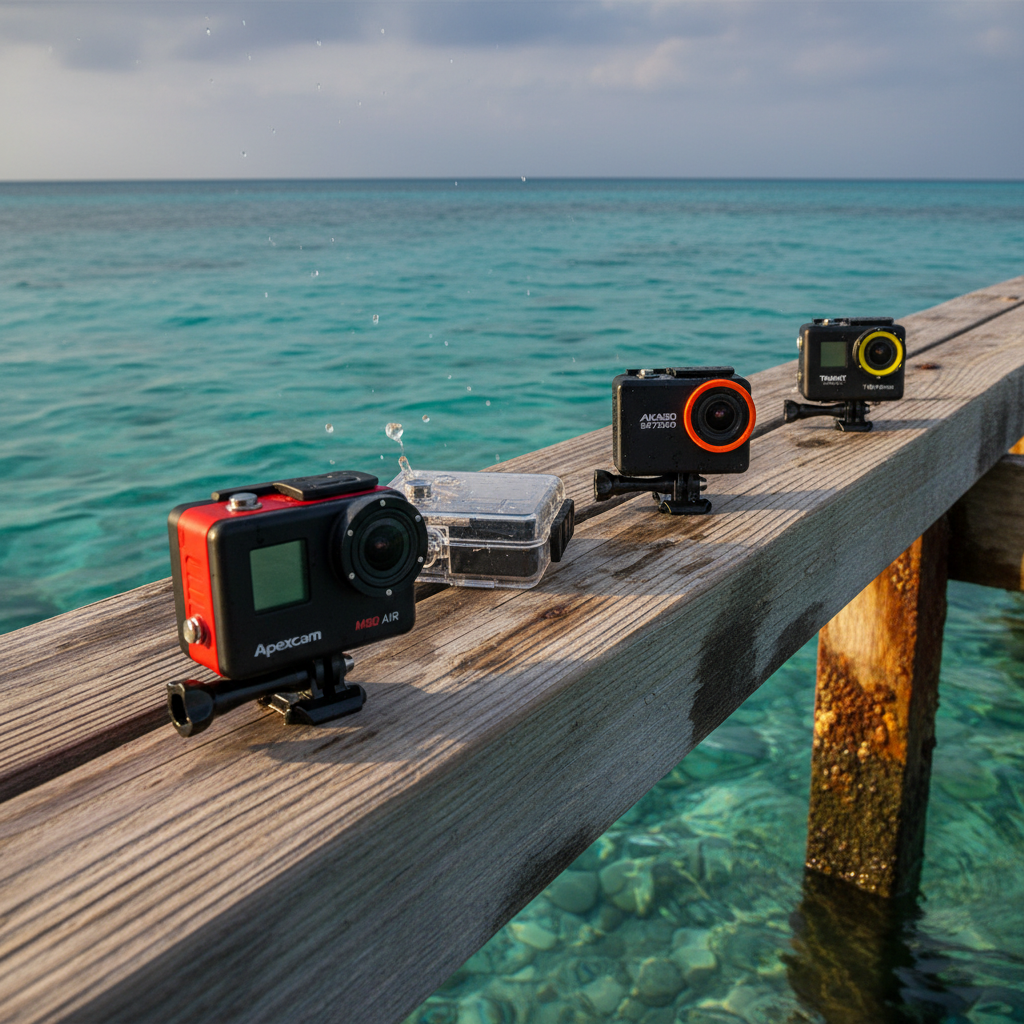
If you need a camera that can survive a plunge beyond 100 ft, you’ll find plenty of options that combine waterproof housing with 4K video and 20 MP photo resolution. The Apexcam M80 AIR, for example, packs a 20 MP sensor and 4K recording while holding a 4.1‑star rating from 9,473 reviewers, all for a list price of $39.99. Its dual removable batteries give you up to 200 minutes of continuous capture, and the included waterproof case rates for 40 m (about 131 ft) depth.
Our comparison looks at 12 models spread across three price tiers. The budget tier—Apexcam M80 AIR, Vemont 1080P Action Camera, Xilecam 1080P Action Camera, and Jadfezy Action Camera—covers prices from $19.94 up to $39.99. Mid‑range choices like the Timnut 16‑pro ($39.99) and Oddv Action1 ($49.99) add higher‑resolution sensors and 4K60 fps video. Premium options such as the Akaso EK7000 ($69.99), Akaso Brave 4 ($89.99), AKASO Brave 7 LE ($111.99), and Sjcam C400 ($189.00) bring larger batteries, dual screens, and extended recording times.
Below you’ll see how each camera stacks up on key specs, user ratings, and price, so you can match the right waterproof action cam to your adventure.
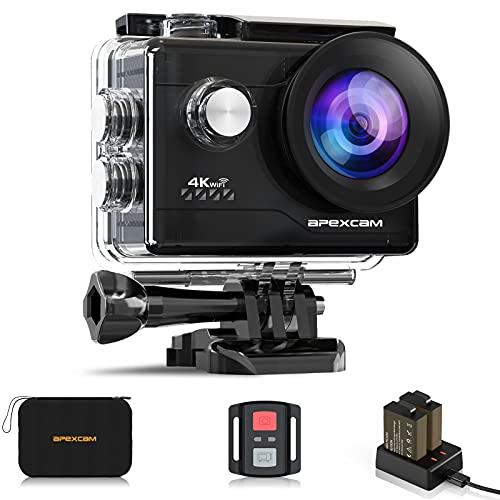
Apexcam M80 AIR
A 1050 mAh battery that recharges in just 2 hours lets you keep shooting without long waits, delivering good value at $39.99.

Akaso EK7000
Ideal for enthusiasts willing to spend $30 more for a proven, high‑quality action cam, the Akaso EK7000 provides a 1050 mAh battery and 90‑minute runtime.

Timnut 16-pro
Stands out with a combined 240‑minute battery life from its dual 1050 mAh cells, giving longer shoots without extra cost at $39.99.
Also considered
Score Analysis
Key score advantages vs. runner-up (Akaso EK7000)
Price Range
Apexcam M80 AIR
$39.99
Akaso EK7000
$74.99
Timnut 16-pro
$42.99

Akaso Brave 4
$69.99
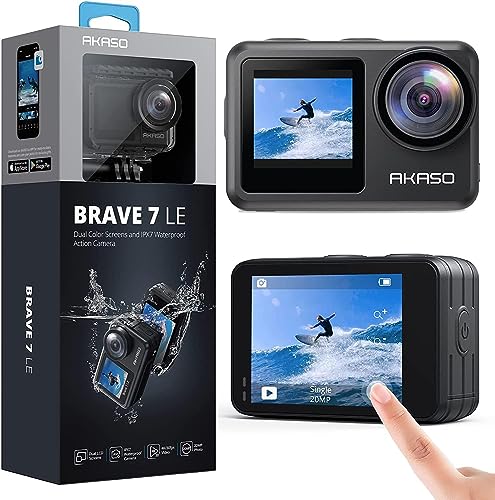
AKASO Brave 7 LE 4K30FPS 20MP WiFi Action Camera
$139.99

Xilecam 1080P Action Camera
$20.88

Jadfezy Action Camera
$21.99
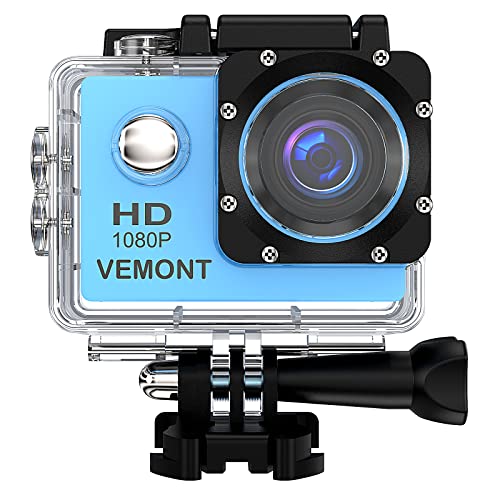
Vemont 1080P Action Camera
$19.94

Sjcam C400
$178.00

Oddv Action1
$49.99

Xilecam X200
$27.99

Jadfezy J-03series
$26.99
Spec Comparison
TL;DR: The Apexcam M80 AIR delivers 4K video, 20 MP photos and a 40 m waterproof rating for $39.99, backed by dual 1050 mAh batteries that give up to 200 minutes of recording.
The standout spec is the dual removable batteries. Each 1050 mAh Li‑ion pack charges in 2 hours and together they provide 200 minutes of continuous capture, letting you swap cells on the go without missing a shot. The camera also packs a 170° ultra‑wide lens, 20 MP (5120 × 3840) stills and 4K video at 30 fps, while an IP68 case protects it, surviving depths of 40 m.
Compared with its peers, the M80 AIR sits in the middle of the weight range: it weighs 0.952 lb, lighter than the Timnut 16‑pro at 1.009 lb and the Oddv Action1 at roughly 1.2 lb, but considerably heavier than the Xilecam X200’s 0.099 lb. Battery capacity matches Timnut and Oddv (both 1050 mAh), yet its combined 200‑minute runtime exceeds Oddv’s approximate 180 minutes while falling short of Timnut’s 240 minutes. The 170° field of view aligns with Timnut and Oddv, and is wider than Xilecam X200’s 120° view. Waterproof performance mirrors the 40 m depth found in Xilecam’s 1080P model, and outpaces Jadfezy’s 30 m rating.
Users consistently applaud the 4K quality offered for under $40, the convenience of two swappable batteries, and the 3.5 mm mic input that boosts audio fidelity. Professional reviewers note the 6‑axis electronic image stabilization (EIS) with distortion correction keeps footage steady, though it does crop the frame and isn’t as smooth as higher‑end gyro‑based systems. The app interface feels basic and can lag, and several owners report Wi‑Fi dropping after short distances (the spec lists a 10 m range). Users also report overheating after roughly 20 minutes of 4K recording.
Additionally, the M80 AIR rounds out its feature set with a 2.0" TFT LCD, loop recording options (1, 3, 5 min), slow‑motion modes up to 720p 120 fps, and a time‑lapse interval range of 1 – 60 seconds. Remote control works on a 2.4 GHz band up to 15 m, and the camera supports microSD cards from 8 GB to 64 GB (Class 10 or UHS‑I recommended).
Pros
Cons
Best for: Budget‑conscious outdoor enthusiasts, casual vloggers and hobbyist adventurers who need 4K video and reliable waterproof performance.
Avoid if: You require professional‑grade 4K at 60 fps, a rugged all‑metal build, built‑in GPS, or a more advanced stabilization system.
“Perfect for my son’s birthday — records amazing ski videos.”
“Battery life is great — used both all day hiking.”
TL;DR: The Akaso EK7000 delivers 4K30fps video, 20 MP photos, 40 m waterproof housing and dual 1050 mAh batteries for about 90 minutes per charge, all at a $69.99 price point.
The standout spec is its 4K30 fps recording paired with a 20 MP sensor, letting you capture ultra‑high‑definition footage and crisp stills. The camera also ships with a waterproof case rated to 40 m, an external‑mic input, HDMI output, and a 4× digital zoom. Battery capacity sits at 1050 mAh per cell, and each battery provides up to 90 minutes of runtime.
At 0.125 lb, the EK7000 is noticeably lighter than the Akaso Brave 4, which weighs roughly 0.35 lb, and it matches the Brave 4’s 1050 mAh battery capacity while offering a longer Wi‑Fi range of 15 m versus the Brave 4’s 10 m. Its 170° field of view aligns with the Apexcam M80 AIR and Timnut 16‑pro, yet the EK7000 is far lighter than the M80 AIR’s 0.95 lb. Like the Oddv Action1, it can endure depths of 40 m, but it adds a more extensive accessory bundle.
Reviewers consistently praise the camera’s affordability and the generous kit of mounts, remote, and dual batteries. Professional reviewers highlight the solid value under $100 and the convenience of built‑in Wi‑Fi. However, users often report unstable Wi‑Fi/app connections and a buzzing noise from the electronic image stabilization (EIS) that can mar audio quality. People describe the 4K footage as “soft,” leading many to favor the sharper 1080p 60 fps mode for critical shots.
Pros
Cons
Best for: Buyers willing to invest in a proven, high-quality option
Avoid if: You're on a tight budget or only need basic functionality
“If you need an action camera that works decently enough for a two‑figure price tag, the AKASO EK7000 Pro will do the job.”
“EIS causes a loud buzzing noise in audio”
TL;DR: The Timnut 16‑pro delivers 4K video, a 170° ultra‑wide view, 20 MP photos and 240 minutes of recording on two 1050 mAh batteries, all sealed for 40 m underwater.
The standout spec is its 170° field of view paired with a 20 MP CMOS sensor that records 4K video at 30 fps with electronic image stabilization. A 2‑inch LCD shows your shots, while the bundled 64 GB microSD card lets you start filming right out of the box. The camera weighs 1.00971715996 pounds, and its dual 1050 mAh batteries provide up to 240 minutes of continuous capture.
Compared with the other eleven entries, the Timnut sits on the heavier side—its 1.0097‑pound chassis exceeds the Xilecam X200’s 0.0992080179‑pound body and the Apexcam M80 AIR’s 0.95239697184‑pound frame. Battery capacity matches the Apexcam M80 AIR at 1050 mAh, but the Timnut’s combined 240‑minute runtime outlasts the Apexcam’s 200‑minute dual‑battery claim. Its waterproof rating of 40 meters (131 ft) matches Xilecam 1080P’s depth rating and beats the Jadfezy J‑03series’ 30‑meter limit.
Reviewers consistently praise the camera’s stable 4K footage and the convenience of the included remote and dual batteries. Users love the deep‑water capability and the wide‑angle perspective for action shots. However, several users note occasional hiccups pairing the FUN DV app and report that you can't use the external microphone when the waterproof housing is attached. Professional reviewers also highlight the lack of a touchscreen, which limits on‑camera navigation.
Beyond the basics, the Timnut 16‑pro offers electronic image stabilization with a 3‑axis gyro, pre‑recording and burst‑photo modes, and a range of creative features like slow‑motion, time‑lapse and white‑balance adjustment. The 2.4 GHz Wi‑Fi lets you control the camera via the FUN DV app on iOS or Android, and the included 2.4 G wireless remote provides hands‑free operation.
Pros
Cons
Best for: Home and office users seeking a balance of features and value
Avoid if: You're shopping on a tight budget — it's priced at $39.99
“Crystal clear footage even in dynamic conditions.”
TL;DR: The Akaso Brave 4 costs $89.99, shoots 4K video at 30 fps, snaps 20 MP photos, and stays waterproof to 30 m, making it a solid entry‑level action cam for adventurous budgets.
The standout spec is its 4K 30 fps video capability paired with a 20 MP maximum photo resolution, both rare at the sub‑$100 price point. It also includes a 2.0‑inch rear LCD, 5× digital zoom, and adjustable fields of view (70°, 110°, 140°, 170°), giving you flexibility without extra lenses. Battery capacity sits at 1050 mAh across two removable cells, delivering 60–90 minutes of recording per charge, and the included waterproof case protects the unit down to 30 m.
Compared with its peers, the Brave 4 is heavier than the Akaso EK7000 (0.125 lb vs 0.3505 lb) but lighter than the AKASO Brave 7 LE (about 1.32 lb). Its Wi‑Fi range of 10 m is shorter than the EK7000’s 15 m, yet still adequate for most app‑controlled setups. Battery life of 60–90 minutes sits just below the EK7000’s 90‑minute claim, while offering the same 1050 mAh capacity. In contrast, the Apexcam M80 AIR and Timnut 16‑pro also use 1050 mAh cells but provide longer combined runtimes, so the Brave 4 trades a bit of endurance for its higher‑resolution video and photo suite.
User feedback repeatedly praises the camera’s price‑to‑performance ratio: reviewers love the crisp 4K footage, the generous accessory bundle (dual batteries, remote wristband, mounting kit, waterproof case), and the ease of pairing via the iSmart DV/AKASO GO app. Professional reviewers note that the six‑axis electronic image stabilization (EIS) keeps most action smooth, though it doesn’t match the hyper‑smooth systems of premium brands. Common complaints focus on inconsistent audio—wind noise can be intrusive—and the lack of a front‑facing screen, which makes self‑recording a bit awkward.
The Brave 4 also supports a versatile shooting profile: 4K 30 fps, 2.7K 30 fps, 1080p 60 fps, and slow‑motion 720p 120 fps. With a 5× digital zoom and selectable photo sizes (20 MP, 16 MP, 14 MP, 10 MP, 8 MP, 5 MP), you can adapt to both wide‑angle scenes and tighter framing without swapping lenses. The built‑in external microphone input offers a path to improve audio, should you need it for vlogging or commentary.
Pros
Cons
Best for: Buyers willing to invest in a proven, high‑quality option
Avoid if: You need advanced features or professional‑grade performance
“Excellent value for money with high-end specs at a low cost”
“Users consistently rate the Brave 4 highly (e.g., 4.8/5 on Walmart) for delivering GoPro-like video quality at a fraction of the price”
TL;DR: The AKASO Brave 7 LE packs dual color touchscreens, 4K 30 fps video, 20 MP photos and a 40 m waterproof rating into a rugged body for $111.99.
This camera’s standout feature is its two screens – a 0.96‑inch front display for framing selfies and a 2.0‑inch rear touchscreen for navigating menus – a combination that's rare at this price point.
Compared with the Akaso Brave 4, the Brave 7 LE is heavier (1.322773572 lb vs 0.35053499658 lb) but brings a larger rear screen and a higher battery capacity (1350 mAh vs 1050 mAh). The dual‑battery setup and the included dual‑battery charger also give it longer on‑camera endurance than many entry‑level rivals that list only a single 1050 mAh cell.
Users consistently praise the front screen for vlogging and the extensive 19+ accessories kit that covers helmets, bikes and more. Professional reviewers highlight the 4K footage as “excellent for a low‑cost camera” and note the premium‑feel build. The main criticisms focus on the 6‑axis EIS lagging during fast motion, grainy low‑light video, and the lack of Bluetooth, which limits wireless audio options.
Additional technical perks include 2.4 GHz Wi‑Fi for app control via the AKASO GO app, a waterproof rating of IPX7 to 40 m (about 13123 ft), and support for up to 256 GB microSD cards. The camera also offers a range of video modes—from 1080p 120 fps slow‑motion to 720p 240 fps high‑speed capture—giving flexibility for creative shooting.
Pros
Cons
Best for: Buyers willing to invest in a proven, high‑quality option
Avoid if: You're shopping on a tight budget — it's priced at $111.99
“Excellent value for money with high-end specs at a low cost”
“Users consistently rate the Brave 4 highly (e.g., 4.8/5 on Walmart) for delivering GoPro-like video quality at a fraction of the price”
TL;DR: The Xilecam 1080P Action Camera offers 40 m (131 ft) waterproofing, dual 900 mAh batteries for 90 minutes of shooting, and a full‑HD 1080p/30 fps sensor at a budget‑friendly $20.88.
What really stands out is the 40 m (131 ft) waterproof rating that comes with the included case, letting you dive far deeper than many entry‑level rivals. Paired with two 900 mAh lithium‑ion batteries, the camera delivers up to 90 minutes of continuous recording per charge, which beginners and families find generous for day‑long outings.
Compared with its peers, the Xilecam is lighter than the Apexcam M80 AIR (which tips the scales at about 0.95 lb) and slimmer than the Jadfezy Action Camera whose depth measures 30 mm. Its waterproof depth also exceeds the Jadfezy model’s 30 m rating, giving you extra margin for snorkeling or shallow diving. While the Vemont 1080P unit lists a similar 900 mAh battery, the Xilecam’s dual‑battery setup provides more flexibility for extended trips.
Customers repeatedly praise the robust accessory bundle – helmet mounts, adhesive pads, bike stand and straps – noting that it makes mounting on bikes, helmets or surfboards a breeze. Professional reviewers highlight the camera’s durability and price point as solid for casual users, but they also point out the lack of Wi‑Fi and the bulky AVI file format, which can complicate editing. Users have flagged overheating on long shoots and the inability to use 64 GB microSD cards, so keep a smaller card handy.
Technically, the X200 captures 1080p video at 30 fps using an f/2.0 aperture and a 22 mm equivalent focal length, delivering clear footage in bright conditions. The camera records photos at 13 MP, and the 2.0‑inch LCD lets you frame shots without a phone. It supports Class 10 microSD cards between 8 GB and 32 GB, and there’s no Wi‑Fi or external mic input, which aligns it firmly with entry‑level expectations.
Pros
Cons
Best for: Entry-level buyers or those on a tight budget
Avoid if: You want the best value-per-dollar in its price range
“Excellent value for money”
“Poor low-light and indoor video quality – grainy and pixelated”
TL;DR: For just $20.99, the Jadfezy Action Camera delivers 1080P video, 12MP photos, dual batteries and a rugged 30 m waterproof case, making it a solid entry‑level option for casual adventurers.
The camera’s standout feature is its IP68‑rated housing that lets you dive up to 30 meters while still recording full‑HD 1920×1080 video at 30fps. It ships with two rechargeable batteries rated between 900 and 1050 mAh, each providing roughly 2 hours of shooting, and a 2.0‑inch LCD screen for on‑the‑spot playback.
At $20.99, it sits at the low‑end of the price spectrum in this 12‑camera roundup, making it cheaper than many of its peers while still offering a full accessory kit—including a waterproof case, helmet mount and bicycle mount—that fewer budget models provide.
Users appreciate the low entry price and the convenience of dual batteries, but reviews frequently mention that the 2‑hour runtime can feel short for longer outings. The digital anti‑shake works for basic movements, yet low‑light scenes often look grainy, and the GoPlus Cam app sometimes suffers connectivity hiccups. Nevertheless, the 10‑meter Wi‑Fi range and GoPro‑style mount compatibility keep the setup straightforward for beginners.
Pros
Cons
Best for: Entry-level buyers or those on a tight budget
Avoid if: You need advanced features or professional‑grade performance
“Excellent value for money”
“Poor low-light and indoor video quality – grainy and pixelated”
TL;DR: For $19.94 you get a 58 g, 2‑inch LCD action cam that records 1080p video at 30 fps, offers a 140° view and a waterproof case rated to 30 m.
The standout spec is the IP68 waterproof housing that protects the camera down to 30 meters, letting you film snorkeling or a rain‑soaked bike ride without worry. At just 58 g and a compact 25 mm × 60 mm × 40 mm body, it’s light enough to mount on a helmet or a bicycle, and the 2.0‑inch LCD gives you a clear live preview.
Compared with the other eleven contenders, Vemont sits in the same budget tier as the Xilecam 1080P model, but it’s heavier than Xilecam’s 45.1 g unit and lighter than the Jadfezy camera, which tips the scales at a larger size. Battery capacity matches Xilecam’s 900 mAh cell, yet Vemont’s recording time caps at 90 minutes, shorter than Jadfezy’s two‑hour claim. Its 30‑meter depth rating equals Jadfezy’s rating but falls short of Xilecam’s 40 m capability. All of this comes at a price point that keeps it competitive within the sub‑$20 segment.
Users consistently praise the affordability and the dependable waterproof case, noting that beginners and kids find the included helmet, bike and fixed mounts very handy. Professional reviewers point out that the 1080p footage looks acceptable in bright conditions, but they also flag grainy video in low‑light scenes and muffled audio, especially when wind is present. The lack of image stabilization and Wi‑Fi connectivity are common complaints, and the large AVI files can fill a microSD card quickly. Still, for casual outings the camera delivers the basics without breaking the bank.
The camera captures 12 MP photos and records video at 30 fps in AVI format, with a MOV compression wrapper. Charging takes 180 minutes via the microUSB port, and the battery draws 400 mAh during use. It supports up to 32 GB of microSD storage and comes with a full mounting kit, making set‑up straightforward for a variety of activities.
Pros
Cons
Best for: Shoppers on a tight budget who want the most for their money
Avoid if: You need professional‑grade video, low‑light performance, or built‑in stabilization
“Excellent value for money”
“Poor low-light and indoor video quality – grainy and pixelated”
TL;DR: The Sjcam C400 offers a modular 3‑in‑1 design with a detachable 4250 mAh battery handle, 437 minutes of 4K recording and a rotatable 2.29″ touchscreen, but it sits at a premium $189 price point.
What really sets the C400 apart is its detachable battery handle that adds a total capacity of 4250 mAh (16.15 Wh) and delivers 437 minutes of 4K/30fps video—over seven hours of continuous capture. The handle also houses a 2.29″ rotatable touchscreen with oleophobic coating, letting you flip the screen for selfie‑style framing while keeping the device powered.
Compared with the other eleven action cams in this roundup, the C400 is heavier at 1.7196056436 pounds, while models like the AKASO Brave 7 LE and Timnut 16‑pro sit under 1.1 pounds. Its battery capacity also dwarfs the typical 1050 mAh cells found in the Akaso Brave 4, EK7000, Apexcam M80 AIR and Timnut 16‑pro, and even exceeds the 1350 mAh battery of the AKASO Brave 7 LE. The rotatable 2.29″ screen is larger than the 2.0″ LCD on the Akaso Brave 4, giving you a clearer view when vlogging. Waterproof performance reaches IPX8 (5 m) without a case and 30 m with the included case—comparable to many peers, though the Oddv Action1 lists up to 40 m with its case.
User sentiment praises the C400’s long recording time, ergonomic grip and smooth 6‑axis EIS with Horizon Lock, especially for travel vlogging and adventure sports. Professional reviewers note the solid stabilization and convenient rotating screen, but they also flag blown‑out highlights in bright light and a weak built‑in microphone that lacks external mic support. Users report the SJCAM Zone app disconnects frequently, which can be frustrating during live streams.
Pros
Cons
Best for: Travel vloggers, YouTube creators and adventure enthusiasts who value long 4K battery life, a rotatable screen and solid stabilization.
Avoid if: You need professional‑grade audio, external mic support or a lower‑cost entry point; the $189 price and limited audio capabilities may not meet those needs.
“Perfect for travel vlogging—fits in my pocket and lasts all day.”
“The rotating screen is genius for solo filming.”
TL;DR: The Oddv Action1 delivers 4K 60FPS video, 30 MP photos and a 40‑meter waterproof case for $49.99, but its digital zoom and non‑touch front screen may limit power users.
What really stands out is the 4K 60FPS recording capability paired with a 30 MP (6000×5000) photo sensor, all packed into a dual‑screen body. The rear 2.0‑inch touch‑sensitive LCD lets you tweak settings on the fly, while the 1.4‑inch front display handles selfies and framing. Six‑axis electronic image stabilization (EIS) promises smoother footage, and the included waterproof case protects the camera down to 40 meters (132 ft).
At $49.99 the Action1 sits above the $39.99 Apexcam M80 AIR and Timnut 16‑pro, yet it offers a higher 30 MP resolution compared with their 20 MP sensors. Battery life compares to the Akaso EK7000 – both list approx 90 minutes per battery – and it outlasts the Jadfezy J‑03series, which reports a total 2‑hour runtime. The Action1’s waterproof depth of 40 meters exceeds the 30‑meter rating of most peers, including the Jadfezy Action Camera and Xilecam X200. Its 5× digital zoom is a step up from Xilecam’s 4×, but reviewers note that the zoom can soften images. The rear 2.0‑inch touch screen also feels larger than the non‑touch 2‑inch display on the Jadfezy Action Camera, while the front screen remains non‑touch.
Everyday users praise the crisp 4K footage and the convenience of the front screen for vlogging. The bundled 64 GB microSD card, two 1050 mAh batteries and a wrist remote get frequent mention as good value. Professional reviewers highlight the 4K 60FPS video and dual screens as strong points for casual creators. On the downside, the 5× digital zoom degrades image quality, the front screen lacks touch control, and the 2.4 GHz remote isn’t waterproof. In practice, the SupCam Pro app can be unstable, leading to occasional connection drops.
Pros
Cons
Best for: Adventure hobbyists, water‑sports enthusiasts and vloggers who want high‑resolution video and a rugged case without breaking the bank.
Avoid if: You need professional‑grade low‑light performance, RAW video, or a camera with a long track record of user reviews.
“Takes incredibly sharp 4K video for the price.”
“Love the front screen for vlogging — makes framing so much easier.”
TL;DR: The Xilecam X200 offers 1080p video, 40 m (131 ft) waterproofing and two 900 mAh batteries for 120 minutes of recording, all for $25.99.
The standout spec is its IP67 rating that lets the camera dive to 131 ft (40 m) without a separate case, and the included waterproof housing extends that protection even further. Paired with two 900 mAh batteries, you've got a combined 120 minutes of continuous shooting, which is generous for a budget‑focused cam. The unit itself weighs just 45 g and fits a 2.0‑inch screen, making it easy to mount on helmets, bikes, or a dash‑cam bracket.
Compared with the other eleven entries, the X200 sits at the lower end of the price band but outperforms several peers on depth rating – the Jadfezy J‑03series and Jadfezy Action Camera both list 30 m waterproofing, while the X200 reaches 40 m. In terms of weight, it's significantly lighter than the Apexcam M80 AIR (around 0.95 lb) and the Timnut 16‑pro (about 1 lb), making a difference on a head‑mount. Battery life matches the 2‑hour claim of the Jadfezy J‑03series, yet the X200 ships with two batteries, so you get that runtime without extra purchases.
Everyday users praise the camera’s affordability and the fact that it arrives with a waterproof case, two batteries and a 32 GB memory card – a ready‑to‑go package for beginners. However, professional reviewers flag the lack of Wi‑Fi or app support despite some listings advertising it, and they've noted grainy video in low‑light or through glass. In practice, the X200 delivers solid 1080p @30 fps footage with a 120° field of view and digital 4× zoom, but its digital stabilization can feel modest when the action gets shaky.
Pros
Cons
Best for: Entry-level buyers or those on a tight budget
Avoid if: You want the best value‑per‑dollar in its price range
“It’s good enough to capture an accident, but don’t expect clarity. The build is solid, but the video looks like VHS. I got more than I paid for, but image quality is sad.”
TL;DR: The Jadfezy J‑03series offers 12 MP photos, 1080P 30 fps video, dual 900 mAh batteries for up to 2 hours of use, and an IP68 case that protects it down to 30 m.
The camera’s most distinctive spec is its two 900 mAh lithium‑ion batteries, which together provide up to 2 hours of continuous recording, while the IP68‑rated housing keeps it safe at depths of 30 m.
Its 900 mAh cells match the Xilecam X200, but the J‑03’s 140° field of view is wider than the Xilecam X200’s 120° and aligns with Vemont’s 140° lens. At 12 MP photo resolution it sits between the Xilecam X200’s 5 MP and the higher‑resolution Apexcam M80 AIR’s 20 MP. The 30 m waterproof rating serves entry‑level cams well, though the Xilecam 1080P model reaches 40 m, giving it a slight edge in depth protection.
Everyday users praise the low entry price and the included 32 GB microSD card, noting satisfactory daylight video. However, several reviewers have experienced occasional corrupted video files, and some say the battery doesn’t consistently hit the advertised 2 hours, especially in colder weather. Professional reviewers note the camera’s electronic image stabilization but point out that low‑light and nighttime footage can be noisy.
The J‑03 records 1080P video at 30 fps and stills at 12 MP, storing files on a Class 10 microSD card (4 GB–32 GB supported). A 2‑inch LCD screen lets you frame shots, while built‑in Wi‑Fi enables simple file transfers. Features like burst mode, dash‑cam mode, time‑lapse, loop recording and a self‑timer add versatility without extra accessories.
Pros
Cons
Best for: Entry-level buyers or those on a tight budget
Avoid if: You want the best value-per-dollar in its price range
“Very nice camera for the price”
“Most, but not all, of the video files end up corrupted”
Breakdown
Apexcam M80 AIR
Pros
Akaso EK7000
Pros
Timnut 16-pro
Pros
Cons
Akaso Brave 4
Pros
Cons
Based on scoring data and product specs
Personalized picks
Best Overall Pick
Apexcam M80 AIR
Best OverallBest for: Home and office users seeking a balance of features and value
Akaso EK7000
Best for: Buyers willing to invest in a proven, high-quality option
$74.99+$35.00 vs winner
Skip Jadfezy J-03series if…
You want the best value-per-dollar in its price range
The Apexcam M80 AIR takes the top spot as the best overall action camera for deep‑water adventures. It offers a solid 4.1‑star rating from 9,473 reviewers, 6‑axis electronic image stabilization with distortion correction, and a waterproof case rated to 40 m (IP68). You also get a 2.0″ TFT LCD, dual 1050 mAh batteries that deliver up to 200 minutes of recording, and crisp 4K video at 30 fps—all for $39.99.
The Akaso EK7000 lands as the runner‑up, especially if you need a model backed by the largest community of users. It holds a 4.4‑star rating from 31,925 reviews and includes a 2.4 GHz wrist remote for hands‑free control, plus Wi‑Fi that reaches 15 m. Like the Apexcam, it’s waterproof to 40 m, shoots 4K30 fps, and ships with two removable 1050 mAh lithium‑metal batteries.
In the budget tier, the Vemont 1080P Action Camera tops the list as the cheapest option, delivering basic 1080p video at just $19.94. For those willing to invest more, the Sjcam C400 stands out as the premium pick, offering higher‑end features at $189.00.
Pick the Apexcam M80 AIR now and capture your next dive with confidence.
The Apexcam M80 AIR, Akaso EK7000, Timnut 16‑pro, Akaso Brave 7 LE, and Oddv Action1 all come with waterproof cases rated for 40 m (about 131 ft) and carry IP68 or IPX7 ratings, so they can comfortably handle dives beyond 100 ft when the case is used.
Please sign in to leave a review
No reviews yet. Be the first to review!
