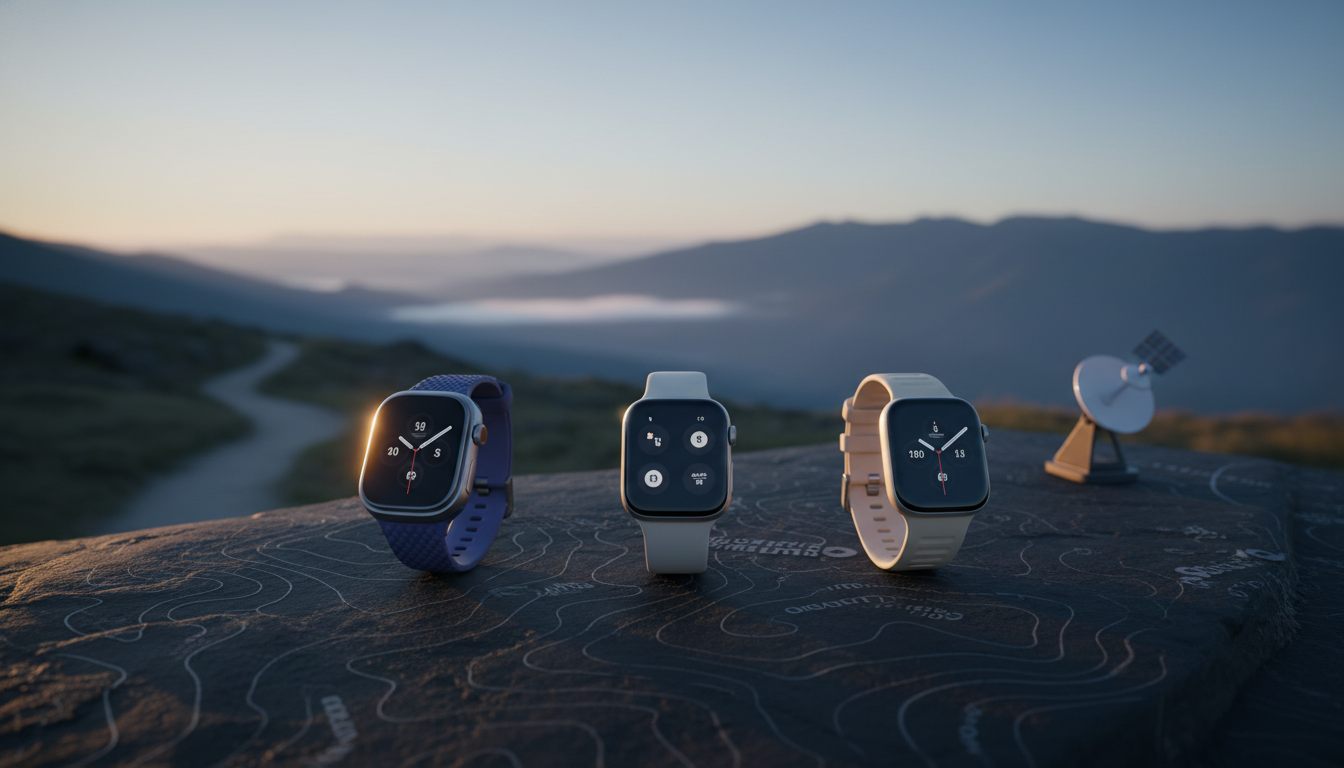
⚡ Quick Answer
When you need a tracker that can lock onto multiple satellite constellations, the market offers a solid mix of options. In this roundup we compared 8 models, spanning a price range from $179.95 (Garmin vívoactive 5) up to $746.41 (Apple Watch Ultra 2). The lineup breaks into three price tiers: budget picks like the Garmin vívoactive 5, AMAZTIM GPS and Suunto Run; mid‑range choices such as the Apple Watch SE 3 and Amazfit T‑Rex 3; and premium offerings including the Suunto Race S, Suunto Vertical 2 and Apple Watch Ultra 2, which has a 4.7‑star rating from 1,200 reviews and up to 36 hours of battery life.
Different adventures call for different strengths. For backcountry expeditions where solar‑extended GPS runs matter, the premium tier delivers models with up to 90 hours of GPS training life. If you’re after a lightweight daily fitness companion with an 11‑day smartwatch battery, the budget tier provides solid value. And for everyday iPhone users who want a bright experience, the mid‑range tier balances display brilliance (up to 2,000 nits on the Amazfit T‑Rex 3) with a comfortable price point. Below we’ll break down each tier and see which tracker fits your adventure, training routine, or daily wear.

Apple Watch Ultra 2 49mm Indigo
A 3000‑nit brightness makes the screen readable even in bright sunlight, supporting extended outdoor use.

Apple Watch SE 3 40mm Starlight
Ideal for everyday users who want solid performance without a premium price—at $219 it’s about $527 cheaper than the Ultra 2, delivering reliable tracking in a compact 40 mm case.

Garmin vívoactive 5 Ivory
Stands out with an 11‑day battery, letting you go weeks between charges—something the Apple watches can’t match—while staying at a $179.95 price point.
Also considered
Score Analysis
Key score advantages vs. runner-up (Apple Watch SE)
Price Range
Apple Watch Ultra 2 49mm Indigo
$789.72
Apple Watch SE 3 40mm Starlight
$219.00
Garmin vívoactive 5 Ivory
$188.49

Suunto Vertical 2
$699.00

Amazfit T-Rex 3
$249.99

Suunto Race S
$349.00

Suunto Run
$199.00

AMAZTIM GPS
$179.99
Spec Comparison
TL;DR: The Apple Watch Ultra 2 packs a 49 mm titanium case, dual‑frequency GPS and a 3000‑nit always‑on display, delivering up to 36 hours of battery for serious outdoor use, but it comes at a premium $746.41 price.
One standout spec is the dual‑frequency L1 + L5 GPS that works with GLONASS, Galileo, QZSS and BeiDou, delivering high‑precision positioning in remote terrain. Coupled with a sapphire crystal and a brightness rating of up to 3000 nits, the 1185 mm² Always‑On Retina display stays readable even in full sunlight. Apple provides up to 36 hours of battery life in normal use and offers 32 GB or 64 GB of storage, all housed in a 49 mm case that's 12 mm deep and 44 mm wide.
Compared with the seven other trackers in this roundup, the Ultra 2 is heavier than the Suunto Race S (0.135 lb vs 0.132 lb) but still lighter than the Suunto Vertical 2’s stainless‑steel version (86 g). Its 3000‑nit brightness outshines the Suunto Race S’s 1000 nits and the Amazfit T‑Rex 3’s 2000 nits. The 1185 mm² display area measures noticeably larger than the Apple Watch SE 3’s 759 mm², giving a more spacious UI. Battery life sits between the Suunto Vertical 2’s 65‑hour best‑mode GPS runtime and the Amazfit T‑Rex 3’s 180‑hour GPS max mode, offering a solid all‑day window without needing solar assistance.
Users repeatedly praise the reliable GPS lock, the eye‑catching brightness, and the long‑lasting battery that survives multi‑day hikes. Reviewers highlight the “unmatched” 36‑hour endurance and the precision of the dual‑frequency GPS. Some users complain about the bulkier 49 mm case and occasional GPS drift in dense urban or forested areas. The watch’s MIL‑STD 810H certification, IP6X dust resistance, 100 m water resistance, built‑in 86 dB siren and backtrack GPS make it a true rugged companion for extreme sports.
Pros
Cons
Best for: Outdoor enthusiasts, athletes, and adventurers who need a rugged, water‑resistant smartwatch with advanced navigation and health tracking.
Avoid if: You're shopping on a tight budget — it's priced at $746.41.
“"unmatched" 36-hour battery”
“Reliable GPS tracking for runs/hikes”
TL;DR: The Apple Watch SE 3 40 mm in Starlight offers a lightweight 0.06‑lb design, 1000‑nit bright display, and precise dual‑frequency GPS, but its 18‑hour battery may need daily charging.
Apple’s newest SE model pairs a precision dual‑frequency L1/L5 GPS with a 1000‑nit Retina LTPO OLED screen, giving you accurate location data and a display that stays readable even in bright sunlight.
At 0.06 pounds, it’s lighter than the Amazfit T‑Rex 3 (0.15 lb), Garmin vívoactive 5 (0.081 lb) and the Apple Watch Ultra 2 (0.135 lb), making it one of the most comfortable choices for small wrists. Its 64 GB of storage dwarfs Garmin’s 4 GB and the Suunto Race S’s 32 GB, while its 18‑hour battery life falls short of the Suunto Run’s 20‑hour GPS performance and the Amazfit T‑Rex 3’s 180‑hour GPS max mode.
Reviewers consistently praise the lightweight aluminum case and the crisp 1000‑nit screen, noting that the watch feels “snappy” thanks to the S10 SiP processor. However, many users mention that the 18‑hour battery often runs out by evening, and the base SE model lacks an always‑on display, which can make quick glances less convenient. The 40 mm case size also feels a bit cramped for those who prefer larger screens.
Beyond GPS and display, the SE packs a full suite of health sensors—including heart‑rate, blood‑oxygen, temperature and sleep tracking—wrapped in a water‑resistant (50 m) anodized aluminum case with ceramic/sapphire crystal back. On‑device Siri, Apple Pay and Bluetooth 5.3 round out the connectivity package.
Pros
Cons
Best for: iPhone users with smaller wrists who want an affordable, well‑reviewed smartwatch that offers solid health tracking and accurate GPS.
Avoid if: you need multi‑day battery life, an always‑on display, or advanced health metrics beyond the basics.
“"unmatched" 36-hour battery”
“Reliable GPS tracking for runs/hikes”
TL;DR: The Garmin vívoactive 5 Ivory packs a 30.5 mm AMOLED screen, 5‑satellite GPS and up to 264 hours of battery life into a lightweight 0.08125‑lb case for $179.95.
The standout spec is its AMOLED touchscreen measuring 30.5 mm, paired with a 42 mm case that keeps the watch slim at 11.1 mm thickness. Garmin also advertises support for five satellite systems, which helps with positioning accuracy during runs or bike rides.
Compared with the other seven entries, the vívoactive 5 is lighter than the Amazfit T‑Rex 3 (0.15 lb) and the Apple Watch Ultra 2 (0.135 lb), but a touch heavier than the Apple Watch SE 3 (0.06 lb). Its battery endurance of up to 11 days (≈264 hours) outlasts the Apple Watch SE 3’s 18‑hour limit, though it falls short of the Amazfit GPS’s 14‑day claim.
Reviewers consistently praise the bright, high‑contrast AMOLED display and the long‑term wear afforded by the 11‑day battery. They also like the deep health suite—Body Battery, continuous heart‑rate, SpO₂ and respiration monitoring—plus wheelchair‑mode tracking. Professional reviewers note the upgrade to an AMOLED panel as a major visual improvement over earlier models.
Beyond the screen, the watch offers 4 GB of internal storage for music or activity data, over 30 preloaded sport apps, and Garmin Coach’s adaptive training plans. The multi‑satellite GPS and the ability to log wheelchair‑specific metrics round out a feature set that feels well‑rounded for its price tier.
Pros
Cons
Best for: Budget‑conscious buyers seeking a reliable entry‑level option
Avoid if: You need advanced features or professional‑grade performance
TL;DR: The Suunto Vertical 2 delivers premium navigation with dual‑band GNSS, 32 GB of offline maps and solar‑boosted battery life up to 90 hours, but its $699 price and heft make it a serious investment.
The standout spec is its solar‑enhanced GPS training battery: in best‑mode you get up to 65 hours, and with solar assistance that stretches to 90 hours. Combined with a daily endurance of up to 60 days (and up to a year when solar charging is constantly available), the watch easily outlasts typical daily‑use devices. Its 49 mm square case houses a 1.4‑inch matrix LCD protected by sapphire crystal, delivering a crisp 280 × 280 pixel image that stays always on.
When you line it up against the seven other contenders, the Vertical 2 sits on the heavier side – 86 g in the stainless‑steel version and 74 g in the titanium solar model – compared with the Apple Watch Ultra 2’s roughly 61 g and the Amazfit T‑Rex 3’s 68 g. It’s also pricier than most of the lineup, positioning it as the premium choice. Unlike the Apple Watch Ultra 2, which lists a brightness of up to 3000 nits, the Vertical 2 only notes an automatic, configurable backlight, so exact nit values aren’t disclosed. Its 32 GB of offline map storage dwarfs the 4 GB found in the Garmin vívoactive 5 and the 32 GB in the Suunto Race S, giving it a clear edge for backcountry navigation.
Reviewers consistently praise the endurance – many note that the solar panel truly extends usage to multi‑day expeditions without hunting for a charger. The dual‑band GNSS, supporting all five major satellite constellations, earns frequent commendations for pinpoint accuracy on rugged terrain. On the flip side, owners mention the absence of offline music storage and the lack of ANT+ or FTMS support as noticeable gaps for cyclists. Owners also note the weight as “a bit heavy on smaller wrists,” echoing the sentiment that the watch trades some comfort for durability.
Pros
Cons
Best for: Multisport athletes, backcountry explorers, and expedition hikers who need long‑lasting battery and reliable navigation.
Avoid if: You're shopping on a tight budget — it's priced at $699.00 and may feel heavy on smaller wrists.
“haven't gotten close to depleting”
“nice adventure watch”
TL;DR: The Amazfit T‑Rex 3 packs a 1.5‑inch 2,000‑nit AMOLED screen, dual‑band GPS and up to 180 hours of GPS‑mode battery in a rugged 48.5 mm case for serious outdoor athletes.
The standout spec is the dual‑band, six‑system GPS paired with offline maps, giving you reliable positioning even in remote terrain. The watch also features a 2000‑nit peak brightness AMOLED panel at 1.5 inches, which outshines the 1000‑nit displays of most rivals. With a freediving certification to 45 m and a 10 ATM water rating, it serves water‑logged adventures.
Compared with the seven other trackers in this roundup, the T‑Rex 3 is noticeably heavier at 0.15 pounds (68.3 g) than the Apple Watch SE 3 (0.06 pounds) and the Garmin vívoactive 5 (0.08125 pounds), and it also outweighs the Suunto Race S (≈0.13 pounds). Its 48.5 mm height and 13.75 mm thickness make it bulkier than the 40 mm Apple Watch SE 3 and the 42 mm Garmin vívoactive 5. However, its 1.5‑inch screen is larger than the 1.32‑inch panels on the Suunto Run and Suunto Race S, and its 2000‑nit brightness eclipses the 1000‑nit screens on those same models. Battery endurance is a clear advantage: the T‑Rex 3’s GPS Max Mode lasts 180 hours, far surpassing the 20‑hour GPS performance of the Suunto Run and the 23‑hour GPS training time of the same device.
Professional reviewers highlight the watch’s 45 m freediving depth and the bright, glove‑compatible display as rugged features. Users repeatedly praise the up to 180 hours of GPS‑mode battery life and the accuracy of the dual‑band satellite system. The downside that surfaces in many comments is the bulkier case, which can feel uncomfortable on smaller wrists, and some note intermittent Bluetooth connectivity. The companion app, while functional, lacks the deep training analytics found in higher‑priced Garmin platforms.
Pros
Cons
Best for: Outdoor enthusiasts, hikers, trail runners, and freedivers who need a rugged watch with strong GPS and long battery life.
Avoid if: You have a small wrist and prefer a slimmer profile, or you need deep sport‑specific analytics and a highly polished app ecosystem.
TL;DR: The Suunto Race S packs a 1.32‑in sapphire‑glass AMOLED screen, 1000‑nit brightness and up to 50 hours of GPS tracking in a rugged 45 mm case for $349.
The watch’s standout feature is its 1.32‑in Matrix AMOLED display delivering 466 × 466 px resolution and a full 1000 nits of brightness, which professional reviewers call a visual standout even in bright sunlight. It also runs on a multi‑band/dual‑frequency GPS stack (GPS, GLONASS, Galileo, QZSS, BeiDou) and offers 32 GB of pre‑loaded offline maps, giving you detailed navigation without a phone.
Compared with the seven other trackers in this roundup, the Race S’s brightness matches the Apple Watch SE 3 and Garmin vívoactive 5, but falls short of the Amazfit T‑Rex 3’s 2000 nits and the Apple Watch Ultra 2’s up to 3000 nits. At 0.1322773572 lb (60 g) it is heavier than the Apple Watch SE 3 (0.06 lb) and Garmin vívoactive 5 (0.08125 lb), yet lighter than the Suunto Vertical 2 (86 g) and comparable to the Apple Watch Ultra 2 (0.135363828868 lb). Its 45 mm case is the same size as the Suunto Run’s 45 mm screen but smaller than the Suunto Vertical 2’s 49 mm and the Apple Watch Ultra 2’s 49 mm. Battery life reaches 40‑50 hours in GPS mode and 26 days on standby, outpacing the Apple Watch SE 3’s 18‑hour typical use but below the Amazfit T‑Rex 3’s 180‑hour max GPS mode.
User sentiment highlights the bright, crisp screen and the week‑long battery endurance as major wins, while many note the stainless‑steel build feels bulky on smaller wrists. The watch also includes a barometric altimeter, blood‑oxygen sensor, compass and menstrual‑cycle tracking, rounding out its multisport toolkit.
Pros
Cons
Best for: Endurance athletes, trail runners, and multisport enthusiasts who need a rugged watch with long GPS battery and extensive offline maps.
Avoid if: You have a small wrist, prioritize a lightweight daily smartwatch, or need a highly polished app ecosystem.
TL;DR: The Suunto Run packs a 1.32‑inch AMOLED display, multi‑GNSS support and 4 GB of music storage into a lightweight watch with up to 20 hours of GPS battery life, making it a solid budget choice for runners.
The standout spec is the 1.32‑inch AMOLED touchscreen, which offers configurable automatic brightness and a crisp 466 × 466‑pixel resolution. Combined with a 20‑hour GPS performance battery, you’ll track long runs without hunting for a charger. The watch also stores 4 GB of MP3 files, so you’ll listen to offline music straight from the band.
Compared with the other seven runners in this roundup, the Suunto Run’s case thickness of 11.5 mm is only a shade thicker than the Garmin vívoactive 5’s 11.1 mm housing, yet noticeably slimmer than the Amazfit T‑Rex 3’s 13.75 mm case. It shares the same 1.32‑inch screen size as the Suunto Race S, while the Suunto Vertical 2 steps up to a 1.4‑inch display. In terms of storage, its 4 GB MP3 capacity matches the Garmin vívoactive 5, giving it an edge over models that list no internal music storage.
Reviewers consistently praise the barely‑there feel of the nylon textile strap and the reliable wrist‑based optical heart‑rate sensor. Professional outlets note the ultra‑thin 11.5 mm profile that avoids snags and the precise GPS lock even under tree cover. Users also appreciate the bright AMOLED screen that stays readable in direct sunlight. On the downside, some users report occasional distance over‑estimation and miss having offline maps or streaming music options.
Pros
Cons
Best for: Entry‑level buyers or those on a tight budget
Avoid if: You need advanced navigation features or professional‑grade performance
TL;DR: The AMAZTIM GPS T3 Ultra packs a 1.43‑inch AMOLED screen, 1000 NIT brightness and a 14‑day battery in a rugged 50.8 mm stainless‑steel case for $179.99.
The watch’s most eye‑catching spec is its 1.43‑inch AMOLED display that can reach 1000 NIT, making it readable in bright sunlight. It runs on a 470 mAh battery that the manufacturer claims lasts 14 days between charges, and the 5 ATM water‑resistance rating lets you dip it down to 50 meters. The case measures 50.8 mm in diameter and 12.7 mm thick, and the stainless‑steel bezel adds durability while keeping the weight at 85 g.
Compared with the other seven trackers, the AMAZTIM is larger than the Garmin vívoactive 5’s 42 mm case and thicker than its 11.1 mm depth. It also carries a heavier weight than Garmin’s listed 0.08125 pounds, but it is slimmer than the Suunto Run’s 11.5 mm thickness and shares a similar screen size advantage over Garmin’s 30.5 mm display. Brightness matches the Apple Watch Ultra 2’s 1000 nits, yet the Amaztim’s screen is a full 1.43 inches versus the Ultra’s 1.32‑inch panel.
Reviewers consistently praise the long standby time, noting that the 14‑day claim reduces the need for daily charging on multi‑day hikes. Professional editors also highlight the six‑satellite GPS and built‑in compass as reliable navigation tools for outdoor use. On the downside, users mention the bulkier 50.8 mm case and the near‑3‑ounce feel as a comfort trade‑off, and the limited third‑party app ecosystem is a frequent complaint among power users.
Beyond the display, the T3 Ultra includes an altimeter, compass, heart‑rate, SpO2 and stress sensors, plus Bluetooth calling that works with both Android and iOS devices. The combination of these health features and the sturdy stainless‑steel construction aims at hikers, swimmers and military‑style enthusiasts who need durability without sacrificing basic fitness tracking.
Pros
Cons
Best for: Entry-level buyers or those on a tight budget
Avoid if: You need advanced features or professional‑grade performance
“Built to handle anything... perfect for long workouts”
“A bit heavy and large... limited app compatibility”
Breakdown
Apple Watch Ultra 2 49mm Indigo
Pros
Cons
Apple Watch SE 3 40mm Starlight
Pros
Garmin vívoactive 5 Ivory
Pros
Suunto Vertical 2
Pros
Cons
Based on scoring data and product specs
Personalized picks
Best Overall Pick
Apple Watch Ultra 2 49mm Indigo
Best OverallBest for: Audiophiles and enthusiasts seeking premium sound quality and advanced features
Apple Watch SE 3 40mm Starlight
Best for: Most users looking for a well-reviewed, reliable mainstream option
$219.00-$570.72 vs winner
Skip AMAZTIM GPS if…
You need advanced features or professional-grade performance
Apple Watch Ultra 2 49 mm Indigo takes the top spot thanks to its dual‑frequency L1 + L5 GPS, a 36‑hour battery life in normal use, and a blistering 3000‑nit always‑on display that stays readable even in bright sunlight. At 61.5 g it’s surprisingly light for a titanium‑case watch, and it carries a solid 4.7‑star rating from 1,200 reviewers.
The runner‑up, Apple Watch SE 3 40 mm Starlight, is the ideal choice if you want a capable daily smartwatch without cellular and at a friendlier price. It offers up to 18 hours of battery (stretching to 32–38 hours in low‑power mode), a 1000‑nit Retina display, and single‑frequency L1 GPS, all packed into a 27.2 g aluminum case for just $219.00.
For tighter budgets, the Garmin vívoactive 5 Ivory delivers fitness tracking at $179.95, making it the best budget pick. If you prefer a mid‑range option, the Apple Watch SE 3 already shines as a cost‑effective alternative with strong sensor set and watchOS support.
Pick the Apple Watch Ultra 2 if you need top‑tier GPS accuracy and durability, then add a Garmin vívoactive 5 for a reliable, lower‑cost companion.
The Apple Watch Ultra 2 leads with a depth gauge accurate to ±1 m down to 40 m, water‑temperature sensor, 100 m water resistance, and an emergency siren, making it the most capable for diving. While the Suunto Vertical 2 also offers 100 m resistance, it lacks a dedicated depth gauge and water‑temperature sensor.
No reviews yet — be the first to share your experience.
Please sign in to leave a review