⚡ Quick Answer
Looking to turn a regular TV into a 4K Google TV hub? Twelve streaming players range from $15.55 up to $199.00. They fall into three price tiers – budget choices like the ONN Android TV Full HD ($15.55) and Xiaomi TV Stick 4K 2nd Gen ($69.99), mid‑range options such as the Xiaomi TV Box S 3rd Gen ($77.99) and Kickpi KP1 ($70.99), and premium models including the Nvidia SHIELD Pro ($199.00) and Google TV Streamer 4K ($79.99 list $99.99). Many of the models carry a 4.4‑star rating from thousands of reviewers, so the crowd’s feedback is consistently positive.
If you dig into the specs, the mid‑range Xiaomi TV Box S offers a 2.5 GHz CPU, 32 GB internal storage and a 360° Bluetooth voice remote, while the Google TV Streamer 4K adds 4 GB RAM, Dolby Vision and an Ethernet port for wired reliability. On the premium side, the Nvidia SHIELD Pro brings 3 GB RAM, Dolby Atmos and a 40 W adapter, and the RockTek GX1 packs Wi‑Fi 6, 4 GB LPDDR4 RAM and 32 GB eMMC in a 93.98 mm square chassis. Whether you need a tiny stick for a bedroom TV or a full‑featured box for a home‑theater, the lineup has a fit for every setup. Keep reading to see how each device performs in use.

Xiaomi TV Box S 3rd Gen
Its ultra‑compact 97 mm depth gives a sleek, low‑profile fit while delivering strong value for its price.

Google TV Streamer 4K
Ideal for mainstream users who want a reliable 4K streamer, and at $79.99 it’s just $2 more than the Xiaomi mid‑range option.

Nvidia SHIELD Pro
Stands out with a larger 1.02 in depth and $199 price, offering a proven, high‑quality platform that appeals to buyers ready to invest beyond the mid‑range options.
Also considered
Score Analysis
Key score advantages vs. runner-up (Google TV Streamer)
Price Range
Xiaomi TV Box S 3rd Gen
$77.99
Google TV Streamer 4K
$79.99
Nvidia SHIELD Pro
$199.00
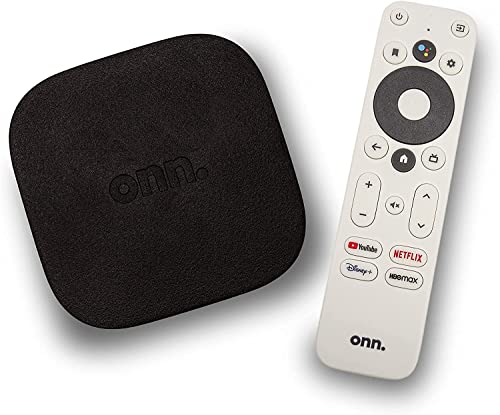
ONN Android TV 4K
$38.75

ONN Android TV Full HD
$24.29
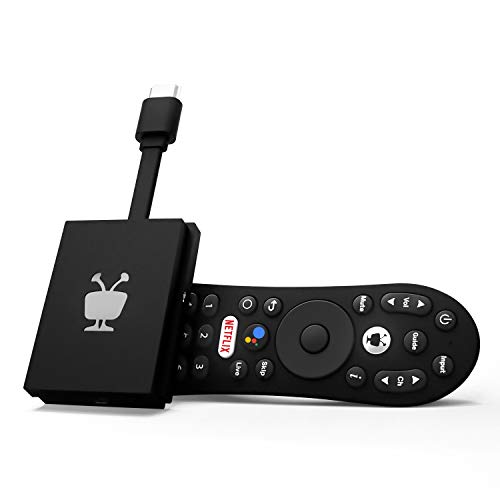
TiVo Stream 4K
$39.99

RockTek GX1
$109.99

Kickpi KP1
$71.99

Boxy Android TV Box
$99.00
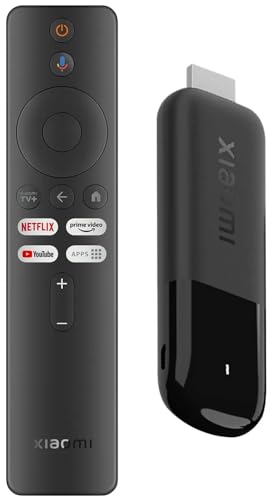
Xiaomi TV Stick 4K 2nd Gen Black
$69.99
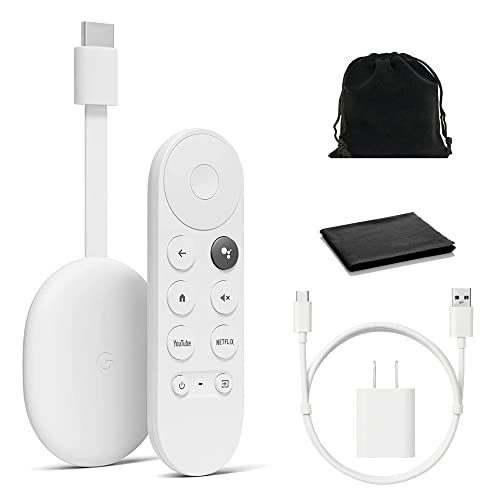
Google Chromecast with Google TV
$169.99

ONN Android TV 2K
$31.00
Spec Comparison
TL;DR: The Xiaomi TV Box S 3rd Gen packs 32 GB of storage, Wi‑Fi 6 and 4K 3840×2160 @ 60 fps into a 0.20‑lb, ultra‑compact box for smooth streaming at $77.99.
The standout spec is the generous 32 GB of internal storage, a clear jump from many competing dongles that only offer 8 GB. Coupled with a quad‑core ARM Cortex‑A55 CPU clocked to 2.5 GHz and a 2 GB DDR3 RAM module, the device can hold plenty of apps and offline media while delivering 4K UHD video at 3840×2160 @ 60 fps.
At 0.20 lb, it’s noticeably lighter than the Google TV Streamer 4K (0.36 lb) and the Kickpi KP1 (0.27 lb). Its 97 mm × 97 mm footprint and 17 mm height also make it smaller than the Boxy Android TV Box, which measures roughly 100 mm × 100 mm × 20 mm. While it shares the same 32 GB storage as the Google TV Streamer, it carries only 2 GB of RAM versus that model’s 4 GB, meaning multitasking may feel slower. Unlike several peers that list an Ethernet port, this box relies solely on Wi‑Fi 6 (802.11ax) for network connectivity.
Professional reviewers praise the storage boost and the Wi‑Fi 6 module for “instant playback” of 4K HDR content, and users consistently note the smooth streaming experience and easy voice‑remote control. The downside that surfaces in both expert and consumer feedback is the limited 2 GB RAM, which can cause lag when many apps run simultaneously. The absence of a wired Ethernet connection and a basic USB 2.0 port also limit high‑speed external storage options.
The hardware packs an ARM G310 V2 GPU, support for Dolby Vision, HDR10+ and Dolby Atmos/DTS:X audio, and AMD FreeSync for smoother video. Bluetooth 5.2/5.3 and a 360° voice remote round out the feature set, making the box a solid all‑rounder for modern streaming needs.
Pros
Cons
Best for: Casual streamers and families who want 4K HDR, generous storage and a tidy setup without breaking the bank.
Avoid if: You need heavy multitasking, wired Ethernet, or a faster USB interface for external drives.
“faster than before with a clean UI and ton of apps”
“2GB RAM is kind of okay for general use”
TL;DR: The Google TV Streamer 4K streams 2160p HDR video at 60 FPS with Dolby Vision and Dolby Atmos, offers 4 GB RAM and 32 GB storage, and retails for $79.99.
The standout spec is its 4K (2160p) HDR output at 60 FPS through an HDMI 2.1 port, backed by Dolby Vision, HDR10+, and Dolby Atmos audio. Coupled with 4 GB of RAM and 32 GB of internal storage, the device feels quick enough for most streaming apps, and it arrives at a list price of $79.99.
Compared with its peers, the Streamer is heavier than the Xiaomi TV Box S 3rd Gen (0.201 lb) and the Kickpi KP1 (0.269 lb) but lighter than the Boxy Android TV Box (over 1 lb). Its 4 GB RAM outpaces the 2 GB found in the Xiaomi TV Box S, Kickpi, and Xiaomi TV Stick, while its 32 GB storage matches the Xiaomi TV Box S, Kickpi, and RockTek GX1. The Streamer uses Wi‑Fi 5 (802.11ac), whereas the RockTek GX1 lists Wi‑Fi 6, making the latter more future‑proof for wireless 4K. Bluetooth 5.1 sits between the older 4.2 in the TiVo Stream and the newer 5.2 in the RockTek GX1.
Users consistently praise the device for seamless 4K playback and rapid app launches, noting that the voice remote with Gemini feels natural for hands‑free control. Professional reviewers highlight the fluid video and full Dolby Vision/HDR10+ support. The most common complaints revolve around the Wi‑Fi 5 limitation for congested networks, the fixed 32 GB storage with no expansion slot, and modest GPU power that falls short for serious gaming.
Beyond streaming, the Streamer includes a gigabit Ethernet port, Bluetooth 5.1, and a 1.8 m power cable that ships with the unit. It also doubles as a Matter controller and Thread border router, and Google promises five years of security updates. The chassis uses 65 % recycled plastic, aligning with a greener design philosophy.
Pros
Cons
Best for: Most users looking for a well‑reviewed, reliable mainstream option
Avoid if: You have limited desk space or need portability
“did not skip a beat”
TL;DR: The NVIDIA SHIELD TV Pro packs a Tegra X1+ processor, 3 GB RAM and AI‑upscaled 4K 60 FPS streaming in a 2.1‑lb box for $199, but its 16 GB storage may require external drives.
The SHIELD TV Pro’s standout feature is AI‑enhanced upscaling that converts lower‑resolution video to native 4K (3840 × 2160) at 60 FPS, a 256‑core NVIDIA GPU and a Tegra X1+ processor drive the process. It supports Dolby Vision and HDR10, and offers Dolby Atmos, Dolby Digital Plus and DTS‑X pass‑through for immersive sound. The unit measures 1.02 in deep, 3.858 in high and 6.26 in wide, and weighs 2.1 lb, with a 40 W power adapter and typical consumption of 5‑10 W.
Compared with the other eleven devices, the SHIELD is significantly heavier than the Google Chromecast with Google TV (≈0.68 lb) and the RockTek GX1 (≈0.25 lb), and it also sits above the Boxy Android TV Box (≈1.10 lb) and the Google TV Streamer 4K (≈0.36 lb). Its 16 GB of internal storage matches the Boxy box but falls short of the 32 GB offered by the RockTek GX1, Google TV Streamer, Xiaomi TV Box and Kickpi KP1. With 3 GB of RAM it lands between the 2 GB models (Boxy, Kickpi) and the 4 GB offerings (RockTek, Google TV Streamer). Gigabit Ethernet and two USB 3.0 Type‑A ports give it faster wired networking and expandability that many of the slimmer sticks lack.
Users consistently praise the AI upscaling and the smooth 4K HDR playback, noting that the built‑in Plex Media Server and GeForce NOW 4K HDR cloud gaming make the device feel more like a micro‑console than a simple streamer. Professional reviewers highlight the 25 % faster Tegra X1+ chip as a key performance boost. On the flip side, the limited 16 GB internal storage forces most owners to add a USB drive or microSD card, and the 2019‑era hardware means the specs do not list HDMI 2.1 or AV1 decoding. The bulkier box design also draws comments from users who prefer the low‑profile look of streaming sticks.
Pros
Cons
Best for: Buyers willing to invest in a proven, high-quality option
Avoid if: You need advanced features or professional-grade performance
“best for PC game streaming to TV”
TL;DR: The ONN Android TV 4K streams 3840×2160 HDR content with Dolby Vision at a $35.99 price, offering Google TV, voice remote, and solid Wi‑Fi in a compact 0.75 lb box.
The standout spec is its native 3840×2160 4K UHD resolution paired with Dolby Vision, HDR10 and HDR10+ support, which promises vibrant, high‑dynamic‑range picture quality straight out of the box. The device runs Google TV (Android TV 10) on an Amlogic S905Y2 processor and 2 GB of RAM, and stores 8 GB of internal memory for apps and settings.
At $35.99 it lands in the budget tier, sitting between the lower‑priced ONN Android TV 2K stick (which offers only 1 GB RAM) and the higher‑priced Kickpi KP1 that ships with 32 GB storage. Weighing about 0.75 lb (340 g), it’s heavier than the ultra‑light Xiaomi TV Stick 4K (≈0.06 lb) but still lighter than many full‑size boxes. Its 2 GB RAM matches the Xiaomi stick and exceeds the ONN 2K stick, while its 8 GB storage is on par with most peers but well below the 32 GB found in Kickpi and Xiaomi TV Box S.
Reviewers consistently praise the picture and sound quality, noting that Dolby Vision and Atmos make streaming movies feel cinematic even at this price point. Users also like the built‑in Chromecast and voice‑enabled remote for hands‑free control. On the downside, several reviewers mention occasional lag when juggling multiple apps, a symptom of the modest 2 GB RAM, and the lack of an Ethernet port limits wired network stability. Reviewers describe the plastic chassis as cheap‑looking, which may turn off buyers who prefer a more premium feel.
Beyond the basics, the box supports AV1, VP9, H.264 and H.265 video codecs, and it offers Bluetooth 4.0 and 802.11a/b/g/n/ac (MIMO) Wi‑Fi for reliable wireless connectivity. Connectivity includes one HDMI output, a USB 3.0 Type‑A port, and a micro‑USB power input. The remote runs on two AAA batteries (included) and integrates Google Assistant for voice queries.
Pros
Cons
Best for: Budget-conscious buyers seeking a reliable entry-level option
Avoid if: You want the best value‑per‑dollar in its price range
TL;DR: For $15.55, the ONN Full HD Android TV stick delivers 1080p streaming, Google Assistant voice control, and a compact design, though its 0 GB RAM and lack of 4K limit performance on newer TVs.
The device measures 6.81 in deep, 2.13 in tall and 3.74 in wide, and weighs just 1 lb (454 g), making it easy to tuck behind a TV. It runs Google TV (Android TV) with 8 GB of internal storage and lists 0 GB of RAM. The maximum output is 1080p Full HD, and it supports Bluetooth 5.0 and dual‑band Wi‑Fi (2.4 GHz / 5 GHz) under the 802.11a/b/g/n/ac standard.
Compared with the other eleven entries, this stick’s RAM is the lowest – the ONN Android TV 2K lists 1 GB and the ONN Android TV 4K, Xiaomi TV Stick 4K, Kickpi KP1 and Xiaomi TV Box S all show 2 GB. Its 8 GB storage matches the ONN Android TV 2K but falls short of the 32 GB in the Kickpi KP1 and Xiaomi TV Box S. In terms of size, its 6.81‑in depth sits noticeably deeper than the TiVo Stream 4K's 3.03‑in depth, yet its footprint remains small enough to hide behind most screens.
Reviewers consistently praise the quick setup and responsive Google Assistant voice control, noting that the remote pairs reliably via Bluetooth. Users also like the ability to stream HD content without a hitch on older televisions. However, reviewers frequently cite the listed 0 GB RAM as causing occasional app lag, and several buyers report having to replace the remote’s two AAA batteries fairly often. The lack of 4K output means it won’t fully utilize modern high‑resolution displays, and the device relies on an external micro‑USB power source rather than offering a built‑in Ethernet port.
Pros
Cons
Best for: Shoppers on a tight budget who want the most for their money
Avoid if: You need 4K resolution, heavy multitasking, or a wired Ethernet connection
TL;DR: TiVo Stream 4K packs 4K HDR, Dolby Vision and a voice‑controlled interface into a 3.03‑in deep dongle for $39.99, but its modest RAM and lack of Ethernet keep it in the budget lane.
The standout spec is its 3.03 in (77 mm) depth combined with a 0.63 in (16 mm) height, making it one of the slimmest devices in this 12‑product set. It delivers up to 3840×2160 resolution at 60 fps with Dolby Vision, HDR10 and HLG, and runs Android 9.0 Pie on an Amlogic S905Y2 Quad‑Core 1.8 GHz CPU paired with 2 GB RAM and 8 GB eMMC storage.
Compared with peers, TiVo’s dimensions are noticeably smaller than the ONN Android TV Full HD’s 6.81 in depth and 2.13 in height, and its width of 2.09 in (53 mm) is narrower than the Full HD’s 3.74 in. It matches the ONN Android TV 4K’s 2 GB RAM and 8 GB storage, but offers a newer Wi‑Fi stack (802.11 b/g/n/ac MIMO) versus the ONN Full HD’s unspecified Wi‑Fi bands. Its Bluetooth 4.2 sits between the ONN 4K’s Bluetooth 4.0 and the Full HD’s Bluetooth 5.0. While the Xiaomi TV Stick 4K 2nd Gen lists a 2.5 GHz CPU, TiVo’s 1.8 GHz processor's typical for a dongle form factor, and reviewers note it as a performance trade‑off.
User sentiment praises the unified content aggregation that lets you browse Netflix, Prime Video and live Sling channels from a single screen, and many note the responsive Google Assistant remote. Professional reviewers highlight this aggregation as a standout convenience. Common complaints focus on the modest 8 GB internal storage filling quickly, occasional app lag tied to the older Android 9.0 OS, and the absence of an Ethernet port for a more stable wired connection.
Pros
Cons
Best for: Budget‑conscious buyers seeking a reliable entry‑level option
Avoid if: You need advanced features or professional‑grade performance
TL;DR: The RockTek GX1 delivers 4K UHD streaming with Dolby Vision and HDR10+ in an ultra‑compact 115 g box, but its 100 Mbps Ethernet and lack of VC‑1 keep it from being a budget champion.
The GX1’s headline feature is its 4K UHD 2160p60 video support, including Dolby Vision, HDR10+, AV1, H.265/HEVC and VP9, paired with Dolby Atmos and Dolby Digital audio. The device uses a Realtek RTD1325TPV quad‑core Cortex‑A55 and a Mali‑G57 GPU, and it packs 4 GB LPDDR4 RAM and 32 GB eMMC 5.1 storage, which reviewers note enables smooth multitasking and rapid app launches.
Compared with the other eleven contenders, the GX1 is markedly lighter at just 115 g, whereas the Boxy Android TV Box tips the scales at 1.10 lb and the Google TV Streamer at 0.36 lb. Its depth of 93.98 mm is a touch slimmer than Boxy’s 100 mm chassis, and it matches the Google TV Streamer’s 4 GB RAM while offering twice the internal storage of the Boxy’s 16 GB. The Kickpi KP1 and Xiaomi TV Stick 4K sit at 0.27 lb and 0.06 lb respectively, but they only provide 2 GB RAM, making the GX1 a stronger performer in memory‑intensive streaming scenarios.
Consumer feedback repeatedly praises the GX1’s vivid picture quality and responsive interface, with many calling it “top‑line” for its visual and audio fidelity. Professional reviewers also highlighted the notable Dolby Vision performance at 2160p60 and the fluid AV1 playback. On the downside, users have flagged the 100 Mbps Ethernet as a bottleneck for high‑bitrate NAS streams, and the omission of VC‑1 codec support has caused playback issues for legacy media libraries. Another recurring comment noted limited ventilation, suggesting long‑term heat management could be a concern.
Beyond the headline specs, the GX1 includes Wi‑Fi 6 and Bluetooth 5.2 for fast wireless connectivity, an HDMI 2.1 port with eARC and dynamic HDR, and an optical SPDIF audio output. The package comes with an HDMI cable, a 12 V 1 A power supply, a protective sleeve and a voice‑controlled remote that integrates Google Assistant for smart‑home control.
Pros
Cons
Best for: Those prioritizing quality and willing to pay for premium performance
Avoid if: You need native VC‑1 support, Gigabit Ethernet, or plan to stream high‑bitrate local media from a NAS
“topline product with great RTD1325 performance.”
“"Ok" rating due to this.”
TL;DR: The Kickpi KP1 delivers Google‑certified Android TV in a tiny 9.6 × 9.6 × 2.3 cm box, offering HDR audio, 2 GB RAM and 32 GB storage for smooth high‑resolution streaming at a modest price.
The KP1 measures just 23 mm in height, 96 mm in length and 96 mm in width, and it weighs 122 g, making it one of the most compact Android TV boxes on the market. It carries Google Certification and Netflix 4K certification, and its HDMI 2.1 port supports the latest video standards.
When you line it up against the ultra‑light Xiaomi TV Stick 4K 2nd Gen (28 g), the KP1 is noticeably heavier, yet it still feels lighter than the Boxy Android TV Box (about 500 g). Its Ethernet port tops out at 100 Mbps, which is slower than the Google TV Streamer’s 10/100/1000 Mbps link, but it's still a reliable wired connection.
Reviewers love the tiny footprint that slides onto cramped TV stands and the built‑in Google Assistant voice remote. The downside that shows up repeatedly is the 2 GB of LPDDR4 RAM, which can feel cramped when running several apps, and the entry‑level Amlogic S905Y4 Cortex‑A35 CPU delivers only modest performance on demanding titles.
The hardware combines an Amlogic S905Y4 quad‑core Cortex‑A35 CPU with an ARM Mali‑G31 MP2 GPU, and it decodes AV1, VP9 and H.265 HEVC video streams. Connectivity includes dual‑band 802.11ac Wi‑Fi, Bluetooth 5.0 with BLE 4.2, and a 100 Mbps Ethernet port. Audio support covers Dolby Digital Plus and Dolby Atmos, and you can expand storage via the USB‑A port.
Pros
Cons
Best for: Most users seeking a balanced, mainstream option
Avoid if: You want the best value‑per‑dollar in its price range
TL;DR: Boxy’s $99 Android TV Box delivers certified 4K Dolby Vision and HDR10+ streaming with HDMI 2.1, but its 2 GB RAM, 16 GB storage and 100 Mbit/s Ethernet may limit power users.
The standout spec is the HDMI 2.1 output that supports 4Kp60 HDR, HDR10+ and Dolby Vision, backed by Netflix 4K certification and Dune HD software for ISO‑based disc playback. Under the hood sits an Amlogic S905X4‑J processor with a 4‑core ARM Cortex‑A55 CPU, 2 GB RAM and 16 GB internal flash.
Compared with the other eleven players, Boxy is heavier at about 1.10 lb (500 g) versus the sub‑0.3 lb weights of the RockTek GX1, Google TV Streamer 4K, Xiaomi TV Box S and others. It carries half the RAM of the RockTek GX1 and Google TV Streamer 4K, and its 16 GB storage trails the 32 GB found in most rivals, though it tops the Xiaomi TV Stick’s 8 GB. The Ethernet port tops out at 10/100 Mbit/s, slower than the gigabit link on the Google TV Streamer, while Bluetooth 5.0 lags behind the 5.2 on RockTek and 5.1 on Google TV. Wi‑Fi remains on the 802.11b/g/n/ac dual‑band standard, whereas RockTek offers Wi‑Fi 6.
Reviewers praise flawless ISO 4K Dolby Vision playback and note that the built‑in Netflix certification guarantees reliable HDR and Atmos support straight out of the box. However, they also point out the 100 Mbit/s Ethernet ceiling as a bottleneck for high‑bitrate 4K streams from a NAS, and the modest 2 GB RAM and 16 GB storage can restrict heavy app usage. The device stays fanless because its plastic chassis is passive, includes a Bluetooth remote with microphone for voice search, a USB 3.0 host for fast external drives, a micro‑SD slot for expansion, and both S/PDIF and analog A/V outputs for flexible audio routing.
Pros
Cons
Best for: Those prioritizing certified 4K streaming quality and advanced local playback, and who don’t need gigabit Ethernet or extensive RAM.
Avoid if: You need the fastest wired network, large internal storage, or a lightweight stick‑form factor for travel.
“faster than before with a clean UI and ton of apps”
“2GB RAM is kind of okay for general use”
TL;DR: The Xiaomi TV Stick 4K (2nd Gen) packs a 2.5 GHz quad‑core CPU, 850 MHz GPU and 2 GB RAM into a 28 g dongle that streams 3840×2160 HDR video via Google TV.
The stick’s standout spec is its 2.5 GHz quad‑core Cortex‑A55 processor paired with an 850 MHz ARM G310 V2 GPU, delivering the 80 % CPU boost and 150 % GPU rendering increase claimed over the first generation. Combined with 2 GB RAM and 8 GB eMMC storage, it handles 4K (3840×2160) HDR content—including Dolby Vision and HDR10+—smoothly at 60 Hz.
Weighing just 0.0617 lb (28 g), the stick is significantly lighter than the Kickpi KP1 (0.269 lb) and far lighter than the Google TV Streamer 4K (0.356 lb) or the Boxy Android TV Box (1.10 lb). It's longer than the Kickpi’s 96 mm length, but its compact 40 mm height, 14 mm thickness and 90 mm width let it slip behind any TV. Compared with the Xiaomi TV Box S 3rd Gen (0.201 lb) and the ONN Android TV 4K (0.750 lb), it stays the lightest option in the lineup.
Users consistently praise the device for lag‑free 4K streaming and a responsive UI, noting the portable form factor as a major convenience for travelers. Professional reviewers call the browsing experience “absolutely crazy smooth,” echoing the performance gains highlighted in the specs. The most common criticisms focus on the absence of an AI super‑resolution feature and the lack of an Ethernet port, which some power users see as a drawback for wired reliability.
Beyond raw performance, it supports Wi‑Fi 6 (802.11ax) dual‑band, Bluetooth 5.2, and audio decoding for DTS:X, DTS HD and Dolby Atmos. It handles modern codecs such as AV1, H.265 and VP9 (4Kp60 10‑bit), ensuring future‑proof video compatibility while the built‑in Google Assistant remote adds voice‑control convenience.
Pros
Cons
Best for: Most users seeking a balanced, mainstream option
Avoid if: You need AI super‑resolution or a wired Ethernet connection
“faster than before with a clean UI and ton of apps”
“2GB RAM is kind of okay for general use”
TL;DR: The Google Chromecast with Google TV delivers 4K HDR streaming, a lightweight design, and a voice‑controlled remote, but its 8 GB storage and $169.99 price place it at the premium end of the market.
The standout feature is its 4K UHD video capability at up to 60 fps with HDR10, Dolby Vision and HLG support, all packed into a 162 × 61 × 12.5 mm dongle that weighs just 55 g. The included remote adds another 63 g, houses two AAA batteries, and offers Google Assistant voice control plus an IR blaster for TV power‑on/off without a phone.
Compared with the other eleven players, the Chromecast is the lightest device – it’s slimmer than the RockTek GX1 (115 g), the Boxy Android TV Box (500 g), and even lighter than the Nvidia SHIELD Pro (250 g). Its 2 GB of RAM matches the Boxy and Kickpi KP1 but falls short of the 3 GB in Nvidia and the 4 GB that RockTek, Google TV Streamer 4K and the RockTek GX1 provide. Internal storage is only 8 GB, while competitors provide 16 GB to 32 GB, so you’ll need to manage apps more actively. At $169.99, it sits above the sub‑$110 price points of many peers, positioning it as a premium‑priced option.
Users consistently praise the plug‑and‑play setup and the convenience of the voice remote, noting that it eliminates the need for a smartphone to launch apps. Professional reviewers echo this, highlighting the smooth 4K HDR playback and the remote’s hand‑free control. The most common complaints revolve around the modest 8 GB storage, which can fill quickly, and occasional Wi‑Fi hiccups in low‑signal areas. Connectivity includes Wi‑Fi 5 (dual‑band), Bluetooth 4.2, and an optional 10/100 Mbps Ethernet adapter, while power comes via a 5 V / 1.5 A USB‑C input.
Pros
Cons
Best for: Those prioritizing quality and willing to pay for premium performance
Avoid if: You need advanced features or professional‑grade performance
“did not skip a beat”
TL;DR: At $28.03, the ONN Android TV 2K delivers 1080p streaming with Android TV 11, a voice‑controlled Google Assistant remote, and full Google Play access, making it the cheapest entry‑level streaming stick in this lineup.
The stick packs 1 GB of RAM and 8 GB of internal storage, runs Android TV 11, and includes a voice remote that talks to Google Assistant. Chromecast built‑in and Widevine L1 DRM let you cast from your phone and stream protected HD content without extra hardware.
Compared with the ONN Android TV 4K, which lists 2 GB of RAM and a weight of 340 g, this model has half the memory but a similar thumb‑drive form factor. It also offers the same 8 GB storage as the Xiaomi TV Stick 4K, though the Xiaomi device is lighter at 28 g. The ONN Android TV Full HD shows 0 GB RAM, so the 2K stick provides a noticeable upgrade in memory over that entry.
Professional reviewers highlight its budget‑friendly price while delivering a solid daily Android TV experience. AndroidGuys notes smooth 1080p playback but points out that the 1 GB RAM can cause occasional lag during home‑screen transitions. In practice, everyday users praise the easy setup and clear dialogue audio, yet many mention the storage filling up quickly and wish for 4K support, which isn’t listed in the specs.
Pros
Cons
Best for: Entry-level buyers or those on a tight budget
Avoid if: You need powerful performance or professional‑grade features
Breakdown
Xiaomi TV Box S 3rd Gen
Pros
Google TV Streamer 4K
Pros
Nvidia SHIELD Pro
Pros
ONN Android TV 4K
Pros
Cons
Based on scoring data and product specs
Personalized picks
Best Overall Pick
Xiaomi TV Box S 3rd Gen
Best Mid-Range PickBest for: Home and office users seeking a balance of features and value
Google TV Streamer 4K
Best for: Most users looking for a well-reviewed, reliable mainstream option
$79.99+$2.00 vs winner
Skip ONN Android TV 2K if…
You need powerful performance or professional-grade features
We crown the Xiaomi TV Box S 3rd Gen as the clear winner. It ships for $77.99, carries a 4.4‑star rating from 2,847 reviewers, and packs Wi‑Fi 6 (802.11ax) with Bluetooth 5.2/5.3 for rock‑solid wireless performance. The box delivers true 4K video at 3840 × 2160 @ 60 FPS, supports Dolby Atmos and DTS:X audio, and fits neatly in a 97 mm × 97 mm × 17 mm footprint with a 0.20‑lb weight.
The runner‑up, the Google TV Streamer 4K, shines when you need a wired connection and robust smart‑home integration. Its 10/100/1000 Mbps Ethernet port guarantees lag‑free streaming, while built‑in Matter and Thread support lets you control compatible devices from the voice remote. It also offers 4 GB of RAM, 32 GB of internal storage, and a 1‑year manufacturer warranty for added peace of mind.
Pick the Xiaomi TV Box S 3rd Gen today and enjoy premium 4K streaming without breaking the bank.
The Xiaomi TV Box S 3rd Gen costs $77.99 and offers Wi‑Fi 6, HDMI 2.1, Dolby Vision, HDR10+ and a 360° Bluetooth voice remote, making it a solid value. The Google TV Streamer 4K is only $2 more expensive but adds 4 GB of RAM and a gigabit Ethernet port, which may justify the slight price jump for some users.
No reviews yet — be the first to share your experience.
Please sign in to leave a review