⚡ Quick Answer
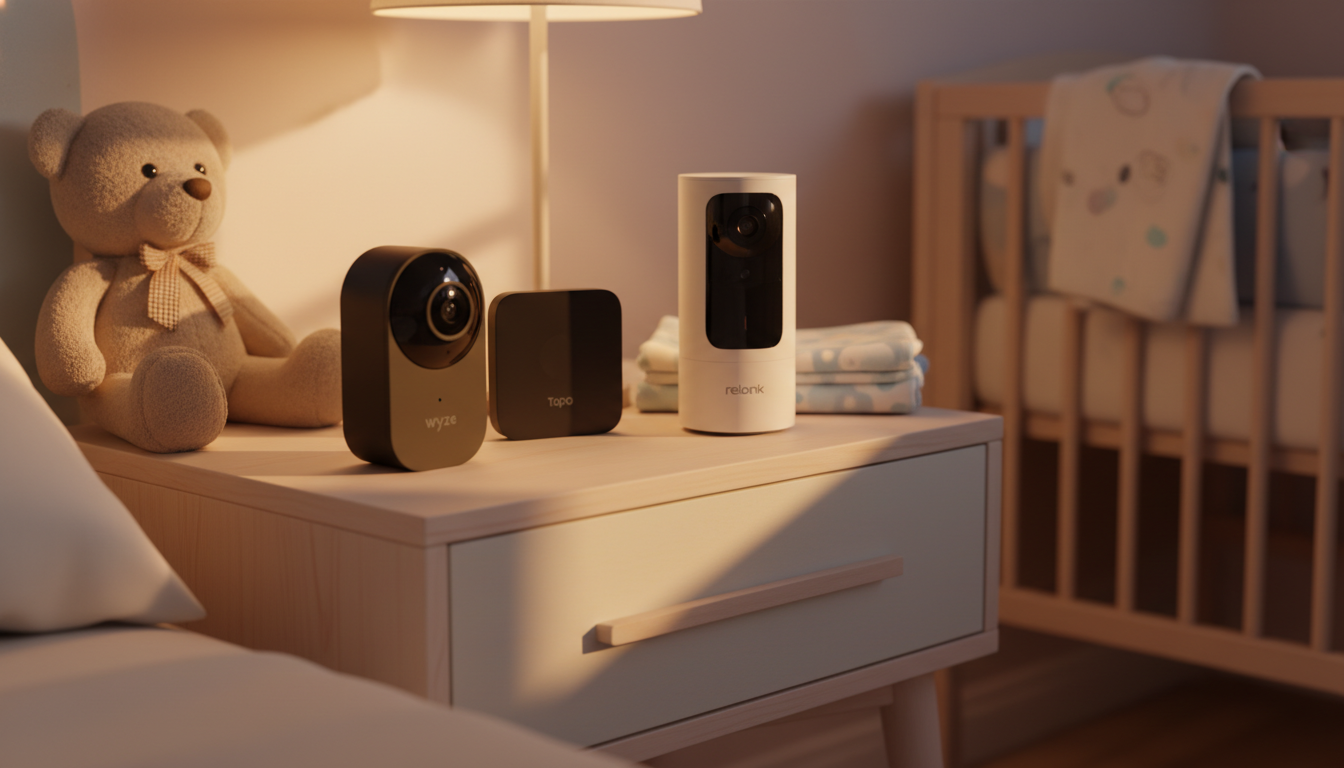
Choosing a baby monitor that fits your nursery, budget, and peace‑of‑mind can feel overwhelming. In this roundup we compare 11 indoor cameras, spanning four budget models (Cinnado D1, Vsmahome, Outinput, Veise), two mid‑range options (Gncc and Tapo C210) and four premium contenders (Wyze Cam v4, eufy Security E30, Reolink E1, Owltron). Prices run from under $14 for the most frugal picks up to just under $50 for the top‑tier devices, giving you plenty of flexibility.
The Wyze Cam v4 draws attention with its 2.5K QHD video (2560 × 1440) and a bright 99 dB siren, plus 20 FPS daytime and 15 FPS nighttime frame rates that keep motion clear. At 0.49 lb it’s lightweight enough to mount anywhere, and its 115.8° diagonal field of view covers a wide portion of the room. With a solid 4.4‑star rating from 12,299 reviewers and a list price of $35.97, it packs premium‑class features into a modest price point.
From ultra‑affordable 360° cams to higher‑resolution PTZ units, each model brings a different mix of pan‑tilt range, night‑vision distance and storage options. Read on to see how they stack up in real‑world scenarios and which specs matter most for your family’s needs.

Wyze Cam v4
Its 99 dB siren volume ensures you’ll hear alerts clearly, even in a noisy nursery.

Cinnado D1
Ideal for budget‑conscious parents, the Cinnado D1 costs $12.99—about $23 cheaper than the Wyze Cam v4.

Tapo C210
The Tapo C210 stands out with a 30‑ft night‑vision range, letting you monitor a dark room without extra lighting.
Also considered
TL;DR: The Reolink E1 delivers crisp 4MP indoor video, 355° pan, AI baby‑cry detection and two‑way audio for $25.49, making it a solid mid‑range baby monitor despite its 2.4 GHz‑only Wi‑Fi.
The standout spec is its 4MP Super HD sensor paired with an 87.5° field of view and a 355° pan range, letting you sweep an entire nursery without missing detail. AI detection can differentiate people, pets and even a baby's cry, while the built‑in two‑way audio lets you soothe or talk to your child from anywhere.
Compared with peers, the E1 is lighter than the Owltron 2K Indoor Camera yet a touch heavier than the Tapo C210. Its field of view is narrower than the Owltron’s 120° and Wyze’s wider diagonal view, but the 355° pan still offers ample coverage. Like the Tapo, it supports up to a 512 GB microSD card for local storage, giving you plenty of room for recordings without a subscription.
Professional reviewers note the high‑resolution detail and reliable AI alerts as major strengths, while the 4.2‑star rating from 18,272 reviews hints at mixed user experiences. Many users appreciate the tap‑to‑disable privacy mode that physically shields the lens, though some mention that the 2.4 GHz‑only Wi‑Fi can be a bottleneck in congested networks.
The unit plugs into a wall outlet, runs on a 2.4 GHz Wi‑Fi connection, and works with the Reolink App. Mounting options include wall, ceiling or tabletop placement, so you can position it wherever it fits best in a nursery or family room.
Pros
Cons
Best for: Those prioritizing quality and willing to pay for premium performance — the Reolink E1 offers Field of View: 87.5 degrees
Avoid if: You have limited desk space or need portability
TL;DR: The Wyze Cam v4 delivers crisp 2.5K video, a 99 dB siren, and Edge AI detection for just $35.97, making it a standout budget choice for indoor/outdoor baby monitoring.
What really sets the Wyze Cam v4 apart is its 2.5K QHD resolution (2560 × 1440) paired with a 20 FPS daytime frame rate and 15 FPS at night. The camera’s 115.8° diagonal field of view captures more of the nursery than many rivals, while the 99 dB siren provides a loud alert if something’s amiss. Edge AI on‑device means motion detection and face recognition happen locally, and the device stores up to 512 GB of footage on a microSD card for offline review.
Compared with the other ten cameras in this roundup, the Wyze Cam v4 is a bit heavier than the Reolink E1 (0.44 lb) and Tapo C210 (0.42 lb) but lighter than the Owltron 2K Indoor Camera (0.86 lb). Its field of view is wider than the Reolink’s 87.5° and matches the eufy Security E30’s 125° diagonal, giving you broader coverage without a pan‑tilt motor. While the camera uses Wi‑Fi 6 on the 2.4 GHz band, several competitors list only 2.4 GHz Wi‑Fi as well, so connectivity is on par, though it lacks a 5 GHz option.
Users consistently praise the crystal‑clear 2.5K footage and the reliable color night vision that keeps the baby’s room visible after dark. The loud 99 dB siren earns high marks for peace‑of‑mind alerts, and many note the straightforward Bluetooth 5.2 setup. On the flip side, reviewers point out the need for continuous wired power via a 1.8 m cable, which can limit placement options, and they mention that full AI features require a paid Cam Plus subscription. Some also report occasional hiccups with the Wyze app’s connectivity.
Additional technical context includes an IP65 rating for rain resistance, a textured matte polycarbonate body, and a built‑in spotlight delivering 72 lumens of illumination. The camera’s four 850 nm IR LEDs and two 5000 K spotlight LEDs enable color night vision, while Wide Dynamic Range processing helps retain detail in high‑contrast scenes. All of this comes with a one‑year manufacturer warranty.
Pros
Cons
Best for: Buyers willing to invest in a proven, high‑quality option — the Wyze Cam v4 offers Siren Volume: 99 dB
Avoid if: You need battery‑operated cameras, native 5 GHz Wi‑Fi, or a completely free AI feature set
“crystal-clear 2.5K daytime/night video”
TL;DR: At $23.99, the Tapo C210 delivers 2K video, 360° pan, 114° tilt, and AI‑powered baby‑cry detection, backed by a 4.5‑star rating from over 20 k reviewers.
The standout spec is its 2K (2304 × 1296) resolution captured by a 3 MP sensor, paired with a full‑circle 360° pan and a 114° vertical tilt. Night vision reaches up to 30 ft, and the camera can store up to 512 GB locally, giving you plenty of room for continuous footage without a subscription.
Compared with the other ten cameras in this roundup, the C210 is noticeably lighter than the Owltron model (0.86 lb) while still being heavier than the ultra‑light Vsmahome unit (0.23 lb). It also offers a wider tilt angle than the Reolink E1’s 50° and the Gncc’s 90°, and it includes smart motion tracking that the Veise and Outinput cameras only list as basic motion detection.
Professional reviewers praise the camera’s surprisingly clear and sharp image quality for its price point. However, they also note that subject tracking can feel clunky and the mobile app feels somewhat antiquated, which may frustrate users who expect a slick interface. On the plus side, the built‑in siren, two‑way audio, and baby‑cry detection add peace of mind for parents.
Additional technical perks include voice‑assistant support for Alexa and Google Assistant, Chromecast compatibility for easy viewing on larger screens, and a two‑year manufacturer warranty. The device’s compact dimensions—117.09 mm high, 86.87 mm wide, and 85.34 mm deep—make it easy to place on a shelf or mount discreetly.
Pros
Cons
Best for: Most users looking for a well‑reviewed, reliable mainstream option — the Tapo C210 offers Tilt Range: 114°
“surprisingly clear and sharp image quality”
“clunky subject tracking”
TL;DR: The Cinnado D1 delivers crisp 2K video and 360° pan at a $12.99 price, but its 2.4 GHz‑only Wi‑Fi and the need for a separate microSD card keep it firmly in the budget tier.
The standout spec is its 2K resolution (2304 × 1296 px) paired with a full 360° horizontal pan, letting you sweep an entire room from your phone. Weighing 0.639 lb (289.5 g), the camera feels solid on a nightstand, and it includes four 940 nm IR LEDs for clear black‑and‑white night vision. Two‑way audio is built in, and motion clips are limited to 10 seconds, saving only the moments you need.
Compared with the other ten cameras in this roundup, the D1 is heavier than the Vsmahome, Outinput, Gncc, and Tapo models, which all tip the scales at under 0.45 lb. Its dimensions (73.5 mm × 101.8 mm × 73.5 mm) make it taller than Vsmahome and Lumaisle but shorter than Veise and Tapo. Storage capacity matches Vsmahome at 128 GB but falls short of Outinput, Lumaisle, and Tapo, which support up to 256 GB or more. Pan‑and‑tilt coverage is on par with Veise’s 360°/360° range and Tapo’s 360°/114° range, while Gncc offers a slightly narrower 355° pan.
Users praise the easy setup, the sharp 2K stream for watching babies or pets, and the responsive two‑way talk feature. Professional reviewers echo the “excellent” app performance and note the clear audio. Common complaints focus on the camera’s reliance on 2.4 GHz Wi‑Fi, which can be spotty in weak‑signal areas, and the fact that a microSD card isn’t included. Some owners report occasional false motion alerts when zones aren’t fine‑tuned.
Technically, the D1 runs on a 5 V DC/1 A power source via USB‑C, supports cloud storage with a 30‑day trial, and encrypts video in the cloud. It integrates with Alexa and Google Home, and multiple users can share the feed. Night vision relies on infrared LEDs, so you won’t get color detail after dark.
Pros
Cons
Best for: Budget‑conscious buyers seeking a reliable entry‑level option — the Cinnado D1 offers Horizontal Pan: 360°
Avoid if: You need advanced features such as 5 GHz Wi‑Fi, color night vision, or professional‑grade performance
TL;DR: The eufy Security E30 delivers 4K video, 125° diagonal view and AI‑driven tracking for $49.96, but its wired power and 15 fps frame rate may limit smoothness and placement flexibility.
The standout spec is its 3840 × 2160 resolution, giving you true 4K clarity inside the home. Coupled with a 125° diagonal field of view, 360° horizontal pan and 75° vertical tilt, the camera can sweep an entire room without blind spots. The f/1.6 aperture and built‑in spotlight help the 32.8 ft infrared night vision stay vivid after dark, while AI detection flags humans, pets, audio cues and even crying.
Compared with the other ten cameras in this roundup, the E30 is heavier than the Wyze Cam v4 (0.49 lb) and the Reolink E1 (0.44 lb), but it offers a wider diagonal view than Wyze’s 115.8°. Its 4K resolution outpaces the 4 MP sensor listed for Reolink and the 3 MP sensor on the Tapo C210, and the local storage capacity of up to 16 TB dwarfs the 512 GB limit on the Tapo. The wired power source means it isn’t as placement‑flexible as battery‑run models, a trade‑off many reviewers note.
Users consistently praise the razor‑sharp footage and the reliability of AI tracking, saying the camera “knows when the baby starts crying” and sends instant alerts. The fee‑free local storage is highlighted as a major win over subscription‑based rivals. On the downside, several owners mention the need to keep the camera near an outlet and occasional hiccups on the 2.4 GHz Wi‑Fi band. Professional reviewers also point out that HomeKit streams at 1080p only, which reduces video quality for Apple users.
Additional technical touches include a USB‑C port for power and data, privacy mode that lets you mute recording, and smart‑home integration with HomeKit, Alexa and Google Assistant. The camera operates from 32 °F to 104 °F, so it can handle most indoor climates without issue.
Pros
Cons
Best for: Buyers willing to invest in a proven, high-quality option — the eufy Security E30 offers Field of View: 125° diagonal
Avoid if: You're shopping on a tight budget — it's priced at $49.96, and it isn’t ideal for those who need battery‑operated flexibility.
“Sharp 4K video, reliable pet/human tracking, easy setup, and ample local storage without cloud fees”
TL;DR: The Gncc Indoor Security Camera delivers 2K video, a 360° effective view, and two‑way audio for just $15.99, making it a solid budget pick for baby‑monitoring in small rooms.
The standout spec is its 360° effective field of view combined with a 355° pan range and a 90° tilt range, letting you sweep an entire nursery without blind spots. It records in 2K FHD (2560×1440) and can see up to 10 meters in the dark, while weighing only about 0.37 lb (170 g), so it sits discreetly on a shelf.
Compared with the other ten cameras, Gncc is heavier than the Vsmahome model (0.23 lb) but shares a similar depth of 75 mm. Its pan range of 355° is just shy of Veise’s full 360°, and its tilt range of 90° is far less than Veise’s 360°, meaning it won’t cover the full vertical sweep that some rivals boast. Night‑vision reach of 10 meters lines up closely with Outinput’s 30 ft claim, giving it comparable low‑light performance. Multi‑device viewing supports up to three phones at once, a feature not listed for most peers.
Users consistently praise the crystal‑clear 2K picture and the reliable two‑way talk, noting that the OSAIO app sends prompt alerts for baby movement or pet antics. Professional reviewers highlight the easy setup and the smooth integration with Alexa and Google Assistant. The most common complaints revolve around the camera’s reliance on a 2.4 GHz Wi‑Fi band, which can feel slower on modern dual‑band routers, and the need for a constant power cord, eliminating any battery‑free placement.
On the technical side, the camera runs on a 5 V/1 A USB‑C supply and includes a 2‑meter power cord, so you’ll need a nearby outlet. It supports TF cards up to 128 GB for local storage and offers a 30‑day cloud‑storage trial, giving you flexible recording options. Smart‑home compatibility means you can voice‑control the view through Alexa or Google Assistant without extra hubs.
Pros
Cons
Best for: Most users looking for a well‑reviewed, reliable mainstream option — the Gncc Indoor Security Camera offers Field of View: 360° effective
“2K resolution... enough to watch everything very sharp”
“perfect for baby monitoring, pet watching”
TL;DR: For $13.99, the Vsmahome 2K Security Camera delivers 2K video, AI motion alerts, two‑way audio, and color night vision in a compact 2.17‑inch body, though its storage caps at 128 GB.
The camera records in 2K resolution and includes motorized pan/tilt, so you can adjust the view without moving the unit. Its IP66 rating means it can handle rain or splashes, and the device measures just 2.17 inches tall, 2.95 inches long and 1.77 inches wide, weighing 0.23 pounds.
Compared with the Outinput 2K Indoor Camera, the Vsmahome unit is heavier than the 0.14‑pound model and shorter than its 3.35‑inch height, but it offers fewer local‑storage options (128 GB vs 256 GB). While several peers list static lenses, Vsmahome’s motorized pan/tilt gives it more flexibility than many of the other ten cameras in this roundup.
Reviewers consistently praise the easy plug‑and‑play setup and the clear video quality in both daylight and low‑light scenes. Professional reviewers highlighted the reliable 24/7 continuous recording via microSD and the crisp two‑way audio. Some users note occasional Wi‑Fi stability quirks on 2.4 GHz networks and wish the app interface were smoother.
Pros
Cons
Best for: Entry-level buyers or those on a tight budget — the Vsmahome 2K Security Camera offers Height: 2.17 inches
Avoid if: You need powerful performance or professional‑grade features
“Phenomenal video output in both daylight and low-light conditions”
“Speaker performance described as great”
TL;DR: The Owltron 2K Indoor Camera delivers crisp 2K video, 120° view, 3× digital zoom and pan‑tilt motion tracking for $25, but its 2.4 GHz‑only Wi‑Fi and short power cord keep it from being a true premium pick.
Owltron’s standout spec is its 2K resolution paired with a 120° field of view and 3X digital zoom, all captured at 20 fps. The motorized pan range of 355° and tilt range of 110° let you sweep the room without moving the unit, while the built‑in smart siren adds an extra layer of deterrence.
Compared with other cameras in this roundup, Owltron offers a noticeably wider view than the Reolink E1’s 87.5° field of view and a larger tilt range than Reolink’s 50°. It is heavier than the Reolink (0.86 lb vs. 0.44 lb) but still lighter than the larger Veise 2K model, which isn’t quantified here. Its night‑vision reach of 33 ft exceeds the Tapo C210’s 30 ft claim, and the 128 GB maximum local storage tops the Vsmahome’s 128 GB limit, though both support the same capacity.
User feedback highlights the camera’s clear video and reliable two‑way audio, with many parents praising the baby‑cry detection and motion alerts. Professional reviewers note the value of 2K video and automatic motion tracking, but they also point out occasional Wi‑Fi drops on the 2.4 GHz band and a power cable that can feel short for larger rooms. The device’s advanced encryption and Alexa/Google Assistant integration are frequently mentioned as reassuring security features.
Technically, the camera records using H.265 encoding, which helps keep file sizes modest for the 128 GB microSD limit. It also supports up to 16 simultaneous camera views and offers multi‑user access, making it suitable for households that need several eyes on the same feed. The inclusion of a smart siren and zone detection rounds out a feature set that feels more premium than its price suggests.
Pros
Cons
Best for: Those prioritizing quality and willing to pay for premium performance — the Owltron 2K Indoor Camera offers Field of View: 120°
“best budget security camera”
“Crystal-clear 2K/1080p video”
TL;DR: The Veise 2K Indoor Camera offers full 360° pan‑tilt, AI‑driven people/pet/cry detection, and 2K video for $14.99, making it a solid mid‑range baby‑monitor choice.
The standout spec is its 360° pan range combined with a matching 360° tilt range, letting you cover an entire room without blind spots. Housed in a compact white body that measures 3.3 inches deep, 4.7 inches high and 3.3 inches wide, the camera delivers crisp 2K imaging through an F1.8 aperture and infrared night vision.
Compared with the other ten cameras in this roundup, Veise’s full‑circle tilt outmatches Gncc’s 90° tilt and its 355° pan, while offering a larger physical profile than Gncc’s 75 mm depth. Vsmahome lists motorized pan/tilt but doesn’t disclose range, so Veise’s explicit 360° coverage gives it a clearer advantage. Outinput and Lumaisle both provide 2K resolution, yet neither specifies pan‑tilt angles, leaving Veise’s 360°/360° claim as the most comprehensive. Tapo C210 also reaches 360° pan but only 114° tilt, so Veise still wins on total coverage. In storage, Veise supports up to 512 GB local memory, matching Tapo’s limit and exceeding Lumaisle’s 256 GB cap.
Reviewers consistently praise the AI motion detection that can tell apart people, pets, and even crying sounds, calling the alerts “reliable” and “accurate.” Professional reviewers note the sharp 2K image quality and the ease of linking the camera to Alexa or Google Home. The most common complaints focus on the requirement for a constant wired power connection and the fact that the unit only works on 2.4 GHz Wi‑Fi, which can cause setup hiccups on 5 GHz‑only routers.
Beyond the core specs, the camera includes a privacy mode, two‑way audio, and a 180‑day free cloud storage trial, giving you flexibility between local SD cards (up to 512 GB) and cloud backup. Voice‑assistant support means you can check the feed with a simple voice command, and the IR night vision keeps the view clear after dark.
Pros
Cons
Best for: Most users seeking a balanced, mainstream option — the Veise 2K Indoor Camera offers Tilt Range: 360°
Avoid if: You have limited desk space or need portability, or your network only supports 5 GHz Wi‑Fi.
TL;DR: The Outinput 2K Indoor Camera delivers crisp 2K QHD video and AI color night vision at a budget‑friendly $13.99, though it’s limited to 2.4 GHz Wi‑Fi and needs constant USB‑C power.
The camera’s headline feature is its 2K QHD (3MP) resolution, which stays sharp even when mounted behind glass. AI Color Night Vision adds full‑color detail out to 30 ft (360 in), and a 3x digital zoom lets you focus on movement without losing that 2K clarity.
Weighing just 0.14 lb, it’s lighter than the Vsmahome model (0.23 lb) and noticeably lighter than the Gncc camera (0.37 lb). Its 256 GB microSD ceiling matches the Lumaisle unit and tops the Vsmahome’s 128 GB limit. While the Veise and Cinnado cameras list motorized pan/tilt or 360° horizontal pan, the Outinput stays fixed, keeping the body compact at 3.35 in tall and 1.81 in wide. Like every other camera in this roundup, it runs on a 2.4 GHz Wi‑Fi network.
Reviewers love the plug‑and‑play USB‑C setup and the clear 2K footage, calling the motion alerts “timely.” The most repeated complaint is the push‑button microSD slot tucked below the lens, which users describe as fiddly. A few owners also note occasional drops on networks that use AP isolation, echoing the connectivity limitation highlighted by professional reviewers.
Power arrives via a USB‑C cable that measures between 1 m and 1.5 m, giving you flexibility to place the camera on a shelf or stick it to a window with the adhesive pad. AI Smart Motion Detection can trigger recordings in continuous loop or motion‑triggered mode, and privacy mode can mute audio and video while keeping alerts active. The iOS/Android app offers live view, playback, zoom and push alerts for multiple users.
Pros
Cons
Best for: Entry-level buyers or those on a tight budget — the Outinput 2K Indoor Camera offers Resolution: 2K QHD (3MP)
Avoid if: Reliability and user satisfaction are your top concerns, especially if you need battery operation or a camera that works on networks without a 2.4 GHz band
“Great 2K window camera to protect your home”
“Job's a good'un”
TL;DR: For $9.99 the Lumaisle 2K Indoor Camera delivers 3 MP, 2K video with AI motion alerts, dual‑band Wi‑Fi and two‑way audio, but its larger body and modest 4.1‑star rating make it a budget‑focused, not premium, choice.
The standout spec is the 3 MP sensor that records in 2K resolution, giving sharper detail than many 1080p rivals. Its compact height of 2.95 inches and a width of 6.42 inches house full‑color night vision and a built‑in siren, all while supporting up to 256 GB of microSD storage.
Compared with the other ten cameras in this roundup, the Lumaisle sits at the low‑end of the price spectrum and carries a 4.1‑star rating, which is modest against peers such as the Cinnado D1, Vsmahome and Veise models that sit at 4.4 stars or higher. Physically, its 6.42‑inch width is noticeably broader than the slimmer footprints of the Vsmahome (1.77 in) and Outinput (1.81 in) units, making it a bulkier option for tight spaces.
User sentiment is thin, but the few points that surface praise the AI‑driven motion detection and the instant push notifications that keep parents in the loop. Reviewers also note the convenience of dual‑band Wi‑Fi for a steadier stream. On the flip side, the 4.1‑star average suggests some buyers found the experience less polished than higher‑rated competitors, and the lack of listed weight or power details leaves the camera’s installation footprint somewhat uncertain.
Pros
Cons
Best for: Entry‑level buyers or those on a tight budget — the Lumaisle 2K Indoor Camera offers Megapixels: 3 MP
Avoid if: Reliability and user satisfaction are your top concerns
Breakdown
Wyze Cam v4
Pros
Cinnado D1
Pros
Tapo C210
Pros

Gncc Indoor Security Camera
Pros
Based on scoring data and product specs
Personalized picks
Best Overall Pick
Wyze Cam v4
Best ValueBest for: Buyers willing to invest in a proven, high-quality option — the Wyze Cam v4 offers Siren Volume: 99 dB
Cinnado D1
Best for: Budget-conscious buyers seeking a reliable entry-level option — the Cinnado D1 offers Horizontal Pan: 360°
$14.99-$20.98 vs winner
Skip Lumaisle 2K Indoor Camera if…
Reliability and user satisfaction are your top concerns
We’re naming the Wyze Cam v4 the clear winner of our baby‑monitor roundup. It pulls a solid 4.4 / 5 rating from 12,299 reviewers, ships at $35.97 and records in 2.5K QHD (2560 × 1440) video. The camera also packs Edge AI for smarter motion alerts, offers two‑way audio, and includes a 99 dB siren, all while being rated IP65 for indoor‑outdoor use.
The Cinnado D1 earns the runner‑up spot, especially if you need full‑room coverage on a tight budget. Its 360° horizontal pan lets you swivel the view from any angle, and it streams crisp 2K video (2304 × 1296) for just $12.99. Like the Wyze, it supports two‑way audio and has a built‑in speaker, making it a solid choice for monitoring a nursery that requires panoramic sightlines.
For shoppers with different price points, we highlight three alternatives. The Lumaisle 2K Indoor Camera is the best budget pick at $9.99, delivering basic 2K imaging at the lowest cost. The Gncc Indoor Security Camera offers the best mid‑range value at $15.99, balancing price with a reliable feature set. If premium build and performance matter most, the eufy Security E30 stands out at $49.96, providing top‑tier specs for the higher spend.
Pick the Wyze Cam v4 today and get the most capable baby monitor without breaking the bank.
It offers 2.5K QHD video (2560 × 1440), Edge AI for motion detection, two‑way audio, and a 99 dB siren, all packaged in a weather‑proof IP65 housing. At $35.97 it combines high‑resolution video and smart features that many cheaper models lack.
No reviews yet — be the first to share your experience.
Please sign in to leave a review