⚡ Quick Answer
We compared 9 home‑security cameras that span a price range from $59.99 for the Ring Battery Doorbell up to $499.99 for the Arlo Ultra 4K HDR. The lineup splits into three clear tiers: budget options like Ring, Arlo Essential 2K and eufy SoloCam S340; mid‑range picks such as Aosu Security Camera, Canary Flex and Blink Outdoor 4; and premium models including the Arlo Pro 2K HDR, Reolink Argus PT Ultra and Arlo Ultra 4K HDR. All of them carry solid user ratings, with Ring leading at 4.6/5 and the Arlo Pro 2K HDR holding a respectable 4.3/5.
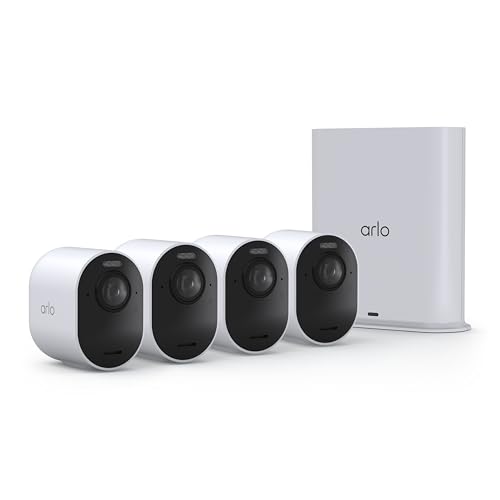
The Arlo Pro 2K HDR brings 2K HDR video, a 160° field of view and a swappable battery that lasts up to 345 600 minutes on a single charge. Its dual‑band Wi‑Fi keeps the feed stable, and the camera integrates with major smart‑home ecosystems, letting you arm or view footage through voice assistants. Priced at $219.99, it delivers premium‑level image clarity and battery endurance without climbing into the highest price bracket.
Below we’ll walk through the budget, mid‑range and premium categories, highlighting each model’s strengths, smart‑home compatibility and any trade‑offs, so you can match a system to your home’s specific needs.

Arlo Pro 2K HDR
Its 160° field of view captures more area, delivering premium coverage.
Ring Battery Doorbell
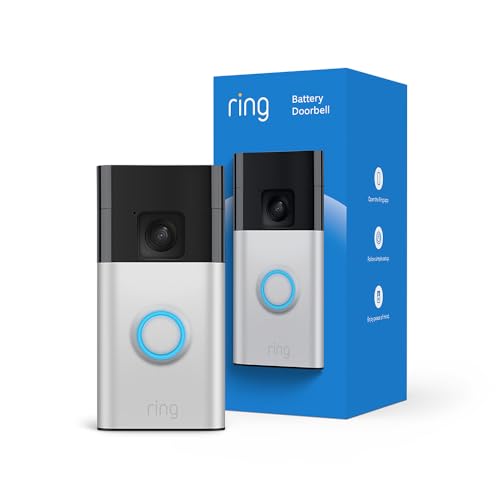
Ideal for budget‑conscious homeowners, the Ring Battery Doorbell costs $59.99—about $160 cheaper than the Arlo Pro 2K HDR—while offering 6x digital zoom.

Blink Outdoor 4
Stands out with a 730‑day battery life, wire‑free installation and no subscription needed, offering 1080p video and 143° view at $189.99.
Also considered
TL;DR: The Ring Battery Doorbell delivers Retinal 2K video, 6x digital zoom, and a 140° head‑to‑toe view in a lightweight 0.39‑lb, battery‑powered unit that installs in about ten minutes for under $60.
Ring’s newest battery‑powered doorbell upgrades the entry‑level line with Retinal 2K video resolution and a 6x Enhanced Zoom, letting you read plates and see facial details from the porch. The camera sits behind a 140° horizontal and vertical field of view, and the whole unit measures just 4.98 in deep, 0.8 in tall and 2.44 in wide, weighing only 0.39 lb. With a USB‑C charging port and a listed installation time of ~10 minutes, you can mount it without running new wiring.
Compared with other options in this roundup, Ring’s field of view is wider than the Arlo Essential 2K’s 130° but narrower than the Aosu Security Camera’s 166°. At 0.39 lb it’s lighter than the Arlo Essential’s 0.45 lb and the Canary Flex’s 0.53 lb, though the Blink Outdoor 4 is even lighter at 0.24 lb. Video‑resolution wise, Ring matches the Arlo Pro 2K HDR’s 2K capability, while the Blink Outdoor stays at 1080p and the eufy SoloCam S340 offers 4 MP stills but not the same 2K video stream.
Everyday users appreciate the quick setup and the clear daytime video that makes package tracking easy. Professional reviewers note the “streamlined 2K upgrade” and the convenience of two‑way talk, while some complain that the standard motion detection can fire false alerts and that the single‑band 2.4 GHz Wi‑Fi sometimes lags behind dual‑band rivals. Battery life isn’t listed, but several owners report faster drain under heavy use, so keeping an eye on charge levels is wise.
Ring also bundles smart alerts for people and packages, though a Ring Protect subscription is required for those notifications and for video recording. The device works with Alexa, letting you hear door activity on Echo devices or launch live video on an Echo Show, which adds a hands‑free layer to home monitoring.
Pros
Cons
Best for: Budget‑conscious buyers seeking a reliable entry‑level option — the Ring Battery Doorbell offers Digital Zoom: 6x Enhanced Zoom
Avoid if: You need advanced features or professional‑grade performance
“in minutes”
“clear daytime video”
TL;DR: The Blink Outdoor 4 delivers 1080p HD video, up to two years of AA‑battery life, and two‑way audio for $189.99, making it a solid, low‑maintenance choice for budget‑focused homeowners.
What really sets the Blink Outdoor 4 apart is its 1080p HD video (1920×1080 px) paired with a 143° diagonal field of view, so you capture a wide scene without sacrificing clarity. The camera runs on two AA lithium cells and is rated for up to 730 days of operation, which translates to roughly two years on a single set of batteries under default settings. Its IP‑65 rating means it can handle rain, snow, and dust, and the built‑in 850 nm infrared LEDs provide clear night‑vision up to 6 meters.
When you line it up against the other eight contenders, the Blink Outdoor 4 is noticeably lighter at 0.24 lb, making it one of the most compact options in the set. It’s lighter than the Canary Flex, which tips the scales at 0.53 lb, and also lighter than the Arlo Essential 2K at 0.45 lb. While it doesn’t include a built‑in siren like some rivals, it avoids the bulk of larger battery‑powered units such as the eufy SoloCam S340 (1.39 lb) and the Aosu Security Camera (2.67 lb). Its reliance on a Sync Module for local storage keeps the camera itself sleek, though it does add a hub requirement that a few competitors skip.
Everyday users rave about the hassle‑free, wire‑free installation and the long battery life that lets them forget about frequent changes. Professional reviewers, however, frequently flag connectivity drops between the camera and its Sync Module, especially when the signal has to travel the full 100 ft range. Users also note that heavy live‑view usage can shave weeks off the advertised two‑year battery span, and occasional false motion alerts have been reported. Still, the customizable activity zones and reliable infrared PIR detection keep most homeowners satisfied with the motion‑alert reliability.
On the technical side, the camera streams using the H.264 codec over a dual‑radio setup: 2.4 GHz Wi‑Fi for internet access and a proprietary 900 MHz Blink Protocol to talk to the Sync Module. Two‑way audio lets you speak through the built‑in microphone and speaker, and smart detection works without a subscription, though person detection does require an optional Blink plan. Storage is handled locally via the Sync Module Core, so you avoid monthly cloud fees.
Pros
Cons
Best for: Value-conscious buyers seeking quality at $189.99 — the Blink Outdoor 4 offers Video Resolution: 1080p HD (1920x1080px)
Avoid if: You need advanced features or professional‑grade performance
“Strong battery life and effective motion detection.”
TL;DR: At $119.99, the eufy SoloCam S340 delivers 3K/2K dual‑lens video, 360° pan, 8× hybrid zoom, and a 15 m night‑vision range, all powered by a removable solar panel for subscription‑free outdoor security.
The camera’s standout feature is its dual‑lens system: a 3K (2880×1620) wide‑angle sensor paired with a 2K (2304×1296) telephoto sensor, plus hybrid 8× zoom. Combined with a 15 m (50 ft) color night‑vision spotlight, you get detailed footage day or night. A removable 2.2 W solar panel can keep the unit running with as little as two hours of sunlight, and the built‑in 90‑day battery provides a safety net when sun isn’t available.
At 1.39 lb, the SoloCam is heavier than the Arlo Essential 2K’s 0.45 lb body but lighter than the Aosu camera’s 2.67 lb chassis. Its 3K/2K resolution outclasses the 4 MP sensor listed for the Arlo Essential 2K, giving clearer detail across the 135° field of view. However, it only supports 2.4 GHz Wi‑Fi, whereas the Arlo Pro 2K HDR offers dual‑band connectivity, which can matter in crowded networks.
Users consistently praise the hassle‑free, wire‑free installation and the reliability of the solar panel, noting that “install once, runs forever” when sunlight is ample. Reviewers also like the on‑device AI that detects people and vehicles without a subscription, and the 8 GB local eMMC storage that keeps footage private. The common complaints focus on battery drain in low‑sun or cold weather and occasional Wi‑Fi hiccups, especially in homes that rely on 5 GHz bands.
Technical details reinforce its practicality: the camera runs up to three months on a full charge, while the solar panel harvests 600–1200 mAh per day under optimal light. Smart detection, two‑way audio, a built‑in siren, and IP65 weather resistance make it ready for any climate between –4 °F and 140 °F. Integration with Alexa and Google Assistant adds convenient voice control.
Pros
Cons
Best for: Budget-conscious buyers seeking a reliable entry-level option — the eufy SoloCam S340 offers Night Vision Range: Up to 15 m (50 ft).
“install once, runs forever”
“Potential battery drain in shaded/low-sun areas”
TL;DR: The Aosu Security Camera delivers true 2K QHD video, a 166° ultra‑wide view and up to a year of battery life on low activity, all without a subscription fee.
The standout feature is its 2K QHD (3.0 MP) resolution paired with a 166° field of view and 6x digital zoom, giving you clear detail across a broad area. The kit includes two cameras, each powered by a 5200 mAh rechargeable battery that can last 240–360 days when activity is low, and a 32 GB encrypted local storage hub.
Compared with the other eight cameras in this roundup, the Aosu system is heavier than the eufy SoloCam S340 (1.39 lb) but lighter than many bulkier indoor units. It offers twice the local storage of the eufy SoloCam’s 8 GB eMMC and more cameras than the single‑camera Arlo Essential 2K. Like the eufy, Canary Flex and Ring Doorbell, it works with Alexa and Google Assistant, yet it sticks to 2.4 GHz Wi‑Fi while some rivals list dual‑band support.
Reviewers consistently praise the long battery life, the crisp 2K color night vision and the fact that there’s no monthly cloud fee. Professional reviewers highlight the seven‑lens ultra‑clear optics and the built‑in spotlight that improves night‑time identification. Common complaints revolve around faster battery drain when motion events are frequent, occasional app hiccups when syncing multiple cams, and the limitation to a 2.4 GHz network which can restrict range in larger homes.
Pros
Cons
Best for: Budget-conscious buyers seeking a reliable entry-level option — the Aosu Security Camera offers Resolution: 2K QHD (3.0 MP)
Avoid if: You want the best value‑per‑dollar in its price range
“Battery lasts months”
“Clear 2K color night vision lights up intruders”
TL;DR: At $79.95, the Arlo Essential 2K delivers crisp 2K video, a 130° view and up to 120‑day battery life, making it a solid entry‑level cam for renters or temporary setups.
The camera’s standout spec is its 2K video resolution (2560×1440) paired with a 130° field of view, so you capture clear detail across a wide area. It runs on a rechargeable battery that the manufacturer lists as lasting up to 120 days, and the unit weighs just 0.45 pounds, keeping installation light and hassle‑free.
In our nine‑product roundup, the Essential 2K is more affordable than the Arlo Pro 2K HDR and lighter than the eufy SoloCam S340, which tips the scales at 1.39 pounds. It is a bit heavier than the Ring Battery Doorbell’s 0.39‑pound chassis, but still compact enough for most doorways or shelf spots. Unlike the Pro 2K HDR’s dual‑band Wi‑Fi, the Essential sticks to 2.4 GHz, which some users note can be slower on crowded networks.
Reviewers consistently praise the straightforward setup and the sharp 2K footage, especially the color night‑vision spotlight that illuminates dark scenes. Professional reviewers highlight the automated privacy shield as a clever way to protect indoor privacy while staying on guard. On the downside, many owners report that heavy motion activity shortens the battery’s runtime, and the required Arlo Secure subscription for cloud storage feels like an extra cost.
Beyond video, the cam includes a built‑in siren, smart detection, two‑way audio with noise‑cancelling, and compatibility with Alexa and Google Home. Its wireless design and optional solar charging give you flexibility to place it wherever you need coverage, indoor or out.
Pros
Cons
Best for: Entry‑level buyers or those on a tight budget — the Arlo Essential 2K offers a 130° field of view and long‑lasting battery.
Avoid if: You need dual‑band Wi‑Fi, constant plug‑in power, or professional‑grade features like HDR.
“impressive video quality”
TL;DR: The Reolink Argus PT Ultra delivers a 180° diagonal 4K view, solar‑powered battery life and AI‑driven alerts, making it a premium‑grade wireless camera for wide‑area outdoor monitoring.
What truly sets this camera apart is its 180° diagonal field of view, created by dual‑lens stitching, paired with a 4K 8MP sensor and an F/1.0 aperture. The unit also offers 355° of pan and 140° of tilt, letting you cover a large perimeter without blind spots. Powered by a rechargeable battery that can last up to 12 extra standby days and a 3W solar panel, the system stays online with minimal upkeep, while Wi‑Fi 6 ensures smooth 4K streaming.
Compared with the other eight cameras in this roundup, the Argus PT Ultra packs more resolution than the Arlo Pro 2K HDR’s 2K video and out‑scales its 160° field of view. It also provides a wider viewing angle than the Blink Outdoor 4’s 110° and the Arlo Essential 2K’s 130°. While the Arlo Ultra 4K HDR shares the same 8 MP sensor, it relies on older Wi‑Fi standards, whereas the Argus PT Ultra runs on Wi‑Fi 6. The camera’s solar compatibility gives it an edge over models like the Arlo Essential that lack built‑in solar options, though it’s heavier than the lightweight Blink Outdoor 4.
Reviewers consistently highlight the blind‑spot‑free coverage and the crisp detail of the 4K footage. Users love the true‑color ColorX night vision, which captures recognizable colors even after dark. On the downside, owners in shaded yards note that the battery needs regular solar exposure or frequent charging, and some report occasional Wi‑Fi range hiccups in larger properties. The expansive 180° view can introduce slight stitching distortion at the edges, a trade‑off noted by a few buyers.
The camera’s AI detection targets people, vehicles, animals and pets, while a PIR sensor reaches up to 10 m with a 100° horizontal angle. Video is compressed with H.265 and stored on an included 64 GB microSD card, with support for two 512 GB cards for expanded local storage. Smart home integration works with Google Assistant and Alexa, and there’s no subscription fee to access basic features.
Pros
Cons
Best for: Those prioritizing quality and willing to pay for premium performance — the Reolink Argus PT Ultra offers Field of View: 180° diagonal
TL;DR: The Arlo Pro 2K HDR offers 2K HDR video, a 160° view, and up to 345600‑minute battery life for $219.99, delivering premium security features at a price below many high‑end rivals.
The standout spec is its 2K HDR video resolution of 2560 x 1440 pixels paired with a 160° field of view, letting you capture sharp detail across a wide area. Its battery is rated for 345600 minutes per charge, and the swappable design means you can replace it without tools. Users have given it a 4.3/5‑star rating across 356 reviews, indicating solid satisfaction.
Compared with the other eight cameras, the Arlo Pro 2K HDR’s field of view is wider than Blink Outdoor’s 110° and Canary Flex’s 116°, and broader than the Arlo Essential 2K’s 130°. It sits just below the Aosu Security Camera’s 166° view. Price‑wise, it is higher than the Blink Outdoor and Canary Flex models but considerably lower than the Arlo Ultra 4K and the Reolink Argus PT Ultra, which sit at the top end of the price range.
Professional reviewers highlight the camera’s crisp 2K HDR footage and the generous 160° coverage as key strengths. Homeowners appreciate the long‑lasting battery and the convenience of a swappable pack, while the integrated spotlight, siren, and AI‑driven threat detection add layers of safety. The main trade‑off is the premium price and the need for an Arlo Secure subscription to unlock AI detections, video history beyond 60 days, and emergency response.
Pros
Cons
Best for: Homeowners who prioritize premium video quality, long battery life, and AI‑driven security – the Arlo Pro 2K HDR offers Field of View: 160°.
Avoid if: You are focused on a tight budget, need local storage without a subscription, or require resolution higher than 2K.
TL;DR: The Canary Flex delivers a 116° field of view, 10x zoom and a 90+ dB siren in a lightweight 0.53‑lb, weather‑proof package for $179.
The camera’s standout spec is its 116° wide‑angle lens paired with 10x digital zoom, letting you capture detail across a broad area. It records in 1080p HD, stores up to 60 days of cloud video, and runs on a 6700 mAh rechargeable battery. At just 0.53 lb (0.53 lb) and with dimensions of 1.9 in × 4.35 in × 1.9 in, it’s compact enough to slip onto a balcony railing or mount on a magnetic surface.
Compared with the eight other cameras in this roundup, the Flex sits in the middle of the weight range—lighter than eufy’s SoloCam S340 (1.39 lb) but heavier than Blink Outdoor 4 (0.24 lb). Its 116° view is wider than Blink Outdoor 4’s 110° field but narrower than Arlo Essential 2K’s 130°. The Flex also carries a higher price tag than Blink Outdoor 4, making it pricier than that entry while still undercutting premium models like Arlo Ultra 4K HDR.
Everyday owners consistently praise the magnetic base and the camera’s true portability, noting that it stays snug on metal frames and survives rain thanks to its IP65 rating. Professional reviewers highlight the hardware flexibility and the intuitive app that surfaces human motion alerts. The main downside voiced by users is the subscription requirement for full two‑way audio and extended cloud storage, plus occasional app quirks when scrubbing video.
Beyond the core video specs, the Flex includes AES‑256‑bit encryption, a dedicated security chip, and an operating temperature range from –4 °F to 113 °F, ensuring reliable performance in most climates. The included 8‑ft power cable offers a wired option when battery power isn’t convenient.
Pros
Cons
Best for: Most users seeking a balanced, mainstream option — the Canary Flex offers Siren Volume: 90+ dB
Avoid if: Reliability and user satisfaction are your top concerns
TL;DR: The Arlo Ultra 4K HDR delivers true 4K HDR video at 24 fps with a 180° view and built‑in spotlight, but its $499.99 price and subscription requirement make it a premium‑only choice.
The headline feature is the 3840 × 2160 4K HDR resolution paired with a 24 fps frame rate, giving you crystal‑clear footage that captures facial details and license plates. Its 180° field of view and 12× digital zoom further broaden coverage, while the built‑in spotlight adds illumination for night‑time alerts.
Compared with the eight other cameras in this roundup, the Ultra sits at the high‑end of the price spectrum and offers the only true 4K HDR video. Its 180° view outpaces the 160° of the Arlo Pro 2K and the 110° of the Blink Outdoor, while the Reolink Argus PT Ultra shares a similar ultra‑wide diagonal but remains cheaper. Rating‑wise, the Ultra’s 4.1/5 places it in the middle of the pack, trailing the higher‑rated Arlo Pro 2K and Ring Doorbell but ahead of the budget‑focused Canary Flex.
Users consistently praise the Ultra’s vivid 4K footage and the reliability of motion alerts through the Arlo Secure app. Professional reviewers highlight the auto‑zoom and tracking as a breakthrough for wire‑free 4K cameras, and the dual‑band 2.4 GHz/5 GHz Wi‑Fi (802.11 a/b/g/n/ac) is noted for low‑latency streaming. However, several owners report that the battery depletes quickly under heavy use, and the need for a $17.99/month subscription to unlock full‑resolution cloud storage and advanced smart alerts is a frequent complaint.
The camera is IP65‑rated for outdoor durability, supports Alexa and Google Home, and includes smart detection for people, vehicles, and packages. Local storage is handled via the required SmartHub, and the device runs on a rechargeable battery that lasts up to four times longer than prior Arlo models, though exact runtime isn’t quantified.
Pros
Cons
Best for: Those prioritizing quality and willing to pay for premium performance — the Arlo Ultra 4K HDR offers Frame Rate: 24 fps
Avoid if: You're shopping on a tight budget — it's priced at $499.99
“Crystal-clear 4K video, wide FOV reducing blind spots, reliable motion alerts, and easy setup with app.”
Breakdown
Arlo Pro 2K HDR
Pros
Ring Battery Doorbell
Pros
Blink Outdoor 4
Pros

eufy SoloCam S340
Pros
Cons
Based on scoring data and product specs
Personalized picks
Best Overall Pick
Arlo Pro 2K HDR
Best OverallBest for: Audiophiles and enthusiasts seeking premium sound quality and advanced features — the Arlo Pro 2K HDR offers Field of View: 160°
Ring Battery Doorbell
Best for: Budget-conscious buyers seeking a reliable entry-level option — the Ring Battery Doorbell offers Digital Zoom: 6x Enhanced Zoom
$59.99-$160.00 vs winner
Skip Canary Flex if…
Reliability and user satisfaction are your top concerns
We’re naming the Arlo Pro 2K HDR the clear winner of our home‑security roundup. Its 2K HDR video (2560 × 1440 resolution) delivers crisp, detailed footage, while the 160° field of view captures more of each room. A massive 345,600‑minute battery life means you can forget frequent recharges, and the built‑in siren plus AI‑driven threat detection round out a feature set that justifies its $219.99 price tag.
The runner‑up is the Ring Battery Doorbell, ideal if you need a front‑door solution that’s quick to install and budget‑friendly. At $59.99 it offers 2K video, 6x enhanced zoom, and color night vision, plus two‑way audio and USB‑C charging. With a 4.6‑star rating from 48,475 reviewers and an estimated 10‑minute setup, it’s a solid choice for anyone wanting reliable door alerts without wiring.
For shoppers focused on price tiers, the best budget pick remains the Ring Battery Doorbell ($59.99) for its doorbell‑specific features. The top mid‑range option is the Blink Outdoor 4 ($189.99), offering solid outdoor coverage at a reasonable cost. If you’re willing to spend more for ultra‑high‑definition, the Arlo Ultra 4K HDR ($499.99) delivers the premium resolution and performance you’d expect.
Secure your home today by choosing the Arlo Pro 2K HDR and enjoy premium protection without the premium price.
It delivers 2K HDR clarity with a 2560 × 1440 resolution and a 160° field of view, while its battery lasts a listed 345600 minutes. The dual‑band Wi‑Fi and AI‑generated alerts add premium smart‑home integration without a premium price tag.
No reviews yet — be the first to share your experience.
Please sign in to leave a review