
⚡ Quick Answer
We compared 10 beginner‑friendly camera drones, spanning the full price spectrum. The budget corner includes the $35.99 Holy Stone HS110D and the $44.99 Hiturbo Camera Drone, with the $89.99 Holy Stone HS720G and HS440D completing the affordable lineup. Mid‑range options include the $189.89 Holy Stone HS175G and the $198.50 DJI Neo. Premium picks—Potensic ATOM SE at $198.99, DJI Mini 4K for $209.00, and the Ruko F11GIM2 ($299.99) and F11PRO 2 ($369.99)—offer higher‑end specs and longer flight times.
If you’re chasing quick travel clips, the sub‑250 g DJI Mini 4K weighs just 0.54 lb, offers 4K video, a 31‑minute flight time and a 10 km transmission range, keeping you registration‑free in most regions. For ultra‑portable selfie‑style shots, the palm‑launchable DJI Neo (0.30 lb) delivers 4K video and up to 7 km O4 video range without a separate controller. Learners who want a gentle entry point can start with the Holy Stone HS110D at $35.99, which provides a 1080 p camera, 150 m control range and a total flight time of about 20 minutes across its two batteries.
Below, we break down each model’s strengths, so you can match a drone to your flying style and budget.

DJI Mini 4K
Its 2250 mAh battery delivers 17.32 Wh of energy, giving longer flight time at a competitive $209 price.

DJI Neo
Ideal for mainstream flyers who want a well‑reviewed drone; at $198.50 it’s about $10.50 cheaper than the Mini 4K.

Holy Stone HS110D
Stands out with a 1000 mAh battery and a $35.99 price tag, making it the go‑to option for tight‑budget beginners.
Also considered
Score Analysis
Key score advantages vs. runner-up (DJI Neo)
Price Range
DJI Mini 4K
$299.00
DJI Neo
$149.00
Holy Stone HS110D
$29.99

Ruko F11GIM2
$299.99

Holy Stone HS720G
$79.99

Ruko F11PRO 2
$339.99

Potensic ATOM SE
$198.98

Hiturbo Camera Drone
$44.99

Holy Stone HS175G
$189.89
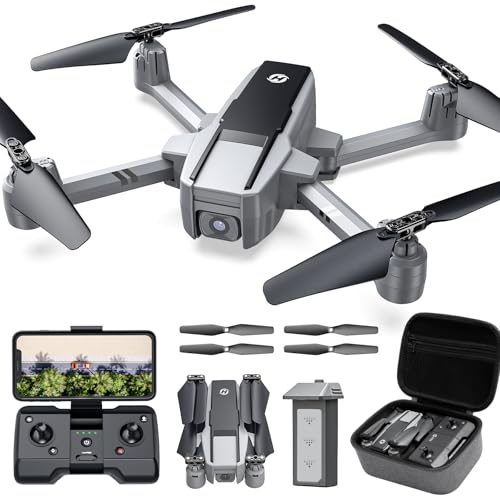
Holy Stone HS440D
$89.99
Spec Comparison
TL;DR: The DJI Mini 4K offers 4K video, 31‑minute flight time, and a 10 km range in a 0.54‑lb package, making it a top‑choice for beginners who want portable, high‑quality aerial footage.
The Mini 4K’s most eye‑catching spec is its 4K UHD video at 3840×2160 px with a 12 MP 1/2.3‑inch sensor, which packs into a sub‑250 g frame that weighs just 0.54 lb. Its 2250 mAh battery delivers up to 31 minutes of airtime, letting you capture longer scenes without frequent landings.
When you line it up against the other nine drones, the Mini 4K sits in the middle of the weight range – lighter than the Ruko F11GIM2 and Holy Stone HS720G, but a touch heavier than the ultra‑light DJI Neo. Its 31‑minute flight time matches the Potensic ATOM SE, yet it outstrips that model’s 4 km transmission range with a claimed 10 km link (dropping to about 1.5‑3 km in crowded Wi‑Fi areas). Battery capacity is lower than the ATOM SE’s 3000 mAh pack, but higher than the Neo’s 1435 mAh cell, giving a solid middle ground for casual flyers.
Users consistently praise the drone’s “registration‑free” portability and the stability of its 3‑axis gimbal plus electronic image stabilization, noting that the footage stays smooth even in 10.7 m/s winds. Professional reviewers also highlight the reliable performance up to a 4000 m takeoff altitude. The main complaints revolve around the lack of omnidirectional obstacle sensors and the video ceiling at 30 fps without HDR, which some creators find limiting for more ambitious projects.
Beyond the camera, the Mini 4K can tilt up to 40° and sprint horizontally at 16 m/s, while climbing at 5 m/s. Its 4× digital zoom and 83° field of view give you flexible framing options without adding weight, and the 200 ms transmission latency keeps the live view responsive for most hobby‑level maneuvers.
Pros
Cons
Best for: Beginners, hobbyists, and casual creators who need a lightweight, registration‑free drone that delivers solid 4K footage and long flight time.
Avoid if: You’ll need obstacle sensing, HDR or 60 fps video, or a professional‑grade platform for mapping and industrial inspections.
TL;DR: The DJI Neo delivers 4K video from a feather‑light 135 g palm‑launchable frame, features a 7 km O4 transmission link, and offers hands‑free AI tracking, though its 18‑minute flight time and single‑axis gimbal limit pro‑level shoots.
The Neo’s standout spec is its ultra‑compact 135 g weight combined with a palm‑launch design and full‑coverage propeller guards, making it registration‑free in most regions. It records 4K / 30p video with a 1/2‑inch CMOS sensor, 12 MP stills, and stores footage on a built‑in 22 GB memory chip, so you never need a microSD card for short shoots.
Compared with the other nine drones, the Neo is lighter than the Potensic ATOM SE and significantly lighter than the Holy Stone HS720G, while its 7 km O4 transmission range outpaces the 4 km range of the ATOM SE and the roughly 1 km link of the HS175G. Its 1 435 mAh battery yields an 18‑minute flight time, which is shorter than the 31‑minute endurance of the ATOM SE and the 28‑minute time of the Ruko F11GIM2.
Users rave about the instant palm launch and the freedom of controller‑free operation via the DJI app, voice commands, or gestures. AI subject tracking and eight QuickShot modes earn praise for creative flexibility. Professional reviewers note the single‑axis gimbal doesn’t smooth motion as well as 3‑axis systems, low‑light video often looks grainy, and the modest 18‑minute endurance limits longer aerial sessions.
Pros
Cons
Best for: Beginners, vloggers, and casual creators who want a lightweight, registration‑free drone with easy, hands‑free operation.
Avoid if: You need professional‑grade image quality, longer endurance, or expandable storage for extensive aerial projects.
TL;DR: The Holy Stone HS110D offers a 1080p camera, 150 m FPV range and up to 20 minutes of total flight time for just $35.99, making it a solid starter drone despite its light plastic build.
The HS110D’s standout spec is its built‑in 1080p HD camera paired with a 120° field of view, letting you capture wide‑angle video while piloting. It’s powered by a 1000 mAh, 3.7 V battery that charges in as little as 45 minutes and delivers 8–10 minutes of flight per charge, or 16–20 minutes total with its dual‑battery system. The drone can climb to a maximum height of 120 m and stay within a 150 m control radius, which is generous for an entry‑level model.
Compared with the other nine drones in this roundup, the HS110D sits in the middle of the pack on size and weight. At roughly 0.33 lb it’s slightly heavier than the Hiturbo Camera Drone (about 0.32 lb) but considerably lighter than the Holy Stone HS720G, HS440D, HS175G, DJI Mini 4K, Potensic ATOM SE and Ruko F11GIM2, all of which exceed 0.4 lb. Its 120 mm height and 320 mm length make it taller and longer than the Hiturbo’s compact 50.8 mm height and 139.7 mm length, giving it a more stable platform but a bulkier footprint. Flight‑time wise, the Hiturbo manages 12 minutes per battery and 24 minutes total, a bit longer than the HS110D’s 8–10 minute per‑battery and 16–20 minute total endurance.
Professional reviewers say the drone’s “decent flight speed and maneuverability for a larger entry‑level drone” and praise the immersive FPV experience the 1080p camera provides. Users love the low price, one‑key takeoff/landing, altitude‑hold and gesture‑control features, but many report that the lightweight plastic frame feels fragile and that the drone drifts in breezy conditions, requiring constant manual corrections. The six‑axis gyroscope, headless mode and colored LED lights help stabilize flight, while the ultrasonic altitude‑hold sensor keeps it hovering steady when you’re still learning the controls.
Pros
Cons
Best for: Entry‑level buyers or those on a tight budget
Avoid if: You need advanced features or professional‑grade performance
TL;DR: The Ruko F11GIM2 packs a 4K gimbal camera, 9800‑ft transmission and up to 64 minutes total flight time, but its 1.29‑lb weight and lack of obstacle sensors keep it in the beginner‑friendly tier.
The standout feature is its 4K UHD camera (3840×2160 @ 30 fps) mounted on a 2‑axis gimbal with 5× optical zoom and a lens angle that adjusts from –80° to 0°. Coupled with a video transmission quality of 720p, the drone can stream footage up to 9800 ft away, giving you plenty of room to explore.
Compared with the other nine drones, the F11GIM2 is heavier—at 1.29 lb it outweighs the DJI Mini 4K and Holy Stone HS175G, both under 0.55 lb. Its 2500 mAh battery sits between the Mini 4K’s 2250 mAh and the Potensic ATOM SE’s 3000 mAh, while the transmission range far exceeds the 660 ft of the Ruko F11PRO 2 and the 3281 ft of the Holy Stone HS175G.
Professional reviewers highlight its Level 6 wind resistance, which holds steady in 25–31 mph gusts, and the GPS‑based position hold and return‑to‑home functions that keep beginners confident. Users note the drone feels sturdy, but the 560 g weight pushes it over the sub‑250 g threshold that avoids registration in many regions, and the absence of obstacle‑avoidance sensors means extra caution is needed.
The technical package includes hover accuracy of ±0.5 m both horizontally and vertically, a max ascent speed of 4.5 m/s, descent speed of 1.5 m/s, horizontal speed of 10 m/s, and a max flight altitude of 120 m. With two batteries you can achieve a total flight time of 64 minutes, and the foldable design (175 mm folded height) makes transport easy.
Pros
Cons
Best for: Beginner‑to‑intermediate adult pilots who want a portable, wind‑resistant drone for outdoor aerial photography.
Avoid if: You need a sub‑250 g drone to skip registration, or you require obstacle‑avoidance sensors for safe indoor flight.
“Chunky, beginner-friendly drone”
“Powerful beginner drone”
TL;DR: The Holy Stone HS720G packs a 4K camera with a 2‑axis gimbal, up to 26 minutes of flight and a 999 m control range for under $90, making it a solid starter drone for travel videography.
What really sets the HS720G apart is its 4K UHD camera paired with a 2‑axis mechanical gimbal and electronic image stabilization, delivering smooth, high‑resolution video at up to 30 fps in 4K mode. The drone folds down to 164 × 90 × 63 mm, so it fits in the included carrying bag and’s easy to stash in a backpack.
Compared with the other nine drones in this roundup, the HS720G is heavier than the ultra‑light HS110D and the Hiturbo Camera Drone, but lighter than the Ruko F11GIM2. Its 2950 mAh battery gives it a longer endurance than the HS440D’s 1100 mAh pack, though the Potensic ATOM SE lists a similar 3000 mAh capacity. In terms of price, it sits in the same budget tier as the HS440D and cheaper than the DJI Mini 4K or Ruko F11GIM2, yet reviewers note that the value‑per‑dollar isn’t as strong as some of those higher‑priced rivals.
Real‑world owners love the plug‑and‑play setup: the app‑based FPV view, GPS‑hold and auto‑Return‑Home give beginners confidence, and the 26‑minute flight window receives repeated praise for being “long enough to get a good shot.” Professional reviewers highlight the effective gimbal and EIS as delivering footage that rivals pricier models. The main complaints revolve around the 5 GHz video link, which can drop beyond roughly 120 m, and the 377 g weight that pushes the drone into the FAA registration zone.
Pros
Cons
Best for: Budget‑conscious buyers seeking a reliable entry‑level option
Avoid if: You want the best value‑per‑dollar in its price range
TL;DR: The Ruko F11PRO 2 packs a 6K camera, 3‑axis gimbal and up to 70 minutes of total flight time, but its 357 g weight forces FAA registration and its reliable range tops out at about 660 ft.
The standout spec is the 6K video and 8K photo capability paired with a 3‑axis gimbal and electronic image stabilization, all within a wide 120° field of view. Those camera features sit on a 3200 mAh battery that delivers a listed 35‑minute flight per charge, and two batteries can push total flight time to 64‑70 minutes.
Compared with most of the other drones in this roundup, the F11PRO 2 is lighter than the Ruko F11GIM2 (which weighs over 1.28 lb) and carries a larger 3200 mAh battery versus the Potensic ATOM SE’s 3000 mAh pack. Its flight time of 35 minutes also exceeds the 31‑minute runtimes of the DJI Mini 4K and Potensic ATOM SE. However, its reliable transmission range of 660 ft is far shorter than the 9 800 ft range of the Ruko F11GIM2 or the multi‑kilometer ranges of the DJI Neo, Potensic ATOM SE and Holy Stone HS175G.
Reviewers consistently praise the drone’s ease of use, long battery life and solid wind resistance (Level 5‑6), while professional voices note the built‑in FAA Remote ID module as a regulatory win. Users do flag the 357 g weight as a hassle because it pushes the drone over the 250 g threshold that would avoid registration, and several mention that control becomes spotty beyond the advertised 660 ft range.
Pros
Cons
Best for: Buyers willing to invest in a proven, high-quality option
Avoid if: You're shopping on a tight budget — it's priced at $369.99
“basic beginner drone that flies fairly well”
“quality on a budget”
TL;DR: The Potensic ATOM SE packs a 4K camera, 31‑minute flight time and a 4 km (1,312,336 ft) transmission range into a sub‑250 g foldable drone that stays registration‑free while delivering solid beginner performance.
The standout spec is its 4 km (1,312,336 ft) transmission range, which pairs with 200 ms video latency, giving you a reliable link for aerial shots far from you. Its 12 MP sensor records 4K video at 30 fps, and the 118° field of view captures wide scenes without needing extra lenses. Powered by a 3000 mAh battery, the ATOM SE can stay aloft for up to 31 minutes, which is generous for a drone under 0.55 lb.
Compared with the other nine drones in this roundup, the ATOM SE sits in the middle of the weight spectrum—lighter than the Ruko F11GIM2 but heavier than the ultra‑light DJI Neo. Its 4 km range is shorter than the DJI Neo’s 7 km link, yet far longer than the Holy Stone HS110D’s 150 m reach. The flight time rivals the DJI Mini 4K’s 31 minutes, while offering more endurance than the budget‑oriented Hiturbo Camera Drone (24 minutes). Pricing places it above the Holy Stone HS720G and Holy Stone HS440D, but below premium options like the Ruko F11GIM2.
Reviewers consistently praise the ATOM SE’s pocket‑size design and the ability to fly without registration, thanks to its sub‑250 g weight. Users love the crisp 4K footage and the 31‑minute endurance for travel vlogs. However, professional editors note the single‑axis gimbal can wobble during aggressive moves, and many users report occasional glitches with the PotensicPro smartphone app, which can interrupt smooth control on some phones. The drone also lacks the full suite of autonomous flight modes found on higher‑priced rivals.
Technical extras include a brushless motor, GNSS support for GPS, GLONASS, Galileo and BeiDou, and PixSync 2.0 video transmission delivering 720p live feed up to the full 4 km range. The SurgeFly controller offers Normal, Video and Sport modes, and the drone can handle winds up to 38 km/h, making it resilient for casual outdoor use.
Pros
Cons
Best for: Beginners, travelers, and intermediate pilots who need a lightweight, registration‑free drone with solid 4K video and long range.
Avoid if: You're a professional cinematographer, need 3‑axis gimbal stability, or require extensive autonomous flight features.
TL;DR: The Hiturbo S20 folds to 50.8 mm, weighs about 0.32 lb, and offers a 1080p camera plus dual batteries for up to 24 minutes of flight for just $44.99.
The standout feature is the dual‑battery system that delivers a combined 24 minutes of flight time—double the per‑battery 12‑minute limit. At 146 g (≈0.32 lb) and a compact 139.7 mm length, the drone is truly pocket‑friendly, and the foldable frame lets you transport it easily.
Compared with the other nine drones in this beginner roundup, the S20 is slightly lighter than the Holy Stone HS110D (≈0.33 lb) and noticeably lighter than the Holy Stone HS720G (≈0.83 lb). It sits a bit heavier than the DJI Neo (≈0.30 lb) but still under the 0.55 lb mark of the Potensic ATOM SE. Flight‑time wise, the S20’s 24 minutes trails the HS720G’s 26‑minute claim, while the HS110D doesn’t list a flight‑time figure. Its control range of 80‑100 m is shorter than the HS110D’s 150 m maximum and the HS440D’s 200 m transmission distance, so you’ll stay closer to the controller than with those models.
Users rave about the one‑key takeoff/landing button and the altitude‑hold sensor, calling the drone “extremely easy for beginners.” Voice commands and gesture‑controlled selfies add a playful element that many owners love. Professional reviewers echo the praise for the intuitive controls and stable hover, noting the reliable low‑battery warnings. The downsides stay consistent: the FPV feed describes it as choppy at 15‑20 FPS with noticeable lag, and the signal weakens sharply beyond about 50 yards, limiting outdoor exploration.
Under the hood, the S20 relies on a 6‑axis gyro for smooth flight, supports headless mode, and includes a return‑to‑home function for added safety. The foldable design, combined with a USB charging port and SD card slot, rounds out a feature set that feels generous for the $44.99 price point.
Pros
Cons
Best for: Entry‑level buyers or those on a tight budget who want an easy‑to‑fly, feature‑rich drone.
Avoid if: You need powerful performance, professional‑grade camera quality, or long‑range control.
“superlative photographic capabilities and intuitive operation”
“Poor FPV video quality: low frame rate (15-20 FPS), laggy transmission requiring direct line-of-sight”
TL;DR: The Holy Stone HS175G offers a 4K camera, 60 minutes of combined flight time from dual batteries, and a 3,281‑ft transmission range for $189.89, making it a solid mid‑range starter drone.
The standout feature is its 4K (3840×2160) Sony CMOS sensor paired with electronic image stabilization and a generous 120° field of view, plus a fully adjustable 90° tilt angle for creative shots. Dual fast‑charging batteries give a combined 60 minutes of flight, and the 5 GHz Wi‑Fi link reaches up to 3,281 ft, letting you keep the video feed clear even at distance.
When you line it up against the nine other drones in this roundup, the HS175G lands toward the higher end of the price band while still delivering one of the longest advertised combined flight times. It’s heavier than the ultra‑light DJI Mini 4K but lighter than the Holy Stone HS720G, and its transmission range outpaces many of the sub‑250 g competitors that sit at the lower‑price tier.
Customer feedback repeatedly highlights the crisp 4K footage and the reliability of the GPS‑guided auto‑return feature. Professional reviewers note that the 4K/EIS combo stands out for a drone in this weight class, and the built‑in Remote ID helps meet current FAA guidelines. The drone uses recyclable plastic, streams live video over Wi‑Fi, and supports a microSD card for onboard storage.
Pros
Cons
Best for: Most users seeking a balanced, mainstream option
Avoid if: You have limited desk space or need ultra‑compact portability
TL;DR: The Holy Stone HS440D offers a foldable 4K camera, GPS‑assisted flight modes and about 19 minutes of air time for $89.99, making it a lightweight starter drone for teens and beginners.
The standout spec features a 4K camera with a 120° field of view and a 90° adjustable lens, delivering crisp footage at 15 fps for 3840×2160 video. Coupled with a live‑view feed of 20 fps, the drone lets new pilots see what they’re shooting in near‑real time. Its 1100 mAh lithium‑polymer battery provides up to 19 minutes of flight before the low‑battery warning kicks in, and the included 120‑minute charging cycle gets you back in the air fairly quickly.
Compared with the other nine drones in this roundup, the HS440D is lighter than the HS720G (0.83 lb) and the HS175G (0.55 lb) but heavier than the DJI Neo (0.30 lb) and the Hiturbo Camera Drone (0.32 lb). Its battery capacity of 1100 mAh is smaller than the 2950 mAh found in the HS720G and the 3000 mAh in the Potensic ATOM SE, translating to a shorter flight time than those models. The 200‑meter FPV transmission distance also falls short of the 3281‑ft range of the HS175G and the multi‑kilometer ranges of the DJI Neo and Ruko F11GIM2.
User feedback repeatedly praises the drone’s portability – the foldable design fits easily into the included carrying case – and the sharpness of its 4K footage. Beginners appreciate the one‑key takeoff/landing, altitude‑hold and auto‑return‑to‑home features, while the GPS‑based Follow Me, Waypoint Fly and Point‑of‑Interest modes add a touch of excitement without demanding manual piloting skills. Professional reviewers note that the 5 GHz FPV link stays stable even in breezy conditions, though they've also pointed out the 19‑minute flight window can feel limiting for longer sessions.
Pros
Cons
Best for: Entry‑level buyers or those on a tight budget
Avoid if: You need advanced features or professional‑grade performance
Breakdown
DJI Mini 4K
Pros
DJI Neo
Pros
Holy Stone HS110D
Pros
Cons
Ruko F11GIM2
Pros
Cons
Based on scoring data and product specs
Personalized picks
Best Overall Pick
DJI Mini 4K
Best ValueBest for: Audiophiles and enthusiasts seeking premium sound quality and advanced features
DJI Neo
Best for: Most users looking for a well-reviewed, reliable mainstream option
$149.00-$150.00 vs winner
Skip Holy Stone HS440D if…
You need advanced features or professional-grade performance
We’re naming the DJI Mini 4K the clear winner of our beginner‑friendly camera drone roundup. It has a 4.5‑star rating from 20,205 reviewers, a solid 31‑minute flight time, and a 10 km maximum transmission distance, giving new pilots plenty of airtime and reliable range without breaking the bank.
The runner‑up is the DJI Neo, ideal if you need a sub‑250 g drone you can launch straight from your palm and fly without a separate controller. It’s registration‑exempt, offers built‑in 22 GB storage, and supports gesture and voice controls, making it a hands‑free-friendly option for casual flyers.
For tighter budgets, the Holy Stone HS110D at $35.99 delivers an entry point for $35.99. The DJI Neo at $198.50 serves as the best mid‑range choice, combining palm launch convenience with controller‑free operation. If you’re willing to spend more for premium features, the Ruko F11PRO 2 at $369.99 offers the highest‑rated experience among the alternatives.
Pick the DJI Mini 4K today and start capturing smooth, high‑quality footage right out of the box.
Both the DJI Mini 4K and the Potensic ATOM SE list a maximum flight time of about 31 minutes per charge, which is the longest among the drones in this roundup. The next best is the Ruko F11GIM2 at 28 minutes, while models like the Holy Stone HS110D only manage around 8‑10 minutes per battery.
No reviews yet — be the first to share your experience.
Please sign in to leave a review