The budget‑friendly Pallton X80, priced at $35.98, carries the highest user rating in the set at 4.6 / 5, beating out many premium‑priced rivals. This foldable mini drone also promises up to 24 minutes of total flight time thanks to its two batteries, giving newcomers plenty of runway to practice auto‑hover, altitude hold, and headless mode without breaking the bank.
This guide compares 10 mini drones across three price tiers. The budget tier—Flyvista Mini Drone ($21.99), Cheerwing X20 ($24.29), Holy Stone HS190 ($26.99) and Pallton X80—covers the $21.99‑$35.98 range. Mid‑range options, Holy Stone HS110D ($39.99) and Syma S100 ($39.99), sit just above the budget sweet spot. Premium picks—Holy Stone HS210 Green ($39.99), Syma X100 ($44.99), Holy Stone HS210T ($48.93) and Deerc D20 Silver ($49.99)—offer extra features and longer ranges, with prices topping out at $49.99.
The following breakdown lists each model’s strengths, quirks, and the scenarios they shine in, helping you pick a starter drone that fits your needs.

Holy Stone HS110D
Equipped with a 1000 mAh battery, the HS110D offers longer flight sessions that boost its value proposition for beginners.

Syma S100
Ideal for kids learning to fly, the Syma S100 matches the HS110D’s $39.99 price while delivering quick 30‑minute charging.

Pallton X80
The X80 stands out with a 4.6‑star rating and a lower $35.98 price, appealing to budget‑focused beginners seeking proven reliability.
Also considered
Score Analysis
Key score advantages vs. runner-up (Syma S100)
Price Range
Holy Stone HS110D
$35.99
Syma S100
$34.99
Pallton X80
$35.98

Holy Stone HS210 Green
$39.99

Holy Stone HS190
$29.99

Syma X100
$42.74
Cheerwing X20
$24.29

Holy Stone HS210T
$48.93

Flyvista Mini Drone
$23.99
Deerc D20 Silver
$49.99
Spec Comparison
TL;DR: The Holy Stone HS110D offers a 1080P camera, 1000 mAh dual batteries for up to 20 minutes of flight, and beginner‑friendly auto‑hover features at a budget‑friendly $39.99 price.
The standout spec is its 1080 × 1920 pixel camera with a 120° field of view and 20 fps live feed, letting you capture full‑HD video from a modest 149 g frame. Two 1000 mAh LiPo batteries give 10 minutes per charge and a combined 20 minutes of airtime, while the 2.4 GHz Wi‑Fi link reaches up to 100 meters.
Compared with the other nine drones, the HS110D is heavier than the ultra‑light HS210 Green but still lighter than the Deerc D20 Silver and many larger hobby models. Its 100 meter transmission range matches the Pallton X80 and exceeds the 48.8 meter range of the HS210 Green and the 14–15 meter range of the Syma S100. Battery capacity tops the list at 1000 mAh, outpacing the 250 mAh of the HS210 Green and the 800 mAh of the Pallton X80, though its 10‑minute per‑battery flight time sits between the shorter 5–7 minute runs of the Syma S100 and the longer 12–15 minute runs of the X80.
Reviewers consistently note how easy the HS110D is to pick up—auto‑hover, altitude hold, and headless mode make the first flights feel stable, and gesture and voice controls add a fun, hands‑free element. Professional reviewers praise the value of dual batteries and the HD camera, but both pros and users flag the plastic airframe as fragile, with prop‑guard clips that can detach after a tumble and video that can appear jittery, especially in low light.
Beyond the camera, the drone includes 4 adjustable speed levels, LED navigation lights, and a 120° FOV that helps keep the pilot oriented. It operates between 0 °C and 40 °C, supports micro‑SD cards up to 32 GB, and offers both a physical remote (AA‑battery powered) and a mobile app for iOS 7.0+ or Android 4.4+.
Pros
Cons
Best for: Beginners and new pilots, children or teens (14+) looking for an affordable drone with HD video and auto‑stabilization features.
Avoid if: You'll need professional‑grade imaging, a sturdy build for windy conditions, or long‑range exploration beyond 100 meters.
“Easy to learn and control, especially for first-time users”
“Drone feels fragile — many report broken arms or cracked body after minor crashes”
TL;DR: The Syma S100 packs gyro‑stabilized altitude hold, one‑key takeoff/landing and LED lights into a 60 mm ultra‑compact indoor helicopter, but its 5–7 minute flight window and 14–15 m range keep it strictly beginner‑focused.
The S100’s standout feature is its built‑in altitude hold paired with a gyro stabilizer, letting first‑time pilots keep the craft steady with just a tap of the controller. It also offers one‑key takeoff/landing and USB‑rechargeable power that tops up in 30 minutes. At 0.48Pounds (218 g) and measuring only 60 mm tall, 105 mm long and 27 mm wide, the helicopter truly fits on two fingers.
When you line it up against the other nine drones, the S100 lands in the mid‑price tier – matching the Holy Stone HS210’s $39.99 tag – but it weighs noticeably more than the HS210’s 38‑gram frame. Its 14–15 meter control distance also falls short of the HS210’s 48.8 meter range and the Pallton X80’s 100‑meter claim. The brushed motor means it won’t push the power envelope like brushless competitors, and the indoor‑only rating keeps it from competing with outdoor‑capable models such as the Deerc D20.
Users consistently praise the S100 for its pocket‑size convenience and the way the gyro system smooths out wobble, making it a favorite for kids and first‑time flyers. Professional reviewers note the same ease of learning, while common complaints focus on the brief 5–7 minute flight time, the limited 14–15 meter range and occasional blade breakage when pilots push it too hard. The alloy‑reinforced body and PVC landing gear help absorb bumps, and the onboard LED lights add a fun visual cue for indoor flights.
Pros
Cons
Best for: Children (8+), beginners, and anyone who wants a safe, ready‑to‑fly indoor helicopter that’s easy to pick up and put down.
Avoid if: You’re an experienced hobbyist seeking advanced aerobatics, outdoor flight, longer range, or higher‑performance specs.
“Perfect for kids and beginners—my 10-year-old mastered it in under 10 minutes.”
“So small and cute! Flies smoothly and the altitude hold is a game-changer.”
TL;DR: The Pallton X80 offers a foldable 1080p camera, 800 mAh dual batteries for up to 24 minutes of flight, and beginner‑friendly auto‑hover features at a sub‑$40 price point.
The X80’s headline spec features a 1080 × 1080 pixel Full HD camera with a lens that adjusts up to 90°, letting you capture clear photos and video without extra gear. Under the hood, it packs two 800 mAh Li‑Po batteries that charge in 60 minutes and together deliver a total of 24 minutes of airtime, with a maximum of 15 minutes per battery.
Compared with the other nine drones in this beginner‑friendly set, the X80 weighs more than the ultra‑light HS210 (38 g) and HS190 (35 g), but its 800 mAh battery dwarfs the 250 mAh and 220 mAh packs found in those models. That translates into a max per‑battery flight time of 15 minutes—well above the 7‑minute figure of the HS210 and the 5‑7 minute range of the HS190. Its 100‑meter control distance also outstretches the typical 48.8‑meter range of the HS210 and the 30‑50‑meter range of the HS190, while the folded size of 50 × 125 × 80 mm keeps it pocket‑sized.
Everyday users praise the one‑key takeoff/landing, altitude‑hold and headless mode for making the X80 feel almost plug‑and‑play for kids, and professional reviewers highlight the 1080p video as a rare high‑resolution offering at this price tier. The same feedback notes that Wi‑Fi FPV can lag once you push past roughly 50 m, and the lack of obstacle avoidance means you’ll want an open space to avoid crashes.
Technically, the drone ships with a physical remote powered by three AA batteries (not included) plus a smartphone app for FPV. It supports gesture control, optical flow positioning, and three speed modes (low, medium, high). LED lights, a low‑battery alarm, a built‑in carrying case and propeller guards round out the feature set, reducing the need for extra accessories.
Pros
Cons
Best for: Beginners, children (8+ with supervision), casual hobbyists, and travelers who want a lightweight, easy‑to‑fly drone with a camera.
Avoid if: You want the best value‑per‑dollar in its price range.
“Perfect first drone for my 10-year-old — easy to fly and takes great videos.”
“Love the gesture selfie feature — works surprisingly well.”
TL;DR: The Holy Stone HS210 Green costs $39.99, weighs just 38 g, and offers up to 21 minutes of total flight time across three 250 mAh batteries, making it a solid starter drone for kids.
The HS210’s most eye‑catching spec is its three‑battery system, which together delivers a total of 21 minutes of airtime despite each cell only providing 7 minutes per charge. The 250 mAh Li‑Polymer pack charges in 40‑60 minutes, so you can rotate batteries for continuous play. At just 0.08377565956 pounds (38 g) and measuring 30 mm tall by 80 mm on each side, it’s truly a nano‑drone that fits in a child’s palm.
When you line it up against the other nine entries, the HS210 is noticeably lighter than the Holy Stone HS110D and far lighter than the Syma S100, which both tip the scales at well over a pound. Its 48.8‑meter control range also outstretches the Syma S100’s 14‑15 meter distance, giving beginners a bit more room to explore without losing signal. While it doesn’t boast the 800 mAh capacity of the Pallton X80, the HS210 balances price and performance for entry‑level pilots.
Reviewers consistently praise the drone’s durable build – the full‑propeller guard cage survives the inevitable bumps of first‑time flyers. Professional reviewers highlight the auto‑hover and headless modes as especially helpful for kids learning the basics, and users love the three‑battery approach that maximizes playtime. The downside that surfaces repeatedly is the short 7‑minute window per charge and the 40‑60 minute recharge period, which can interrupt longer sessions. The built‑in camera records 1080p video, but many note the footage appears grainy, and occasional signal interference can cause brief drops.
Pros
Cons
Best for: Children aged 8‑12, beginners of any age, and parents looking for a safe, easy‑to‑fly STEM toy.
Avoid if: You’re an advanced hobbyist needing long continuous flight, high‑resolution video, or a far‑greater control range.
“Easy to learn and control, especially for first-time users”
“Drone feels fragile — many report broken arms or cracked body after minor crashes”
TL;DR: The Holy Stone HS190 is a pocket‑sized, foldable nano drone that weighs just 35 g, offers altitude hold and headless mode, and comes at a budget‑friendly $26.99 price.
The standout feature of the HS190 is its ultra‑light 35 g weight combined with a fold‑into‑controller design, letting you stash the whole quadcopter in a pocket. Its barometric altitude hold and headless mode let beginners keep a steady hover without worrying about orientation, while three speed settings (low, medium, high) give room to grow.
Compared with the other nine drones in this roundup, the HS190 is lighter than the Cheerwing X20 (which tips the scales at 0.4 pounds) and the Syma S100 (0.48 pounds). It's also a shade lighter than Holy Stone’s own HS210 Green, which weighs about 38 g. Price‑wise it sits below many competitors at $26.99, offering core beginner features without sacrificing affordability.
Users consistently praise the drone’s durability – the included propeller guards and locking mechanism survive the inevitable bumps of indoor play. Parents love the portability and the fact that the kit comes with spare propellers, a crowbar, and a screwdriver. The most common complaints focus on the brief 5‑7 minute flight window per charge and the lack of a camera, which limits it to recreational use.
From a technical standpoint, the HS190 packs a 220 mAh Li‑Po battery that reaches full charge in about 40 minutes. Flight time ranges from five to seven minutes, and the 2.4 GHz transmitter provides a 30‑50 meter range – ample for living‑room flights. The drone can execute 360° rapid spins and three‑axis flips in four directions, adding a fun flair for new pilots.
Pros
Cons
Best for: Children aged 8+ and beginner pilots looking for a safe, portable indoor drone.
Avoid if: You need outdoor capability, longer flight endurance, or a camera for media capture.
“Easy to learn and control, especially for first-time users”
“Drone feels fragile — many report broken arms or cracked body after minor crashes”
TL;DR: The Syma X100 costs $44.99, offers dual 450 mAh batteries for up to 20 minutes of total flight, and packs beginner‑friendly features like altitude hold, headless mode, and infrared obstacle avoidance.
The X100’s most eye‑catching spec is its two‑battery system: each 450 mAh lithium‑ion pack delivers 10 minutes of airtime, and together they give a total of 20 minutes before you need to recharge. At a weight of 0.12786811196 pounds (58 g) and a compact 45 mm height, the drone stays light enough for indoor play while still feeling solid thanks to its ABS plastic body and full‑enclosed propeller guard.
Compared with the nine other drones in this roundup, the X100 lands in the middle of the pack on several fronts. It’s heavier than the Holy Stone HS210 Green (0.08377565956 lb) and HS210 T (0.093475999088 lb) but lighter than the Holy Stone HS110D (0.32848877038 lb), Syma S100 (0.48 lb), Deerc D20 Silver (0.15211896078 lb), and Cheerwing X20 (0.4 lb). Its 450 mAh cells sit between the 250 mAh of the HS210 Green and the 500 mAh of the HS210 T, while matching the 10‑minute per‑battery flight time of the HS110D and surpassing the 7‑minute time of the HS210 Green. The X100’s 50‑meter control range and two speed modes are comparable to many peers, but its infrared obstacle detection (30 cm) is a standout safety feature not always present in the competition.
Reviewers consistently praise how the X100’s six‑axis gyro stabilization and altitude hold make indoor flight feel steady, even for kids new to drones. The one‑key takeoff/landing and headless mode are highlighted as “plug‑and‑play” conveniences that reduce the learning curve. Professional reviewers note the strong obstacle avoidance for a sub‑$100 toy, while everyday users love the crash‑proof design. The common criticisms focus on the 60‑minute charge per battery, the limited 10‑minute per‑battery flight window, and reduced stability in breezy outdoor conditions, especially where infrared sensors can misread dark surfaces.
Pros
Cons
Best for: Buyers willing to invest in a proven, high-quality option
Avoid if: You need advanced features or professional‑grade performance
“Perfect for my 9-year-old—easy to learn and survives every crash.”
“Love the obstacle avoidance—it doesn’t crash into walls!”
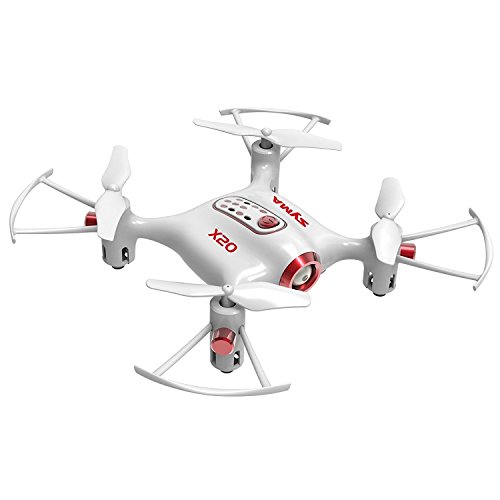
TL;DR: The Cheerwing X20 is a pocket‑sized, 0.4‑pound nano drone with a 180 mAh battery, 5‑minute flight time and intuitive one‑key controls, perfect for indoor beginners who value simplicity over camera features.
The X20 measures just 25 mm tall and 105 mm on each side, making it small enough to slip into a backpack. It weighs 0.4 pounds and runs on a 180 mAh, 3.7 V Li‑Po cell that charges via USB in about 50 minutes and delivers roughly 5 minutes of flight per charge. Altitude hold, headless mode and a one‑key takeoff/landing button aim to flatten the learning curve, while integrated LED lights add a playful glow for night‑time indoor flights.
Compared with the other nine drones in this roundup, the X20 sits in the middle of the weight spectrum: it’s heavier than the Flyvista Mini Drone (≈0.21 pounds) but lighter than the Holy Stone HS110D (≈0.33 pounds). Its 50‑meter control distance matches the upper end of the Holy Stone HS190’s range, yet it offers fewer advanced specs such as camera modules or multiple speed modes that higher‑priced peers include. In short, it provides the core flight functions without the extra bells and whistles found on larger models.
Users consistently praise the X20’s ease of use, reflected in a perfect 5.0/5 ease‑of‑use rating and a solid 3.9/5 beginner‑friendly score. Reviewers highlight the 6‑axis gyro stabilization and the responsive 4‑channel remote as factors that keep the drone steady during indoor maneuvers. Professional reviewers note the “excellent indoor agility and stability” that the auto‑hover and headless features deliver. The most common complaints revolve around the brief 5‑minute flight window and the relatively long 50‑minute recharge, as well as the absence of any onboard camera despite some listings suggesting otherwise.
Pros
Cons
Best for: Entry‑level buyers or those on a tight budget who want a simple indoor drone to learn the basics.
Avoid if: You need advanced features, a built‑in camera, or a drone capable of sustained outdoor flight in windy conditions.
“This was my first drone with altitude hold, and it made flying so easy. I’ve crashed it multiple times, but it keeps flying. I bought three more for my grandkids.”
“Looks cool flying down a dark hallway.”
TL;DR: The Holy Stone HS210T offers a 50 m control range, 8‑color LEDs and a unique air‑and‑ground dual‑mode, but its 8‑minute per‑battery flight and lack of camera keep it best suited for indoor beginner fun.
One of the standout specs is its 50 m control range, letting you pilot the drone across a typical living‑room while staying within line‑of‑sight. It runs on two 500 mAh Li‑Po batteries that each deliver up to 8 minutes of flight before a 60‑minute charge restores full power.
At 42.4 g, the HS210T is lighter than the Deerc D20 Silver and far lighter than the HS110D, yet heavier than the HS210 Green and HS190, giving it a solid feel without feeling bulky. Its 8‑minute per‑battery flight time outlasts the Syma S100’s 5‑7 minutes and the Cheerwing X20’s 5 minutes, though it falls short of the 10‑minute runs that the Deerc D20 and Syma X100 achieve. The 50 m range also exceeds the Syma S100’s 14‑15 m control distance and matches the Cheerwing X20’s 50 m range, while surpassing the HS210 Green’s 48.8 m reach.
Parents and kids alike rave about the eight‑color LED ring and the one‑key takeoff button, calling the drone instantly fun to launch. Reviewers praise the full‑coverage nylon‑ABS propeller guards and the altitude‑hold and headless modes that keep the craft steady, especially for first‑time pilots. The most common gripe is the brief 8‑minute flight window and the fact that there’s no camera, which limits its appeal beyond indoor play.
Safety‑focused features include altitude hold, headless mode, low‑battery alarm and a one‑key emergency stop, plus a throw‑to‑go launch that lets you start flying by simply tossing the drone onto a flat surface. The four posture‑deformation modes—Tilt Forward, Tilt Back, Wiggle and Dance Disco—add a playful character, while the 1.0 m/s low, 1.4 m/s medium and 1.8 m/s high speed settings let you adjust performance to skill level.
Pros
Cons
Best for: Those prioritizing quality and willing to pay for premium performance
Avoid if: You're shopping on a tight budget — it's priced at $48.93
“Easy to learn and control, especially for first-time users”
“Drone feels fragile — many report broken arms or cracked body after minor crashes”
TL;DR: The Flyvista Mini Drone packs a 1080p camera, three 1800 mAh batteries for up to 30 minutes total flight, and beginner‑friendly auto‑hover features, all for $21.99.
What really stands out is the 1800 mAh battery capacity paired with three interchangeable cells, delivering a combined 30 minutes of airtime and a per‑charge flight window of 10 minutes. The drone’s 1080p Full HD camera, mounted on a 90° manually adjustable CMOS sensor, streams live video over Wi‑Fi, letting you see the view on any iOS or Android device.
Compared with the other nine drones in this roundup, Flyvista is heavier than the ultra‑light Holy Stone HS190 (35 g) but lighter than the Cheerwing X20 (181.44 g). Its battery capacity dwarfs the Cheerwing X20’s 180 mAh and the Holy Stone HS190’s 220 mAh, while still falling short of the Pallton X80’s 800 mAh, making it the most power‑rich option among the budget set. The 30–50 m Wi‑Fi range is shorter than the radio‑frequency ranges of some peers, and the drone lacks GPS, placing it squarely in the indoor‑friendly, short‑range category.
Users consistently praise the one‑click takeoff/landing, altitude hold, and headless mode for making the first flights painless, especially for kids 8+ and drone newcomers. Reviewers also note the clear 1080p video and the convenience of three batteries that keep play sessions going without frequent recharging. On the flip side, several owners report occasional Wi‑Fi drop‑outs beyond 30 m and that aggressive maneuvers shave a few minutes off the 10‑minute per‑battery claim. The manual camera tilt, while offering a 90° field of view, requires you to adjust it before each flight.
Pros
Cons
Best for: Entry-level buyers or those on a tight budget
Avoid if: Reliability and user satisfaction are your top concerns
“Perfect for kids and first-time flyers.”
“The 1080p camera is surprisingly clear for the size.”
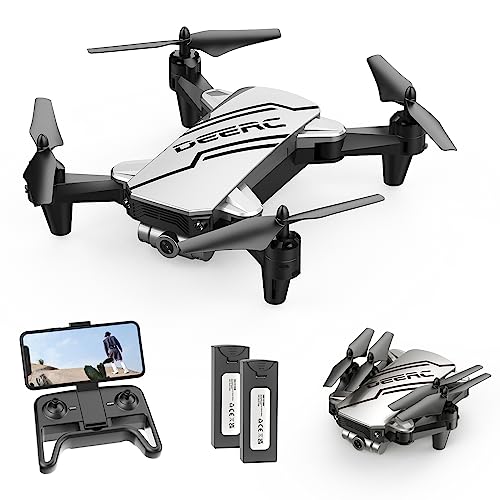
TL;DR: The Deerc D20 Silver offers a 720p camera, dual 500 mAh batteries for up to 20 minutes of total flight, and beginner‑friendly controls for $49.99.
The standout spec is the pair of 500 mAh batteries that together provide a total flight time of 20 minutes, with each battery charging in 80 minutes. Coupled with a 1280×720‑pixel (720p) camera that tilts 55° and captures 0.92 MP photos, the D20 packs solid video capability into a compact frame.
At 69 g (0.15211896078 lb), the D20 sits between the lighter Holy Stone HS210 Green (≈0.084 lb) and the heavier Holy Stone HS110D (≈0.328 lb), making it easy to carry yet sturdy enough for indoor play. Its 40 m control range (40 000 mm) is shorter than the Pallton X80’s typical 100 m range, but matches the 20‑minute total flight time offered by peers like the Syma X100 and Holy Stone HS110D. The D20 balances weight and endurance better than many entry‑level drones in this group.
User feedback highlights the drone’s durability and the fun factor of gesture and voice commands, which many beginners find intuitive. Professional reviewers also note the strong safety suite—prop guards, altitude hold, and low‑battery alarm—making the learning curve gentle. The most common complaints revolve around the Wi‑Fi‑based FPV link, which can drop beyond roughly 30 m, and the 720p camera (0.92 MP) falls short for serious content creators.
Beyond the camera, the D20 packs a suite of beginner aids: altitude hold, headless mode, one‑key takeoff/landing, emergency stop, 3D flips, and a waypoint (Tap Fly) mode. The app saves media directly to a smartphone, so there’s no need for an onboard SD card, and the 2.4 GHz remote works over Wi‑Fi for straightforward connectivity.
Pros
Cons
Best for: Beginners aged 14+ and families looking for an affordable, fun indoor/outdoor drone.
Avoid if: You're shopping on a tight budget — it's priced at $49.99.
“Gesture selfie and voice commands are impressive and fun for social sharing.”
“FPV app is generally stable within range and easy to connect.”
Breakdown
Holy Stone HS110D
Pros
Pallton X80
Pros
Cons
Holy Stone HS210 Green
Pros
Based on scoring data and product specs
Personalized picks
Best Overall Pick
Holy Stone HS110D
Best ValueBest for: Those prioritizing quality and willing to pay for premium performance
Syma S100
Best for: Those prioritizing quality and willing to pay for premium performance
$34.99-$1.00 vs winner
Skip Deerc D20 Silver if…
You're shopping on a tight budget — it's priced at $49.99
Holy Stone HS110D takes the top spot, backed by a solid 4.1/5 rating from 19,150 reviews, a total of 20 minutes of flight time thanks to its two 1000 mAh LiPo batteries, and a 100‑meter transmission range that keeps the video feed clear. Its 1080P Full HD camera with a 120° field of view and built‑in altitude‑hold, headless mode, and gesture control make it the most capable starter drone in the lineup.
The Syma S100 lands as the runner‑up; it's perfect if you need a straightforward indoor trainer. It offers altitude‑hold, anti‑collision design and emergency stop, all fit within a 5–7 minute flight window and a 14‑15 meter control distance, keeping the learning curve gentle for beginners.
For those looking beyond the top two, the budget‑friendly Flyvista Mini Drone at $21.99 delivers basic flight fun at the lowest price point, while the premium Deerc D20 Silver at $49.99 offers higher‑end features for flyers ready to invest a bit more.
Pick the Holy Stone HS110D today and start mastering the skies with confidence.
The Flyvista Mini Drone tops the list with three 1800 mAh batteries that provide 10 minutes each, for a total of about 30 minutes of flight. That’s longer than the Holy Stone HS110D’s 20 minutes (two 1000 mAh batteries) and the Pallton X80’s 24 minutes (two 800 mAh batteries).
Please sign in to leave a review
No reviews yet. Be the first to review!
