⚡ Quick Answer
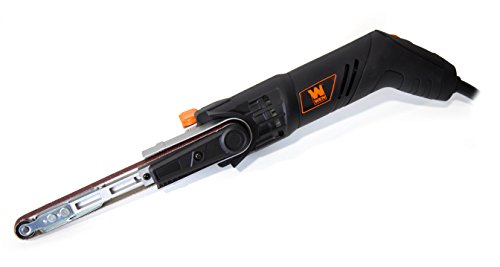
When you’re hunting for a belt sander that won’t empty your wallet, the $35.08 WEN 6307 catches the eye. With a 4.6/5 rating from over 6,200 reviewers, a 2.4‑lb frame and a 55‑degree pivot, it promises the kind of precision you’d expect from a pricier tool. Its 1/2 × 18‑inch belt, variable speed from 1080 to 1800 FPM and auto‑tracking system make it a solid candidate for hobbyists, DIYers and light‑pro pros who need to sand, deburr or contour in tight spots.
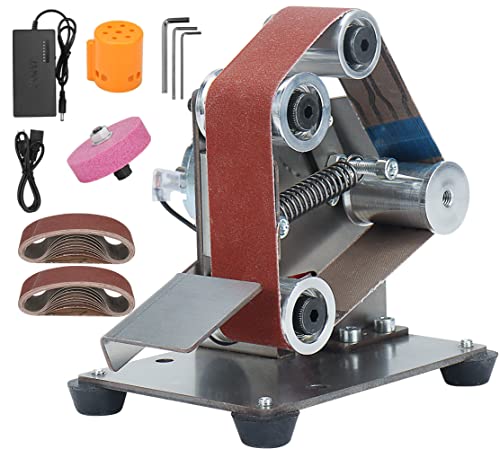
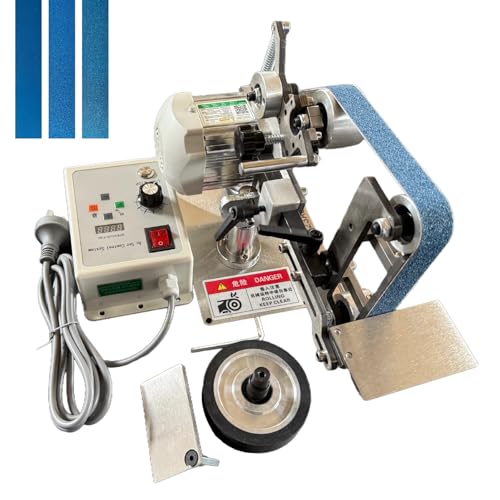
Our roundup pits 11 models against each other, spanning four budget picks (WEN 6307, SI Fang, Blissthrill, WEN HB321V), two mid‑range options (Kongkee, NuoDunco) and four premium contenders (Jellas, Milwaukee M12 Fuel, Bucktool, Makita). From cordless convenience to heavy‑duty 1/3 HP motors, each tool brings a different blend of power, size and price. Keep reading to see how the specs, reviews and price tiers line up and which machine fits your workshop the best.
WEN 6307
Its 55‑degree pivot angle lets you reach tight corners, delivering the flexibility you need on entry‑level projects.
Jellas 3 x 21-Inch Belt Sander
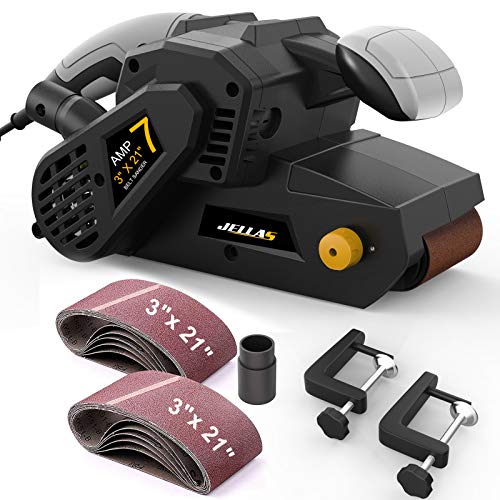
Ideal for DIY hobbyists who want a larger 3 × 21 in belt, it costs about $35 more than the WEN 6307.

Milwaukee M12 Fuel Belt Sander
The Milwaukee’s 360‑degree arm rotation lets you sand in any orientation, a flexibility the other two lack, though it carries a premium price tag.
Also considered
TL;DR: The WEN 6307 belts out premium rivals with a 55° pivot, 6‑foot cord and auto‑tracking belt at a $35 price point, making it a surprisingly capable budget sander.
The standout spec is the 55‑degree pivot angle, letting the 1/2 × 18‑inch belt swing into tight corners that most mini sanders can’t reach. Coupled with a variable speed range of 1080 to 1800 FPM, you can dial in the perfect pace for delicate woodwork or light automotive detailing.
When you line it up against the other ten entries, the WEN 6307 feels feather‑light at 2.4 lb—considerably lighter than the SI Fang Mini Belt Sander’s 4.27 lb and the Kongkee Mini Belt Sander’s roughly 4.08 lb. It also undercuts the heft of the WEN HB321V, which tips in at nearly 7 lb. The 6‑foot power cord gives you more reach than many of the compact rivals that often come with shorter cables.
Users love how the auto‑tracking belt system eliminates manual tensioning, and the tool‑free belt change speeds up job swaps. Professional reviewers highlight the same convenience, noting the sander’s compact form factor shines in cramped engine bays. The main complaint is the modest 2‑amp motor, which can bog down on tougher metals—so it’s best suited for light sanding and deburring rather than aggressive grinding.
Pros
Cons
Best for: Budget‑conscious buyers seeking a reliable entry‑level option — the WEN 6307 offers Pivot Angle: 55 degrees
Avoid if: You need advanced features or professional‑grade performance
“it will remove steel... but not at a super powerful pace”
“cheap tool that... works a lot better than I had thought”
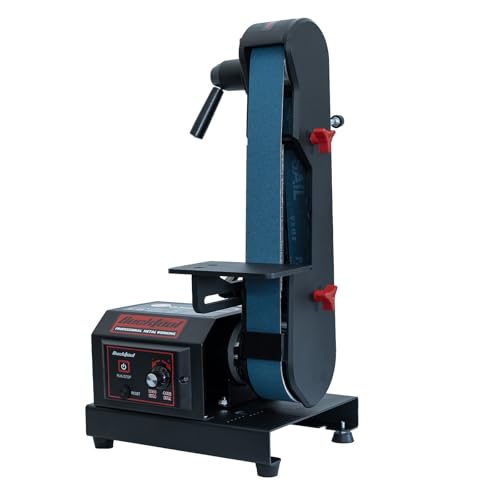
TL;DR: The Bucktool Variable Speed Belt Sander delivers 1240‑4480 FPM belt speeds and a 0‑90° angle on a solid 39.9 lb cast‑iron frame, ideal for precise hobby‑shop work.
What really sets this sander apart is its belt speed range of 1240 – 4480 FPM, paired with a 0‑90° belt angle that lets you tackle bevels and contours without swapping tools. A 3.5 A DC motor spins at a no‑load speed of 3450 RPM, and the unit runs on standard 120 V, 60 Hz power, giving you reliable, plug‑in performance.
When you line it up against the other ten models in this roundup, the Bucktool feels substantially heavier than the mini units such as the Milwaukee M12 Fuel or NuoDunco Mini, but that mass translates into the stability you’ll notice on the shop floor. Its belt speed ceiling outstrips the lower‑end budget sanders, while the variable‑speed control offers more flexibility than the single‑speed options you’ll find on many entry‑level tools.
Reviewers consistently praise the quick‑release belt tension mechanism and the adjustable leveling foot, noting how quickly they can swap belts and set the sander on uneven surfaces. Professionals highlight the sturdy cast‑iron and aluminum construction for vibration control during extended use. On the flip side, users mention that the heavy 39.9 lb package can be a challenge to move, and the lack of an integrated dust‑collection port means you’ll need a separate extraction solution for cleaner operation.
Beyond performance, the sander carries CSA certification for safety, includes a 120# grit belt right out of the box, and offers spring‑loaded tracking positions (a/b for thick/hard belts, c/d for thin belts) that simplify belt alignment. The 2" × 42" belt size gives you a generous sanding surface for both metal and wood projects.
Pros
Cons
Best for: Buyers willing to invest in a proven, high‑quality option — the Bucktool Variable Speed Belt Sander offers Motor Power: 3.5A
TL;DR: The Jellas 3 × 21‑inch belt sander packs a 7 Amp motor, variable speed control and ten assorted sanding belts, but its 9.6‑pound weight makes it a solid, stationary workhorse rather than a lightweight handheld tool.
Jellas equips this model with a 7 Amp motor and a speed range of 120‑400 rpm, managed through six dials for fine‑tuned control. The sanding area measures 3 × 21 inches and the unit ships with ten pre‑selected belts ranging from P40 to P180, plus an 80‑grit belt already installed. A quick‑release lever and an adjustment knob let you track the belt without hassle, while a lock‑on trigger keeps the motor running when you need continuous power.
At 9.6 pounds, the Jellas sander is noticeably heavier than the NuoDunco Mini (about 4.4 lb), Kongkee Mini (around 4.08 lb), the WEN HB321V (6.4 lb) and especially the ultra‑light WEN 6307 (2.4 lb). Its 10‑foot cord outstretches the 6‑foot cable on the WEN 6307, reducing the need for extensions. While the belt size matches the WEN HB321V’s 3 × 21 inches, the speed range sits below the 4,000‑9,000 rpm range listed for the NuoDunco Mini, positioning the Jellas as a more torque‑focused, lower‑speed option.
Reviewers consistently praise the value of the included belt set and the effective dust collection provided by the detachable bag and 2‑in‑1 vacuum adapter. Professional reviewers note the copper‑wound motor handles heavy stock removal with ease. The most common complaints revolve around the tool’s heft, which can cause fatigue during long handheld sessions, and the need to manually adjust belt tracking when the belt loosens.
Pros
Cons
Best for: Most users looking for a well‑reviewed, reliable mainstream option — the Jellas 3 × 21‑inch Belt Sander offers Belt Size: 3 × 21 inches
Avoid if: You need advanced features or professional‑grade performance, or you require an ultra‑lightweight tool for prolonged handheld sanding.
“great deal compared to Harbor Freight's Bauer model due to included belts”
“heavy-duty cord, easy belt swap, and dual-use mounting as standout”
TL;DR: The Makita 9404 delivers a variable 690–1,440 ft/min belt speed, 8.8 AMP motor, and auto‑tracking in a compact 10.3‑lb package for serious woodworkers willing to invest $387.80.
The standout spec is its 690–1,440 ft/min belt‑speed range paired with an 8.8 AMP motor, giving you enough power for most woodworking tasks while still letting you dial down for delicate paint removal. Auto‑tracking keeps the belt centered without manual adjustment, and the double‑insulated housing helps keep the 84 dB noise level lower than many competing sanders.
Compared with the other ten models, the Makita sits on the heavier side of the spectrum – at 10.3 lbs it’s a touch heavier than the 9.6‑lb Jellas and the ultra‑light 2.34‑lb Milwaukee M12 Fuel, but dramatically lighter than the 39.9‑lb Bucktool. Its price point is higher than the budget‑focused Jellas and NuoDunco units, yet it offers features like variable speed and auto‑tracking that those lower‑priced models don’t list. While the Milwaukee provides two fixed speed settings, the Makita’s continuous range gives finer control, and unlike the mini sanders, it includes a dedicated dust bag and a 4″ × 24″ belt for broader sanding areas.
Professional reviewers praise the quiet operation and the consistency of speed under load, noting that the 84 dB sound level is noticeably lower than the 92 dB typical of many belt sanders. Users also appreciate the included 4″ × 24″ abrasive belt and dust bag, which let you start a project right out of the box. The corded design, however, ties you to an outlet and can be a hassle on job sites that need mobility, and some experts point out that the 8.8 AMP motor, while solid, isn’t as robust as the 11 AMP units found in higher‑end Makita models.
Additional technical details reinforce its professional angle: the tool measures 6.2 inches tall, 13.13 inches long, and 5.63 inches wide, and it ships with a 16.4‑ft power cord, giving you decent reach around a workshop. The flush‑sanding capability lets you work close to edges, and the double‑insulated body adds a layer of safety for extended use.
Pros
Cons
Best for: Buyers willing to invest in a proven, high-quality option — the Makita 9404 offers Motor Power: 8.8 AMP
TL;DR: The SI Fang Mini Belt Sander packs a 96 W 7‑speed motor, stainless‑steel construction and 20 assorted sanding belts into a 4.27‑lb, $45.07 tool that’s solid for hobby‑level projects but not a heavyweight for big‑shop jobs.
What really stands out is the 7‑speed adjustable motor paired with a 96 W 775‑brushed design and forward/reverse rotation. The unit delivers 80 dB of noise—noticeable but typical for a belt sander of this size—and the worktable tilts up to 15°, letting you reach awkward angles. Its compact envelope (130 mm × 120 mm × 100 mm) and 4.27‑lb weight make it easy to store on a small bench.
At $45.07, the SI Fang sits in the same price bracket as the Blissthrill Mini Belt Sander ($45.99) and the WEN HB321V ($46.48), but it’s pricier than the $35.08 WEN 6307 and cheaper than the $49.99 Kongkee Mini Belt Sander. Weighing 4.27 lb, it’s heavier than the ultra‑light WEN 6307 (2.4 lb) yet lighter than the WEN HB321V (6.4 lb) and far lighter than the 9.6‑lb Jellas 3 × 21‑inch model. Its belt size of 330 × 30 mm is smaller than the 3‑inch × 21‑inch belts found on the WEN HB321V and Jellas, aligning it more with precision‑oriented tasks. Compared with the Blissthrill, the SI Fang offers fewer belts (20 vs. 30) but still covers a useful grit range from 120 up to 1000.
Reviewers consistently highlight the 7‑speed control and the stainless‑steel 304 body, noting that the metal construction feels durable and resists rust. The included 20 sanding belts (grits 120, 320, 600, 800, 1000) and three wrenches get frequent praise for getting you started right out of the box. On the flip side, the 96 W motor is described as “a bit light” for heavy metal grinding, and the 80 dB noise level is mentioned as something you’ll notice in a quiet workshop.
Pros
Cons
Best for: Entry-level buyers or those on a tight budget — the SI Fang Mini Belt Sander offers Sanding Belts Included: 20 pcs (Grits: 120, 320, 600, 800, 1000)
TL;DR: The Blissthrill Mini Belt Sander packs a 96W copper motor, seven speed settings and 30 belts into a compact stainless‑steel body for versatile hobby‑level sharpening and polishing.
At the heart of this tool is a 96W 775 full‑copper motor with double bearings, delivering enough torque to handle metal, wood, resin and jewelry work. The belt sits at a 15° angle for precise material removal, and seven adjustable speeds let you dial in from gentle polishing up to 9,000 RPM grinding. The package also throws in 30 sanding belts and 20 disc papers, plus a grinding wheel, polishing wheel, wax and a motor cover.
Compared with the other ten belt sanders in the roundup, the Blissthrill sits at a higher price point than the $35 WEN 6307, but it outpaces that model on accessories – the WEN 6307 ships with just three belts, while the Blissthrill includes thirty. It also supplies more belts than the SI Fang Mini, which offers twenty. Speed‑control options match the SI Fang and Kongkee, both of which list seven settings. The stainless‑steel construction and four rubber‑pad mounts give it a sturdier feel than lighter‑weight aluminum units.
Reviewers consistently praise the motor’s power and the tool’s compact footprint, noting that it “excels on tough materials” and feels “stable with minimal vibration.” Professional reviewers highlight the high torque and the breadth of included abrasives. On the flip side, the 4.2‑star rating and occasional comments about belt slippage suggest that intensive, continuous use may expose a weakness.
Pros
Cons
Best for: Hobbyists, knife makers, jewelers and DIY wood or metal workers who need a powerful 96W motor in a compact, accessory‑rich package.
Avoid if: You need a rock‑solid, high‑reliability tool for nonstop industrial‑level production.
TL;DR: The Kongkee Mini Belt Sander packs a fixed 15° belt angle, seven speed settings, and three bearings into a 95 mm‑high, 4.08‑lb tool for precise sharpening at $49.99.
What really sets this sander apart is its 15‑degree belt angle, a geometry that professional reviewers highlight as ideal for knife sharpening. The tool also offers seven adjustable speed settings, letting you dial in the right RPM for metal, wood, or plastic work. Three bearings keep the belt stable, and the compact footprint—95 mm tall, 160 mm long, and 90 mm wide—means it fits easily on a crowded workbench.
Compared with the other ten contenders, the Kongkee sits in the middle of the weight spectrum. At 4.08 lb it is heavier than the ultra‑light WEN 6307 (2.4 lb) but noticeably lighter than the Jellas 3 × 21‑inch model (9.6 lb). Its weight is roughly on par with the SI Fang Mini (4.27 lb) and lighter than the NuoDunco Mini (about 4.4 lb when converted). Speed‑setting flexibility matches the Blissthrill Mini, which also lists seven adjustable speeds, while the WEN 6307 offers fewer speed options.
User sentiment points to the fixed 15° angle as a double‑edged sword. Sharpeners love the precision it delivers, but the same rigidity limits versatility for projects that demand a different angle. The 4.1‑star rating from 302 reviewers suggests solid but not outstanding satisfaction, hinting that some buyers wish for more adjustable features or clearer technical specs.
The sander’s dimensions—95 mm height, 160 mm length, 90 mm width—make it genuinely portable, and its 4.08 lb weight keeps it stable without feeling cumbersome. However, the manufacturer doesn’t list voltage, belt size, or motor power, so you’ll need to verify compatibility with your existing accessories.
Pros
Cons
Best for: Value-conscious buyers seeking quality at $49.99 — the Kongkee Mini Belt Sander offers Height: 95 mm.
Avoid if: You need adjustable belt angles or detailed technical specifications.
TL;DR: The Milwaukee M12 Fuel Belt Sander packs a brushless motor, 360‑degree arm rotation, and up to 3600 SFM speed in a lightweight 2.34‑lb package, delivering pro‑level spot‑weld removal for a premium price.
The standout spec is the POWERSTATE brushless motor that delivers a high‑speed setting of 3600 SFM and a low‑speed setting of 1800 SFM, giving you precise control over metal or wood removal. The tool‑free belt‑change system and a full 360‑degree arm rotation let you reach tight spots without re‑positioning the whole unit. At just 2.34 pounds, the sander feels airy enough for extended use, yet the replaceable contact wheel adds durability.
Compared with the other ten contenders, this model is dramatically lighter than the Bucktool’s 39.9‑lb build and more compact than the Jinlida’s 9.25‑inch height. Its 15.6‑inch length and 4.9‑inch width sit between the bulkier Jellas (13.3‑inch width) and the ultra‑small NuoDunco, which weighs about 2000 g. While the WEN HB321V tips the scales at roughly 6.4 pounds, the Milwaukee still wins on power and feature depth, positioning it as a premium‑tier tool in the lineup.
Professional reviewers praise the sander’s “best‑in‑class spot weld removal rate” and appreciate the two‑speed adjustment for matching material hardness. Users also like the forward and reverse rotation for better access. A recurring critique is that belt alignment must be tweaked with an Allen set screw rather than a quick‑turn knob, and the 1/2‑inch belt removes fewer spot welds per charge than larger variants. Still, the model holds a solid 4.9/5‑star rating from 106 reviewers, indicating strong overall satisfaction.
On the technical side, the unit can handle roughly 550 spot welds on a high‑speed setting when paired with a 4.0 Ah battery, making it suitable for body‑shop jobs that demand endurance. It ships with two 60‑grit, 1/2" × 18" sanding belts, and the contact wheel is user‑replaceable, extending the tool’s service life.
Pros
Cons
Best for: Those prioritizing quality and willing to pay for premium performance — the Milwaukee M12 Fuel Belt Sander offers Arm Rotation: 360 degrees
Avoid if: You're on a tight budget or only need basic functionality
TL;DR: The WEN HB321V delivers a 3 × 21‑inch belt, 620‑1200 FPM variable speed, and a lightweight 6.4‑lb design for a solid professional feel without a premium price.
The standout spec is the variable‑speed motor that runs between 620 and 1200 feet per minute, giving you fine control over wood, metal or paint‑stripping tasks. Coupled with a 3‑inch × 21‑inch belt and a 7.5‑amp, 120‑volt motor, the sander tackles both light‑detail work and more aggressive material removal. The rubber‑grip handle and lock‑on trigger make extended sanding sessions less tiring, while the quick‑release tension lever lets you swap belts in seconds.
Compared with the other ten belt sanders in this roundup, the HB321V sits above the ultra‑budget WEN 6307 model but still under many larger, heavier units. It’s heavier than the SI Fang and Kongkee mini sanders, yet noticeably lighter than the Jellas 3 × 21‑inch model. While its price is higher than the sub‑$35 entry‑level options, it offers more robust features than many mini‑size competitors that list fewer accessories.
Customer feedback averages 4.5 stars from 100 reviews, with users applauding the variable‑speed control and the detachable dust bag that keeps workspaces cleaner. Professional reviewers highlight the same speed range as a key advantage, but they also note that belt tracking can drift, requiring occasional manual tweaks. Some owners mention that the 7.5‑amp motor can feel “aggressive” if the tool isn’t held firmly, a trade‑off for the power it provides.
Pros
Cons
Best for: Entry-level buyers or those on a tight budget — the WEN HB321V Belt Sander offers Belt Size: 3 inches x 21 inches
TL;DR: The Jinlida Jld10‑8 packs a 550 W pure‑copper motor, VFD speed control from 0‑4400 RPM and a 30 × 1‑inch belt into a compact benchtop frame for serious hobby‑shop work.
This model’s standout spec is its 550 W motor paired with a variable‑frequency‑drive that lets you dial the belt speed anywhere between 0‑4400 RPM, while the no‑load peak reaches 5500 RPM. The belt itself measures 30 × 1 inch, giving you a longer grinding surface than the 3 × 21‑inch belts found on the Jellas sander in this roundup.
Compared with the other ten entries, the Jinlida sits on the pricier side of the spectrum, but it also delivers more motor power than the battery‑driven Milwaukee M12 Fuel, which runs on a 12 V system. Its benchtop footprint (14.76 in length, 9.25 in height, 7.09 in width) is larger than the ultra‑compact Kongkee and NuoDunco mini units, yet still smaller than the floor‑standing Bucktool that measures over 24 in long.
Professional reviewers highlight the VFD’s smooth, precise speed adjustments and praise the pure‑copper motor for handling heavy‑duty grinding without overheating. Users also like the included accessories – two grinding moulds and three sanding belts (100, 180, 240 grit) – but a few mention that the machine can vibrate if the workbench isn’t perfectly level.
Pros
Cons
Best for: Hobbyists and small‑shop professionals who need a 550 W motor and fine speed control for metalworking, knife making, or tool sharpening.
TL;DR: The NuoDunco Mini Belt Sander packs a 4000‑9000 RPM, 7‑speed motor into a 4.4‑lb stainless‑steel body for $63, offering solid durability and vibration control for hobby‑level projects.
What really stands out is the motor’s speed envelope: a 4000‑9000 RPM range across seven selectable gears lets you dial in just the right aggression for wood, metal or jewelry work. The unit weighs 2000 g (about 4.4 lb) and is built from heavy‑duty stainless steel, so you get a rust‑resistant chassis that can survive the bumps of a small workshop.
Compared with the other ten belt sanders in this roundup, NuoDunco lands in the middle of the weight spectrum—heavier than the ultra‑light WEN 6307 (2.4 lb) but lighter than the Jellas 3 × 21‑inch model (9.6 lb). Its 7‑speed gearbox matches the Kongkee and Blissthrill mini units, yet its RPM ceiling far exceeds the Jellas’s 120‑400 rpm claim, giving it a clear performance edge. While the WEN HB321V lists a speed range in feet per minute, NuoDunco’s RPM figure is the only one that directly shows high‑speed capability.
Reviewers consistently praise the stainless‑steel construction for its durability and the four rubber feet for cutting vibration during extended sanding sessions. The 4.5‑star rating from 14 reviewers also highlights the usefulness of the included Plus Kit—extra belts, a grinding wheel and a buffing wheel—so you can start a project right out of the box. On the downside, the lack of independent testing means power draw and exact torque remain unverified, and some users note that the price of $63.01 is steeper than the sub‑$40 alternatives.
Pros
Cons
Best for: Most users seeking a balanced, mainstream option — the NuoDunco Mini Belt Sander offers Speed Range: 4000‑9000 RPM
Avoid if: You're shopping on a tight budget — it's priced at $63.01
Breakdown
WEN 6307
Pros
Jellas 3 x 21-Inch Belt Sander
Pros
Milwaukee M12 Fuel Belt Sander
Pros
Bucktool Variable Speed Belt Sander
Pros
Based on scoring data and product specs
Personalized picks
Best Overall Pick
WEN 6307
Best OverallBest for: Budget-conscious buyers seeking a reliable entry-level option — the WEN 6307 offers Pivot Angle: 55 degrees
Jellas 3 x 21-Inch Belt Sander
Best for: Most users looking for a well-reviewed, reliable mainstream option — the Jellas 3 x 21-Inch Belt Sander offers Belt Size: 3 x 21 inches
$66.48+$38.38 vs winner
Skip NuoDunco Mini Belt Sander if…
You're shopping on a tight budget — it's priced at $63.01
The WEN 6307 earns the top spot thanks to its 4.6/5 rating from 6,200 reviews, a lightweight 2.4‑lb build, and a variable speed range of 1080 to 1800 FPM that handles everything from light finishing to aggressive material removal. Its tool‑free belt installation, auto‑tracking system, and included dust port give you professional‑grade convenience at a $35.08 price tag.
The Jellas 3 × 21‑Inch Belt Sander comes in second, perfect if you need a larger 3 × 21‑inch sanding area and the ability to mount the unit on a bench for workshop projects. It offers a 4.4/5 rating from 1,196 reviews, a 9.6‑lb frame, a speed range of 120‑400 rpm, a quick‑release belt lever, and a detachable dust bag for cleaner operation.
For budget‑focused shoppers the WEN 6307 already serves as the best value; the Jellas model remains the strongest mid‑range pick thanks to its bigger belt and benchtop mounting capability; and the Makita 9404 stands out as the premium option, delivering top‑tier power at $387.80.
Choose the WEN 6307 now and enjoy professional sanding performance without the premium price.
The WEN 6307 is priced at $35.08, while the Jellas model costs $69.98, so the WEN costs less than half. It also offers auto‑tracking, a variable speed range of 1080 – 1800 FPM and a built‑in dust port, all in a 2.4 lb handheld unit.
No reviews yet — be the first to share your experience.
Please sign in to leave a review