⚡ Quick Answer
Choosing a bench sander often feels like balancing power, footprint, and price. In this roundup we examined 9 models that span three price tiers: budget options such as the Jellas 3x21 and the Greteefor combo, mid‑range choices like the WEN 6502T and SKIL BB9504, and premium machines including the Proxxon TG 125 and Bucktool BD61000. Prices range from $69.99 up to $399.59, and ratings cluster around 4.4 to 5 stars, giving you a clear view of what the market offers.
The budget‑friendly WEN 6515T 30‑inch catches the eye with a list price of $90.55 and a 4.6‑star rating from 2,698 reviewers. Its belt speed of 3160 FPM rivals many higher‑priced units, while the compact 14 × 11.5 × 15.5‑inch frame and 16‑lb weight make it easy to fit into a small workshop. Features like a quick‑release tension lever add convenience that’s often reserved for pricier models.
Next we’ll break down each sander’s strengths, limitations, and ideal use cases so you can match the tool to your workspace and projects without guessing.
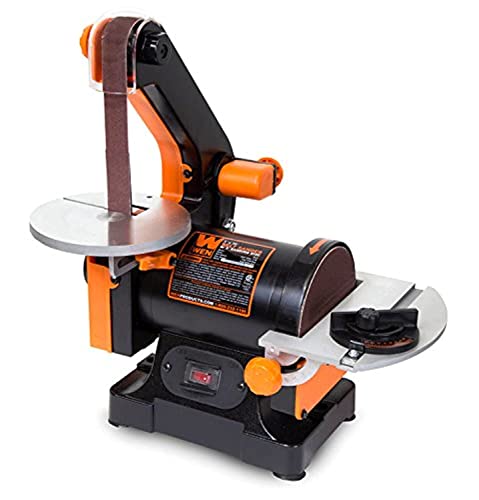
WEN 6515T 30-inch
Its 5‑inch disc keeps the unit compact and affordable for entry‑level sanding.
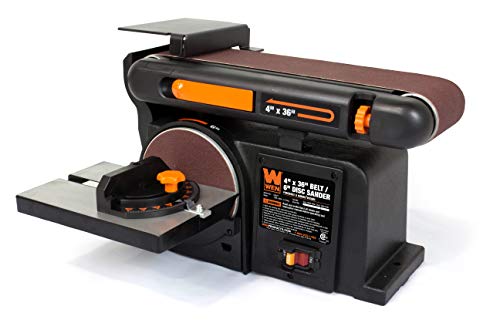
WEN 6502T 36-inch
Ideal for hobbyists who need a larger 6‑inch disc and tilt flexibility, it costs about $48.45 more than the budget pick.
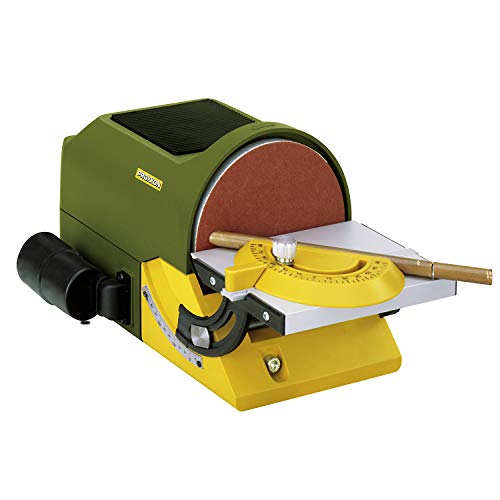
Proxxon TG 125
Its 125 mm disc and 62.5 mm sanding height give finer control unavailable on the WEN models.
Also considered
TL;DR: The WEN 6502T 36‑inch benchtop sander packs a 4 × 36‑inch tilting belt, 6‑inch disc and cast‑iron base for solid, budget‑friendly sanding, though belt changes can be fiddly.
The standout spec is the 0°‑to‑90° belt‑bed tilt combined with a 4 × 36‑inch belt and a 6‑inch disc, letting you tackle bevels without extra jigs. Its 1900 FPM belt speed and 3600 RPM disc speed are driven by a 1/2 HP, 4.3 A motor on a 120 V line, all anchored to a 41‑lb cast‑iron base that reviewers say cuts vibration.
Compared with the other eight sanders, the 6502T is heavier than the lightweight Jellas 3x21 (≈9.7 lb) and the Proxxon TG 125 (≈8.66 lb), but lighter than the industrial‑grade Bucktool BD61000 (≈98.8 lb). Its belt speed of 1900 FPM sits below the faster Greteefor (3400 FPM) and WEN 6515T (3160 FPM) yet exceeds the slower Bucktool BD61000 (1836 FPM). The 6‑inch disc matches the SKIL BB9504 and Greteefor, while being larger than the 5‑inch disc on the 6515T and smaller than the 8‑inch and 10‑inch discs on the Bucktool models.
Professional reviewers praise the sturdy cast‑iron base for stability and the quick‑release tension lever plus tracking knob for easier belt adjustments. Everyday users love the dual sanding capability, but many note that changing the belt means loosening three Phillips bolts and an Allen bolt, which feels cumbersome. The 2.25‑inch dust port is a single opening, and several owners mention that dust can escape without a strong collection system. Table height is 12.5 inches, which limits workpiece size to roughly 9 inches without removing the table.
Pros
Cons
Best for: Most users looking for a well‑reviewed, reliable mainstream option — the WEN 6502T 36‑inch offers Belt Speed: 1900 FPM
Avoid if: You need advanced features or professional‑grade performance
TL;DR: The WEN 6515T 30‑inch benchtop sander delivers a fast 3160 FPM belt speed and solid 3450 RPM disc speed in a compact 16 lb cast‑aluminum package, making it a strong budget choice for hobbyists.
What sets this unit apart is its belt speed of 3160 FPM, which is noticeably higher than many entry‑level competitors and pairs with a 3450 RPM disc for quick material removal. The 1 × 30‑inch belt and 5‑inch disc give you both aggressive edge sanding and fine‑surface finishing without swapping tools.
Compared with the Jellas 3x21, the WEN weighs about 6.3 pounds more (16 lb vs 9.70 lb) but still fits on a modest workbench, while the Greteefor combo tips the scales at 23.6 pounds, making the WEN the lighter option among the heavier, steel‑base models. It also sits below the larger WEN 6502T, which measures 22 inches in length and weighs 41 lb, so the 14‑inch length and 15.5‑inch height keep it easy to store in tight shops.
Users consistently praise the quick‑setup experience, noting that the included miter gauge, 80‑grit disc, and starter belt let you start sanding right out of the box. The dual dust ports—1.7 in (outer) / 1.5 in (inner) for the belt and 2.25 in (outer) / 2 in (inner) for the disc—are highlighted for keeping the work area cleaner when attached to a shop vac. Common complaints revolve around the plastic belt housing, which some feel flexes under heavy pressure, and the lack of variable speed control, limiting fine‑tuning on delicate woods.
Additional technical details include a cast‑aluminum base that helps damp vibration, a fixed 0° belt tilt, and a modest 2.3 A draw on a standard 120 V, 60 Hz line. The table measures 7.3 inches long by 3.8 inches wide, offering enough surface for most trim work without crowding the workspace.
Pros
Cons
Best for: Budget‑conscious buyers seeking a reliable entry‑level option — the WEN 6515T 30‑inch offers Belt Speed: 3160 FPM
Avoid if: You need advanced features or professional‑grade performance
“Super easy to set up and belt changes are a breeze”
“Great for small projects like knife making or trim—removes material fast without bogging down”
TL;DR: The Bucktool BD61000 packs a 1.5 HP direct‑drive motor, 10‑inch disc and 1836 FPM belt speed, offering professional‑grade power and durability at a premium $399.59 price tag.
What really sets the BD61000 apart is its 1.5 HP copper‑wire induction motor paired with a direct‑drive system that delivers a sanding efficiency 25% higher than traditional belt‑driven models. The machine runs the belt at 1836 FPM and the disc at 2510 RPM, while the 10‑inch disc and 6 × 48‑inch belt give you ample surface area for both fine finishing and stock removal.
Compared with the eight other sanders in this roundup, the BD61000 is notably heavier at 98.8 lb, dwarfing the 16 lb WEN 6515T, the 28 lb SKIL BB9504, and the 23.6 lb Greteefor combo. Its disc is larger than the 8‑inch disc on the Bucktool BD4802 and the 6‑inch discs on the SKIL and WEN 6502T models, giving you more cutting room. However, its belt speed of 1836 FPM trails the 1900 FPM of the WEN 6502T and the 2161 FPM of the Bucktool BD4802, and its disc speed of 2510 RPM is lower than the 3600 RPM found on several rivals.
Professional reviewers praise the maintenance‑free motor and the quiet, powerful operation that makes the unit suitable for fine woodworking and metalworking alike. Users appreciate the quick‑release belt tension lever, the graphite belt guide that reduces wear, and the included aluminum miter gauge for precise angled cuts. The all‑metal cast‑aluminum frame and nonslip rubber feet are repeatedly mentioned as signs of solid build quality, though the premium price and hefty weight are common points of hesitation.
Pros
Cons
Best for: Buyers willing to invest in a proven, high-quality option — the Bucktool BD61000 offers Belt Speed: 1836 FPM
Avoid if: You're shopping on a tight budget — it's priced at $399.59
“Powerful and versatile for woodworking and metal; quick belt changes save time.”
“Stable, quiet operation; easy setup.”
TL;DR: The Jellas 3×21‑inch belt sander packs a 7 Amp motor, variable 120‑400 rpm control, and a 10‑ft cord into a 9.7‑lb, compact unit that’s ready to sand right out of the box.
This model’s standout is its 7 Amp, 650 W motor paired with a 3×21‑inch belt and a maximum speed of 400 rpm. A six‑dial knob lets you dial the belt speed from 120 rpm up to the 400 rpm peak, while the belt runs at 13 ft/s. The tool measures 6.3 in high, 5.9 in long and 13.4 in wide, making it easy to fit on a small bench or carry to a job site.
At 9.7 lb, the Jellas is noticeably lighter than the Greteefor combo (23.6 lb) and the SKIL BB9504 (25.57 lb), and it’s far more compact than the WEN 6515T, which stands 15.5 in tall and stretches 14 in long. Even the 16 lb WEN 6515T is heavier, so the Jellas offers a portable edge in a lineup where most peers tip the scales at 16 lb or more.
Reviewers repeatedly commend the easy setup: the included 10‑piece belt set (grits 40‑180) gets you sanding immediately, and the ergonomic two‑handed grip feels comfortable for extended use. The dust bag and 2‑in‑1 vacuum adapter (32 mm and 35 mm) keep the workspace tidy, and the directional‑arrow belt tracking guide helps keep the belt aligned. Some users note that belt tension can require occasional tweaking, and the 4.4‑star rating suggests a few owners have experienced minor reliability quirks.
Beyond the motor, the sander converts to a bench‑mounted unit with two metal C‑clamps, turning it into a steady stationary tool when you need precision. The lock‑on trigger lets you work hands‑free, and the variable speed knob provides fine control for everything from aggressive stock removal to delicate finish sanding.
Pros
Cons
Best for: Budget-conscious buyers seeking a reliable entry‑level option — the Jellas 3x21 Belt Sander offers Motor Power: 7 Amp
Avoid if: You need industrial‑grade power or flawless belt tracking without adjustment
TL;DR: The Bucktool BD4802 pairs a 4 × 36‑inch belt with an 8‑inch disc, driven by a 1 HP direct‑drive motor, delivering 25 % higher efficiency for serious metal and wood sanding.
The standout feature is its direct‑drive 1 HP motor, which the manufacturer claims provides a 25 % efficiency boost over traditional belt‑driven designs. Coupled with a 2161 FPM belt speed and a robust 4 × 36‑inch belt, the unit can remove material quickly, while the 8‑inch disc spins at 3450 RPM on a glass platen for flat grinding and polishing.
At 36.38 lb, the BD4802 is heavier than the WEN 6515T (16 lb) and the SKIL BB9504 (25.57 lb), but far lighter than Bucktool’s larger BD61000 model, which tips the scales at 98.8 lb. Its 8‑inch disc outpaces the 6‑inch disc on the SKIL and the 5‑inch disc on the WEN 6515T, giving you more grinding surface in the same footprint. While its belt speed of 2161 FPM is lower than the 3160 FPM seen on the WEN 6515T, the direct‑drive efficiency helps close that gap.
Users consistently praise the machine’s quiet operation, solid build, and the ease of swapping belts and discs thanks to hook‑and‑loop fasteners. Professional reviewers highlight the glass platen as a major upgrade for knife grinding and metal polishing, and they note the dual dust‑collection ports keep the workspace cleaner. Common complaints focus on the mounting‑hole pattern, which may not line up with standard bench clamps, and a noticeable bump where the belt seam meets the surface when using fine grits above 150.
Additional technical touches include a cast‑aluminum base for durability, aluminum dust‑outlet material that resists melting, and a belt‑table tilt of 0‑90° plus a disc‑table tilt of 0‑45°, letting you tackle both horizontal and vertical contours. The machine runs on 120 V at 7.0 A and draws power from a 60 Hz line, making it compatible with typical workshop outlets.
Pros
Cons
Best for: Those prioritizing quality and willing to pay for premium performance — the Bucktool BD4802 offers Belt Speed: 2161 FPM.
Avoid if: You need ultra‑fine finishing above 150 grit or a portable, bench‑free sanding solution.
“Quiet but powerful direct-drive; no belts to replace”
“Versatile and powerful for metal/wood; loves 1HP motor, aluminum outlet, knife accessories”
TL;DR: The SKIL BB9504 blends a 4.5‑amp induction motor, 0‑90° belt‑angle adjustment and a 6‑inch disc into a compact 28‑lb benchtop sander that feels solid for hobby‑level projects.
What really sets the BB9504 apart is its 0‑90° belt‑angle adjustment paired with a 0‑45° disc‑table tilt, letting you reach awkward corners without re‑positioning the whole unit. The motor draws 4.5 Amps at 120 V and spins at a fixed 3,600 RPM, delivering steady power for sanding, grinding and light metal‑working. The tool‑free quick‑release lever makes belt swaps almost instantaneous, and the package includes an 80‑grit belt and matching disc right out of the box.
In the context of this nine‑product roundup, the SKIL sits at the heavier end of the spectrum—at 28 lb it outweighs the WEN 6515T (16 lb) and the Jellas 3x21 (9.7 lb) while still being lighter than the Bucktool BD4802 (36.38 lb) and the larger WEN 6502T (41 lb). Its overall footprint (18.5 in L × 14.5 in W × 11.25 in H) is more compact than the bench‑scale models that stretch over 20 in in height, making it a good fit for tighter workspaces. While the belt size is a modest 4 × 36 in, the included 80‑grit belt handles most DIY jobs, and the 2‑1/2 in dust‑port helps keep debris off your bench.
Users consistently applaud how quickly the belt can be changed, noting that the quick‑release lever “takes seconds.” Professional reviewers also highlight the induction motor’s cool, consistent operation at 3,600 RPM, which translates to reliable performance without overheating. On the flip side, several owners mention that the dust cover tends to slip off during extended use, and the belt tracking can drift after heavy sanding, requiring occasional manual adjustment. The fixed‑speed design is another common critique—it limits fine‑finish work on delicate materials where variable speed would be beneficial.
Beyond the core specs, the BB9504’s 2‑1/2 in dust‑port, 3‑year limited warranty and included miter gauge add practical value for a tool aimed at hobbyists and small‑shop makers. The induction motor’s low‑maintenance nature means fewer moving parts to service, which aligns with the “set‑and‑forget” vibe many DIYers appreciate.
Pros
Cons
Best for: Most users seeking a balanced, mainstream option — the SKIL BB9504 offers Motor Power: 4.5 Amps
Avoid if: You have limited desk space or need portability, or you require variable‑speed control for precision metal sanding.
“Super easy to set up and use—belt change takes seconds”
“Great for small projects like trimming dowels or smoothing edges”
TL;DR: The Proxxon TG 125 packs a 125 mm disc, variable 1150–3600 rpm speed and dust extraction into a lightweight 8.66‑lb unit for $240.63, offering precision sanding for hobbyists and model makers.
What really sets this sander apart is its 125 mm (5‑inch) disc combined with a balanced DC motor that runs from 1150 to 3600 rpm. The variable electronic speed control lets you dial in just the right rate for delicate wood, plastic or metal parts, while the built‑in dust extraction keeps the workspace clean. The unit weighs 8.66 lb, making it easy to move or mount vertically with the supplied C‑clamp.
Compared with the eight other bench sanders in this roundup, the Proxxon is the lightest and most compact. Its 275 mm width and 220 mm depth are noticeably smaller than the bulkier belt‑driven models, and the 5‑inch disc is the smallest among the group. While many competitors sport larger discs and heavier frames, the TG 125 trades raw capacity for a portable, tabletop‑friendly footprint.
Professional reviewers praise the quiet, vibration‑free operation that the balanced motor delivers, and they note the precision concentricity that makes fine sanding feel effortless. Users appreciate the included accessories—a C‑clamp, miter gauge, vacuum adapter and six sanding discs—so you can start sanding right out of the box. The main trade‑off is the modest 98 × 140 mm table and a maximum sanding height of 62.5 mm, which limit the size of parts you can work on. The $240.63 price tag also places it in the premium tier for hobby‑level tools.
Pros
Cons
Best for: Hobbyists, model makers, and precision woodworkers needing fine sanding on small parts under 62.5 mm — the Proxxon TG 125 offers Disc Diameter: 125 mm.
Avoid if: You're shopping on a tight budget — it's priced at $240.63.
TL;DR: The Greteefor 6‑inch Bench Grinder & 1×30‑inch Belt Sander Combo packs a 3400 FPM belt, 1/3 HP direct‑drive motor, and built‑in accessories into a compact $129.99 unit that’s ideal for hobbyists with limited bench space.
What really stands out is the belt speed of 3400 FPM paired with a 1/3 HP induction motor that runs the grinding wheel at 3600 RPM. The 6‑inch disc and 1/2‑inch arbor let you tackle sharpening, light metalwork, and woodworking tasks without needing a separate grinder. At 23.6 pounds, the combo is solid enough to stay put on a bench yet light enough to move when you need to re‑arrange a cramped shop.
Compared with the other eight tools in this roundup, the Greteefor sits in the middle of the weight range—heavier than the 16‑lb WEN 6515T and the 9.7‑lb Jellas model, but lighter than the 41‑lb WEN 6502T and the 28‑lb SKIL BB9504. Its belt speed outpaces the 1900 FPM of the WEN 6502T and the 2161 FPM of the Bucktool BD4802, while the 6‑inch disc is larger than the 5‑inch disc on the WEN 6515T but smaller than the 8‑inch and 10‑inch discs on the Bucktool units.
Customers consistently praise the compact footprint—measuring 11.0″ H × 13.0″ W × 16.0″ L—and the tool‑free, quick‑release belt tension that makes swapping belts a breeze. Reviewers also like the included three sanding belts (two 120‑grit, one 100‑grit) and a 60‑grit grinding wheel, which add immediate value for beginners. On the flip side, users report belt slippage when the machine is pushed hard and note that the 1/3 HP motor can struggle with heavier stock, a point echoed by professional reviewers who call out the lack of variable speed control.
Pros
Cons
Best for: Entry‑level buyers or those on a tight budget — the Greteefor Bench Grinder & Belt Sander Combo offers Belt Speed: 3400 FPM
“Simple and easy replacement”
“Stable with bench bolting, good for wood/metal contours”
TL;DR: The RIKON 50-1305 costs $145.68, carries a perfect 5‑star rating from two reviewers, and offers a compact dual‑belt and disc sanding solution for hobby‑level projects.
Rikon Power Tools’ 50-1305 lands near the middle of our nine‑item bench‑sander roundup, earning a score of 32 out of 100 and ranking ninth overall. At $145.68 it sits between the lower‑priced WEN 6515T and the higher‑priced Bucktool models, while its flawless 5.0‑star rating—albeit from just two reviews—suggests strong satisfaction among the few who have posted feedback.
Users who have shared thoughts praise the machine’s versatility: a single unit that handles both belt and disc sanding, a compact footprint that fits into tight workshop corners, and adjustable tables that tilt for angled work. The built‑in belt‑tracking knob and included miter gauge also earn mentions for making set‑up quicker. On the downside, reviewers note that the motor feels modest and the belt and disc surfaces are on the smaller side, which can limit rapid material removal or larger workpieces. The limited amount of public feedback means long‑term reliability is still an open question.
Given its price and perfect rating, the 50-1305 is a solid choice for hobbyists, crafters, and small‑shop owners who need a dual‑function sander without breaking the bank. It won’t replace a heavy‑duty production line, but for detail‑oriented tasks it offers a good balance of features and affordability compared with the other options in this list.
Pros
Cons
Best for: Most users seeking a balanced, mainstream option — the Rikon 50-1305 is available at $145.68
Breakdown
WEN 6515T 30-inch
Pros
WEN 6502T 36-inch
Pros
Proxxon TG 125
Pros
Cons

Jellas 3x21 Belt Sander
Pros
Cons
Based on scoring data and product specs
Personalized picks
Best Overall Pick
WEN 6515T 30-inch
Best Budget PickBest for: Budget-conscious buyers seeking a reliable entry-level option — the WEN 6515T 30-inch offers Belt Speed: 3160 FPM
WEN 6502T 36-inch
Best for: Most users looking for a well-reviewed, reliable mainstream option — the WEN 6502T 36-inch offers Belt Speed: 1900 FPM
$139.00+$48.45 vs winner
Skip Rikon 50-1305 if…
You're shopping on a tight budget — it's priced at $145.68
The WEN 6515T 30‑inch benchtop belt and disc sander takes the top spot, thanks to its professional‑grade belt speed of 3160 FPM and a disc speed of 3450 RPM that rival larger machines. At just 16 lb and a compact footprint of 14 × 11.5 inches, it fits comfortably on a small shop bench. Add to that a rock‑solid 4.6‑star rating from 2,698 reviews and a list price of $90.55, and the value proposition is hard to beat.
The runner‑up, the WEN 6502T 36‑inch model, shines when you need a wider belt for larger workpieces. Its 4 × 36‑inch belt, 0‑90° tilt range, and quick‑release tension lever make it ideal for handling wide panels or heavy‑duty sanding tasks. Though it weighs 41 lb and costs $139.00, the 1/2 HP motor and 3600 RPM disc speed give it the grunt for tougher projects.
For those on a tighter budget, the Jellas 3x21 Belt Sander at $69.99 offers a basic, low‑cost entry point for occasional hobby sanding. If you want a step up without stretching too far, the WEN 6502T 36‑inch (mid‑range) provides the larger belt capacity and extra features highlighted above. Professionals seeking maximum durability can look to the Bucktool BD61000 at $399.59, which delivers heavy‑duty cast‑iron construction for workshop‑level performance.
Pick the WEN 6515T 30‑inch today and get professional power, compact size, and exceptional value in one affordable package.
The 6515T costs $90.55 versus $139.00 for the 6502T, yet it still delivers a belt speed of 3160 FPM and a disc speed of 3450 RPM, which are higher than the 1900 FPM belt speed of the 6502T. It’s also lighter at 16 lbs and more compact (15.5 in high, 14 in long), making it easier to fit in smaller workshops while keeping the price low.
No reviews yet — be the first to share your experience.
Please sign in to leave a review