⚡ Quick Answer
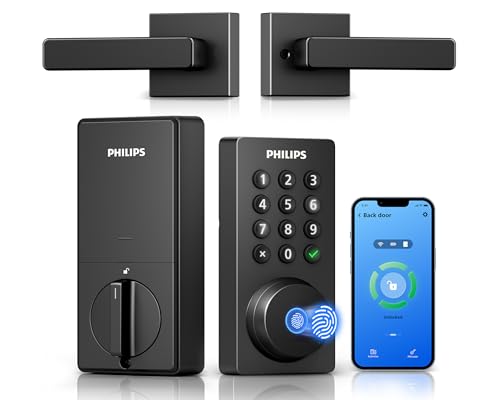
Choosing a biometric lock means balancing cost, speed, and smart‑home compatibility. Our roundup pits 12 models against each other, from budget‑friendly options under $60 to premium units near $200. The list spans three price tiers: budget (Desloc B200, Veise VE017, GHome Smart Fingerprint Door Lock, Veise Smart Lock), mid‑range (Wyze Bolt, Philips Smart Lock) and premium (Philips Smart Lock with Handle, Aqara U100, Ultraloq Bolt, eufy Video Smart Lock E330).
Across the board, fingerprint recognition times cluster around 0.2–0.3 seconds, but the Veise VE017 advertises a 0.2‑second sensor and bundles Bluetooth and Wi‑Fi for $55.55, earning a 4.4‑star rating from 760 reviewers. The Aqara U100, priced at $139.99, pushes connectivity further with Zigbee and NFC, while the Wyze Bolt offers a 4.5‑star rating at $79.98 and a quick 20‑minute install. Battery life ranges from eight months (Aqara) to a full year (Veise VE017).
Below we break down how each model stacks up on speed, power, and smart‑home integration, so you can match the lock to your door and budget.

Veise VE017
Its compact Depth of 68.6 mm makes it an ideal entry‑level lock for budget‑conscious buyers seeking reliable security.
Aqara U100
Designed for users who value premium performance, the Aqara U100—priced about $84.44 higher than the Veise VE017—offers an 8‑month battery life.

Wyze Bolt
Its 16 ft Bluetooth range lets you lock or unlock from across the room, a convenience the Veise and Aqara models don’t provide.
Also considered
TL;DR: The Ultraloq Bolt offers a 360° fingerprint scanner, Matter‑over‑Thread, and up to 50 access codes for $169.99, delivering premium security and smart‑home integration in a compact 2.96‑inch deadbolt.
The standout spec is its 360° fingerprint sensor paired with an anti‑peep keypad, giving you two biometric entry options without a keyhole view. It also carries an IP65 rating, so dust and water resistance won’t be a concern for most doorways. With Matter support over both Wi‑Fi and Thread, the lock talks directly to Apple Home, Google Home, Alexa and SmartThings, and you can control it from the U‑home app. The lock stores up to 50 access codes and includes two mechanical keys for backup.
At 3.4 pounds, the Ultraloq Bolt is heavier than the Wyze Palm Lock (1.9 pounds) and the Philips Smart Lock (1.4 pounds), but lighter than the Aqara U100 (≈3.86 pounds) and the eufy Video Smart Lock (≈3.62 pounds). Its depth of 2.96 inches sits between the slim Wyze Bolt (2.6 inches high) and the bulkier eufy lock (≈8.71 inches deep). Feature‑wise, only the Ultraloq and Aqara list Matter support, while the others rely on Zigbee, NFC or Bluetooth only. The eufy lock matches the Ultraloq’s 50‑code capacity but lacks native Thread integration, and the Wyze Bolt offers a similar fingerprint count but only Bluetooth connectivity.
Users consistently praise the lock’s seamless Apple Home integration, noting that Siri commands work without an extra hub. Professional reviewers highlight the cross‑platform compatibility that Matter and Thread provide, as well as the efficient power draw that lets eight AA batteries last months. A common complaint is the reliance on a 2.4 GHz Wi‑Fi network, which can trip up homes that default to 5 GHz‑only routers. Installation is described as DIY‑friendly, though the separate deadbolt‑knob design adds a few extra steps compared with single‑piece units.
Additional technical context includes ANSI/BHMA A156.36 Grade 1 certification, 128‑bit AES encryption, and a lifetime mechanical guarantee backed by an 18‑month electronic warranty. The lock operates from –4 °F to 149 °F externally and 14 °F to 131 °F internally, giving it a wide temperature envelope for most climates. Power comes from eight AA alkaline cells, and the device runs on a 12 V system.
Pros
Cons
Best for: Buyers willing to invest in a proven, high‑quality option — the Ultraloq Bolt offers Access Codes Capacity: Up to 50
Avoid if: You're on a tight budget, need 5 GHz Wi‑Fi compatibility, or prefer a single‑piece deadbolt without separate knob installation.
“Built-in WiFi, app remote control, and door alerts.”
TL;DR: The Wyze Bolt offers a 16‑ft Bluetooth range, under‑1‑second fingerprint unlock and a 20‑minute DIY install for $79.98, making it a solid mid‑price choice for keyless entry.
What really stands out is the combination of a 16 ft Bluetooth range and a fingerprint storage capacity of 50 users, all packed into a lock that unlocks in under 1 second. At 2.75 lb, the Bolt feels solid on the door while still being manageable for most standard deadbolts.
Compared with the other eleven locks in this roundup, the Bolt is heavier than the Philips Smart Lock (1.4 lb) and the Veise VE017 (about 2.25 lb), yet lighter than some bulkier models. Its price sits in the mid‑tier of the group, offering more specs than the budget‑focused Desloc B200 while still undercutting premium options.
Users consistently praise the quick 20‑minute installation and the reliable fingerprint performance. Reviewers also note the convenience of sharing access with up to 50 users and 20 passcodes via the app. On the flip side, the Bluetooth‑only design means you’re limited to the 16‑ft range, and the AA‑battery power can drain faster if the lock is used heavily. Professional reviewers highlight the BHMA certification and IPX5 rating, but also point out that the weather rating isn’t enough for direct outdoor mounting.
Pros
Cons
Best for: Most users looking for a well‑reviewed, reliable mainstream option — the Wyze Bolt offers Bluetooth Range: 16 ft
Avoid if: You need a lock for direct outdoor installation or require higher security than a battery‑powered, IPX5‑rated device provides
TL;DR: The Veise Smart Lock delivers fast 0.2‑second fingerprint unlock, 7‑in‑1 access options and a roomy 250+ user code capacity for $69.98, making keyless entry surprisingly affordable.
The lock’s standout feature is its biometric performance: a 99.8% fingerprint accuracy paired with a 0.2‑second recognition speed lets you glide through the door without fumbling. It also packs a 7‑in‑1 access suite—fingerprint, app, web portal, fobs, code, eKey sharing and a mechanical key—so you can choose the method that fits your routine.
Compared with its peers, the Veise Smart Lock is slimmer than the Wyze Bolt’s 2.6‑in height and narrower than the Foxgard model’s 72 mm width, while offering a wider 2.96‑in face than the Philips Smart Lock’s 2‑in width. Its fingerprint capacity of 50 matches the Wyze Bolt and Desloc B200, and its user code capacity of 250+ far exceeds the 20‑code limit on Wyze and the 150‑code limit on Desloc. The lock also weighs less than the Wyze Bolt’s 2.75 lb, giving it a more compact profile for standard doors.
Reviewers consistently praise the fingerprint convenience, calling it the “most convenient daily‑use feature.” Installation is described as “simple” because it requires no drilling on standard doors. The only hitch is that remote access, Alexa and Google Assistant integration need a separately purchased Veise G2 gateway, a point that users note as a trade‑off for the otherwise rich feature set.
The lock includes an anti‑peeping touchscreen with backlight, privacy and passage modes, and an auto‑lock timer adjustable from 1 to 999 seconds. Low‑battery alerts keep you informed, and the power source is standard AA batteries, which are easy to replace.
Pros
Cons
Best for: Most users looking for a well‑reviewed, reliable mainstream option — the Veise Smart Lock offers Fingerprint Capacity: 50.
Avoid if: You need full remote or voice‑assistant control without buying extra hardware.
“The installation process and functional demonstration of the VE017 model highlighting the ease of setup and the convenience of fingerprint unlock”
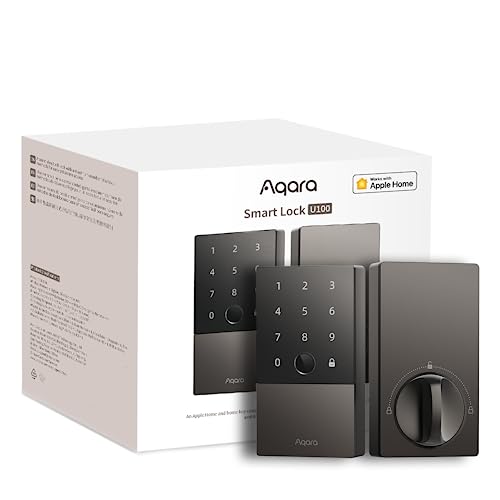
TL;DR: The Aqara U100 delivers 98.6% fingerprint accuracy, eight‑month battery life, and robust smart‑home integration at $139.99, making it a solid mid‑range biometric lock for families and tech‑savvy homes.
The lock’s standout spec is its 98.6% fingerprint accuracy, backed by a 128‑bit AES‑encrypted sensor that can store up to 50 fingerprints. It also sports a 100 dB speaker for audible alerts and an IP65‑rated outer panel that resists moisture and dust. Power comes from four AA batteries, promising up to eight months of operation before replacement.
At $139.99 the U100 sits above the Wyze Bolt’s $79.98 price point and the Philips Smart Lock’s $79.98, yet it’s cheaper than the eufy Video Smart Lock’s $199.99 and the Ultraloq Bolt’s $169.99. Weighing about 3.86 pounds, it’s heavier than the Wyze Palm Lock’s 1.9 pounds and the Philips Smart Lock’s 1.4 pounds, but lighter than the Ultraloq Bolt’s 3.4 pounds. Its Bluetooth 5.0 and Zigbee 3.0 ranges exceed 20 m, offering broader connectivity than the Wyze Bolt’s 16 ft Bluetooth range.
User sentiment highlights the lock’s versatility: reviewers love the long battery life, the reliable auto‑lock and passage modes, and the seamless Apple Home Key experience when paired with an Aqara hub. Professional reviewers note the solid Zigbee performance and the high‑accuracy fingerprint sensor as key strengths. However, the inner plastic panel isn’t weather‑proof, and full Zigbee or Home Key functionality does require an optional hub, adding extra cost for some installers.
The device also includes NFC support, emergency USB‑C charging at 5 V DC, and operates comfortably from –35 °C to 66 °C with humidity tolerance up to 93 % RH. Its matte keypad offers permanent, periodic, and one‑time passwords, and the backset can be set to 60 mm or 70 mm to match most door configurations.
Pros
Cons
Best for: Those prioritizing quality and willing to pay for premium performance — the Aqara U100 offers Battery Life: 8 months
Avoid if: You're on a tight budget, need a fully weather‑proof lock without a hub, or prefer a lighter DIY installation.
“HomeKit News praises the U100 for its fingerprint sensor, Apple HomeKey support, auto-locking, and 8-month battery life, noting solid Zigbee 3.0 performance with an optional Aqara hub and IP65 outer panel for weather resistance.”
TL;DR: The Foxgard Fingerprint Door Lock packs a 360° sensor, 98.5% accuracy and 0.3‑second reads into a $38, lightweight unit that supports five unlock methods, making it the most feature‑dense budget option.
What really stands out is the 360° fingerprint sensor that can read prints in just 0.3 seconds with 98.5% accuracy, and it stores up to 100 fingerprints plus 50 numeric codes. The lock also alerts you when the battery drops to 4 V, and its standby draw is only 30 µA, which helps stretch the life of the four AAA alkaline cells it uses.
Compared with the other eleven locks in this roundup, the Foxgard sits in the middle of the weight range – heavier than the Philips Smart Lock (1.4 lb) and the Desloc B200 (≈2.03 lb) but lighter than the Wyze Bolt (2.75 lb). Its 165 mm depth is shallower than Desloc’s 185 mm yet deeper than the Veise VE017’s 68.6 mm, giving it a compact profile without sacrificing the latch‑size compatibility of 60‑70 mm. The 100‑fingerprint capacity also doubles the 50‑fingerprint limit listed for Desloc, while its 0.3‑second read time matches the sub‑0.3‑second speed claimed by that same competitor.
Users repeatedly praise the flexibility of five unlock methods – fingerprint, keypad, app, IC card and mechanical key – and especially like the electronic deadlock for added peace of mind. Professional reviewers note the design feels reliable and the low‑battery alerts are helpful. The main complaints focus on the fact that the four AAA batteries aren’t included and that the emergency power port relies on a Micro USB connection, which some find slower than newer USB‑C options.
The lock handles a wide range of environments, operating comfortably between 40‑85% relative humidity and temperatures from –4 °F to 158 °F. Its zinc‑alloy body measures 165 mm deep, 63 mm high and 72 mm wide, and it fits doors 35‑55 mm thick, covering most residential and light‑commercial applications.
Pros
Cons
Best for: Shoppers on a tight budget who want the most for their money — the Foxgard Fingerprint Door Lock offers Operating Humidity: 40-85% RH
Avoid if: Reliability and user satisfaction are your top concerns
TL;DR: The Philips Smart Lock packs built‑in Wi‑Fi and Bluetooth, a 0.3‑second fingerprint scan with 99% accuracy, and remote app control into a 1.4‑lb deadbolt for $79.98.
What really sets this lock apart is its dual‑connectivity: it ships with both Wi‑Fi (2.4 GHz) and Bluetooth, so you never need a separate hub. The fingerprint sensor reads a print in just 0.3 seconds and boasts a 99% recognition rate, making keyless entry feel almost instantaneous. At 1.4 pounds it’s lighter than many Bluetooth‑only rivals, and the auto‑lock timer can be set anywhere from 10 to 180 seconds.
Compared with the other eleven locks in the roundup, the Philips model sits in the middle of the weight spectrum—heavier than the Veise VE017 but lighter than the Wyze Bolt’s 2.75 pounds. Its fingerprint capacity of 20 is modest; the Veise Smart Lock stores 50 fingerprints and the Wyze Bolt holds 50, so power users may prefer those. On the price side it’s priced higher than the $55 Veise VE017 but matches the $79.98 Wyze Bolt, offering a solid feature set for its tier.
Reviewers consistently praise the hub‑free Wi‑Fi setup and the speed of the biometric scanner. Professional reviewers note the “rapid 0.3‑second recognition with high accuracy reliability.” The main complaints focus on power: the lock requires eight AA batteries (not included) and offers no emergency backup, which some users find inconvenient. Its ANSI/BHMA Grade 3 rating is deemed suitable for residential doors but not for commercial security needs.
From a technical standpoint, the lock uses AES128 encryption and supports Alexa and Google Assistant voice commands. It operates in humidity from 0‑95% and temperatures ranging from –35 °C to 66 °C, so it can handle most indoor climates. The device logs entries locally, offers a master PIN and up to 100 user PINs, and includes low‑battery, wrong‑entry, and jam alarms for added peace of mind.
Pros
Cons
Best for: Most users looking for a well‑reviewed, reliable mainstream option — the Philips Smart Lock offers Operating Humidity: 0‑95%.
Avoid if: You need advanced features or professional‑grade performance.
TL;DR: The Desloc B200 offers sub‑0.3‑second fingerprint unlocking, 12‑month battery life and multiple entry methods at $49.98, making it a solid budget smart lock despite needing a separate gateway for remote control.
The lock’s standout spec is its fingerprint recognition speed of < 0.3 seconds, paired with a capacity for 50 fingerprints and 150 PIN codes. It runs on four AA batteries that the manufacturer says last about 12 months, and it can be controlled via Bluetooth up to 2 meters away or through a G2 Gateway with a 10‑foot range. The device also carries an IP54 rating and operates from –30 °C to 70 °C, so it can handle most indoor climates.
Compared with other options in this roundup, the B200 is lighter than the Veise VE017 (2.03 lb vs 2.25 lb) and the Foxgard lock (2.03 lb vs 2.55 lb), but its depth of 185 mm is considerably greater than the Veise’s slim 68.6 mm profile. Its fingerprint speed matches the Veise’s 0.2‑second claim in terms of responsiveness, yet it arrives at a lower price tier than the Veise and Wyze Bolt, making it a competitive budget choice.
Reviewers consistently praise the “incredible” sub‑0.3‑second fingerprint unlock and the convenience of seven unlock methods—including fingerprint, PIN, app, eKey, IC card and a mechanical key. The main complaint is that remote control, Alexa and Google Assistant support require purchasing the separate G2 Gateway, and the native Bluetooth range of just 2 meters limits direct app access without that hub. Still, owners appreciate the 12‑month battery lifespan and the anti‑peeping mode that protects PIN entry.
Additional technical details include an auto‑lock timer adjustable from 5 to 900 seconds, local data storage for access logs, and BHMA Grade 3 security certification. Installation is DIY on a standard deadbolt door, and the package comes with two mechanical keys for backup.
Pros
Cons
Best for: Budget-conscious buyers seeking a reliable entry-level option — the Desloc B200 offers Fingerprint Capacity: 50
TL;DR: The GHome Smart Fingerprint Door Lock delivers 0.2‑second biometric access, Bluetooth app control and a rechargeable battery for $59.90, making it a solid budget pick for interior doors.
The lock’s standout spec is its 0.2‑second fingerprint recognition paired with 99.9% accuracy, which lets you open the door faster than you can tap a key. It also stores 20‑100 user fingerprints and up to 50 passcodes, giving families plenty of flexibility. Installation is marketed as a 10‑30‑minute DIY job, and the knob‑style design fits doors 35‑55 mm thick.
Compared with the other eleven entries, the GHome matches the Veise VE017’s 0.2‑second speed but falls short of the Veise’s 12‑month AA battery life. Its product depth of 3.93 inches exceeds the Veise’s 68.6 mm depth, indicating a bulkier profile. Like the Desloc B200, it includes two mechanical keys, yet it offers a higher fingerprint capacity than the Wyze Bolt’s 50‑user limit. Overall, it sits in the middle of the price spectrum—more expensive than the Foxgard model but cheaper than the Wyze Bolt.
User feedback repeatedly praises the lightning‑quick fingerprint unlock and the straightforward app that logs entries and lets you share temporary access. Reviewers also note the convenience of having both Bluetooth control and a physical key backup. On the downside, several users mention that the lock only supports Bluetooth, so remote unlocking outside of range isn’t possible, and the dark‑brown finish is the sole color option. Professionals echo the sentiment, calling the hardware‑software integration reliable but wishing for broader colour choices.
Pros
Cons
Best for: Budget-conscious buyers seeking a reliable entry-level option — the GHome Smart Fingerprint Door Lock offers Included Keys: 2 mechanical keys
Avoid if: You want the best value‑per‑dollar in its price range
“pretty slick”
“fairly fast, within 1 second”
TL;DR: The Wyze Palm Lock uses palm‑vein scanning for contactless entry, packs a 1.9‑lb body, 50 guest codes and a 20‑minute DIY install, but its premium price sits above many budget rivals.
The standout feature is its palm‑vein biometric sensor, which offers a contactless unlock method that experts say is harder to spoof than traditional fingerprint readers. The lock weighs 1.9 pounds, carries an IP53 rating for splash resistance, and includes anti‑peep protection for up to 50 programmable guest codes. Auto‑lock is driven by a built‑in gyroscope, and the device can also be opened via PIN, touchscreen, Wyze app, voice assistants or a mechanical key.
Compared with the other eleven entries, the Palm Lock is heavier than the 1.4‑pound Philips Smart Lock but lighter than the 3.86‑pound Aqara U100 and the 3.4‑pound Ultraloq Bolt. Its 50 guest‑code limit matches the Ultraloq Bolt’s access‑code capacity, yet falls short of the Philips Smart Lock with Handle’s 100 user PIN slots. While many peers rely on Bluetooth or Zigbee, Wyze opts for Wi‑Fi‑only connectivity and supports Alexa and Google Assistant, giving it a broader smart‑home reach.
Reviewers consistently praise the palm‑vein scanner for its security edge and note that the dual‑battery system—six‑month main life plus a two‑week backup—keeps the lock running during outages. Professional reviewers highlight the BHMA3 certification, which signals rigorous durability testing. The only recurring gripe is that the emergency USB‑C charging cable isn’t bundled, meaning you’ll need to source a cable yourself. Additionally, the limited pool of user reviews makes long‑term satisfaction harder to gauge.
Pros
Cons
Best for: Those prioritizing quality and willing to pay for premium performance — the Wyze Palm Lock offers Installation Time: 20 minutes
Avoid if: You need advanced features or professional‑grade performance
TL;DR: The eufy Video Smart Lock E330 3‑in‑1 packs a 2K camera, 0.3‑second fingerprint unlock and 10,000 mAh rechargeable battery into a BHMA‑rated deadbolt, but its $199.99 price puts it in the premium tier.
The most eye‑catching spec is the built‑in 2K (2560 × 1440) camera with an f/1.6 aperture, which pairs with a color day/night night‑vision mode. Fingerprint recognition happens in just 0.3 seconds and supports up to 50 users, while the 10,000 mAh rechargeable Li‑ion battery is advertised to last between 3 and 12 months. The lock also boasts 100,000 durability cycles and a pressure resistance of 2000 N, indicating a very sturdy build.
At 3.6 lb, the eufy unit is heavier than the 1.9 lb Wyze Palm Lock but only a shade above the 3.4 lb Ultraloq Bolt. Its fingerprint capacity of 50 matches the Ultraloq Bolt and Wyze Bolt, putting it on par with the best‑performing peers in that category. While it offers more integrated features than many rivals, it does not include HomeKit or Matter support, which some competing locks provide.
Users consistently praise the all‑in‑one design: the lock replaces a separate deadbolt, camera and doorbell, and the 8 GB internal storage means no subscription is required for video archives. Professional reviewers note the sharp 2K video and reliable 5.2 m motion‑detection range. However, many owners report that real‑world battery life often falls short of the 3‑12 month claim, forcing more frequent recharges. The touchscreen keypad and doorbell button are also reported as dim in low‑light situations, and occasional Wi‑Fi hiccups can affect remote access.
Beyond the camera, the lock carries an IP65 rating, 72‑hour salt‑spray resistance and 144‑hour humidity resistance, making it suitable for harsh weather. Encryption follows AES128 + ECC standards, and the device works with Alexa, Google Assistant and Apple Watch, though it lacks Matter integration. Installation takes about 15 minutes and requires no drilling, which many renters find appealing.
Pros
Cons
Best for: Those prioritizing quality and willing to pay for premium performance — the eufy Video Smart Lock E330 3-in-1 offers Fingerprint Capacity: 50
Avoid if: You're shopping on a tight budget — it's priced at $199.99
“battery killer”
“remarkably sleek and compact”
TL;DR: Philips Smart Lock with Handle blends a 0.3‑second fingerprint scanner, hub‑free 2.4 GHz Wi‑Fi and 100 PIN slots into a compact 1.5‑inch‑high deadbolt for $115.99.
The lock’s standout spec is its lightning‑fast fingerprint recognition—0.3 seconds with a 99% success rate—paired with a capacity for 20 fingerprints and 100 user PINs. Its dimensions (1.5 in H × 6.0 in L × 2.2 in W) keep it slim enough to fit most front‑door aesthetics while still housing an AES128‑encrypted local storage system and ANSI/BHMA Grade 3 certification.
Compared with peers, the Philips unit is shorter than the Wyze Bolt’s 2.6‑inch height and lighter than the Wyze Palm Lock, which lists a weight of 1.9 pounds. The Veise Smart Lock offers a larger fingerprint pool (50) and a quicker 0.2‑second scan, but Philips compensates with a broader PIN capacity and an adjustable auto‑lock timer of 10‑180 seconds—something the Palm Lock’s gyroscope‑based auto‑lock doesn’t let you fine‑tune.
Reviewers consistently praise the hassle‑free app, voice‑assistant integration (Alexa, Google Assistant) and the reliable auto‑lock feature that prevents forgotten doors. The main complaints revolve around the lock’s reliance on eight AA batteries without an emergency power backup and the relatively modest 20‑fingerprint limit for larger households.
Pros
Cons
Best for: Most users seeking a balanced, mainstream option — the Philips Smart Lock with Handle offers Fingerprint Capacity: 20
Avoid if: You're shopping on a tight budget — it's priced at $115.99
TL;DR: The Veise VE017 packs a 0.2‑second fingerprint sensor, 8‑in‑1 smart access and a $55.55 price tag into a compact deadbolt, delivering strong value for budget‑focused homeowners.
The standout spec is its ultra‑fast 0.2‑second fingerprint recognition, powered by an on‑device AI chip that learns each user’s pattern. With an 8‑in‑1 access suite—fingerprint, app, PIN, two NFC cards, two mechanical keys, voice (via Alexa/Google), and auto‑lock—it covers virtually every entry preference. The lock measures 68.6 mm deep, 76.2 mm high and 147.3 mm wide, and weighs about 2.25 lb, making it sturdy yet manageable for most door setups.
Compared with its peers, the VE017 is a touch heavier than the Desloc B200 (≈2.03 lb) but lighter than the Foxgard Fingerprint Door Lock (2.55 lb). Its fingerprint speed matches the GHome Smart Fingerprint Door Lock’s 0.2 seconds, while offering more access methods than many budget alternatives that list fewer smart features. The lock’s IP55 rating also gives it a weather‑resistant edge over models that lack a disclosed rating.
Users consistently highlight the quick, straightforward installation and the reliability of the fingerprint sensor day‑to‑day. Reviewers appreciate the long 12‑month battery life supplied by four AA alkaline cells and the convenience of a USB‑C emergency port. Some note that independent durability data are sparse, so long‑term wear remains an open question.
Pros
Cons
Best for: Budget-conscious buyers seeking a reliable entry-level option — the Veise VE017 offers Depth: 68.6 mm
Avoid if: You want the best value‑per‑dollar in its price range
“impressive for a technological lock”
Breakdown
Veise VE017
Pros
Cons
Aqara U100
Pros
Wyze Bolt
Pros

GHome Smart Fingerprint Door Lock
Pros
Cons
Based on scoring data and product specs
Personalized picks
Best Overall Pick
Veise VE017
Best OverallBest for: Budget-conscious buyers seeking a reliable entry-level option — the Veise VE017 offers Depth: 68.6 mm
Aqara U100
Best for: Those prioritizing quality and willing to pay for premium performance — the Aqara U100 offers Battery Life: 8 months
$149.99+$94.44 vs winner
Skip Wyze Palm Lock if…
You need advanced features or professional-grade performance
The Veise VE017 wins the round as the best overall biometric lock. At a list‑price of $55.55 it outshines pricier rivals, while its 4.4‑star rating from 760 reviews shows strong user approval. The lock’s on‑device AI chip delivers fingerprint recognition in just 0.2 seconds, and it supports an 8‑in‑1 smart‑access suite (fingerprint, app, RFID, PIN, voice, mechanical keys and more), all protected by an IP55 rating and both Bluetooth and Wi‑Fi connectivity.
The runner‑up, Aqara U100, shines when you need robust smart‑home integration and audible feedback. It offers Bluetooth 5.0, Zigbee 3.0 with a >20 m range, and a 100 dB speaker for clear alerts. Its fingerprint sensor holds 50 templates with 98.6 % accuracy, and the lock runs on four AA batteries for about 8 months. Priced at $139.99 and backed by a 4.2‑star rating from 2,474 reviews, it’s a solid choice for a connected‑home setup.
For tighter budgets, the Foxgard Fingerprint Door Lock at $37.99 delivers basic biometric entry at the best value. In the mid‑range, Wyze Bolt at $79.98 offers reliable performance without breaking the bank. If you want premium features like video monitoring and a 3‑in‑1 design, the eufy Video Smart Lock E330 at $199.99 provides the most advanced package.
Pick the Veise VE017 today and secure your door with the most feature‑rich, affordable biometric lock on the market.
The Veise VE017 costs $55.55, which is $84.44 less than the Aqara U100’s $139.99 price tag. It also offers a 12‑month battery life versus the U100’s 8‑month life, and provides 8‑in‑1 smart access methods compared with the U100’s fingerprint, app, NFC and keypad options. Both are ANSI Grade 3 certified, but the Veise adds Wi‑Fi and Bluetooth support while staying under a $60 budget.
No reviews yet — be the first to share your experience.
Please sign in to leave a review