⚡ Quick Answer
Home security is getting smarter, and this roundup pits 11 biometric locks against each other. Prices stretch from $64.99 for the entry‑level MSR X6 up to $339.99 for the premium Lockly Visage Zeno, while user ratings hover between 4.0 and 4.6 stars. With everything from fingerprint scanners to palm‑vein readers, the field is crowded.
We’ve grouped the options into three price tiers. The budget camp includes the MSR X6, Veise VE027, Philips Smart Lock and eufy Smart Lock E31, all under $130 and offering basic fingerprint or keypad entry. Mid‑range picks – Wyze Palm Lock at $129.98 and Aqara U100 at $139.99 – add extra unlock methods like NFC or voice. Premium models such as the Ultraloq Bolt ($169.99), Kwikset Halo Touch, Aqara U400 and Lockly Visage Zeno bring full‑suite connectivity, higher fingerprint capacities and weather‑proof ratings.
What makes the Ultraloq Bolt intriguing is its 8‑in‑1 keyless entry, Matter‑over‑Wi‑Fi support without a hub, and a rugged IP65 rating, all while handling up to 50 access codes. Below we break down each lock’s strengths and trade‑offs so you can match the right security level to your home.

Ultraloq Bolt
It supports up to 50 access codes, giving plenty of flexibility for family members and guests.
Aqara U100
Ideal for tech‑savvy renters who want voice alerts, it costs $30 less than the Ultraloq Bolt.

Philips Smart Lock
Offers a compact backset of 2‑3/8 or 2‑3/4 inch, fitting tighter door frames where the Ultraloq and Aqara models may not.
Also considered
TL;DR: The Ultraloq Bolt packs a 360° fingerprint scanner, up to 50 access codes, and Matter‑enabled smart home integration into a compact, IP65‑rated deadbolt that weighs 3.4 lb and earns a 4.3‑star rating.
The lock’s standout spec is its 360° fingerprint sensor paired with an anti‑peep keypad, allowing up to 50 unique access codes and two mechanical keys for backup. Housed in a zinc‑alloy case with a satin‑nickel finish, it measures just 2.96 inches deep, 2.96 inches high and 1.35 inches wide, and carries an IP65 rating for dust and water resistance.
Compared with the other ten entries, the Ultraloq Bolt is lighter than Kwikset Halo Touch (3.88 lb) and Yale Assure Lock 2 Touch (4.0 lb) but heavier than Wyze Palm Lock (1.9 lb) and Philips Smart Lock (1.4 lb). Its depth of 2.96 inches makes it far more compact than Kwikset’s 9.82‑inch height and the bulkier dimensions of several peers. Unlike many competitors that rely on hubs or Zigbee, this model offers native Matter support over both Wi‑Fi (2.4 GHz) and Thread, giving it broader smart‑home compatibility without extra hardware.
Users consistently highlight the seamless Apple Home integration and the convenience of remote lock/unlock via the U‑home app. Professional reviewers note the “Matter and Thread support ensures cross‑platform compatibility” and praise the responsive fingerprint sensor. A recurring complaint is the lock’s reliance on a 2.4 GHz Wi‑Fi network, which can limit advanced features for households that run primarily on 5 GHz bands. Installers also mention a modest learning curve because the deadbolt and knob are sold separately.
Beyond convenience, the lock carries an ANSI/BHMA Grade 1 certification and 128‑bit AES encryption, underscoring its security pedigree. It operates from –4 °F to 149 °F externally and 14 °F to 131 °F internally, and the manufacturer claims a security strength up to 35× that of standard residential locks and a lifespan up to 7× longer.
Pros
Cons
Best for: Buyers willing to invest in a proven, high‑quality option — the Ultraloq Bolt offers Access Codes Capacity: Up to 50
Avoid if: You're on a tight budget, need 5 GHz Wi‑Fi compatibility, or prefer a lock with minimal installation steps
“Built-in WiFi, app remote control, and door alerts.”
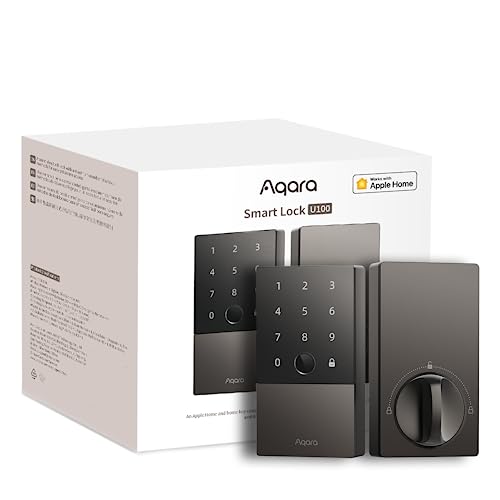
TL;DR: The Aqara U100 offers 98.6% fingerprint accuracy, an 8‑month battery life on AA cells, and IP65‑rated outer housing, making it a solid, feature‑rich smart lock for families.
The lock’s standout spec is its 98.6% fingerprint accuracy across 50 stored fingerprints, paired with a 100 dB speaker for audible alerts. Its outer panel meets IP65 standards, and the device weighs 3.86 pounds (1750 g), giving it a sturdy feel while staying portable enough for most door setups.
Compared with peers, the U100 is heavier than the Wyze Palm Lock (1.9 pounds) but a touch lighter than the Kwikset Halo Touch (3.88 pounds). Its Bluetooth range exceeds 20 m and it supports Zigbee 3.0, placing it ahead of many rivals that list fewer connectivity options. Battery life of eight months on four AA cells also outlasts the typical daily‑swap expectations of other locks where battery duration isn’t disclosed.
Users consistently praise the lock’s versatile unlock methods—fingerprint, keypad, NFC, Bluetooth, and Zigbee—plus seamless Apple Home integration, which professional reviewers highlight as “highly accurate” and “convenient for iOS homes.” The downside noted by both experts and everyday owners is the need for an optional Aqara hub to unlock full Zigbee and HomeKey features, and the inner plastic panel isn’t weather‑proof, limiting exposure on exterior doors. The lock’s 128‑bit AES encryption and emergency USB‑C power add layers of security and peace of mind.
Pros
Cons
Best for: Families or shared households needing up to 50 biometric users, and smart‑home enthusiasts who want Apple HomeKey and multi‑protocol integration – Battery Life: 8 months.
Avoid if: You require a fully weather‑proof lock without a hub, prefer Wi‑Fi‑native devices, or need a lighter, more minimalist deadbolt.
“HomeKit News praises the U100 for its fingerprint sensor, Apple HomeKey support, auto-locking, and 8-month battery life, noting solid Zigbee 3.0 performance with an optional Aqara hub and IP65 outer panel for weather resistance.”
TL;DR: At $79.98, the Philips Smart Lock delivers built‑in Wi‑Fi and Bluetooth, a 0.3‑second fingerprint scan with 99% accuracy, and a lightweight 1.4‑lb design, making keyless entry easy for budget‑focused homes.
The lock’s standout feature is its integrated Wi‑Fi and Bluetooth combo, which means you won’t need a separate hub to control it from the Philips Home Access app. Its fingerprint sensor reads a print in just 0.3 seconds and boasts a 99% recognition rate, offering the speed and reliability you expect from premium biometric locks. The deadbolt’s compact dimensions—1.5 in height, 2 in width, and 6 in length—keep it unobtrusive on most doors.
Compared with other options in this 11‑product roundup, the Philips unit is lighter than the Veise VE027 (1010 g) and the Wyze Palm Lock (1.9 lb), yet still heavier than the ultra‑light MSR X6 (1755 g) when converted. Its fingerprint capacity of 20 is modest next to the MSR X6’s 200 slots, but it matches the Veise’s broader feature set, sharing the same 10‑180 second auto‑lock window. The backset options of 2‑3/8 or 2‑3/4 in align closely with the MSR X6’s 54 mm specification, ensuring a good fit for standard doors.
Professional reviewers highlight the lock’s rapid fingerprint response and the convenience of hub‑free Wi‑Fi connectivity. Users appreciate the seamless voice‑assistant integration with Alexa and Google Assistant, noting that remote unlocking feels “instant” thanks to the local storage of entry logs. The main trade‑off mentioned is the need for eight AA batteries, which aren’t supplied, and the absence of an emergency power backup. Its ANSI/BHMA Grade 3 rating makes it suitable for typical residential use but not for high‑security commercial settings.
Pros
Cons
Best for: Budget-conscious buyers seeking a reliable entry‑level option — the Philips Smart Lock offers Backset: 2‑3/8 or 2‑3/4 inch
Avoid if: You need advanced features or professional‑grade performance
TL;DR: The Wyze Palm Lock uses palm‑vein scanning for contactless entry, offers six unlock methods, and packs a 6‑month main battery plus a 2‑week backup, all for $129.98.
What sets the Palm Lock apart is its palm‑vein recognition sensor, a biometric method that’s harder to spoof than typical fingerprint readers. The unit weighs 1.9 pounds and carries an IP53 rating, so it can handle light rain or splashes without a fuss. Installation is DIY‑friendly and takes about 20 minutes with just a screwdriver.
Compared with the other ten locks in this roundup, the Palm Lock sits in the middle of the weight range—lighter than the Kwikset Halo Touch (around 3.88 pounds) but heavier than the Philips Smart Lock (about 1.4 pounds). Its 20‑minute install is a bit longer than the 15‑minute installs listed for eufy Smart Lock E31 and Veise VE027. Feature‑wise, Wyze offers six unlock methods (palm scan, PIN, touchscreen, app, voice assistants, and a physical key), which matches eufy’s six methods but is one short of Veise’s seven.
Professional reviewers praise the palm‑vein scanner as a genuine security upgrade, noting that the built‑in gyroscope enables true auto‑lock detection and the millimeter‑wave radar only powers on when someone is present, extending battery life. Users also like the BHMA3 certification, which signals that the lock has survived rigorous durability testing. The main battery lasts about six months, and a removable backup pack provides roughly two weeks of power if the primary source runs out.
Pros
Cons
Best for: Most users seeking a balanced, mainstream option — the Wyze Palm Lock offers Installation Time: 20 minutes
TL;DR: The Kwikset Halo Touch delivers Wi‑Fi‑enabled, 100‑fingerprint biometric entry with Grade AAA security, but its higher price and lack of a door sensor may turn some buyers away.
What really sets the Halo Touch apart is its built‑in Wi‑Fi, which means you don’t need a separate hub to control the lock from the Kwikset app, Alexa or Google Assistant. The lock also stores up to 100 fingerprints locally, letting up to 50 users unlock the door without any cloud dependency. Physically, the deadbolt measures 9.82 inches tall, 4.18 inches long and 5.39 inches wide, and it weighs 3.88 pounds, giving it a solid, premium feel on the door.
Compared with the other ten locks in this roundup, the Halo Touch sits toward the pricier end – it’s pricier than the Wyze Palm Lock and the Philips Smart Lock, yet still cheaper than the Yale Assure Lock 2 Touch. At 3.88 pounds it’s heavier than the Ultraloq Bolt (3.4 pounds) and the Wyze Palm Lock (1.9 pounds), but lighter than the Aqara U100, which tips the scales at roughly 3.86 pounds. Battery‑life details aren’t listed for the Halo Touch, whereas the Aqara U100 specifies an 8‑month lifespan on its four AA cells.
Users consistently praise the quick, reliable fingerprint scan and the straightforward setup that lets families add members without re‑keying the whole lock. Professional reviewers highlight the convenience of Wi‑Fi integration and the privacy‑focused local fingerprint storage. However, a recurring complaint is the unreliable auto‑lock feature, which many attribute to the lock’s lack of a built‑in door sensor. Reviewers also note the missing Apple HomeKit support and the absence of a keypad, limiting entry options for iOS‑centric households.
From a security standpoint, the Halo Touch carries ANSI/BHMA Grade AAA certification and UL 437 compliance, bolstered by Kwikset’s SmartKey technology that resists torque attacks and bumping. The lock also includes Microban antimicrobial protection, geofencing, and intrusion detection, rounding out a feature set that feels more at home in a tech‑savvy family than in a minimalist apartment.
Pros
Cons
Best for: Most users seeking a balanced, mainstream option — the Kwikset Halo Touch offers Fingerprint Capacity: 100 fingerprints
Avoid if: Reliability and user satisfaction are your top concerns
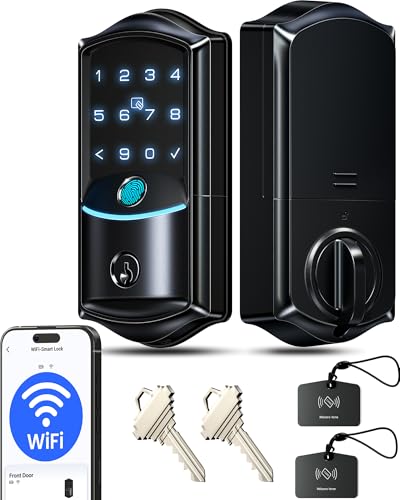
TL;DR: The Veise VE027 delivers seven unlock options, 99.8% fingerprint accuracy, and a year‑long battery life—all wrapped in a weather‑proof, hub‑free Wi‑Fi deadbolt for under $70.
The lock’s standout feature is its seven distinct unlock methods—app, fingerprint, PIN, RFID, mechanical key, voice, and auto‑lock—combined with a fingerprint accuracy of 99.8% and a recognition speed of 0.2 seconds. Its IP65 rating and BHMA Grade 3 certification give it solid resistance to weather and forced entry, while the anti‑peeping PIN mode adds an extra layer of privacy. Installation is quick, with a listed 15‑minute setup time, and the built‑in 2.4 GHz Wi‑Fi means no extra hub is required.
Compared with the other ten locks in this roundup, the Veise is lighter than the MSR X6 (1010 g vs 1755 g) but heavier than the Philips Smart Lock, which weighs 1.4 pounds. It also offers more unlock methods than the eufy Smart Lock E31, which lists six methods. The auto‑lock timer of 10‑180 seconds matches the range found on the Philips model, giving you familiar flexibility. While many competitors rely on external bridges or 5 GHz networks, Veise’s hub‑free Wi‑Fi keeps the setup simple.
Reviewers praise the lock’s “effortless convenience” and “advanced security” thanks to its military‑grade encryption and local plus app activity logs. Professionals note the eight‑month (365 days) battery life as a major convenience for busy households. On the downside, users have reported occasional hiccups pairing the lock with a 2.4 GHz network, and the package does not include the required 2 AA batteries, so you’ll need to purchase them separately.
Beyond the core specs, the Veise integrates with Alexa and Google Home for voice control, and its back‑lit keypad works well in low‑light conditions. The KK Home App provides remote lock/unlock, activity monitoring, and the ability to set temporary PINs for guests—features that make it a solid choice for families, rentals, or office environments where multiple users need flexible access.
Pros
Cons
Best for: Entry‑level buyers or those on a tight budget — the Veise VE027 offers Battery Life: 365 days
Avoid if: You need 5 GHz Wi‑Fi connectivity or prefer a lock that comes with batteries included
TL;DR: The Lockly Visage Zeno delivers hands‑free entry with sub‑second facial recognition, a 99‑print fingerprint sensor, and full Wi‑Fi smart‑home integration, though it carries a premium $339.99 price tag.
The standout feature is its industry‑first facial recognition that unlocks in under 1 second, using radar detection plus dual infrared sensors. This hands‑free method works even if you’re carrying groceries, and the 3D fingerprint sensor reads prints in just 0.2 seconds, storing up to 99 fingerprints on the device.
At 6.06 pounds, the Zeno is heavier than the Ultraloq Bolt (3.4 pounds), Yale Assure Lock 2 Touch (4.0 pounds), Kwikset Halo Touch (3.88 pounds), and Wyze Palm Lock (1.9 pounds). It’s also pricier than those models, positioning it as a premium choice in the lineup. However, its biometric suite—facial, fingerprint, QR‑code scan, and PIN Genie™ touchscreen—outmatches many peers that list fewer entry methods.
Reviewers repeatedly praise the speed of both facial and fingerprint unlocks, noting reliable performance with glasses and in low‑light conditions. The app setup is described as straightforward, and the lock’s solid matte‑black build earns compliments. On the downside, users mention occasional app hiccups when controlling the lock remotely, and the limit of three monthly eBadges and three offline access codes can feel restrictive for households that share entry frequently.
Additional technical details include on‑device biometric storage for privacy, a QR code scan‑to‑open option, encrypted Bluetooth, built‑in 2.4 GHz Wi‑Fi, and smart‑home compatibility with Apple Home Key, Alexa, Google Assistant, and Siri. The unit runs on two rechargeable lithium batteries charged via USB‑C, and installation typically takes about 15 minutes.
Pros
Cons
Best for: Those prioritizing quality and willing to pay for premium performance — the Lockly Visage Zeno offers Fingerprint Capacity: 99 prints
Avoid if: You're shopping on a tight budget — it's priced at $339.99
TL;DR: The MSR X6 Smart Door Lock offers ultra‑fast 0.3‑second fingerprint access, IP64 weather protection, and eight unlock methods for just $64.99, making it a solid budget pick for DIY home upgrades.
The lock’s standout spec is its 0.3 s fingerprint recognition time, supporting up to 200 unique fingerprints and delivering a full unlock within 1 s. Combined with an IP64 rating, the unit tolerates rain, dust and temperatures from –35 °F to 122 °F, so you won’t have to worry about harsh weather degrading performance.
At 1755 g (3.9 lb), the X6 is heavier than the Veise VE027 (1010 g) and noticeably heftier than the Philips Smart Lock’s 1.4 lb body. Its battery life of 3–6 months is shorter than Veise’s 365‑day claim, while its 54 mm backset fits standard US doors. The lock also packs a reversible handle, a touch keypad with backlight, and an auto‑lock delay that can be set anywhere from 1 to 999 seconds, giving you more flexibility than many rivals that list fewer adjustable features.
Users consistently praise the quick 10‑minute installation that requires only a screwdriver—no extra drilling needed. Reviewers note that the fingerprint sensor works reliably even with wet hands, and families like the ability to assign personalized codes. However, professional reviewers point out that remote access and Alexa integration need the optional G2 Gateway, and the mechanical key cylinder feels less premium than higher‑end competitors. Battery drain can accelerate if you rely heavily on fingerprint unlocking, which aligns with the reported 3–6 month lifespan.
Pros
Cons
Best for: Shoppers on a tight budget who want the most for their money — the MSR X6 Smart Door Lock offers Backset: 54 mm
Avoid if: You need built‑in cameras, Grade 1 certification, or want remote features without purchasing an extra gateway.
“Installed in 10 mins, fingerprints work flawlessly even wet hands”
“Great for families – kids use codes, I check logs remotely.”
TL;DR: The eufy Smart Lock E31 offers six unlocking options, a 10,000 mAh rechargeable battery and Matter support for $124.98, making it a solid, budget‑friendly choice for single‑family doors.
What really stands out is the 10,000 mAh rechargeable battery paired with a 14‑month lifespan when you average ten unlocks per day. The lock warns you at 20% charge, and its fingerprint scanner reads a print in just 0.3 seconds, while the keypad can store up to 100 passcodes.
At 2.44 lb, the E31 is heavier than the Philips Smart Lock and the Wyze Palm Lock but lighter than the Kwikset Halo Touch and Ultraloq Bolt. Installation takes about 15 minutes, matching Veise’s speed and beating Wyze’s 20‑minute claim. With six unlock methods (fingerprint, app, keypad, voice, physical key, Matter) it offers fewer options than Veise’s seven, yet it still covers the core smart‑home needs without a hub.
Professional reviewers note the BHMA certification and AES128 + ECC encryption as strong durability and security signals. Matter over Thread lets you control the lock through Apple Home, Google Home or Alexa without extra hardware, though the lack of Apple HomeKey means iPhone users miss native unlocking. The lock runs on 2.4 GHz Wi‑Fi only, which some power users see as a limitation compared to dual‑band devices.
Pros
Cons
Best for: Entry-level buyers or those on a tight budget — the eufy Smart Lock E31 offers Fingerprint Capacity: 50
TL;DR: The Yale Assure Lock 2 Touch blends a 99% accurate fingerprint sensor, Wi‑Fi connectivity, and a sleek brushed‑metal design, but its premium price and fingerprint‑account workarounds may deter budget‑focused buyers.
What really stands out is the biometric fingerprint sensor, which delivers 99% recognition accuracy in just 0.5 seconds and stores data locally with AES 128‑bit encryption. The lock also supports up to 250 keypad codes of 4‑8 digits, giving you plenty of backup entry options.
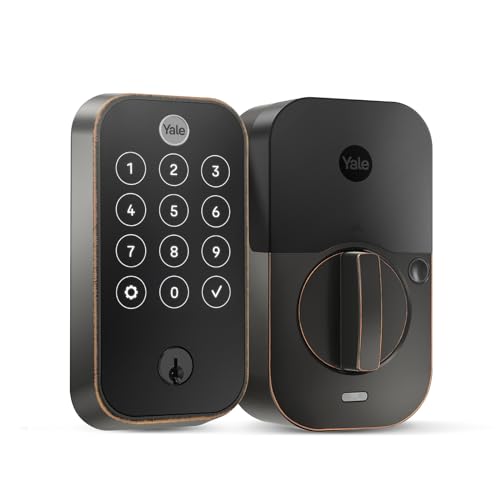
Compared with the other ten entries, the Yale lock is heavier at 4.0 pounds, outmatching the Ultraloq Bolt (3.4 pounds) and Kwikset Halo Touch (3.88 pounds) while still being lighter than many larger deadbolts. Its depth of 22.23 mm is far shallower than Ultraloq Bolt’s 2.96 inches, meaning it sits more discreetly on the door. In terms of smart‑home integration, it offers Wi‑Fi plus Bluetooth, while the Ultraloq Bolt relies only on BLE and the Kwikset Halo Touch lists no Wi‑Fi capability.
Reviewers consistently praise the lock’s straightforward installation and the premium feel of its oil‑rubbed bronze finish. Professional reviewers note the lightning‑fast fingerprint recognition and the convenience of auto‑unlock via Bluetooth proximity. However, users also report occasional hiccups where the sensor doesn’t read a fingerprint despite the high accuracy claim, and they must use a guest‑account workaround to store multiple fingerprints.
Pros
Cons
Best for: Those prioritizing quality and willing to pay for premium performance — the Yale Assure Lock 2 Touch offers Depth: 22.23 mm
Avoid if: You're on a tight budget or only need basic functionality
“lightning fast”
“much quicker and more convenient than unlocking with the code”
TL;DR: The Aqara U400 costs $269.99, unlocks in 0.3 seconds, and blends UWB hands‑free entry with Matter‑compatible smart features, making it a premium choice for tech‑savvy homeowners.
The standout spec is the 0.3‑second unlock speed paired with 98.6% fingerprint accuracy, delivering almost instant access when you press the scanner. Its UWB range works within a few feet, so your iPhone or Apple Watch can open the door automatically as you approach, a feature praised by users as “magical.” The lock also supports a full suite of entry methods—UWB auto‑unlock, fingerprint, PIN, NFC, app, voice, and a physical key—so you’re rarely locked out.
Compared with the other ten locks in this roundup, the U400 sits at the higher end of the price spectrum, making it pricier than the Ultraloq Bolt (which weighs 3.4 pounds) and the Wyze Palm Lock (1.9 pounds). Its fingerprint capacity of 50 is lower than Kwikset Halo Touch’s 100 fingerprints, yet its unlock speed of 0.3 seconds beats Lockly Visage Zeno’s “under 1 second” facial‑recognition time. While the U400’s weight isn’t listed, many peers provide exact weights, highlighting a data gap for this model.
Reviewers love the seamless Apple Home Key integration and the reliability of the UWB hands‑free feature, noting that the lock feels “future‑ready.” Professionals also highlight the Matter‑over‑Thread connectivity, which offers faster, more stable local control than Wi‑Fi‑only rivals. However, users frequently mention the need for a separate Thread Border Router or Matter hub to unlock the full smart‑home experience, and the UWB auto‑unlock currently works only with Apple devices.
Pros
Cons
Best for: Those prioritizing quality and willing to pay for premium performance — the Aqara U400 offers Fingerprint Capacity: 50
Avoid if: You're shopping on a tight budget — it's priced at $269.99
“feels magical”
“the best smart lock you can buy right now”
Breakdown
Ultraloq Bolt
Pros
Aqara U100
Pros
Philips Smart Lock
Pros
Veise VE027
Pros
Based on scoring data and product specs
Personalized picks
Best Overall Pick
Ultraloq Bolt
Best ValueBest for: Buyers willing to invest in a proven, high-quality option — the Ultraloq Bolt offers Access Codes Capacity: Up to 50
Aqara U100
Best for: Most users seeking a balanced, mainstream option — the Aqara U100 offers Battery Life: 8 months
$149.99-$20.00 vs winner
Skip Yale Assure Lock 2 Touch if…
You're on a tight budget or only need basic functionality
We crowned the Ultraloq Bolt as the top biometric lock. It retails for $169.99, carries a solid 4.3‑star rating from 2,485 reviewers, and wraps its hardware in an IP65‑rated zinc‑alloy case. The lock’s 360° fingerprint sensor works alongside an anti‑peep keypad and supports up to 50 access codes, while native Matter over Wi‑Fi and Thread keep it in sync with the major smart‑home ecosystems.
The runner‑up, Aqara U100, shines when you need a lock that talks to both Zigbee and NFC devices and can alert you loudly. Priced at $139.99, it offers a 100 dB speaker, NFC support, Zigbee 3.0 connectivity, and a battery life of about eight months on four AA cells. Its 50‑fingerprint capacity (98.6 % accuracy) and multiple password types make it a versatile choice for tech‑savvy households.
For tighter budgets, the MSR X6 Smart Door Lock at $64.99 delivers basic keyless entry without the premium price tag. If you’re willing to splurge, the Lockly Visage Zeno stands out as the premium option at $339.99, signaling a higher‑end feature set for those who want the most advanced lock on the market.
Pick the Ultraloq Bolt today and lock in both security and smart‑home convenience.
The Ultraloq Bolt combines a 360° fingerprint ID, an anti‑peep keypad, and two mechanical keys, letting you unlock with a fingerprint, a code you enter on the keypad, or a physical key. It also offers auto lock/unlock via a door sensor or your smartphone, so you can stay hands‑free when you come and go.
No reviews yet — be the first to share your experience.
Please sign in to leave a review