⚡ Quick Answer
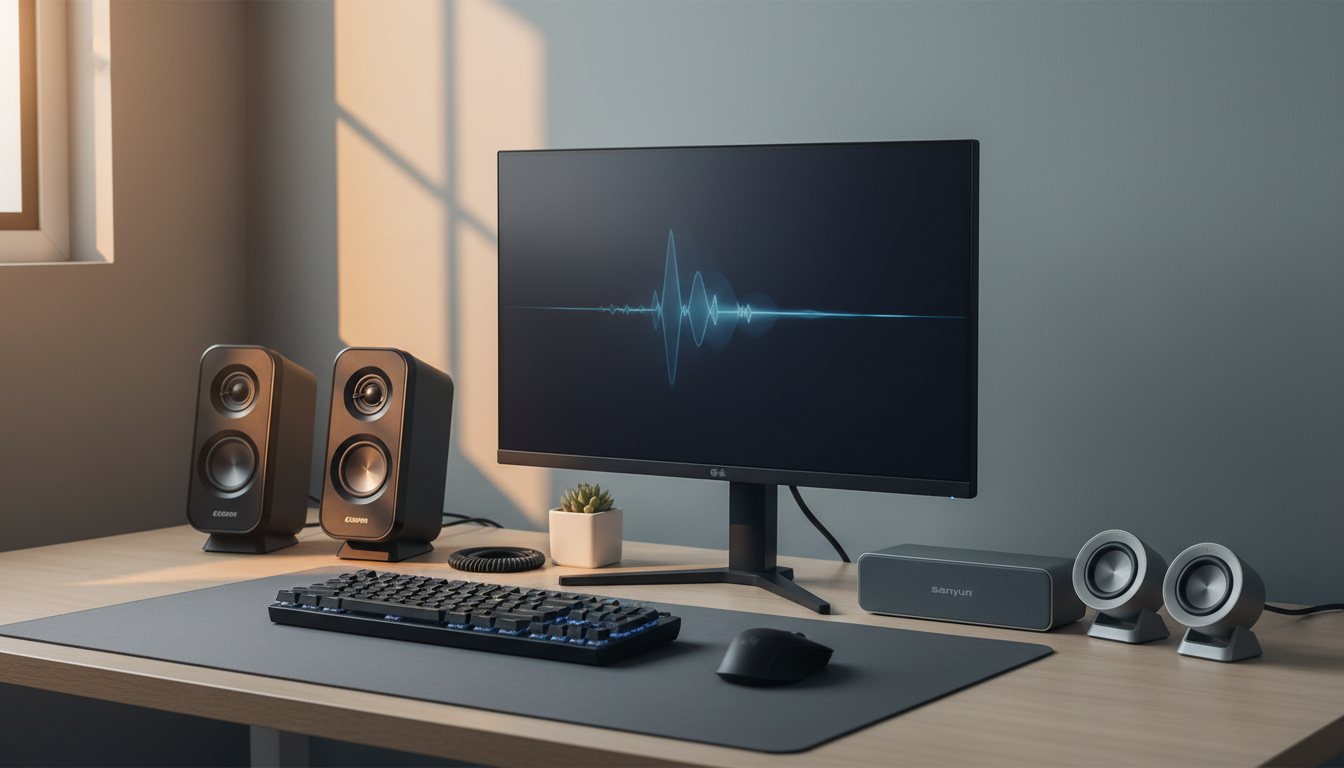
Finding the right Bluetooth speakers for a computer can feel like a maze, especially when you want solid sound without cluttering your desk. We compared 11 models, ranging from ultra‑budget units to premium desktop pairs, so you can see how each stacks up against the others.
On the budget side, you’ll find options like the Amazon Basics speakers at $23.99, delivering 2.4 W RMS and a 4.5/5 rating, and the Soulion R50 at $17.43 for a compact soundbar. Mid‑range choices include the Logitech Z207 for $58.99, offering a 20 m Bluetooth range and a 4.3/5 rating, while the Creative Pebble Pro sits at $64.99 with similar performance. Premium selections feature the Edifier G2000 at $99.99, delivering a 32 W peak output, a 4.6/5 rating, and RGB lighting, alongside higher‑priced bookshelf pairs like the Sanyun SW208 and Audioengine A2+.
Below we’ll break down each tier, highlight key specs and user feedback, and help you match a speaker to your workspace and listening habits.
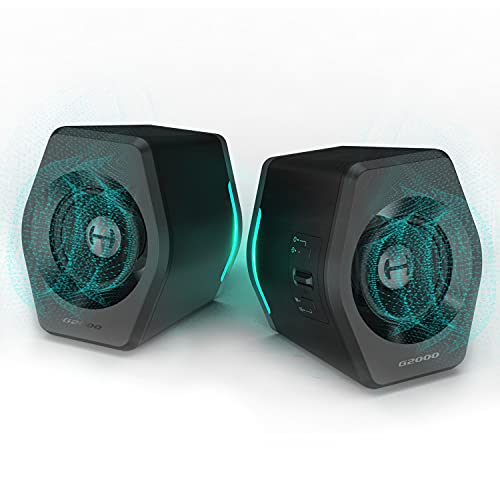
Edifier G2000
Its ultra‑quiet operation at ≤25 dB(A) delivers premium sound without background hiss, underpinning its top rating.

Logitech Z207
Ideal for budget‑conscious gamers who need solid Bluetooth sound, it’s $58.99—about $41 less than the Edifier G2000.
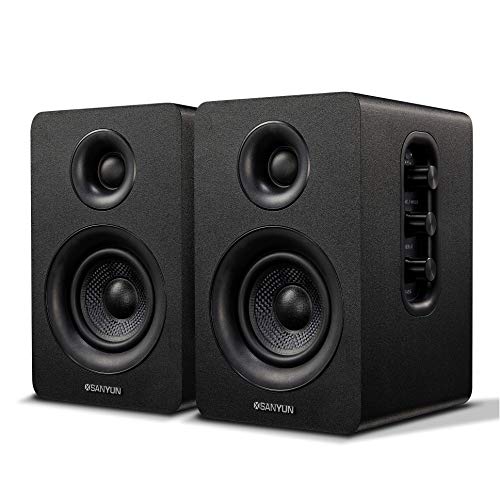
Sanyun SW208
Stands out with a larger 3‑in driver, offering fuller mids for music lovers who prefer richer tone without stepping up to premium pricing.
Also considered
Score Analysis
Key score advantages vs. runner-up (Logitech Z207)
Price Range
Edifier G2000
$109.99
Logitech Z207
$58.99
Sanyun SW208
$69.99

Amazon Basics Bluetooth Computer Speakers
$15.61
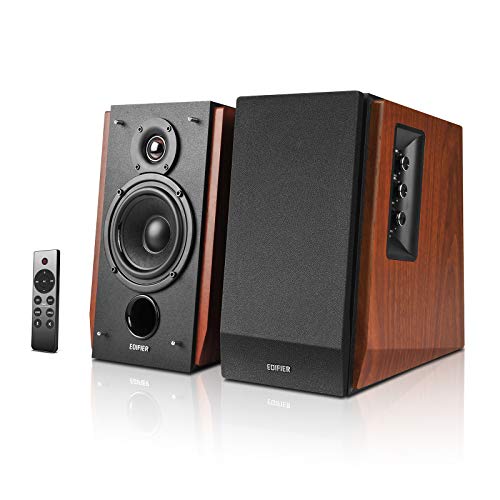
Edifier R1700BTs
$229.99

Creative Pebble V3
$39.99

Audioengine A2+
$279.00
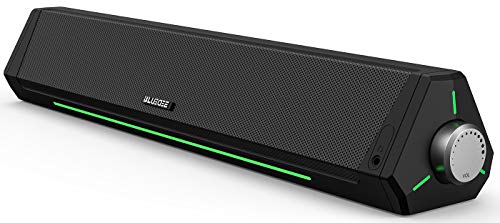
Bluedee Computer Speakers
$56.99

Soulion R50
$17.43

Creative Pebble Pro
$61.74
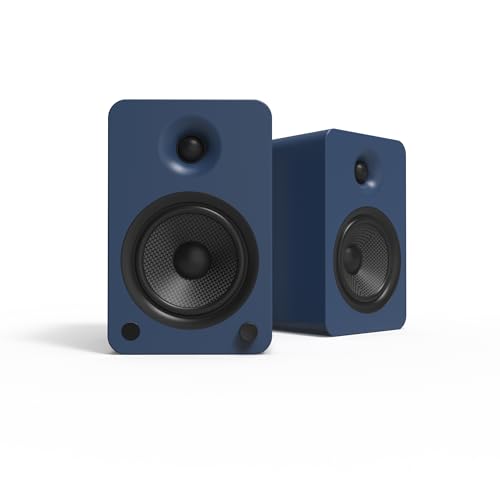
Kanto YU6
$469.99
Spec Comparison
TL;DR: The Edifier G2000 packs 2.75‑inch drivers, 16 W RMS output and 12 RGB patterns into a 9.09‑inch‑tall column, delivering loud, colorful sound for tight‑desk gaming setups.
The G2000’s standout spec is its 2.75 in full‑range drivers paired with a 16 W RMS power rating, which the manufacturer says delivers “punchy” audio despite the speakers’ modest 5.47 in depth and 0.65 L cavity volume. A mechanical shift lever lets you dial volume precisely, while three EQ presets (Music, Game, Movie) let you tailor the sound on the fly. The cabinet is column‑shaped, stands 9.09 in tall, and sports 12 customizable RGB light effects that sync with game action.
Compared with the other ten speakers in this roundup, the G2000’s driver is larger than the 2.25 in drivers in the Creative Pebble V3 but smaller than the 3 in drivers in the Sanyun SW208. Its 16 W RMS output outpaces the Logitech Z207’s 5 W RMS and the Bluedee speakers’ 15 W output, giving it a clear power edge. At 4.21 lb, it is heavier than the Creative Pebble V3 (1.59 lb), Logitech Z207 (2.88 lb) and Bluedee (2.0 lb), reflecting the more sturdy internal components. The price point sits above the budget‑oriented options like the Amazon Basics Bluetooth speakers, positioning the G2000 as a premium‑tier choice for gamers willing to spend a bit more.
User feedback repeatedly praises the ultra‑compact footprint—roughly 4.2 × 4.1 × 5.1 in per speaker—and the surprisingly loud output for its compact dimensions. Reviewers also highlight the easy Bluetooth pairing and the vibrant lighting as strong value adds. On the downside, several owners note that the 98 Hz low‑end limit curtails deep bass, and the plastic construction feels less solid than metal‑cased rivals. A handful of users have reported occasional Bluetooth or USB connectivity drops, which can be frustrating during long gaming sessions.
Beyond the core specs, the G2000 includes a dedicated power adapter, a subwoofer output for future expansion, and a noise level rated at ≤25 dB(A), keeping background hiss to a minimum. The column design incorporates a backward‑facing mega bass port and anti‑slip foot pads, which help stabilize the speakers on small desks.
Pros
Cons
Best for: Budget‑conscious gamers and desktop users with limited desk space who want vibrant lighting and solid volume.
Avoid if: You’re an audiophile seeking deep bass, demand a metal build, or need the lowest possible price.
TL;DR: The Logitech Z207 offers a 20 m Bluetooth range, 5 W RMS output and a compact design for under‑$60, making it a solid desk‑friendly Bluetooth speaker set.
The standout spec is the 20 m Bluetooth range, letting you stream from a phone or laptop across a typical room without drop‑outs. An active integrated amplifier powers each speaker, delivering 5 W RMS (10 W peak) and including two passive radiators that extend low‑frequency response without a separate subwoofer.
Among the ten speakers, the Z207 weighs more than the Bluedee pair (2.0 lb vs 2.88 lb) but stays compact enough for most desks. Its 5 W RMS is lower than the Edifier G2000’s 16 W RMS, so it won’t match that model’s louder output. However, the Z207’s Bluetooth range beats Creative Pebble Pro’s 10 m, giving you more flexibility when the source device is across the room.
User sentiment highlights the clear, crisp stereo sound and the tiny footprint—124 mm deep, 90 mm wide and 241 mm tall per speaker—making it easy to tuck behind a monitor. Reviewers appreciate the Easy‑Switch button that lets two devices stay paired, but they also note the limited 5 W RMS can feel thin in larger spaces and the lack of an internal battery ties the speakers to an outlet.
Additional technical notes: the system uses a 3.5 mm line‑in and headphone jack, supports simultaneous pairing of two Bluetooth devices, and comes with a 2‑year limited warranty. Reviewers praise the passive radiators for adding room‑filling bass without the bulk of a dedicated subwoofer, while the active integrated amp keeps the setup plug‑and‑play.
Pros
Cons
Best for: Most users looking for a well‑reviewed, reliable mainstream option
Avoid if: You need deep sub‑woofer bass, portability without a power cord, or coverage for a large open‑plan space
TL;DR: The Sanyun SW208 delivers 60 W of balanced sound from 3‑inch carbon‑fiber drivers in a compact 190 × 136 × 119 mm bookshelf design, backed by solid 4.3‑star ratings from over 7 k reviewers.
At the heart of the SW208 is a pair of 3 in (76 mm) carbon‑fiber drivers that push 30 W per side for a combined 60 W RMS output. Bluetooth 5.0 pairs with a built‑in 24‑bit DAC, and the speakers support 3D Dynamic surround sound. The chassis measures 190 mm wide, 136 mm high and 119 mm deep, making it a true bookshelf‑style unit that still fits comfortably on a typical desktop.
Compared with other contenders, the SW208’s drivers are larger than the 2.25 in drivers found in the Creative Pebble Pro, and its 190 mm width exceeds both the Pebble Pro’s 123 mm and the Logitech Z207’s 90 mm width. It's slightly shallower than the Z207’s 124 mm depth, and it's considerably shorter than the Z207’s 241 mm height, which helps keep the profile low. While the Pebble Pro ships with Bluetooth 5.3, the SW208 uses Bluetooth 5.0, a modest step down but still well within modern connectivity standards.
Reviewers frequently praise the SW208’s balanced audio output across lows, mids and highs, noting that the 3‑inch drivers handle a wide frequency range without sounding thin. The on‑board knobs for bass, treble and volume get positive mentions for giving quick, tactile control without needing a software app. Users also like the compact footprint, which fits nicely on cramped desks while still delivering room‑filling sound.
The speakers carry an EU ER2 energy‑saving certification, feature built‑in noise elimination, and enter a quiet standby mode when idle, which helps reduce power draw during long listening sessions.
Pros
Cons
Best for: Most users looking for a well‑reviewed, reliable mainstream option
Avoid if: You have limited desk space or need portability
TL;DR: The Amazon Basics Bluetooth Computer Speakers deliver compact, Bluetooth 5.3 stereo sound with USB and AUX inputs for just $23.99, but their modest 2.4 W RMS output limits volume and bass.
At the heart of this set is a 1.75 in driver paired with Bluetooth 5.3, offering a clean 80 Hz–20 kHz frequency range and a signal‑to‑noise ratio of ≥65 dB. The speakers sit on a shallow 110 mm depth chassis that measures 87.1 mm high and 68.1 mm wide, and they're only 0.44 lb (199.5 g), making them easy to slip onto any desk.
When you line them up against the other ten contenders, the Amazon Basics pair is noticeably lighter than the Soulion R50 (≈1.76 lb) and the Creative Pebble V3 (≈1.59 lb). They also sit at the lower end of the power spectrum: their 2.4 W RMS total output is modest compared with the Soulion’s 10 W total output and the Pebble V3’s 16 W peak output. Price‑wise they're among the most affordable options in the roundup, positioning them as a true budget pick.
Reviewers appreciate the plug‑and‑play simplicity: Bluetooth 5.3, USB audio, and a 3.5 mm AUX jack let you connect laptops, phones, or tablets without extra drivers. The front‑panel volume knob and built‑in headphone jack add convenience. Professional reviewers note the clear stereo imaging for everyday desktop use, yet they also point out that the blue LED lighting can be overly bright in dim rooms, and the 2.4 W RMS output may feel under‑powered for gaming or movie nights that demand louder, richer sound.
Pros
Cons
Best for: Budget-conscious buyers seeking a reliable entry-level option
Avoid if: You have limited desk space or need portability
TL;DR: The Edifier R1700BTs deliver 66 W RMS of rich sound from 4‑inch woofers and a 19 mm tweeter, wrapped in a walnut‑veneer MDF cabinet, but they sit at a premium $199.99 price point.
What really sets these speakers apart is the 66 W RMS Class‑D amplifier paired with a 4 in woofer and a 19 mm silk‑dome tweeter, giving a frequency response that starts at 52 Hz. The built‑in Soundfield Spatializer widens the soundstage, and Bluetooth 5.0 with aptX HD ensures high‑resolution wireless playback.
Weighing 14.55 lb, the R1700BTs tip the scales compared with the Audioengine A2+ (6 lb) and the Edifier G2000 (4.21 lb), and far outmass the Creative Pebble Pro (1.72 lb). Their 446 mm length also exceeds the compact footprint of many desk‑top peers. In terms of power, the 66 W RMS output dwarfs the G2000’s 16 W RMS and the Logitech Z207’s 5 W RMS, positioning the R1700BTs among the most capable in the lineup.
People praise the solid MDF enclosure with walnut veneer for reducing resonance and the generous cable length that keeps desks tidy. They describe pairing as effortless, and the Bluetooth connection stays stable for most use cases, though a few note occasional reconnection after the source sleeps. Reviewers highlight the aptX HD codec and DSP‑based Spatializer, while also pointing out that the bass can feel thin without an external subwoofer despite the 52 Hz low‑frequency reach.
Technical details include an input sensitivity of 400 mV ± 50 for Bluetooth, 700 mV ± 50 for Line In 1, and 550 mV ± 50 for Line In 2, with a signal‑to‑noise ratio of ≥85 dB. The class‑D amp with DSP and DRC delivers clear audio across volume levels, and the Bluetooth 5.0 chipset supports aptX HD for higher‑quality streaming.
Pros
Cons
Best for: Audiophiles and enthusiasts seeking premium sound quality and advanced features
Avoid if: You're on a tight budget or only need basic functionality
“insane value”
TL;DR: The Creative Pebble V3 offers a sleek 2‑speaker desktop setup with 2.25‑inch drivers, 8 W RMS output, and a single USB‑C cable for power and audio, all for $39.99.
The Pebble V3’s most distinctive feature’s a single USB‑C cable that handles both power and audio, cutting down on desk clutter. Each satellite houses a 2.25‑inch full‑range driver angled at 45°, delivering 8 W RMS power and a signal‑to‑noise ratio of 75 dB, which reviewers describe as “clear and surprisingly loud for a speaker of this size.”
At 1.59 pounds, the pair's lighter than many bulkier desktop speakers yet still feels solid on a desk. Its 4.8 × 4.7 × 4.6‑inch dimensions let it sit comfortably in tight spaces, and the ABS plastic chassis keeps the footprint minimal without sacrificing stability.
Professional reviewers highlight the ultra‑simple Bluetooth 5.0, AUX, and USB‑C switching as “crazy easy” to use, and everyday users love the minimalist look for video calls and background music. The trade‑off is that maximum volume needs a high‑power USB‑C source (5 V 2 A), and the 100 Hz low‑end of the 100 Hz – 17 kHz frequency response means bass depth is modest.
Pros
Cons
Best for: Budget-conscious buyers seeking a reliable entry-level option
Avoid if: You want the best value-per-dollar in its price range
“crazy easy USB‑C/Bluetooth/AUX switching”
“surprisingly loud and clear audio (50% louder than prior models)”
TL;DR: The Audioengine A2+ packs 15 W RMS per channel, >95 dB SNR and aptX‑low‑latency Bluetooth into a 6‑lb, desktop‑friendly cabinet, but its thin bass and $279 price tag keep it in the premium niche.
The A2+ stands out with dual class AB amplification that delivers 15 W RMS per channel and a signal‑to‑noise ratio of >95 dB while keeping total harmonic distortion under 0.05 %. Its Bluetooth 5.0 stack supports aptX‑low‑latency with an advertised ~30 ms delay, and the wireless range reaches 30 m. All of that lives in a compact 4 in × 5.25 in × 6 in footprint that weighs 6.0 pounds, making it easy to fit on a crowded desk.
Compared with the other ten speakers in this roundup, the A2+ is heavier than the Creative Pebble Pro (780 g) and Logitech Z207 (998 g) but far lighter than the Edifier R1700BTs, which tip the scales at over 14 pounds. Its Bluetooth range of 30 m outpaces the Creative Pebble Pro’s 10 m limit, while the Sanyun SW208 lists the same Bluetooth version (5.0) without a range claim. Driver‑size wise, the A2+ uses a 0.75‑in tweeter and a 2.75‑in woofer, matching the Edifier G2000’s 2.75‑in driver but staying smaller than the Edifier R1700BTs’ 4‑in woofer. Price‑wise it sits above budget‑oriented options like the Bluedee speakers and the Sanyun SW208, positioning it as a premium choice.
Professional reviewers praise the A2+ for delivering “big, clear sound” and “impressive detail” from such a tiny cabinet, noting the high‑resolution 24‑bit audio path and the 48 kHz USB sample rate. Users echo the ease of Bluetooth pairing and the clean, distortion‑free playback, but some flag the thin bass that rolls off around 65 Hz and the occasional instability when cranked to full volume. Consumer feedback notes the lack of an included subwoofer or dedicated speaker stands.
Pros
Cons
Best for: Buyers willing to invest in a proven, high‑quality option
Avoid if: You're shopping on a tight budget — it's priced at $279.00
“nice detail and punch for their size”
“CNET calls the stereo imaging unmatched by single wireless speakers”
TL;DR: The Bluedee Bluetooth Computer Speakers deliver 15 W of stereo sound in a compact 2.67‑inch footprint, feature dual drivers, anti‑magnetic tech, and RGB lighting for $53.99.
What really stands out is the 15 W RMS power output combined with dual drivers and diaphragms, which the manufacturer says provides balanced high notes and deep bass while keeping the speakers only 2.67 in deep and tall.
Compared with the other ten speakers in this roundup, the Bluedee sits in the middle of the weight range at 2.0 lb—lighter than Logitech’s 2.88 lb unit but heavier than the sub‑pound Amazon Basics model. Its 15 W output outpaces Logitech’s 5 W RMS and Amazon Basics’ 2.4 W RMS, and it also exceeds Soulion’s 10 W total output. The 16.45 in width makes it noticeably wider than the narrow designs of the Logitech, Creative Pebble, and Amazon Basics speakers.
Reviewers consistently praise the clear, room‑filling sound and the ability of the anti‑magnetic technology to eliminate static hiss. The RGB LED lighting gets a thumbs‑up for adding a visual flair to a desk setup, while the nylon‑braided Y‑cable highlights its durability. A recurring theme is that the price feels a bit high for the feature set, especially when cheaper alternatives offer acceptable sound for basic use.
The speakers support Bluetooth 5.0, a 3.5 mm aux input, and a USB power source, giving you flexible connectivity options. They’re also wall‑mountable, so you can free up desk space if needed.
Pros
Cons
Best for: Budget-conscious buyers seeking a reliable entry-level option
Avoid if: You want the best value‑per‑dollar in its price range
TL;DR: The Soulion R50 delivers 10 W of stereo sound, 10 m Bluetooth range, and RGB lighting in a compact 30° slanted bar for under‑$20.
The standout spec is the dual 5 W full‑range diaphragms that combine for a total output power of 10 W, giving a clear stereo image that outpaces many entry‑level desktop speakers. Bluetooth connectivity reaches up to 10 m, and four dynamic RGB lighting modes let you match the bar to your setup.
At 1.76 lb (798 g), the R50 is heavier than the Amazon Basics speakers (≈0.44 lb) but lighter than the Creative Pebble V3 (≈1.59 lb) and far lighter than the Logitech Z207 (≈2.88 lb). Its 406.4 mm length and 68.6 mm width sit between the ultra‑compact Amazon Basics (110 mm depth) and the bulkier Bluedee speakers (depth 2.67 in). Power‑wise, its 10 W RMS output beats the Amazon Basics’ 2.4 W total RMS and matches the Logitech Z207’s 10 W peak, though it sits below the Creative Pebble Pro’s higher‑output design.
Users consistently praise the R50 for its “loud, clear” sound that eclipses built‑in laptop speakers, and many note the attractive RGB lighting as a desk‑friendly perk. Professional reviewers highlight the practical upgrade over weak laptop audio and the versatile connectivity options. The main criticism centers on the modest 10 W output, which may feel restrained in larger rooms or for bass‑heavy gaming sessions. Reviewers also note the hard‑wired USB power and 3.5 mm audio cables as a downside for those who prefer replaceable cords. The manufacturer does not list premium audio specifications such as driver size or SNR.
Pros
Cons
Best for: Entry-level buyers or those on a tight budget
Avoid if: You need powerful performance or professional‑grade features
TL;DR: The Creative Pebble Pro packs 2.25‑inch drivers, 10 W RMS per speaker and Bluetooth 5.3 into a 780 g, RGB‑lit desktop pair that shines for small‑space setups but needs an optional adapter for its full 60 W peak power.
The standout spec is its 10 W RMS output per satellite, delivered through a single USB‑C cable that also powers the speakers. Coupled with BassFlex technology, Creative claims up to 3.5× richer low‑frequency response, and Clear Dialog processing promises clearer vocals in movies and calls.
Compared with its peers, the Pebble Pro is lighter than the Logitech Z207 (998 g) but heavier than the Amazon Basics Bluetooth speakers (199.5 g). Its 2.25‑inch drivers are smaller than the Sanyun SW208’s 3‑inch drivers and a touch smaller than Edifier G2000’s 2.75‑inch units. Bluetooth 5.3 gives it a newer wireless stack than Sanyun’s 5.0, though its 10 m range is shorter than Logitech Z207’s 20 m. At 10 W RMS, it outpowers Logitech’s 5 W RMS but sits below Sanyun’s 30 W per speaker and Edifier’s 16 W RMS.
User sentiment highlights the tiny 123 × 123 × 118 mm footprint, the convenience of a single USB‑C connection, and the eye‑catching customizable RGB lighting. Professional reviewers note the “astounding power” when you use the optional 30 W USB‑PD adapter, while many owners report modest volume and reduced bass depth without it. The speakers also deliver a signal‑to‑noise ratio of ≥75 dB and a frequency response of 80 – 20 000 Hz, which aligns with typical desktop listening expectations.
Pros
Cons
Best for: Desk‑bound professionals, students, casual gamers and streamers who need a space‑saving stereo solution with a splash of color.
Avoid if: You need consistently high volume or deep bass without an external power adapter, or you prefer a portable speaker system.
“crazy easy USB‑C/Bluetooth/AUX switching”
“surprisingly loud and clear audio (50% louder than prior models)”
TL;DR: The Kanto YU6 costs $579.99, earns 4.3 / 5 stars from 809 reviewers, and packs a built‑in MM phono preamp with 1‑in tweeters, a 5.25‑in woofer, and a compact matte‑blue cabinet.
The standout feature is the integrated MM phono preamp, letting you hook a turntable directly to the speakers without a separate amp. Each unit houses a 1‑in tweeter and a 5.25‑in woofer, and the cabinet measures 175 mm × 272 mm × 205 mm (W × H × D). At 20.062065842 pounds, the pair feels solid on a desk or bookshelf, and Bluetooth aptX support promises higher‑quality wireless streaming.
In the context of the eleven‑product roundup, the YU6 weighs noticeably more than the Audioengine A2+ (6 lb) and the Edifier G2000 (4.21 lb), and it also tops the list in driver size with a 5.25‑in woofer versus the A2+’s 0.75‑in tweeter and 2.75‑in woofer. The included remote adds convenience that many of the other speakers lack. Its price tag places it at the premium end of the range, well above the budget‑focused options.
Reviewers praise the YU6 for delivering “impactful sound” that fills small to medium rooms, and professional observers note the curved‑corner cabinet and rear port design improve imaging and bass response. However, the Bluetooth stack limits you to version 4.0, lacking newer codecs such as aptX HD or LDAC, and the frequency response starts at 50 Hz, so deep sub‑bass may be missing without a dedicated subwoofer.
Additional technical notes include a two‑year manufacturer warranty, a matte‑blue finish that blends into modern workspaces, and the presence of a remote control for volume and source selection. The speakers draw power from a universal AC supply (100–240 V) and feature a built‑in Class D amplifier, which reviewers say provides clean, efficient power delivery.
Pros
Cons
Best for: Buyers willing to invest in a proven, high‑quality option
Avoid if: You're on a tight budget or only need basic functionality
Breakdown
Edifier G2000
Pros
Logitech Z207
Pros
Sanyun SW208
Pros
Amazon Basics Bluetooth Computer Speakers
Pros
Based on scoring data and product specs
Personalized picks
Best Overall Pick
Edifier G2000
Best OverallBest for: Audiophiles and enthusiasts seeking premium sound quality and advanced features
Logitech Z207
Best for: Most users looking for a well-reviewed, reliable mainstream option
$58.99-$51.00 vs winner
Skip Kanto YU6 if…
You're on a tight budget or only need basic functionality
Edifier G2000 takes the top spot as the best Bluetooth computer speaker. It delivers 16 W RMS (32 W peak) power, a 2.75‑in driver and a 98 Hz–20 kHz frequency response, giving you clear mids and punchy lows. The unit also scores a strong 4.6 / 5 rating from 3,408 reviewers and comes with 12 RGB light effects for a bit of desk flair, all for $99.99.
The Logitech Z207 is the runner‑up and shines when you need a compact dual‑speaker setup that can hop between two Bluetooth sources. Its 20 m Bluetooth range and support for two simultaneous devices make it ideal for a small desk where you switch between a laptop and a phone, and it’s priced at $58.99 with a solid 4.3 / 5 rating from 7,434 reviews.
For tighter budgets, the Soulion R50 at $17.43 offers a basic Bluetooth solution that still gets the job done. If you’re looking for a reliable mid‑range choice, the Logitech Z207 (already highlighted) balances price and performance. For a premium upgrade, the Kanto YU6 at $579.99 provides high‑end audio fidelity for audiophiles willing to invest.
Pick the Edifier G2000 today and enjoy top‑tier sound without compromise.
The Edifier G2000 uses 2.75‑inch drivers and delivers up to 32 W peak power with Hi‑Fi tuning, giving it a richer, fuller sound than many compact options. Its column‑shaped cabinet also helps project audio across a desktop space.
No reviews yet — be the first to share your experience.
Please sign in to leave a review