⚡ Quick Answer
When we lined up 12 rechargeable drills—from a $27.54 starter kit to a $239.00 professional hammer—our goal was to see which tool gives the most bang for the buck across budget, mid‑range and premium tiers. The lineup splits into three price buckets: budget options like the DEKO PRO 20V at $27.54 and the SKIL 12V Compact at $69.99; mid‑range contenders such as the DeWalt DCD777D1 at $99.00 and the DeWalt DCD794B at $100.00; and premium powerhouses including the Kobalt 24‑Volt Max at $130.00 and the DeWalt DCD996B at $239.00.
The DeWalt DCD777D1 catches the eye with a 2.0 Ah battery, a 1/2‑inch ratcheting chuck, 15 clutch positions and a no‑load speed of up to 1,650 RPM, while weighing just 2.82 lb. Its 4.7‑star rating from 2,060 reviewers suggests solid reliability, and the $99.00 list price positions it well below many premium rivals.
Below we break down how each model stacks up on power, ergonomics and value, so you can decide which drill fits your workshop or jobsite the best.

DeWalt DCD777D1
Its 1/2‑inch chuck gives you the versatility most users need, backed by a solid 2.0 Ah battery for reliable run time.
SKIL 12V Compact Drill
Ideal for entry‑level buyers or tight‑budget DIYers, this compact drill comes in at $69.99—about $29 cheaper than the DeWalt mid‑range model.

DEWALT DCD996B
Its larger 8.0‑inch height and 4.0‑inch length signal a more powerful, professional‑grade tool that the smaller mid‑range and compact models don’t match.
Also considered
TL;DR: The DEWALT DCD996B packs a 2,100 in‑lbs max torque brushless motor, 3‑speed drive and a bright 70‑lumen LED into a 4‑lb, 20 V cordless drill that’s built for tough jobs.
What really sets this drill apart is its 2,100 in‑lbs of max torque, the highest figure among the peers we examined. The brushless motor also delivers three speed ranges, topping out at 2,000 RPM, and the integrated hammer can reach up to 38,250 BPM for solid masonry performance. At 8.0 inches tall, 4.0 inches long and 10.0 inches wide, the DCD996B remains compact enough for tight‑space work while still housing a 1/2‑inch metal ratcheting chuck.
Compared with the other drills in our 12‑item roundup, the DCD996B is heavier than the ultra‑light Bosch GSR12V‑140FCB22 (1.4 lb) and the Milwaukee M18 Compact 1‑inch Drill (2.3 lb), but it matches the weight of the Kobalt 24‑Volt Max Drill (4.0 lb) and is lighter than Milwaukee’s M18 Fuel Hammer Drill (4.65 lb). Its torque dramatically exceeds the Milwaukee M18 Fuel’s 1,400 in‑lbs and Kobalt’s 850 in‑lbs, positioning it as the most powerful option for demanding applications.
Everyday users and contractors consistently praise the DCD996B for its raw power and reliability on heavy‑duty tasks. Reviewers highlight the ease of handling in confined spaces, thanks to the anti‑rotation kickback control and the bright 70‑lumen 3‑mode LED that stays on for up to 20 minutes. The runtime claim of up to 275 holes per charge—75 % more than older 18 V NiCad brushed models—also resonates with professionals who need longer intervals between charges.
Technical details reinforce its premium stance: a 20 V brushless motor, three‑speed drive (0‑450 RPM, 0‑1,200 RPM, 0‑2,000 RPM), and hammer rates ranging from 0‑8,500 BPM up to a max of 28,050 BPM. The 70‑lumen LED offers three lighting modes and a 20‑minute automatic shutoff, while the 1/2‑inch chuck with carbide inserts ensures secure bit grip. All of this comes with a 3‑year limited warranty for added peace of mind.
Pros
Cons
Best for: Buyers willing to invest in a proven, high-quality option — the DEWALT DCD996B offers Chuck Size: 1/2 inch
Avoid if: You're shopping on a tight budget — it's priced at $239.00
TL;DR: The DEKO PRO 20V cordless drill packs a brushless motor, 1.5 Ah battery and 3/8‑inch keyless chuck into a 2.5‑lb, $27.54 tool that delivers solid performance for DIY tasks.
This drill’s brushless motor and 18+1 torque settings give you smooth power delivery while keeping the unit light at 2.5 lb. It reaches a high speed of 0‑1350 RPM and a maximum torque of 350 in‑lbs, which is plenty for most light‑ to medium‑duty screwdriving and drilling. The kit includes a 1.5 Ah lithium‑ion battery, charger, 10 screwdriver bits and a magnetic bit holder, so you can start right away.
Compared with the other eleven models in our roundup, the DEKO PRO is heavier than the Ryobi ONE+ HP Drill (2.1 lb) but lighter than the Makita XFD13 (about 3.1 lb). Its 3/8‑inch chuck is smaller than the 1/2‑inch chucks found on most competitors, which limits bit size but helps keep the tool compact. Torque-wise, it matches the SKIL 12V Compact Drill’s 350 in‑lbs but falls short of the DeWalt DCD777D1’s 530 in‑lbs, making it less suited for heavy‑duty work.
Reviewers consistently praise the drill’s easy handling, compact dimensions (2.0 in × 2.0 in × 2.0 in) and the value of the all‑in‑one kit. Professional reviewers note the brushless motor’s efficiency and the LED worklight’s usefulness on dark jobs. The most common complaints revolve around the 1.5 Ah battery’s limited runtime and the 350 in‑lbs torque ceiling, which can feel restrictive on tougher projects.
Pros
Cons
Best for: Budget-conscious buyers seeking a reliable entry-level option — the DEKO PRO 20V Cordless Drill offers Chuck Size: 3/8 inch
Avoid if: you need high torque for heavy‑duty professional applications
TL;DR: The DeWalt DCD777D1 packs a 404 UWO brushless motor, a 1/2‑inch ratcheting chuck and a compact 6.38‑inch head into a 2.82‑lb, 20‑second LED‑delay drill that scores high with pros and DIYers alike.
The standout spec is the brushless motor delivering 404 UWO of power while keeping the tool under 3 lb. A 1/2‑inch ratcheting metal chuck ensures solid bit grip, and the 6.38‑inch tool head lets you work in tight, overhead spots. An integrated LED with a 20‑second delay adds visibility without draining the battery.
Compared with its peers, the DCD777D1 is a bit taller at 9.813 inches versus the 8.39‑inch height of the DeWalt DCD794B, and it weighs 2.82 lb, making it slightly heavier than the DCD794B’s 2.47 lb. It’s longer than the Milwaukee M18 Compact’s 5.7‑inch length, yet its overall length of 12.5 inches remains manageable. The Makita XFD13 sits at 9.25 inches tall and 3.1 lb, so the DeWalt feels a touch lighter while offering a similar height profile.
User sentiment highlights the drill’s reliability and compact form factor, with many reviewers praising its ability to handle everyday fastening tasks. A recurring note is the lower top speed of 1,650 RPM, which some users find limiting compared to faster models. Professionals also point out that the included 2.0 Ah battery may require a second pack for extended heavy‑use sessions, and the tool lacks the advanced LED and connectivity options of premium XR lines.
Additional technical context includes 15 clutch positions for precise torque control, a 2‑speed variable trigger, and a 20‑V power source that balances power and runtime. The ergonomic comfort grip reduces fatigue during prolonged use, and the bundled belt hook and bag make job‑site transport straightforward.
Pros
Cons
Best for: Most users looking for a well‑reviewed, reliable mainstream option — the DeWalt DCD777D1 offers Chuck Size: 1/2-inch
Avoid if: You need the highest possible RPM or advanced connectivity features
TL;DR: The Milwaukee M18 Fuel Hammer Drill packs 1,400 in‑lbs of torque, 33,000 IPM and a brushless motor into a 6.9‑inch, 4.65‑lb tool that feels at home in professional hands.
What sets this drill apart is its 1,400 in‑lbs of max torque combined with a 2,100 RPM speed and 33,000 IPM impact rate. Those numbers land it at the top of the torque chart in this roundup, letting you bite through concrete, steel and dense wood without stalling.
Compared with the other eleven drills, the Milwaukee is shorter than the Kobalt 24‑V Max (9.5 in height) and the DeWalt DCD777D1 (9.8 in height), but it weighs a bit more than those models—4.65 lb versus roughly 2–4 lb for the peers. It also out‑torques the Bosch GSR12V‑140FCB22 (265 in‑lbs) and the Kobalt (850 in‑lbs), while staying slimmer than the Bosch at 2.38 in width versus 2 in for Bosch (which is narrower but far less powerful). The Milwaukee’s 6.9 in length is longer than the compact Milwaukee M18 1‑inch drill (5.7 in) but still shorter than the DeWalt DCD777D1’s 12.5 in overall length, making it a good middle ground for tight spaces.
Reviewers consistently praise the tool’s raw power and the comfort of its pistol‑grip handle, noting that the all‑metal 1/2‑inch chuck with carbide teeth holds bits securely even under heavy hammering. Professionals highlight the REDLINK PLUS intelligence and AutoStop safety mode as confidence‑boosting features on demanding jobs. The most common complaint is the bare‑tool weight—3.3 lb without a battery—so the fully loaded setup feels heavier than lighter‑weight competitors.
Pros
Cons
Best for: Buyers willing to invest in a proven, high‑quality option — the Milwaukee M18 Fuel Hammer Drill offers Chuck Size: 1/2-inch
Avoid if: You need advanced features or professional‑grade performance
“doesn't back down in concrete/wood/metal”
“serious muscle at 1,200+ in-lbs, 2,000 RPM, and solid build quality”
TL;DR: The DeWalt DCD794B packs a brushless motor, 404 UWO power and a 5.9‑inch tool head into a 2.5‑lb, 8.4‑inch package, ideal for tight‑space drilling.
The standout spec is its ultra‑compact tool head length of 5.88–5.9 inches, which lets the drill reach into cramped cavities that larger drivers miss. Weighing between 2.4 lb and 2.75 lb and standing 8.39 inches tall, it feels light enough for overhead work yet sturdy enough for everyday tasks. A brushless motor delivers 404 UWO of power and 1 Nm of torque, while the 15‑position clutch and 2‑speed transmission give you fine control from 0 RPM up to 1,650 RPM.
Compared with the other eleven drills in this roundup, the DCD794B sits near the middle of the size spectrum. The DeWalt DCD777D1, for example, is slightly heavier at 2.82 lb and taller at 9.813 inches, though it shares the same 15 clutch positions and a comparable no‑load speed ceiling of 1,650 RPM. The Milwaukee M18 Compact is lighter at 2.3 lb, but its specs list a higher maximum speed of 1,700 RPM and a larger torque figure, while the SKIL 12V Compact is the lightest at 1.9 lb but lacks the brushless efficiency of the DCD794B. Overall, the DCD794B offers a balanced mix of weight, size and speed without being the absolute lightest or most powerful.
Professional reviewers praise the brushless motor for its durability and the compact head for accessing tight spots, echoing many homeowner comments that the drill “gets into corners my older tools can’t reach.” The same reviewers note the absence of a hammer‑drill mode, which means the DCD794B isn’t suited for masonry or concrete work. Consumer sentiment also points out that while 404 UWO is sufficient for typical household projects, it falls short of the higher outputs found in premium flagship models.
Beyond the core specs, the DCD794B works with over 300 tools in DeWalt’s 20V MAX system, so you can share batteries across a growing kit. An integrated LED work light shines directly on the bit, and the variable‑speed trigger lets you dial in the exact RPM you need, whether you’re driving screws or drilling pilot holes.
Pros
Cons
Best for: Most users looking for a well‑reviewed, reliable mainstream option — the DeWalt DCD794B offers No‑Load Speed: 0–450/1650 RPM
TL;DR: The Ryobi ONE+ HP Drill packs 400 in‑lbs of torque into a 6.4‑inch, 2.1‑lb brushless tool, offering solid performance for DIY tasks at a budget‑friendly price.
What really stands out is the 23+1 clutch setting range paired with a brushless motor that delivers up to 400 in‑lbs of torque. The drill also reaches a high no‑load speed of 0‑1,700 RPM on its second speed setting, giving you plenty of bite for fast driving while staying compact at 6.4 inches tall and 2.1 lbs in weight.
Compared with the other eleven drills in the roundup, the Ryobi is shorter than the SKIL 12V Compact Drill’s 7.81‑inch height and lighter than the Makita XFD13’s 3.1‑lb weight, yet it offers more torque than the SKIL’s 350 in‑lbs. It’s also noticeably lighter than the DeWalt DCD777D1’s 2.82 lb and far more compact than that model’s 9.813‑inch height, though the DeWalt tops the Ryobi with 530 in‑lbs of torque.
Everyday users praise the drill’s ability to slip into tight spaces and stay comfortable during overhead work, thanks to the plastic knurled grip and the built‑in LED worklight that shines into dark corners. Professional reviewers highlight the impressive power‑to‑size ratio and note the motor’s thermal efficiency, which keeps the tool cool during both light, prolonged use and short bursts of heavy duty.
Pros
Cons
Best for: Budget‑conscious DIYers who need a reliable entry‑level drill — the Ryobi ONE+ HP Drill offers a 1/2‑inch chuck and compact ergonomics.
Avoid if: You require professional‑grade torque for heavy construction or need a hammer function for masonry work.
TL;DR: The DEWALT DCD777B delivers brushless efficiency, 57% longer runtime, and a lightweight 2.5–2.9 lb design, making it a solid budget drill for DIY tasks despite a modest 1,600 RPM top speed.
The standout feature is its brushless motor, which the manufacturer claims provides up to 57% more runtime compared with brushed equivalents. Coupled with a 340 UWO power output and a 20V MAX (nominal 18V) system, the drill offers two speed ranges—0–500 RPM for low‑torque work and 0–1,600 RPM for faster drilling. At just 7.52 inches long and weighing between 2.5 and 2.9 lb, it fits comfortably in tight spaces while the ergonomic comfort grip reduces hand fatigue.
Compared with the other 11 drills in this roundup, the DCD777B sits in the middle of the weight spectrum—lighter than the Makita XFD13’s 3.1 lb body but heavier than the SKIL 12V Compact Drill’s 1.9 lb. Its 15‑position clutch is fewer than Makita’s 21‑position clutch and Ryobi’s 23+1 positions, and the 1,600 RPM maximum speed trails the Milwaukee M18 Compact’s 1,700 RPM and the Ryobi ONE+ HP’s higher top speed. All three competitors share the same 1/2‑inch chuck size, so capacity isn’t a differentiator.
Users consistently praise the drill’s portability and the LED light’s 20‑second trigger‑release delay, noting that the compact length makes overhead work less cumbersome. Professional reviewers highlight the solid build quality and the ergonomic grip as reasons the unit feels sturdy without being overweight. However, several reviewers flag the plastic ratcheting chuck as a durability concern and note that the 1,600 RPM ceiling feels limiting for faster drilling tasks.
Technical details reinforce its value: a maximum torque of 44.1 ft‑lbs (530 in‑lbs) and 15 clutch settings give you fine control over screw driving, while the 2‑speed transmission lets you switch between precision and speed as needed. The 20‑second LED delay helps conserve battery life, complementing the brushless motor’s efficiency boost.
Pros
Cons
Best for: Entry-level buyers or those on a tight budget — the DEWALT DCD777B offers Chuck Size: 1/2 inch
Avoid if: You need advanced features or professional‑grade performance
TL;DR: The Kobalt 24‑Volt Max Drill packs 850 in‑lbs of torque and a 32,000 BPM hammer rate in a 4‑pound brushless package, making it a powerful yet portable option for demanding jobs.
The Kobalt 24‑Volt Max Drill delivers a max torque of 850 in‑lbs, enough to drive large auger bits without stalling. Its 32,000 BPM hammering rate punches through concrete and masonry quickly. Weighing 4.0 pounds, it balances power with a manageable size at 9.5 in height, 7.5 in length, and 3.0 in width. The brushless 24 V motor runs off a 2.0 Ah Li‑ion battery, and a base‑mounted LED lights the work area.
Compared with the other drills in this roundup, the Kobalt sits near the top for torque—its 850 in‑lbs tops the Milwaukee M18 Compact’s 550 in‑lbs and outpaces the DeWalt DCD777D1, whose torque isn’t listed. Its hammer rate of 32,000 BPM is comparable to the Milwaukee M18 Fuel’s 33,000 IPM. At 4.0 pounds, it’s heavier than the compact 2.3‑lb Milwaukee M18 Compact and the 2.82‑lb DeWalt DCD777D1, but lighter than the Milwaukee M18 Fuel’s 4.65‑lb build.
Customers repeatedly praise the raw power, noting that the torque often requires a two‑hand grip for control. Reviewers also highlight the long battery life from the 2.0 Ah pack and the convenience of the included auxiliary handle and soft‑bag case. A common complaint is the tool’s heft, which can feel cumbersome on prolonged light‑duty tasks, and a brief lock‑up may occur when drilling through very tough metal.
The drill offers 24 clutch settings and a 2‑speed variable trigger, giving you fine control from a low 0‑550 RPM range up to 0‑2000 RPM for faster drilling. Its keyless 1/2‑in. chuck with total‑lock design simplifies bit changes, while the brushless motor contributes to longer runtime and reduced maintenance. The five‑year tool warranty and three‑year battery coverage add confidence for professional use.
Pros
Cons
Best for: Those prioritizing quality and willing to pay for premium performance — the Kobalt 24-Volt Max Drill offers Clutch Settings: 24
Avoid if: you need a lightweight drill for occasional household tasks
“enough torque to need handle assistance”
TL;DR: The Bosch GSR12V‑140FCB22 packs a brushless 12 V motor, 265 in‑lb torque and a versatile 5‑in‑1 FlexiClick system into a 1.4 lb, 7‑inch drill that excels in tight‑space jobs but carries a premium price.
This drill’s standout feature is the FlexiClick 5‑in‑1 attachment system, letting you switch between a keyless 1/4 in. chuck, locking bit holder, right‑angle, offset‑angle and magnetic holder without tools. Under the hood sits an EC Brushless motor that delivers a max torque of 265 in‑lb and a two‑speed transmission (0‑400 rpm low / 0‑1,300 rpm high). The 20 + 1 clutch settings and 16 rotation positions give fine control, while the included 2 × 12 V 2.0 Ah lithium‑ion batteries keep the tool running for a full workday.
Compared with the other 11 drills in this roundup, the Bosch is lighter than the Milwaukee M18 Hammer (4.65 lb) and the DeWalt DCD996B (4.0 lb), but heavier than the ultra‑compact Milwaukee M18 Compact (2.3 lb) and the DeWalt DCD777D1 (2.82 lb). Its 1/4 in. chuck is smaller than the 1/2 in. chucks found on most peers, making it ideal for tight‑fit screws but less suited for larger fasteners. Torque-wise, 265 in‑lb sits well below the Milwaukee M18 Hammer’s 1,400 in‑lb and the Kobalt 24‑V Max’s 850 in‑lb, reflecting the 12 V platform’s lower power ceiling. The price tag of $189.05 also sits at the higher end of the group, which many reviewers note as a premium investment for the feature set.
User feedback repeatedly praises the tool’s compact 7 in. height, 5.2 in. length and 1.4 lb weight, calling it “the perfect size for cabinet work and electrical jobs.” Reviewers also highlight the quick‑change chuck and the included carrying bag as workflow boosters. On the flip side, several users mention that the 12 V battery limits drilling into dense materials and that the lack of a lock‑on switch can cause hand fatigue during longer tasks. Professional reviewers echo these points, noting that the brushless motor and strong torque are impressive for a drill of this size, but the power ceiling is an inherent trade‑off.
Pros
Cons
Best for: Buyers willing to invest in a proven, high‑quality option — the Bosch GSR12V‑140FCB22 offers Chuck Size: 1/4 in.
Avoid if: You're shopping on a tight budget — it's priced at $189.05
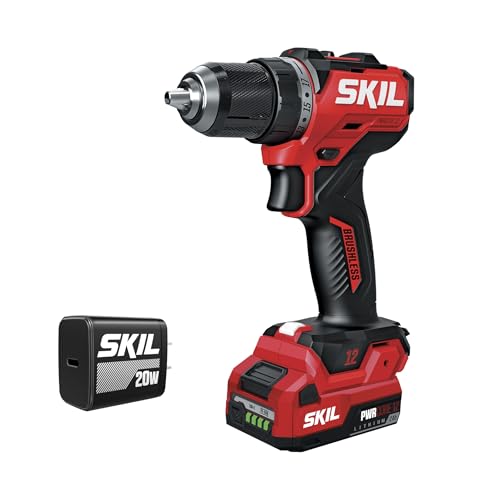
TL;DR: The SKIL 12V Compact Drill delivers 350 in‑lb torque, up to 1,700 RPM, and a lightweight 1.9 lb body for just $69.99, making it a nimble choice for DIY tasks.
What really sets this drill apart is its 350 in‑lb of max torque paired with a two‑speed range of 0‑450 RPM and 0‑1,700 RPM, all driven by a digital brushless motor. The 17+1 clutch positions give you fine control, while the 2.0 Ah lithium‑ion battery provides a solid run‑time for a 12 V tool.
Compared with the other eleven drills in the roundup, the SKIL is noticeably lighter at 1.9 lb versus the DeWalt DCD777B’s 2.5–2.9 lb and the Makita XFD13’s 3.1 lb. Its 6.06‑inch length is shorter than the Makita’s 6‑5/8 in and comparable to the Ryobi’s 6.4 in, helping it reach tighter spots. The tool’s height of 7.81 in sits just under the Milwaukee M18’s 7.95 in, while its width of 2.66 in is a bit wider than Milwaukee’s 2.2 in but narrower than the Ryobi’s 6.4 in. Torque-wise, the SKIL’s 350 in‑lb trails the DeWalt DCD777B’s 530 in‑lb and the Milwaukee’s 550 in‑lb, reflecting the trade‑off of its 12 V platform.
Reviewers consistently praise the ultra‑compact 6.06‑inch body and the feather‑light 1.9 lb feel, noting that the drill stays comfortable during extended use. The integrated LED with pre‑light and after‑glow earns marks for visibility in dim spaces, and the USB‑C port that can charge the battery or a phone adds a modern convenience. Professional reviewers highlight the solid performance for a 12 V tool, though they also point out that the power level stays the same as the previous generation, so heavy‑duty jobs may feel limited.
Beyond the core specs, the drill includes a reversible belt clip for easy carry, a 20 W PD charger, and a two‑way USB‑C charging system that can power other devices. The single‑sleeve keyless ratcheting chuck accepts 1/2‑inch bits, and the pre‑light/after‑glow LED helps you see the workpiece without extra lighting.
Pros
Cons
Best for: Entry‑level buyers or those on a tight budget — the SKIL 12V Compact Drill offers Clutch Settings: 17+1
Avoid if: You want the best value‑per‑dollar in its price range
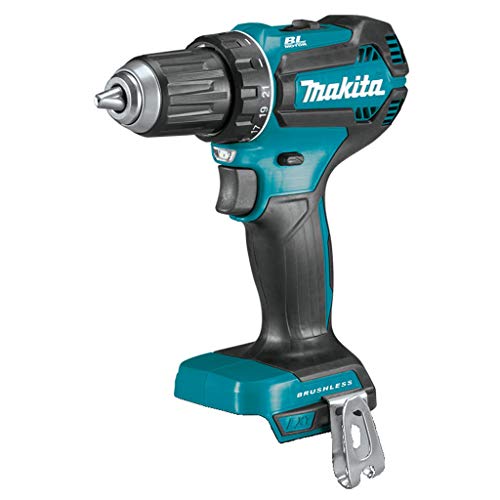
TL;DR: The Makita XFD13 packs 440 in·lb of torque into a 3.1‑lb, 6‑5/8‑in‑long brushless drill that reaches 1,900 RPM, making it a compact, high‑performance tool for tight‑space jobs.
What really stands out is the 440 in·lb of max torque delivered by a bare‑tool weighing just 3.1 lb. Combined with a 21‑position clutch and a no‑load speed range that tops out at 1,900 RPM, the XFD13 can punch through 1‑1/2 in wood and 1/2 in steel while still offering fine control for delicate fastening. Its all‑metal gear set and Makita‑built BL brushless motor promise durability on demanding job sites.
Compared with the other eleven drills in this roundup, the XFD13 sits in the middle of the weight band—lighter than the Kobalt 24‑V Max (4.0 lb) but a touch heavier than the SKIL 12 V Compact (1.9 lb) and Milwaukee M18 Compact (2.3 lb). Its 6‑5/8 in overall length is shorter than the DeWalt DCD777D1 (12.5 in) and DeWalt DCD777B (about 7.5 in front‑to‑back) while being a hair longer than the Milwaukee and SKIL models. The 21 clutch positions outnumber the 15‑position clutches on the DeWalt DCD777D1 and DCD794B, giving you more granularity than those tools. Torque-wise, the XFD13 exceeds the SKIL’s 350 in·lb but falls short of Milwaukee’s 550 in·lb and DeWalt DCD777B’s 530 in·lb, placing it solidly in the mid‑range of power. Its top speed of 1,900 RPM also beats the DeWalt DCD777D1’s 1,650 RPM and the Milwaukee’s 1,700 RPM.
User feedback repeatedly praises the XFD13’s compact footprint and the way the ergonomic soft grip feels during prolonged use. Professionals note that the brushless motor and metal gears hold up to daily abuse, and many appreciate the bright LED light for work in dim areas. Common complaints mention a touchy trigger at the high 1,900 RPM setting, which can require a learning curve for tiny screws, and the lack of an onboard battery‑level indicator, meaning you must rely on the battery pack’s display.
Pros
Cons
Best for: Most users seeking a balanced, mainstream option — the Makita XFD13 offers Chuck Size: 1/2 in
“Insanely compact—fits where full-size drills can't”
“Holds up to daily abuse; brushless means no burnt motors after years.”
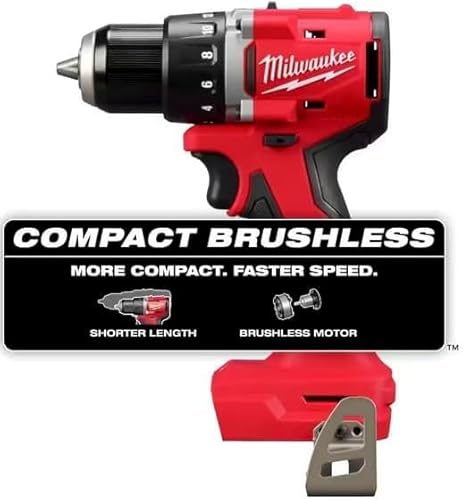
TL;DR: The Milwaukee M18 Compact 1‑inch Drill packs a 5.7‑inch length, 2.3 lb weight and 550 in‑lb of torque into a brushless, all‑metal package for tight‑space jobs, though it comes at a $101.99 price without a battery.
What really sets this drill apart is its ultra‑compact size: at just 5.7 inches long, 7.95 inches tall and 2.2 inches wide, it slides into cramped ceilings and tight corners that larger tools can’t reach. The 2.3 lb weight keeps it balanced in your hand, while the 550 in‑lb max torque and 1 700 RPM max speed give you enough power for most professional and DIY applications.
Compared with the other eleven drills in our roundup, the Milwaukee is noticeably smaller and lighter than the DeWalt DCD777D1 (2.82 lb) and the Makita XFD13 (3.1 lb), yet it isn’t as light as the SKIL 12V Compact (1.9 lb). Its height of 7.95 inches is shorter than the DeWalt DCD794B (8.39 in) and the DeWalt DCD777D1 (9.813 in), and its 2.2‑inch width is slimmer than the 3.32‑inch width of the DCD794B and the 3.75‑inch widths of several competitors. In short, it’s the most compact option among the mid‑range drills, though it carries a higher price tag than the budget‑focused SKIL.
Professional reviewers praise the drill’s “compact 5.7‑inch length” for superior control in confined spaces, and they note that the brushless motor paired with an all‑metal gear case promises durability on the job site. Consumer sentiment echoes the torque strength, but some users point out that torque numbers can appear inconsistent across similar Milwaukee models, which may cause confusion when comparing specs. The tool‑only package also means you’ll need to purchase an M18 battery separately, a trade‑off for those who already own Milwaukee batteries.
Beyond size and power, the drill features a metal 1/2‑inch chuck, REDLINK™ intelligence for overload protection and temperature monitoring, and a brushless motor that helps extend tool life. These details reinforce its positioning as a professional‑grade, compact workhorse.
Pros
Cons
Best for: Most users seeking a balanced, mainstream option — the Milwaukee M18 Compact 1‑inch Drill offers Chuck Size: 1/2 inch
Breakdown
DeWalt DCD777D1
Pros
SKIL 12V Compact Drill
Pros
Cons
DEWALT DCD996B
Pros
Cons

DEKO PRO 20V Cordless Drill
Pros
Cons
Based on scoring data and product specs
Personalized picks
Best Overall Pick
DeWalt DCD777D1
Best Mid-Range PickBest for: Most users looking for a well-reviewed, reliable mainstream option — the DeWalt DCD777D1 offers Chuck Size: 1/2-inch
SKIL 12V Compact Drill
Best for: Entry-level buyers or those on a tight budget — the SKIL 12V Compact Drill offers Clutch Settings: 17+1
$65.99-$23.11 vs winner
Skip Ryobi ONE+ HP Drill if…
You have limited desk space or need portability
The DeWalt DCD777D1 wins our roundup thanks to a blend of power, ergonomics, and value. It carries a 20 V brushless motor delivering 404 UWO, while the 15‑position clutch lets you fine‑tune torque for screws and bolts. Reviewers have given it a 4.7‑star rating from 2,060 users, and at $99.00 it undercuts many higher‑priced rivals without sacrificing performance.
The SKIL 12V Compact Drill lands as the runner‑up, perfect for cramped job sites or tight‑fit DIY projects. Weighing just 1.9 lb, it’s easy to maneuver, and its 17+1 clutch settings provide precise control. A digital brushless motor, USB‑C 60 W two‑way charging, and an LED with pre‑light and after‑glow keep you working in dim spaces.
Looking beyond the top two, the DEKO PRO 20V Cordless Drill offers the best budget entry at $27.54, delivering 20 V power for occasional home fixes. For professionals who need premium performance, the DEWALT DCD996B stands out at $239.00, packing higher output for heavy‑duty applications.
Pick the DeWalt DCD777D1 for a reliable, mid‑range drill that punches above its price tag.
It packs a 20 V brushless motor, a 2.0 Ah battery and a 1/2‑inch metal ratcheting chuck, all for under $100. The tool also includes an ergonomic grip, LED light with a 20‑second delay and a 2‑speed transmission, giving you features that usually appear on pricier models.
No reviews yet — be the first to share your experience.
Please sign in to leave a review