⚡ Quick Answer
We compared 10 action cameras that sit comfortably under $100, with prices ranging from $19.94 for the Vemont model up to $74.59 for the Nuisk Thumb. Despite the low price tags, several units boast strong community approval – the AKASO EK7000 holds a 4.4‑star rating from nearly 32 000 reviewers, while the ODDV scores 4.6 stars from 227 users.
The lineup splits into three price tiers. Budget‑friendly picks – Vemont, Xilecam, Jadfezy and Timnut – sit between $19.94 and $42.99 and include features like Xilecam’s 40000 mm waterproof depth and a 2.0‑inch screen on the Vemont cam. Mid‑range options, Polaroid and ODDV, hover around $49.99 and add larger displays or higher‑resolution sensors. Premium choices – AKASO, Intepoll, Sixmou and Nuisk – push toward $70‑plus, offering 4K video, extended battery life and deeper sub‑mersion ratings.
Below we break down each model’s specs, battery performance and accessory bundles so you can match a camera to your adventure style. Whether you’re chasing waves, cycling trails or capturing family moments, the guide will help you find a reliable cam without breaking the bank.

Xilecam Action Camera
Offers a 22 mm maximum focal length, delivering versatile framing for action shots.

AKASO EK7000
Ideal for buyers seeking a proven, high‑quality action cam; at $69.99 it’s about $49 more than the Xilecam, reflecting its broader brand confidence and strong review base.

Jadfezy Action Camera
Stands out with a 2‑hour battery life, giving more recording time than the AKASO’s 90‑minute claim while staying under $22.
Also considered
Score Analysis
Key score advantages vs. runner-up (AKASO EK7000)
Price Range
Xilecam Action Camera
$20.88
AKASO EK7000
$69.99
Jadfezy Action Camera
$21.99
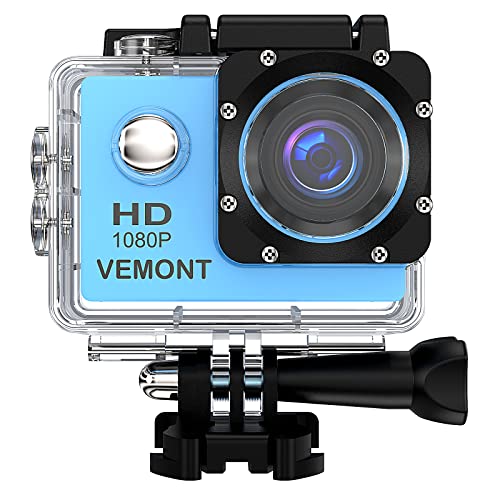
Vemont Action Camera
$19.94

Sixmou i3
$73.99

Polaroid IS048
$49.99

Nuisk Thumb Action Camera
$74.59

Timnut Action Camera
$44.99

Intepoll Mini Action Camera
$79.99

ODDV Action Camera
$49.99
Spec Comparison
TL;DR: The Xilecam X200 packs a 1080p/30fps sensor, a 50.8 mm screen and 40,000 mm waterproof rating into a feather‑light 45 g body for just $20.88.
The camera’s most eye‑catching spec is its waterproof depth of 40,000 mm (about 40 m), which lets you submerge it without an extra housing. It records 1080p video at 30 fps and offers a 22 mm maximum focal length, while the built‑in 50.8 mm screen lets you frame shots without a phone. Its compact chassis measures 25.4 mm × 76.2 mm × 50.8 mm, and at 45 g it’s notably lighter than many peers.
Compared with the other nine cameras in this budget roundup, the X200 is lighter than the Vemont and Jadfezy models (both around 58 g) and far lighter than the Timnut (about 458 g). Its length of 76.2 mm exceeds Vemont’s 40 mm depth, but the total footprint remains smaller than the bulkier ODDV and AKASO units. While its screen size matches the 50.8 mm dimension of the X200, several rivals list larger inch‑based screens, so the X200’s display feels modest but functional.
User sentiment repeatedly praises the camera’s ultra‑light form factor and the included accessories that reduce extra costs. Consumers also value the reliable 40 m waterproof claim, noting it holds up during snorkeling trips. Professional reviewers highlight that the X2 delivers acceptable 1080p video quality for its low price point, yet they also note significant frame‑rate drops at full resolution, prompting many to switch to lower settings for smoother footage. The two 900 mAh rechargeable batteries provide basic power, though reviewers mention the limited capacity as a trade‑off.
Pros
Cons
Best for: Casual adventure enthusiasts, water‑sports participants, budget‑conscious travel vloggers and cyclists who need a lightweight, waterproof camera.
Avoid if: You need professional‑grade performance, reliable full‑1080p frame rates, or extended battery life for long sessions.
“satisfied with this purchase for the price”
TL;DR: The AKASO EK7000 packs 4K video, 20 MP photos, a 30 m waterproof housing and a 2‑inch screen into a 74 g body for $69.99, making it a solid entry‑level action cam.
The camera’s headline spec is 4K video at 25‑30 fps paired with a 20 MP sensor and a fixed 170° field of view, displayed on a 2‑inch TN screen. Its waterproof housing lets you dive to 30 m, and the included remote gives wireless control up to 10 m (about 32 ft) away.
At 74 g, the EK7000 sits in the middle of the pack: it’s lighter than the Intepoll Mini (0.79 lb) yet heavier than the Xilecam (0.099 lb) and the ultra‑light Jadfezy (58 g). Battery life is 90 minutes per charge, matching the Intepoll Mini’s runtime but trailing the Timnut’s 240‑minute claim. These figures make the EK7000 a balanced choice for users who want a portable rig without the bulk of heavier models.
Users consistently praise the camera’s feather‑light cube design and the value‑packed accessories—remote, mounts and two batteries—that arrive out of the box. However, reviewers note that the 4K mode upscales footage, which can appear noisy in low light, and the base model lacks any form of image stabilization or a touchscreen for quick menu navigation. Reviewers describe the built‑in microphone as weak, so external audio capture may be necessary for clearer sound.
Beyond the headline specs, the EK7000 supports loop recording, time‑lapse intervals of 3 s, 5 s and 10 s, and offers micro HDMI and mini/micro USB ports for charging, storage and webcam use. With a 1050 mAh battery per pack and a 30‑minute Wi‑Fi range, it targets daylight adventures where you can swap batteries on the go.
Pros
Cons
Best for: Beginners, casual adventurers, and budget‑conscious users who need a lightweight, waterproof action cam with solid 4K capability.
Avoid if: You need professional‑grade video, low‑light performance, advanced stabilization, or a touchscreen interface.
“basic but functional with 'mediocre image quality' lacking EIS/touchscreen”
“good video stabilization in some tests despite no EIS on base model”
TL;DR: The Jadfezy Action Camera packs a 2‑inch screen, 10 m waterproof rating, 16 MP photos and 2 hours of use into a 58 g body for just $21.99.
This camera’s most eye‑catching spec is its ultra‑lightweight design at only 58 g paired with a 2.0‑inch LCD. It records up to 60 fps at 1080 p and 120 fps at 720 p, offers a 160° field of view, and can dive to 10 meters without an extra housing. The 900 mAh battery provides roughly 2 hours of continuous shooting, and the device supports microSD cards up to 64 GB.
Compared with the other nine contenders, Jadfezy sits in the middle of the weight range. It’s heavier than Xilecam’s 0.10 lb unit but about the same as Vemont’s 0.13 lb model, and far lighter than Timnut’s 1.01 lb camera. Battery capacity mirrors Vemont’s 900 mAh pack, yet it falls short of Timnut’s 1050 mAh and AKASO’s 1050 mAh cells. Its price point is lower than most peers, making it one of the most affordable options in the group.
Users repeatedly praise the low price, the tiny footprint, and the bundle of mounts that let you clip the camera on helmets or bikes in seconds. Professional reviewers, however, flag the advertised 1080 p claim as misleading, noting the sensor tops out at a lower resolution, which can disappoint when you expect full‑HD detail. Reviewers also note the battery cover feels flimsy, and they describe the companion app as under‑featured.
Beyond the basics, the camera carries an IP68 rating, works from –10 °C to +55 °C, and records in both MP4 and AVI formats. Loop recording lets you capture 2‑, 3‑ or 5‑minute clips, while time‑lapse modes offer intervals from 3 s to 20 s. These features round out a solid starter kit for casual outdoor shooting.
Pros
Cons
Best for: Entry‑level buyers or those on a tight budget who need a lightweight, waterproof action camera for casual outdoor activities.
Avoid if: You need advanced features, reliable full‑HD or 4K quality, or a rugged professional‑grade build.
“satisfied with this purchase for the price”
TL;DR: The Vemont Action Camera packs a 140° lens, 12 MP photos and 30 m waterproofing into a 58 g, $19.94 body, but its 1080p 30 fps video and lack of stabilization keep it in the entry‑level camp.
What really stands out is the 140° field of view paired with a 12 MP CMOS sensor, letting you capture wide‑angle scenes without breaking the bank. The camera records 1080P video at 30 fps and stores images on a micro‑SD card, while the included 2.0‑inch screen helps you frame each shot.
Compared with the nine other cameras in this roundup, the Vemont is among the lightest at 58 g, heavier than the Sixmou i3 but lighter than the Timnut, ODDV and Polaroid models. Its 900 mAh battery gives about 90 minutes of runtime – similar to Jadfezy’s single‑cell pack but far less than Xilecam’s dual‑cell setup. The 30 m waterproof rating (IP68) matches the AKASO EK7000’s depth rating, yet the Vemont lacks the larger 170° lenses found on Timnut and ODDV.
Users consistently praise the camera’s feather‑light chassis and the convenience of swapping the 900 mAh battery on the go. However, many note that footage feels shaky because the unit lacks image‑stabilization, and the 1080p 30 fps limit restricts fast‑action scenes. Reviews also mention accidental activation when the camera sits in a bag.
Pros
Cons
Best for: Shoppers on a tight budget who want the most for their money
Avoid if: You need 4K video, high frame‑rate capture, or built‑in stabilization for professional‑grade footage
“satisfied with this purchase for the price”
TL;DR: The Sixmou i3 packs 4K video, magnetic mounting and Wi‑Fi into a 35.7 g thumb‑sized body, but its 4K battery life tops out at about 90 minutes, making it best for short, discreet shoots.
The i3’s most eye‑catching spec is its ultra‑compact footprint: it measures just 63 mm tall, 28 mm wide and 18 mm thick, and it weighs only 35.7 g. That tiny chassis still houses a CMOS sensor with a f/2.8 aperture and can record 4K (3840×2160) MP4 video. The battery is 800 mAh, delivering up to 150 minutes at 1080p, 120 minutes at 2K and 90 minutes at full 4K resolution.
Compared with the other nine cameras in this roundup, the Sixmou i3 is significantly lighter than the AKASO EK7000 (74 g) and far lighter than the Nuisk Thumb (331 g). Its height of 63 mm also exceeds the Nuisk’s 55.9 mm, but it remains shorter than many bulkier models that top out near 70 mm. In terms of waterproof capability, the i3 matches the Nuisk and Timnut with a 40 m (131 ft) rating, while the ODDV and Polaroid models list similar depths.
Users consistently praise the camera’s “pocket‑sized” convenience and the magnetic mounting system that lets you snap it onto helmets, bikes or even a metal water bottle without extra tools. Professional reviewers note the “record while charging” feature, which can extend sessions when you’re near a power source. On the flip side, the same reviewers point out that the 4K battery endurance of roughly 90 minutes feels short for longer adventures, and reviewers describe the included waterproof case as fragile, raising durability concerns for high‑impact sports.
Additional technical details include an exposure compensation range of –2.0 to +2.0 EV, a 3‑minute loop recording length, AAC audio format and built‑in Wi‑Fi for app control. The camera ships with seven accessories, including a 360° rotating spring clip, giving you flexible mounting options without extra purchases.
Pros
Cons
Best for: Casual users who need an ultra‑discreet, hands‑free camera for low‑to‑moderate intensity activities.
Avoid if: You are an extreme‑sport enthusiast or require a highly durable, impact‑resistant cam for high‑speed, high‑impact activities.
TL;DR: The Polaroid IS048 offers a 2.4‑inch screen, 16 MP photos and 720p video in a feather‑light, waterproof body for just $49.99, making it a solid entry‑level action cam for casual use.
The camera’s 2.4‑inch LCD is the largest display among many budget rivals, and its 16 MP (4608×3456) sensor captures detailed stills despite the compact 34 mm × 34 mm × 34 mm chassis. A 4× digital zoom and f/3.0 aperture give you basic framing flexibility, while the built‑in flash helps in low‑light scenes. It's rated waterproof to 10 ft (3 m), letting you film poolside or on a rainy hike without a housing.
When you line it up with the other nine cameras, the IS048 is noticeably lighter at 0.4 lb (181 g) compared with the ODDV Action Camera’s 1.23 lb, making it easier to clip to a helmet or backpack strap. Its 2.4‑inch screen also beats the ODDV’s 2.0‑inch rear display, though the ODDV’s waterproof depth of 132 ft dwarfs Polaroid’s 10 ft rating. Compared with the AKASO EK7000, the Polaroid lacks a waterproof housing that reaches 30 m, and its digital‑only zoom falls short of AKASO’s more robust accessories bundle.
Reviewers consistently praise the camera’s pocket‑size portability and the fact that it runs on 2 × AAA alkaline batteries, which keeps it cheap to power. However, users note that the AAA cells drain quickly, leading to frequent replacements. The 720p video limit and the quality loss when using the 4× digital zoom are common complaints, especially from those who expect Full HD or 4K footage. Professional reviewers highlight the decent 16 MP sensor and the generous 2.4‑inch screen as standout points for the price.
Pros
Cons
Best for: Value-conscious buyers seeking quality at $49.99
Avoid if: You need Full HD/4K video, extensive low‑light performance, or a longer‑lasting rechargeable battery
TL;DR: The Nuisk Thumb Action Camera packs 4K/30 fps video, dual front‑and‑rear screens and IPX7 waterproofing into a 0.73‑lb, thumb‑sized body for under $75.
What really sets this cam apart is its 4K video at 30 FPS recorded with an H.265 codec and a bright f/2.8 aperture on a 30 mm lens. The dual‑screen layout lets you frame shots from either side without turning the unit, and the magnetic hanging mount adds a hands‑free option that many rivals lack. At 55.9 mm high, 17.8 mm long and 27.9 mm wide, it fits comfortably on a bike helmet or wrist strap while weighing about 0.73 lb.
Compared with the other nine cameras in this budget roundup, the Nuisk is heavier than the ultra‑light Sixmou i3 (≈0.08 lb) and AKASO EK7000 (≈0.13 lb), but lighter than the ODDV model (≈1.23 lb) and Timnut (≈1.01 lb). Its waterproof rating of 40 m matches Sixmou i3 and ODDV, and exceeds the Jadfezy’s 10 m limit. None of the peers list dual screens, so Nuisk’s front‑and‑back displays give it a clear advantage for vloggers. Storage‑wise, it ships with 128 GB built‑in and supports up to 256 GB microSD, outpacing the Polaroid’s 32 GB cap and matching the Intepoll’s limits.
Everyday users repeatedly praise the camera’s pocket‑size portability and the crisp 4K footage when lighting is good, echoing professional reviewers who highlight the f/2.8 aperture and dual screens as “ideal for POV shots.” Common complaints focus on video softness in low‑light situations, the absence of advanced stabilization, and the limited frame‑rate options beyond 30 FPS. The manufacturer‑listed fast Wi‑Fi pairing and loop recording keep recording seamless, while a 2 A/5 V charge rate keeps the battery topped up quickly.
Technical notes: the unit records 3840×2160 photos and video, uses MP4 format, and includes ten accessories out of the box, such as a magnetic mount and rotating clip. Loop recording automatically overwrites the oldest files when the storage fills, and the IPX7 rating (30 m) plus a dedicated waterproof case let you dive to 40 m.
Pros
Cons
Best for: Adventure enthusiasts, vloggers and travelers who value 4K quality, dual screens and rugged mounting in a compact package.
Avoid if: You're shopping on a tight budget — it’s priced at $74.59.
“satisfied with this purchase for the price”
TL;DR: The Timnut 16‑pro shoots 4K / 30 fps video, 20 MP stills and offers 240 minutes of continuous recording with dual 1050 mAh batteries, all for $42.99.
The camera’s 170° field of view and 3‑axis electronic image stabilization give you a wide, steadier perspective, while the 20 MP sensor delivers sharp stills. Dual 1050 mAh batteries provide up to 240 minutes of continuous use, and the bundled 64 GB microSD card lets you start recording right out of the box. It’s also waterproof to 40 m (131 ft) and includes a remote‑control, helmet mount and external‑mic input.
Compared with the other nine models, Timnut sits in the middle of the weight range: it’s lighter than the ODDV’s 559 g and the Intepoll’s 358 g, but noticeably heavier than ultra‑light options like Jadfezy, Xilecam, Vemont and Sixmou, which weigh under 60 g. Its 240‑minute battery life outlasts most peers—Jadfezy offers about 120 minutes, Vemont and AKASO around 90 minutes, and Intepoll also caps at 90 minutes. The 170° view matches ODDV’s wide angle and exceeds Vemont’s 140°, while the 20 MP photo resolution sits between ODDV’s 30 MP and the lower 16 MP and 12 MP of several competitors.
Users appreciate the “plug‑and‑play” simplicity, the long runtime from the dual batteries, and the value of the included accessories, especially the waterproof housing that lives up to its 40 m rating. Professional reviewers note the clear 4K/30 fps footage and the usefulness of the external microphone port for vlogging. Common complaints focus on the fisheye distortion from the wide lens and the fact that 4K is limited to 30 fps, which may feel restrictive for fast‑action shooting. Those who favor feather‑light cams also mention the heavier build.
Pros
Cons
Best for: Entry‑level buyers or those on a tight budget
Avoid if: You want the best value‑per‑dollar in its price range
“satisfied with this purchase for the price”
TL;DR: The Intepoll Mini Action Camera packs 4K video, a built‑in 128 GB card and magnetic mounts into a thumb‑sized, IPX7‑rated body for $71.99, but its 90‑minute battery limits long shoots.
The standout spec is the pre‑installed 128 GB microSD card, giving you plenty of space straight out of the box while the 4K UHD (2160p) video records at 30 FPS with electronic stabilization. A 1‑in screen lets you frame shots on the go, and the magnetic body design means you can snap the cam onto helmets, bikes, pets or a wrist strap without extra hardware.
Compared with the other nine cameras in this roundup, the Intepoll is heavier than ultra‑light options like the AKASO EK7000 (0.125 lb) and Sixmou i3 (0.078 lb), yet it stays lighter than bulkier models such as the ODDV Action Camera (1.23 lb) and Timnut Action Camera (1.01 lb). Its 1400 mAh battery capacity outpaces the 1050 mAh cells in the AKASO EK7000 and the 800 mAh pack in the Sixmou i3, though the actual runtime is limited to about 90 minutes of continuous 4K recording. The 1‑in display is more compact than the 2‑in screen on the AKASO EK7000 and the larger 1.4‑in front screen of the ODDV, which may feel cramped for detailed framing. On storage, the included 128 GB card beats the 64 GB built‑in memory of the ODDV and far exceeds the 32 GB limit of the Polaroid IS048.
User sentiment highlights the camera’s tiny form factor and magnetic accessories as highly convenient for hands‑free mounting, while reviewers praise the IPX7 rating for reliable protection during rain or shallow dives. Professional reviewers note the solid 4K quality at f/1 and the convenience of Wi‑Fi app control and webcam mode for vloggers. Common complaints focus on the short 90‑minute battery life and the modest 1‑in screen, which can make menu navigation feel fiddly.
Pros
Cons
Best for: Casual outdoor enthusiasts, vloggers, cyclists, hikers, pet owners, and anyone who values a tiny, magnetic‑mount camera with built‑in storage.
Avoid if: You need long battery runtime, higher frame‑rate options, or professional‑grade features.
“satisfied with this purchase for the price”
TL;LR: The ODDV Action Camera delivers 4K 60fps video, 30 MP photos and a dual‑screen layout for $49.99, packing a 132‑ft waterproof rating into a compact, 1.23 lb body.
The standout spec is its 30 MP photo resolution paired with 4K video at 60 fps, a combination rarely seen under $50. It also sports a 1.4‑inch front LCD and a 2.0‑inch rear touch screen, letting you frame shots from any angle without digging for controls.
Compared with the other nine cameras, ODDV sits at a similar price point to the Polaroid IS048 ($49.99) but weighs more than the Polaroid (0.4 lb) and the Timnut (≈1.01 lb). Its 30 MP sensor outstrips Polaroid’s 16 MP and Timnut’s 20 MP, while the 170° field of view matches Timnut’s offering. The waterproof depth of 132 ft (40.2 m) exceeds the Timnut’s 131 ft rating and far surpasses the shallow 10‑meter rating of the Jadfezy model.
Consumer sentiment highlights the solid waterproof performance and the generous 64 GB memory card that reduces early upgrades. Professional reviewers praise the crisp 4K 60fps footage, yet note that the six‑axis electronic image stabilization requires turning off for that high‑resolution mode, limiting smooth capture at the top setting. The 5× digital zoom also draws criticism for noticeable softness, a typical trade‑off of digital enlargement.
Pros
Cons
Best for: Adventure‑sport enthusiasts and water‑activity lovers who want high‑resolution video and photos without breaking the bank.
Avoid if: You need simultaneous 4K 60fps recording with image stabilization or require optical zoom capabilities.
“satisfied with this purchase for the price”
Breakdown
Xilecam Action Camera
Pros
Cons
AKASO EK7000
Pros
Jadfezy Action Camera
Pros
Vemont Action Camera
Pros
Cons
Based on scoring data and product specs
Personalized picks
Best Overall Pick
Xilecam Action Camera
Best OverallBest for: Users with specific technical requirements or compatibility needs
AKASO EK7000
Best for: Buyers willing to invest in a proven, high-quality option
$69.99+$49.11 vs winner
Skip ODDV Action Camera if…
You prefer products with extensive real-world feedback and proven track records
Our top pick is the Xilecam Action Camera. At just $20.88 it delivers 1080p video at 30 fps, a solid 3.9‑star rating from 802 reviewers, and a truly rugged waterproof rating of 40 000 mm. We also like its lightweight build at 45 g and dual 900 mAh rechargeable batteries that keep you shooting longer without breaking the bank.
The runner‑up is the AKASO EK7000, ideal if you need higher‑resolution footage and extra accessories. Priced at $69.99 it records 4K video at up to 30 fps, ships with two batteries offering about 90 minutes of runtime each, and includes a wireless wrist remote plus mounts and a waterproof housing for dives to 30 m.
For other buying personas, consider the Vemont Action Camera as the best budget alternative at $19.94, offering the lowest entry price in the lineup. The Polaroid IS048 stands out as the best mid‑range choice at $49.99, balancing cost with a reputable brand name. If you’re willing to stretch for premium features, the Nuisk Thumb Action Camera at $74.59 provides the highest price among the budget‑friendly picks.
Pick the Xilecam today and get a capable, ultra‑affordable action cam that covers the basics without compromise.
The Xilecam Action Camera stands out as the best value, priced at just $20.88 while still offering 1080p video, a f/2 aperture, and a waterproof rating of 40 m. Its low price and solid feature set make it a strong choice for most casual shooters.
No reviews yet — be the first to share your experience.
Please sign in to leave a review