⚡ Quick Answer
When it comes to sanding large, flat surfaces, a belt sander can shave hours off a project. We compared 10 models that span the full price spectrum—from the $35.08 entry‑level WEN 6307 up to the $143.98 Bucktool BD4603—so you can see how a budget, mid‑range or premium tool stacks up against the competition.
Among the budget choices, the WEN 6307 stands out with a 4.6/5 rating from 6,200 reviewers, while the mid‑range EX Electronix Express Mini offers a solid 4.4/5 score at $69.99 and a belt speed of 3,260 FPM. Premium options like the Craftsman CMEW213 ($89.00) and the Bucktool combo ($143.98) bring heavier builds and higher amperage. The SKIL 7510, priced at $63.98, carries a 4.5/5 rating from 4,507 users and boasts a 1,050 SFPM no‑load speed plus an auto‑track belt system—features that usually appear on pricier units.
Below, we break down each model’s strengths, weaknesses, and ideal use cases so you can match the right sander to your workshop and budget.

SKIL 7510 Belt Sander
Its compact 5.75 in height keeps the tool easy to control, making it a solid choice for DIY hobbyists looking for an affordable sander.

Craftsman CMEW213
Its larger belt width and higher motor output let you handle tougher jobs, and it costs about $25 more than the SKIL 7510.
Bucktool BD4603
Its 2161 FPM belt speed and 0°‑90° table tilt let you tackle precise sanding tasks the SKIL and Craftsman models don’t target.
Also considered
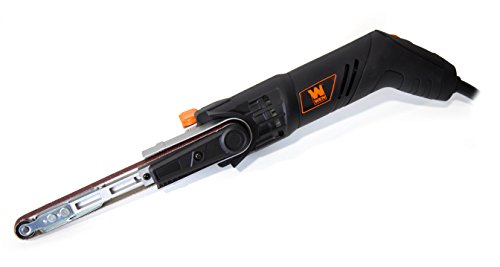
TL;DR: The WEN 6307 delivers a 55‑degree pivoting 1/2‑by‑18‑inch belt with auto‑tracking, variable speed (1080‑1800 FPM) and a feather‑light 2.4‑lb build, all for a budget‑friendly price.
What really sets this sander apart is its 55‑degree pivot angle and a 1/2 × 18‑inch belt that can be installed without tools. The auto‑tracking system keeps the belt centered, while the variable‑speed dial lets you dial in anywhere between 1080 and 1800 FPM, matching the demands of light woodwork or automotive detail work. A 2‑amp motor runs on standard 120‑volt power, and the included dust‑port attachment helps keep the workspace clean.
At just 2.4 lb, the 6307 is markedly lighter than the WEN 6321 (6.2 lb) and the SKIL 7510 (around 5.5 lb), making it easy to maneuver in cramped areas. Its overall length of 17.5 in is longer than the 12‑in bodies of those same rivals, giving a bit more sanding reach without sacrificing compactness. The 6‑foot cord matches the cord length of the other models, so you won’t feel short‑changed on power reach.
Reviewers consistently highlight how the auto‑tracking and tool‑free belt changes simplify jobs in tight engine bays or small woodworking projects. Professional reviewers note the convenience of the variable speed and dust‑port, but they also point out that the 2‑amp motor can bog down on tougher metals, limiting the tool to light sanding and deburring tasks. Everyday users echo this sentiment, praising the sander’s ease of use and value while warning that it isn’t built for aggressive material removal.
Pros
Cons
Best for: Budget-conscious buyers seeking a reliable entry-level option — the WEN 6307 offers Pivot Angle: 55 degrees
Avoid if: You need advanced features or professional‑grade performance
“it will remove steel... but not at a super powerful pace”
“cheap tool that... works a lot better than I had thought”
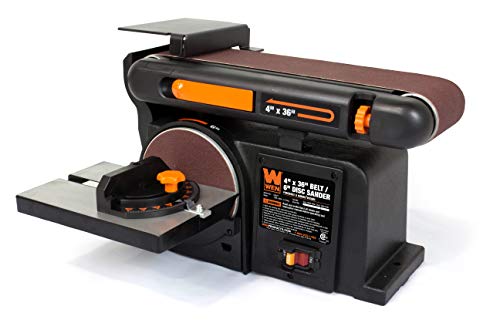
TL;DR: The WEN 6502T 36‑inch benchtop belt and disc sander packs a 4 × 36‑inch tilting belt, cast‑iron stability and a 1/2 HP motor for $139, making it a solid choice for hobbyist woodworkers.
What really sets this unit apart is the 0° to 90° belt‑bed tilt combined with a 4 × 36‑inch belt and a 6‑inch disc, all anchored to a cast‑iron base. The motor runs on 120 V, 60 Hz power at 4.3 A, delivering a respectable 1/2 HP output and a belt speed of 1900 FPM, while the disc spins at 3600 RPM. Its dimensions—12.5 inches high, 22.0 inches long, 11.0 inches wide—and a 41‑lb weight give it a sturdy, stationary feel on a workbench.
Compared with the other nine sanders in this roundup, the WEN 6502T is noticeably heavier than the lightweight SKIL 7510 (around 6 lb) and the compact WEN 6515T (16 lb). Its belt speed of 1900 FPM is also slower than the 3160 FPM found on the smaller WEN 6515T, but the 0°‑90° tilt range matches the Bucktool BD4603’s tilt capability, giving it comparable versatility for bevel work. The 2.25‑inch dust port is larger than the 1‑¾‑inch port on the EX Electronix Mini, though the unit lacks an integrated dust‑collection system.
Users consistently rate the sander 4.6 / 5 stars across 5,381 reviews, praising the dual sanding options and the reliable power of the 4.3 A motor. Professional reviewers highlight the cast‑iron base for minimizing vibration and the quick‑release tension lever for easier belt changes. On the flip side, many owners note that belt tracking can be finicky and that the belt‑removal process involves loosening three Phillips‑head bolts, which feels cumbersome. The 12.5‑inch table height limits the maximum workpiece thickness to roughly 9 inches, a point frequently mentioned by hobbyists.
From a technical standpoint, the sander is UL listed and comes with an 80‑grit belt and a miter gauge right out of the box. Its single 2.25‑inch dust port and 6‑foot cord give you enough reach for most bench‑top setups, while the non‑variable speed means you’ll operate at a fixed 1900 FPM minimum and 3600 OPM maximum. The inclusion of a quick tension release lever and a tracking knob adds a touch of convenience that many competitors lack.
Pros
Cons
Best for: Buyers willing to invest in a proven, high‑quality option — the WEN 6502T 36‑inch offers Belt Speed: 1900 FPM
Avoid if: You're shopping on a tight budget — it's priced at $139.00
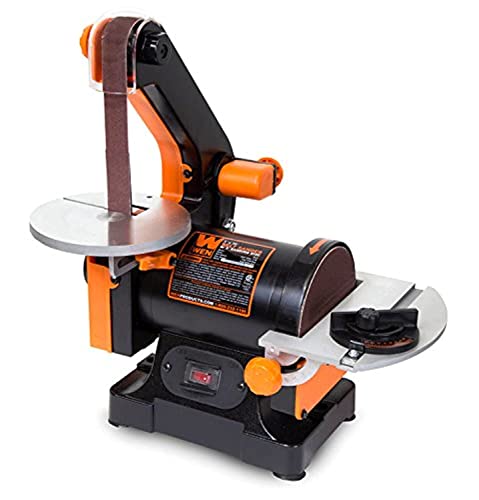
TL;DR: The WEN 6515T delivers a 1 × 30‑inch belt and 5‑inch disc at 3160 FPM, packed in a 16‑lb cast‑aluminum frame for solid, entry‑level sanding power.
What really stands out is the belt speed of 3160 FPM, paired with a 1 × 30‑inch belt and a 5‑inch sanding disc. The base is cast aluminum, which helps keep vibration down, and the unit measures 14 in L × 11.5 in W × 15.5 in H, making it compact enough for a small workshop.
Compared with the other nine sanders, the 6515T is heavier than the SKIL 7510’s roughly 5.5‑pound chassis but considerably lighter than the WEN 6502T’s 41‑pound bench model. Its belt speed dwarfs the Craftsman CMEW213’s 800 FPM and even exceeds the EX Express Mini’s 3260 FPM, while the disc speed of 3450 RPM sits comfortably above the SKIL’s 1050 SFPM rating. Lengthwise, its 14‑inch footprint is almost identical to the Craftsman’s 14.37 in, yet its overall height of 15.5 in is taller than the 5.64‑inch profile of that same model.
Users consistently praise the fast material removal, noting that the high belt speed makes quick work of stock removal on wood and lumber. The dual dust ports (1.7 in outer × 1.5 in inner for the belt, 2.25 in outer × 2 in inner for the disc) are highlighted for keeping the workspace cleaner, especially when hooked to a shop vac. On the downside, reviewers point out the plastic belt housing feels less rugged than metal alternatives, and the lack of variable speed control limits fine‑tuning for delicate softwoods. Professional reviewers also mention the 2.3 A motor provides enough power for hobby‑level tasks but may struggle under heavy‑duty production loads.
Pros
Cons
Best for: Buyers willing to invest in a proven, high‑quality option — the WEN 6515T 30‑inch offers Belt Speed: 3160 FPM
Avoid if: You need advanced features or professional‑grade performance
“Super easy to set up and belt changes are a breeze”
“Great for small projects like knife making or trim—removes material fast without bogging down”
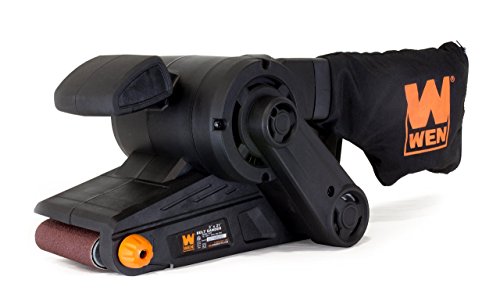
TL;DR: The WEN 6321 offers a 3‑by‑21‑inch belt, 7‑amp motor, and 820 FPM speed at a budget‑friendly $38.79, making it a solid entry‑level sander for light woodworking projects.
The WEN 6321’s standout spec is its 7 Amp motor driving a fixed 820 FPM belt speed on a 3 in × 21 in. sanding surface. At 6.2 pounds, the unit balances power and portability, and its compact 6.5 in × 12.0 in × 6.0 in footprint fits comfortably on a standard workbench. A 6‑foot cord keeps you tethered without excessive reach, while the 120 V, 60 Hz power supply matches typical household outlets.
Compared with the other nine belt sanders in this roundup, the 6321 is heavier than the ultra‑light WEN 6307, which weighs just 2.4 pounds, but still lighter than the Jellas 3 × 21‑Inch model that tips the scales at 9.6 pounds. It’s a touch heavier than the SKIL 7510 (around 5.5 pounds) and marginally shorter than that SKIL’s 12.25‑inch length, though its height of 6.5 inches exceeds the SKIL’s 5.75 inches and its width of 6.0 inches is a shade narrower than SKIL’s 6.25 inches. The SKIL’s listed belt speed of 1050 SFPM outpaces the WEN’s 820 FPM, while the Jellas models feature broader widths (13.3 inches and 13.4 inches) versus the WEN’s 6.0 inches. All three share a 6‑foot cord, putting the 6321 on equal footing for reach.
User sentiment repeatedly praises the 6321’s value proposition: reviewers note the lightweight feel reduces fatigue during extended sanding, and the 7 Amp motor handles light‑to‑moderate woodwork and paint stripping without strain. The detachable dust bag is highlighted as a convenient way to keep debris contained, though several users point out that the dust collection isn’t as robust as vacuum‑ported systems on higher‑priced rivals. Professional reviewers echo these points, calling the fixed 820 FPM speed a limitation for delicate materials and describing the housing as bulkier than more ergonomically tuned competitors.
Additional technical context includes an ETL safety listing, a lock‑in safety trigger for controlled operation, and a two‑year manufacturer warranty. The motor type is listed as standard (non‑brushless), and the unit ships with a detachable dust bag as its sole accessory.
Pros
Cons
Best for: Budget-conscious buyers seeking a reliable entry-level option — the WEN 6321 Belt Sander offers Belt Speed: 820 FPM
Avoid if: Precision or high‑volume industrial applications, heavy professional use, and tasks requiring variable speed control are your top priorities
“great economical option”
“gets the job done well for the price point”
TL;DR: The Craftsman CMEW213 delivers a 3‑in. × 21‑in. belt at a fixed 800 FPM with a 7‑amp brushed motor, offering solid dust collection and tool‑free belt changes for a modest $89 price.
This model’s standout spec is the 3 in. × 21 in. angled belt paired with a 7 A motor that runs at a fixed 800 FPM. The angled design lets the belt hug corners and edges, while the 5.64 in. height keeps the unit compact enough for tight workspaces. A 6‑ft cord supplies power at 120 V, and the on‑board dust bag helps keep debris off the floor.
Compared with the other nine sanders in the roundup, the CMEW213 sits in the middle of the weight range—lighter than the 16‑lb WEN 6515T but a touch heavier than the 6.2‑lb WEN 6321 and the 6.4‑lb SKIL 7510. Its 800 FPM speed is slower than the 3,160 FPM of the WEN 6515T and the 3,260 FPM of the EX Electronix Mini, yet it’s comparable to the 820 FPM of the WEN 6321. The 6‑ft cord is shorter than the 10‑ft cord on the Jellas 3x21, which some users note may require an extension for larger jobs.
Reviewers consistently praise the fixed‑speed belt for quickly removing material on wood, seams, or paint stripping, and they highlight the angled belt’s ability to reach tight corners. Professional reviewers also commend the tool‑free lever for belt changes and the integrated dust bag for cleaner operation. However, the lack of variable speed control is mentioned as a drawback for finer finishing work.
Additional technical details include a two‑position belt cover, a knob that lets you keep the belt tracking between 7/64 in. and 13/64 in., and a 3‑position over‑molded handle that adds comfort during extended use. The brushed motor design is noted as less efficient over the long term compared with brushless alternatives.
Pros
Cons
Best for: DIYers and light‑professional woodworkers who need quick stock removal — the Craftsman CMEW213 offers Amperage: 7 A
Avoid if: you require variable speed control or precision finishing work
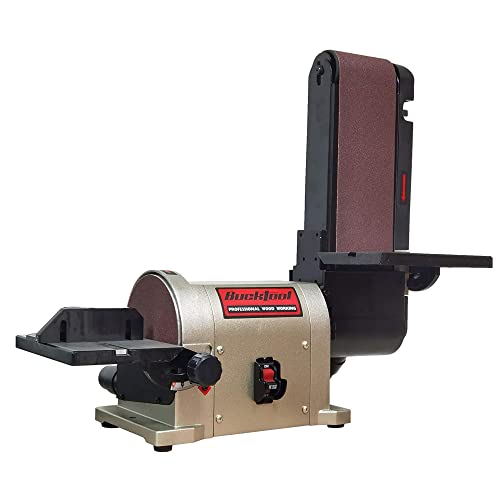
TL;DR: The Bucktool BD4603 delivers industrial‑grade power with a 3/4 HP direct‑drive motor, 4 × 36 in belt, 6 in disc, and 25 % efficiency boost, all for $143.98.
The standout feature is its direct‑drive 3/4 HP fully enclosed induction motor, which the manufacturer claims provides a 25 % efficiency increase over traditional belt sanders. Coupled with a belt speed of 2161 FPM and a 4 × 36 in belt, the unit tackles demanding sanding tasks while keeping the belt tracking adjustable.
At 35.5 lb, the BD4603 is considerably heavier than the SKIL 7510, which weighs about 5.5 lb, yet lighter than the WEN 6502T that tips the scales at 41 lb. Its belt speed outpaces the WEN 6502T’s 1900 FPM but sits below the WEN 6515T’s 3160 FPM, placing it solidly in the mid‑range for performance. The 6 in disc matches many bench‑top models, though it’s smaller than the 8 in discs found on some industrial units.
Customers frequently praise the easy setup, the “strong motor performance” for woodworking projects, and the value of receiving an 80‑grit belt right out of the box. A recurring note is that the dust port sometimes requires an adapter to fit standard shop vacuums, and a few reviewers mention that the overall build feels basic compared with heavier‑duty competitors.
Additional technical details include a belt table tilt range of 0°‑90°, a disc table tilt range of 0°‑45°, quick‑release belt replacement, separate dust‑collection ports for belt and disc, and CSA certification for safety compliance. The unit is maintenance‑free and comes with a cast‑aluminum base and rubber feet for stability.
Pros
Cons
Best for: Hobbyist woodworkers and light‑shop professionals who need a powerful combo sander with a 4 × 36 in belt and 6 in disc.
Avoid if: You require a larger disc for extensive flat‑surface sanding or a lighter, budget‑focused unit.
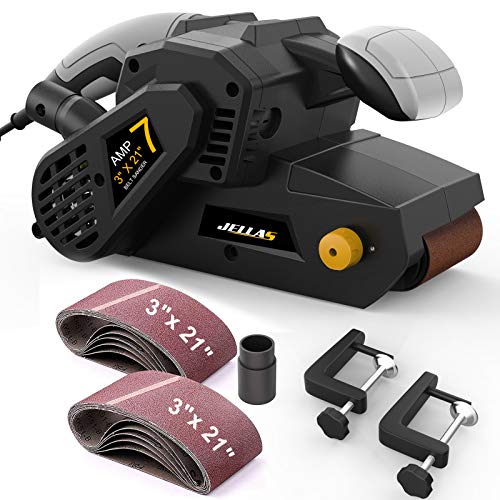
TL;DR: The Jellas 3 × 21‑Inch Belt Sander packs a 7 Amp motor, variable‑speed control and a full set of sanding belts for $69.98, but its 9.6‑lb weight can tire you out on long handheld jobs.
This sander’s most eye‑catching spec is the 7 Amp motor paired with a 120‑400 rpm speed range, which professional reviewers say handles heavy stock removal comfortably. The included quick‑release lever makes belt swaps straightforward, and the six‑dial speed control lets you dial in the right RPM for everything from rough shaping to fine finish work. At 6.2 inches high, 5.8 inches long and 13.3 inches wide, the unit sits on a benchtop or can be handheld, and the 10‑foot cord gives you plenty of reach without an extension cord.
Compared with the other nine belt sanders in this roundup, the Jellas sits toward the heavier end – it weighs 9.6 pounds, which is noticeably more than the SKIL 7510 and the WEN 6321 models, but lighter than the EX Electronix Express Mini that tips the scales at over 12 pounds. Its price matches the budget tier, so you’ll find it similarly priced to the EX Electronix but offering a larger 3 × 21‑inch sanding area that the smaller‑belt competitors lack.
Customers repeatedly praise the value of the ten‑piece belt set (P40‑P180) that comes pre‑installed, noting that it saves a trip to the hardware store. The detachable dust bag and 2‑in‑1 vacuum adapter also earn kudos for keeping the workshop cleaner. On the flip side, users flag the 9.6‑lb weight as a fatigue factor during extended handheld sanding, and the manual belt‑tracking knob sometimes needs readjustment after a few minutes of use, a point echoed by expert reviewers.
Pros
Cons
Best for: Budget‑conscious buyers seeking a reliable entry‑level option — the Jellas 3 × 21‑Inch Belt Sander offers Belt Size: 3 × 21 inches
“great deal compared to Harbor Freight's Bauer model due to included belts”
“heavy-duty cord, easy belt swap, and dual-use mounting as standout”
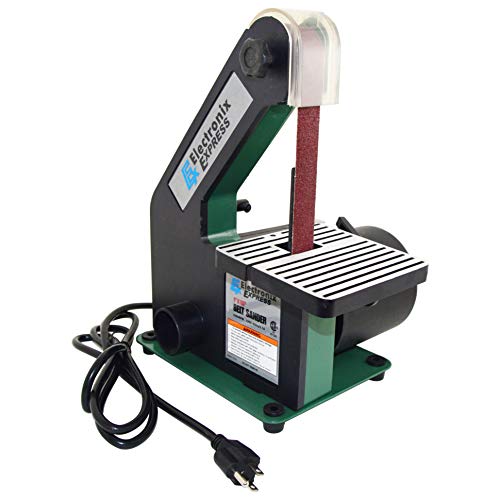
TL;DR: The EX Electronix Express Mini Belt Sander packs a 1/3 HP motor, 3400 RPM spin and 3260 FPM belt speed into a die‑cast aluminum, 12.25‑lb benchtop tool that’s solid for hobby‑level projects.
This sander’s most distinctive spec is its 3400 RPM motor paired with a 3260 FPM belt speed, delivering brisk material removal on a 1 × 30 inch belt. The die‑cast aluminum housing adds stability, while a variable‑speed dial lets you dial back for finer finishes. A 0°‑to‑45° tilting work table expands the range of angles you can sand without repositioning the workpiece.
Compared with the nine other belt sanders in this roundup, the EX model is noticeably heavier at 12.25 pounds—roughly double the 5.5‑pound SKIL 7510 and a couple of pounds more than the Jellas units that sit around 9.6‑9.7 pounds. Its 14.5‑inch length and 10‑inch width also give it a larger footprint than the compact SKIL or WEN 6307, which measures under 6 inches in length. While the price point aligns with the similarly priced Jellas models, the EX sander offers a higher‑speed motor and a sturdier aluminum build than many of the lighter, budget‑oriented competitors.
Reviewers consistently praise the tool’s reliable performance for hobbyists and small‑shop woodworkers. Users highlight the consistent belt speed and the convenience of the removable back plate for quick belt changes. The most common critique points to the modest 5 × 5 inch work table, which can feel cramped for larger stock, and the corded design that ties you to an outlet. Professional reviewers note that the variable speed and tilting table are features usually reserved for pricier models, making this a solid value in the mid‑range segment.
Additional technical touches include a 1‑3/4 inch vacuum port for dust extraction and rubber‑footed vibration damping that helps keep the unit steady on a workbench. The 3.0 AMP draw and 360‑Watt power consumption sit comfortably within typical workshop circuits, and the 120 VAC requirement matches standard North American outlets.
Pros
Cons
Best for: Most users looking for a well‑reviewed, reliable mainstream option — the EX Electronix Express Mini Belt Sander offers Amperage: 3.0 AMP
TL;DR: The Jellas 3×21 in Belt Sander packs a 7 Amp motor, 400 rpm max speed and a 10‑ft cord for versatile handheld or bench use, but its $69.99 price is higher than many entry‑level options.
What really stands out is the 7 Amp motor paired with a variable‑speed knob that lets you dial the belt between 120 rpm and the top 400 rpm. At a belt speed of 13 feet per second, the tool can remove material quickly while still giving you control for finer work.
Compared with the nine other sanders in this roundup, the Jellas is heavier than the SKIL 7510 and WEN 6307, yet lighter than the EX Electronix mini model. Its 10‑ft power cord is longer than the SKIL’s 6‑ft lead, giving you more reach on larger projects. While the price matches the EX Electronix, it sits above the budget‑focused WEN 6321, which costs less but offers fewer accessories.
Everyday users often praise the easy setup: the included metal C‑clamps make the bench conversion straightforward, and the 10‑piece aluminum‑oxide belt set covers a wide range of grits. Reviewers also note the ergonomic two‑handed grip and lock‑on trigger make prolonged sanding comfortable. Professional reviewers highlight the motor’s ability to handle heavy stock removal, though some mention the need to tweak belt tension for optimal tracking.
Pros
Cons
Best for: Most users looking for a well‑reviewed, reliable mainstream option — the Jellas 3x21 Belt Sander offers Motor Power: 7 Amp
TL;DR: The SKIL 7510 delivers industrial‑grade 6 A power and a patented auto‑track belt system at $63.98, making it a lightweight (6.4 lb) yet capable choice for DIY woodworkers.
The standout spec is its 1050 SFPM no‑load belt speed paired with a 6 A motor, giving you fast material removal on a 3 × 18‑inch belt. An LED pressure‑control indicator (green for optimal, red for excess) lets you see at a glance whether you’re applying too much force, while the quick‑release lever speeds belt changes. The unit’s dimensions—5.75 in tall, 12.25 in long, and 6.25 in wide—keep it compact enough for tight‑corner sanding, and the 6 ft cord gives decent reach without being a tripping hazard.
Compared with the nine other belt sanders in this roundup, the SKIL sits near the middle of the weight range: it’s lighter than the Jellas 3 × 21‑Inch model (≈9.6 lb) and the EX Electronix Express Mini (≈12.25 lb), yet heavier than the ultra‑light WEN 6307 (≈2.4 lb). Its 6 ft cord matches the WEN 6321 but is shorter than the Jellas 3x21 that offers a 10‑ft cord. Price‑wise, it lands below many of the higher‑priced competitors while still packing features like a micro‑filter canister dust collection system that many peers only list as a detachable bag.
Users consistently praise the auto‑track belt alignment for keeping the belt centered without constant manual tweaking, and the pressure‑control LED for preventing over‑pressuring the workpiece. Reviewers also note the micro‑filter canister does a solid job of catching fine dust, especially when paired with a 1‑1/4 in vacuum hose. On the downside, the fixed 1050 SFPM speed means you can’t dial back for delicate finishing, and the quick‑release lever can feel finicky when dust builds up. Some owners mention the red‑light warning trips too easily if you’re used to applying heavier pressure.
Technical details worth highlighting include the flush‑edge sanding capability, which lets you sand right up to corners, and the fact that the belt alignment system is patented, offering a level of reliability you don’t see on many budget models. The unit runs on 120 V mains power at 60 Hz, drawing 6 A, and its 720 W rating ensures enough torque for most DIY projects without overheating.
Pros
Cons
Best for: Budget‑conscious buyers seeking a reliable entry‑level option — the SKIL 7510 Belt Sander offers Amperage: 6 A
Avoid if: You want the best value‑per‑dollar in its price range
“Pressure lights are a game-changer—green light means perfect sanding every time.”
“Auto-track saves hassle; belt stays centered for hours.”
Breakdown
SKIL 7510 Belt Sander
Pros
Cons
Craftsman CMEW213
Pros
Cons
Bucktool BD4603
Pros
Cons
WEN 6502T 36-inch
Pros
Cons
Based on scoring data and product specs
Personalized picks
Best Overall Pick
SKIL 7510 Belt Sander
Best OverallBest for: Budget-conscious buyers seeking a reliable entry-level option — the SKIL 7510 Belt Sander offers Amperage: 6 A
Craftsman CMEW213
Best for: Audiophiles and enthusiasts seeking premium sound quality and advanced features — the Craftsman CMEW213 offers Amperage: 7 A
$98.86+$34.88 vs winner
Skip WEN 6321 Belt Sander if…
Reliability and user satisfaction are your top concerns
The SKIL 7510 Belt Sander takes the top spot with a solid 4.5‑star rating from 4,507 reviewers and a list price of $63.98. Its 720 W motor delivers a no‑load speed of 1050 SFPM, while the 3 × 18‑inch belt and auto‑track alignment keep sanding smooth and efficient. Quick‑release lever belt changes and a microfilter canister for dust collection round out an ergonomic, work‑ready package.
The Craftsman CMEW213 lands as the runner‑up, especially if you need a longer 3 × 21‑inch belt for bigger projects and appreciate an on‑board dust bag. Its tool‑free lever makes belt swaps painless, and the 800 FPM fixed speed handles most wood‑working tasks without fuss. At $89.00 and a 4.4‑star rating from 1,612 reviews, it offers a sturdy alternative for those who value integrated dust management.
For tighter budgets, the WEN 6307 shines as the best‑value pick, delivering reliable sanding at just $35.08. If you prefer a compact, mid‑range tool, the EX Electronix Express Mini Belt Sander stands out as the best‑mid‑range option at $69.99. And for a premium experience, the Bucktool BD4603 earns the highest‑rated badge, offering top‑tier performance for $143.98.
Pick the SKIL 7510 today and get industrial‑grade power and ergonomics without breaking the bank.
At $63.98 the SKIL 7510 is about $25 cheaper than the Craftsman’s $89 price, yet it delivers a higher no‑load belt speed of 1050 SFPM versus the Craftsman’s 800 FPM. It also includes an auto‑track belt alignment and a quick‑release lever, giving comparable convenience for less money.
No reviews yet — be the first to share your experience.
Please sign in to leave a review