⚡ Quick Answer
Finding a capable drone under $200 can feel like hunting for a needle in a haystack, but our look at nine models shows there’s plenty of lift for the price. The lineup stretches from the $35.99 Holy Stone HS110D at the low end to the $198.99 Potensic ATOM SE topping the budget ceiling, covering three price tiers: budget, mid‑range and premium. Across the board you’ll see ratings hovering between 4.0 and 4.5 stars, with the DJI Neo pulling the highest 4.5/5 from more than 11 000 reviewers.
Mid‑range picks like the 0.83‑lb Holy Stone HS720G pack a 4K camera, a 120° field of view and 26 minutes of flight per charge, while the sub‑250 g HS440D keeps you under registration limits and still offers 4K video. Premium contenders raise the stakes: the DJI Neo weighs just 0.30 lb, streams 4K up to 7 km, and the HS175G delivers a combined 60 minutes of airtime and a 10 000‑ft range. Expect a deeper dive into each drone’s battery life, camera specs and handling quirks in the sections that follow.

Holy Stone HS720G
Its 2950 mAh battery (22.715 Wh) gives longer flight time, supporting the strong value and rating that earned it Best Overall.

DJI Neo
Ideal for buyers wanting a proven, high‑quality drone, the DJI Neo costs about $108 more than the HS720G, reflecting its strong brand confidence and feature set.

Holy Stone HS110D
At $35.99, the HS110D’s 1000 mAh, 3.7 V battery makes it the most affordable entry‑level option, making it ideal for tight budgets and first‑time flyers.
Also considered
Score Analysis
Key score advantages vs. runner-up (DJI Neo)
Price Range
Holy Stone HS720G
$79.99
DJI Neo
$199.00
Holy Stone HS110D
$33.99
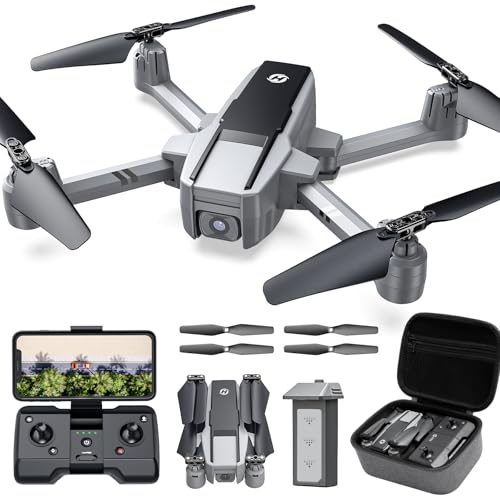
Holy Stone HS440D
$89.99

Hiturbo Camera Drone
$44.98

Potensic ATOM SE
$229.79
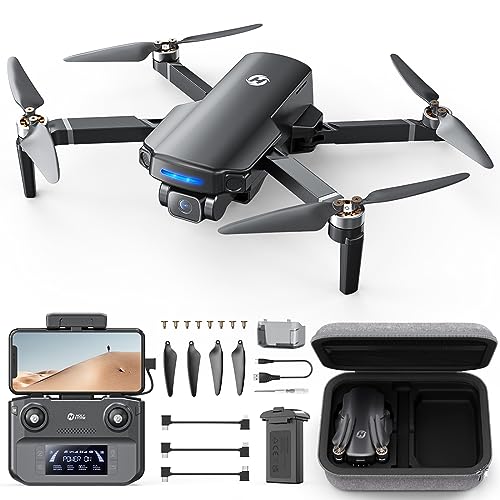
Holy Stone HS360S
$179.99

Blinory GPS Drone
$59.98

Holy Stone HS175G
$189.89
Spec Comparison
TL;DR: The Holy Stone HS720G offers a 4K 3840×2160 camera on a 2‑axis gimbal, 26‑minute flight time and up to 999 m control range for just $89.99, making it a strong budget drone.
The standout spec features a 4K UHD camera (3840×2160) with a 120° field of view, a 2‑axis mechanical gimbal plus electronic image stabilization, and video rates of 30 fps at 4K and 60 fps at 1080p. Powered by a 2950 mAh battery, the drone can stay aloft for 26 minutes and needs about 5 hours to recharge.
Compared with the other eight drones in this roundup, the HS720G is heavier than the foldable HS440D (195 g) and the Blinory GPS Drone (145 g), but its 2950 mAh battery dwarfs the HS440D’s 1100 mAh pack. Its advertised maximum control distance of 999 m (≈327,756 ft) also exceeds the 200 m transmission range of the HS440D and the 500 m video link of several peers, giving it a clear advantage in range.
Reviewers appreciate the easy setup, the portable folded size (164 × 90 × 63 mm) and the smooth 4K footage that works well for social‑media clips. Professional testers highlight the effective 2‑axis gimbal combined with EIS, which rivals pricier models. The main complaints revolve around the 5 GHz Wi‑Fi link dropping signal beyond roughly 120 m and occasional GPS drift, while the 377 g weight pushes the drone into the FAA registration zone.
Pros
Cons
Best for: Beginner to intermediate pilots who want a portable, feature‑rich drone for travel videography without breaking the bank.
Avoid if: You need professional‑grade long‑range performance, high‑wind stability, or want to skip the registration requirement tied to drones over 250 g.
“advanced yet friendly”
“good controls like advanced drones”
TL;DR: The DJI Neo delivers 4K video from a 135 g palm‑launchable frame, with AI tracking, 22 GB built‑in storage and a 7 km transmission range, all for under $200.
The standout feature is its 4K/30p UHD camera paired with a 12 MP 1/2‑inch CMOS sensor, 13 mm‑equivalent lens and F/2.8 aperture, plus a single‑axis mechanical gimbal that the manufacturer describes as “ultra‑stabilized.” AI subject tracking and gesture control let you capture creative shots without a remote controller.
At 135 g, the Neo is lighter than most of the eight rivals in this roundup – it sits below the Potensic ATOM SE, Holy Stone HS175G and HS360S, and is only a shade heavier than the Blinory GPS Drone and Hiturbo Camera Drone. Its 7 km transmission range (≈2,296,588 ft) outstretches the 4 km range of the Potensic ATOM SE and the 3,281 ft range of the Holy Stone HS175G, giving you more freedom to explore larger spaces.
Reviewers love the palm‑launch design and the fact that, at under 250 g, the Neo exempts you from registration in many regions. The 22 GB internal storage eliminates the need for a microSD card during short shoots, and the built‑in AI tracking earns praise for hands‑free creativity. Professional testers note that the single‑axis gimbal doesn’t match the three‑axis stabilization of higher‑end models, and low‑light footage can appear grainy. The 18‑minute flight time and 8 m/s wind‑speed limit also temper expectations for fast‑action or windy‑day flying.
Technical highlights include a 1435 mAh battery, a maximum horizontal speed of 16 m/s in manual mode, and support for DJI Goggles for FPV experiences. The drone’s GNSS suite (GPS, GLONASS, Galileo, BeiDou) and downward vision sensor provide precise hovering within 0.5‑10 m, while the O4 video link ensures a stable feed across its long range.
Pros
Cons
Best for: Beginners, vloggers, and casual creators who want a lightweight, registration‑free drone for quick, high‑quality aerial clips.
Avoid if: You need professional‑grade image quality, longer endurance, or advanced stabilization for serious aerial photography.
TL;DR: The Holy Stone HS110D packs a 1080p camera, 150 m (≈49,212.6 ft) FPV range and up to 20 minutes of total flight time for just $35.99, making it a solid starter drone for tight budgets.
The HS110D’s most eye‑catching spec is its built‑in 1080p HD camera with a 120° field of view, paired with a live‑view Wi‑Fi link that reaches 150 m (≈49,212.6 ft). Its 1000 mAh, 3.7 V battery provides 8‑10 minutes per charge and up to 16‑20 minutes total when you swap the two modular packs. The airframe measures 120 mm tall and 320 mm long and wide, and it weighs about 0.33 lb (149 g), putting it near the lighter end of the nine‑drone lineup.
Compared with its peers, the HS110D feels a touch heavier than the ultra‑light Hiturbo Camera Drone and the Blinory GPS Drone (both around 0.32 lb), but it’s far lighter than the HS720G, HS440D, HS360S, HS175G and Potensic ATOM SE, which tip the scales above 0.4 lb. Its 1000 mAh battery is the smallest capacity in the group, so its flight time trails models like the HS720G (2950 mAh) and the Potensic (3000 mAh). Likewise, its 150 m range is shorter than the 200 m FPV distance of the HS440D and dramatically less than the multi‑kilometer ranges advertised by the DJI Neo and Potensic ATOM SE.
Reviewers consistently praise the HS110D for its affordability and beginner‑friendly controls—one‑key takeoff/landing, altitude hold and headless mode make the learning curve gentle. Professionals note the drone’s decent speed and maneuverability for its class, and the 6‑axis gyroscope plus gravity sensor help keep it steady. However, users also flag the lightweight plastic shell as fragile, especially in breezy conditions, and many mention a tendency to drift, requiring frequent manual corrections. Users also complain about the lack of GPS and return‑home functions.
Pros
Cons
Best for: Entry‑level buyers or those on a tight budget
Avoid if: Reliability and user satisfaction are your top concerns
“advanced yet friendly”
“good controls like advanced drones”
TL;DR: The Holy Stone HS440D offers a foldable 4K camera, GPS‑assisted flight modes and a 19‑minute runtime for $89.99, making it a lightweight, beginner‑friendly drone under 250 g.
The standout feature is its 4K camera that records at 3840×2160 pixels with a 120° field of view and a 90° adjustable lens, delivering sharp aerial footage while staying under the 250 g FAA threshold (0.4299014109 pounds). GPS‑based flight modes such as Follow Me, Waypoint Fly and Point of Interest give new pilots confidence, and the built‑in Remote ID means you stay compliant without extra accessories.
Compared with the other eight drones in this roundup, the HS440D is lighter than the Holy Stone HS720G (which weighs about 0.83 pounds) but heavier than the DJI Neo (around 0.30 pounds). Its 1100 mAh battery is smaller than the HS720G’s 2950 mAh pack, resulting in a shorter 19‑minute flight time versus the HS720G’s 26‑minute claim. The 200‑meter (656 ft) FPV transmission range sits between the shorter range of the Blinory GPS Drone and the longer reach of the Potensic ATOM SE, making it adequate for backyard flights but not for extended outdoor outings. Price‑wise, it lands in the lower‑mid tier of the group, offering more features than the entry‑level HS110D while staying below the premium pricing of the DJI Neo and Potensic ATOM SE.
Everyday users repeatedly praise the drone’s portability – the foldable design fits into the included carrying case and the sub‑250 g weight doesn’t require FAA registration. Reviewers also note the crispness of the 4K video and the ease of one‑key takeoff/landing. Professional reviewers highlight the 5 GHz FPV link as a stable solution for smooth live view at 20 fps. The most common complaints revolve around the 19‑minute flight time and the beginner mode that caps distance and altitude at roughly 98 feet, which can feel restrictive once you outgrow the training phase.
Pros
Cons
Best for: Value-conscious buyers seeking quality at $89.99
Avoid if: You need professional‑grade flight time, extended range, or advanced camera performance for serious videography
“advanced yet friendly”
“good controls like advanced drones”
TL;DR: The Hiturbo S20 offers a fold‑able, 146 g drone with dual 12‑minute batteries for up to 24 minutes of flight, 1080p video and beginner‑friendly controls at just $44.99.
Weighing just 146 g (0.32 lb) and folding down to a compact 50.8 mm height, the S20 packs a surprisingly sturdy frame for its size. It comes with two 12‑minute batteries, giving a combined maximum flight time of 24 minutes, and a 1080p manual‑adjustable camera that records full‑HD video.
At $44.99 it sits above the ultra‑budget Holy Stone HS110D but well below the Holy Stone HS720G, making it one of the more affordable options in the nine‑product lineup. Its weight of 146 g is a shade lighter than the HS110D’s 149 g, while its folded dimensions are shorter than the Blinory GPS Drone’s 55.1 mm height and 299.9 mm length, keeping it easy to stash in a backpack.
Everyday owners love the one‑key takeoff/landing combined with altitude hold, calling the drone “extremely easy” for beginners. Professional reviewers echo this, noting the intuitive controls and stable hover as ideal for newcomers, and they applaud the dual‑battery system for extending flight time beyond typical budget models. However, both users and editors complain that the FPV live view is choppy at 15‑20 FPS and that signal strength drops noticeably after about 50 yards.
The S20 relies on a 6‑axis gyro and includes altitude hold plus a return‑to‑home feature that automatically lands the craft if the signal's lost. Its control range lists 80‑100 meters, and the drone supports Wi‑Fi FPV streaming through the Hiturgo FPV app, an SD card slot, USB charging, gesture and voice commands, and even trajectory flight paths programmed via the app.
Pros
Cons
Best for: Entry-level buyers or those on a tight budget
Avoid if: You need powerful performance or professional‑grade features
“superlative photographic capabilities and intuitive operation”
“Poor FPV video quality: low frame rate (15-20 FPS), laggy transmission requiring direct line-of-sight”
TL;DR: The Potensic ATOM SE packs a 12 MP 4K camera, 31‑minute flight time and a 4 km (1,312,336 ft) transmission range into a sub‑250 g foldable frame for $198.99.
The standout spec is the 4K video capability paired with a 118° field of view, which lets you capture wide‑angle footage without needing a separate gimbal. The drone’s 3000 mAh battery powers up to 31 minutes of flight, and its 200 ms video latency keeps the live feed responsive enough for casual piloting.
Compared with the other eight drones in this budget roundup, the ATOM SE sits at the higher end of the price band, but it outpaces many rivals on transmission distance and camera resolution. While the DJI Neo and Holy Stone HS360S are lighter and cheaper, they offer shorter range and lower‑resolution video. The Holy Stone HS175G matches the ATOM SE’s sub‑250 g weight class, yet its field of view and video quality fall short of the ATOM SE’s 118° and 4K output.
Reviewers consistently praise the drone’s pocket‑size portability, and its sub‑250 g weight makes it registration‑free in most regions. Professional editors note the crystal‑clear 4K footage and the 31‑minute endurance as impressive for its class, while everyday users love the reliable GPS tracking and the 4 km signal stability. The single‑axis gimbal draws criticism, especially during aggressive maneuvers, and a few users have reported occasional app freezes on certain smartphones.
Pros
Cons
Best for: Beginners, travelers, and intermediate pilots who need a lightweight, registration‑free drone with solid 4K video and long-range control.
Avoid if: You're shopping on a tight budget — it's priced at $198.99.
TL;DR: The Holy Stone HS360S delivers a fold‑able 4K camera, GPS‑assisted flight and 20 minutes of airtime for $169.99, but its 4K video tops out at 20 fps and its range can fall short of the claimed 10,000 ft.
What really stands out is the 3840×2160 pixel camera paired with a 1/3″ CMOS sensor and an 85° field of view that can be widened to 90°. Weighing just 213 g (about 0.47 lb) and featuring brushless motors, the drone folds down to a compact 56 mm height, making it easy to slip into a backpack for travel.
Compared with the eight other drones in this roundup, the HS360S sits in the middle of the weight spectrum: it’s heavier than the DJI Neo (≈0.30 lb) and the Blinory GPS Drone (≈0.32 lb) but lighter than the Holy Stone HS175G (≈0.55 lb) and the HS720G (≈0.83 lb). Its 20‑minute flight time trails the 60‑minute dual‑battery claim of the HS175G, and its 85° FOV is narrower than the 120° lenses found on the HS175G, HS720G and HS440D. The transmission range of 3048 m (10,000 ft) offers a respectable distance, yet it falls short of the 7 km range DJI Neo advertises.
Reviewers consistently praise the sub‑250 g weight for eliminating the need for FAA registration and love the foldable design for on‑the‑go shooting. Professional outlets note the GalaxyCore sensor delivers “stunning” stills, while everyday users appreciate the included spare propellers and USB‑C charger. On the downside, the 4K video caps at 20 fps, which can make footage feel less smooth, and several owners report the practical range often falls below the advertised 10,000 ft. Battery life also tends to dip to the mid‑teens in real‑world use, and occasional GPS reconnect glitches sometimes occur.
Pros
Cons
Best for: Most users looking for a well‑reviewed, reliable mainstream option
Avoid if: You're shopping on a tight budget — it's priced at $169.99
“advanced yet friendly”
“good controls like advanced drones”
TL;DR: The Blinory HK55 offers a fold‑able GPS‑enabled drone with a 2K camera, 32‑minute flight time and beginner‑friendly auto‑return for just under $60.
The standout feature is its 2K HD camera, which sits on a shock‑absorbing gimbal that tilts a full 90°, giving you angled shots without extra accessories. At only 0.32 pounds (145 g) and a compact 55.1 mm height, the drone folds to fit inside a 6.5‑inch tablet case, making it easy to stash in a backpack or locker.
When you line it up against the other eight drones, the Blinory is noticeably lighter than the Holy Stone HS720G (0.83 lb) yet a touch heavier than the DJI Neo (0.30 lb). Its 32‑minute battery life also outlasts the Hiturbo Camera Drone’s total 24‑minute runtime and the Holy Stone HS360S’s 20‑minute flight, giving you more airtime for the same price tier.
Reviewers appreciate the auto‑return, follow‑me and waypoint modes that usually sit in pricier models, and they note the USB‑C charging port as a modern convenience. However, users repeatedly call out the 2K footage as jittery and not as sharp as expected, and the narrow phone holder on the controller can be frustrating for larger phones. Professional reviewers highlight the vibration‑dampening gimbal as a key factor that improves video steadiness, while the persistent beeping sound during flight draws criticism.
Under the hood, the drone relies on brushless motors for smoother thrust and longer lifespan, and the built‑in GPS and optical flow sensors help maintain stable hover even when the signal weakens. The inclusion of a microSD slot supporting 8–16 GB lets you store footage without swapping cards, and the one‑key takeoff/landing button simplifies operation for beginners.
Pros
Cons
Best for: Beginners, kids, teens and casual hobbyists who want an inexpensive GPS drone under 250 g for short, fun flights.
Avoid if: You need professional‑grade 4K video quality, plan to fly in windy conditions, or require a drone without audible beeping.
TL;DR: The Holy Stone HS175G delivers a 4K 3840×2160 camera with 120° view, up to 60 minutes of combined flight time, and a 3281 ft transmission range, all for $189.89.
The HS175G offers a 4K 3840×2160 Sony CMOS sensor with electronic image stabilization and a 120° field of view, shooting at 30 FPS. Dual fast‑charging batteries give a total of 60 minutes of airtime, and the 5 GHz Wi‑Fi link reaches 3281 ft (100004.9 m), letting you keep the live feed far beyond most entry‑level drones.
Compared with the eight other drones in this under‑$200 roundup, the HS175G is pricier than most peers and sits at 0.54895103238Pounds (249 g), making it heavier than the DJI Neo, Blinory GPS Drone, and Holy Stone HS110D, but lighter than the HS720G. Its transmission range of 3281 ft outstrips several competitors that list only a few hundred meters, and the 120° FOV matches the DJI Neo and HS720G while exceeding the narrower views of the HS360S and HS440D.
Reviewers consistently praise the 60‑minute combined flight time and the crisp 4K footage, noting that the EIS‑stabilized video feels “professional‑grade” for a hobby drone. Users also highlight the reliable GPS‑assisted auto‑return and the convenience of one‑key takeoff/landing. A few owners mention that the 0.54895103238Pounds mass can feel a bit hefty in gusty conditions, and the reliance on Wi‑Fi rather than a dedicated 2.4 GHz controller may limit signal robustness in cluttered environments.
Technical extras include altitude hold, headless mode, optical flow, and a foldable frame that collapses to 152 × 80 × 60 mm for easy transport. A carrying case and remote controller ship in the box, letting you fly straight out of the package.
Pros
Cons
Best for: Those prioritizing quality and willing to pay for premium performance
Avoid if: You're on a tight budget or only need basic functionality
“advanced yet friendly”
“good controls like advanced drones”
Breakdown
Holy Stone HS720G
Pros
DJI Neo
Pros
Holy Stone HS110D
Pros
Cons
Holy Stone HS440D
Pros
Cons
Based on scoring data and product specs
Personalized picks
Best Overall Pick
Holy Stone HS720G
Best OverallBest for: Home and office users seeking a balance of features and value
DJI Neo
Best for: Buyers willing to invest in a proven, high-quality option
$199.00+$119.01 vs winner
Skip Holy Stone HS175G if…
You're on a tight budget or only need basic functionality
The Holy Stone HS720G takes the top spot thanks to its 4K (3840×2160) camera with a 120° field of view, a solid 26‑minute flight time, and a 999 m maximum control distance—all for $89.99 and a 4.4‑star rating from over 3,500 reviewers. It also sports a brushless motor and a 2‑axis mechanical gimbal with electronic image stabilization, giving you smoother footage without breaking the bank.
The DJI Neo lands as the runner‑up, especially if you need ultra‑long range and smart tracking; its 7 km transmission range, AI subject tracking, and 4K/30p video from a 12 MP sensor make it ideal for aerial filming where distance and autonomous features matter. The controller‑free operation via app, voice, and gestures adds extra convenience for on‑the‑fly creators.
For tighter budgets, the Holy Stone HS110D at $35.99 offers a straightforward flying experience with decent video for newcomers. The Holy Stone HS440D at $89.99 balances price and performance, delivering reliable GPS hold and a better camera for hobbyists who want more control. If you want the most premium features without breaking the $200 ceiling, the Potensic ATOM SE at $198.99 provides higher‑end specs and a richer sensor suite.
Pick the HS720G for the best value and start capturing smooth 4K footage today.
The Holy Stone HS720G stands out with a 4K camera, 2‑axis gimbal with EIS, 26‑minute flight time and a control distance of up to 999 m, all for just $89.99. Its feature set beats many higher‑priced rivals while staying well under $100, making it the most cost‑effective choice in the list.
No reviews yet — be the first to share your experience.
Please sign in to leave a review