⚡ Quick Answer
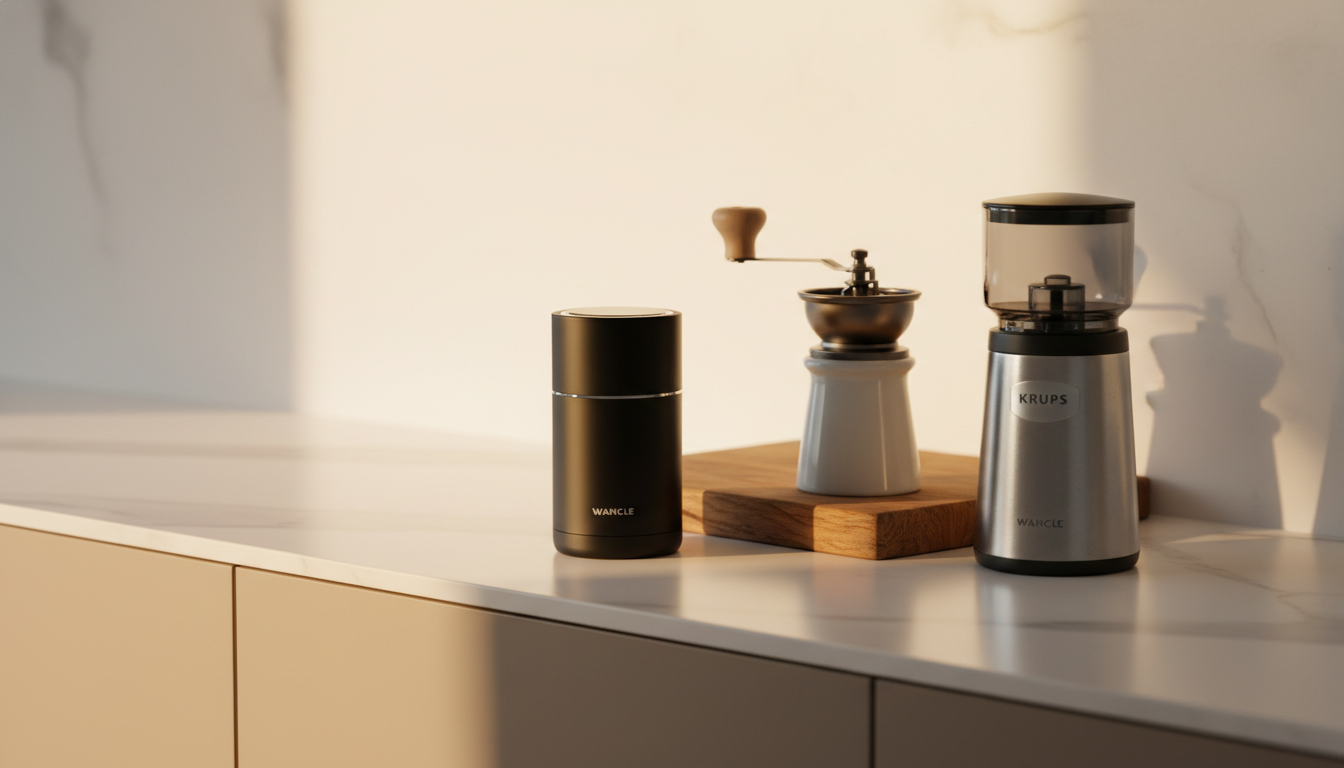
Finding a reliable coffee grinder under $50 can feel like hunting for a needle in a haystack, especially when you want decent performance without blowing your budget. We’ve lined up nine contenders across three price tiers—budget, mid‑range and premium—so you can see how each segment stacks up.
The budget bucket features the Wancle Electric Coffee Grinder at $14.99, with a 150 W motor that spins up to 35,000 RPM and a 60 g bean capacity, plus a solid 4.4‑star rating from over 10,000 reviewers. Mid‑range options like the Krups Electric Coffee Grinder, priced at $33.62, offer a larger 85 g capacity and a 200 W motor while holding the same 4.4‑star score. Premium picks such as the Hario Skerton sit at $42.10 and bring ceramic burrs for low‑heat grinding.
We'll examine each model’s strengths, from grind consistency to countertop footprint, and point out which scenarios each one shines in. Keep reading to discover which grinder fits your brewing style and kitchen space best.
Wancle Electric Coffee Grinder
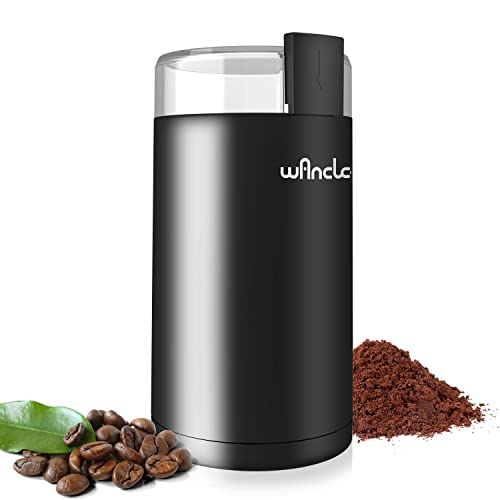
At just 168 mm tall, this grinder packs solid value and features for $14.99, delivering a reliable entry‑level experience.

Hario Skerton
Ideal for coffee enthusiasts who prefer a hand‑crank grinder, the Hario Skerton costs $42.10—about $27 more than the Wancle, reflecting its proven high‑quality build.

Krups Electric Coffee Grinder
With a 170 mm height and 98 mm length, the Krups offers a larger footprint at $33.62, positioning it between the compact Wancle and the bulkier Hario for mainstream users.
Score Analysis
Key score advantages vs. runner-up (Hario Skerton)
Price Range
Wancle Electric Coffee Grinder
$14.99
Hario Skerton
$42.10
Krups Electric Coffee Grinder
$33.92
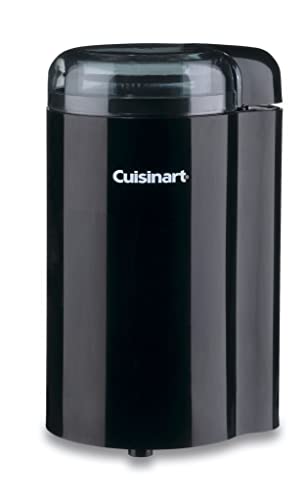
Cuisinart DCG-20BKN Black
$24.95

Hamilton Beach Fresh Grind
$21.95

KitchenAid BCG111ER Blade Coffee Grinder
Out of Stock

Bodum Bistro
$29.99

Cuisinart DCG-12BC
$44.95

Secura Electric Coffee Grinder
$32.99
Spec Comparison
TL;DR: The Wancle Electric Coffee Grinder packs a 35,000 RPM copper motor, 60 g stainless‑steel bowl and low‑noise one‑touch control into a $14.99, ultra‑compact unit.
At the heart of this grinder is a pure copper motor that spins up to 35,000 RPM, delivering fast, even grinding that many reviewers say preserves aroma. The 150 W motor runs on 120 V/60 Hz power and includes automatic overheating protection, so you’ll grind beans, spices or nuts without worrying about heat build‑up.
Compared with the eight other grinders in this roundup, the Wancle is lighter than Hamilton Beach’s 590 g model and far more compact than Bodum’s larger 724 g unit. Its 150 W draw is lower than Secura’s 200 W motor, yet it still outpaces the 125 W Hamilton Beach in raw speed thanks to the higher RPM. While some competitors offer larger capacities—Bodum holds 84 g and Cuisinart 70 g—Wancle’s 60 g bowl keeps the footprint small enough for a crowded countertop.
Users consistently praise the single‑press start/stop button and the transparent lid that lets you watch the grind. The stainless‑steel blades and bowl highlight durability, and the low‑noise operation makes it kitchen‑friendly. A common complaint is that the 60 g capacity limits batch size, and a few reviewers note that grounds can cling to the bowl, requiring the included cleaning brush.
Pros
Cons
Best for: Budget‑conscious buyers seeking a reliable entry‑level option
Avoid if: You need advanced features or professional‑grade performance
“decent for modest needs but not high-volume grinding”
TL;DR: The Hario Skerton manual grinder costs $42.10, weighs about 0.04 lb, holds 100 g of beans, and uses conical ceramic burrs for low‑heat, consistent grinding.
The Skerton stands out thanks to its conical ceramic burr set and a glass bowl made of heat‑proof borosilicate. The adjustable stainless‑steel nut lets you dial in grind size from French press to espresso, while the 100 g bean hopper gives you a bit more room than many entry‑level electric models. At just 0.0440924524 pounds (roughly 20 g) and with a compact footprint of 101.6 mm tall, 198.1 mm long and 137.2 mm wide, it’s truly portable.
Compared with the eight other grinders in this roundup, the Skerton weighs 0.04 lb, making it lighter than the Cuisinart DCG‑12BC (0.55 lb) and the KitchenAid BCG111ER (2.3 lb). Its 100 g capacity also exceeds the 90 g hopper of the Cuisinart DCG‑12BC and the 85 g capacity of the Bodum Bistro, and it rivals the KitchenAid’s 4 oz (about 113 g) bowl. While the electric options rely on blade or steel‑burr systems, the Skerton’s ceramic burrs preserve bean aroma by minimizing heat transfer.
Reviewers consistently note the grinder’s consistent output and the sturdy glass bowl that can be placed in the dishwasher, though only the glass parts are dishwasher safe. Professional reviewers highlight the low‑speed, hand‑crank action as a way to avoid overheating beans, delivering a “shaving” grind that many specialty‑coffee fans love. The downside most users mention is the physical effort required for larger batches, and the 100 g hopper can feel restrictive when brewing for several people.
The Skerton’s construction splits between Japan (the glass bowl) and China (handle, lid, and grip). The grind‑adjustment mechanism uses a stainless‑steel nut for repeatable settings, and the non‑slip silicone rubber base keeps the grinder steady on countertops. Since only the glass bowl is dishwasher safe, you’ll need to hand‑wash the burr section and other components after each use.
Pros
Cons
Best for: Coffee enthusiasts who value a consistent, low‑heat grind and don’t mind a bit of manual effort.
Avoid if: You need to grind large batches quickly or require a high‑volume, plug‑in solution.
TL;DR: The Krups Electric Coffee Grinder offers a 200 W motor, 85 g capacity and quiet blade grinding in a compact oval design for under $35.
This grinder’s standout spec is its twin stainless‑steel cutting blades powered by a 200 W motor, delivering fast grinding for up to 12‑15 cups per batch. The 3 oz (85 g) bean chamber lets you grind enough beans for a full pot without refilling, and the one‑touch operation means you just press and release.
Compared with the eight other grinders in this roundup, the Krups sits heavier than the Secura (0.16 lb) but lighter than the Cuisinart DCG‑20BKN (1.57 lb). Its 85 g capacity outstrips Secura’s 70 g and Cuisinart’s 70 g limits, while the power draw matches Secura’s 200 W. Price‑wise it is pricier than the Secura model but still below the KitchenAid unit. The oval shape and 0.7 m cord length give it a stable countertop footprint.
Users consistently praise the grinder’s speed and the ease of a single‑press start, noting that it handles coffee beans, spices, nuts and herbs without fuss. Professional reviewers highlight the stainless‑steel blades for durable performance, and many mention the “5× quieter than prior models” claim as a real benefit in small kitchens. The common drawback is the blade‑based grinding, which can produce uneven particles for espresso lovers, and the lack of multiple grind‑size settings limits precision.
Additional technical notes include a lid‑activated safety switch that prevents accidental start, a stainless‑steel finish that resists fingerprints, and a two‑year limited warranty for peace of mind.
Pros
Cons
Best for: Most users looking for a well‑reviewed, reliable mainstream option
Avoid if: You need advanced features or professional‑grade performance
“decent for modest needs but not high-volume grinding”
TL;DR: The Cuisinart DCG-20BKN offers a 130 W motor, 70 g stainless‑steel bowl and a compact 4.25 × 3.5 × 7 in footprint for $24.95, making it a solid budget choice for casual grinders.
The grinder’s most notable spec is its 130 W heavy‑duty motor paired with a stainless‑steel grinding bowl that holds up to 2.5 oz (70 g) of beans—enough for roughly a dozen cups of drip coffee. Its on/off safety interlock and BPA‑free construction add a layer of confidence for everyday use. At 1.57 lbs, the unit feels sturdy without being a countertop heavyweight.
Compared with the eight peers, the Cuisinart sits in the middle of the weight range—heavier than the Secura’s 0.16 lb and the Wancle’s 0.99 lb, yet lighter than the KitchenAid’s 2.3 lb. Its 130 W motor outpaces the Hamilton Beach’s 125 W and the Krups’s 200 W, but falls short of the Bodum’s 480 W and the Secura’s 200 W. Capacity‑wise, it matches the Secura’s 2.5 oz limit but is smaller than the Bodum’s 5.8 oz and the Krups’s 3 oz. In terms of dimensions, the 4.25 in depth and 3.5 in width are comparable to the Hamilton Beach’s 95 mm depth and 90 mm width, while the 7 in height is taller than the Bodum’s 96 mm but shorter than the Hamilton’s 181 mm.
Reviewers consistently praise the compact footprint—4.25 × 3.5 × 7 in fits easily on a small kitchen counter. Reviewers highlight the stainless‑steel bowl and blades for durability, and the 4.4‑star rating from 13,832 reviews suggests broad satisfaction. However, users note that the blade‑grinding mechanism can produce uneven particle size and that the lack of adjustable grind settings limits precision for espresso enthusiasts. The 18‑month limited warranty offers some peace of mind for a budget model.
Pros
Cons
Best for: Casual home users who need a reliable, well‑reviewed grinder for small‑batch coffee, spices or herbs.
Avoid if: You require precise, consistent grind size, adjustable settings, or large‑batch grinding capabilities.
TL;DR: The Hamilton Beach Fresh Grind offers a 125 W stainless‑steel blade grinder with a dishwasher‑safe bowl for under $20, but its blade‑type grind can be uneven for espresso or French‑press lovers.
The grinder’s most notable spec is its 125 W motor, which gives enough power to crush beans, spices, herbs and seeds quickly. The removable grinding chamber is constructed from stainless steel and can go in the dishwasher, simplifying cleanup after each use. The unit weighs 590 g (about 1.3 lb), making it easy to store on a countertop or slip into a small kitchen cabinet.
Compared with the eight other budget grinders in this roundup, the Fresh Grind is lighter than the Bodum Bistro and the Cuisinart DCG‑20BKN, yet heavier than the ultra‑light Secura model. Its 125 W motor sits between the lower‑powered Wancle (150 W) and the higher‑powered Krups (200 W), so it isn’t the most powerful option but still delivers solid performance for drip‑coffee routines.
Everyday users praise the one‑touch press‑and‑release operation and the see‑through lid with measurement markings, noting that the grinder “just works” for a quick morning brew. Reviewers also like the hideaway cord storage that keeps the countertop tidy. Critics note the blade‑type grinding can produce uneven particle size and limit the grinder’s usefulness for espresso or French‑press enthusiasts. Professional reviewers point out the lack of adjustable grind settings as a trade‑off for its low price.
Pros
Cons
Best for: Budget‑conscious buyers seeking a reliable entry‑level option
Avoid if: You need advanced features or professional‑grade performance
TL;DR: The KitchenAid BCG111ER Blade Coffee Grinder offers a sturdy stainless‑steel bowl, one‑touch operation and a 11,340 g capacity, but its $49.95 price and heavier build may be overkill for casual users.
This grinder’s standout feature is the removable stainless‑steel bowl that can hold up to 11,340 g (about 400 oz) of coffee grounds, paired with a clear plastic top that lets you watch the beans pulse. The one‑touch push‑to‑start control makes grinding quick and straightforward, and the unit measures 4.2 in deep, 8.7 in high and 3.9 in wide, weighing 2.3 lb.
Compared with the eight other grinders in this roundup, the KitchenAid is noticeably heavier than the 0.55 lb Cuisinart DCG‑12BC and the 0.16 lb Secura model, giving it a more solid countertop feel but less portability. Its 2.5 ft power cord is a bit shorter than the Cuisinart’s 36 in cord yet comparable to the Krups’ 0.7 m cord, so it fits most kitchen layouts without excess slack.
Reviewers appreciate the quick, one‑touch grinding and the clear cover that shows the beans in action, while professional reviewers highlight the stainless‑steel bowl for its durability. However, many users point out that blade‑style grinding can yield uneven particle sizes, which can affect flavor consistency, and the 4 oz bowl (the listed capacity) limits batch size. The $49.95 price tag also places it at the higher end of the sub‑$50 segment.
Pros
Cons
Best for: Buyers willing to invest in a proven, high‑quality option
Avoid if: You're on a tight budget or only need basic functionality
“decent for modest needs but not high-volume grinding”
TL;DR: The Bodum Bistro offers a 480 W stainless‑steel blade grinder with an 84 g bean hopper, five grind settings, and a compact brushed‑stainless design, making it a solid entry‑level choice for casual brewers.
The Bistro’s standout spec is its 480 W motor, which pushes beans through a stainless‑steel blade quickly enough for everyday use. It holds up to 84 g of beans, feeds a 5.8 oz grinding chamber, and provides five preset grind settings. A removable bowl and a transparent lid let you see the grounds as they fall, while the push‑button control keeps operation simple.
When you line it up against the other eight grinders, the power advantage is clear: most rivals sit between 130 W and 200 W, so the Bistro grinds noticeably faster. At 724 g, it weighs more than the Hamilton Beach Fresh Grind (590 g) and the Secura model (71 g), yet it’s still under a kilogram, keeping the countertop footprint manageable. Its blade‑type mechanism compares favorably to the Cuisinart and Krups units, but the higher wattage gives it a bit more grunt for the same compact size.
Reviewers consistently praise the grinder’s small footprint and straightforward push‑button operation. Users love being able to watch the grind through the clear lid, and many note that the 5‑setting range covers everything from coarse French‑press grinds to finer drip‑brew needs. Professional reviewers highlight the sturdy stainless‑steel blade and the 480 W motor as strong points for daily home brewing. The common downsides are the uneven particle size that blade grinders typically produce and the limited 84 g bean hopper, which can require frequent refills during larger batches. A few owners mention that the plastic components can show wear after extended use.
Beyond the motor and capacity, the Bistro can handle up to 12 cups per brew cycle, aligning with its 5.8 oz chamber volume. It runs on standard 110‑120 V outlets and comes with a one‑year limited warranty, giving peace of mind for a budget‑friendly purchase. The combination of five grind settings, removable bowl, and transparent lid makes it a practical tool for anyone just getting started with home coffee.
Pros
Cons
Best for: Budget-conscious buyers seeking a reliable entry-level option
Avoid if: You want the best value-per-dollar in its price range
“Inconsistent fineness (e.g., black/off-white finishes), durability issues over time.”
TL;DR: The Cuisinart DCG-12BC Grind Central packs a 90 g capacity, 36‑in cord, and single‑button operation into a 0.55‑lb brushed‑stainless design, but its lack of grind‑size settings keeps it from the specialty‑coffee tier.
The standout spec is the 90 g (about 18‑cup) stainless‑steel grinding bowl, which lets you prep a full batch in seconds. A 36‑in cord gives you plenty of reach, and the single on/off button with a built‑in safety interlock means you can start grinding with one press while the unit won’t run unless the lid is locked.
Compared with the eight other grinders in this roundup, the Cuisinart sits toward the higher‑price end but is lighter than the KitchenAid BCG111ER and heavier than the Secura Electric Coffee Grinder. Its 0.55‑lb weight also makes it bulkier than the ultra‑light Hario Skerton, yet still more portable than the bulkier Krups Electric Coffee Grinder.
Reviewers love the powerful motor that quickly handles the full 90 g load, noting the removable stainless‑steel bowl is dishwasher‑safe and marked for easy measurement. Professional reviewers highlight the brushed stainless exterior as a good fit for modern kitchens. On the flip side, users frequently mention the pulse‑only control can produce uneven grinds, and grounds sometimes cling to the bowl’s crevices, which can be messy.
Technically, the grinder draws 1.2 A at 110 VAC, and its stainless‑steel blade is built for durability. Integrated cord storage keeps the kitchen counter tidy, while the lack of an automatic shutoff means you’ll need to monitor the unit while it runs.
Pros
Cons
Best for: Buyers willing to invest in a proven, high-quality option
Avoid if: You're shopping on a tight budget — it's priced at $44.32
TL;DR: The Secura SP‑7412 packs a 200 W motor, dual stainless‑steel bowls and a 70 g grinding capacity into a feather‑light 0.16 lb body for versatile, low‑noise grinding at a modest price.
The standout feature is the two removable stainless‑steel bowls—one for coffee beans, the other for spices, nuts or veggies—so you never worry about flavor crossover. Each bowl is dishwasher‑safe, and the unit delivers up to 70 g of grounds per cycle while drawing 200 W of power.
Compared with the eight other grinders in this roundup, the Secura ranks among the lightest at 0.16 lb, far lighter than the Cuisinart DCG‑20BKN (1.57 lb) and the Bodum Bistro (about 1.6 lb). Its footprint (119 mm deep and wide) makes it more compact than the Krups (82 mm wide) and Hamilton Beach (90 mm wide) models, yet its height of 195 mm leaves it slightly taller than most, giving it a balanced kitchen‑counter presence. Power‑wise, its 200 W motor matches the Krups and exceeds the 130 W Cuisinart and 125 W Hamilton Beach units, while staying well below the high‑draw Bodum’s 480 W motor. Capacity sits at 70 g, equal to the Cuisinart DCG‑20BKN, a notch above the 60 g Wancle, but below the larger 84 g Bodum, 85 g Krups and the 100 g Hario Skerton.
Reviewers consistently praise the grinder’s quiet, quick operation and the convenience of swapping bowls for different tasks. Professional reviewers note the smart overheat protection that automatically shuts off the motor, extending the unit’s lifespan. Everyday users love the straightforward on/off switch, the cord‑wrap base that keeps the countertop tidy, and the ease of cleaning the stainless‑steel components.
Technical details round out the picture: the grinder runs on standard 120 V North American power, draws 200 W, and comes with a two‑year manufacturer warranty. The included accessories—an extra 2‑blade cup, cleaning brush and user manual—add value for anyone who wants both coffee and spice grinding without buying separate appliances.
Pros
Cons
Best for: Most users seeking a balanced, mainstream option
Avoid if: Reliability and user satisfaction are your top concerns
“decent for modest needs but not high-volume grinding”
Breakdown
Wancle Electric Coffee Grinder
Pros
Hario Skerton
Pros
Krups Electric Coffee Grinder
Pros
Cons
Cuisinart DCG-20BKN Black
Pros
Based on scoring data and product specs
Personalized picks
Best Overall Pick
Wancle Electric Coffee Grinder
Best OverallBest for: Budget-conscious buyers seeking a reliable entry-level option
Hario Skerton
Best for: Buyers willing to invest in a proven, high-quality option
$42.10+$27.11 vs winner
Skip Secura Electric Coffee Grinder if…
Reliability and user satisfaction are your top concerns
The Wancle Electric Coffee Grinder takes the top spot as the best budget grinder. At just $14.99 it undercuts the competition, while its 4.4‑star rating from 10,233 reviews shows strong user approval. It cranks a pure‑copper motor at 35,000 RPM, yet the noise level is low, and the 60 g stainless‑steel bowl handles a full scoop without spilling. At roughly 0.99 lb it’s light enough to store on a countertop without crowding your kitchen.
The runner‑up is the Hario Skerton, a manual option that shines if you need precise grind control for pour‑over or French‑press brewing. You can adjust its conical ceramic burrs with a stainless‑steel nut, and the 100 g heat‑proof borosilicate glass bowl lets you see the grounds as you work. Priced at $42.10 and backed by a 4.4‑star rating from 6,440 reviewers, it offers a sturdy aluminum handle and a silicone‑rubber non‑slip cover for comfortable grinding.
For those who want alternatives beyond the winner, the Cuisinart DCG‑20BKN Black stands out as the best mid‑range pick at $24.95, delivering solid electric performance at a modest price. If you prefer a premium feel, the KitchenAid BCG111ER Blade Coffee Grinder, priced at $49.95, offers a sleek design and reliable blade grinding for a step‑up in style.
Grab the Wancle Electric Coffee Grinder now and start brewing better coffee without breaking the bank.
The Hario Skerton is hand‑crank, weighs about 20 g, and has a compact height of 101.6 mm, making it the lightest and most travel‑friendly option. Electric models like the Wancle (450 g) or Krups (490 g) require power and are bulkier.
No reviews yet — be the first to share your experience.
Please sign in to leave a review
Also considered
$42.10