⚡ Quick Answer
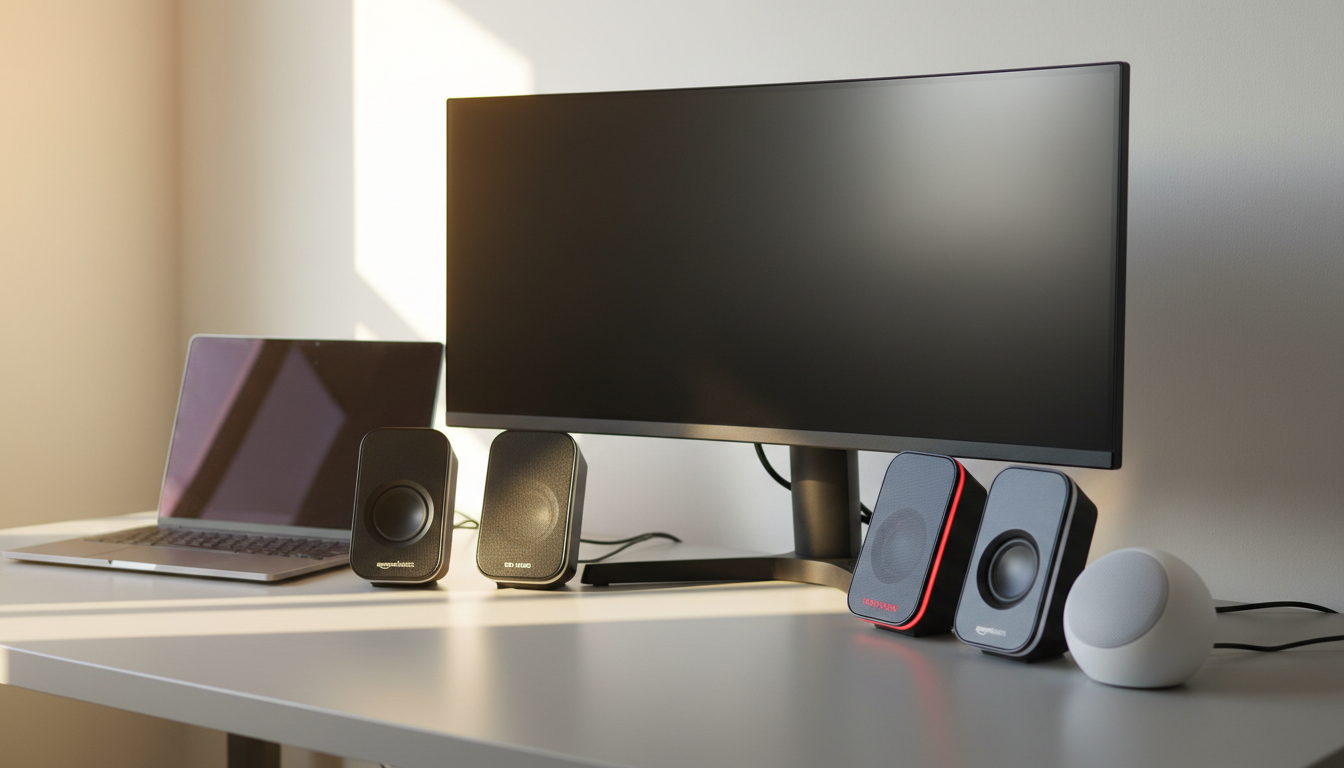
Finding decent computer speakers under $25 can feel like hunting for a needle in a haystack, but this roundup trims the noise. The review compared 9 models that sit between a low‑end $14.34 price tag and a $24.99 ceiling, all pulling in solid user love — the Amazon Basics Stereo 2.0 speakers lead with a 4.4‑star rating from 79,775 reviews, while Creative’s Pebble 2.0 features a 2‑inch (50.8 mm) driver and a 4.5‑star score from 67,177 reviewers.
To help you navigate, we split the list into three price tiers. The budget tier (Amazon Basics Stereo, Logitech S150, Soulion R50) offers plug‑and‑play simplicity and sturdy builds for under‑$20 desks. Mid‑range options (Lenrue Computer, Lenrue G11, Creative Pebble 2.0) add features like RGB lighting or larger drivers while staying under $25. The premium tier (Amazon Basics Bluetooth, XKX, Redragon GS550) delivers extra power — up to 6 W total on the Redragon — and added connectivity such as Bluetooth 5.3 or built‑in USB‑C adapters.
Below, we break down each model’s key specs, strengths, and the scenarios they shine in, so you'll match a speaker set to your workspace and listening habits.

Amazon Basics Stereo 2.0 Speakers
Its compact depth of 100.1 mm keeps the desk clutter‑free while delivering solid sound, earning it top marks for value and popularity.
Creative Pebble 2.0
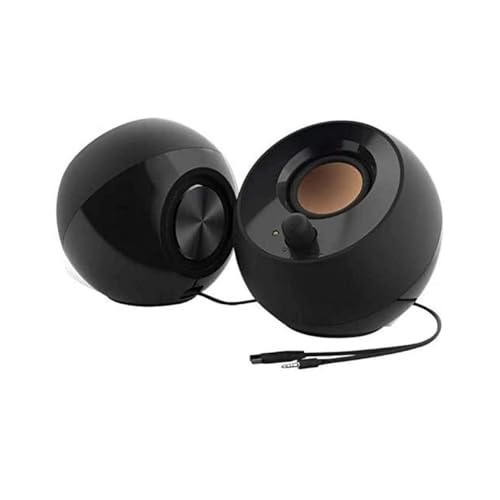
Ideal for users wanting a well‑reviewed desktop setup, the Creative Pebble 2.0 costs $9.40 more than the Amazon Basics, offering a 2‑in driver for richer audio.

Redragon GS550
Stands out with an input sensitivity of 820 mV ± 50 mV, delivering clearer sound for gamers or music producers who need precise audio control, a spec the other two lack.
Also considered
Score Analysis
Key score advantages vs. runner-up (Creative Pebble 2.0)
Price Range
Amazon Basics Stereo 2.0 Speakers
$14.14
Creative Pebble 2.0
$20.99
Redragon GS550
$19.99

Amazon Basics Bluetooth Computer Speakers
$22.04

Lenrue Computer Speakers
$20.77
Logitech S150
$15.99

Lenrue G11
$23.51

Soulion R50
$17.43

XKX Computer Speakers
$23.99
Spec Comparison
TL;DR: At $14.34, the Amazon Basics Stereo 2.0 speakers deliver surprisingly strong bass and clear mids from a solid 1.43‑lb USB‑powered pair, though they lack Bluetooth and detailed specs.
These speakers pack a USB‑powered design with a 3.5 mm aux input, an integrated in‑line volume knob, and a blue‑purple LED that lights up when connected. The front‑facing 180‑degree driver layout focuses sound directly toward you, while the velvety rubberized base keeps the pair stable on a desk. At 100.1 mm deep, 73.2 mm high and 66.0 mm wide, the units stay compact, and the 1.43‑lb (648.5 g) build feels sturdier than many budget rivals.
Compared with the eight other speakers in this roundup, the Amazon Basics pair is heavier than the Logitech S150 (0.4 lb) and the Lenrue Computer speakers (1.17 lb), but lighter than the Soulion R50 (1.76 lb). Its depth of 100.1 mm exceeds the Logitech’s 64 mm and the XKX’s 41.9 mm, giving it a more substantial footprint. While the Creative Pebble 2.0 matches the Amazon Basics in weight, the Pebble adds a 45° driver angle that the Basics lack, and the Bluetooth‑enabled Amazon Basics Bluetooth speakers are noticeably lighter at about 0.44 lb.
Everyday users rave about the loud, clear sound and the solid, premium feel the weight provides. Reviewers consistently note the strong bass response and clear mids for a pair this inexpensive, and they appreciate the plug‑and‑play USB power and the anti‑slip base. Professional reviewers also highlight the focused front‑only projection as a double‑edged sword: it delivers direct sound but can feel narrow in larger rooms. The biggest complaint is the absence of detailed acoustic specs such as wattage or frequency response, making objective comparisons harder.
Pros
Cons
Best for: Budget‑conscious buyers seeking a reliable entry‑level option
Avoid if: You have limited desk space or need portability
“sound freaking awesome”
“they weigh a lot”
TL;DR: The Creative Pebble 2.0 offers a 2‑in (50.8 mm) driver, 4.4 W RMS output and USB power in a tiny 126 mm‑square design for just $23.74.
What really stands out is the 45° driver angle paired with a rear‑facing passive radiator, which professional reviewers say helps create an immersive soundstage despite the modest 4.4 W RMS power. The speakers also include three 1.2 m cables (USB, aux and satellite), so you can reach a typical desktop without an extension.
Compared with the other eight speakers in this roundup, the Pebble’s 2 in (50.8 mm) drivers are larger than the 1.75 in drivers in the Amazon Basics Bluetooth pair and about the same size as the Logitech S150’s 5.1 cm driver. At 1.42 lb, it’s heavier than the ultra‑light Logitech S150 (0.4 lb) and the Amazon Basics Bluetooth speakers (0.44 lb), but lighter than the Redragon GS550 (1.50 lb) and Soulion R50 (1.76 lb). Its 4.4 W RMS output sits between the Logitech S150’s 1.2 W RMS and the Redragon GS550’s 6 W total, while offering a lower‑limit frequency response of 100 Hz versus the Amazon Basics Bluetooth’s 80 Hz low end.
Users consistently praise the “small but mighty” vibe – the speakers sound loud and clear for a desktop setup, and the USB‑only power draw makes them plug‑and‑play on Windows, macOS or even a Nintendo Switch. Common complaints focus on the limited bass depth, the absence of Bluetooth or tone‑control knobs, and the fixed 1.2 m cable lengths that can make cable management a bit tricky.
Pros
Cons
Best for: Most users looking for a well‑reviewed, reliable mainstream option
Avoid if: You're shopping on a tight budget — it's priced at $23.74
“small but mighty”
“balanced audio with depth, immersiveness, and crystal clear details”
TL;DR: The Redragon GS550 offers a compact 2‑in‑1 USB‑powered speaker system with 6 W total output, an 80 cm detachable cable, and red LED backlighting, delivering clear sound at a budget‑friendly $24.99.
What really sets the GS550 apart is its transformable 2‑in‑1 design: two dynamic drivers can sit side‑by‑side under a monitor or be separated with the 80 cm (31 in) cable. The system draws 5 V from USB and puts out 3 W per channel (6 W total), while the listed frequency response of 300 Hz – 20 kHz and an input sensitivity of 820 mV ± 50 mV give a surprisingly clear audio picture for a speaker of its size. At 1.5 lb, it’s solid enough to stay put without wobbling.
Compared with the other eight speakers in this roundup, the GS550 is heavier than the Logitech S150 (0.4 lb) and the Amazon Basics Bluetooth pair (0.44 lb), yet lighter than the Creative Pebble (1.42 lb). Its 6 W output tops the Amazon Basics Bluetooth’s 2.4 W RMS but falls short of the 10 W offered by the Lenrue G11 and Soulion R50. The 80 cm cable is shorter than the 1194 mm cables on the Lenrue models, but longer than the 120 cm USB lead on the S150. With 23 listed specifications across six categories, Redragon provides more detailed data than the Amazon Basics Stereo 2.0 speakers, which list fewer specs.
Users consistently praise the clear, deep sound and the striking red LED backlight, noting that the mechanical volume knob feels solid and intuitive. Professional reviewers highlight the “strong bass quality for a compact USB‑powered speaker,” while everyday buyers say the speakers are “completely worth it” compared to pricier options. The main criticisms focus on the modest 3 W per channel power, which can feel thin in larger rooms, and the lack of Bluetooth or wireless connectivity.
From a technical standpoint, the GS550 runs on a 5 V USB supply and supports both 3.5 mm AUX and mic/headset inputs, so you can use it with a PC, laptop, TV, or desktop. The maximum cable‑run range of 10 m gives you flexibility in desk placement, and the 2.0 stereo output with dynamic drivers ensures a balanced soundstage for gaming and media.
Pros
Cons
Best for: Budget‑conscious gamers and PC users who want a compact, USB‑powered speaker with clear sound and a stylish design.
Avoid if: You need deep bass, high volume output, or Bluetooth connectivity for larger spaces.
“Clear and deep sound for gaming/monitor use when skipping headphones”
“Completely worth it”
TL;DR: Amazon Basics Bluetooth Computer Speakers deliver compact 2‑speaker stereo with Bluetooth 5.3, USB and AUX inputs, blue LED lighting, and 2.4 W RMS power for $23.99, earning 4.5‑star ratings from nearly a thousand users.
The standout feature is Bluetooth 5.3 paired with a massive 4,445 mm driver (listed as 1.75 in) that promises clear stereo sound in a desktop‑friendly package. A front‑panel blue LED adds a touch of style, while the volume knob offers tactile control.
Compared with the other eight speakers, these Amazon Basics units weigh notably less at 199.5 g, while the Creative Pebble 2.0 weighs 645 g. Their 110 mm depth exceeds the Logitech S150’s 64 mm, giving a sturdier footprint. Bluetooth connectivity is a rarity among the peers—most only list USB or AUX—so you’ll enjoy wireless flexibility that the XKX, Redragon, Lenrue, Soulion, Logitech and Amazon Basics Stereo models don’t mention.
User feedback praises the plug‑and‑play simplicity and the clear, balanced audio that suits everyday laptop or PC use. Professional reviewers note the same ease of setup and the respectable stereo separation of ≥35 dB, but they also point out that the blue LED can be overly bright in dim rooms and that the 2.4 W total RMS output may feel modest for louder listening scenarios.
Technical details round out the picture: a frequency response of 80 Hz–20 kHz, impedance of 4 Ω, signal‑to‑noise ratio of ≥65 dB, and support for both USB audio and a 3.5 mm AUX input. A headphone jack and a USB power source keep the system tidy on any desk.
Pros
Cons
Best for: Buyers willing to invest in a proven, high-quality option
Avoid if: You're shopping on a tight budget — it's priced at $23.99
“sound freaking awesome”
“they weigh a lot”
TL;DR: The Lenrue A39PRO offers a USB‑powered 10 W stereo soundbar with dual 5 W drivers, RGB lighting and a top‑mounted knob for under‑monitor use at just $18.69.
At the heart of the A39PRO, two 5 W drivers deliver a 10 W power output and a low‑end frequency response of 20 Hz. The speakers measure 55.1 mm tall, 320.0 mm long and 65.0 mm wide, and weigh 530 g (≈1.17 lb). They draw power from a 5 V USB source, so you don’t need an external adapter.
Compared with the eight other speakers in this roundup, the Lenrue unit weighs more than the 0.4‑lb Logitech S150 but less than the 1.42‑lb Creative Pebble. Its 1194 mm cable matches the Lenrue G11’s length and is a shade shorter than the Logitech S150’s 120 cm USB lead. The A39PRO’s 55.1 mm height makes it considerably more compact than the Logitech S150’s 159 mm profile, giving it a slimmer under‑monitor footprint.
Users praise the clear mids and highs that the dual‑driver design produces, and many note the convenience of plug‑and‑play USB power and the ergonomic top‑mounted volume knob. The built‑in RGB breathlight adds a pop of color that you can toggle on or off. However, reviewers consistently mention weak bass and a tendency toward distortion when you crank the volume to the maximum, making the speakers less suitable for bass‑heavy music or large rooms.
Beyond the audio, the A39PRO’s design includes a 3.5 mm AUX input, a headphone jack and a microphone jack, allowing it to serve as a simple hub for desktop audio needs. The two‑year warranty adds peace of mind for budget‑conscious buyers.
Pros
Cons
Best for: Office workers, students and remote professionals who need clear audio for calls and casual media without breaking the bank.
Avoid if: You require deep bass, high maximum volume, or a portable speaker for on‑the‑go listening.
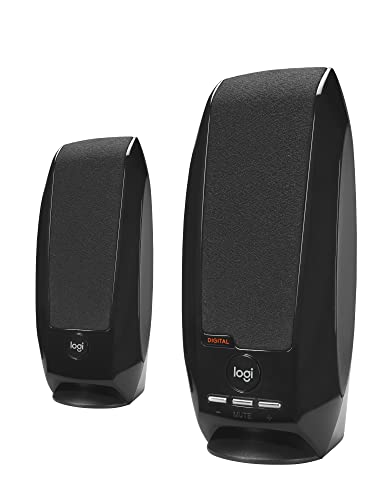
TL;DR: The Logitech S150 delivers plug‑and‑play USB audio with a tiny 0.4 lb footprint, 5.1 cm drivers and 1.2 W RMS output, making it a solid ultra‑budget choice for quiet desktop use.
The standout spec is its ultra‑compact design: the speakers measure just 2.52 in deep, 6.22 in tall and 2.68 in wide, and they tip the scales at only 0.4 lb (181 g). That size lets you slip them onto a cramped desk or even a laptop screen without crowding your workspace. Power comes from the USB‑A connection, so you get both audio and electricity from a single 4 ft (120 cm) cable.
When you line the S150 up with the eight other speakers in this roundup, it weighs noticeably less than most – the Soulion R50, Amazon Basics Stereo, Lenrue models and Creative Pebble all weigh well over a pound. Even the Amazon Basics Bluetooth pair, at roughly 0.44 lb, is a bit heavier. Cable length is comparable to the Lenrue and Creative Pebble units, which also ship with around a 4‑ft USB lead, so you won’t be hunting for extra adapters.
Users consistently praise the S150 for its “plug‑and‑play” convenience and the front‑right volume/mute buttons that let you adjust sound without reaching for the computer. Reviewers also note the orange LED status indicator as a handy visual cue. The downside that shows up again and again is the modest 1.2 W RMS output, which many say feels quiet in louder rooms or when you crank up games. A few buyers mention that the volume knob can feel a bit imprecise and that distortion appears if you push the speakers past their comfortable level.
Pros
Cons
Best for: Entry-level buyers or those on a tight budget who need a space‑saving, plug‑and‑play speaker set.
Avoid if: You need powerful performance, deep bass, or precise volume control for gaming or audiophile use.
TL;DR: The Lenrue G11 is a $19.49 USB‑powered 2.0 speaker bar that delivers clear, distortion‑free audio in a compact under‑monitor form, though its maximum volume stays modest.
At the heart of the G11 is a 10 W RMS power rating fed by a 5 V USB source, and a 1194 mm cable that reaches both your PC and the speakers without a cluttered mess. Its dimensions—65 mm high, 63 mm long, and 380 mm wide—let it slide neatly beneath most monitors, while the 1.433004703‑pound weight keeps the bar stable without feeling heavy.
Compared with the eight other speakers in this roundup, the G11 is a bit heavier than the ultra‑light Logitech S150 (0.4 lb) but still lighter than the Soulion R50 (1.75928885076 lb). Its 1194 mm cable matches Creative Pebble’s 1.2 m cable, and it out‑strips the Lenrue Computer Speakers’ 530 g weight, sitting just a shade above at 650 g. Unlike many peers, the G11 adds touch‑activated LED lights and a top‑mounted volume knob, features you won’t find on the Amazon Basics Stereo 2.0 or the XKX Computer Speakers.
Reviewers consistently praise the “clear, surge‑stereo sound without distortion” and love how the bar clears desk space. Professional reviewers note the four‑amplifier IC horns give surprisingly detailed imaging for the price. The downsides that surface are the low maximum volume—making the G11 less suited for large rooms or high‑intensity gaming—and the automatic LED cycling that some users find distracting. Because the speakers draw power from a USB port, you must place them near a computer or hub, which can limit flexibility.
Pros
Cons
Best for: Budget‑conscious desktop users who need a compact, well‑reviewed speaker bar for small spaces.
Avoid if: You need high volume, deep bass, or a portable solution, or if automatic LED lighting bothers you.
TL;DR: The Soulion R50 is a compact 10‑W Bluetooth soundbar with RGB lighting, a 30° slant, and a physical volume knob, costing $17.43 for budget‑friendly desktop audio.
The R50 packs two independent 5 W full‑range diaphragms for a total output of 10 W, delivering clear stereo sound in a footprint of 88.9 mm high, 406.4 mm long and 68.6 mm wide. Bluetooth connectivity reaches up to 10 m (about 33 ft), and four dynamic LED modes add a splash of color to any desk.
Compared with the other eight speakers, the R50 sits near the middle of the price band—cheaper than the Creative Pebble 2.0 and Amazon Basics Bluetooth speakers, but pricier than the Logitech S150. It weighs about 1.76 lb, making it heavier than the ultra‑light Logitech S150 (0.4 lb) and Lenrue Computer Speakers (1.17 lb), yet lighter than the Creative Pebble 2.0 (1.42 lb). Its 10 W output matches the Lenrue models while surpassing the modest 1.2 W RMS of the Logitech S150 and the 2.4 W total of the Amazon Basics Bluetooth speakers. Unlike most peers, the R50 includes built‑in RGB lighting and a dedicated Bluetooth radio, features that the other units don't list.
Everyday users rave about the “loud, clear sound” and the space‑saving slanted design that slides neatly under a monitor. Professional reviewers note the practical upgrade over laptop speakers and praise the versatile connectivity—Bluetooth, 3.5 mm aux and USB power—all selectable with an “M” key. The main complaints focus on the modest 10 W power ceiling, which can feel under‑whelming for high‑volume gaming sessions, and the fact that both the USB power cable and the 3.5 mm audio cable are hard‑wired and can't be replaced.
Additional technical touches include a physical volume knob on the front panel and a breathable cloth covering that helps keep dust at bay. The 30° design angle directs sound toward the listening position, making it a tidy addition to a home office or dorm desk.
Pros
Cons
Best for: Entry‑level buyers or those on a tight budget
Avoid if: You need audiophile‑grade fidelity, high‑volume output, or replaceable cables
TL;DR: The XKX115A offers dual ultra‑magnetic drivers, adaptive channel switching and a compact 41.9 mm depth design for $23.99, delivering solid plug‑and‑play audio for office and casual use.
The standout feature is the dual ultra‑magnetic drivers paired with dual passive radiators, which the manufacturer says help keep sound balanced even when you clamp the speakers to a monitor. At just 270 g and a shallow 41.9 mm depth, the pair stays out of the way on cramped desks while still delivering audible presence.
Compared with the eight other speakers in this budget roundup, the XKX set sits on the heavier side of the USB‑powered crowd but is lighter than the Creative Pebble 2.0 and Redragon GS550. It’s also bulkier than the Logitech S150’s 2.52 in depth, yet its footprint of 233.0 mm width is wider than many competitors, giving it a stable base. The price of $23.99 places it above the Amazon Basics Stereo 2.0 speakers and the Logitech S150, making it a pricier choice among the sub‑$25 options.
Customer reviews (987 ratings, averaging 4.4 / 5 stars) repeatedly praise the simple USB‑C adapter and the three‑touch‑button control panel for mute and volume, noting that the speakers “just work” with Windows, macOS, ChromeOS and Linux. Reviewers also highlight the adaptive channel switching sensor as a handy feature for dual‑monitor setups. On the flip side, users mention that audiophiles looking for rich bass or immersive gaming sound may find the output modest, which aligns with the product’s positioning as a basic desktop audio solution.
Additional technical context includes a 24‑month worry‑free warranty and fully USB‑powered operation, meaning no external power brick is needed. The black finish and low‑profile design blend well with most workstations, and the built‑in USB‑C to USB adapter ensures compatibility with newer laptops without extra cables.
Pros
Cons
Best for: Buyers willing to invest in a proven, high-quality option
Avoid if: You're shopping on a tight budget — it's priced at $23.99
Breakdown
Amazon Basics Stereo 2.0 Speakers
Pros
Creative Pebble 2.0
Pros
Cons
Redragon GS550
Pros
Amazon Basics Bluetooth Computer Speakers
Pros
Cons
Based on scoring data and product specs
Personalized picks
Best Overall Pick
Amazon Basics Stereo 2.0 Speakers
Best OverallBest for: Budget-conscious buyers seeking a reliable entry-level option
Creative Pebble 2.0
Best for: Most users looking for a well-reviewed, reliable mainstream option
$20.99+$6.85 vs winner
Skip XKX Computer Speakers if…
You're shopping on a tight budget — it's priced at $23.99
The Amazon Basics Stereo 2.0 Speakers take the top spot, thanks to a rock‑bottom price of $14.34 and a strong 4.4‑star rating from 79,775 reviewers. They draw power via USB and accept a 3.5 mm aux jack, so you can plug them into almost any PC or laptop without a separate adapter. The velvety rubberized anti‑slip base and front‑facing 180‑degree driver design keep them stable on a cluttered desk while delivering clear stereo sound.
The Creative Pebble 2.0 lands as runner‑up, perfect if you need a compact desktop pair with easy volume tweaks. It costs $23.74, carries a 4.5‑star rating from 67,177 reviews, and sports 2 in (50.8 mm) drivers with a 100–17,000 Hz frequency response for fuller mids and highs. A front‑panel knob lets you power on and adjust volume without reaching for the cable.
For those willing to stretch a bit, the Creative Pebble 2.0 provides the best mid‑range option, offering larger drivers for richer sound at $23.74. For the premium slot, the Redragon GS550 tops out at $24.99, making it the most feature‑rich speaker set in this budget range.
Grab the Amazon Basics Stereo 2.0 Speakers now and enjoy solid audio without breaking the bank.
The Amazon Basics Stereo 2.0 Speakers stand out for value, priced at just $14.34 and offering USB‑powered plug‑and‑play operation with a built‑in volume control and a bottom bass radiator for added low‑end punch. Their metal finish and 180‑degree front‑facing drivers provide solid stereo sound without any extra cost.
No reviews yet — be the first to share your experience.
Please sign in to leave a review