⚡ Quick Answer
Choosing a drone under $100 can feel overwhelming, but we've narrowed the field to seven kits that balance cost, community feedback, and build potential. Prices span from $23.99 for the YoungRC F450 up to $69.99 for the Eielediy DIY kit, and the lineup is split into clear budget, mid‑range, and premium tiers.
For a sturdy starter frame that earned a 4.5‑star rating from 179 reviewers, the YoungRC F450 costs $23.99, weighs about 0.87 lb and offers a 450 mm wheelbase—ideal for beginners who want a glass‑fiber and nylon mix without extra electronics. The Techvio Mini Drone sits in the mid‑range slot at $49.99, delivers an 80‑meter control range and a 10‑minute flight time, and holds a 4.0‑star rating. Premium choices like the Eielediy kit bring a 1080p camera, 30‑minute flight endurance and a 4.2‑star score, while the FPVDrone S550 and Yysolderic kits round out the high‑end options with larger frames and dual‑battery setups.
Below we break down each tier, compare specs such as weight, flight time and control range, and help you decide which kit fits your skill level and budget.

YoungRC F450
Its 55 mm frame height keeps the kit compact and lightweight at just 395 g, offering strong value and high ratings for entry‑level flyers.

Eielediy Drone DIY Kit
Ideal for hobbyists who want longer flights, its 2000 mAh capacity yields up to 30‑minute runtimes, though it costs about $46 more than the YoungRC F450.

Techvio Mini Drone
It stands out with a 2.4 GHz remote control link, providing a stable connection for casual flights despite a modest 10‑minute battery life, placing it between the cheap F450 and premium Eielediy kit.
Also considered
Score Analysis
Key score advantages vs. runner-up (Eielediy Drone DIY)
Price Range
YoungRC F450
$21.99
Eielediy Drone DIY Kit
$69.99
Techvio Mini Drone
$49.99
Yysolderic Drone DIY Kit
$69.88

Gilobaby Mini Drone Kit
$35.99
FPVDrone S550
$59.99
QWinOut F450
$26.88
Spec Comparison
TL;DR: The YoungRC F450 offers a 450 mm glass‑fiber frame with an integrated PCB, lightweight 0.87 lb build and a solid 4.5‑star rating, making it the most affordable entry‑level DIY drone kit.
The frame’s 450 mm wheelbase and 55 mm height give it a compact footprint while still leaving room for electronics, and the built‑in PCB lets you solder ESCs directly to the top and bottom plates. Glass‑fiber and polyamide nylon combine for an impact‑resistant structure, and the 3 mm motor‑mount holes match common brushless motors.
Compared with the other six kits, the YoungRC F450 is considerably lighter than the QWinOut F450 (over 4 lb) and the FPVDrone S550 (about 1.21 lb), yet a bit heavier than the Gilobaby Mini Drone (0.30 lb) and the Techvio Mini Drone (0.99 lb). Its wheelbase is also shorter than the FPVDrone’s 550 mm, giving it a tighter turning radius. Price‑wise it sits at the low end of the group, making it the most budget‑friendly option.
Users repeatedly praise the kit’s quick assembly and the durability of its glass‑fiber construction, noting that the large mounting tabs simplify camera installs. However, reviewers flag inconsistent net‑weight listings—some sources cite 272 g, others 280 g—which hints at occasional quality‑control variation. Professional reviewers also point out the absence of carbon‑fiber reinforcement and limited technical drawings, which can be a hurdle for precise custom builds.
Additional technical details include 220 × 40 mm arms, a 200 mm landing‑gear height for stable take‑offs, and a generous 1800 g maximum take‑off weight, allowing you to experiment with larger batteries or payloads as you gain confidence.
Pros
Cons
Best for: Entry-level buyers or those on a tight budget
Avoid if: You need powerful performance or professional‑grade features
“superstrong & smooth kit”
“ultra high strength material”
TL;DR: The Eielediy Drone DIY Kit costs $69.99, offers a 2000 mAh battery for up to 30 minutes of flight, and packs a 1080p Wi‑Fi camera into a 44 mm‑tall, brushless‑motor quadcopter.
The standout spec is the 30‑minute flight time, powered by a 2000 mAh LiPo battery, which doubles the runtime of the Techvio Mini Drone’s 10‑minute limit. Combined with four brushless motors, the kit promises stable lift and smoother handling.
Compared with the other six kits, the Eielediy’s 44 mm height matches the Yysolderic package height, but its 235 mm length exceeds Yysolderic’s 170 mm assembled length, while its 168 mm width is narrower than Yysolderic’s 221 mm. At 1.06 pounds, it weighs more than the Gilobaby Mini Drone’s 0.3 pounds and the Techvio Mini Drone’s 0.99 pounds, yet weighs less than the FPVDrone S550’s 1.21 pounds. Its 2000 mAh battery capacity also outstrips Gilobaby’s 350 mAh cell.
Reviewers appreciate the educational value: the detailed manual and PPT slides make the build a solid STEM exercise, and the optical flow module provides steady hovering without GPS. The main drawback is the high difficulty rating (5/5), which can overwhelm beginners, and the fact that the kit doesn’t bundle a Wi‑Fi remote control, so an extra purchase is often required.
Additional context: the kit includes a 1080p camera that records MP4 and JPEG files, carbon‑fiber rods for rigidity, and an estimated 1.5‑hour assembly time. The design mixes plastic, acrylic, and carbon fiber, keeping the weight at 480 g (1.06 pounds) while maintaining a compact footprint.
Pros
Cons
Best for: Those prioritizing quality and willing to pay for premium performance
Avoid if: You're on a tight budget or only need basic functionality
TL;DR: The Techvio Mini Drone offers a 159‑piece DIY build, 10‑minute flight time, and 80‑meter range for $49.99, making it a solid entry‑level STEM kit for kids and beginners.
This kit stands out with its 159 interlocking ABS pieces that snap together without tools, letting you assemble a fully functional drone in a few hours. The finished EC300 weighs about 0.99 lb (450 g) and can lift up to 120 g, while the included 2.4 GHz remote gives you an 80‑meter control radius and a 10‑minute flight window.
Compared with the other six drones in this roundup, the Techvio is lighter than the FPVDrone S550 at roughly 1.21 lb but heavier than the Gilobaby Mini Drone at 0.30 lb. Its 80‑meter range also exceeds the Gilobaby’s 50‑meter limit, while the YoungRC F450 sits at about 0.87 lb, making the Techvio a middle‑weight option with an 80‑meter range for its price tier.
Users love the hands‑on building experience and note that the four built‑in propeller guards keep flights safe for younger pilots. Professional reviewers praise the altitude‑hold and headless modes for easing the learning curve. Most common complaints revolve around the short 10‑minute battery life and occasional takeoff failures when the assembled weight exceeds the 120 g limit.
Beyond the basics, the drone includes 3 speed modes, 3D flip capability, emergency stop, low‑power warning, and one‑key takeoff/landing. Wi‑Fi connectivity lets you pair the unit with a smartphone for additional control options, while the lithium‑polymer battery is rechargeable.
Pros
Cons
Best for: Kids ages 8‑18, beginners, and families looking for an educational, hands‑on drone building experience.
Avoid if: You need long endurance, advanced performance, or GPS‑based features; the drone’s short flight time and limited range may disappoint seasoned hobbyists.
“highly engaging and educational toy”
“great gift”
TL;DR: The Yysolderic DIY Drone Kit delivers a carbon‑fiber, brush‑less drone with dual cameras and 30 minutes of total flight time, but its complex build makes it best for experienced hobbyists.
This kit stands out with a dual‑camera module that streams video in real time, an optical‑flow positioning system for indoor hovering, and high‑power brushless motors. It ships with two LiPo batteries, each offering up to 15 minutes of flight, for a combined 30 minutes of airtime, and the assembled frame measures 170 mm in length.
At 458 g, the drone is slightly lighter than the Eielediy kit’s 480 g frame but heavier than the Gilobaby Mini Drone Kit’s 0.3 pounds and lighter than the FPVDrone S550’s 1.21 pounds. Its 30‑minute total flight time matches the Eielediy’s 30‑minute claim and exceeds the Techvio Mini Drone’s 10‑minute flight duration, placing it toward the higher end of endurance among the seven contenders.
User feedback praises the educational value: the hands‑on assembly teaches drone engineering concepts and the dual cameras add excitement. However, reviewers consistently flag the build as very challenging, rating the assembly difficulty at the maximum level, and note that the remote controller requires an external power bank, which adds inconvenience during flights.
Beyond the cameras, the kit includes carbon‑fiber rods, a flight control board, an optical‑flow module, LED indicators, and one‑click takeoff/landing, headless mode, speed adjustment, and 360° flips. These features give the drone indoor/outdoor versatility while the component list remains thorough for a DIY project.
Pros
Cons
Best for: Teenagers (14+) and adults with prior DIY or engineering experience who want a hands‑on STEM project.
Avoid if: You're a complete beginner, need a ready‑to‑fly drone, or require longer uninterrupted flight without swapping batteries.
TL;DR: The Gilobaby Mini Drone Kit offers a 350 mAh battery, 50 m control range and kid‑friendly DIY assembly for just $33.99, though its 3.8/5 rating hints at mixed user satisfaction.
The standout spec is the 350 mAh battery paired with a 50 meter Wi‑Fi control range, letting beginners keep the drone aloft for short indoor sessions. At only 0.3 pounds and measuring 152.4 mm on each side, the kit is compact enough to fly safely around furniture while still offering 360° flexible movement, 3D flip and altitude‑hold functions.
Compared with the other six drones in this roundup, the Gilobaby is dramatically lighter than the QWinOut F450, which tips the scales at over 4 pounds, and also smaller than the YoungRC F450’s 55 mm frame height. Its 50 meter range is shorter than the Techvio Mini Drone’s 80 meter range, but most peers don’t list a range at all, making Gilobaby’s distance reasonable for a budget entry‑level model. Unlike the FPVDrone S550 and the Yysolderic DIY Kit, which emphasize advanced frame materials and multiple battery packs, Gilobaby focuses on a single 350 mAh pack and a simple plastic build, keeping the price low.
User feedback frequently praises the “DIY Build & Fly” experience, noting that the protective propeller guards and headless mode make the drone approachable for children. Reviewers also highlight the 3D flip capability as a fun way to learn basic maneuvers. However, the 3.8/5 star average signals that some owners have encountered reliability quirks, and several comments note that the manufacturer doesn’t clearly state the flight time, leaving endurance uncertain.
Pros
Cons
Best for: Entry-level buyers or those on a tight budget
Avoid if: Reliability and user satisfaction are your top concerns
“highly engaging and educational toy”
“great gift”
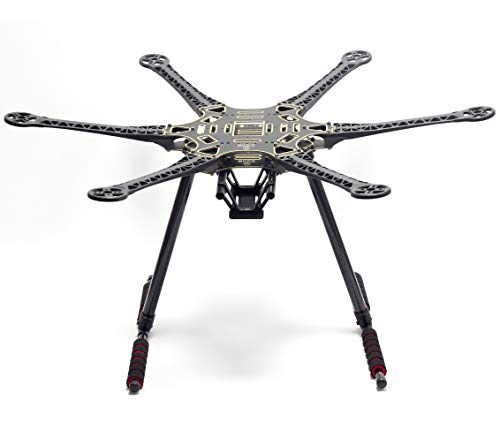
TL;DR: The FPVDrone S550 offers a glass‑fiber frame with 250 mm carbon‑fiber landing gear and an integrated PCB, but its 760 g weight and $59.99 price place it toward the premium side of sub‑$100 kits.
The standout feature is the unfoldable carbon‑fiber landing gear that sits 250 mm above the ground, giving solid clearance for rough surfaces. The frame itself is glass fiber, reinforced by polyamide‑nylon arms that contain a carbon rod for extra rigidity, and the kit includes an integrated PCB baseplate with pre‑threaded brass sleeves to speed up wiring.
Compared with the other six drones in this roundup, the S550 is pricier than most and carries a heftier build. At roughly 1.21 lb (1.212542441 pounds) it is heavier than the Techvio Mini Drone’s sub‑1 lb weight, yet far lighter than the QWinOut F450, which tips the scales at over 4 lb. Its 760 g total frame weight also exceeds the lightweight carbon‑only options, meaning you may see slightly shorter flight times versus the lighter kits.
Reviewers repeatedly praise the kit’s sturdy feel and the ease of assembling the frame thanks to the integrated PCB and brass‑sleeved arms. Hobbyists note that the heavier construction can dampen agility, and you need to purchase motors, props and a battery separately, adding extra cost and planning. Professional reviewers highlight the solid build quality as a strong point for intermediate builders who want a reliable hexacopter platform for FPV racing or aerial filming.
The kit recommends 2200–5200 mAh 3S–4S LiPo batteries and supports 2212 KV to 3108 KV motors, giving you flexibility to match power to your flight style. With a 550 mm wheelbase, the S550 balances stability and maneuverability, while the 100 g carbon‑fiber landing gear legs keep the overall footprint compact enough for indoor testing.
Pros
Cons
Best for: Intermediate DIY builders who value a sturdy hexacopter platform and don’t mind sourcing their own power components.
Avoid if: You're shopping on a tight budget — it's priced at $59.99
“super strong & smooth”
TL;DR: At $26.88, the QWinOut F450 offers a sturdy glass‑fiber frame with pre‑threaded brass sleeves and a KK V2.3 controller, but its 4.15 lb weight makes it one of the bulkier budget kits.
The kit measures 10.39 in in length, 10.28 in in width and 5.28 in in height, while weighing 4.15 lb. Its frame combines glass fiber with polyamide nylon, and the pre‑threaded brass sleeves plus large mounting tabs speed up assembly. The included KK V2.3 flight controller works with a 2.4 GHz 8‑channel remote, and the battery type lists lithium.
In price terms, the QWinOut sits near the low end of the seven‑product lineup, only a shade above the cheapest option. However, its 4.15 lb mass is considerably heavier than most of the other kits, which typically weigh under 2 lb. The 4.0/5 star rating also trails the top‑rated peers, suggesting a modest user satisfaction level compared with the higher‑rated alternatives.
User feedback frequently highlights the convenience of the pre‑threaded brass sleeves and the robustness of the glass‑fiber construction. Reviewers appreciate the included KK V2.3 controller and the 2.4 GHz remote, but several note that the heavier frame makes transport and indoor flying less agile. The price‑to‑feature balance often calls it a trade‑off, with some buyers feeling the kit could offer more value for the dollar.
Pros
Cons
Best for: Entry‑level buyers or those on a tight budget
Avoid if: You need powerful performance or professional‑grade features
Breakdown
YoungRC F450
Pros
Eielediy Drone DIY Kit
Pros
Techvio Mini Drone
Pros
Cons
Yysolderic Drone DIY Kit
Pros
Based on scoring data and product specs
Personalized picks
Best Overall Pick
YoungRC F450
Best Budget PickBest for: Entry-level buyers or those on a tight budget
Eielediy Drone DIY Kit
Best for: Those prioritizing quality and willing to pay for premium performance
$69.99+$48.00 vs winner
Skip QWinOut F450 if…
You need powerful performance or professional-grade features
The YoungRC F450 clinches the top spot as the best budget drone kit. It’s listed at $23.99, carries a 4.5‑star rating from 179 reviews, and weighs just 0.87 lb, making it lightweight and easy to handle. Its integrated PCB lets you solder ESCs directly, while the glass‑fiber and polyamide nylon frame provides high‑strength impact resistance and large mounting tabs for optional accessories.
The Eielediy Drone DIY Kit earns the runner‑up title, perfect if you need a more feature‑rich kit out of the box. Priced at $69.99 with a 4.2‑star rating from 65 reviews, it includes a 1080p camera, 30‑minute flight time, and an optical flow sensor for stable hovering. The kit’s assembly takes about 1.5 hours, so you can get airborne faster.
If the $23.99 F450 feels too basic, the Techvio Mini Drone at $49.99 offers a solid mid‑range, plug‑and‑play experience for casual flyers. For the most features without crossing the $100 threshold, the Eielediy kit remains the premium pick thanks to its built‑in camera and longer endurance.
Grab the YoungRC F450 today and start building your own drone without overspending.
The Techvio Mini Drone offers the furthest advertised range at 80 meters, compared with the Gilobaby Mini Drone’s 50 meter range and the YoungRC F450, which does not list a specific range. If you need a kit that can handle open‑air flights, the Techvio’s 80‑meter reach and sturdy ABS plastic frame make it a solid outdoor choice.
No reviews yet — be the first to share your experience.
Please sign in to leave a review