
💚 Best Value
Hawk's Work FR-450 Frame
$28.99
Choosing a DIY drone kit under $200 can be overwhelming, especially when 11 options sit on the market. Prices stretch from a pocket‑friendly $21.99 for the YoungRC F450 up to $195.99 for the QWinOut F450, and the lineup spans three price tiers – budget, mid‑range and premium – so you can pinpoint a fit for any wallet.
The budget tier packs the YoungRC F450 (4.5/5 from 173 reviews) and Hawk’s Work FR‑450 Frame ($28.99, 4.4/5 from 76 reviews) alongside the Techvio EC300 ($49.99, 4.0/5 from 137 reviews) and the Yysolderic kit at $69.88. Mid‑range offerings like the Eielediy Drone Kit ($69.99) and Betafpv Cetus Lite ($142.99) add longer flight times, while premium choices such as the Apex FPV Kit ($169.99, 3.0/5) and Betafpv Cetus Kit ($191.99) bring full‑feature bundles.
Read on for a closer look at how each kit performs, so you can pick the one that fits your build goals.
YoungRC F450
Its compact 55 mm height keeps the frame lightweight and easy to transport.
Hawk's Work FR-450 Frame
Ideal for hobbyists who want extra landing stability, and at $28.99 it’s $7 more than the YoungRC F450.
Yysolderic Drone Kit
Offers a 30‑minute flight window, far longer than the entry‑level frames, making it suitable for longer sessions.
Also considered
Score Analysis
Key score advantages vs. runner-up (Hawk's Work FR-450)
Price Range
YoungRC F450
$21.99
Hawk's Work FR-450 Frame
$28.99
Yysolderic Drone Kit
$69.88
Eielediy Drone Kit
$69.99

Techvio EC300 Drone
$49.99

QWinOut F450
$195.99
Betafpv Cetus Lite Kit
$142.99
Hisingy Firefly Kit
$189.99

Apex FPV Kit
$169.99
Betafpv Cetus Kit
$191.99
Zsjdretu Frame Kit
$58.23
Spec Comparison
TL;DR: The YoungRC F450 offers a $21.99 DIY quadcopter frame with a sturdy glass‑fiber composite, integrated power board and color‑coded arms, earning 4.5‑star ratings from 173 reviewers.
This kit’s standout feature is its integrated PCB power‑distribution board, which lets you solder ESCs directly to the frame and eliminates a tangled wiring mess. The frame itself uses high‑strength glass‑fiber reinforced polyamide nylon, and every mounting hole comes with pre‑threaded brass sleeves. At just 55 mm tall, 450 mm long and with a 450 mm wheelbase, the airframe weighs 0.8708259349 pounds, giving you a solid yet manageable platform.
Compared with the other ten entries, the YoungRC F450 is the most affordable option under $200 and carries a higher star rating than most peers. It is heavier than the Hawk’s Work FR‑450 frame (which weighs 0.661386786 pounds) but shares the same 450 mm wheelbase, while its wheelbase is significantly larger than the Techvio EC300’s assembled length of 9.7 in (246.4 mm). Its net frame weight of 272 g also sits comfortably between the lighter Zsjdretu Frame Kit (0.110231131 pounds) and the bulkier Techvio EC300 (0.992080179 pounds).
Reviewers consistently praise the frame’s durability and the color‑coded arms that help avoid assembly errors. Professional reviewers highlight the integrated PCB as a real time‑saver for DIY builders. The most common complaints involve occasional missing screws or hardware and some flex when loading payloads near the 1.8 kg maximum takeoff weight. As a pure frame kit, you’ll need to source motors, ESCs, a 3S LiPo battery (1800–3600 mAh recommended) and other electronics yourself.
Pros
Cons
Best for: Entry-level buyers or those on a tight budget
Avoid if: You need powerful performance or professional‑grade features
“Sturdy build quality and crash resilience make this frame feel very solid.”
“Missing screws in the kit was frustrating; had to order extras.”
TL;DR: The Hawk's Work FR-450 Frame costs $28.99, weighs 0.661386786 pounds, and offers a sturdy 450 mm wheelbase with a pre‑soldered PCB, making it a solid entry‑level DIY drone kit.
This frame’s most notable spec is its 450 mm wheelbase combined with a built‑in PCB and XT60 plugs that come pre‑soldered, letting you skip the messy wiring step. The chassis uses high‑strength glass fiber and polyamide nylon, and the net frame weight is only 280 g, while the manufacturer lists the maximum take‑off weight at 1800 g. The kit also includes four landing skids and a full set of mounting screws (24 × M2.5 × 6 mm, 8 × M2.5 × 8 mm, 8 × M3 × 7 mm).
Compared with other frames in this roundup, the FR‑450 is lighter than the YoungRC F450 (0.8708259349 pounds) and the Techvio EC300 (0.992080179 pounds), yet it sits at a higher price point than the YoungRC model. Its 450 mm dimensions match the YoungRC’s length, wheelbase, and width, placing it squarely in the standard F‑450 class while still under the $200 budget ceiling.
Reviewers repeatedly praise the clear documentation and video tutorials that make the build approachable for beginners. Users also note the frame’s durability after crashes and the convenience of the pre‑soldered PCB. On the downside, some shipments arrive with missing screws or landing skids, and first‑time builders report that the assembly can stretch over several days.
Pros
Cons
Best for: Entry‑level buyers or those on a tight budget
Avoid if: You need powerful performance or professional‑grade features
“Great product for a DIY project — solid build, clear instructions, and perfect for learning drone fundamentals.”
TL;DR: The Yysolderic DIY Drone Kit costs $69.88, offers a dual‑camera 1080p system, brushless motors, and up to 30 minutes claimed flight time, but demands a 1.5‑hour build and expert‑level skills.
This kit’s standout spec is its dual‑camera setup delivering 1080p HD video while you pilot, paired with high‑power brushless motors that reviewers say run quieter and last longer than brushed alternatives. The manufacturer claims a maximum flight time of 30 minutes, though real‑world users report around 15 minutes per session.
Compared with the other ten entries, the Yysolderic is notably lighter—its 9 g frame is a fraction of the weight of the Eielediy Drone Kit (over 1 lb) and the Techvio EC300 (just under 1 lb). It also sits at a higher difficulty level (5/5 expert) than most kits, which tend to target beginners. While its price of $69.88 is competitive, many of the peers lack the same dual‑camera capability or brushless motor configuration.
User feedback highlights the educational payoff: the detailed manual walks you through optical flow positioning, headless mode, and 360° flips, turning the build into a STEM lesson. However, several owners note dense instructions, easy loss of tiny screws, and a build time that can stretch beyond the advertised 1.5 hours. Professional reviewers praise the real‑time video transmission and precise indoor hovering enabled by the optical flow sensor.
Pros
Cons
Best for: STEM educators, teens (14+) and hobbyists who enjoy a challenging DIY project and want to learn drone technology hands‑on.
Avoid if: You're looking for plug‑and‑play drones, are a young child, or lack the tools and patience for an expert‑level build.
“It took me 3 hours instead of 1.5 — way harder than expected.”
“Most users say the effort is "worth it" for the educational payoff.”
TL;DR: At $69.99, the Eielediy Drone Kit offers a brush‑less quadcopter with 1080p Wi‑Fi video, optical‑flow hover and a full STEM curriculum, but demands a 1.5‑hour build and expert‑level skill.
The kit ships with four brushless motors, a 30‑minute LiPo battery and a 1080p camera that streams live video to a smartphone over Wi‑Fi. Assembly takes about 1.5 hours and the difficulty earns a 5‑out‑of‑5 rating, making it a serious engineering project rather than a plug‑and‑play toy.
Compared with other options in the roundup, it’s heavier than the feather‑light Yysolderic kit (which weighs just 9 g) and taller than the compact Zsjdretu frame (100 mm high). Its 130 mm height also exceeds the 71 mm assembled height of the Techvio EC300, while its price sits alongside the similarly priced Yysolderic kit.
Reviewers praise the brushless motors and optical‑flow positioning for stable indoor flight, and they value the editable PPT courseware for classroom use. Common complaints focus on the steep learning curve, occasional Wi‑Fi video lag and the tendency of carbon‑fiber rods to crack after crashes.
Pros
Cons
Best for: Value-conscious buyers seeking quality at $69.99
Avoid if: You have limited desk space or need portability
“It took me 3 hours instead of 1.5 — way harder than expected.”
“Most users say the effort is "worth it" for the educational payoff.”
TL;DR: The Techvio EC300 Drone is a 159‑piece, beginner‑friendly DIY kit that flies for about 10 minutes within an 80 m range, priced under $200 and packed with safety‑first features.
The standout spec is the 159 snap‑together ABS pieces that let kids build and customize their own drone in minutes, then launch it with a single button. The kit includes a rechargeable LiPo battery that charges in 60 minutes and delivers roughly 10 minutes of flight, while the RF remote gives an 80 m control range. At an assembled height of 2.8 in and a compact 9.7 in length and width, it fits comfortably on a desk or bedside table.
Compared with the other ten entries, the EC300 is heavier than the ultra‑light Zsjdretu Frame Kit but lighter than the Eielediy Drone Kit, placing it in the middle of the weight spectrum. It’s also more affordable than the Betafpv Cetus Lite Kit and offers a full drone experience where many frame‑only kits, such as the Hawk's Work FR‑450, provide just the chassis. While some competitors list longer flight times, the EC300’s 10‑minute endurance is typical for budget‑oriented, beginner drones.
Reviewers consistently praise the educational angle – the kit encourages problem‑solving, engineering concepts, and hands‑on play for children 8 years and up. Professional reviewers note the ease of assembly and the inclusion of safety features like altitude hold, headless mode, and four‑sided propeller guards. The most common complaints focus on the short 10‑minute flight window, the 80 m range, and occasional battery or motor overheating that some users have observed.
Beyond the basics, the EC300 packs extra flight aids: 3D flips in four directions, an emergency stop button, low‑power warnings, and a one‑key takeoff/landing function. All components use non‑toxic ABS plastic, and the kit markets itself as beginner‑friendly for all skill levels, making it a solid choice for classroom STEM projects or a birthday gift.
Pros
Cons
Best for: Buyers in the budget price range seeking the best quality at that price point
Avoid if: You want the best value-per-dollar in its price range
“fun family project”
“perfect gift”
TL;DR: The QWinOut F450 offers a nearly complete DIY quadcopter kit with a 5200 mAh optional battery, pre‑flashed 30 A ESCs and an APM 2.8 controller, but it demands soldering and firmware work.
The standout spec is the optional 5200 mAh battery paired with an 11.1 V pack, which can extend the advertised 8–15 minute flight window. All four 30 A ESCs arrive pre‑programmed with Simonk firmware, so you skip the extra coding step. The frame measures 365 mm × 365 mm × 190 mm with a 450 mm wheelbase, giving a sturdy platform for payloads up to roughly 1.5 kg.
Compared with the other ten kits in this roundup, the F450 sits toward the higher end of the price band and includes more comprehensive hardware – many of the competitors ship with sub‑500 mAh batteries or omit a flight controller entirely. While some kits are lighter or smaller, the F450’s larger dimensions and higher‑capacity battery give it a more capable flight envelope.
Reviewers love the “all‑soldered” approach; they note that the kit saves weeks of part hunting. At the same time, users repeatedly mention the steep learning curve: you still need to flash the APM 2.8 firmware, tune PID settings, and handle the solder joints. Professional reviewers point out that the APM 2.8 is older than newer Pixhawk/PX4 boards, which can limit advanced features.
Technical enthusiasts will appreciate the open‑source APM 2.8 controller with a built‑in compass, barometer (MS5611) and support for Mission Planner. The DJI‑style folding GPS antenna, 25 cm cable, and dual CAN/UART ports add flexibility for custom telemetry or autonomous missions.
Pros
Cons
Best for: Those prioritizing quality and willing to pay for premium performance
Avoid if: You're on a tight budget or only need basic functionality
“Everything included — saved me weeks of sourcing parts.”
“Great for learning APM and Mission Planner.”
TL;DR: The Betafpv Cetus Lite Kit offers a beginner‑focused FPV experience with barometer‑based altitude hold (±0.3 m accuracy), a full RTF package, but only 4–5 minutes of flight per charge.
The standout spec is its barometer‑based altitude hold that maintains hover within ±0.3 m, a feature many newcomers find reassuring when learning to fly indoors. Combined with a lightweight 36 g airframe and 19000 KV brushed motors, the drone feels nimble yet stable.
Compared with the other ten kits, the Cetus Lite sits at a higher price tier than the ultra‑light Yysolderic Drone Kit (which weighs just 9 g) and the budget‑oriented Eielediy Drone Kit (which weighs over 480 g). Its 300 mAh battery measures smaller than the Apex FPV Kit’s 400 mAh cells and far below the Hisingy Firefly’s 950 mAh pack, giving it a shorter 4–5 minute flight window compared with the longer runtimes those rivals claim. However, its 80 m maximum flight distance tops the Hisingy Firefly’s listed 50 m control range, giving it a modest edge in range.
User sentiment repeatedly praises the safety‑first design: a full propeller guard, automatic calibration on power‑up, and an emergency auto‑locking system that disarms the motors on impact. Reviewers also highlight the included LiteRadio 1 transmitter’s two self‑centering gimbals and the VR02 goggles’ headband as making the out‑of‑the‑box experience truly plug‑and‑play. Professional reviewers note the high‑impact PA12 frame steps up from the brittle plastics many entry‑level drones use, while also pointing out that the 25 mW video transmitter and 720p camera keep the kit firmly in the budget FPV category.
Pros
Cons
Best for: Children 8 + under supervision, absolute FPV beginners, and parents seeking an educational, safety‑focused drone starter kit.
“Altitude hold is incredibly helpful for learning basic flight dynamics.”
“Just power on and fly.”
TL;DR: The Hisingy Firefly Kit offers an 83.9 g micro‑quadcopter with a 4.3‑inch FPV display, 8‑10 minute flight time, and 50 m Bluetooth control range for under $200, making it a solid starter package.
The standout spec is the 4.3‑inch FPV screen that refreshes at 60 Hz, delivering a clear view for beginners. The drone itself weighs just 83.9 g and packs a 40,000 rpm brushed motor, while the included 1S 950 mAh battery promises 8–10 minutes of flight per charge.
At $169.99 the Firefly sits at a similar price point to the Apex FPV Kit, yet it ships with a dedicated controller and goggles, whereas Apex only lists a drone and batteries. Compared with the Apex’s weight of roughly 0.22 lb, the Firefly’s 83.9 g frame is lighter, which helps new pilots keep control. The Betafpv Cetus Lite Kit lists fewer specs, so the Firefly’s richer feature set—Bluetooth simulator support, OTA updates, and a 4.3‑inch display—places it ahead in terms of out‑of‑the‑box functionality.
Reviewers consistently praise the kit’s beginner‑friendly design: altitude hold and stable brushed motors make the first flights forgiving, and professional reviewers highlight the bright goggles as “clear.” Users love the all‑in‑one convenience, but they also note the short 8–10 minute flight window and the need to buy extra AAA cells for the controller and a 18650 cell for the goggles.
Technically, the system operates on a 2.4 GHz control link and transmits analog video at 5.8 GHz, with the goggles reporting a max control range of 80 meters. The 55 mm propellers and 10 C discharge rate keep the quad agile, while the controller’s 8‑hour battery life ensures long practice sessions without recharging.
Pros
Cons
Best for: Children ages 8–12, FPV beginners, educators running STEM programs, and indoor or backyard flyers who want an all‑in‑one starter kit.
Avoid if: You prefer high speed, long endurance, digital HD video, brushless motors, or a product with extensive real‑world feedback and proven track records.
“Perfect for my 10-year-old—easy to fly and very durable.”
“Love that it connects to Liftoff—my son practices indoors before flying outside.”
TL;DR: The Apex FPV Kit delivers a 100 g, 400 mAh drone with three batteries for up to 54 minutes total flight, 120° FOV camera, and 305 m 5.8 GHz range, all for $169.99.
The kit’s standout spec is the three 400 mAh batteries that together give you up to 54 minutes of flight time, while each individual cell promises 15–18 minutes aloft. At just 100 g, the drone stays light enough for indoor play yet sturdy enough for beginners, and the 120° field‑of‑view camera feeds low‑latency video to the included goggles.
Compared with the other ten entries, Apex’s battery capacity sits below Hisingy’s 950 mAh pack but above the 300 mAh cells found in the Betafpv Cetus Lite. Its 305‑meter transmission range outstrips Hisingy’s 50‑meter control range, and the drone’s 94 mm height lands between the ultra‑compact 45 mm of the Cetus Lite and the larger 190 mm profile of the QWinOut F450. Weight‑wise, Apex is heavier than the feather‑light 9 g Yysolderic but dramatically lighter than the 480 g Eielediy model.
Users consistently highlight the three‑battery bundle as a major convenience, noting that it lets them practice longer without swapping cells. Reviewers also praise the head‑tracking and optical‑flow positioning, features that feel advanced for an entry‑level kit. The main complaints revolve around occasional controller pairing hiccups and the base camera’s 480p resolution, which some find limiting for video‑focused flying.
Beyond the basics, the system supports up to a 32 GB SD card, runs on a 5.8 GHz analog link with 25 mW power on the regular remote (up to 500 mW on the ELRS version), and offers both altitude‑hold and manual flight modes, making the transition to more aggressive piloting smoother.
Pros
Cons
Best for: Beginners seeking an all‑in‑one FPV experience with solid flight time and beginner‑oriented features.
Avoid if: You need high‑performance brushless motors, 1080p+ video, or rock‑solid reliability for competitive racing.
“Perfect for learning FPV flying without breaking the bank.”
“The head tracking makes it feel like you’re really flying.”
TL;DR: For under $200, the Betafpv Cetus Kit delivers a brush‑less micro FPV drone with altitude‑hold mode, bright goggles and a full prop‑guard, but its 4‑5 minute flight time and proprietary batteries keep it beginner‑focused.
The Cetus Kit stands out with its brushless motor paired with a 40 mm three‑blade propeller and a high‑discharge 75C BT2.0 450 mAh 1S battery, giving a takeoff weight of just 45 g. Its built‑in altitude‑hold (Normal) mode and manual/sport options let newcomers transition smoothly, while the PA12 frame and full 360° propeller guard keep crashes survivable. The included VR02 goggles pack a 4.3‑in screen, 300 cd/m² brightness and a 55° field of view, powered by a 2000 mAh 3.7 V internal battery.
Compared with the other kits in this $200‑plus roundup, the Cetus is pricier than the Betafpv Cetus Lite Kit and heavier than the feather‑light Yysolderic Drone Kit, which weighs only 9 g. Its 4–5 minute flight window is far shorter than the Apex FPV Kit’s 54‑minute total endurance, and its 80 m maximum range exceeds the 50 m control range claimed by the Hisingy Firefly Kit. On the size front, the 90 mm square frame is larger than the 36 mm tall Hisingy drone but more compact than the QWinOut F450’s 190 mm height.
Everyday flyers praise how ready‑to‑fly the package feels – the two included batteries, charger and portable bag let you launch straight out of the box. Reviewers also note the auto‑landing safety that kicks in when the battery dips below 3.3 V, which protects the tiny 45 g quad from sudden power loss. On the flip side, owners frequently mention the proprietary BT2.0 connector as a hassle, and the short 4–5 minute flight time as a limiting factor for longer sessions.
The kit blends optical flow horizontal positioning with a laser rangefinder for height, delivering ±0.2 m horizontal and ±0.3 m vertical accuracy. Video transmission runs on a 5.8 GHz band at 25 mW, while the 8‑channel 2.4 GHz transmitter stays under 100 mW output, keeping interference low. The brushless motor’s higher thrust and the 75C discharge rate give a snappy response, though some pilots report a yaw rate that feels aggressive in the slower sport mode.
Pros
Cons
Best for: Beginners who want a ready‑to‑fly, crash‑resistant FPV starter kit.
Avoid if: Experienced pilots who need longer endurance, custom firmware or standard battery compatibility.
“Altitude hold is incredibly helpful for learning basic flight dynamics.”
“Just power on and fly.”
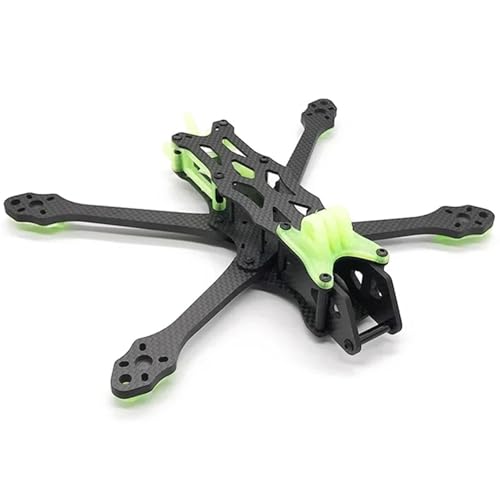
TL;DR: The Zsjdretu 5‑inch carbon‑fiber frame kit offers a lightweight 50 g chassis, 225 mm wheelbase and DJI O3‑ready cutouts for under $60, making it a solid DIY option for budget‑conscious FPV builders.
This frame’s standout feature is its carbon‑fiber construction that keeps the item weight down to just 50 grams while still providing the rigidity needed for responsive flight. The 5‑inch propeller compatibility and 225 mm wheelbase give you a versatile platform that can handle both freestyle tricks and smooth cinematic shots. The kit also includes precise mounting holes – 30.5 mm × 30.5 mm and 20 mm × 20 mm – so you can fit popular flight controllers and the DJI O3 Air Unit without extra drilling.
At $58.23, the Zsjdretu frame sits above ultra‑cheap options like the Hawk's Work FR‑450, but it’s considerably lighter than the Techvio EC300 Drone, which tips the scales at 0.992080179 pounds. Compared with the feather‑light Yysolderic Drone Kit at 9 g, the Zsjdretu is heavier, yet it still undercuts many mid‑range carbon‑fiber frames that often exceed $100. In short, it lands in a sweet spot where you pay a modest premium for a sturdier, more feature‑rich build.
Community chatter notes that the brand isn’t yet a household name in the FPV scene, so support resources often feel sparse. Nonetheless, reviewers appreciate the dedicated cutouts for the DJI O3 Air Unit and the clean cable‑management layout. Some users have reported that the arms become brittle after hard crashes and that finish quality varies between kits, so you’ll want to handle impacts gently.
Beyond the frame, the kit offers Bluetooth connectivity for easy configuration and a 1 MP effective still resolution camera mount, which is sufficient for basic visual checks while you’re on the ground. The arm thickness of 5.5 mm and bottom plate thickness of 2.5 mm strike a balance between durability and weight, and the 2.0 mm side and top plates add extra stiffness where it matters most.
Pros
Cons
Best for: Entry-level buyers or those on a tight budget
Avoid if: You need powerful performance or professional‑grade features
Breakdown
YoungRC F450
Pros
Hawk's Work FR-450 Frame
Pros
Cons
Yysolderic Drone Kit
Pros
Eielediy Drone Kit
Pros
Based on scoring data and product specs
Personalized picks
Best Overall Pick
YoungRC F450
Best Budget PickBest for: Entry-level buyers or those on a tight budget
Hawk's Work FR-450 Frame
Best for: Entry-level buyers or those on a tight budget
$28.99+$7.00 vs winner
Skip Zsjdretu Frame Kit if…
You need powerful performance or professional-grade features
YoungRC’s F450 flies to the top of the list with a $21.99 price tag, a 4.5‑star rating from 173 reviewers, and a lightweight 0.8708259349‑pound frame that still supports a 1.8 kg maximum takeoff weight. Its integrated PCB power‑distribution board and pre‑threaded brass sleeves make the build process straightforward, while the colored arms help you keep orientation straight during flight.
The runner‑up is Hawk’s Work FR‑450 Frame, a solid choice if you’d like a kit that arrives with landing skids and XT60 plugs already installed. Priced at $28.99 and rated 4.4 stars by 76 users, this frame weighs 0.661386786 pounds and offers the same high‑strength glass‑fiber/polyamide nylon construction, making it ideal for beginners who prefer a ready‑to‑fly feel.
If you need something beyond the entry level, the Yysolderic Drone Kit at $69.88 delivers a well‑balanced mid‑range option with upgraded components, while the QWinOut F450 at $195.99 serves as the premium pick for hobbyists seeking a more refined build and extra features.
Pick the YoungRC F450 today and get the most capable drone kit under $200 without breaking the bank.
The YoungRC F450, priced at $21.99, provides excellent value with an integrated PCB, pre‑threaded brass sleeves, and a lightweight high‑strength glass fiber and polyamide nylon frame, making it a solid starter for under $30.
Please sign in to leave a review
No reviews yet. Be the first to review!
