⚡ Quick Answer
When you need to smooth tight corners or delicate contours, an edge sander can make the difference between a rough finish and a professional look. We compared eight models that span the full price spectrum—from the $8.79 Milescraft 1621 up to the $45.49 Worx WX822L—so you can see how budget, mid‑range and premium options stack up. All eight tools earned solid user scores, with the WEN 6301, SKIL SR250801 and Ryobi Corner Cat each hovering around a 4.5‑plus rating on thousands of reviews.
The WEN 6301 stands out for its pro‑level 13,500 OPM motor, a lightweight 997.9 g body and a handy 34.9 mm dust‑collection port, all for just $16.80. It lives in the budget tier alongside the ultra‑light FastCap Fastbreak, yet its 1‑amp motor and angled 3.75 × 5.5‑inch pad give it a level of precision that rivals pricier cordless rivals. On the mid‑range side, the SKIL SR250801 adds a rubberized grip and a 1.2 A motor, while the FastCap Fastbreak XL offers a manual solution for thick‑edge work. Premium contenders like the Worx WX822L and Ryobi Corner Cat bring cordless freedom, brushless‑compatible motors and triangular grips for tight‑spot access.
Below we break down each model’s strengths, quirks and ideal use cases, so you can match the right edge sander to your workshop or hobby space.

WEN 6301
Its compact height of 152.4 mm lets it slide into tight spots while delivering strong value and high ratings.

SKIL SR250801
Ideal for DIY hobbyists who want a solid, well‑reviewed sander; at $32.99 it’s about $16 higher than the WEN 6301.
Worx WX822L
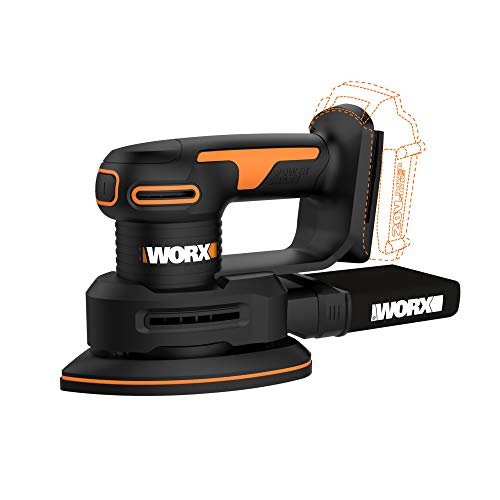
The cordless 20 V Worx WX822L, with a brushless‑compatible motor and a 3‑year warranty, offers freedom and durability the other two lack.
Also considered
TL;DR: The WEN 6301 delivers 13,500 OPM from a lightweight 997.9 g body, an angled pad for tight corners, and a 34.9 mm dust port, all at a budget‑friendly $16.80 price.
At the heart of the WEN 6301 is a fixed‑speed 1‑amp brushed motor that spins the pad at 13,500 OPM. The sanding pad measures 95.25 × 139.7 mm and features an angled tip, which lets you reach inside cabinets or along narrow moldings without awkward wrist angles. A 34.925 mm dust‑collection port lets you attach a shop vac, keeping the work area cleaner. The unit weighs just 997.9 g and comes with a 1.83 m cord, giving you enough reach for most bench‑top projects.
Compared with the other seven sanders in this roundup, the WEN sits in the middle of the weight range. It is heavier than the FastCap Fastbreak (0.08 lb) and Milescraft 1621 (0.35 lb), but lighter than the SKIL SR250801 (2.31 lb), Workpro Detail Sander (2.6 lb), Ryobi Corner Cat (1.92 lb), and Worx WX822L (1.77 lb). Speed‑wise, it matches the SKIL’s 13,500 OPM rating while offering a larger dust‑port than the FastCap’s 1‑1/4‑inch port. Its cord length of 1.83 m is shorter than the longer cables found on some larger corded models, which can limit mobility unless you use an extension.
Professional reviewers highlight the angled pad tip as a real advantage for tight‑space detail work, and users consistently praise the light weight for reducing hand fatigue during long sessions. The included vacuum adapter and a starter 80‑grit sandpaper sheet make it ready to go out of the box. On the flip side, the fixed single speed draws criticism from users who want more control on delicate finishes, and the modest 1‑amp motor can feel under‑powered when tackling tougher hardwoods. The 1.83 m cord also shows up in complaints about limited reach.
Beyond the core specs, the sander uses a Velcro (hook‑and‑loop) pad attachment for quick sandpaper changes, runs on standard 120 V household power, and carries a 2‑year limited warranty from WEN. Its compact dimensions—152.4 mm height, 95.25 mm length, and 133.35 mm width—make it easy to store in a crowded workshop.
Pros
Cons
Best for: Budget‑conscious buyers seeking a reliable entry‑level option — the WEN 6301 offers Height: 152.4 mm
Avoid if: You need variable speed control, a longer reach, or heavy‑duty material removal capabilities
TL;DR: The SKIL SR250801 delivers a 13,500 OPM 1.2 A motor, 4‑in‑1 tool‑free attachments and a 1‑1/4‑inch dust port, all for $32.99 and a solid 4.5‑star rating.
At the heart of the SKIL SR250801 is a 1.2 amp motor that spins at 13,500 OPM, giving you fast, smooth sanding on flat surfaces and tight corners. The sander’s 4‑in‑1 design—standard pad, louver, finger, and flexible attachment—lets you switch between tasks with a single button, and the rubberized grip plus counterweight balance keep vibration low during use.
Compared with the other seven edge sanders, the SKIL sits in the middle of the weight range at 2.31 lb, lighter than the Workpro Detail Sander (2.6 lb) but heavier than the FastCap Fastbreak XL (≈0.62 lb). Its 13,500 OPM speed matches the top‑end WEN 6301 and outpaces the Ryobi Corner Cat’s 11,000 OPM. The 1‑1/4‑inch dust‑port is the same size as Worx’s vacuum adapter, giving it comparable dust‑extraction capability.
Reviewers consistently praise the smooth operation and the ease of swapping sanding sheets, noting that the micro‑filtration canister keeps their work area tidy. Professional reviewers highlight the low‑vibration design and the dust‑sealed on/off switch as durability boosters. A few users do mention that the canister fills quickly if you’re not hooked up to a vacuum, and the vibration can become noticeable during extended sessions. The sander is limited to dry sanding, so wet‑sanding projects aren’t advisable.
Pros
Cons
Best for: Most users looking for a well‑reviewed, reliable mainstream option — the SKIL SR250801 offers Dust Port Size: 1-1/4-inch
Avoid if: You have limited desk space or need portability
TL;DR: The Worx WX822L delivers cordless, triangular‑base precision with a 5.75‑inch depth, 1.77‑lb weight and up to 12,000 OPM, but its tool‑only packaging pushes the $45.49 price higher than many entry models.
What really sets this sander apart is the triangular “steam‑iron” base combined with a feather‑light 1.77 lb chassis and a compact overall depth of 5.75 inches. Those dimensions let you reach tight corners while the no‑load speed range of 400–12,000 OPM and an oscillation rate of 1,200 oscillations per minute give you enough bite for fine‑detail work.
Against the seven other edge sanders in the roundup, the WX822L is longer than the Ryobi Corner Cat (7.09 in) and the SKIL SR250801 (6.77 in), but its weight of 1.77 lb is lighter than Ryobi’s 1.92 lb, Workpro’s 2.6 lb, and SKIL’s 2.31 lb. It sits between the FastCap Fastbreak XL’s ultra‑light 0.62 lb and the heavier Workpro model, offering a balanced heft that many users find comfortable for one‑handed operation.
Reviewers consistently praise the sander’s ease of use, noting that the triangular shape “addresses specific pain points in edge and corner sanding.” Professional reviewers highlight the 12,000 OPM ceiling as “competitive within the detail sander category” and the elliptical orbit as a way to reduce swirl marks. Users also like the built‑in micro‑filter dust bag and the 1‑hour charging time that gets the 20V Max battery ready for quick jobs.
Beyond the basics, the WX822L plugs into Worx’s 75+‑tool Power Share ecosystem, meaning existing Worx batteries work right out of the box. The 5/64‑inch orbital diameter and 1‑¼‑inch vacuum adapter let you attach a shop vac for cleaner workspaces, while the 5.5 × 3.5‑inch platen keeps the sanding surface tight enough for delicate trim work.
Pros
Cons
Best for: Buyers willing to invest in a proven, high‑quality option — the Worx WX822L offers Overall Depth: 5.75 inches
Avoid if: You're shopping on a tight budget — it's priced at $45.49
TL;DR: The Ryobi Corner Cat delivers cordless 18 V finish sanding with a triangular base, 11,000 OPM speed, low vibration, and three starter grits, all for $41.74, making it a solid choice for DIY corner work.
What sets the Ryobi Corner Cat apart is its triangular base, which the manufacturer says is 23% more compact than previous models. At just 1.92 lb and measuring 4.29 in high, 6.22 in wide and 7.09 in long, it slips into tight corners that bulkier sanders can't reach. The 18 V ONE+ cordless system powers an 11,000 OPM orbit speed while a built‑in 50 % vibration reduction keeps the tool steady for fine finishing.
Compared with the other seven sanders in this roundup, the Corner Cat sits in the middle of the weight range—lighter than the Workpro Detail (2.6 lb) and SKIL SR250801 (2.31 lb) but heavier than the ultra‑light FastCap Fastbreak XL (0.62 lb) and Milescraft 1621 (0.35 lb). Its orbit speed of 11,000 OPM is a notch below the Worx WX822L’s 12,000 OPM ceiling and the Workpro’s 13,000 OPM, yet it still outpaces many budget models. In length it’s shorter than the Workpro’s 9.72 in but a bit longer than the SKIL’s 6.77 in, giving it a balanced footprint that complements its corner‑focused geometry.
User reviews consistently highlight the ease of getting into tight spaces and the low‑vibration feel, calling the tool “comfortable” for extended sanding of trim or furniture. Professional reviewers echo this, noting that the 50 % vibration reduction and hook‑and‑loop sandpaper attachment make light‑finish work precise and quick. The downside that surfaces in both consumer and expert feedback is the limited material removal – the vibration‑only action isn’t meant for heavy stock – and the cordless nature means you’ll need to manage battery runtime on longer jobs.
The Corner Cat runs on Ryobi’s ONE+ 18 V battery ecosystem, meaning you can share power with over 300 other Ryobi tools. It ships with three sandpaper sheets (grits 60, 120 and 240) that attach via a hook‑and‑loop system, so you’re ready to sand right out of the box. The combination of a compact triangular shape, reduced vibration, and cordless flexibility positions it as a practical finish sander for DIYers who already own Ryobi batteries.
Pros
Cons
Best for: Those prioritizing quality and willing to pay for premium performance — the Ryobi Corner Cat offers Included Sandpaper Count: 3
Avoid if: You're shopping on a tight budget — it's priced at $41.74
“very inexpensive unit”
“doesn't take a ton of material off at a time”
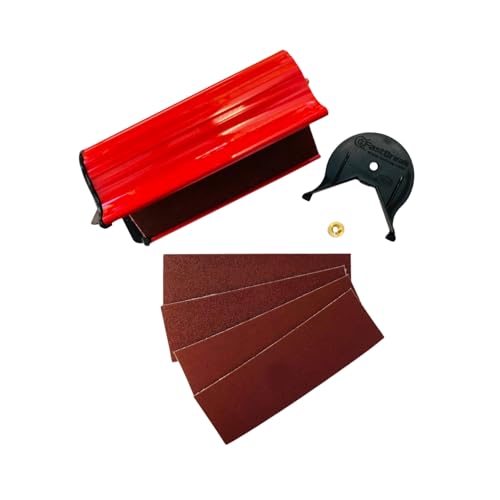
TL;DR: The FastCap Fastbreak Dual‑Edge Sander packs a 5‑7⁄8‑inch sandpaper area, ergonomic grip and a feather‑light 0.08‑lb body, delivering edge‑breaking speed up to ten times faster than hand filing for under $15.
What really sets this tool apart is its dual‑edge design paired with a sandpaper sheet that measures 5‑7⁄8 inches tall and 1‑3⁄4 inches wide. The ergonomic grip makes it comfortable for extended use, and at just 0.08 pounds it’s one of the lightest edge sanders you’ll find. It handles material thicknesses from 6.35 mm up to 28.575 mm, covering standard edge ranges of 1/4″ to 1‑1/8″.
Compared with the seven other sanders in this roundup, the Fastbreak is dramatically lighter than the WEN 6301, the Milescraft 1621 and the SKIL SR250801, which all weigh well over a pound. Its 8.65‑inch width also gives it a broader sanding footprint than many of the compact models, while still remaining easy to maneuver thanks to its compact 1.9‑inch height.
Reviewers consistently praise the tool for shaving edge‑finishing time, noting it feels “at least ten times faster than hand filing.” Professionals highlight the clean, consistent round‑over it produces on melamine, veneer and plywood. The main trade‑off is its single‑purpose focus – it excels at edge‑breaking but isn’t meant for general surface sanding.
Technical details include a sanding thickness range of 6.35 mm to 28.575 mm and a requirement for only one pass to achieve a smooth edge. The tool ships with 80‑ and 180‑grit sandpaper options, and the standard model holds one sheet per load, while the XL version accepts two.
Pros
Cons
Best for: Entry‑level buyers or those on a tight budget — the FastCap Fastbreak offers Sandpaper Height: 5‑7⁄8 inches
Avoid if: you need a versatile, general‑purpose sander or adjustable profiling capability
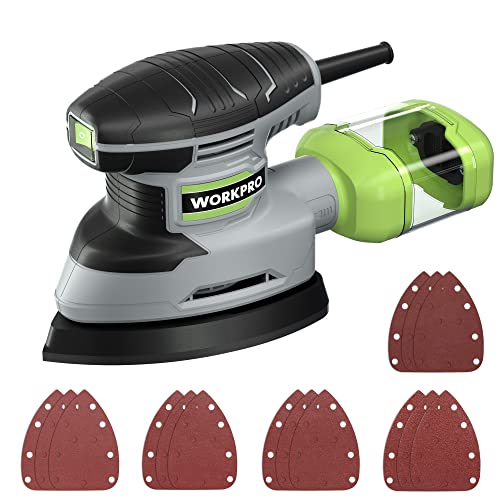
TL;DR: The Workpro Detail Sander packs a 13,000 OPM motor, built‑in dust collector and 15 assorted sandpapers into a 2.6‑lb, corded unit for precise, small‑area sanding at a modest $33.99 price.
What really sets this sander apart is its 13,000 OPM motor speed paired with a 1.6 A draw at 120 V, delivering fast material removal while staying compact at 5.08 in tall, 9.72 in long, and 5.98 in wide. The integrated dust‑collection box means debris stays trapped, keeping your workspace cleaner than many handheld rivals.
Compared with the seven other edge sanders in this roundup, the Workpro is heavier than the SKIL SR250801 (2.31 lb) and Ryobi Corner Cat (1.92 lb), and noticeably bulkier than the ultra‑light FastCap Fastbreak XL (0.617 lb) and Milescraft 1621 (0.35 lb). Its motor speed sits just below the SKIL and WEN 6301, both listed at 13,500 OPM, but outpaces the Ryobi’s 11,000 OPM and Worx’s 12,000 OPM ceiling. Lengthwise, it’s longer than the SKIL (6.77 in) and Ryobi (7.09 in) yet shorter than the Worx (10.5 in), giving you a middle‑ground balance between reach and maneuverability.
Customer chatter highlights the convenience of the built‑in dust collector and the generous 15‑piece sandpaper kit (3 × P60, P80, P120, P180, P240). Professional reviewers note that the soft‑rubber grip reduces hand fatigue during extended detail work. The main downside echoed in feedback is the corded power source, which limits portability for on‑site jobs, and a rating of 4.4 / 5 that trails the higher‑scoring peers.
Pros
Cons
Best for: Those prioritizing quality and willing to pay for premium performance — the Workpro Detail Sander offers Included Sandpapers: 15 PCS (3x P60, 3x P80, 3x P120, 3x P180, 3x P240)
TL;DR: The Milescraft 1621 Edge Sander gives DIY woodworkers a cheap, dual‑edge manual sander that handles 6.35–38.1 mm boards, with a non‑slip grip and a 127 mm disc, all for $8.79.
What sets the Milescraft 1621 apart is its V‑groove dual‑edge design that sands both sides of a board in a single pass. The tool accepts any standard 5‑inch Hook‑and‑Loop disc, and it comes with a 150‑grit sanding sheet ready to go. Its ergonomic contoured shape and non‑slip rubber grip help keep hand fatigue low during longer jobs, while the board‑thickness range of 6.35 mm to 38.1 mm lets you work with material from a quarter‑inch up to one‑and‑a‑half inches. The overall height measures 69.85 mm, and the sanding disc diameter is 127 mm.
Compared with the seven other edge sanders in this roundup, the Milescraft is noticeably lighter than the FastCap Fastbreak (0.08 lb) but heavier than that same model’s XL version, which weighs about 0.62 lb. It is also far lighter than the powered WEN 6301, which tips the scales at 997.9 g, and considerably more compact than the SKIL SR250801 that weighs 2.31 lb. In terms of size, the Milescraft’s length of 215.9 mm exceeds the WEN’s 95.25 mm length, giving it a longer reach for larger panels. While the WEN and other powered units boast motor speeds of 13,500 OPM, the Milescraft stays manual, keeping its price at a budget‑friendly $8.79.
Professional reviewers praise the dual‑edge capability for halving sanding time and note the contoured, non‑slip grip as a comfort booster. User sentiment is generally positive, reflected in a 4.4‑star rating from 117 reviewers, though the limited number of reviews makes long‑term durability harder to gauge. The tool’s manual nature means it won’t match the speed of electric sanders, but for hobbyists who value control and cost, it delivers solid performance.
Additional technical details include a 3‑year limited warranty and a 0.35‑pound overall weight (159 g), making it easy to store in a small workshop. The included 150‑grit disc provides a ready‑to‑use starting point, and the Hook‑and‑Loop backing lets you swap grits quickly without tools.
Pros
Cons
Best for: Shoppers on a tight budget who want the most for their money — the Milescraft 1621 offers Height: 69.85 mm
TL;DR: The FastCap Fastbreak XL is a lightweight, manual edge sander that handles 19‑60 mm material thickness, delivers 10× faster edge breaking, and earns a 4.6‑star rating for its ease of use.
The Fastbreak XL’s standout spec is its sanding thickness range of 19 mm to 60 mm, letting you work on material up to 2‑3/8 in thick in a single pass. At just 0.28 kg (0.62 lb) and with a compact footprint of 80 mm × 150 mm × 50 mm, it’s easy to grip and maneuver in tight cabinet‑making spaces.
Compared with the other seven sanders in this roundup, the Fastbreak XL is markedly lighter than the SKIL SR250801 (2.31 lb), Workpro Detail Sander (2.6 lb), WEN 6301 (997.9 g), Ryobi Corner Cat (1.92 lb) and Worx WX822L (2.0 lb). It is heavier than the original FastCap Fastbreak (0.08 lb) and slightly heavier than the Milescraft 1621 (0.35 lb). Its 150 mm length also exceeds the SKIL’s 6.77 in length but is shorter than the Worx’s 10.5 in overall length, placing it in a comfortable mid‑size sweet spot.
Users appreciate how “so easy” the tool is to set up, noting that the removable end cap and dual‑sheet sandpaper design make edge breaking feel almost effortless. Professional reviewers highlight the claim of being 10 times faster than hand filing and praise the uniform edge finish on melamine, edge banding, plywood and even plastic veneers. The tool’s two‑sheet sandpaper system, with 44 mm‑wide sheets, speeds material removal while keeping the workpiece flat.
Technical details round out the picture: the Fastbreak XL ships with two sandpaper sheets, supports 80 and 180 grit options, and requires only a single pass to break sharp or chipped edges. The sandpaper height of 149 mm provides ample coverage for most panel edges, and the “passes required” flag is set to Yes, confirming that one pass is sufficient for a clean break.
Pros
Cons
Best for: Most users seeking a balanced, mainstream option — the FastCap Fastbreak XL offers Height: 80 mm
Avoid if: You want the best value-per-dollar in its price range
“Works exactly as advertised... at least 10 times faster than filing edge banding by hand. Works equally well on melamine, plastic and veneer edge banding.”
“So easy! This FastCap product works exactly as advertised.”
Breakdown
WEN 6301
Pros
SKIL SR250801
Pros
Worx WX822L
Pros
Cons

Ryobi Corner Cat
Pros
Cons
Based on scoring data and product specs
Personalized picks
Best Overall Pick
WEN 6301
Best OverallBest for: Budget-conscious buyers seeking a reliable entry-level option — the WEN 6301 offers Height: 152.4 mm
SKIL SR250801
Best for: Most users looking for a well-reviewed, reliable mainstream option — the SKIL SR250801 offers Dust Port Size: 1-1/4-inch
$27.99+$6.67 vs winner
Skip FastCap Fastbreak if…
Reliability and user satisfaction are your top concerns
The WEN 6301 takes the top spot with a solid 4.6‑star rating from 5,539 reviewers, a fixed 13,500 OPM orbital speed and a lightweight 997.9 g build that stays comfortable during long detail jobs. At a list price of $16.80 it delivers professional‑grade power without breaking the bank, making it the best overall edge sander for most DIYers.
The SKIL SR250801 lands as the runner‑up, ideal if you need a versatile 4‑in‑1 system with tool‑free attachment changes and a built‑in dust‑sealed switch. It runs at the same 13,500 RPM, weighs 1.05 kg, and features a rubberized grip plus a canister dust‑collection system, giving you clean, controlled sanding for projects that demand flexibility.
For tighter budgets, the Milescraft 1621 offers the lowest entry price at $8.79 while still handling basic edge sanding tasks. If you want a solid mid‑range choice, the SKIL SR250801 (priced at $32.99) adds interchangeable pads and superior dust management. The premium tier goes to the Worx WX822L at $45.49, which packs higher‑end ergonomics and durability for frequent, demanding use.
Pick the WEN 6301 today and get pro‑level performance at a budget‑friendly price.
Both sanders run on a 120 V corded source and reach a fixed speed of 13,500 OPM. The WEN 6301 uses a 1 Amp motor, while the SKIL SR250801 draws 1.2 A, which can translate to slightly higher electricity draw for the SKIL.
No reviews yet — be the first to share your experience.
Please sign in to leave a review