⚡ Quick Answer
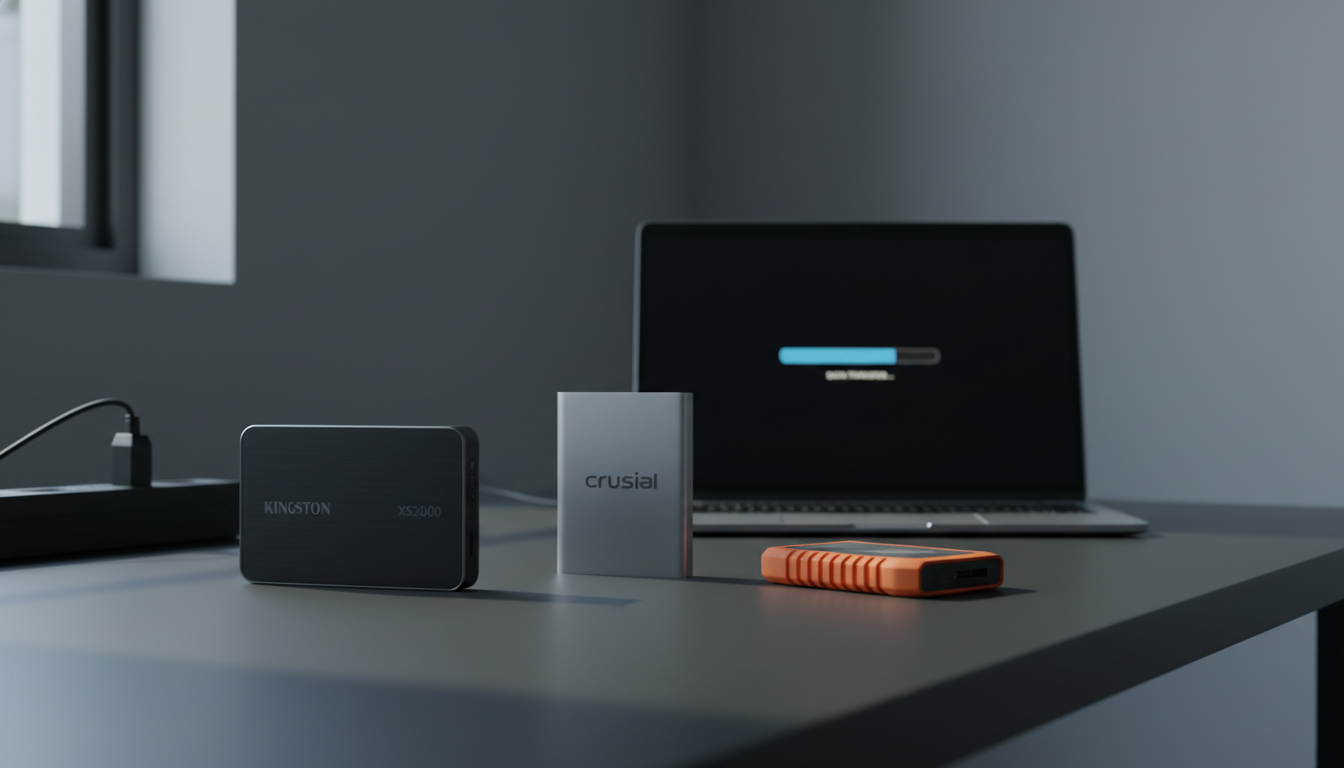
Choosing a fast, reliable external SSD without blowing your budget can feel overwhelming, especially with eight solid options on the table. Prices span from the budget‑friendly Netac 500GB at $71.24 up to the premium WD My Passport SSD 500GB at $174.99, while ratings range from 4.3 to 4.7 stars. We’ve grouped the drives into three clear tiers – Budget (Netac, Crucial X9, Crucial X9 Pro), Mid‑range (Kingston XS2000, SSK Portable SSD) and Premium (SanDisk Extreme Portable SSD, SanDisk Portable SSD, WD My Passport SSD) – so you can match performance to what you’re comfortable spending.
If raw speed is your priority, the Kingston XS2000 packs a 1 TB capacity and claims up to 2,000 MB/s read and write over a USB 3.2 Gen 2x2 interface, all inside a 28.9 g metal‑plastic shell. For rugged field work, the SanDisk Extreme Portable SSD 500GB offers IP55/65 protection, 3 m drop resistance and up to 1,050 MB/s reads, while weighing just 0.086 lb. On the lighter side, the Crucial X9 delivers a 1 TB drive at 32 g with 1,050 MB/s speeds, and the Netac 500GB gives a respectable 500 MB/s read rate at the lowest price point.
The following sections cover each drive’s strengths, durability, and real‑world usability, helping you pinpoint the SSD that fits your workflow and wallet.

Kingston XS2000
Compact 13.5 mm height keeps your workspace tidy while delivering solid performance.

SanDisk Extreme Portable SSD 500GB USB-C
Ideal for photographers needing rugged protection; at $159.99 it’s $10 pricier than the Kingston XS2000 but offers 3 m drop protection and 1500 g shock resistance.

Crucial X9
Stands out with a 10 mm profile, the thinnest among the three, delivering reliable storage at $125.47 for budget‑focused users.
Also considered
Score Analysis
Key score advantages vs. runner-up (SanDisk Extreme Portable)
Price Range
Kingston XS2000
$199.00
SanDisk Extreme Portable SSD 500GB USB-C
$159.99
Crucial X9
$142.16

Crucial X9 Pro
$132.79

SanDisk Portable SSD
$149.99

SSK Portable SSD
$159.99

WD My Passport SSD 500GB
$174.99
Netac 500GB Portable SSD
$71.24
Spec Comparison
TL;DR: The Kingston XS2000 1 TB SSD delivers up to 2,000 MB/s read/write speeds in a pocket‑sized 28.9 g, IP55‑rated case for $149.99, making it a fast, rugged option for creators.
The XS2000 packs a 1,000 GB capacity and a USB 3.2 Gen 2x2 (Type‑C) interface that promises “up to 2,000 MB/s” sequential read and write performance. Its metal‑plastic shell measures 13.5 mm × 69.54 mm × 32.58 mm and weighs just 0.12 pounds (28.9 g), while the included 11.5‑inch USB‑C cable lets you run it bus‑powered without an external adapter.
Compared with the seven other SSDs in this roundup, the XS2000 is heavier than the SSK Portable SSD (≈0.066 lb) and the Netac model (≈0.066 lb), but lighter than the WD My Passport SSD (≈0.101 lb). Its length of 69.54 mm exceeds the SSK’s 68 mm and the Crucial X9’s 65 mm, yet it remains shorter than the SanDisk Extreme’s 85.09 mm height. Speed‑wise, the XS2000’s “up to 2,000 MB/s” tops the SSK, SanDisk Extreme, Crucial X9, and X9 Pro models, which all list maximum sequential speeds around 1,050 MB/s.
Professional reviewers praise the drive’s burst speeds and IP55 protection for on‑location shooting, noting the “20 Gbps interface” as ideal for 8K video transfers. User feedback echoes the fast transfer claims and highlights the compact, pocket‑friendly design. The drive supports TRIM, S.M.A.R.T. reporting, and UASP, and its DRAM‑less architecture can cause write throttling once the SLC cache is exhausted, a point mentioned in several expert reviews.
Pros
Cons
Best for: Content creators, photographers, and videographers who need ultra‑fast burst transfers and a rugged, portable drive.
Avoid if: You lack a USB 3.2 Gen 2x2 port or need consistent sustained write performance for large continuous workloads.
TL;DR: The SanDisk Extreme Portable SSD 500 GB delivers 1050 MB/s read speeds, IP55/IP65 ruggedness, and 3 m drop protection in a feather‑light 0.086‑lb package for under $200.
The drive packs a 500 GB NVMe solid‑state module that can read up to 1050 MB/s and write up to 1000 MB/s through a USB 3.2 Gen 2 Type‑C interface. Its chassis meets IP55/IP65 standards, survives drops from 3 m (≈9.8 ft), and tolerates 1500 g shock, all while weighing just 0.086 lb and measuring 85.09 mm × 50.8 mm × 9.91 mm.
In the eight‑product lineup, the Extreme SSD is heavier than the ultra‑light SSK Portable SSD (≈0.07 lb) but lighter than the Kingston XS2000 (0.12 lb). Its 3 m drop rating tops the 2 m protection of the SanDisk Portable SSD and the 4‑ft (≈1.2 m) drop resistance of the SSK model, and it matches the 1050 MB/s read speed claimed by both the SSK and Crucial X9 units.
Users repeatedly praise the pocket‑size form factor, the rapid off‑load of 4K video, and the peace of mind from its water‑ and dust‑resistant rating. Professional reviewers note that the high sequential read speed speeds up on‑location workflows, but they also point out that the USB 3.2 Gen 2 (10 Gbps) link caps the drive’s throughput, preventing it from reaching the full NVMe potential on Thunderbolt‑capable machines. The drive is bus‑powered, includes a USB‑C to C cable, a USB‑C to A adapter, and a carabiner loop, and it offers 128‑bit AES encryption for added security.
Pros
Cons
Best for: Buyers willing to invest in a proven, high‑quality option
Avoid if: You're on a tight budget or only need basic functionality
TL;DR: The Crucial X9 1 TB portable SSD delivers up to 1050 MB/s read/write speeds in a 65 × 50 × 10 mm, 32 g package, offering solid performance and drop protection for under $130.
The standout spec is its symmetric 1050 MB/s sequential read and write throughput, powered by a USB 3.2 Gen 2 (10 Gb/s) Type‑C interface. At just 10 mm thick, 65 mm long and 50 mm wide, the drive packs a full terabyte into a footprint that fits easily in a pocket.
Compared with the seven other SSDs in this roundup, the X9 is lighter than the Kingston XS2000, SanDisk Extreme, SanDisk Portable, WD My Passport and Netac models, but a touch heavier than the SSK and Netac units. Its 32 g weight (≈0.07 lb) is lighter than the Crucial X9 Pro’s 38 g and considerably slimmer than the Kingston’s 13.5 mm height. Speed‑wise, it matches the X9 Pro and SSK’s 1050 MB/s read rate, while outpacing the Netac’s 500 MB/s and SanDisk Portable’s sub‑800 MB/s figures.
Users consistently praise the drive’s ultra‑compact size and plug‑and‑play convenience across Windows, macOS, Android, iOS, Linux, Xbox and PlayStation. Professional reviewers highlight the 32 g weight as a major selling point for creators who juggle multiple drives. The included USB‑C‑to‑C cable and a lanyard hole add practical everyday utility.
Technical notes: the SSD uses 3D NAND flash and carries a three‑year limited warranty. It carries an IP55 rating for dust and water resistance and can survive drops from up to 7.5 ft (2.3 m) without data loss.
Pros
Cons
Best for: Budget-conscious buyers seeking a reliable entry-level option
Avoid if: You want the best value-per-dollar in its price range
TL;DR: The Crucial X9 Pro is a 1 TB, IP55‑rated external SSD that weighs just 0.08 lb, delivers up to 1,050 MB/s via USB 3.2 Gen 2, and comes with a 5‑year warranty.
The standout spec features its ultra‑light chassis at 38 g (0.0838 lb) and a credit‑card‑sized footprint of 65 mm × 9.91 mm × 50 mm, while still offering 1,050 MB/s sequential read and write speeds. It also includes 256‑bit AES hardware encryption for secure data handling.
Compared with the seven other SSDs in this roundup, the X9 Pro is heavier than the SSK Portable SSD (0.066 lb) and the Netac 500 GB model (0.066 lb), but lighter than the Kingston XS2000 (0.12 lb) and WD My Passport SSD (0.10 lb). Its read/write ceiling matches the Crucial X9 and SSK models (both up to 1,050 MB/s read, 1,050 MB/s write for X9 Pro vs 1,000 MB/s write for SSK), yet it lags behind the Kingston XS2000’s 2,000 MB/s speeds. The IP55 rating mirrors the SanDisk Extreme Portable SSD’s protection, though the SanDisk model also offers an IP65 rating.
Reviewers repeatedly praise the X9 Pro’s pocket‑friendly weight and the smooth plug‑and‑play experience on macOS, noting that the pre‑configured firmware eliminates extra setup steps. Professional reviewers highlight the “sweet‑spot” balance of size, speed, and price, while everyday users appreciate the included Mylio Photos+ and Acronis True Image software for quick backups.
Under the hood, the drive uses Micron TLC NAND paired with a Silicon Motion SM2320 ASIC controller, and it draws power directly from the USB port, eliminating the need for an external power brick. The five‑year limited warranty adds confidence for long‑term use.
Pros
Cons
Best for: Creative professionals and Mac users who need fast, portable storage for 4K/8K video editing.
Avoid if: You want the best value‑per‑dollar in its price range.
TL;DR: The SanDisk Portable SSD offers 1 TB of storage in a 0.09‑lb, IP55‑rated case with 2‑meter drop protection and up to 800 MB/s read speeds for a solid, portable solution under $200.
What really stands out is the 1 TB capacity packed into a 10 mm‑high, 47 mm × 47 mm footprint that weighs just 0.09 pounds (41 g). SanDisk rates the drive for a maximum data‑transfer rate of 10 Gbps and lists read speeds up to 800 MB/s and write speeds up to 526 MB/s in benchmark tests. The chassis carries an IP55 rating and survives drops from 2 meters, while the built‑in rubber hook adds convenience for on‑the‑go use.
Compared with the other seven picks, this model is a bit heavier than the SSK Portable SSD (0.066 lb) and the Crucial X9 (0.0705 lb), but still lighter than the SanDisk Extreme Portable SSD 500 GB (0.086 lb). Its 2‑meter drop protection sits between the SanDisk Extreme’s 3 m rating and the SSK’s 4‑ft claim, delivering solid durability without being the absolute toughest. In raw speed, the 800 MB/s read ceiling trails the SanDisk Extreme’s “up to 1050 MB/s” and the Kingston XS2000’s “up to 2,000 MB/s,” so you won’t get the very highest transfer rates in the lineup, though you do get more storage than most 500 GB rivals.
Users consistently praise the drive’s pocket‑size portability and rugged feel, especially for field photography and travel. Professional reviewers note the well‑built, water‑and dust‑resistant shell and appreciate the USB‑C NVMe interface that needs no external power. Reviewers commonly note heat buildup during long, high‑speed transfers, and several owners point out that the included USB‑C cable is shorter than they’d like.
Beyond speed and durability, the SSD ships with a rubber hook for easy attachment to bags or belts, and its USB‑C NVMe connector works with both Windows and Mac systems. The drive arrives pre‑formatted in exFAT, so you'll start moving files right away without reformatting.
Pros
Cons
Best for: Buyers willing to invest in a proven, high‑quality option
Avoid if: You need advanced features or professional‑grade performance
TL;DR: The SSK Portable SSD offers 1TB of storage, up to 1050 MB/s reads and 1000 MB/s writes, a lightweight 0.07 lb aluminum body, and a 4‑ft drop rating for $149.99.
The drive’s standout spec is its sequential performance – up to 1050 MB/s read and 1000 MB/s write – paired with a full‑size 1TB (1024 GB nominal) capacity. Its aluminum alloy shell measures 12 mm thick, 68 mm long, 37 mm wide and weighs about 0.07 lb (30 g), while a 4‑ft drop resistance adds confidence for on‑the‑go use.
Compared with the other seven SSDs in this roundup, the SSK is lighter than the Kingston XS2000 (0.12 lb) and about the same weight as the Netac 500GB (0.07 lb). Its read speed matches the SanDisk Extreme Portable SSD and the Crucial X9, but it trails the Kingston XS2000’s 2000 MB/s claim. The drop resistance of 4 ft is lower than the SanDisk Extreme’s 9.8 ft rating but still respectable for a budget‑oriented drive.
Reviews note the plug‑and‑play simplicity, the feather‑light feel, and the noticeable speed boost for 4K media. The drive’s burst performance benefits from an approximately 24 GB pSLC cache, while sustained writes fall to around 550 MB/s once the cache is exhausted, per the specifications. The included USB‑C to C and USB‑C to A cables, plus a protective pouch, frequently receive praise as useful extras.
Pros
Cons
Best for: Most users looking for a well‑reviewed, reliable mainstream option
Avoid if: You're shopping on a tight budget — it's priced at $149.99
TL;DR: The WD My Passport SSD 500 GB offers 500 GB of fast, encrypted storage with up to 1050 MB/s reads and a rugged 9 mm, 54 g design, but its premium $174.99 price puts it above many competitors.
What really stands out is the advertised sequential performance: up to 1050 MB/s read and up to 1000 MB/s write over a USB 3.2 Gen 2x1 (10 Gb/s) interface, backed by a 6 GB pSLC cache and 256‑bit AES hardware encryption. At just 9 mm thick and weighing roughly 0.10 lb (54 g), it serves on‑the‑go creators who need a thin, lightweight drive that can survive a 6.5‑ft (1.98 m) drop.
Compared with the seven other SSDs in this roundup, the My Passport is noticeably heavier than the SanDisk Portable SSD (41 g) and the SanDisk Extreme Portable SSD (39 g), and its 100 mm length exceeds the 47 mm length of the SanDisk Portable. Its drop resistance matches the SanDisk Portable’s 2 m rating but falls short of the SanDisk Extreme’s 3 m (9.8 ft) and the Crucial X9’s 7.5 ft protection. In terms of raw speed, its “up to 1050 MB/s” read matches most rivals (SSK, Crucial X9, Crucial X9 Pro) but is slower than the Kingston XS2000’s advertised 2000 MB/s and trails the SanDisk Extreme’s higher ceiling.
Customers consistently praise the drive’s plug‑and‑play convenience, the instant security of hardware encryption, and its travel‑ready form factor. Professional reviewers note the uniform performance across capacities and the thin 9 mm profile, while also pointing out the modest 4 KB random read speed of about 21.48 MB/s and the limited 6 GB cache, which can throttle sustained writes in heavy workloads. Many note the higher price tag of $174.99, especially when cheaper 500 GB options are available.
Beyond the headline speeds, the drive delivers 4K random 64‑thread read/write rates of 347.27 MB/s and 269.05 MB/s respectively, and CDM RND4K Q32T16 read/write speeds of 457.73 MB/s and 387.93 MB/s. These figures show read speeds of 347.27 MB/s and write speeds of 269.05 MB/s for typical file transfers, though they sit behind the top‑tier random metrics of some competitors.
Pros
Cons
Best for: Buyers willing to invest in a proven, high‑quality option
Avoid if: You're shopping on a tight budget — it's priced at $174.99
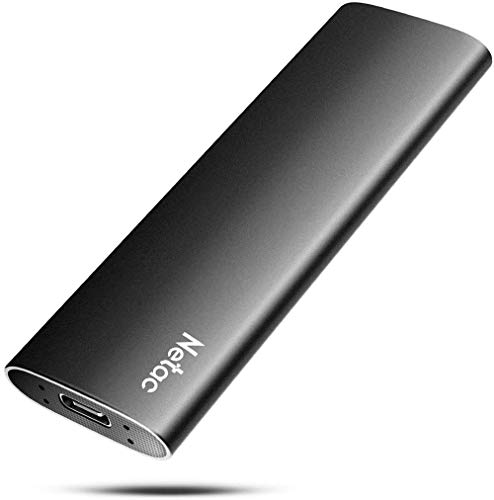
TL;DR: The Netac 500 GB Portable SSD offers 500 GB storage, 500 MB/s read speeds and a feather‑light 30 g aluminum body for just $71, making it the most affordable compact SSD in the lineup.
The drive packs a 500 GB capacity and advertises up to 500 MB/s sequential read and 450 MB/s write through a USB 3.2 Gen 2 (10 Gbps) interface. At only 9 mm thick, 100 mm long and 30 g in weight, it fits easily into a pocket or laptop bag while the shock‑resistant aluminum housing keeps it safe on the go.
Compared with the seven other SSDs, Netac is the lightest option alongside the SSK model (both 30 g) and noticeably lighter than the Crucial X9 Pro (≈0.084 lb) and the SanDisk Extreme (≈0.086 lb). Its 9 mm profile makes it slimmer than the Crucial X9 Pro’s 65 mm height and the SanDisk Extreme’s 85 mm height. Speed‑wise, it trails the Crucial X9 series, SSK, Kingston XS2000 and SanDisk models, all of which list read speeds of 1,050 MB/s or higher, but it undercuts them on price, sitting at $71.24 versus the higher‑priced peers.
Reviewers consistently praise the compact aluminum design and the inclusion of both USB‑C‑to‑C and USB‑C‑to‑A cables plus a protective case. However, many users note that real‑world transfer rates often hover around 300 MB/s, falling short of the 500 MB/s claim, and that the drive can become warm during prolonged heavy use. Professional reviewers highlight its adequate temperature control for typical 4K video editing, though they caution that it may not satisfy the most demanding workloads.
Pros
Cons
Best for: Budget‑conscious buyers seeking a reliable entry‑level option
Avoid if: You need the highest sequential speeds for large‑file professional workloads
Breakdown
Kingston XS2000
Pros
SanDisk Extreme Portable SSD 500GB USB-C
Pros
Crucial X9
Pros
Cons
Crucial X9 Pro
Pros
Cons
Based on scoring data and product specs
Personalized picks
Best Overall Pick
Kingston XS2000
Best Mid-Range PickBest for: Home and office users seeking a balance of features and value
SanDisk Extreme Portable SSD 500GB USB-C
Best for: Buyers willing to invest in a proven, high-quality option
$159.99-$39.01 vs winner
Skip Netac 500GB Portable SSD if…
You have limited desk space or need portability
Kingston’s XS2000 takes the top spot with a solid blend of speed, durability and value. It pushes up to 2,000 MB/s for both sequential reads and writes, and its metal‑plus‑plastic shell carries an IP55 rating plus a removable rubber sleeve for extra shock protection. At $149.99 it also ships with a 5‑year limited warranty and has earned a 4.6‑star rating from over 9,100 reviewers.
The runner‑up, SanDisk’s Extreme Portable SSD (500 GB, USB‑C), shines when you need rugged reliability. It’s rated IP55/IP65, survives drops from 3 m, and weighs just 0.09 lb, making it ideal for on‑the‑go creators who travel or work outdoors. Its 1,050 MB/s read speed and 4.7‑star rating from 25,360 reviews add confidence for demanding workflows.
Looking beyond the top two, the Netac 500 GB Portable SSD offers the best budget choice at $71.24, delivering a straightforward external storage solution at the lowest price point. For those willing to stretch a bit for premium features, the WD My Passport SSD 500 GB stands out as the premium contender at $174.99, placing it at the high‑end of the sub‑$200 market.
Pick the Kingston XS2000 today for the fastest, most reliable SSD under $200.
The Kingston XS2000 stands out with manufacturer‑claimed sequential read and write speeds of up to 2,000 MB/s, which is well above the 1,050 MB/s ceiling of the other drives. At $149.99 it also offers a full 1 TB of storage, making it the top‑performing option in this price range.
No reviews yet — be the first to share your experience.
Please sign in to leave a review