⚡ Quick Answer
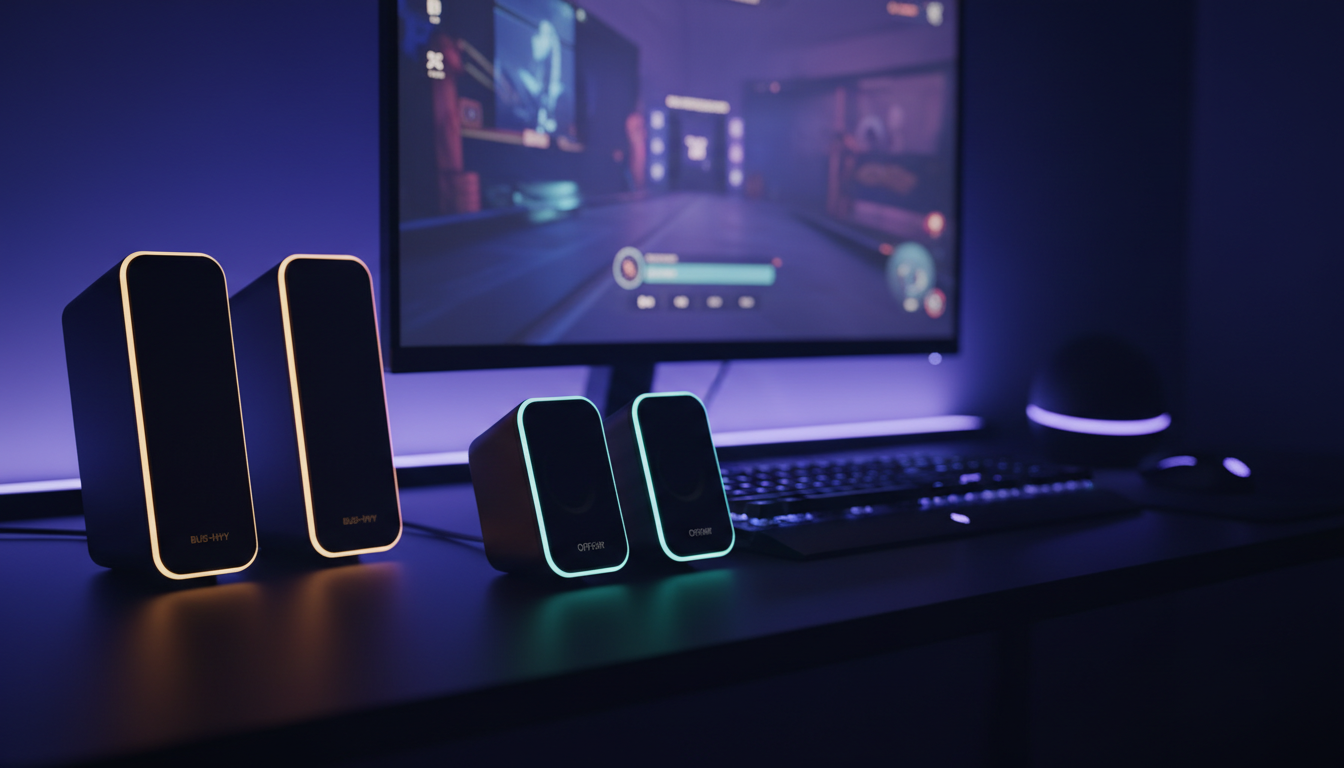
If you’re hunting for gaming speakers that won’t break the bank, we’ve sifted through 7 models that sit under $25. The lineup spans everything from ultra‑compact USB‑powered bars to Bluetooth‑enabled pairs, each promising decent stereo sound for a modest desk or dorm setup. Prices range from $13.99 for the Busp‑hyy duo up to $24.99 for the Offsir and Redragon options, while user ratings hover between 4.3 / 5 and 4.5 / 5, giving you a quick sense of community approval.
To make sense of the field, we grouped the speakers into three price tiers. The budget tier (Busp‑hyy, OROW, Jeecoo M30) delivers basics like 3 W per driver on the Busp‑hyy and 5 W per driver on the Jeecoo, plus USB power for clutter‑free setups. Lenrue lands in the mid‑range tier with a single‑cable USB design and a listed 10 W maximum output. The premium tier (Creative Pebble SE, Offsir, Redragon) pushes features such as 8.8 W peak power on the Creative, 10 W RMS on the Offsir, and a 3 W × 2 stereo output on the Redragon, while still staying under $25.
Here’s a breakdown of each model’s strengths, drawbacks, and ideal use‑cases, helping you match a speaker to your gaming corner without guessing.

Busp-hyy Computer Speakers
It delivers 3 W per driver, giving solid sound for a $13.99 entry‑level set while keeping the price ultra‑low.

Offsir Computer Speakers
Ideal for gamers who want louder, clearer audio and are willing to spend $11 more than the Best Overall at $24.99.
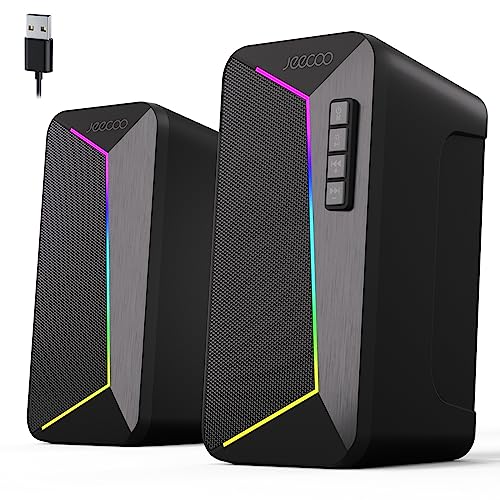
Jeecoo M30
Stands out with a 1.5 m USB cable, letting you place the Jeecoo M30 farther from your PC without sacrificing the 5 W per driver output.
Also considered
Score Analysis
Key score advantages vs. runner-up (Offsir Computer Speakers)
Price Range
Busp-hyy Computer Speakers
$13.99
Offsir Computer Speakers
$24.98
Jeecoo M30
$19.99

Creative Pebble SE Minimalist 2.0
$26.59

Redragon GS550
$19.99

OROW Computer Speakers
$19.99

Lenrue Computer Speakers
$12.99
Spec Comparison
TL;DR: The Busp‑hyy E‑1062 delivers stereo sound with dual 3 W drivers, 6 W RMS output and six RGB lighting modes for just $13.99, making it a compact, plug‑and‑play choice for tight budgets.
At the heart of the E‑1062 are two 3 W drivers that together provide a total output of 6 W RMS, backed by a signal‑to‑noise ratio of ≥80 dB and a frequency range of 40 Hz – 18 kHz. The speakers sit on a slim ABS plastic frame measuring 80 mm deep, 155 mm high and 160 mm wide, and they draw power from a standard 5 V USB connection. Six dynamic RGB lighting modes—symphony, flowing, breathing and three solid colors—add a visual punch that many users say brightens a gaming rig.
Compared with the seven other speakers in this roundup, the Busp‑hyy’s 6 W RMS is lower than OROW’s 10 W RMS and Lenrue’s 10 W maximum output, but it exceeds Creative Pebble SE’s 4.4 W RMS. Its driver power of 3 W per driver trails Jeecoo M30’s 5 W per driver, while its 1000 mm USB and aux cables are shorter than Jeecoo’s 1.5 m USB lead. In weight, the 576 g unit is lighter than Creative’s 862 g but heavier than Redragon’s 500 g model. The speaker’s 800 mm cable‑separation length compares to the others, though Offsir offers a longer 130 cm cable.
Reviewers consistently note the clear stereo imaging and the “surprisingly full” sound for the price, especially praising the tactile volume knob and the touch‑controlled RGB cycle. The modest 6 W RMS means the speakers can feel under‑powered in larger rooms or during intense gaming sessions, and the lack of a built‑in battery limits true on‑the‑go use. Nevertheless, the plug‑and‑play USB‑C power and 3.5 mm AUX input make setup effortless.
Pros
Cons
Best for: Budget‑conscious gamers, students, or office workers who want a sleek, RGB‑lit desktop speaker without breaking the bank.
Avoid if: You need high‑volume, deep‑bass performance for large rooms or a battery‑powered solution for on‑the‑go use.
“Really clear stereo sound”
“Super slim and sits nicely under monitor”
TL;DR: The Offsir GS005 delivers 10 W total RMS power through 50 mm drivers, offers a 130 cm USB cable and RGB lighting, but its $24.99 price is higher than many peers.
What really stands out is the 50 mm driver paired with 5 W RMS per channel, giving a combined 10 W output that reviewers find surprisingly loud for such a compact desktop speaker. The speakers also feature touch‑sensitive RGB breathing lights with four modes, adding a visual flair that gamers often appreciate.
Compared with the six other speakers in this roundup, the Offsir’s 130 cm cable is longer than the Redragon’s 80 cm and Busp‑hyy’s 100 cm cables, while still shorter than Jeecoo’s 150 cm USB lead. Weighing 760 g, it's a bit heavier than Redragon’s 500 g unit and the Creative Pebble’s 350 g drivers, but lighter than the OROW speakers that tip the scale at over a pound. The 90 mm depth and 260 mm height keep the footprint modest, though the Pebble’s 125 mm depth is larger.
Users consistently praise the plug‑and‑play USB connection and the loud output for a desk‑sized pair, noting that the RGB lighting adds a gaming vibe. Professional reviewers echo this sentiment, highlighting the basic functionality and visual appeal while pointing out a minor setup step: you must manually select the Offsir speakers as the default audio device after plugging in. The frequency response starts at 150 Hz, which some users feel limits deep bass, a common comment across the board.
Pros
Cons
Best for: Budget‑conscious gamers who want decent volume, RGB lighting and a detachable design for a small desk.
Avoid if: You need deep bass, Bluetooth connectivity, or the absolute lowest price point.
“Really clear stereo sound”
“Super slim and sits nicely under monitor”
TL;DR: The Jeecoo M30 offers 10 W stereo sound, RGB lighting and USB/Bluetooth plug‑and‑play for $19.99, all in a compact 82 mm × 75 mm × 150 mm design that weighs about 1.98 lb.
The standout spec is its combined 10 W power output—5 W per driver—paired with six RGB lighting modes, giving a noticeable boost over laptop speakers while keeping the desk tidy.
Compared with the other six speakers in this roundup, the M30 is heavier than the Lenrue pair (≈0.96 lb) but lighter than Creative’s Pebble SE (≈1.9 lb). Its 10 W output matches Lenrue and OROW, outpacing Redragon’s 6 W total and Busp‑hyy’s 6 W RMS. Dimensionally it is deeper than Lenrue’s 63.5 mm depth and taller than the Busp‑hyy’s 155 mm height, yet still more compact than Creative’s 125 mm height and width.
Users consistently praise the louder, clearer sound and the eye‑catching RGB lighting, noting the simple USB/Bluetooth switch and front‑panel volume controls as hassle‑free. Professional reviewers note the solid‑state plug‑and‑play convenience, while common complaints focus on the captive 1.5 m (≈5 ft) cable that limits speaker placement, a plastic housing that can vibrate, and modest bass depth that won’t satisfy audiophiles.
Technical details include a USB power range of 5‑20 V DC, two full‑range drivers, and button functions for power, Bluetooth/USB toggle, play/pause, lighting cycle and volume adjustments, all powered by a single USB connection.
Pros
Cons
Best for: Budget-conscious buyers seeking a reliable entry-level option
Avoid if: You're shopping on a tight budget — it's priced at $19.99
“on par for affordable options”
TL;DR: The Creative Pebble SE Minimalist 2.0 delivers compact 2‑speaker sound with USB‑C power, 7‑color RGB lighting, and 4.4 W RMS output, but its modest volume and fixed cables keep it best for small‑desk gaming under $25.
The standout spec is its 7‑effect RGB lighting integrated into a 125 mm‑tall, 240 mm‑wide chassis that weighs just 1.9 pounds. Power comes from a USB‑C cable (1.2 m) and the speakers push 4.4 W RMS through two 2‑inch full‑range drivers with passive radiators, covering an 80 Hz–20 kHz frequency range.
Compared with the six other speakers in this roundup, the Pebble SE is heavier than the Lenrue pair (which tips the scales at about 0.96 pounds) but lighter than the Jeecoo M30 (around 1.98 pounds). Its 1.2 m audio input cable is longer than Redragon’s 80 cm lead, while the 1.5 m inter‑speaker link gives more reach than many of the compact peers. In terms of power, its 4.4 W RMS is below Redragon’s 6 W total output and well under Jeecoo’s 10 W combined rating, placing it on the lower end of the group.
Users highlight the ultra‑compact footprint and the RGB zone’s visual appeal as major wins. Reviewers like the USB‑C power solution because it removes a brick‑style adapter, but they frequently note that the 4.4 W RMS ceiling makes the speakers struggle in larger rooms or with bass‑heavy games. The non‑detachable 3.5 mm and USB‑C cables also draw criticism for limiting placement flexibility, and the lack of Bluetooth means you can’t go wireless.
Pros
Cons
Best for: Those prioritizing a sleek, space‑saving desktop setup with visual flair and multi‑platform compatibility.
Avoid if: You're shopping on a tight budget — it's priced at $22.99.
TL;DR: The Redragon GS550 offers a compact 2‑in‑1 USB‑powered speaker set with a 80 cm detachable cable, 6 W total output and a red LED backlight, making it a solid budget pick for desktop gaming.
The standout feature is its transformable 2‑in‑1 design: two 81 mm × 58 mm × 186 mm speakers connect via an 80 cm cable, letting you place them side‑by‑side or separate them for a wider soundstage. With a frequency response of 300 Hz – 20 kHz and an input sensitivity of 820 mV ± 50 mV, the system delivers clear mids and decent highs while staying within a modest 6 W total power budget.
Compared with the six other speakers in this roundup, the GS550 is a bit heavier than the Lenrue pair (about 0.96 lb vs. 1.5 lb) but still lighter than many full‑size desktop sets. Its 80 cm cable is shorter than Offsir’s 130 cm lead and Creative Pebble’s 120 cm cable, so you may need to position the speakers closer to your PC. Power‑wise, the 6 W total output sits below most peers, which typically push 10 W total, and only matches the Busp‑hyy’s 6 W RMS rating.
Reviewers consistently praise the GS550’s clear, deep sound and the punchy bass that belies its size. The red LED backlight and mechanical volume knob earn extra kudos for adding a gamer‑friendly aesthetic and easy control. On the flip side, users note that the 3 W per channel output can feel thin in larger rooms, and the lack of Bluetooth limits placement flexibility.
Pros
Cons
Best for: Budget‑conscious gamers, PC enthusiasts, and casual media users who want a simple, desk‑top audio upgrade.
Avoid if: You need high volume, deep bass, Bluetooth or wireless flexibility, or plan to fill a large room with sound.
“Clear and deep sound for gaming/monitor use when skipping headphones”
“Completely worth it”
TL;DR: The OROW S201 delivers 10 W RMS stereo sound in a tiny USB‑powered package for $18.99, with toggleable RGB lighting, but its bass is thin and it lacks Bluetooth.
What sets the OROW speakers apart is the 10 W RMS total power coming from dual 5 W drivers, plus a built‑in bass diaphragm for a little extra low‑frequency punch. The unit also sports dynamic RGB lighting that you can turn on or off with the rotary volume knob on the right speaker.
In the seven‑product lineup, the OROW is lighter than the Jeecoo M30 (which weighs about 1.98 lb) but a bit heavier than the Lenrue pair (around 0.96 lb). Its tabletop footprint—1.16 in depth, 1.55 in height, and 1.09 in width—is more compact than the Busp‑hyy speakers, whose depth is listed at 80 mm and height at 155 mm. With a 10 W RMS output, it matches the highest RMS power you’ll find among the group, tying with the Jeecoo, Lenrue, and Offsir models, while the Redragon and Busp‑hyy sit lower at 6 W total.
Customers repeatedly note that the speakers fill a small desk with surprisingly loud and clear audio, and they love the instant plug‑and‑play setup—just connect USB for power and a 3.5 mm AUX cable for sound. Professional reviewers echo this, calling the stereo imaging “crisp” for the size. The most common complaints focus on the shallow bass response, a result of the modest driver size, and the absence of Bluetooth, which limits wireless use.
Beyond sound, the S201 runs entirely on USB power, so you won’t need a wall adapter, and the rotary knob doubles as an RGB switch, keeping the design tidy. The high‑quality ABS varnish finish houses the speakers, adding durability while keeping the look sleek and gamer‑friendly.
Pros
Cons
Best for: Budget‑conscious gamers, students, or office workers who want a compact, USB‑powered speaker with basic stereo sound and RGB flair.
Avoid if: You need deep bass, Bluetooth/wireless connectivity, or audiophile‑grade sound quality.
“Really clear stereo sound”
“Super slim and sits nicely under monitor”
TL;DR: The Lenrue E‑1103 delivers 10 W of USB‑powered stereo sound with RGB lighting in a compact 0.96‑lb, under‑monitor design, but its modest bass and plastic build keep it firmly in the budget lane.
At the heart of the Lenrue speakers is a single USB‑C cable that supplies both power (5 V / 1 A) and audio, letting you skip extra adapters. The pair pushes a combined 10 W of output while keeping the signal‑to‑noise ratio at 80 dB, which is respectable for the price. Weighing just 0.959 lb (435 g) and measuring only 63.5 mm deep and high, they sit neatly under a monitor, and the 381 mm width lets the drivers spread sound across a decent soundstage.
Compared with the six other speakers in this $25‑or‑less roundup, Lenrue is lighter than the Jeecoo M30, OROW, Creative Pebble SE and Redragon GS550, and its 63.5 mm depth is shallower than Jeecoo’s 82 mm and Busp‑hyy’s 80 mm. Its total 10 W output matches the Jeecoo, OROW and Offsir models, outpacing Redragon’s 6 W and Busp‑hyy’s 6 W RMS. The only dimension where Lenrue stands out is width – at 381 mm it’s wider than the Jeecoo’s 150 mm, Creative’s 240 mm, and the Offsir’s 120 mm, giving a broader acoustic surface.
Users consistently praise the plug‑and‑play simplicity and the touch‑sensitive RGB lighting that reacts to music. Professional reviewers note the clear stereo separation and low noise, but they also flag the limited bass depth that comes from the modest 10 W drivers. A recurring complaint is that the RGB effect can’t be fully turned off, which may be distracting in dark rooms, and the plastic housing feels less sturdy than metal‑cased rivals.
Technical details round out the package: the speakers support 2.0‑channel stereo, include a 3.5 mm AUX input, a headphone jack, and offer volume control via touch or a knob. The under‑monitor mounting style makes them ideal for cramped desks, and the included USB‑C adapter ensures compatibility with a range of devices.
Pros
Cons
Best for: Budget‑conscious buyers seeking a reliable entry‑level option
Avoid if: Reliability and user satisfaction are your top concerns
“Really clear stereo sound”
“Super slim and sits nicely under monitor”
Breakdown
Busp-hyy Computer Speakers
Pros
Offsir Computer Speakers
Pros
Cons
Jeecoo M30
Pros
Cons
Creative Pebble SE Minimalist 2.0
Pros
Cons
Based on scoring data and product specs
Personalized picks
Best Overall Pick
Busp-hyy Computer Speakers
Best OverallBest for: Budget-conscious buyers seeking a reliable entry-level option
Offsir Computer Speakers
Best for: Those prioritizing quality and willing to pay for premium performance
$24.98+$10.99 vs winner
Skip Lenrue Computer Speakers if…
Reliability and user satisfaction are your top concerns
Busp-hyy Computer Speakers are the best budget gaming speakers under $25. They cost just $13.99, deliver a total output of 6 W RMS, and cover a frequency range of 40 Hz – 18 kHz, giving you clear mids and punchy lows for cheap. The 4.4‑star rating from 667 reviewers also shows solid satisfaction, and built‑in Bluetooth lets you stream game audio without a tangled cable.
The Offsir Computer Speakers earn the runner‑up title, especially if you need a detachable stereo pair that can double as a compact soundbar. With a 10 W total output and a 150 Hz – 18 kHz frequency response, they push a bit more power than the winner. Their touch‑sensitive RGB breathing lights (four modes) and a 130 cm cable give you flexible placement for a small desk or a bedside setup.
For shoppers looking beyond the top two, the lineup still offers sensible choices. Budget pick: OROW Computer Speakers keep the cost low while providing basic sound for a modest setup. Mid‑range pick: Lenrue Computer Speakers deliver solid performance at $19.99, balancing price and audio quality. Premium pick: Offsir Computer Speakers (the runner‑up) add a detachable design and higher output for those who want a bit more flexibility.
Grab the Busp‑hyy speakers now and level up your gaming audio without breaking the bank.
The Busp‑hyy Computer Speakers stand out as the best value. At $13.99 they offer Bluetooth, hi‑res audio support, a 6 W RMS output and six RGB lighting modes, all while staying well under the $25 ceiling.
No reviews yet — be the first to share your experience.
Please sign in to leave a review