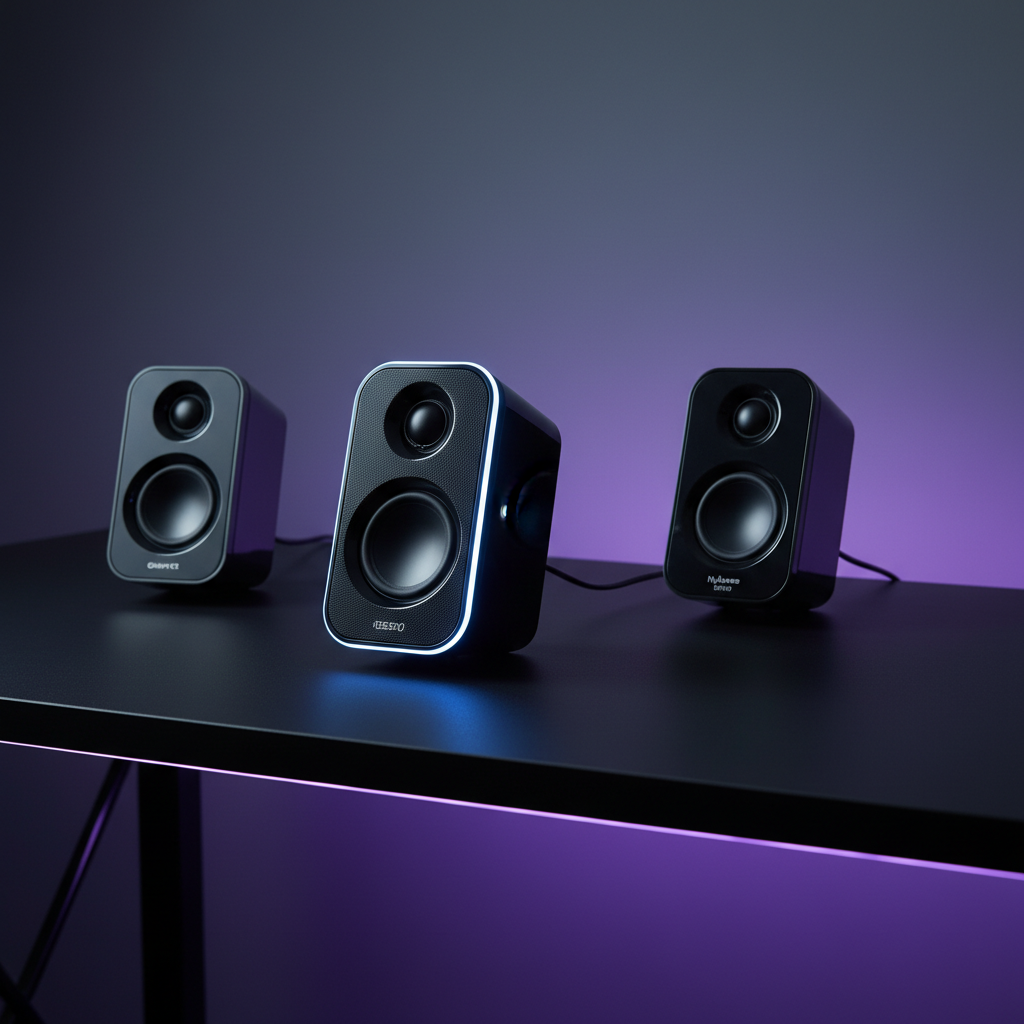
If you’re hunting for gaming speakers that won’t break the bank, the field narrows to 12 models under $75. The cheapest option starts at $13.99, while the most expensive sits at $69.99, giving you plenty of room to pick a pair that fits your desk and wallet. Even the highest‑rated pick, the Offsir GS005, carries a 4.5‑star rating from 463 reviewers, showing that good sound can come at a modest price.
We’ve grouped the contenders into three price tiers so you can quickly zero in on what matters most. The budget tier—Busp‑hyy E‑1062 ($13.99, 4.4/5), Logitech S150 ($15.99, 4.2/5), OROROW S201 ($16.99, 4.2/5) and Jeecoo M20 ($18.04, 4.3/5)—covers ultra‑compact USB‑powered speakers. Mid‑range choices like the Redragon GS500 ($22.98, 4.4/5) and Offsir GS005 ($24.99, 4.5/5) add features such as LED lighting or stronger output. Premium selections—including the Redragon GS510 and Nylavee SK100 at $53.99 each, Bluedee BD‑SK010 at $53.99, and the Ohayo C6 at $69.99—bring higher power, Bluetooth connectivity and larger drivers for richer gaming immersion.
Below you’ll find a quick look at each model’s strengths, so you can match the right speaker set to your gaming setup.

Redragon GS500
Offers >35 dB channel separation, delivering clear stereo imaging for everyday gaming.

Nylavee SK100
Ideal for gamers who want a proven 2.0‑channel setup and are willing to spend about $31 more than the Redragon GS500.

Ohayo C6
Stands out with an 80 dB signal‑to‑noise ratio, offering quieter background hiss than the Redragon and Nylavee models.
Also considered
Score Analysis
Key score advantages vs. runner-up (Nylavee SK100)
Price Range
Redragon GS500
$22.97
Nylavee SK100
$53.99
Ohayo C6
$66.49
Logitech S150
$15.99

Offsir GS005
$24.99
Bluedee BD-SK010
$53.99
Redragon GS510
$24.99
Jeecoo M20
$18.04

Busp-hyy E-1062
$13.99

OROROW S201
$18.99

Redragon GS560 White
$33.98

Razer Leviathan V2 X Renewed
$62.00
Spec Comparison
TL;DR: The Redragon GS500 delivers 10 W RMS stereo sound from 2.5‑inch drivers, plugs in via USB and 3.5 mm, and adds a fixed red LED in a compact tabletop package for just $22.98.
The standout spec is the 2.5 in dynamic drivers paired with a total RMS output of 10 W, giving a clear stereo image and channel separation better than >35 dB. Power comes from a single 5 V USB connection, so there’s no need for a wall adapter, and the built‑in red LED adds a gamer‑friendly glow.
Compared with the other eleven speakers, the GS500 weighs 550 g versus the Redragon GS510’s 762 g, but shares the same overall depth (185 mm) and height (110 mm). Its inter‑speaker cable is 838 mm, which is shorter than the Offsir GS005’s 1320 mm cable, so placement options are a bit tighter. Like the GS510, Offsir GS005 and Jeecoo M20, it delivers a total RMS power of 10 W, outpacing the Logitech S150’s 1.2 W RMS. However, it lacks Bluetooth, a feature that some peers list, and its plastic chassis feels lighter than the metal‑accented designs of higher‑priced rivals.
User sentiment notes the instant plug‑and‑play setup as a major plus—no drivers, just USB power and a 3.5 mm audio jack. Reviewers also highlight the red backlight for a subtle gaming ambience. On the downside, several owners mention thin bass and limited volume for larger rooms, and the all‑plastic build can feel cheap over time. Professional reviewers echo these points, calling the sound “balanced” but noting the system doesn’t deliver immersive, room‑filling audio.
Technical details round out the picture: a frequency response of 270 Hz – 20 kHz, input sensitivity of 820 mV ± 50 mV, and a modest power consumption of 10 W keep the speakers efficient. Dimensions (185 mm × 110 mm × 170 mm) and speaker size (90 mm × 165 mm × 78 mm) make the GS500 a true tabletop solution, while the 1‑year warranty adds peace of mind.
Pros
Cons
Best for: Casual gamers, students and office workers who want an affordable, well‑reviewed desktop speaker with a touch of LED flair.
Avoid if: You need deep bass, room‑filling sound, or Bluetooth wireless capability.
“Perfect for my small apartment—clear sound and doesn’t take up space.”
“Easy setup: plugged into my laptop and it worked instantly.”
TL;DR: The Nylavee SK100 is a compact, USB‑powered 2.0 soundbar that offers Bluetooth 5.0, clear mids and highs, and four RGB lighting modes for under $75, though its 5 W output limits loudness.
At the core of the SK100 sits a 2.0‑channel soundbar with four full‑range drivers and two independent bass diaphragms, delivering a frequency response up to 20 kHz and a signal‑to‑noise ratio of 72 dB. The unit runs on a 5 V USB supply, produces a maximum output of 5 W, and includes a built‑in microphone for voice chat. Bluetooth 5.0 provides a 33 ft (10,058 mm) range and a low 40 ms audio latency, while the 2 in (51 mm) tweeter helps keep mids and highs crisp.
Weighing 1.9 lb, the SK100 is a shade lighter than the Bluedee BD‑SK010’s 2.0 lb and virtually on par with the Razer Leviathan V2 X’s 1.98 lb. Its total output of 5 W is lower than the Redragon GS560’s 8 W peak power and the Redragon GS510’s 10 W RMS rating, but it matches the Offsir GS005’s 10 W dual‑driver setup in power class. In depth, the SK100’s 2.36 in profile is slimmer than the Bluedee’s 67.8 mm (about 2.67 in) chassis, making it one of the more space‑saving options in the lineup.
Users consistently praise the SK100 for its plug‑and‑play simplicity and the clarity of vocal and in‑game audio, noting that the mids and highs feel “crystal‑clear” even without an external subwoofer. Professional reviewers highlight the “cavity‑optimized design” and premium driver materials like double‑layer neodymium magnets, which contribute to the balanced sound profile. The most common complaints revolve around modest bass depth and occasional Bluetooth pairing hiccups, especially in cluttered wireless environments.
The soundbar’s USB‑C power source means no bulky adapters, and the single‑knob touch control keeps the tabletop clutter to a minimum. Four RGB lighting modes—rainbow, breathing, flowing, and rhythm—add a subtle visual flair without overwhelming a gaming setup. Although the unit lacks water resistance and is intended for indoor use only, its ABS plastic and metal construction give it a sturdy feel for a desktop speaker.
Pros
Cons
Best for: Remote workers, students, and casual gamers who want clear, balanced audio without a bulky setup.
Avoid if: You need room‑filling bass, plan to use speakers in a large open space, or are looking for the absolute cheapest desktop audio solution.
TL;DR: The Ohayo C6 offers 60 W of stereo power, Bluetooth 5.3, and a solid MDF enclosure for clear desktop sound, but its $69.99 price puts it at the premium end of the sub‑$75 segment.
At the heart of the C6 are a 3‑inch (76 mm) carbon‑fiber full‑range driver and a 0.75‑inch (19 mm) silk‑dome tweeter, delivering a total output of 60 W (30 W per speaker). The active amplification and integrated independent sound card keep the signal clean, while an 80 dB signal‑to‑noise ratio helps keep distortion low. Bluetooth 5.3 and a USB‑C digital audio input give you modern wireless and wired options, and the rear‑facing bass port adds a bit of low‑end punch.
Compared with the Razer Leviathan V2 X Renewed, the C6 is noticeably heavier than the Leviathan’s 1.98 lb (898 g) package, reflecting its denser MDF chassis. Its 60 W total output sits just shy of the Leviathan’s 65 W, but the C6 wins on connectivity with Bluetooth 5.3 versus the Leviathan’s Bluetooth 5.0. Relative to the Bluedee BD‑SK010, the C6 also carries a higher power rating (60 W vs 15 W) and a larger driver, positioning it as a more robust desktop solution.
User feedback consistently praises the C6’s “crystal‑clear highs and rich mid‑bass,” noting that the MDF enclosure reduces resonance for a more accurate soundstage. Reviewers also like the front rotary volume knob and the rear bass/treble controls for quick tweaks. The most common downside mentioned is that the bass feels adequate for a small desk but lacks depth in larger rooms, and the USB‑only power source limits true portability.
Beyond raw power, the C6’s active design means each speaker contains its own amp, simplifying setup—just plug the AC power cable and you’re ready to go. The rear bass control knob lets you dial in low‑end response without needing an external subwoofer, and the combination of 3.5 mm AUX, RCA, and USB‑C inputs ensures you can hook up a PC, console, or phone without adapters.
Pros
Cons
Best for: Students, remote workers, and gamers in small to medium rooms who value clear desktop sound and modern connectivity.
Avoid if: You're shopping on a tight budget — it's priced at $69.99.
“deliver crystal-clear highs and rich mid-bass”
“an excellent choice for gaming”
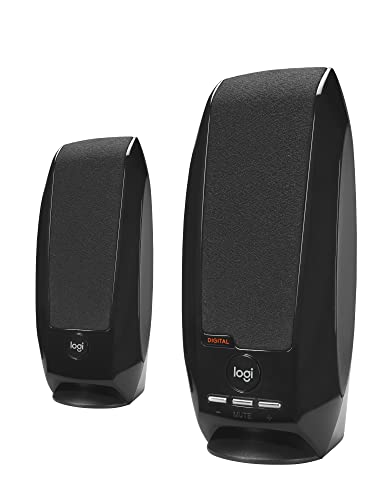
TL;DR: The Logitech S150 offers USB‑powered stereo sound with 50.8 mm drivers, 1.2 W RMS output, and a tiny 0.4‑lb footprint for just $15.99, making it a solid budget choice for desktop and laptop use.
The standout feature is its single USB‑A cable that supplies both power (5 V DC) and digital audio, eliminating the need for a wall adapter. Each speaker houses a 50.8 mm full‑range driver and delivers 1.2 W RMS total output, with a peak of 2 W, which's typical for entry‑level desktop speakers.
At 0.4 lb (181 g), the S150's lighter than the OROROW S201 (about 1.19 lb) and considerably lighter than the Jeecoo M20 (around 1.41 lb). Its driver size matches the Jeecoo M20’s 50.8 mm but is a touch smaller than the OROROW’s 52 mm and the Redragon GS510’s 51 mm drivers. While its 5‑foot inter‑speaker cable is longer than the Redragon GS500’s 838 mm and GS510’s 990 mm cables, it still remains fixed, unlike some competitors that list detachable lengths.
Reviewers consistently note the plug‑and‑play convenience and the clear, fuller sound compared with built‑in laptop speakers. The orange LED power indicator and front‑facing mute button add a touch of practicality. However, users also point out that the volume buttons can jump from mute to loud, the bass response is modest, and the lack of a headphone jack limits flexibility.
Pros
Cons
Best for: Shoppers on a tight budget who want the most for their money
Avoid if: Reliability and user satisfaction are your top concerns
“Great sound for such a small package”
“Volume jumps from mute to very loud”
TL;DR: The Offsir GS005 offers dual 5 W drivers, 20 Hz low‑end response, detachable design and RGB lighting for $24.99, making it a solid entry‑level gaming speaker set.
The standout spec is the 10 W total maximum output power from two 5 W drivers, paired with a 20 Hz frequency response that promises full‑range stereo for a compact desktop. A single knob handles power and volume, while four touch‑sensitive RGB breathing modes let you tweak the ambience without extra software.
Compared with the other eleven speakers in this roundup, the GS005 sits at the higher end of the price range and offers a longer inter‑speaker cable (1320 mm, about 52 inches) than many rivals, which often have shorter links. Its 750 g weight makes it a bit heftier than ultra‑light models like the Logitech S150, yet still light enough for a desktop setup. The detachable speakers that combine into a soundbar give it a flexibility that many fixed‑design peers lack.
Users consistently praise the plug‑and‑play USB and 3.5 mm connectivity, noting that the speakers work straight out of the box on Windows, macOS, Linux and Chrome OS. Reviewers also like the RGB lighting for gaming atmospheres, but several mention thin bass and a plastic ABS build that feels less premium. Professional reviewers highlight the simple control knob as a convenience, while they view the three‑month free return and exchange warranty as modest.
Pros
Cons
Best for: Budget‑conscious gamers and desktop users who want RGB lighting and a compact wired speaker solution.
Avoid if: You're shopping on a tight budget — it's priced at $24.99.
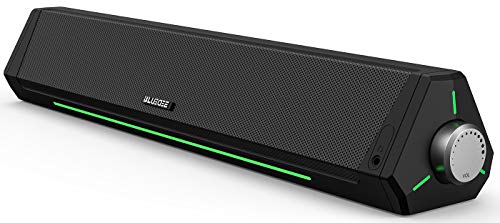
TL;DR: At $53.99, the Bluedee BD‑SK010 delivers 15 W of stereo sound with a 70 dB signal‑to‑noise ratio, dual drivers and RGB lighting, but its bass is modest and battery life falls short of claims.
The BD‑SK010 packs a 15 W maximum output and a 4 Ω impedance, while its 70 dB signal‑to‑noise ratio delivers clear mids and vocal detail. Dual drivers with anti‑magnetic technology keep static interference low, and the unit features a touch‑controlled knob plus RGB breathing‑mode lighting for a desk‑friendly vibe.
At 2.0 lb, it is slightly heavier than the 1.9‑lb Nylavee SK100, yet still comparable to the Redragon GS560’s 2.03‑lb chassis. Its Bluetooth range of 10 m matches the Nylavee’s listed 33 ft (about 10 m) and outpaces many wired‑only competitors. However, the 70 dB SNR falls short of the 80 dB figure reported for the Ohayo C6, indicating a bit less noise rejection in very quiet environments.
Reviewers consistently praise the clear mid‑range and voice reproduction, noting the large illuminated volume knob makes fine adjustments easy. Professional reviewers highlight the refined audio clarity for the price and the vibration‑resistant build despite the plastic‑heavy enclosure. Users do mention weak bass response and a battery that doesn’t live up to the advertised runtime, and the lack of a companion EQ app limits custom sound tuning.
Pros
Cons
Best for: Remote workers, students and casual gamers who need clear voice audio and a compact, illuminated soundbar for a desktop.
Avoid if: You prioritize deep bass, need to fill a large room with sound, or require a full‑featured EQ app.
“Perfect for my home office—clear voice during Zoom calls.”
“Love the RGB lights; they look great at night.”
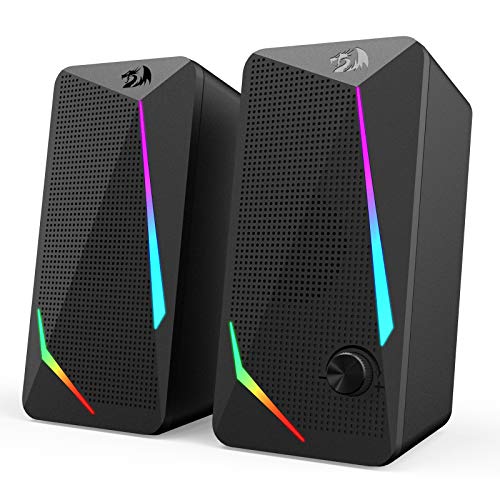
TL;DR: The Redragon GS510 offers 2‑in‑inch RGB‑lit desktop speakers with 10 W total RMS power, USB plug‑and‑play, and touch controls for just $24.99, making it a solid budget pick.
The GS510 packs a 2 in (51 mm) speaker unit in each channel and delivers 5 W RMS per channel for a total of 10 W RMS output. Its frequency response spans 160 Hz – 20 kHz and the signal‑to‑noise ratio rates at ≥60 dB, giving you clear mids for typical desktop use. A 990 mm inter‑speaker cable keeps the two drivers neatly spaced while the tabletop footprint measures 170 mm × 110 mm × 185 mm and the whole set weighs 550 g.
Compared with other speakers in this roundup, the GS510 is lighter than the Offsir GS005 and uses a shorter inter‑speaker cable than that model’s 1320 mm run. It shares identical depth, height, and width with the Redragon GS500, so if you’ve seen that pair you’ll recognize the same compact silhouette. Despite its modest size, the GS510 is more affordable than several peers, positioning it as a cost‑effective choice for budget‑conscious setups.
Users consistently praise the low price, the eye‑catching RGB backlight with four selectable modes, and the hassle‑free USB power that eliminates extra adapters. Professional reviewers note the “enhanced clear bass” and solid frame for basic desktop use. On the flip side, a noticeable portion of owners describe the audio as tinny with weak bass, and some report distortion or crackling when the volume is turned up. The ABS plastic chassis feels cheap to the touch, and some users have mentioned occasional shorting concerns.
Pros
Cons
Best for: Casual PC users, students, office workers, and budget gamers who want a compact, visually appealing desktop speaker.
Avoid if: You need high‑fidelity audio, deep bass, or a rugged build—it's not ideal for audiophiles or portable setups.
“great for the price.”
“unit shorting out and nearly causing a fire”
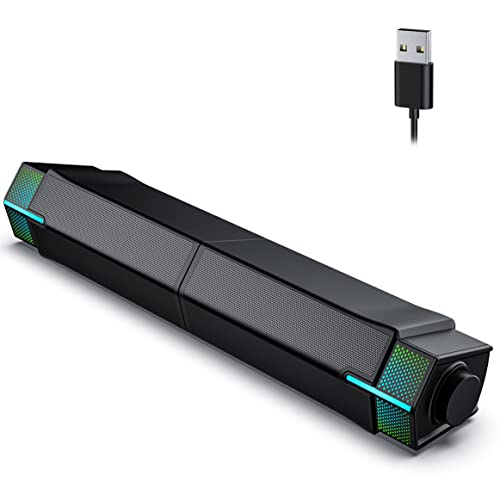
TL;DR: The Jeecoo M20 offers a 10 W Bluetooth‑5.3 soundbar with a 50.8 mm driver, RGB lighting and modular design for under $20, but its bass and durability are limited.
The standout spec is the 10 W maximum output power paired with a 50.8 mm dynamic driver, delivering clear mids for a compact desktop setup. At just 1.4109584768 pounds (640 g) and a footprint of 200 × 66 × 66 mm, it’s easy to fit on a cluttered desk while still providing a 10 m Bluetooth range.
Compared with the other speakers in this roundup, the M20 is heavier than the Logitech S150 (0.4 pounds) and the OROROW S201 (1.1904948 pounds), but its driver size matches the Logitech’s 50.8 mm and is only slightly smaller than the OROROW’s 52 mm driver. It also offers Bluetooth 5.3, a newer version than the Bluetooth‑only options that lack a listed version, and includes a 1.6 m USB cable for power and wired audio.
Reviewers consistently praise the modular design that lets you slide the speakers together or keep them separate, and the gradient RGB LED that adds a visual flair to a gaming desk. Professional reviewers note the balanced audio at moderate volumes, yet many users report distortion and loss of bass when the volume is cranked up, along with occasional LED flickering and a plastic build that feels less durable.
Pros
Cons
Best for: Budget-conscious buyers seeking a reliable entry-level option
Avoid if: You’re after the best value‑per‑dollar in its price range
“Perfect for my small desk—love that I can separate the speakers!”
“Sound is clear for YouTube, Zoom calls, and music.”
TL;DR: The Busp‑hyy E‑1062 delivers 6 watts of USB‑powered stereo sound with RGB lighting and a compact tabletop design for just $13.99, making it a solid entry‑level gaming speaker.
The standout spec is its 6 watts total output (3 watts per driver) powered by a 5 V DC USB connection, paired with six RGB lighting modes that cycle through Symphony, Flowing, Breathing and three solid colors. At 80 cm speaker separation and a 16 kHz frequency response, the pair offers a decent stereo spread for a desktop setup.
Compared with the other eleven speakers in this budget roundup, the E‑1062 pushes more power than the Logitech S150’s 1.2 W RMS and sits deeper (80 mm vs. the S150’s 64 mm). The spec sheet doesn’t list a driver size, but the 80 mm depth is taller than the ultra‑slim OROROW S201 (29.46 mm) while still smaller than the Redragon GS500’s 185 mm depth. Output‑wise, it trails the Jeecoo M20, Redragon GS510 and Offsir GS005, all of which list around 10 W total power, so bass may feel less punchy. The warranty lasts only 30 days, noticeably shorter than the Logitech’s two‑year guarantee and the multi‑year guarantees that several rivals offer.
User sentiment backs up the specs: a 4.4‑star average from 421 reviews praises the “balanced audio” and “easy plug‑and‑play” experience, while recurring comments note weak low‑end response and a plastic chassis that feels cheap. Professional reviewers also highlight the RGB integration as a rare perk at this price point, though they warn that USB power caps maximum volume for larger rooms.
Pros
Cons
Best for: Entry‑level buyers or those on a tight budget
Avoid if: You need powerful performance or professional‑grade features
“Great for the price”
“Perfect for gaming and music”
TL;DR: The OROROW S201 delivers 10 W of USB‑powered stereo sound with 52 mm drivers and vibrant RGB lighting, all in a compact tabletop package for under $20.
At the heart of the S201 is a pair of 52 mm dynamic drivers that push 5 W per channel, giving a combined 10 W of output. The speakers achieve 50 dB channel separation and a 60 dB signal‑to‑noise ratio, while the 4 Ohm impedance keeps them easy to drive from a standard USB port. Weighing just 1.1904948 pounds and measuring 27.69 mm wide, 29.46 mm deep and 39.37 mm tall, they sit comfortably on any desk without crowding your workspace.
Compared with other budget options, the S201’s drivers are slightly larger than the 50.8 mm drivers found in the Logitech S150, and its total output matches the 10 W rating of the Jeecoo M20. It’s a bit heavier than the lightweight Logitech model (0.4 pounds) but still lighter than many similarly powered speakers such as the Redragon GS510, which tips the scales at around 550 g. The S201 also packs RGB lighting that the Logitech S150 lacks, giving it a visual edge for gaming rigs.
User feedback highlights the plug‑and‑play convenience of the USB power cable and 3.5 mm AUX input, with many reviewers calling the setup “instant” and appreciating the touch‑controlled volume. Professional reviewers note the clear mids and highs that the 10 W stereo output provides, and reviewers praise the RGB accents for adding atmosphere to a gaming desk. Common complaints revolve around limited bass response—attributable to the modest driver size—and occasional low volume or buzzing when the speakers draw power from a USB port that supplies less than the recommended ≥1 A.
Beyond sound, the S201 features a sturdy ABS plastic chassis with a varnish finish, fixed‑pattern RGB lighting, and a tabletop mounting style that keeps cables tidy. The system is indoor‑only, comes with a 1‑year warranty, and includes everything you need out of the box: two speakers, a 3.5 mm AUX cable, a USB power cable, two RGB fans, and a user manual.
Pros
Cons
Best for: Casual gamers, students, or anyone needing a compact, RGB‑lit desktop speaker on a tight budget.
Avoid if: You prioritize audiophile‑grade sound, deep bass, or need a speaker that runs reliably on low‑current USB ports.
“Great for the price”
“Easy to set up”
TL;DR: The Redragon GS560 White is a compact USB‑powered 2‑inch desktop soundbar with 6 W total RMS output, RGB lighting and a touch‑control logo, priced at $33.99.
The standout spec is its total RMS power of 6 W, delivered by two 3 W RMS drivers that fit into a 2‑inch driver unit. Coupled with a signal‑to‑noise ratio of ≥65 dB, the speakers provide clear mids and crisp highs, which reviewers repeatedly praise for speech and high‑frequency effects.
Compared with the other eleven speakers in this roundup, the GS560 is pricier than the Logitech S150 and heavier than the Offsir GS005 (750 g vs 921 g). It’s shorter than the Redragon GS500 (71.12 mm tall vs 110 mm) and uses a smaller 2‑inch driver versus the GS500’s 2.5‑inch unit. Its RMS output is lower than the Redragon GS510’s 10 W total RMS and the Offsir GS005’s 10 W dual‑driver output, but its SNR of ≥65 dB tops the GS510’s ≥60 dB and the OROROW S201’s 60 dB.
User sentiment highlights the ease of plug‑and‑play setup via a hardwired USB + 3.5 mm cable and the fun of 4‑6 RGB preset lighting modes that sync to audio. Professional reviewers note the “uncompromisingly clear sound quality” and the compact tabletop footprint (71.12 mm × 401.32 mm × 68.58 mm). Common complaints focus on the flat bass response—expected from the modest driver size and 6 W RMS—and occasional hiccups with the audio‑sync lighting. Reviewers also cite the lack of Bluetooth or wireless options as a limitation for users seeking cable‑free connections.
Pros
Cons
Best for: Budget PC builders, office workers, casual gamers, students, and anyone with limited desk space who wants stereo sound and RGB lighting.
Avoid if: You need deep bass, wireless/Bluetooth connectivity, or a portable speaker solution.
“Sound quality exceeds this price range”
“Great volume, much better than my monitor speakers”
TL;DR: The Razer Leviathan V2 X Renewed delivers 65 W of stereo sound in a 3‑inch‑high, monitor‑mountable bar for $62, with 14‑zone Chroma RGB and Bluetooth 5.0.
The standout spec is its 65 W total output power, split as 32.5 W per 2‑inch full‑range driver, which is far above the 8 W peak power of the Redragon GS560 and the 10 W max output of the Offsir GS005. At just 1.98 lb, it’s lighter than the Bluedee BD‑SK010 (2.0 lb) and comparable to the Nylavee SK100 (1.9 lb). Its compact footprint—3.0 in high, 15.8 in long, and 2.8 in wide—lets it sit neatly under a monitor, a size advantage over the taller Ohayo C6.
Users consistently praise the plug‑and‑play USB‑C connection and the eye‑catching 14‑zone Razer Chroma lighting that syncs with games. Professional reviewers note the low‑latency Bluetooth 5.0 makes swapping between PC and phone smooth. However, many mention that the bass feels thin despite the passive radiators, and the 90 dB maximum SPL can introduce distortion when cranked to the limit.
From a technical standpoint, the soundbar’s bass‑reflex enclosure and 85 Hz – 20 kHz frequency response aim to balance clarity with the space‑saving design. The lack of a 3.5 mm auxiliary input means you’ll rely on USB‑C or Bluetooth, which some users find restrictive. Razer’s Synapse and Audio mobile apps provide RGB customization, though a few reviewers consider the software unnecessary for pure audio use.
Pros
Cons
Best for: Gamers with compact desk setups who want louder sound and synced RGB lighting.
Avoid if: You need deep, room‑filling bass, prefer a traditional 3.5 mm jack, or are extremely price‑sensitive.
“Great value soundbar”
“Lacks bass and power”
Breakdown
Redragon GS500
Pros
Ohayo C6
Pros
Cons
Logitech S150
Pros
Cons
Based on scoring data and product specs
Personalized picks
Best Overall Pick
Redragon GS500
Best Mid-Range PickBest for: Most users looking for a well-reviewed, reliable mainstream option
Nylavee SK100
Best for: Buyers willing to invest in a proven, high-quality option
$53.99+$31.02 vs winner
Skip Razer Leviathan V2 X Renewed if…
You're on a tight budget or only need basic functionality
The Redragon GS500 leads the roundup thanks to its specs at $22.98. It earns a 4.4/5 rating from 2,128 reviewers, packs a 2.5 in dynamic driver, and delivers >35 dB channel separation for clear stereo imaging. With a total RMS output of 10 W and a compact tabletop design, it offers the performance you expect from a mid‑range gaming speaker set without blowing your budget.
The runner‑up, the Nylavee SK100, shines when you want a wireless, desk‑friendly soundbar with a built‑in microphone. Its Bluetooth 5.0 connectivity and 4 RGB lighting modes let you go cable‑free while adding a splash of color, and the 5 W output is adequate for close‑range gaming sessions. At $53.99 and a 4.3/5 rating from 3,435 users, it’s a solid choice for a clean, Bluetooth‑enabled setup.
For tighter wallets, the Busp‑hyy E‑1062 stands out as the best budget pick at $13.99, delivering basic stereo sound at the lowest price point. If you’re willing to stretch to the top of the $75 ceiling, the Ohayo C6 becomes the premium alternative at $69.99, offering a higher‑end price tag for those seeking a more upscale audio experience.
Grab the Redragon GS500 now and upgrade your gaming audio without overspending.
The Redragon GS500, priced at $22.98, provides solid sound with a 2.5‑inch driver and 10 W total output, plus a fixed red LED, making it the most affordable while still delivering good performance.
Please sign in to leave a review
No reviews yet. Be the first to review!
