⚡ Quick Answer
Finding a decent headset under $50 can feel like hunting for a needle in a haystack, but this roundup narrows the field to eight options that span the budget, mid‑range and premium tiers. Prices stretch from $17.97 for the ultra‑light Sonitum model up to $49.99 for the EKSA E900 Pro, giving you a clear sense of what’s possible at each price point.
Two headsets share the top rating of 4.4 out of 5 – Turtle Beach’s Recon 70, which have amassed a massive 68,209 reviews, and Razer’s BlackShark V2 X with 26,887 reviews. If driver size matters, the premium contenders all sport 50 mm units, while the budget‑focused HyperX Cloud Stinger 2 and JBL Quantum 100 stick with 50 mm and 40 mm respectively. Weights range from a feather‑light 0.22 lb for Sonitum to a sturdier 1.23 lb for Globalsades, so you can match comfort to your gaming marathon style.
Next, this guide breaks down each model’s sound profile, mic quality and comfort features so you can pinpoint the headset that fits your setup and budget.
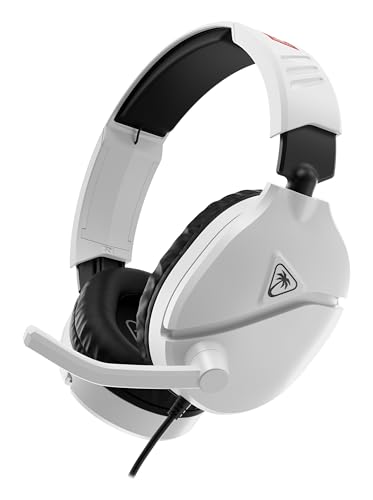
Turtle Beach Recon 70
Its 40 mm drivers provide solid audio while the $29.99 price keeps it a great value for most users.

Razer BlackShark V2 X 50mm 3.5mm Green
Ideal for gamers who want a proven brand and extra driver size, it sits $10 above the Turtle Beach at $39.99.

HyperX Cloud Stinger 2 50mm Black
At $19.99, its 30 Ω impedance makes it easy to drive on phones and laptops, a simplicity the higher‑priced picks don’t prioritize.
Also considered
Score Analysis
Key score advantages vs. runner-up (Razer BlackShark V2)
Price Range
Turtle Beach Recon 70
$29.99
Razer BlackShark V2 X 50mm 3.5mm Green
$49.99
HyperX Cloud Stinger 2 50mm Black
$29.99

Logitech H390
$19.99

JBL Quantum 100
$44.95
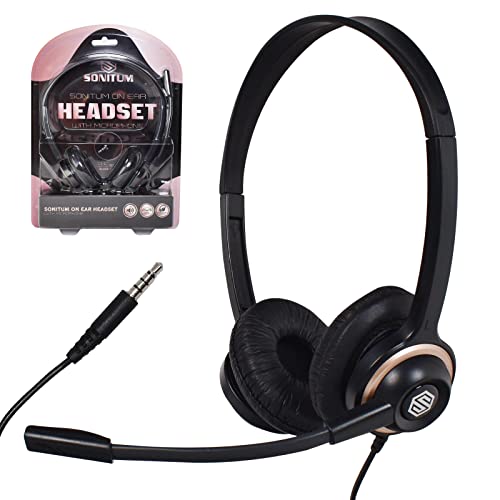
Sonitum Headset
$17.07

Globalsades Gaming Headset
$29.99

EKSA E900 Pro
$49.99
Spec Comparison
TL;DR: The Turtle Beach Recon 70 packs 40 mm drivers into a 0.51‑pound, lightweight over‑ear design with a flip‑to‑mute mic, making it a solid budget pick for Switch gamers.
At the core of the Recon 70 is a 40 mm neodymium driver that aims to deliver clear highs and solid lows while keeping the headset under a half‑kilogram at just 0.51 pounds. Its dimensions—9.37 inches tall, 8.21 inches long and 1.0 inch wide—give it a compact profile that stays comfortable during long sessions.
Compared with the seven other contenders, the Recon 70 is lighter than most: it’s noticeably heavier than the Logitech H390 (0.434 pounds) and the JBL Quantum 100 (0.485 pounds), but still lighter than the Razer BlackShark V2 X (0.53 pounds), HyperX Cloud Stinger 2 (0.63 pounds), EKSA E900 Pro (1.05 pounds), Globalsades Gaming Headset (1.23 pounds) and Sonitum Headset (0.22 pounds). Its 40 mm drivers match the JBL Quantum 100 but sit below the 50 mm drivers found in most of the other models, which can influence perceived bass depth.
Reviewers consistently praise the headset’s synthetic‑leather ear cushions for staying comfortable without adding bulk, and the flip‑to‑mute mic earns points for quick muting during multiplayer chat. Professional commentary highlights “great game sound” and “superior comfort,” while users note the wired connection can tangle and the lack of active noise cancellation lets ambient noise seep in. Nintendo officially licenses the headset for the Switch family, and it supports spatial audio formats like Windows Sonic and Dolby Atmos when paired with compatible software.
Pros
Cons
Best for: Most users looking for a well‑reviewed, reliable mainstream option
Avoid if: You have limited desk space or need portability
TL;DR: The Razer BlackShark V2 X delivers 50 mm TriForce Titanium drivers, 7.1 virtual surround and a lightweight 0.53 lb build, making it a solid esports choice that feels near‑weightless but isn’t the most portable option.
The headset’s standout spec is its 50 mm TriForce Titanium driver, paired with Razer’s 7.1 virtual surround sound. A detachable HyperClear cardioid microphone and passive noise‑cancelling ear cups round out the feature set, while the SpeedFlex cable reduces strain and tangling.
Weighing 0.53 lb (240 g), it’s heavier than the ultra‑light Logitech H390 (0.434 lb) and Sonitum Headset (0.22 lb), but lighter than the EKSA E900 Pro (1.05 lb) and Globalsades Gaming Headset (1.23 lb). Its driver size outmatches the 40 mm units in the JBL Quantum 100 and Turtle Beach Recon 70, yet aligns with the 50 mm drivers of the EKSA E900 Pro and HyperX Cloud Stinger 2. The BlackShark V2 X lands in the mid‑range of weight and driver size among the eight round‑up contenders.
Professional reviewers praise the headset’s “near‑weightless feel” and breathable FlowKnit memory‑foam cushions, noting that long gaming sessions stay comfortable. Users echo this comfort but frequently mention a tight clamping force that may need adjustment for larger heads. The bulkier shape limits travel friendliness, and several owners report cable wear over time. Because the headset relies on passive noise cancellation, it doesn’t block ambient sound as aggressively as some active‑ANC models.
Beyond the drivers, the steel‑reinforced headband adds stability during intense play, and the optional USB sound card unlocks advanced mic controls. The removable microphone is a practical touch for those who occasionally want a mic‑free listening experience.
Pros
Cons
Best for: Competitive esports gamers who need low‑latency wired audio and precise 7.1 surround cues.
Avoid if: You prioritize travel‑friendliness, deep bass for music, or active noise cancellation.
“insanely comfortable and light, with great noise cancellation.”
“barely feel it on”
TL;DR: The HyperX Cloud Stinger 2 delivers 50 mm drivers with 97.5 dB sensitivity and DTS Headphone:X spatial audio in a lightweight 0.63 lb package for under $20, but its wired design limits mobility.
At the heart of the Cloud Stinger 2 is a 50 mm neodymium driver paired with a sensitivity of 97.5 dB SPL/mW, giving you a noticeably punchy soundstage for its price tier. The headset also includes a 2‑year activation code for DTS Headphone:X spatial audio, which many reviewers cite as a key factor for immersive 3‑D gaming sound.
Compared with the other seven contenders, the Stinger 2 sits in the middle of the weight spectrum—heavier than the ultra‑light Sonitum headset (≈0.22 lb) but lighter than the Globalsades Gaming Headset (≈1.23 lb). Its 50 mm drivers outsize the Logitech H390’s 30 mm drivers and the Turtle Beach Recon 70’s 40 mm units, while matching the driver size of several higher‑priced rivals. The 2 m cable is a touch longer than Logitech’s 1.9 m lead, giving you a bit more reach without adding bulk.
Users repeatedly praise the headset’s under‑300 g construction for marathon sessions, noting the memory‑foam leatherette cushions stay comfortable even after hours of play. The swivel‑to‑mute, bi‑directional noise‑cancelling microphone highlights clear voice chat, and the DTS spatial audio adds depth that many feel exceeds what you’d expect at this price. On the flip side, consumers point out the closed‑back design can trap heat, and the wired 3.5 mm connection limits freedom of movement compared with wireless alternatives.
Pros
Cons
Best for: Budget-conscious buyers seeking a reliable entry-level option
Avoid if: You want the best value‑per‑dollar in its price range
TL;DR: The Logitech H390 offers a 30 mm driver, USB‑A plug‑and‑play, and a noise‑canceling boom mic at a lightweight 0.434 lb for just under $21, making it a solid entry‑level office headset.
At the heart of the H390 is a 30 mm driver paired with 94 dB headphone sensitivity, delivering clear stereo audio across the full 20 Hz–20 kHz range. The built‑in boom microphone labels itself as noise‑canceling and registers –17 dB sensitivity, which reviewers say helps keep background chatter out of calls. Plug‑and‑play connectivity via a USB‑A cable means you’ll hook it up to Windows, macOS, or ChromeOS computers without installing extra drivers.
When you line it up against the seven other budget headsets, the H390 feels lighter than most – it weighs 0.434 lb (197 g), while the HyperX Cloud Stinger 2, Turtle Beach Recon 70, JBL Quantum 100, Razer BlackShark V2 X, and EKSA E900 Pro all sit at or above 0.48 lb. Only the Sonitum model is lighter at about 0.22 lb. Its 1.9 m cable is longer than JBL’s 1.2 m cord and a shade longer than EKSA’s 1.8 m, but comparable to HyperX’s 2 m lead. The driver size is smaller than the 40–50 mm units found in most peers, which can translate to a less bass‑heavy sound signature but also keeps the headset compact.
Professional reviewers highlight the padded headband and swivel ear cushions as a comfort win for all‑day video calls, while everyday users praise the microphone’s ability to cut out kitchen noise. The downside that surfaces in both circles is the headset’s bulkier shape despite its light weight, and the long cable tends to droop and tangle on desks. Additionally, the mic sits on the left side only, limiting positioning flexibility for some users.
Pros
Cons
Best for: Budget‑conscious buyers seeking a reliable entry‑level option
Avoid if: You need advanced features or professional‑grade performance
“crisp and well-balanced with clean mids and decent bass”
“you can hear the bass/treble perfectly”
TL;DR: The JBL Quantum 100 packs 40 mm drivers, a detachable directional mic, and Windows Sonic support into a lightweight 0.49‑lb over‑ear headset that sounds clear for its sub‑$50 price.
At the heart of the Quantum 100 are 40 mm dynamic drivers paired with a 96 dB SPL sensitivity, giving a wide 20 Hz‑20 kHz frequency response that many reviewers say makes in‑game cues easy to spot. The headset also includes a detachable boom mic with a -42 dBV directional pickup pattern and a windscreen foam, which professionals note provides clear voice transmission and decent echo cancellation.
Compared with the other seven budget options, the Quantum 100 sits in the middle of the pack on weight: it’s a bit heavier than the Logitech H390’s 0.43 lb frame but lighter than Turtle Beach’s 0.51 lb Recon 70 and far lighter than the EKSA E900 Pro’s 1.05 lb build. Its 40 mm drivers match the Turtle Beach model and are smaller than the 50 mm units found in the Razer BlackShark V2 X, HyperX Cloud Stinger 2, and EKSA E900 Pro. The 1.2 m cable shortens the setup compared with Logitech’s 1.9 m lead, yet remains longer than the 2 m cable on the HyperX Stinger 2.
User feedback repeatedly praises the headset’s comfort thanks to memory‑foam ear cushions and the intuitive volume wheel, while many note the bass feels modest and the plastic construction feels less premium than higher‑end JBL models. Professional reviewers also point out the lack of a companion app or RGB lighting, which keeps the Quantum 100 focused on core audio performance rather than extra bells and whistles. Windows Sonic spatial sound compatibility adds a layer of directional audio without needing extra hardware.
Pros
Cons
Best for: Budget‑conscious beginners and casual gamers who want a comfortable wired headset with clear voice chat and solid directional audio.
Avoid if: You need deep sub‑bass, extensive EQ tuning, or a premium‑grade build for competitive esports play.
TL;DR: The Sonitum PC01 headset delivers ultra‑light comfort at about 0.22 lb, plug‑and‑play 3.5 mm audio, and built‑in noise cancellation for under $18, making it a solid budget pick for office and study use.
The standout spec is its featherweight design – the manufacturer lists the headset at 0.220462262 pounds (≈100 g), which is far lighter than any of the seven rivals in this roundup. It also features a standard 3.5 mm audio jack, so you can connect it to laptops, desktops, or tablets without any adapters or battery worries.
When you line it up against the competition, the Sonitum is the lightest option. The HyperX Cloud Stinger 2 weighs about 0.63 lb, Logitech H390 about 0.43 lb, Turtle Beach Recon 70 around 0.51 lb, JBL Quantum 100 roughly 0.49 lb, Razer BlackShark V2 X near 0.53 lb, Globalsades Gaming Headset at 1.23 lb, and EKSA E900 Pro about 1.05 lb. Even though it lacks some of the extra features found on pricier models, its low weight and simple wired connection give it a clear advantage for anyone who values comfort over bells and whistles.
Reviewers consistently praise the headset’s “extremely lightweight” feel, noting that it stays comfortable during long video calls or study sessions. Reviewers highlight the built‑in noise‑cancelling microphone and rotating boom as helpful for clear voice transmission, while the “crystal clear audio” claim matches the plug‑and‑play experience many users appreciate. On the downside, the 4.2‑star rating from over 5,000 reviews sits just below the 4.3‑star marks of several peers, suggesting a modest dip in satisfaction.
Sonitum markets the PC01 as a universal, over‑ear headset with an adjustable headband, making it adaptable to different head sizes. Its lack of wireless connectivity or battery means you won’t have to manage charging, but it also means you’re limited to wired setups. User feedback mentions the long cable as a potential source of desk clutter.
Pros
Cons
Best for: Shoppers on a tight budget who want the most for their money
Avoid if: You have limited desk space or need portability
TL;DR: The Globalsades Gaming Headset packs a 50 mm driver, premium noise‑cancelling mic and soft leather‑like ear pads into a 1.23‑lb package for $29.99, offering solid sound and comfort for budget gamers.
What really stands out is the 50 mm driver size, which is larger than the 40 mm drivers found in the Turtle Beach Recon 70 and JBL Quantum 100. Coupled with a premium noise‑cancelling omnidirectional microphone, the headset promises clear voice transmission and decent isolation for gaming sessions. The manufacturer describes the ear pads as soft skin‑friendly leather, and the headband adjusts ergonomically for comfort during long play.
Compared with the seven other headsets in this sub‑$50 roundup, the Globalsades unit is the heaviest at about 1.23 lb, outweighing the Turtle Beach (0.51 lb), JBL (0.49 lb), Logitech (0.43 lb), Razer (0.53 lb), HyperX (0.63 lb), Sonitum (0.22 lb) and EKSA (1.05 lb) models. Its driver size matches the Razer BlackShark V2 X, HyperX Cloud Stinger 2 and EKSA E900 Pro, but exceeds the 40 mm drivers of the Turtle Beach and JBL options. While the price tag sits at $29.99, the headset offers more features—simulated surround sound and a premium noise‑cancelling mic—than many of its peers, which list fewer specifications.
The 4.3‑star rating from 2,811 reviews suggests most owners are satisfied. Reviewers frequently mention the comfortable leather‑like cushions and the clear, noise‑isolated microphone as highlights. A recurring comment points to the headset’s weight, noting that it feels a bit heavy after marathon sessions, but most users feel the trade‑off is worth the audio quality.
Pros
Cons
Best for: Most users looking for a well‑reviewed, reliable mainstream option
Avoid if: You're shopping on a tight budget — it's priced at $29.99
TL;DR: The EKSA E900 Pro packs a 50 mm driver and 118 dB sensitivity into a comfortable, feature‑rich wired headset for $49.99, but its virtual 7.1 surround feels hit‑or‑miss and the plastic build feels cheap.
At the heart of the E900 Pro is a 50 mm driver paired with a high 118 dB sensitivity, meaning the headset can deliver loud sound even from low‑impedance sources. It also includes a 1.8 m cable and a USB‑enabled 7.1 virtual surround mode for PC gaming, plus a detachable omnidirectional noise‑cancelling mic.
Weighing in at 1.05 pounds, the E900 Pro is heavier than the Turtle Beach Recon 70 (0.51 pounds) and Logitech H390 (0.434 pounds), though lighter than the Globalsades Gaming Headset (1.23 pounds). Its 1.8 m cable outstretches the JBL Quantum 100’s 1.2 m lead, giving you more freedom to move.
Users consistently praise the protein memory foam earcups and the headset’s ability to stay comfortable during marathon sessions, while professional reviewers note the loud output and the generous accessory bundle. However, both reviewers and everyday users call the virtual 7.1 surround “inconsistent” and criticize the plastic matte finish as cheap.
The mic’s 2.2 kΩ impedance and –42 dB sensitivity, combined with a one‑key mute switch and foam cover, provide clear voice transmission, though some reviewers say it still picks up background noise. Power draw's modest at 0.5 mA with a 3 V supply, and the headset offers 12 EQ presets and 27 environment effects for quick sound tweaks.
Pros
Cons
Best for: Budget‑conscious gamers who want a comfortable wired headset with virtual 7.1 surround on PC.
Avoid if: You need premium build quality, precise surround sound, or wireless freedom.
“won't feel discomfort for hours”
“transformed gaming”
Breakdown
Turtle Beach Recon 70
Pros
Razer BlackShark V2 X 50mm 3.5mm Green
Pros
HyperX Cloud Stinger 2 50mm Black
Pros
Cons
Logitech H390
Pros
Cons
Based on scoring data and product specs
Personalized picks
Best Overall Pick
Turtle Beach Recon 70
Best Mid-Range PickBest for: Most users looking for a well-reviewed, reliable mainstream option
Razer BlackShark V2 X 50mm 3.5mm Green
Best for: Buyers willing to invest in a proven, high-quality option
$49.99+$20.00 vs winner
Skip EKSA E900 Pro if…
Reliability and user satisfaction are your top concerns
The Turtle Beach Recon 70 takes the top spot with a solid $29.99 price tag, a 4.4‑star rating from 68,209 reviewers, and a feather‑light 0.51 pound build. Its 40 mm drivers deliver clear audio while the flip‑to‑mute mic adds convenience, and you’ll find the noise‑isolating ear cushions keep distractions at bay—all without breaking the bank.
The runner‑up, the Razer BlackShark V2 X in green, shines if you need immersive 7.1 surround sound and a detachable HyperClear cardioid mic for PC or console gaming. It packs larger 50 mm drivers, weighs just 0.53 pounds, and comes with a 2‑year manufacturer warranty—it's a reliable choice for serious gamers on a modest budget.
Looking beyond the top two, the Sonitum Headset stands out as the best budget option at $17.97, offering basic functionality for casual use. For those willing to stretch to the premium tier, the EKSA E900 Pro at $49.99 provides higher‑end features while still fitting under the $50 ceiling.
Pick the Turtle Beach Recon 70 today and you’ll enjoy balanced sound and comfort without overspending.
The Turtle Beach Recon 70, priced at $29.99, combines a lightweight design, on‑ear controls and a flip‑to‑mute mic, delivering solid performance without breaking the bank. Its price‑to‑feature balance makes it the strongest value pick in the sub‑$50 range.
No reviews yet — be the first to share your experience.
Please sign in to leave a review