⚡ Quick Answer
Choosing the right pressure‑washer pump can feel like a maze, especially when you’ve got eight contenders spanning a $49.99‑to‑$86.99 price range. We’ve lined up three budget picks (Toolcy, Hourleey, Biswing), two mid‑range options (VEVOR, Ezjob) and three premium models (Muturq, Yamatic, The ROP Shop) so you can see how price maps to performance and durability.
The Toolcy pump, priced at $49.99 and carrying a 4.7‑star rating from 596 reviews, packs a 2.5 GPM flow rate, 3000 PSI maximum pressure, a horizontal shaft, axial‑cam design and a pre‑filled oil capacity—all backed by a thermal‑relief valve. Those specs give it a rare blend of flow, construction quality and warranty coverage that many higher‑priced rivals lack. By contrast, the VEVOR model pushes 3400 PSI at the same 2.5 GPM but weighs 5.5 lb, while the Ezjob unit offers a higher 3.1 GPM flow at a lower 2600 PSI ceiling.
Next, we’ll break down each pump’s strengths, durability factors and ideal use cases, helping you match the right level of power and price to your cleaning projects.

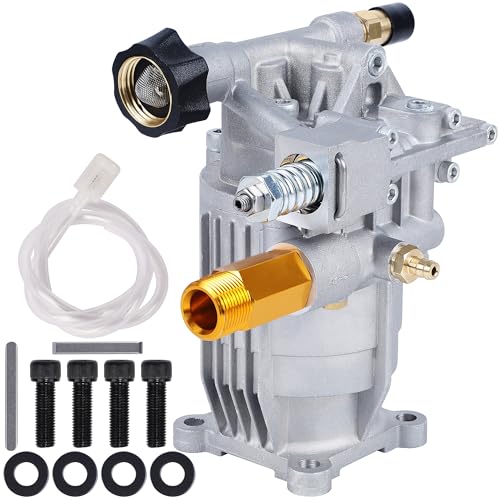
Toolcy Pressure Washer Pump
Installation takes just 5–10 minutes, and its compact 7.0‑inch height keeps the unit low‑profile for tight spaces.

VEVOR Pressure Washer Pump
Ideal for DIY homeowners who want a solid mid‑range pump; it costs about $9 more than the Toolcy budget option.
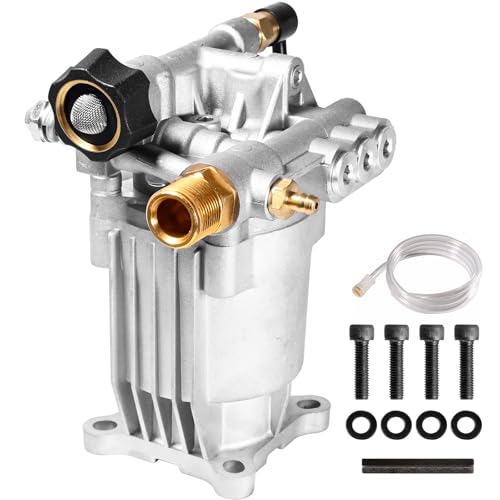
Yamatic Pressure Washer Pump
Stands out with a double‑seal system and adjustable unloader, offering extra leak protection and pressure fine‑tuning not found on the other two models.
Also considered
TL;DR: The Yamatic 3/4‑inch horizontal pump pushes up to 3400 PSI at 2.5 GPM, weighs 6.77 lb, and offers an easy‑start design backed by 4.5‑star ratings from over 3,000 users.
This pump’s headline spec is its 3400 PSI ceiling while delivering a steady 2.5 GPM flow, which puts it squarely in the high‑pressure tier for residential cleaners. The unit runs at 3400 RPM and is rated for 120 hours of continuous operation, with an extended endurance claim of 150 hours. At 6.77 lb, it balances durability with a manageable weight for most DIY installations.
Compared with the other seven pumps in this roundup, Yamatic is a touch heavier than VEVOR’s 5.5‑lb model but lighter than Hourleey’s roughly 7.1‑lb offering. Its 2.5 GPM flow matches VEVOR, Biswing, and Hourleey, while Ezjob pushes a higher 3.1 GPM but tops out at a lower 2800 PSI. The 3400 PSI peak also exceeds the 3000 PSI limit of The ROP Shop pump, putting Yamatic ahead of several competitors on sheer pressure.
Customers repeatedly praise the pump’s “powerful performance” and “easy installation.” Reviewers highlight the quick‑connect inlet/outlet fittings and the Easy Start feature that eliminates the need for a pressure‑release step. Professional reviewers note the upgraded double‑bearing design and the USA‑made thermal relief valve as durability boosters that set it apart from basic OEM replacements.
Technical details reinforce its robust reputation: a double‑seal system works with double bearings to protect against wear, while the maintenance‑free crankcase means you won’t have to change oil. The adjustable unloader lets you fine‑tune pressure, and the horizontal shaft orientation fits the majority of gas‑powered units that use 3/4‑inch shafts.
Pros
Cons
Best for: Buyers willing to invest in a proven, high‑quality option — the Yamatic Pressure Washer Pump offers Flow Rate: 2.5 GPM
Avoid if: You're on a tight budget, need a pump for vertical‑shaft machines, or require heavy‑duty professional performance
“unsung hero of home restoration”
TL;DR: The Toolcy Pressure Washer Pump delivers 2.5 GPM at up to 3000 PSI, installs in 5‑10 minutes, and earns a 4.7‑star rating for just $49.99.
What really stands out is the combination of a 3000 PSI maximum pressure and a 2.5 GPM flow rate, giving you enough power for most residential cleaning tasks while staying within a modest budget. The pump measures 7.0 inches high, 9.0 inches long and 8.0 inches wide, and its horizontal 0.75‑inch shaft fits a range of common gas engines.
Compared with the other seven pumps in this roundup, Toolcy matches the 2.5 GPM flow and 3400 PSI peak pressure you see on models like Hourleey and VEVOR, but it carries a higher user rating and a lower price point. While several competitors list their weight, Toolcy doesn’t provide that figure, which can make mounting calculations a bit trickier.
Reviewers appreciate the wide 2600‑3400 PSI operating range, noting it handles everything from light soap‑up applications to tougher grime without needing a separate pressure‑relief step. The quick 5‑10 minute installation and pre‑filled oil chamber are also frequently praised. On the downside, the pump isn’t suited for heavy‑duty commercial work that demands flow above 2.5 GPM or pressures beyond 3400 PSI.
Technically, the unit uses an axial‑cam design with a direct‑drive layout, a standard seal system, and an integrated thermal relief valve for added durability. Its die‑cast aluminum body receives a deep surface treatment to resist rust, and the shaft length of 2.625 inches provides solid engagement with compatible engines.
Pros
Cons
Best for: Budget‑conscious buyers seeking a reliable entry‑level option — the Toolcy Pressure Washer Pump offers Installation Time: 5‑10 minutes.
Avoid if: You need a pump for heavy‑duty commercial applications or require higher flow rates than 2.5 GPM.
TL;DR: The VEVOR Pressure Washer Pump delivers 3400 PSI at 2.5 GPM, weighs just 5.5 lb, and fits a wide range of 6.5‑7 HP engines, making it a solid mid‑range replacement.
The standout spec is its 3400 PSI maximum pressure, paired with a 2.5 GPM flow rate. Those numbers put it in the same pressure tier as the Biswing and Hourleey pumps, while still offering a respectable flow for residential cleaning tasks. Its 0.75‑inch horizontal shaft and 1.57‑inch shaft length match the standard SAE bolt pattern, simplifying installation on compatible engines.
Compared with the seven other pumps in this roundup, VEVOR sits toward the lighter end at 5.5 lb—lighter than the Muturq (6.0 lb), Yamatic (≈6.8 lb), and Hourleey (≈7.1 lb), and only a shade lighter than the ROP Shop’s 5.9 lb. In terms of pressure, it ties the top performers (Biswing, Hourleey, Yamatic) at 3400 PSI, while surpassing the Ezjob’s 2400‑2800 PSI range. Its flow of 2.5 GPM matches Biswing and Hourleey but trails Ezjob’s 3.1 GPM, so it’s not the highest‑volume option but balances pressure and flow well for most DIY jobs.
User sentiment highlights the pump’s strong pressure output and the ease of swapping it into 6.5‑7 HP engines from brands like Honda, Simpson, and RYOBI. Reviewers appreciate the maintenance‑free design and the included hardware—four UNF5/16‑24 bolts, flat pads, spring washers, and a detergent hose. A recurring caution is that the fit can be finicky if the engine’s horsepower or shaft diameter deviates from the listed 0.75‑inch horizontal shaft, so double‑checking compatibility before purchase is wise. Professionals note the robust metal shaft sleeve and hardened plunger as durability wins.
Pros
Cons
Best for: Most users looking for a well‑reviewed, reliable mainstream option — the VEVOR Pressure Washer Pump offers Max Pressure: 3400 PSI
Avoid if: You have a vertical‑shaft engine or need ultra‑high‑volume professional setups that exceed the pump’s 2.5 GPM capacity
TL;DR: The Ezjob Pressure Washer Pump delivers a solid 3.1 GPM flow at 2600 PSI, weighs 6.39 lb, and includes a pre‑filled oil system, but its price of $59.99 sits above many comparable pumps.
What really stands out is the 3.1 GPM flow rate, the highest among the eight pumps in this roundup. Coupled with a maximum pressure of 2600 PSI and a 3400 RPM operating speed, the unit balances decent power with a compact 8.5 in × 8.0 in × 7.7 in footprint. The aluminum pump head and built‑in thermal relief valve add durability, while the direct‑coupling start type simplifies installation on any 3/4‑inch shaft engine.
Compared with its peers, the Ezjob is heavier than the VEVOR pump (5.5 lb) but on par with the Muturq model (6.0 lb) and lighter than Hourleey (7.1 lb). Its 3.1 GPM flow outpaces the 2.5 GPM flow reported for VEVOR, Biswing, Muturq, Yamatic, Toolcy, Hourleey, and the ROP Shop pump. On the pressure front, most rivals list max pressures of 3000‑3400 PSI, so the Ezjob’s 2600 PSI ceiling is modest in comparison.
User feedback repeatedly praises the included thermal relief valve and pre‑filled oil, noting that these extras reduce setup time and help keep the pump running cool. Reviewers also like the wide engine compatibility (196‑224 cc, 5‑7 HP, 3/4‑inch shaft) and the sturdy aluminum seal system. A common criticism is the $59.99 price tag, which many consider higher than the $54.99‑$58.90 range of other models.
The pump’s horizontal mount, 0.75‑inch shaft diameter, and M22 outlet thread make it a drop‑in replacement for many popular pressure washer brands. Its 45 mm plunger size and 0.75‑inch inlet thread further ensure a snug fit, while the aluminum construction promises resistance to corrosion over time.
Pros
Cons
Best for: Most users looking for a well‑reviewed, reliable mainstream option — the Ezjob Pressure Washer Pump offers Flow Rate: 3.1 GPM
Avoid if: You're shopping on a tight budget — it's priced at $59.99
TL;DR: The Muturq Pressure Washer Pump delivers 3100 PSI of power, a 2.5 GPM flow, and a maintenance‑free, pre‑filled oil design in a compact 197 mm tall package.
At its core, the Muturq pump pushes a maximum of 3100 PSI while moving water at 2.5 GPM, making it a solid choice for most residential pressure‑washing tasks. The unit weighs 6.0 lbs and measures 197 mm in height, 191 mm in length, and 178 mm in width, fitting comfortably on most horizontal gas washers.
Compared with the other seven pumps, Muturq is a bit taller than the Toolcy model (7.0 in vs 7.8 in) and slightly heavier than the VEVOR pump (5.5 lb). Its flow rate matches the Yamatic and VEVOR units at 2.5 GPM, while the Ezjob offers a higher 3.1 GPM. The lifetime rating of 120 hours aligns with Yamatic and VEVOR, but falls short of Toolcy’s 200‑hour claim.
Reviewers appreciate the maintenance‑free design—pre‑filled oil eliminates regular oil changes—and the inclusion of a chemical hose, mounting bolts, shaft key, and instruction booklet, which streamlines installation. Professional reviewers note the aluminum seal system and thermal relief valve as reliable safeguards, though the 4.4‑star rating suggests some users find the performance modest for the price.
Best for: Buyers willing to invest in a proven, high‑quality option — the Muturq Pressure Washer Pump offers Height: 197 mm
Avoid if: You're on a tight budget or need continuous heavy‑duty operation beyond the 120‑hour lifetime rating
Pros
Cons
TL;DR: At $49.99, the Hourleey pump delivers 3400 PSI and 2.5 GPM, but its 7.1 lb weight and 4.4‑star rating make it a solid budget choice with some trade‑offs.
The standout figure for the Hourleey unit is its maximum pressure of 3400 PSI. Coupled with a flow rate of 2.5 GPM, it can handle most residential cleaning jobs without needing a larger engine. The pump also features a double‑seal system and a pre‑filled oil reservoir, which together promise low‑maintenance operation straight out of the box.
When you line it up against the other seven pumps in this roundup, a few patterns emerge. It shares the same $49.99 price tag as the Toolcy pump, yet Toolcy enjoys a higher rating of 4.7/5. In terms of weight, the Hourleey’s 7.1 lb mass is heavier than VEVOR’s 5.5 lb model, Muturq’s 6.0 lb version, and the Yamatic pump at roughly 6.8 lb. The ROP Shop unit is even lighter at about 5.9 lb, while the Biswing and VEVOR models match Hourleey’s 2.5 GPM flow but stay under its weight. Ezjob pushes a higher flow of 3.1 GPM but caps pressure at 2800 PSI, so Hourleey still leads on pressure while staying in the same budget tier.
In practice, the limited public feedback means you won’t find a wealth of user anecdotes, but the 4.4‑star average from 355 reviews hints at decent, if not stellar, satisfaction. Reviewers who do comment appreciate the double‑seal construction and the fact that the oil system comes pre‑filled, eliminating a common maintenance step.
Technical details round out the picture: the pump uses a horizontal shaft with a 0.75‑inch diameter, matching the inlet port size of the same dimension and an M22‑threaded outlet. A built‑in thermal relief valve adds a safety layer during extended use, and the metal pump head and shaft sleeve reinforce durability.
Pros
Cons
Best for: Entry‑level buyers or those on a tight budget — the Hourleey Pressure Washer Pump offers Flow Rate: 2.5 GPM
Avoid if: Reliability and user satisfaction are your top concerns
TL;DR: The Biswing BPW-3400 delivers 3400 PSI at 2.5 GPM, fits 180‑225 cc engines and includes a thermal relief valve, all for $54.99, making it a solid budget pick.
The headline spec is its 3400 PSI maximum pressure, which puts it in the same high‑pressure class as several competitors while keeping the flow rate at a modest 2.5 GPM. Its 0.75‑inch (3/4‑inch) horizontal shaft and axial‑plunger design are built for cold‑water use, and the pump comes with a thermal relief valve for added safety.
Compared with the other seven pumps in this roundup, Biswing matches VEVOR and Hourleey on both pressure (3400 PSI) and flow (2.5 GPM), but it falls short of Ezjob’s higher flow of 3.1 GPM. Its pressure also exceeds the ROP Shop’s 3000 PSI limit. While VEVOR lists a weight of 5.5 pounds, Biswing does not disclose weight or dimensions, making it harder to gauge how it will fit into tight spaces. In terms of engine compatibility, Biswing’s 180‑225 cc range aligns with the mid‑range engines that many DIY setups use, similar to the compatibility range noted for the Ezjob model.
Review sentiment points to two recurring themes: users appreciate the strong 3400 PSI output and the straightforward engine match, but some express concern over possible flow‑rate inconsistencies across different listings. The lack of listed dimensions or weight also shows up as a practical hurdle for installers who need precise mechanical data. Professional reviewers highlight the inclusion of four bolts, a detergent hose, four flat pads, and two shaft keys as handy accessories that simplify the build process.
Beyond the headline numbers, the pump’s horizontal shaft orientation and axial‑plunger mechanism are typical for cold‑water pressure washers, and the thermal relief valve helps prevent overheating during prolonged use. It accepts a 3/4‑inch inlet port and an M22‑14 male outlet thread, fitting standard hose assemblies. Engine requirements of 6.5‑7 HP further confirm its suitability for common small‑engine pressure washer kits.
Pros
Cons
Best for: Entry-level buyers or those on a tight budget — the Biswing Pressure Washer Pump offers Flow Rate: 2.5 GPM.
Avoid if: You need higher flow rates, hot‑water capability, or detailed dimensional specs for precise mechanical integration.
TL;DR: The ROP Shop pump delivers 3000 PSI at 2.5 GPM in a horizontal triplex design, but its $86.99 price and modest 4.4‑star rating make it a premium‑tier choice for AR‑compatible washers.
This pump’s headline spec is a maximum pressure of 3000 PSI paired with a 2.5 GPM flow rate, driven by a 3450 RPM horizontal triplex plunger unit and a 0.75‑in shaft. Those numbers give you enough power for driveway and vehicle cleaning while keeping water consumption reasonable.
When you line it up against the seven other pumps in our roundup, it sits at the higher end of the price spectrum. Its 5.89 lb weight is mid‑range – lighter than the Yamatic and Muturq units but a touch heavier than the VEVOR model. The 3000 PSI ceiling is a few points below the 3400 PSI caps many rivals tout, and its 4.4‑star rating is a shade under the top‑rated Toolcy pump.
Reviewers note that it fits directly into AR RMV2G25D and XMV3G27 gas washers, delivering solid cleaning power without the need for custom adapters. The package includes a chemical injector, unloader valve, thermal release valve, outlet tube, keyway and hose, which streamlines installation. However, users also point out the lack of published endurance data, meaning long‑term durability is harder to gauge.
Pros
Cons
Best for: Those prioritizing quality and willing to pay for premium performance — the The ROP Shop Pressure Washer Pump offers Flow Rate: 2.5 GPM
Avoid if: You need advanced features or professional‑grade performance
Breakdown
Toolcy Pressure Washer Pump
Pros
VEVOR Pressure Washer Pump
Pros
Yamatic Pressure Washer Pump
Pros

Ezjob Pressure Washer Pump
Pros
Cons
Based on scoring data and product specs
Personalized picks
Best Overall Pick
Toolcy Pressure Washer Pump
Best Budget PickBest for: Budget-conscious buyers seeking a reliable entry-level option — the Toolcy Pressure Washer Pump offers Installation Time: 5-10 minutes
VEVOR Pressure Washer Pump
Best for: Most users looking for a well-reviewed, reliable mainstream option — the VEVOR Pressure Washer Pump offers Max Pressure: 3400 PSI
$58.90-$0.08 vs winner
Skip The ROP Shop Pressure Washer Pump if…
You need advanced features or professional-grade performance
The Toolcy Pressure Washer Pump takes the top spot. It pushes a solid 2.5 GPM flow while reaching a maximum pressure of 3000 PSI, a combination usually seen in higher‑priced units. Its built‑in thermal relief valve adds a layer of safety, and the 0.75‑inch horizontal shaft paired with an Axial Cam pump type promises reliable performance and easy installation.
The VEVOR Pressure Washer Pump lands as the runner‑up, ideal if you need a lightweight pump that starts cold. Weighing just 5.5 lb, it’s easy to maneuver, and it matches the winner’s flow at 2.5 GPM while delivering a slightly higher max pressure of 3400 PSI. The one‑piece pump design and cold‑start capability make it a solid choice for residential or light‑commercial cleaning.
For shoppers looking at other price tiers:
Grab the Toolcy pump today and enjoy high‑pressure cleaning without breaking the bank.
Both the VEVOR and Yamatic pumps are listed with a maximum pressure of 3400 PSI, which tops the Toolcy’s 3000 PSI rating. If you need the extra pressure head, those two models are the clear choices.
No reviews yet — be the first to share your experience.
Please sign in to leave a review