⚡ Quick Answer
Finding an interactive display that fits under $1,500 often feels like hunting for a needle in a haystack, especially when you need something that matches your workflow. We compared 9 models, spanning the budget, mid‑range, and premium tiers, so you can see how a $69.99 portable screen stacks up against a $1,499.95 studio‑grade tablet. Ratings range from 4.0 to 4.6 stars, giving you a sense of real‑world satisfaction without guessing.
If you’re a professional illustrator or animator, a large, color‑accurate panel with pen pressure and tilt support is crucial – one of the premium options delivers a 23.8‑inch IPS screen, 350 cd/m² brightness, and a 4.6/5 rating from 3,736 reviewers. For students, hobbyists, or anyone on the move, a lightweight pen display under $400 offers a slim 10‑mm profile and a 4.4/5 rating from over 3,300 users, making it a strong pick for on‑the‑go sketching. Meanwhile, small businesses or educators looking for a rugged, touch‑enabled surface benefit from a budget‑tier monitor that includes built‑in speakers and a 250 cd/m² panel while staying well below the $200 mark.
Below we break down each category, spotlight the strengths and trade‑offs, and help you decide which display fits your specific needs.
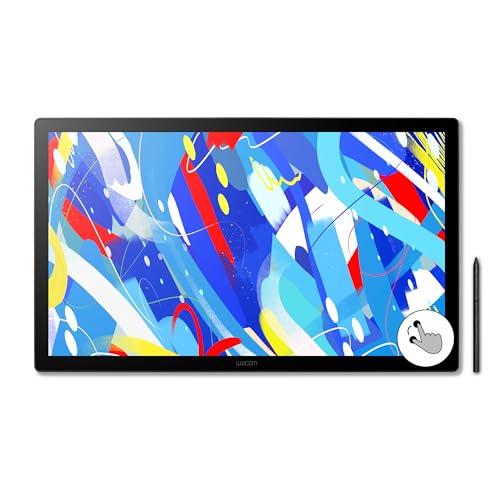
Wacom Cintiq 24
With an ultra‑thin 1 mm height, it gives a sleek, desk‑friendly profile that sets it apart from bulkier rivals.

Wacom One HD
Ideal for hobbyists or students who want reliable performance without breaking the bank—costs about $1,140 less than the Wacom Cintiq 24.

ASUS VT229H
Its 8.0‑inch depth provides a more pronounced surface, catering to users who prefer a larger drawing area at a fraction of the cost.
Also considered
Score Analysis
Key score advantages vs. runner-up (Wacom One HD)
Price Range
Wacom Cintiq 24
$1,499.95
Wacom One HD
Out of Stock
ASUS VT229H
$219.00

Hosyond 10.1-inch Portable Monitor
$75.99

LG Smart Monitor Swing 32U889SA
$779.99

Planar Helium 24-inch
$469.00

ViewSonic TD2423D
$309.74

Elo 2002L
$618.82
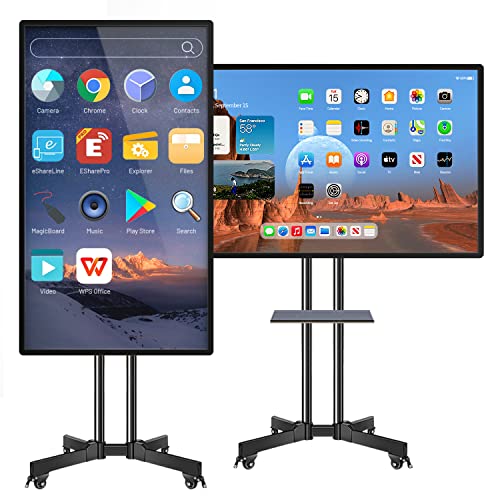
Jyxoihub 49-inch Smart Board
$1,428.00
Spec Comparison
TL;DR: The Wacom Cintiq 24 delivers a 23.8‑inch 2.5K IPS panel with 5080 lpi pen resolution, 8192 pressure levels and 10‑point touch, but its 13.01 lb weight makes it a studio‑focused display.
The standout spec is the Pro Pen 3’s 5080 lpi pen resolution paired with 8192 pressure levels and ±60° tilt, giving artists fine‑grained control on a 23.8‑inch 2560 × 1440 IPS screen that reaches 350 cd/m² brightness and covers 100% sRGB.
Compared with the other eight displays, the Cintiq is heavier than the ViewSonic TD2423D (11.5 lb) and the Elo 2002L (11.68 lb), but lighter than the Planar Helium (13.7 lb). Its brightness matches the LG Smart Monitor Swing’s 350 cd/m², while its 23.8‑inch size is considerably smaller than the Jyxoihub 49‑inch Smart Board.
Professional reviewers praise the anti‑glare etched glass with near‑zero parallax for a paper‑like feel, and users appreciate the intuitive 10‑point multi‑touch gestures. The main trade‑off is the 13.01 lb weight and the large 340 × 568 × 21 mm footprint, which can limit portability and desk space. The display limits you to 8‑bit color depth, so creators needing HDR should look elsewhere.
Pros
Cons
Best for: Buyers willing to invest in a proven, high-quality option
Avoid if: You're on a tight budget or only need basic functionality
“delivers a natural pen on paper feel”
TL;DR: The Wacom One HD delivers a 13.3‑inch 1080p pen display with a paper‑like surface, 4,096 pressure levels and a lightweight 4.5‑lb design for under $400, making it a solid entry‑level choice.
The standout spec features a 13.3‑inch IPS panel with a native 1920×1080 resolution, a 0.1611 mm pixel pitch, 285 cd/m² brightness and a 1000:1 contrast ratio. Its bonded anti‑glare surface mimics paper, and the battery‑free pen provides 4,096 pressure levels plus 60° of tilt.
Weighing just 4.5 pounds, the One HD feels noticeably lighter than the ViewSonic TD2423D (11.5 pounds), the Planar Helium (13.7 pounds) and the ASUS VT229H (7.01 pounds). Its 285 cd/m² brightness also tops the 250 cd/m² listed for those rivals, though its screen is smaller than the 21.5‑inch ASUS and the 24‑inch Planar models.
Users repeatedly praise the natural pen‑to‑paper feel, low lag and the convenience of USB‑C power without a separate adapter. Professional reviewers say the clear 1080p image and 99 % sRGB coverage meet beginners' needs. Common complaints target the modest 4,096 pressure levels, the dimmer display in well‑lit rooms, and the lack of a built‑in stand, which can lead to cable clutter when using the HDMI 3‑in‑1 cable.
Pros
Cons
Best for: Beginners, students and hobbyists who want a portable, well‑reviewed pen display without breaking the bank.
Avoid if: You need professional‑grade pressure sensitivity, a brighter screen for bright rooms, or integrated stand and shortcut keys.
“Natural pen-to-paper feel, low lag, lightweight design (750 g), and easy setup.”
TL;DR: The ASUS VT229H offers a 21.5‑inch Full HD IPS touchscreen with 10‑point capacitive touch, 250 cd/m² brightness, and built‑in stereo speakers for $202.34, making it a solid budget interactive display.
The VT229H’s 21.5‑inch IPS panel delivers a native 1920×1080 resolution at 102 PPI, while a 5 ms response time keeps motion smooth. 7H hardened glass protects its 10‑point capacitive touch surface, giving both responsiveness and durability for frequent interaction.
Weighing 7.01 pounds, it's lighter than the ViewSonic TD2423D (11.5 pounds) and the Planar Helium (13.7 pounds) but heavier than the Hosyond 10.1‑inch Portable Monitor (1.875 pounds) and the Wacom One HD (4.5 pounds). The 8.0‑inch depth is considerably deeper than ViewSonic’s listed 101 mm depth, while the 250 cd/m² brightness matches ViewSonic and Hosyond yet falls short of the LG Smart Monitor’s 350 cd/m² and the Wacom Cintiq’s 350 cd/m².
Reviewers consistently praise the responsive 10‑point touch and the integrated 2 × 1.5 W speakers for collaborative or kiosk use. However, the tilt‑only adjustment (‑5° to +20°) frequently draws criticism for being limiting, and the glossy surface can produce glare in bright rooms. The modest 250 cd/m² brightness also surfaces as a common complaint for users needing higher luminance.
Beyond the basics, the display offers a dynamic contrast ratio of 100,000,000:1, TÜV‑certified flicker‑free and Low Blue Light eye‑care modes, and ENERGY STAR qualification. Power draw stays low at 0.5 W off‑mode, 18.9 W on‑mode, and 21.9 W typical consumption, helping keep operating costs down.
Pros
Cons
Best for: Budget-conscious buyers seeking a reliable entry-level option
Avoid if: You want the best value-per-dollar in its price range
TL;DR: At $69.99, the Hosyond 10.1‑inch IPS portable monitor offers a lightweight 1.875 lb design, 5‑point capacitive touch, built‑in speakers, and decent 250 cd/m² brightness, making it the most affordable interactive display in the lineup.
Its standout feature is a 10.1‑inch IPS LCD panel that delivers a 1280×800 resolution, 250 cd/m² brightness and a 1000:1 contrast ratio, all housed in a 1.875‑pound frame with a 6H tempered‑glass touch surface that supports five simultaneous touch points.
Compared with the other eight monitors, Hosyond is dramatically lighter than the 7.01‑pound ASUS VT229H and the 11.5‑pound ViewSonic TD2423D, and its 10.1‑inch screen is far smaller than the 21.5‑inch ASUS or the 24‑inch Wacom One HD. Brightness matches the 250 cd/m² of both ASUS and ViewSonic, but falls short of the 285 cd/m² listed for the Wacom One HD. Power draw of 5.29 W for the display alone keeps energy use modest against the higher‑wattage peers.
User feedback praises the IPS panel’s true‑to‑life colors and the smooth 5‑point touch, while noting that the 1280×800 resolution feels limited when watching Full HD content. Reviewers also appreciate the included HDMI cable, USB power cable and stand, which simplify setup for Raspberry Pi or console connections.
The monitor accepts HDMI (up to 1080p source), Mini HDMI and VGA, and runs on a 5 V micro‑USB or Type‑C supply. The package weighs 892 g and arrives with dual 8 Ω 2 W speakers, a 3.5 mm audio jack, and a convenient dial switch for volume and brightness control.
Pros
Cons
Best for: Shoppers on a tight budget who want the most for their money
Avoid if: You need advanced features or professional‑grade performance
TL;DR: The LG 32U889SA offers a 31.5‑inch 4K IPS touchscreen with 95% DCI‑P3 color coverage, a fully adjustable rolling stand, and strong connectivity for under $800.
This monitor’s standout spec is its 31.5‑inch 4K UHD IPS panel that delivers 3840 × 2160 resolution, 350 cd/m² typical brightness and 95% DCI‑P3 color gamut, all wrapped in a touchscreen with 5 ms response time. The rolling stand lets you tilt, swivel, pivot 360° and adjust height, while the built‑in speakers provide 2 × 5 W audio.
Compared with the other eight displays in this roundup, the LG is noticeably heavier at 46.74 lb, while the Elo 2002L and Planar Helium weigh 11.68 lb and 13.7 lb respectively. It also ships with three USB‑C ports—one delivering 65 W Power Delivery—far more than the single HDMI‑only inputs on many peers. The feature set spans 43 specs across eight categories, outpacing the more modest spec lists of the Wacom One HD and ViewSonic TD2423D.
Reviewers praise the “stunning clarity and rich color” of the 4K IPS panel and the “effortless mobility” of the wheeled base. Professional editors note the convenience of webOS apps, AirPlay 2, and the ability to use the screen in portrait mode. The main criticisms focus on the 60 Hz refresh rate, which may feel limiting for fast‑paced gaming, and the monitor’s 46.74‑lb weight, which can make frequent relocation a chore.
Pros
Cons
Best for: Those prioritizing quality and willing to pay for premium performance
Avoid if: Reliability and user satisfaction are your top concerns
TL;DR: The Planar Helium 24‑inch offers a 10‑point projected‑capacitive touch screen with edge‑to‑edge glass, 1920×1080 resolution and built‑in webcam, but its $469 price and modest brightness keep it in the mid‑range budget tier.
The standout feature is its full‑glass front that spans the entire 23.6‑inch diagonal, delivering a sleek look and uninterrupted touch area. It supports up to 10 simultaneous touches, runs at a 1920×1080 resolution, and reaches a typical brightness of 250 cd/m² (212 cd/m² when touch is active). The 0.2715 mm pixel pitch and 14 ms response time provide a smooth visual experience for most office and design tasks.
Compared with the other eight displays, the Helium is heavier than the 4.5‑pound Wacom One HD and the 11.5‑pound ViewSonic TD2423D, yet far lighter than the 46.74‑pound LG Smart Monitor. Its brightness matches the ViewSonic’s 250 cd/m² but falls short of the LG’s 350 cd/m². The pixel pitch of 0.2715 mm is larger than the Wacom One’s 0.1611 mm, meaning it isn’t as densely packed as that model. While its $469 price sits above the $359 Wacom and $309 ViewSonic options, it still remains well under the $1500 ceiling for this roundup.
Reviewers repeatedly praise the uninterrupted glass surface and the convenience of the integrated 720p webcam and built‑in microphone, noting that video calls feel “plug‑and‑play” without extra peripherals. Professional reviewers highlight the ergonomic foldable stand that tilts from +15° to +70°, which helps during long sessions. Users do flag the modest 250 cd/m² brightness as a limitation in brightly lit rooms, and the model’s discontinuation raises concerns about future support and parts.
The Helium draws 35 W during use and less than 1 W in standby, fitting comfortably into typical office power budgets. Connectivity includes VGA, HDMI, DisplayPort and a USB 2.0 hub, while the built‑in speakers deliver 2 W per channel for basic audio. The device also carries UL/c‑UL, FCC, CE and RoHS certifications, and it operates from 0 °C to 40 °C with humidity up to 90 % non‑condensing.
Pros
Cons
Best for: Most users seeking a balanced, mainstream option
Avoid if: You need advanced features or professional‑grade performance
TL;DR: The ViewSonic TD2423D is a 24‑inch 1080p touchscreen with 10‑point IR touch, 75 Hz refresh, and eye‑care features, priced under $310 and built for durable commercial use.
This model packs a 24‑inch LED panel with a 1920 × 1080 resolution and a 75 Hz refresh rate, which is higher than most peers in this price band. It offers 10‑point infrared touch that supports pinch, zoom and swipe gestures, and it includes eye‑care technologies like a blue‑light filter and flicker‑free operation. A 7H scratch‑resistant surface protects the screen, and the built‑in 2 W speakers provide basic audio.
At 11.5 pounds, the TD2423D is heavier than the Wacom One HD (4.5 pounds) and the ASUS VT229H (7.01 pounds) but lighter than the Planar Helium 24‑inch (13.7 pounds). Its 250 cd/m² brightness matches the ASUS VT229H and the Planar Helium, yet it falls short of the LG Smart Monitor’s 350 cd/m². The 75 Hz refresh outpaces the typical 60 Hz found in many competitors, giving smoother motion for interactive content.
Professional reviewers highlight the durable 7H scratch‑resistant surface and the intuitive 10‑point IR response for multi‑user kiosk scenarios. Users also appreciate the flicker‑free and blue‑light filter features for long‑duration work. On the downside, the Full HD 1920 × 1080 resolution appears less sharp than 4K alternatives, and the 250 cd/m² brightness may struggle in very bright ambient lighting. The 4.1/5 star rating from 211 reviews sits below the average of other models in this roundup.
Pros
Cons
Best for: Commercial environments such as retail kiosks, point‑of‑sale terminals, education labs, and budget‑conscious buyers who need a sturdy interactive display.
Avoid if: You want the best value‑per‑dollar in its price range or need ultra‑high resolution and very high brightness for bright ambient lighting.
TL;DR: The Elo 2002L is a 19.5‑inch Full HD 10‑point touchscreen built for 24/7 retail use, offering rugged durability, zero‑bezel glass, and multiple inputs at $618.82.
The display measures 19.5 inches diagonally and delivers a native 1920×1080 resolution on an edge‑to‑edge glass panel. Professional reviewers note its 50,000‑hour MTBF and IPX1 front‑ingress protection, making it suitable for constant public interaction.
At 11.68 lb, the Elo sits lighter than the Planar Helium 24‑inch (13.7 lb) but it's heavier than the ultra‑light Hosyond 10.1‑inch (1.875 lb) and the compact Wacom One HD (4.5 lb). It also offers more built‑in connectivity than many peers, featuring HDMI, VGA, an audio input, and a USB‑B touch port, whereas some competitors list only HDMI or limited audio options.
User sentiment highlights the rugged build and tablet‑like feel, but users say the modest brightness of 225 cd/m² and a 20 ms response time are drawbacks for bright rooms or fast‑motion content. The monitor draws about 8.7 W at full brightness and supports VESA mounting in both portrait and landscape orientations.
Pros
Cons
Best for: Retail and hospitality settings that need a rugged, always‑on interactive display.
Avoid if: You require high brightness for outdoor use, ultra‑fast response for gaming, or a lightweight portable monitor.
TL;DR: The Jyxoihub 49‑inch Smart Board delivers a 4K UHD, 10‑point touch experience with Android 11/12 built‑in, but its 64‑lb weight and $1299 price put it in the premium‑budget tier.
The standout spec is the 49‑inch 4K UHD screen paired with a 6 ms response time, 10 simultaneous touch points, and an Android 11/12 OS that runs apps directly on the panel. With 8 GB RAM and 32 GB storage, the board can host presentations and collaboration tools without an external PC.
Compared with the other eight entries, this model offers the largest display—far bigger than the LG 31.5‑inch monitor and the Wacom Cintiq 24’s 23.8‑inch screen. At roughly 63.9‑64.24 lb, it's heavier than the LG (46.74 lb) and considerably heftier than the Wacom Cintiq 24 (around 13 lb). Its price of $1299.00 also places it above most competitors in the roundup.
Professional reviewers praise the durable 7H tempered‑glass surface and the smooth wireless sharing via AirPlay, Miracast, and Chromecast. Everyday users love the expansive visual space and the responsive touch, though several note occasional lag when many fingers are active and describe the initial network setup as a bit tricky.
The board includes a wall‑mount bracket, 4G cellular connectivity, a USB port, and ultra‑thin bezels that keep the visual footprint clean. Palm rejection and stylus support add flexibility for classroom annotations or boardroom brainstorming.
Pros
Cons
Best for: Educational institutions, corporate conference rooms, and training facilities that need a large, high‑resolution interactive display.
Avoid if: You have limited space, need frequent relocation, or require a lower‑cost solution for a small office.
Breakdown
Wacom Cintiq 24
Pros
Wacom One HD
Pros
ASUS VT229H
Pros
Cons
Hosyond 10.1-inch Portable Monitor
Pros
Based on scoring data and product specs
Personalized picks
Best Overall Pick
Wacom Cintiq 24
Best OverallBest for: Buyers willing to invest in a proven, high-quality option
Wacom One HD
Best for: Most users looking for a well-reviewed, reliable mainstream option
Out of Stock
Skip Jyxoihub 49-inch Smart Board if…
You need advanced features or professional-grade performance
The Wacom Cintiq 24 takes the top spot with its 23.8‑inch IPS panel, 350 cd/m² brightness and a full‑range 100 % sRGB color gamut, delivering the most vivid canvas you’ll find under $1500. Its Pro Pen 3 offers 5080 lpi resolution and 8192 pressure levels, giving you the precision pros demand. It has a 4.6‑star rating from 3,736 reviewers and costs $1499.95, balancing premium performance with solid user confidence.
The runner‑up, the Wacom One HD, shines when you need a compact, budget‑friendly drawing tablet for on‑the‑go creativity. At $359.25 it packs a 13.3‑inch 1080p screen, 2540 lpi pen resolution and 4096 pressure levels, all powered by a battery‑free pen that never needs charging. Its 4.4‑star rating from 3,308 reviews shows it’s a reliable choice for students or hobbyists.
For tighter budgets, the Hosyond 10.1‑inch Portable Monitor at $69.99 offers a lightweight, plug‑and‑play solution for occasional sketching or note‑taking. If you want a solid mid‑range option, the Wacom One HD offers a full HD display and dependable pen performance without breaking the bank. The premium tier is already covered by the Cintiq 24, so no additional pick is needed.
Choose the Wacom Cintiq 24 today to get the most capable interactive display for your creative workflow.
The Wacom Cintiq 24 lists 8,192 pressure levels, which is double the 4,096 levels offered by the Wacom One HD. This higher resolution gives artists finer control over line weight and opacity.
No reviews yet — be the first to share your experience.
Please sign in to leave a review