⚡ Quick Answer
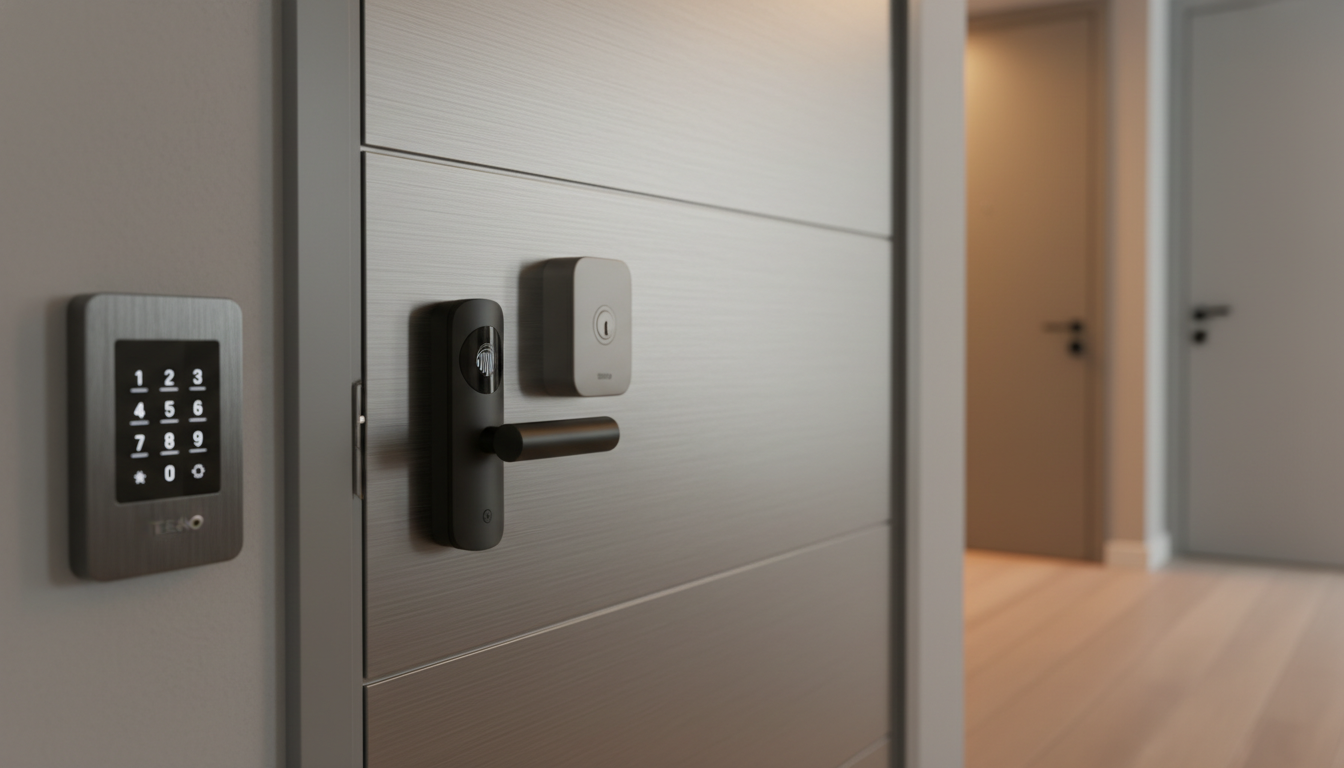
Keypad locks have become a go‑to upgrade for anyone who wants the convenience of code entry without the hassle of traditional keys. In this roundup we examined nine models, spanning everything from entry‑level options to high‑end lever locks. Prices stretch from $33.99 for the most modest unit up to $90.00 for the premium selections, giving you plenty of choices no matter your budget.
The budget tier features the Teeho TE001 at $33.99, which carries a strong 4.6/5 rating from nearly 23 000 reviewers, supports 20 user codes and weighs 1.76 pounds. It sits alongside the Teeho TE002 and the Ulecoce Fingerprint Deadbolt as the most wallet‑friendly picks. Mid‑range contenders like the Sifely Smart Lock, Ultraloq U‑Bolt and eufy C30 bring extra connectivity and larger code capacities, while the premium class—Kwikset SmartCode 917, Philips Smart Lock and Schlage Plymouth—offers larger form factors and higher security certifications.
Below we break down how each lock performs in real‑world scenarios, so you can pinpoint the model that matches your door, tech setup, and security needs.

Teeho TE001
Its compact 1.3‑inch height keeps it low‑profile and easy to install, delivering strong value for a budget‑friendly price.

Sifely Smart Lock
Ideal for families needing many users, it stores over 200 key fobs and 150 passcodes, and at $67.97 it’s about $34 more than the Teeho budget option.

Ultraloq U-Bolt 5-in-1 Black
Stands out with a solid 3.0‑lb weight, offering a sturdier feel and extra durability that the slimmer Teeho and feature‑focused Sifely don’t provide.
Also considered
TL;DR: For $33.99 the Teeho TE001 packs a 5.12‑inch deadbolt, 20 user codes and IP54 weather resistance into a 1.76‑lb, app‑free lock that scores 4.6/5 stars from nearly 23 k reviewers.
The TE001’s standout feature is its anti‑peeping password, which lets you add random digits before or after your PIN for extra privacy, and it supports up to 20 individual user codes plus one‑time codes that auto‑delete after use. Its compact footprint—5.12 inches long, 2.95 inches wide and only 1.3 inches high—fits standard exterior doors while the 2‑1/8‑inch door‑hole requirement keeps installation simple.
Compared with the other eight locks in this roundup, the TE001 is noticeably lighter than premium options such as the Ultraloq U‑Bolt (3.0 lb) and Sifely Smart Lock (3.6 lb), yet a bit heavier than the budget‑tier Teeho TE002 (1.0 lb). It also avoids the higher price tags of many smart locks that bundle Wi‑Fi or Bluetooth connectivity, positioning it as the most affordable entry‑level keypad deadbolt. While rivals like the Philips Smart Lock and Kwikset SmartCode add app control, the TE001 stays strictly local, which some users appreciate for privacy.
Customers repeatedly praise the lock’s straightforward setup and reliable keyless entry, noting that the back‑lit keypad is easy to see in low light and the vacation mode blocks all codes while alerting you to tampering. Professional reviewers highlight the solid build—nickel, stainless steel and zinc alloy—and the IP54 rating that protects it from dust and splashes, making it suitable for climates ranging from –22 °F to 158 °F. Battery life is rated up to one year on four AA cells, with a red low‑battery indicator that glows when power falls below 15 %.
Pros
Cons
Best for: Budget‑conscious buyers seeking a reliable entry‑level option — the Teeho TE001 offers Height: 1.3 inches, compact dimensions and solid security without a pricey smart hub.
Avoid if: You need advanced remote features, real‑time activity logs, or a lock that integrates with smartphone apps.
TL;DR: The Teeho TE002 delivers fast 0.3‑second fingerprint access, IP54 weather resistance and a 12‑month battery life at a budget‑friendly $40.19, making it a solid entry‑level deadbolt.
The standout spec is the 0.3‑second fingerprint recognition speed, which pairs with a total door unlock time of just 1 second. Its high‑grade aluminum body measures 130.05 mm deep, 33.02 mm high and 74.93 mm wide, and it carries an IP54 rating for protection against splashes and dust. The lock runs on four AA batteries that last about 12 months before a low‑battery alert at 15%.
Compared with the other eight locks in this roundup, the TE002 is notably lighter at 1.0 pound versus the 1.76‑pound Teeho TE001 and the heavier Ultraloq (3.0 pounds) or Sifely (3.6 pounds). Its depth of 130.05 mm matches the TE001’s 5.12‑inch length, keeping the overall profile compact. While the Ulecoce Fingerprint Deadbolt lists a larger fingerprint capacity of 50 groups, the TE002 supports up to 20 fingerprints and 20 passcodes, which is fewer but still adequate for most small families. Unlike the eufy C30 or Philips Smart Lock, the TE002 does not list any smart‑home integration, so it stays purely local.
Users consistently praise the near‑instant fingerprint unlock and the convenience of not juggling keys. Professional reviewers also highlight the auto‑lock range of 10‑99 seconds and the one‑time PIN feature that automatically deletes after a single use. The most common complaint is the 12‑month battery lifespan, which some owners feel could be longer, especially in high‑traffic homes.
Pros
Cons
Best for: Budget-conscious buyers seeking a reliable entry-level option — the Teeho TE002 offers Included Keys: 2
Avoid if: You need extensive smart‑home integration or have a large household requiring more than 20 fingerprints or passcodes
TL;DR: The Sifely Smart Lock offers a robust lever‑style design with 200 fingerprint slots, 150+ passcodes and multiple unlock methods, but its fingerprint sensor can struggle in wet conditions and it lacks full outdoor weather protection.
The lock’s standout spec is its high‑capacity credential storage – it can hold over 200 fingerprints, more than 150 passcodes, and 200+ wireless key fobs or cards. An anti‑peeping keypad overlay hides entered numbers, and the auto‑lock feature ensures the door secures itself after each use. All of this sits inside a zinc‑alloy lever that weighs 3.6 lbs and fits a standard 2 1/8‑inch bore without drilling.
Compared with the eight other keypad locks in this roundup, the Sifely is heavier than the Ultraloq U‑Bolt 5‑in‑1 (3.0 lbs) and lighter than the Kwikset SmartCode 917 (3.7 lbs). Its 7.0‑inch length and 3.0‑inch width make it longer and wider than the compact Teeho TE001, while its 1.12‑inch height is taller than the Philips Smart Lock’s 1.5‑inch profile. In short, it occupies more physical space than several peers but compensates with far more user slots.
Everyday owners praise the lock for family‑friendly convenience – kids and seniors can use fingerprints, cards, or a simple passcode, and the installation typically finishes in 10–20 minutes with just a Phillips screwdriver. Professional reviewers note the fingerprint sensor unlocks in under 0.3 seconds under dry conditions, yet both reviewers and consumers report noticeable slowdowns when fingers are wet or greasy. The lock also isn’t marketed for fully exposed exterior doors, so users in harsh climates often opt for a more weather‑rated option.
On the tech side, Sifely employs white‑box cryptography to encrypt stored credentials, and it integrates with Amazon Alexa and Google Assistant via a separate Wi‑Fi gateway. The lock runs on four AA batteries that the manufacturer says last about a year, and it supports Bluetooth‑based app control for iOS and Android devices.
Pros
Cons
Best for: Most users looking for a well‑reviewed, reliable mainstream option — the Sifely Smart Lock offers Fingerprint Capacity: 200
Avoid if: You need advanced features or professional‑grade performance
“much better than expected for the price”
“love the fingerprint unlock indoors; it becomes a habitual, quick method”
TL;DR: The Schlage Plymouth keypad lock blends a 4.42‑inch lever grip, 5‑second auto‑lock and LED‑backlit keypad for solid security at $90, though its 9‑V battery and limited code slots keep it premium‑priced.
The lock’s standout feature is its long 4.42‑inch lever grip, which gives a comfortable pull while the built‑in auto‑lock snaps shut just 5 seconds after the door closes. It also stores up to 19 total access codes, with two preset codes ready out of the box, and uses a 4‑digit entry that’s easy to remember.
At 4.25 lb overall (1.5 lb lock weight) the Plymouth is noticeably heavier than the Philips Smart Lock (1.4 lb) and the Teeho TE001 (1.76 lb), but lighter than the Kwikset SmartCode (3.7 lb). It carries a higher price tag than the budget‑focused Teeho models, yet it offers a traditional mechanical key backup and a satin‑chrome finish that many premium competitors lack.
Reviewers consistently highlight the auto‑lock convenience and the LED‑backlit silicone‑rubber keypad for night‑time entry. On the downside, users note the bulky 9‑Volt battery can feel cumbersome to replace, and the 19‑code limit may fall short for larger households. The timed entry allowance of just 10 seconds also draws criticism from those who need a longer window.
The Plymouth’s cross‑bore diameter measures 2.125 inches, with a 1‑inch latch throw and an adjustable backset ranging from 2‑3/8 in to 2‑3/4 in, fitting doors 1‑3/8 in to 1‑3/4 in thick. Its ANSI/BHMA Grade 2 rating and limited‑lifetime mechanical warranty underline Schlage’s reputation for durability.
Pros
Cons
Best for: Buyers willing to invest in a proven, high‑quality option — the Schlage Plymouth offers Lever Grip Length: 4.42 Inches
TL;DR: The Ultraloq U‑Bolt 5‑in‑1 Black packs fingerprint access for up to 120 users, IP65 weather resistance and Matter‑over‑Thread support into a 3.0 lb deadbolt for $66.49.
What really sets the U‑Bolt apart is its five‑way keyless entry: a 360° capacitive fingerprint sensor that stores up to 120 fingerprints, a backlit anti‑peep keypad that holds 50‑60 PIN codes (4‑8 digits), NFC/Apple Home Key for up to 50 cards, Bluetooth LE, Wi‑Fi (2.4 GHz) and optional Z‑Wave. The lock also offers 128‑bit AES encryption and an IP65 rating, meaning it can handle rain and dust without a hitch. Its battery pack of eight AA cells is rated for up to 1 year or roughly 8,000 accesses, and the auto‑lock timer is configurable from 10 seconds to 5 minutes.
At 3.0 lb, the U‑Bolt is lighter than the Sifely Smart Lock (3.6 lb) and Kwikset SmartCode (3.7 lb), yet heavier than the Philips Smart Lock (1.4 lb) and Teeho TE001 (1.76 lb). While several rivals list only a single connectivity option, Ultraloq bundles Bluetooth, Wi‑Fi, Thread (Matter‑over‑Thread) and optional Z‑Wave, giving it a broader smart‑home reach. Its backset is adjustable (2‑3/8″ or 2‑3/4″), matching the door‑prep specs of many competitors.
Reviewers consistently praise the hands‑free unlock for grocery runs and the geofencing auto‑unlock that works when you approach the door. Professional reviewers note the “healthy facelift” and improved geofencing compared with earlier models, as well as the flexible auto‑lock timer. The main complaint is that remote status checks and auto‑lock often need an extra Wi‑Fi or Z‑Wave bridge, and the battery count can vary between four and eight AA cells depending on the version.
From a security standpoint, the lock’s 128‑bit AES encryption and ANSI Grade 1 rating provide strong protection. The LED indicator (red/green/blue) gives clear feedback, and voice‑assistant integration with Alexa, Google Assistant and SmartThings lets you lock or unlock by command. With a lifetime mechanical warranty and 18‑month electronic coverage, the U‑Bolt aims for long‑term reliability.
Pros
Cons
Best for: Most users looking for a well‑reviewed, reliable mainstream option — the Ultraloq U‑Bolt 5‑in‑1 Black offers Weight: 3.0 lbs
Avoid if: You're shopping on a tight budget — it's priced at $66.49
TL;DR: The eufy Smart Lock C30 offers Wi‑Fi keyless entry, auto‑lock and a 5‑month battery life for $54.99, fitting most US/Canadian deadbolts with a compact 65.28 mm depth.
What sets the C30 apart is its built‑in Wi‑Fi, so you can lock, unlock and receive alerts directly from the eufy Security app without a separate bridge. The lock auto‑locks on a time‑based schedule and includes wrong‑try protection that temporarily disables entry after several incorrect attempts.
Compared with the eight peers, the C30 is lighter than the Ultraloq U‑Bolt 5‑in‑1 (3.0 lb) and the Sifely Smart Lock (3.6 lb), yet heavier than the Teeho TE002 (1.0 lb) and Philips Smart Lock (1.4 lb). Its 65.28 mm depth is shallower than the Ulecoce Fingerprint Deadbolt’s 3.54 in depth, making it a good fit for tighter door jambs. Unlike the Ulecoce and Sifely models, the C30 lacks fingerprint recognition, but it compensates with a physical‑button keypad and voice‑assistant support for Alexa and Google Assistant.
Professional reviewers praise the straightforward 15‑minute installation and the reliable 5‑month battery life supplied by four AA cells. Users also note the lock’s durability, thanks to an IPX3 rating and an operating temperature range from –22 °F to 158 °F. The only recurring theme in consumer feedback is the need to purchase AA batteries separately, which adds a small upfront cost.
Pros
Cons
Best for: Most users seeking a balanced, mainstream option — the eufy Smart Lock C30 offers Depth: 65.28 mm
TL;DR: The Kwikset SmartCode 917 Matte Black delivers BHMA AAA security, a backlit keypad and self‑rekeying SmartKey at $69, but lacks any smart‑home connectivity, making it a solid interior lock for security‑focused users.
The lock’s standout feature is its backlit, motion‑activated keypad paired with silent operation, letting you enter a 4‑8 digit code in low light without a click. Its physical dimensions—Depth 3.87 inches, Height 9.49 inches, Width 4.11 inches—give it a robust presence on the door.
At 3.7 pounds, it’s a touch heavier than the ultra‑light Teeho TE001 (1.76 pounds) and roughly on par with the Sifely Smart Lock (3.6 pounds). Its height also dwarfs the compact Teeho TE001, which measures just 1.3 inches tall, so you’ll notice a more traditional lever profile.
Reviewers consistently praise the easy programming of up to 30 unique codes plus a one‑time use code, and the battery‑drain indicator that supports up to 3 years on a 9 V battery. Professionals highlight the BHMA AAA rating and SmartKey self‑rekeying as top‑tier security measures, while users love the silent, reliable feel. The main complaints focus on the complete lack of Bluetooth, Wi‑Fi, or Z‑Wave, meaning there’s no remote or smartphone control.
Pros
Cons
Best for: Buyers willing to invest in a proven, high‑quality option — the Kwikset SmartCode 917 Matte Black offers Depth: 3.87 inches
Avoid if: You're on a tight budget or only need basic functionality
TL;DR: The Philips Smart Lock packs built‑in Wi‑Fi, fast 0.3‑second fingerprint access and a solid 1.4‑lb aluminum body for $79.98, delivering premium convenience at a mid‑range price.
What really sets this lock apart is the combination of native Wi‑Fi and Bluetooth, so you never need a separate hub. At just 1.4 pounds it’s lighter than many deadbolts that rely on bulkier hardware, and its fingerprint sensor reads a print in 0.3 seconds with a 99% recognition rate, making entry feel almost instantaneous.
Compared with the eight other keypad locks in this roundup, the Philips model sits in the higher‑priced tier—costing more than the Teeho TE001 ($33.99) and TE002 ($40.19) but less than the Schlage Plymouth ($90.00). It’s also noticeably lighter than the Kwikset SmartCode 917 (3.7 pounds) and the Sifely Smart Lock (3.6 pounds), while still heavier than the ultra‑light Teeho TE001 (1.76 pounds). Feature‑wise it outpaces many rivals by offering both Wi‑Fi and Bluetooth, a full keypad, mechanical key, and voice‑assistant integration.
Professional reviewers highlight the lock’s rapid fingerprint performance and the convenience of remote control through the Philips Home Access app, which also logs entries for you. Users appreciate the “hub‑less” setup and the ability to lock or unlock with a voice command. The main complaints revolve around the need for eight AA batteries—none are included—and the absence of an emergency power backup, which some consider a trade‑off for the added connectivity.
The lock stores up to 20 fingerprints, supports 100 user PINs and an unlimited number of one‑time PINs, and can auto‑lock anywhere from 10 to 180 seconds after closing. It operates in humidity from 0‑95% and temperatures between –35 °C and 66 °C, and all wireless traffic is protected with AES128 encryption, giving you peace of mind for everyday residential use.
Pros
Cons
Best for: Buyers willing to invest in a proven, high-quality option — the Philips Smart Lock offers Backset: 2-3/8 or 2-3/4 inch
TL;DR: For $49.98, the Ulecoce Fingerprint Deadbolt delivers 0.3‑second fingerprint reads, 5‑in‑1 unlocking and a 50‑meter app range, making it a solid budget‑friendly smart lock.
The standout spec is the ultra‑fast 0.3‑second fingerprint recognition speed paired with a claimed 99.99% accuracy, letting you open the door almost instantly. The lock also supports five unlock methods—fingerprint, keypad, app, one‑touch, and traditional key—so you have multiple backups if one method fails.
Compared with the eight other locks in this roundup, the Ulecoce model sits at the lower end of the price spectrum and offers more unlocking options than the eufy Smart Lock C30, which lacks biometric support. It is lighter on features than the Ultraloq U‑Bolt 5‑in‑1, which adds NFC and Thread, but it still provides a respectable 512 total passcode entries, a range the Teeho TE002 does not disclose. Its depth of 3.54 inches and height of 11.02 inches make it taller than the Kwikset SmartCode 917, yet its matte black finish matches the aesthetic of the Philips Smart Lock.
Professional reviewers praise the lock’s speedy fingerprint identification and the ability to monitor access logs through the companion app. Users appreciate the straightforward DIY installation that only requires a screwdriver, and the adjustable auto‑lock timer (10‑30 seconds) adds a layer of convenience for busy households. The 50‑meter app control range means you can lock or unlock from across a typical driveway without needing to be right at the door.
Pros
Cons
Best for: Budget-conscious buyers seeking a reliable entry‑level option — the Ulecoce Fingerprint Deadbolt offers Fingerprint Capacity: 50 groups.
Avoid if: You prefer a lock with extensive smart‑home integrations or need a solution for non‑standard doors where compatibility details are missing.
Breakdown
Teeho TE001
Pros
Sifely Smart Lock
Pros
Ultraloq U-Bolt 5-in-1 Black
Pros
Cons

Teeho TE002
Pros
Based on scoring data and product specs
Personalized picks
Best Overall Pick
Teeho TE001
Best Budget PickBest for: Budget-conscious buyers seeking a reliable entry-level option — the Teeho TE001 offers Height: 1.3 inches
Sifely Smart Lock
Best for: Most users looking for a well-reviewed, reliable mainstream option — the Sifely Smart Lock offers Fingerprint Capacity: 200
$69.99+$34.00 vs winner
Skip Ulecoce Fingerprint Deadbolt if…
You have limited desk space or need portability
The Teeho TE001 earns the top spot with a rock‑bottom $33.99 price tag, a 4.6‑out‑of‑5 rating backed by 22,971 reviews, and a solid 20‑user code capacity. Its anti‑peeping password keypad, IP54 weather rating, and built‑in auto‑lock delay (10‑99 seconds) give you high security without the premium price.
The runner‑up, Sifely Smart Lock, shines when you need connectivity and biometric entry. Priced at $67.97, it offers Bluetooth, Alexa and Google Assistant support, plus a 200‑fingerprint capacity and multiple unlock methods—including fingerprint, smartphone, and key fob—making it ideal for tech‑savvy households.
Looking beyond the top two, the Ultraloq U‑Bolt 5‑in‑1 Black stands out as the best mid‑range choice at $66.49, delivering a versatile 5‑in‑1 locking solution. For premium shoppers, the Kwikset SmartCode 917 Matte Black is the top premium pick at $69.29, offering robust build quality and advanced features for a higher‑end budget.
Choose the Teeho TE001 now and secure your door without breaking the bank.
The TE001 offers an anti‑peeping password, one‑time codes that auto‑delete, and a lock‑out after wrong entries, while the Sifely Smart Lock adds anti‑peeping code plus fingerprint recognition for up to 200 users and white‑box encryption. Both lock after failed attempts, but the TE001 comes in at $33.99 versus the Sifely’s $67.97, making it the more budget‑friendly option.
No reviews yet — be the first to share your experience.
Please sign in to leave a review