⚡ Quick Answer
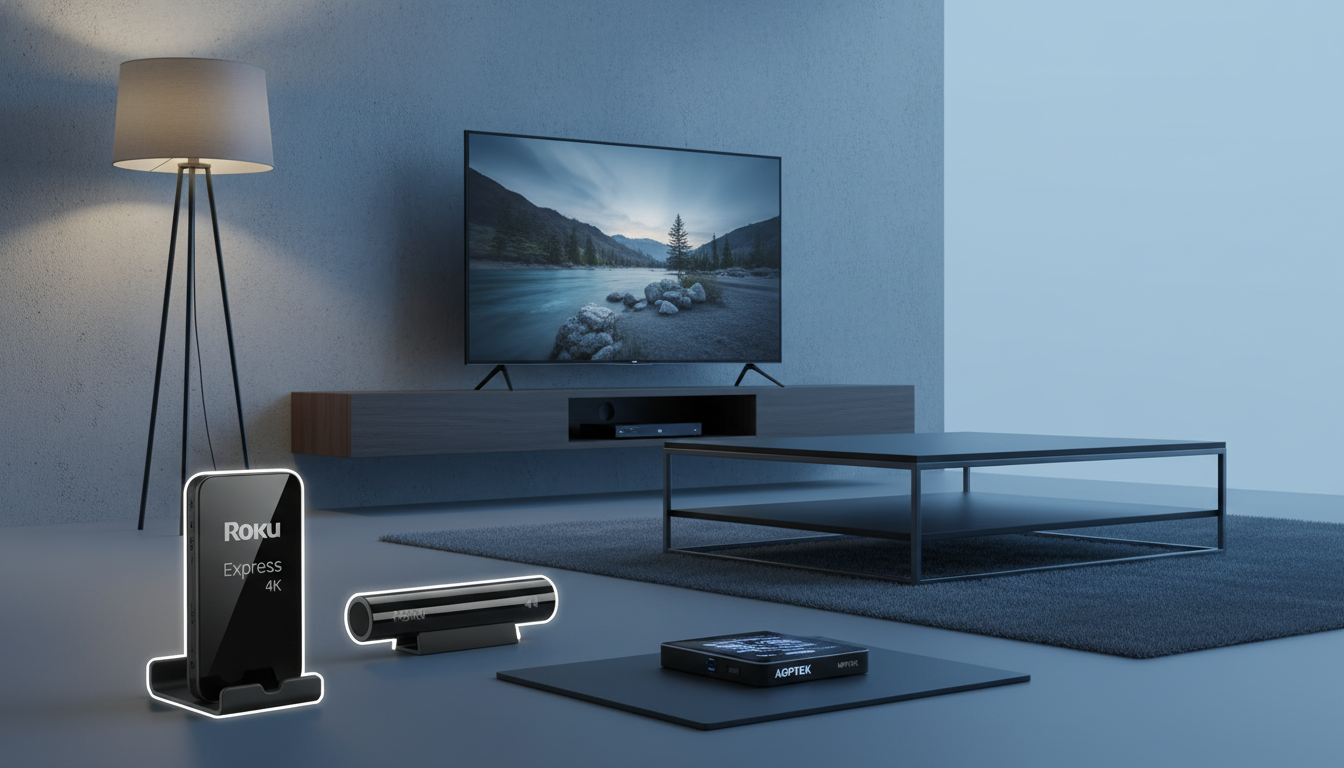
If you're hunting for a media player that won't break the bank, our roundup of 9 options under $50 gives you a clear view of what's on the market. Prices stretch from $26.99 for the AGPTEK 16 GB MP3 player up to $49.75 for the Roku Ultra LT, and the selection spans three tiers – budget picks like the Roku Premiere, mid‑range choices such as the Roku Express 4K, and premium‑styled units including the AGPTEK HDMI Media Player.
Ratings are high across the board – the Roku Premiere tops the list with a 4.7‑star average from 95,413 reviews, while the Roku Ultra LT holds a 4.6‑star rating from 2,267 reviewers. If storage matters, the Roku Express 4K ships with roughly 4 GB of internal memory and a 1 GB RAM, and the Neumitech Atom can read up to 1 TB SD cards and 8 TB USB drives. Weight‑conscious users will notice the ultra‑light 0.07‑pound AGPTEK 16 GB model and the feather‑light 0.08‑pound Roku Premiere.
Next we break down each tier, compare key specs like refresh rates, audio support and connectivity, and point out which devices suit a bedroom TV, a kitchen screen or a travel‑friendly music setup. Stay tuned for the full breakdown.

Roku Express 4K
Its ultra‑slim 2 cm depth makes it fit discreetly behind any TV, delivering full‑HD streaming at a strong 4.5‑star rating.

Roku Premiere
Ideal for budget‑conscious streamers, the Roku Premiere costs $27.00—about $12 less than the Roku Express 4K—while still offering reliable entry‑level performance.

AGPTEK MP3 Player 32GB Black
Stands out as a portable music player with 8+ hours battery life and a compact 8.9 mm profile, offering a handheld alternative to the TV‑bound Roku devices.
Also considered
Score Analysis
Key score advantages vs. runner-up (Roku Premiere)
Price Range
Roku Express 4K
$54.01
Roku Premiere
$27.00
AGPTEK MP3 Player 32GB Black
$38.99

Roku Ultra LT
$49.00

AGPTEK HDMI Media Player Black
$39.99

AGPTEK MP3 Player 64GB Black
$42.99

AGPTEK MP3 Player 16GB Blue
$29.99
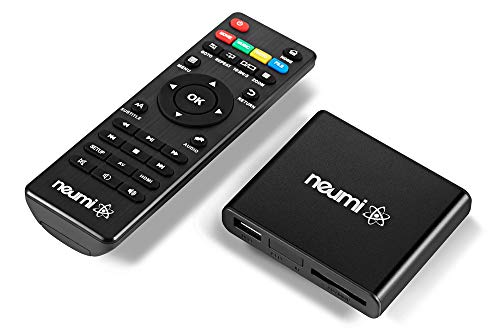
Neumitech Atom
$37.99

Mypin HDMI Media Player Blue
$39.99
Spec Comparison
TL;DR: The Roku Express 4K streams true 4K 60 fps HDR video at a $38.97 price, packs about 4 GB of internal storage for quick app launches, and stays under 3.5 W of power draw.
The standout spec is its 3840 × 2160 resolution at 60 fps with HDR10+, HDR10+ and HLG support, delivering a crisp picture that rivals higher‑priced players. Its ARM Cortex‑A55 quad‑core processor (up to 2.0 GHz) and 1 GB of RAM use roughly 4 GB of internal storage, which reviewers say speeds up app loading compared with older Roku sticks.
In the context of the other eight budget players, the Express 4K is far lighter than the AGPTEK HDMI Media Player (45 g vs 249 g) and more compact than the Roku Ultra LT’s larger chassis. Its 4K UHD resolution outclasses the 1920 × 1080 output of the Mypin HDMI Media Player, while the AGPTEK MP3 devices don’t even handle video. However, it lacks an Ethernet port that the Roku Ultra LT includes, and its simple IR remote doesn’t offer voice search—a feature found on some competing Roku models.
Users praise the device’s plug‑and‑play setup, smooth 4K/HDR streaming, and the value you get for $38.97. Common complaints focus on Wi‑Fi‑only connectivity, occasional buffering on weak networks, and the ad‑heavy interface. Professional reviewers also note the low power draw of <3.5 W during 4K streaming, earning ENERGY STAR certification, and the inclusion of a premium HDMI cable for hassle‑free hookup.
Pros
Cons
Best for: Most users looking for a well‑reviewed, reliable mainstream option
Avoid if: You need Ethernet connectivity or a voice‑controlled remote
TL;DR: At $27, the Roku Premiere delivers 4K HDR streaming with a quad‑core processor, voice remote, and a tiny footprint, making it a solid entry‑level media player for budget shoppers.
The Roku Premiere packs a 3840 × 2160 resolution display engine, HDR10 support and a 60 Hz refresh rate, all driven by a quad‑core 1.2 GHz ARM processor. Its 0.08‑pound weight and 84 mm × 17 mm × 36 mm dimensions let it slip behind any TV without crowding the cabinet. The device ships for $27.00 and includes a premium HDMI cable, remote with voice control, two AAA batteries, and a micro‑USB power adapter.
Compared with the other eight contenders, the Premiere is cheaper than the Roku Ultra LT and the Roku Express 4K, yet it weighs far less than the AGPTEK HDMI Media Player Black (0.55 pounds) and the Roku Ultra LT (around 0.37 pounds). While the Neumitech Atom lists a higher maximum video bitrate, the Premiere’s HDMI 2.0 output still handles full‑frame 4K @ 60 Hz. It also offers higher streaming specs than the MP3‑focused AGPTEK players, which lack video capabilities entirely.
Users consistently praise the plug‑and‑play setup, noting how quickly they can start watching 4K content and how the voice‑enabled remote simplifies channel changes. Professional reviewers highlight the “snappy performance” of the quad‑core CPU and the crisp, colorful picture that 4K HDR delivers. The most common complaints revolve around the reliance on Wi‑Fi 5 (802.11ac) without an Ethernet port, leading to occasional drops in weak‑signal areas, and the outdated micro‑USB power connector.
Pros
Cons
Best for: Budget-conscious buyers seeking a reliable entry-level option
Avoid if: You have limited desk space or need portability
“very very compact,”
“plug in HDMI, connect Wi-Fi, done”
TL;DR: The AGPTEK MP3 Player A19 packs 32 GB of internal storage, Bluetooth 5.3, and a 2.4‑inch curved screen for $38.99, but its tiny screen and limited playlist slots keep it in the budget‑friendly, casual‑listener lane.
The standout spec is the 32 GB of built‑in memory that you can expand up to 128 GB via microSD, giving you room for thousands of songs without needing a phone. Bluetooth 5.3 ensures fast, reliable pairing with headphones or car speakers, and the 2.4‑inch TFT HD curved display lets you navigate the UI with capacitive touch buttons.
In the context of the other eight players, this model sits in the same price bracket as most streaming sticks and mini‑media devices. It’s heavier than the ultra‑light Roku Express (which weighs about 0.1 lb) but lighter than the AGPTEK HDMI Media Player (around 0.55 lb). Its dimensions (8.9 mm depth, 105.9 mm height, 39.9 mm width) compare to the AGPTEK 64 GB MP3 player, which shares the same 2.4‑inch screen but tips the scales at 76 g. Compared with the Neumitech Atom’s 39 g weight, the A19 feels a bit bulkier, yet it still fits comfortably in a pocket or armband.
Reviewers consistently praise the quick Bluetooth setup and the solid 8+ hour battery life that lasts through commutes and workouts. Professional reviewers also note clear sound from the built‑in speaker and the convenience of FM radio recording. On the flip side, users complain about the three fixed playlist slots that are hard to edit and the limited SD‑card browsing—no artist or genre sorting, which can be frustrating for larger libraries. The small 2.4‑inch screen also makes video playback feel more like a novelty than a primary feature.
Pros
Cons
Best for: Most users seeking a balanced, mainstream option
Avoid if: Reliability and user satisfaction are your top concerns
“"very well" performing”
“flawless Bluetooth”
TL;DR: The Roku Ultra LT delivers true 4K HDR streaming with Dolby Vision, a quad‑core 1.5 GHz processor and a voice remote for under $50, but its $49.75 price is higher than many entry‑level players.
The standout spec is its native 3840 × 2160 resolution at 60 fps combined with HDR support for Dolby Vision, HDR10, HDR10+ and HLG, all driven by a quad‑core 1.5 GHz ARM Cortex A55/A53 CPU and 2 GB of RAM. This hardware combo lets the Roku OS run smoothly and launch apps quickly, giving you a crisp, high‑dynamic‑range picture on any 4K TV.
Compared with the other eight players in this roundup, the Ultra LT sits at the higher end of the price spectrum—it's pricier than the Roku Express 4K, Roku Premiere and the AGPTEK HDMI Media Player, which all list lower price points. However, it also packs more premium features: a full microSD slot for local media, Ethernet 10/100 Mbps, Wi‑Fi 5 dual‑band, and Dolby Atmos audio support, which many of the budget‑focused competitors lack or only list as “not listed”. Its physical footprint (127 mm × 124.4 mm × 25.4 mm) is larger than the ultra‑compact Mypin HDMI Media Player but still compact enough to hide behind most TVs.
Users consistently praise the Ultra LT’s sharp 4K picture and the snappy UI, noting that the voice remote with private‑listening headphones makes searching effortless. Professional reviewers highlight the solid quad‑core CPU and strong HDR support as reasons the device feels “premium” despite its modest size. The most common complaints revolve around the absence of a USB port, which limits direct connection of external drives, and occasional Wi‑Fi hiccups that some users report during heavy network traffic.
Beyond the core specs, the Ultra LT runs Roku OS, offering a familiar interface and access to thousands of streaming channels. It includes an HDMI 2.0 output for full‑bandwidth 4K video, a microSD slot for expandable storage (capacity not listed), and Dolby Atmos support for immersive sound when paired with compatible audio equipment. The remote draws power from a single lithium‑polymer cell, though the manufacturer doesn’t disclose battery life.
Pros
Cons
Best for: Buyers willing to invest in a proven, high‑quality option
Avoid if: You're shopping on a tight budget — it's priced at $49.75
“Fast app loading, vivid colors, easy voice control.”
TL;DR: For $39.99 the AGPTEK HDMI Media Player Black delivers full‑HD 1080p video, supports up to 8 TB of external storage, and packs a sturdy aluminum body with a 7 m IR remote range.
The standout spec is its HDMI output at 1080p 60 Hz, ensuring crisp playback on most modern TVs. It also accepts external HDDs up to 8 TB, far exceeding the storage limits that many sub‑$50 rivals list.
Compared with the eight other players in this roundup, the AGPTEK unit is heavier than the Mypin player (50 g) and the Roku Express (45 g), and its 84 mm depth, 145 mm height, and 87 mm width make it larger than most compact sticks such as the Neumitech Atom (66 mm × 15 mm × 76 mm). However, its price sits alongside those budget options, while offering far more external storage capacity than the MP3‑focused AGPTEK models, which list only microSD slots.
Users repeatedly praise the plug‑and‑play simplicity and the sturdy aluminum alloy chassis that survives travel and RV use. Professional reviewers note the broad codec list—including RMVB, MKV, and multiple subtitle formats—as a major advantage. The most common complaints revolve around the 1080p ceiling, the lack of Wi‑Fi or streaming apps, and occasional IR signal drop‑outs beyond the 7 m remote range.
Power comes from a 5 V / 2 A supply and the player draws about 4 W, matching typical low‑power media sticks. The IR remote offers a 30° angle and works reliably within its 7 m range, though users have reported occasional hiccups at the edge of that distance.
Pros
Cons
Best for: Travelers, seniors, or anyone needing a simple, offline media player with massive storage capacity.
Avoid if: You require 4K video, built‑in streaming services, or the highest possible user rating.
TL;DR: The AGPTEK M3 packs 64 GB of built‑in storage (expandable to 192 GB total), a 2.4‑inch TFT screen and Bluetooth 5.3 for $33.99, making it a solid budget media player despite its low‑resolution video support.
This model’s standout spec is the massive 64 GB internal flash, which you can boost to a total of 192 GB by adding a micro SD card up to 128 GB. The 2.4‑inch color display is bright enough for album art, and Bluetooth 5.3 plus a USB‑C port give you fast, reliable wireless and wired connections.
At $33.99 it sits below the Neumitech Atom’s $37.99 price tag and is cheaper than the Roku Ultra LT, while the Neumitech weighs only 39 g compared with this player’s 76 g. Its video resolution of 128 × 160 px is far lower than the 4K support the Roku Express 4K provides and the 1920 × 1080 px the Mypin HDMI Media Player offers, so don’t expect crisp video playback.
Reviewers appreciate the simple drag‑and‑drop transfer that keeps album metadata intact, and many note the Bluetooth 5.3 pairing works smoothly with AirPods. Users also like the built‑in speaker, FM radio and pedometer for on‑the‑go listening. The main complaints focus on the indirect volume control via the menu and the need to convert videos to the tiny 128 × 160 format, and occasional screen blackouts occur.
Pros
Cons
Best for: Entry-level buyers or those on a tight budget
Avoid if: You want the best value‑per‑dollar in its price range
“"very well" performing”
“flawless Bluetooth”
TL;DR: The AGPTEK 16 GB MP3 player offers 70 hours of music playback, Bluetooth 5.3, and expandable storage up to 128 GB for just $26.99, making it a solid ultra‑budget media companion.
What really stands out is the 70‑hour music battery paired with a 420 mAh cell, so you can binge playlists for days without hunting for a charger. The device is tiny enough to slip into a pocket – it weighs only 0.07 pounds and measures 1.8 inches across its TFT LCD screen. Six preset EQ modes and an integrated noise‑cancellation chip let you tweak sound without extra gear.
Compared with the other eight entries, this player is among the lightest: it’s lighter than the Roku Premiere (0.08 lb) and the Roku Express 4K (0.1 lb), and also lighter than the AGPTEK 64 GB Black model (76 g). While the Roku devices focus on streaming video, they don’t list Bluetooth at all, so the A02S’s Bluetooth 5.3 transmitter gives it a connectivity edge. Its $26.99 price tag sits in the same range as the Roku Premiere, but it bundles earphones, a USB cable, and a pedometer that many peers lack.
Users consistently praise the ultra‑light feel and the 70‑hour battery life, calling it ideal for students, seniors, or anyone who wants music on the go. Reviewers also note the simple slim‑button layout and the built‑in FM radio that runs up to 12 hours. The main complaints revolve around the Bluetooth being transmitter‑only – you can’t stream phone calls – and the modest 1.8‑inch non‑touch screen, which feels cramped for video. The manufacturer doesn’t list a video resolution, so you’ll need to keep expectations modest.
Pros
Cons
Best for: Entry‑level buyers or those on a tight budget
Avoid if: You need a larger touchscreen, built‑in speaker, or full Bluetooth receiver functionality
“"very well" performing”
“flawless Bluetooth”
TL;DR: The Neumitech Atom is a $37.99, ultra‑compact media player that reads up to 8 TB USB drives and 1 TB SD cards, delivering 1080p60 video with 10‑bit color depth.
Its standout spec is its massive storage support: it handles USB drives up to 8 TB and SD cards up to 1 TB, far exceeding the modest internal storage of many sub‑$50 rivals. Coupled with a maximum video bitrate of 200 Mbps and 10‑bit color depth, it can play high‑quality 1080p60 streams without stutter.
At 39 g, the Atom is lighter than most HDMI‑based players in this lineup but a touch heavier than the Roku Premiere’s 36 g design. Its footprint—66 mm deep, 15 mm high and 76 mm wide—fits into spaces as small as a deck of cards, making it more compact than the bulkier AGPTEK HDMI Media Player and Mypin HDMI Media Player.
Reviewers consistently praise the plug‑and‑play setup: just plug the HDMI cable and power adapter and the device's ready. Professional reviewers call it a “compact powerhouse” for its codec breadth, including H.265/HEVC and H.264/AVC support. The main complaints revolve around the lack of 4K output and the need to buy trigger sensors separately if you want motion‑or button‑activated playback.
Technical notes: the Atom outputs 1080p @ 60 Hz via HDMI and also offers composite AV (720×576 PAL, 720×480 NTSC). It runs on a 5 V DC input and supports FAT32, exFAT and NTFS file systems. The trigger input lets you connect a push‑button or motion sensor (sold separately) for hands‑free control.
Pros
Cons
Best for: Most users seeking a balanced, mainstream option
Avoid if: You need 4K resolution, built‑in streaming, or an all‑in‑one sensor solution
“"compact powerhouse" with "stunning quality at 1080p60Hz"”
“"no complicated setups, just plug and play"”
TL;DR: The Mypin HDMI Media Player Blue delivers full‑HD 1080p@60Hz video, supports massive external storage up to 8 TB, and packs a sturdy aluminum alloy chassis for $39.99, but its file‑type reliability and lack of 4K streaming keep it from being a premium choice.
This mini player’s standout spec is its 1920x1080 @ 60 Hz output through HDMI, which professional reviewers praise for sharp picture quality and accurate colour on HDTVs. It also handles an extensive list of video codecs—including MKV, MP4, AVI, and MOV—plus audio formats like FLAC and DTS, all from a compact 13 mm‑high, 63 mm‑long, 60 mm‑wide aluminum shell.
At $39.99, it sits in the same price bracket as the AGPTEK HDMI Media Player Black, yet it is a touch heavier than the Roku Express 4K’s 0.1 pound weight (the Mypin weighs 0.11025 pounds). Its dimensions are slimmer than many peers, making it easy to tuck behind a TV or slip into a travel bag. While the Roku Express 4K is lighter, the Mypin offers a richer set of ports, including HDMI, composite AV, a USB 3.0 slot, an additional USB 2.0, and a TF card slot.
Everyday users highlight the plug‑and‑play simplicity: just connect the AV cable, insert a USB drive or an external HDD, and the IR remote works straight out of the box. Reviewers note the clear HDMI output and the sturdy feel of the aluminum alloy chassis, which many consider ideal for portable setups or digital signage. The most common complaints revolve around occasional file‑type pickiness—some supported videos still refuse to play—and questions about internal build durability. Users also mention that the remote arrives without batteries and that the device only reads FAT32 or exFAT partitions, which can be a nuisance for larger drives.
Technical details worth mentioning include support for USB flash drives up to 512 GB, SD/TF cards up to 128 GB, and external HDDs up to 8 TB (MBR, FAT32/exFAT). It provides audio output via HDMI or a 2‑channel AV connector, and the player recognizes subtitle files in SRT, SUB, and SSA formats. Power input accepts 100‑240 V AC, so the player works worldwide without a transformer.
Pros
Cons
Best for: Those prioritizing quality and willing to pay for premium performance
Avoid if: You're on a tight budget or only need basic functionality
Breakdown
Roku Express 4K
Pros
Roku Premiere
Pros
AGPTEK MP3 Player 32GB Black
Pros
Cons
Roku Ultra LT
Pros
Cons
Based on scoring data and product specs
Personalized picks
Best Overall Pick
Roku Express 4K
Best OverallBest for: Most users looking for a well-reviewed, reliable mainstream option
Roku Premiere
Best for: Budget-conscious buyers seeking a reliable entry-level option
$27.00-$27.01 vs winner
Skip Mypin HDMI Media Player Blue if…
You're on a tight budget or only need basic functionality
The Roku Express 4K earns the top spot thanks to its solid 4K resolution (3840 × 2160 @ 60 fps), HDR10/HDR10+/HLG support and a lightweight 0.1 lb profile that slips behind any TV. At $38.97 it stays well under the $50 ceiling, while a 4.5‑star rating from 3,620 reviewers shows broad satisfaction. Its 802.11ac dual‑band Wi‑Fi and ARM Cortex‑A55 quad‑core processor keep streaming smooth without breaking the bank.
Roku Premiere lands as the runner‑up, perfect if you need a voice‑enabled remote and the support of a massive user base. It carries a 4.7‑star score from 95,413 reviews and ships for $27.00, offering HDR10, 4K upscaling for 720p/1080p sources, and a simple IR remote with built‑in voice control.
For the tightest budget, the AGPTEK MP3 Player 16GB Blue at $26.99 provides basic media playback in a pocket‑sized form factor. If you’re willing to stretch to the premium tier, Roku Ultra LT at $49.75 adds higher‑end features while still fitting the sub‑$50 limit.
Pick the Roku Express 4K today and get the most capable streaming experience without exceeding your budget.
The Roku Express 4K, priced at $38.97, supports HDR10, HDR10+ and HLG and streams native 4K 3840 × 2160 at 60 fps, giving it a clear edge in picture quality over the Roku Premiere, which only offers HDR10 and 4K upscaling.
No reviews yet — be the first to share your experience.
Please sign in to leave a review