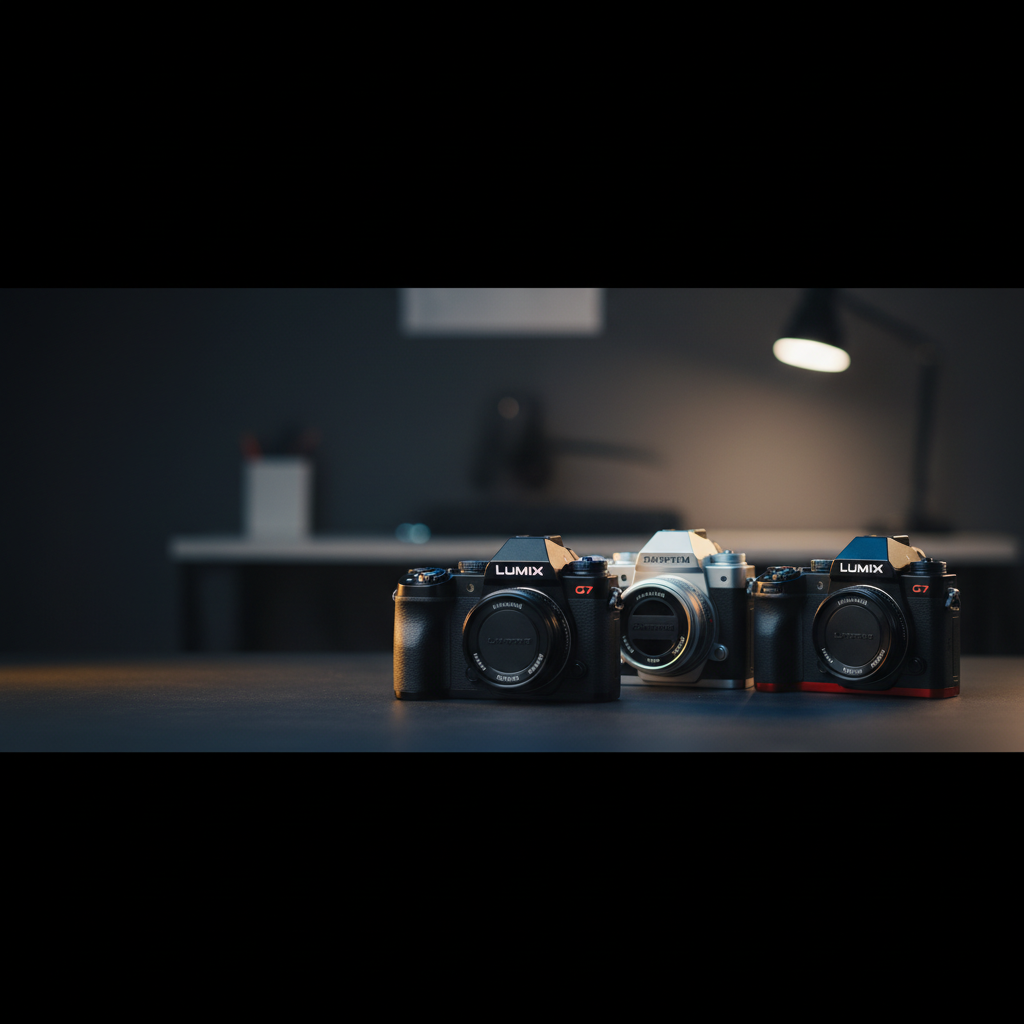
If you’re hunting for a Micro Four Thirds mirrorless camera that stays under $800, you’ve landed in the right place. In this roundup we’ve lined up 4 models that balance price, performance, and portability, so you can pick the one that fits your shooting style without breaking the bank.
On the budget side, the Panasonic LUMIX G7 leads at $547.99 and carries a 4.5‑star rating from 1,997 reviewers, plus a 49‑point contrast‑detect AF system and 4.6 fps continuous shooting. The OM SYSTEM Olympus E‑M10 Mark IV Silver follows at $699.99, also rated 4.5 stars, and offers 121 AF points in a 1.1pounds body. Stepping up, the OM SYSTEM E‑M10 Mark IV sits at $699.99 with a 4.4‑star rating, 4.5‑stop in‑body stabilization and a lightweight 0.84pounds chassis. The Panasonic LUMIX G100 caps the premium tier at $747.99, holds a 4.5‑star rating, records up to 90 minutes of 1080p video and weighs 1.3007273458Pounds.
The following sections break down each camera’s strengths, handling, and the shooting scenarios they shine in, so you can zero in on the best match for your budget and creative goals.

Panasonic LUMIX G7
Its 49-point contrast‑detection autofocus gives reliable focus coverage at a price under $550, so it's a solid entry‑level choice.

OM SYSTEM Olympus E-M10 Mark IV Silver Micro Four Thirds
Ideal for hobbyists who want more focus points, it offers 121‑point AF and sits about $152 higher than the G7, appealing to those willing to spend a bit more for precision.

Panasonic LUMIX G100
Stands out with up to 90 minutes of 1080p video recording and a 10 fps electronic shutter, catering to vloggers who need longer takes and smoother motion than the G7 or E‑M10.
Score Analysis
Key score advantages vs. runner-up (OM SYSTEM Olympus)
Price Range
Panasonic LUMIX G7
$713.71
OM SYSTEM Olympus E-M10 Mark IV Silver Micro Four Thirds
$699.99
Panasonic LUMIX G100
$747.99

OM System E-M10 Mark IV
$699.99
Spec Comparison
TL;DR: The Panasonic LUMIX G7 packs a 16 MP Micro Four Thirds sensor, 4K video up to 30p, and a high‑resolution OLED viewfinder for $547.99, making it a solid budget choice for hybrid shooters.
The standout spec is its 4K video capability – up to 30 p in MP4 – paired with a 16.0 MP MOS sensor that lacks a low‑pass filter, delivering crisp stills and detailed footage. Its OLED EVF shows 2,360,000 dots at 0.70× magnification, and the fully articulating 3.0‑inch touchscreen lets you frame from tricky angles. Autofocus relies on 49‑point contrast detection, and the camera can burst up to 17 RAW + JPEG frames, with continuous‑AF JPEG shooting at 4.6 fps.
Compared with the Olympus E‑M10 Mark IV variants, the G7 is lighter than the Silver model (0.9 lb vs 1.1 lb) but a touch heavier than the other Mark IV (0.9 lb vs 0.84 lb). It offers fewer AF points (49 vs 121) but a slightly larger battery (1,200 mAh vs 1,175 mAh) and comparable shot count (≈350 vs ≈360). In size, the G7’s depth (125 mm) and width (77 mm) exceed the Olympus bodies, while its height (86 mm) is similar. Against the Panasonic LUMIX G100, the G7’s EVF resolution (2.36 M dots) is lower than the G100’s ~3.68 M‑dot viewfinder, though both share a 3‑inch rear screen.
User sentiment highlights the camera’s affordable 4K video, the handy 4K Photo and Post‑Focus modes, and the responsive touchscreen. Professional reviewers praise the EVF's 2,360,000‑dot resolution and dual control dials, but note the plastic chassis feels cheap and the lack of a headphone jack limits audio monitoring. Autofocus can slow in low‑light scenes, and the continuous‑AF burst rate (4.6 fps) may feel modest for fast action. Battery endurance sits at roughly 350 shots per charge, which some users find limiting for extended shoots.
Pros
Cons
Best for: Content creators, vloggers, and hybrid shooters who want affordable 4K video in a compact mirrorless package.
Avoid if: You need professional‑grade audio monitoring, high‑speed sports bursts, or a more premium build quality.
TL;DR: The OM SYSTEM E‑M10 Mark IV delivers a 20.3 MP Micro‑Four‑Thirds sensor, 5‑axis IBIS up to 4.5 EV, and a tilting 3‑inch touchscreen for $699.99, making it a compact, well‑reviewed entry‑level mirrorless option.
This camera uses a 20.3 MP (5184 × 3888) Live MOS sensor paired with the TruePic VIII processor, delivering detailed images and good low‑light performance. The 5‑axis in‑body image stabilization can compensate up to 4.5 EV steps, which helps keep handheld shots sharp. Autofocus relies on 121 contrast‑detect points, and the electronic viewfinder offers roughly 100 % coverage with about 1.23× magnification.
Compared with the other three contenders, the E‑M10 Mark IV sits at 1.1 lb, heavier than the 0.84 lb OM System sibling and the 0.9 lb Panasonic G7, but lighter than the 1.30 lb G100. Its body depth of 4.8 in (122 mm) is deeper than the 49 mm depth of the other OM System model, while its width of 2.6 in (66 mm) is noticeably narrower than that model’s 121.7 mm width. Battery life matches the other OM System version at roughly 360 shots per charge, and the EVF magnification (≈1.23×) is higher than the ≈0.67× of the sibling body.
Everyday users praise the camera’s portability and the quality of its stills, especially for travel and street photography. Professional reviewers highlight the effective 5‑axis IBIS and the high‑resolution sensor as strong points for the class. The most common complaints focus on the contrast‑detect AF lag when tracking moving subjects, the lack of an external microphone input for serious video work, and the plastic construction without weather sealing.
Pros
Cons
Best for: Budget-conscious buyers seeking a reliable entry-level option
Avoid if: You're shopping on a tight budget — it's priced at $699.99
TL;DR: The Panasonic LUMIX G100 packs a 20.3 MP sensor, 4K 30p video at 100 Mbps and three‑mic OZO audio in a 1.30‑lb, fully articulating body, ideal for vloggers who value sound and portability.
What really stands out is the combination of a 20.3 MP Live MOS sensor with 4K recording at 30 p and a 100 Mbps bitrate, plus a built‑in three‑mic OZO audio system that offers directional tracking. The camera also sports a 3.0‑inch fully articulating touchscreen and an electronic viewfinder delivering approximately 3.68 million dots of resolution.
Compared with the other three contenders, the G100 is heavier than the Olympus E‑M10 Mark IV variants (which weigh around 0.84–1.1 lb) and the Panasonic G7 (about 0.9 lb). It shares the same 49‑area contrast‑detect AF points as the G7, but falls short of the Olympus’s 121‑point system. Panasonic lists battery life at roughly 250–270 shots per charge, which is lower than the Olympus’s ~360‑shot rating. Unlike the Olympus models, the G100 lacks in‑body image stabilization for stills, while the G7’s specifications do not mention an EVF, giving the G100 an edge for eye‑level composing.
Reviewers consistently praise the camera’s built‑in audio – they highlight the three‑mic OZO array with tracking modes as “excellent” for vloggers. The compact 303 g body (590 g overall) and side‑hinged screen make it easy to shoot from low or high angles. On the downside, professional notes call out the 10‑minute 4K limit, which overheating causes, and the absence of a headphone jack, which means you can’t monitor audio in real time. The camera also offers a 90‑minute 1080p recording window, a mechanical shutter up to 1/16,000 s and an electronic shutter capable of 10 fps.
Pros
Cons
Best for: Vloggers, social‑media creators, and hybrid shooters who need strong built‑in audio and a compact, EVF‑equipped camera.
Avoid if: You rely on in‑body stabilization, need uninterrupted 4K recording, or require a headphone output for precise audio monitoring.
TL;DR: The OM System E‑M10 Mark IV offers a 20.3 MP Micro Four Thirds sensor, 5‑axis 4.5‑stop in‑body stabilization, and a fully articulating 3‑inch touchscreen for under $800, making it a solid travel companion.
What really sets this camera apart is its 5‑axis sensor‑shift image stabilization, offering up to 4.5 stops, which helps keep handheld shots sharp even in low light. The 20.3 MP Live MOS sensor sits behind a compact body that weighs just 0.84 pounds (335 g body‑only) and measures 49 mm × 84.4 mm × 121.7 mm, so it slips easily into a small bag.
Compared with the other three contenders, the E‑M10 Mark IV is lighter than the Panasonic LUMIX G100 (which tips the scales at over 1.3 pounds) and roughly matches the weight of the LUMIX G7’s 303 g body‑only design. It’s also noticeably lighter than the silver‑finished OM SYSTEM version that weighs about 1.1 pounds. In terms of depth, its 49 mm profile is slimmer than the G100’s 54.2 mm but deeper than the G7’s 125 mm chassis.
Users consistently praise the camera’s retro styling and the fun of its 31 art filters, while professional reviewers highlight the balance of portability, image quality, and the 5‑axis stabilization. The 3.0‑inch touchscreen (1,037,000‑dot resolution) tilts upward 80° and downward 180°, making high‑angle shooting and selfies straightforward. Video‑savvy users’ll appreciate 4K UHD capture at 24/25/30 p, though the lack of an external microphone input limits audio flexibility.
Pros
Cons
Best for: Budget‑conscious buyers seeking a reliable entry‑level option
Avoid if: You need rugged, weather‑sealed construction or professional‑grade video audio capabilities
Breakdown
Panasonic LUMIX G7
Pros
OM SYSTEM Olympus E-M10 Mark IV Silver Micro Four Thirds
Pros
Cons
Panasonic LUMIX G100
Pros
OM System E-M10 Mark IV
Cons
Based on scoring data and product specs
Personalized picks
Best Overall Pick
Panasonic LUMIX G7
Best Budget PickBest for: Budget-conscious buyers seeking a reliable entry-level option
OM SYSTEM Olympus E-M10 Mark IV Silver Micro Four Thirds
Best for: Budget-conscious buyers seeking a reliable entry-level option
$699.99-$13.72 vs winner
Skip OM System E-M10 Mark IV if…
Reliability and user satisfaction are your top concerns
The Panasonic LUMIX G7 takes the top spot as the best budget Micro Four Thirds mirrorless camera under $800. It packs 4K UHD video (3840 × 2160 at 30 p) and a 4K Photo mode that grabs 8 MP stills at 30 fps, giving you high‑resolution video and stills without stretching your budget. Its 49‑point contrast‑detection AF with DFD delivers reliable focus, and the fully articulating 3.0‑inch touchscreen makes framing tricky angles a breeze. At $547.99 and a 4.5‑star rating from 1,997 reviewers, it offers solid performance for the price.
The runner‑up is the OM SYSTEM Olympus E‑M10 Mark IV Silver, which shines when you need in‑body image stabilization and extra resolution. Its 5‑axis sensor‑shift IBIS provides up to 4.5 EV of shake reduction, and the 20.3 MP Live MOS sensor captures more detail than the G7’s 16 MP sensor. With 121 AF points and a 4.5‑star rating from 523 users, it’s a solid option if you prioritize handheld low‑light shooting or larger prints.
Pick the Panasonic LUMIX G7 today and get a capable, future‑proof MFT system without breaking the bank.
The Panasonic LUMIX G100 is designed with vloggers in mind, offering three built‑in microphones with Nokia OZO audio and a 3.5 mm external mic jack for added flexibility. It also has a fully articulating side‑hinged touchscreen that makes framing yourself easy, while the other two models lack dedicated vlog‑oriented audio features.
Please sign in to leave a review
No reviews yet. Be the first to review!
