⚡ Quick Answer
It might surprise you that the budget‑friendly Redrie Mini Drone, priced at $29.98, has a 4.5‑star rating from 316 reviewers—higher than several premium‑priced rivals. That blend of solid user love and a wallet‑friendly tag makes it a strong contender in our look at mini drones that cost under $40.
We compared 9 models that span three price tiers. The true budget lane includes the $21.99 Force1 Scoot, the $24.29 Syma X20, and the $29.98 Redrie Mini Drone. Mid‑range options sit around $29.99 to $39.99 and feature the Holy Stone HS190, the Pallton Mini Drone (which carries the highest 4.6‑star rating), and the Relidol Camera Drone with its 1080p adjustable lens. The premium tier rounds out the set with the $39.99 Holy Stone HS210 Green, Sky Viper Fury, and Veeniix V995, each offering extra batteries or longer range.
The next section breaks down how each drone performs in flight time, camera quality, and beginner‑friendly controls, helping you match the right mini flyer to your needs.
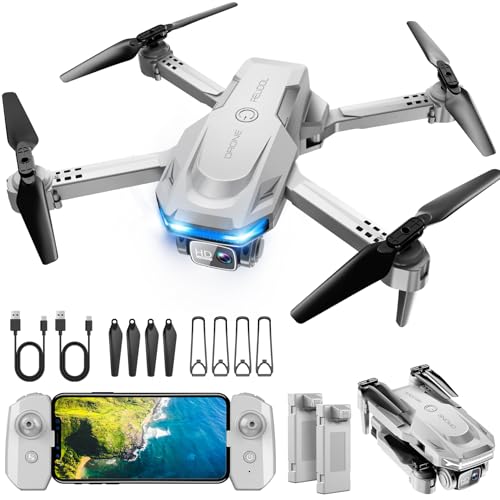
Relidol Camera Drone
Offers 25 minutes of flight time across two batteries, delivering longer sessions than typical budget drones.

Holy Stone HS190
Ideal for casual flyers who want a mainstream, easy‑to‑use drone at $29.99, roughly $10 cheaper than the Best Overall.

Redrie Mini Drone
Stands out with a 1200 mAh battery delivering 25 minutes of flight, offering higher capacity than the other picks while staying under $30.
Also considered
Score Analysis
Key score advantages vs. runner-up (Holy Stone HS190)
Price Range
Relidol Camera Drone
$39.96
Holy Stone HS190
$29.99
Redrie Mini Drone
$29.98

Holy Stone HS210 Green
$39.99

Pallton Mini Drone
$37.99
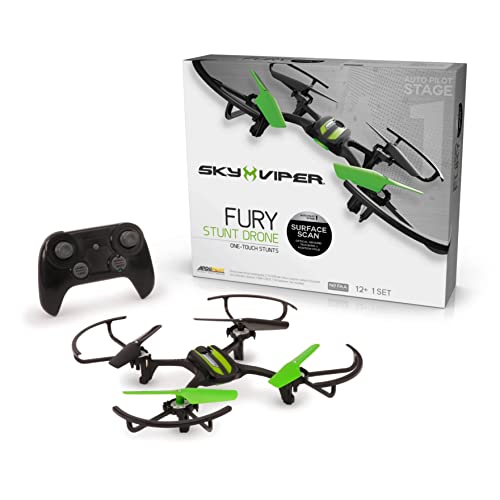
Sky Viper Fury
$39.99
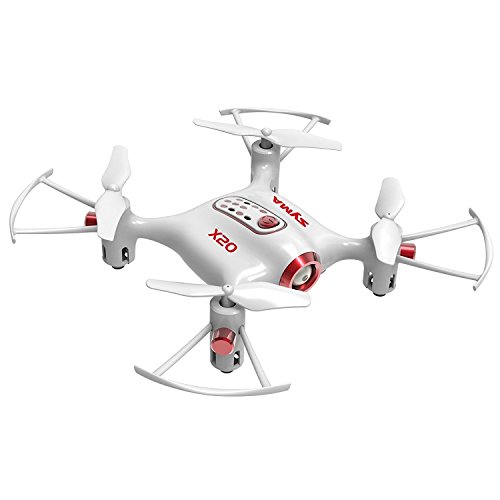
Syma X20
$24.29
Force1 Scoot
$21.99

Veeniix V995 Mini Drone
$39.99
Spec Comparison
TL;DR: The Relidol Camera Drone offers a foldable 1080p HD camera, voice‑controlled flight and a total 25‑minute flight time from two batteries, all for under $40.
This mini quadcopter packs a 1080p HD adjustable lens with an 80° field of view, and its two batteries deliver a combined 25 minutes of airtime. Weighing 115 g (0.25375 lb) and measuring 65 mm tall, 280 mm long and 260 mm wide, it folds flat and ships with a carrying case and propeller guards for easy transport.
Compared with the other eight drones, the Relidol is heavier than the ultra‑light Veeniix V995 (≈0.049 lb) and Holy Stone HS210 (≈0.084 lb), but far lighter than the Sky Viper Fury at 1.0 lb. Its 25‑minute total flight time tops the Holy Stone HS210’s 21 minutes and matches the Redrie Mini Drone’s 25 minutes, while exceeding the Veeniix’s 21‑minute total. The 1080p camera puts it on par with the Pallton Mini Drone’s 1080p offering, and its 80° FOV is slightly narrower than Pallton’s 90° view.
Reviewers consistently praise the one‑key takeoff/landing button and the voice‑command feature that lets you launch the drone hands‑free. The included case and foldable frame make it a favorite for indoor play and quick outings. However, users note that the limited control range keeps it from covering large open fields, and the lightweight build can struggle in breezy conditions.
Beyond the basics, the Relidol supports gesture capture, waypoint and circle flight paths, and real‑time FPV streaming to the built‑in screen controller via the app. The three‑speed gear selector and emergency stop button add an extra layer of safety for beginners.
Pros
Cons
Best for: Absolute beginners, kids, and casual hobbyists who want a portable, easy‑to‑fly drone for indoor and calm‑outdoor fun.
Avoid if: You need long‑range or wind‑resistant performance, or professional‑grade video quality.
“Pretty good for casual use”
“Works well indoors and outdoors with easy takeoff/land buttons”
TL;DR: The Holy Stone HS190 folds into its controller, weighs just 35 g and offers one‑key takeoff, altitude hold and LED lights for under $30, but its 5–7 minute flight time and 30–50 m range keep it in the beginner‑friendly zone.
The HS190’s most eye‑catching spec is its ultra‑compact size – it measures only 30 mm in height and 114 mm in both length and width, and at 35 g it’s light enough to slip into a pocket. Its 220 mAh battery powers up in 30–60 minutes and delivers 5–7 minutes of flight, while the built‑in LED lights keep it visible after dark.
Compared with the eight other drones in this $40‑under roundup, the HS190 is lighter than the Redrie Mini Drone and the Syma X20, and only a few grams heavier than the Force1 Scoot. Its flight time of 5–7 minutes is shorter than the 25‑minute endurance of the Redrie Mini Drone and the 24‑minute dual‑battery run of the Pallton Mini Drone, yet matches the 7‑minute per‑battery claim of the Veeniix V995. The 30–50 meter control range sits alongside the Veeniix’s 30 meter range and the Sky Viper Fury’s roughly 30 meter reach, but falls short of the HS210’s advertised 50 meter range.
Reviewers consistently praise the drone’s pocket‑size convenience and the simplicity of its one‑key takeoff, landing and return‑home functions. Professional reviewers note that the altitude‑hold sensor provides a steady hover for novices, while the headless mode removes orientation worries. Users, however, frequently mention the brief 5–7 minute battery life and the modest 30–50 meter range as limiting factors, and a few have reported inconsistent charging‑cable quality that can delay flight sessions.
Beyond the basics, the HS190 includes altitude hold, headless mode, three speed settings, and stunt options like 360° spins, 3D flips and an orbit mode. The included propeller guard adds a layer of safety for indoor play, and the USB charging method means you can power it from most wall adapters or power banks.
Pros
Cons
Best for: Kids, beginners, and casual flyers who want an ultra‑portable, easy‑to‑use drone under $30.
Avoid if: You need longer flight time, extended range, or performance suitable for windy conditions and advanced aerial work.
“perfect for kids with different skill levels”
“takes under an hour to charge”
TL;DR: The Redrie Mini Drone packs a 1200 mAh battery, 1080p adjustable‑angle FPV camera, and foldable ABS frame for under $30, making it a portable starter drone with plenty of features but a heavier build.
What really stands out is the 1200 mAh lithium‑ion battery paired with two included packs, giving a listed 25‑minute flight window and a 1–1.5 hour charge time. That capacity dwarfs the 220 mAh cell in the Holy Stone HS190 and the 180 mAh unit in the Syma X20, meaning you’ll stay airborne longer between swaps.
In the context of the nine‑drone roundup, the Redrie is noticeably heavier at 480 g compared with the feather‑light Holy Stone HS190 (35 g), Force1 Scoot (32 g) and Veeniix V995 (22.3 g). Its weight is closer to the Sky Viper Fury’s roughly 1 lb frame, so expect a bit more wind‑sensitivity than the ultra‑light models. On the feature side, the foldable design (38.1 mm folded height, 54.9 mm unfolded) and a full suite of flight modes—including one‑key takeoff/landing, altitude hold, gesture selfies, waypoint fly, and 3D flips—outpace many peers that list only basic controls.
Reviewers consistently praise the drone’s beginner‑friendly interface. Professional reviewers highlight the one‑key controls and the app‑based FPV experience as “solid value for entry‑level users.” Users love the portability of the foldable frame and the inclusion of prop‑guard guards, but they also note that the 1080p footage can be shaky because the camera lacks stabilization, and the lightweight ABS shell feels fragile in a crash. Wind can push the 480 g craft off course, a complaint many consumers echo.
Pros
Cons
Best for: Kids, beginners, and casual family users who want a portable drone with an easy‑to‑use app, up to 25 minute flight time, and a built‑in camera for indoor or calm‑outdoor play.
Avoid if: You want the best value‑per‑dollar in its price range or need a highly wind‑stable, professional‑grade video platform.
“perfect for first drone”
“fun stunt modes and camera selfies”
TL;DR: The Holy Stone HS210 is a 38 g indoor mini‑drone with three 250 mAh batteries delivering up to 21 minutes total flight, offering beginner‑friendly features at $39.99.
The standout spec features an ultra‑lightweight build at just 38 g, plus three 250 mAh batteries that give a combined 21 minutes of flight time, while each charge provides about 9 minutes of airtime. Its max flight height of 120 m and top speed of 5 m/s give enough room to practice basic maneuvers without feeling cramped.
Compared with the other eight drones in this budget roundup, the HS210 sits in the middle of the weight range—heavier than the Veeniix V995 Mini Drone but still well under 40 g, making it portable enough for indoor use. Its total flight time matches the Veeniix’s 21‑minute combined runtime, and it outlasts the Holy Stone HS190, which lists only 5‑7 minutes per charge.
Reviewers consistently praise the lag‑free control response and the ease of tossing the drone into the air for quick launches. Users love the compact size and the suite of beginner‑oriented modes such as altitude hold, headless mode, and 3‑D flips. The most common complaints focus on the short per‑battery flight window, a charging period of 40–60 minutes per battery, and the relatively loud noise during operation.
Additional technical details include an operating frequency of 2452–2474 MHz, a low‑battery alarm, adjustable speed settings, and a 50 m transmission range, which's suitable for indoor rooms but limits outdoor excursions. The drone works in temperatures from 32 °F to 104 °F, and it requires a separate 1.5 V AAA transmitter battery.
Pros
Cons
Best for: Absolute beginners, children aged 8+, and budget‑conscious buyers who want a compact indoor trainer.
Avoid if: You need aerial photography, long outdoor range, or performance suitable for experienced pilots.
“perfect for kids with different skill levels”
“takes under an hour to charge”
TL;TD: The Pallton Mini Drone offers a 24‑minute combined flight time, 1080p camera with a 90° adjustable lens, and beginner‑friendly one‑key controls, all packed in a foldable army‑green frame for $37.99.
The standout spec is the 24 minutes of total flight time two batteries supply, which lets new pilots enjoy longer sessions without swapping cells. Its 1080p camera sports a 90° adjustable angle and a 90° field of view, giving you flexible framing despite the modest image quality users note.
Compared with the other eight drones, Pallton’s flight endurance sits above the Holy Stone HS210’s 21‑minute total and the Veeniix V995’s 21‑minute total, but just shy of the Relidol Camera Drone’s 25‑minute claim. In size, the 76.2 mm height, 177.8 mm length and 127 mm width make it taller than the Holy Stone HS190 (30 mm × 114 mm × 114 mm) and wider than the Syma X20 (25 mm × 105 mm × 105 mm), yet more compact than the Sky Viper Fury’s inch‑based dimensions. Its foldable arms and included carrying case also give it a portability edge over bulkier models like the Redrie Mini Drone.
Users love how the one‑key takeoff/landing combined with altitude hold makes the drone “extremely easy for beginners to control,” and professional reviewers echo that point and praise those same features. Gesture controls for photos (hand‑shaped V) and videos (open palm) add a fun, hands‑free element, while the three speed gears and 360° flips keep kids entertained. On the downside, reviewers consistently mention a laggy, low‑resolution FPV feed and a camera that falls short of serious aerial photography needs. The lack of GPS, auto‑return, and advanced obstacle‑avoidance also limits its appeal for more experienced pilots.
Pros
Cons
Best for: Absolute beginners, children aged 8+, and casual hobbyists who want a portable, well‑reviewed drone with easy controls.
Avoid if: You're shopping on a tight budget — it's priced at $37.99.
“perfect for first drone”
“fun stunt modes and camera selfies”
TL;DR: At $39.99, the Sky Viper Fury offers a 1‑pound, 7‑8‑minute flight with optical‑flow hover, eight one‑touch stunts, and a 100‑foot range—making it a solid beginner stunt drone.
The standout feature is Sky Viper’s Surface Scan optical‑flow technology, which keeps the quadcopter steady and holds its position up to 100 feet, even in light breezes of up to 9 mph. Paired with a 2.4 GHz control frequency, the link stays reliable for indoor and outdoor sessions.
At 1.0 pound, the Fury is noticeably heavier than the ultra‑light Veeniix V995 (≈0.05 pound) and Holy Stone HS210 (≈0.08 pound), but it still fits comfortably in a small backpack. Its 650 mAh battery gives a modest 7‑8 minute flight, longer than the 5‑7 minute window of the Syma X20 and comparable to the 7‑minute per‑battery time of the Veeniix, though shorter than the 24‑minute total the Pallton Mini Drone offers. The 100‑foot control range matches the 50‑meter range listed for the Holy Stone HS210 when expressed in different units, placing it in the middle of the pack.
Reviewers consistently praise the one‑touch stunt button that triggers eight flips and barrel rolls, noting that beginners find the auto launch/land button especially forgiving. Professional reviewers highlight the Surface Scan system as delivering “superior beginner stability,” while some users mention the need to swap batteries frequently because of the 7‑8 minute flight window. The basic controller, which runs on three AAA batteries (not included), lacks trim adjustments—a minor annoyance for seasoned pilots.
Additional technical details include a motor size of 7 mm × 20 mm, dimensions of 11.5 × 3.0 × 13.5 inches, and a minimum stunt altitude of 10 feet to keep the drone clear of obstacles. The package comes with a one‑year parts warranty, giving extra peace of mind for first‑time flyers.
Pros
Cons
Best for: Beginners and kids aged 12+ who want an easy‑to‑fly stunt drone with reliable hover and fun flip tricks.
Avoid if: You’re an experienced pilot seeking long range, camera capability, or extended flight endurance.
TL;DR: The Cheerwing Syma X20 is a 0.4‑lb, palm‑sized mini drone with auto‑hover, altitude hold and LED night flight, but its 5‑minute flight time and 20‑25 m range keep it firmly in the beginner‑only camp.
The X20’s most eye‑catching spec is its built‑in altitude hold and headless mode, which let a complete novice keep the craft steady without constant throttle adjustments. At just 25 mm tall and 105 mm long and wide, it fits comfortably in the palm of your hand, and the ABS shell with propeller guards adds a layer of safety for indoor use. The drone runs on a 180 mAh, 3.7 V battery that charges in about 50 minutes and delivers a single 5‑minute flight.
Compared with the other eight entries, the X20 weighs noticeably more than the 32 g Force1 Scoot and the 35 g Holy Stone HS190, yet lighter than the 480 g Pallton Mini Drone. Its 5‑minute flight time matches the lower end of the HS190’s 5‑7 minute window but falls short of the Force1 Scoot’s 8‑minute endurance and the 7‑minute per‑battery runs of the Veeniix V995. The X20’s 20‑25 m control range is also tighter than the Veeniix’s 30 m range and the Sky Viper Fury’s 100‑ft reach. Battery capacity at 180 mAh is modest against the HS190’s 220 mAh, the HS210’s 250 mAh, and the higher‑capacity drones that have 650 mAh or more.
Reviewers consistently praise the altitude hold and one‑key takeoff/landing as “stand‑out” features that make indoor flights almost fool‑proof. Professional editors note the stable auto‑hover and quick yaw response add a fun, responsive feel despite the tiny frame. On the flip side, users complain about the very short 5‑minute flight window and the limited 20‑25 m range, which can feel restrictive when trying to fly outdoors. The small size also means the drone can be easy to misplace, a point frequently mentioned in consumer feedback.
The X20 uses ABS plastic and includes LED lights for night‑time fun. It communicates on a 2.4 GHz frequency and runs on four AA batteries (not supplied). The operating temperature range of 0 to 40 °C makes it suitable for most indoor environments, and the inclusion of propeller guards and headless mode further lowers the risk of crashes for beginners.
Pros
Cons
Best for: Entry‑level buyers or those on a tight budget
Avoid if: You need advanced features or professional‑grade performance
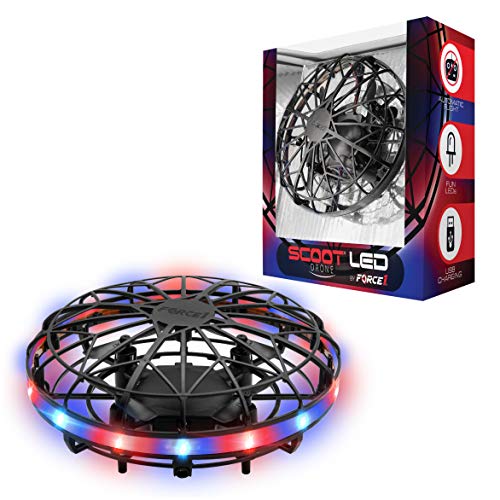
TL;DR: The Force1 Scoot is a $21.99 indoor mini‑drone with a 46.7 mm height, 32 g weight and 8‑minute flight time, offering auto‑hover, hand‑gesture control and eye‑catching LED ceiling projections.
The Scoot’s most distinctive spec is its ultra‑compact frame – just 46.7 mm tall, 109 mm long and 109 mm wide, and weighing only 32 g. Its nontoxic webbed shell cushions crashes, while a multicolor LED ring creates moving patterns on the ceiling, turning a simple flight into a light show.
Compared with the eight other drones in this roundup, the Scoot is lighter than the Syma X20 (which tips the scales at about 0.4 lb) and shorter than the Holy Stone HS190’s 30 mm height, while still fitting comfortably on a desk. Its 8‑minute battery life outlasts the HS190’s 5‑7 minutes and matches the charging time of the Syma X20 (both list 50 minutes). However, it lacks the longer flight endurance of the Pallton Mini Drone’s 24‑minute claim and the Veeniix V995’s 21‑minute total.
In practice, users love how the infrared motion sensors let you launch the Scoot with a simple hand wave and keep it steady with auto‑hover. Professional reviewers say the durable webbed cage and the novelty of ceiling‑projection LEDs. Everyday owners repeatedly note the drone’s durability and ease of use, but they also flag the “very short” 8‑minute flight window and the unpredictable flight paths that make precise tricks hard. The absence of a remote controller or camera keeps the experience simple but limits its appeal beyond casual indoor play.
Pros
Cons
Best for: Young children, beginners, and anyone looking for a cheap indoor drone that’s easy to launch and lights up a room.
Avoid if: You need outdoor capability, precise flight control, or video/camera features.
“great indoor toy”
“you get what you pay for”
TL;DR: The Veeniix V995 Mini Drone offers three Li‑Ion batteries for a combined 21 minutes of flight, 30 m control range, and beginner‑friendly features like altitude hold and prop‑guard protection at $39.99.
This tiny quad weighs just 0.049163084426 lb (22.3 g) and measures 35 mm × 80 mm × 85 mm, making it easy to carry and perfect for indoor play. Each of its three lithium‑ion batteries provides about 7 minutes of airtime, giving a total of 21 minutes before you need to recharge. The drone can be steered up to 30 meters away and includes 360° rotation, 3D flips, altitude hold, circle fly and headless mode.
Compared with the Holy Stone HS210, the V995 is noticeably lighter (0.049 lb vs 0.084 lb) but its per‑battery flight time is shorter (7 min vs 9 min) while the total flight time matches the HS210’s 21 minutes. Its 30 m range is also less than the HS210’s 50 m transmission range. Against the Relidol Camera Drone, the V995’s total flight time of 21 minutes falls short of the Relidol’s 25‑minute endurance, and it is considerably lighter than the Relidol’s 0.254 lb.
Reviewers appreciate the protective propeller guards and the altitude‑hold mode that keep the drone steady for newcomers. Reviewers praise the three speed modes and headless orientation for making control intuitive. On the downside, users repeatedly note the brief 7‑minute bursts per battery and the modest 30‑meter range, which can feel limiting outdoors. Some also mention that the plastic frame feels a bit flimsy after a few crashes.
Pros
Cons
Best for: Kids aged 8‑14 and absolute beginners who want a lightweight, easy‑to‑fly indoor/outdoor toy with stunt features.
Avoid if: You're an experienced hobbyist or need long endurance, robust crash resistance, or an extended control range; it's priced at $39.99.
“perfect for first drone”
“fun stunt modes and camera selfies”
Breakdown
Relidol Camera Drone
Pros
Holy Stone HS190
Pros
Cons
Redrie Mini Drone
Pros
Cons
Holy Stone HS210 Green
Pros
Based on scoring data and product specs
Personalized picks
Best Overall Pick
Relidol Camera Drone
Best OverallBest for: Buyers willing to invest in a proven, high-quality option
Holy Stone HS190
Best for: Most users seeking a balanced, mainstream option
$29.99-$9.97 vs winner
Skip Veeniix V995 Mini Drone if…
You're shopping on a tight budget — it's priced at $39.99
The Relidol Camera Drone takes the crown as the best mini drone under $40. It gives you a full‑HD 1080p camera with an 80° field of view, two batteries that add up to 25 minutes of flight, and a foldable frame that comes with its own carrying case. Weighing about 0.25 lb, it also offers 360° flips, voice control and a child lock, making it kid‑friendly. At $39.99 and a 4.4‑star rating from over 1,200 reviewers, it balances features and price nicely.
If you need a lightweight indoor flyer that’s ready to go in seconds, the Holy Stone HS190 is the runner‑up. Weighing roughly 0.08 lb and fitting into a 30 mm‑high frame, it offers three speed modes, a 30–50 m control range and a 5‑7 minute flight window on its 220 mAh battery. LED lights give it night visibility, while the included propeller guard and a controller powered by four AAA cells keep things simple for beginners. All of this comes at $29.99 and a solid 4.1‑star rating from more than 12,000 users.
For shoppers who want a clear tiered choice, here are the top picks from the budget alternatives:
Grab the Relidol Camera Drone today and start capturing your flights without breaking the bank.
Both the Relidol Camera Drone and the Redrie Mini Drone list a total of 25 minutes of flight time when using their two included batteries, edging out the Pallton Mini Drone’s 24 minutes. All three stay under the $40 price ceiling.
No reviews yet — be the first to share your experience.
Please sign in to leave a review