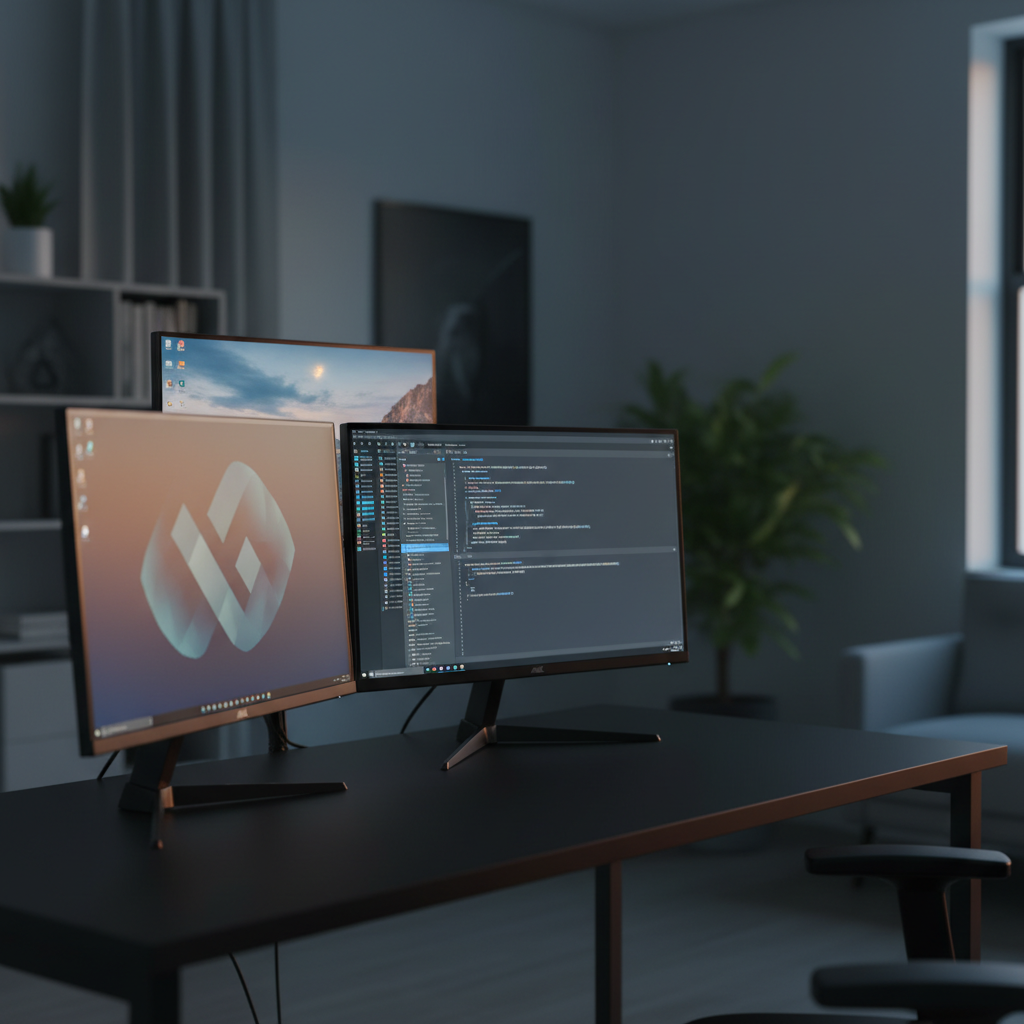
We’ve lined up 13 monitors that sit under the $200 mark, with prices ranging from $77.97 for the Sceptre E248W‑19203R up to $139.99 for both the AOC 27G4H and the BenQ GW2490T. Many of these screens have a solid 4.5‑plus star rating – the AOC, for example, holds a 4.6/5 score from 9,018 reviewers, showing that decent performance doesn’t have to break the bank.
To help you navigate the choices, we grouped the lineup into three price tiers. The budget tier features the Sceptre E248W‑19203R, Philips 241V8LB, Acer SB220Q, and the larger Sceptre E275W‑19203R, all priced below $100 and offering basic Full HD panels with good color coverage. The mid‑range tier includes the Sceptre C275W‑1920RN at $109.97 and the Asus VG249QL3A at $119.00, each adding higher refresh rates and more ergonomic tweaks. Premium picks – the HP 327S, Sceptre E275W‑FW100T, AOC 27G4H, and BenQ GW2490T – sit at $119.99 or $139.99 and bring features like 100 Hz+ refresh, HDR10, or extensive eye‑care technology.
Below you’ll find a closer look at each model, so you can match the right monitor to your desk, gaming rig, or home office setup.

AOC 27G4H
Includes a 3.5 mm headphone jack for direct audio, letting audiophiles enjoy premium sound without extra gear.

Asus VG249QL3A
Ideal for buyers wanting a proven, high‑quality monitor, it offers solid features at $119, roughly $21 less than the Top Pick.

Sceptre E248W-19203R 24-inch
Stands out with VESA‑mount compatibility (100 × 100 mm) and dual HDMI 1.4 ports, delivering a reliable entry‑level experience at just $77.97.
Also considered
Score Analysis
Key score advantages vs. runner-up (Asus VG249QL3A)
Price Range
AOC 27G4H
$139.99
Asus VG249QL3A
$157.99
Sceptre E248W-19203R 24-inch
$87.97

Sceptre E275W-FW100T
$104.97

Philips 241V8LB
$79.99

Sceptre C275W-1920RN
$99.97

HP 327S
$119.99

BenQ GW2490T
$129.99
Acer SB220Q 21.5-inch
$97.99

Sceptre E275W-19203R 27-inch
$98.97

Sceptre E279W-19203R
$89.97

Sansui ES-24F2
$79.99
Sansui ES-22X3AH
$81.99
Spec Comparison
TL;DR: The AOC 27G4H delivers a 27‑inch Fast IPS panel with a 200 Hz refresh rate, 0.3 ms MPRT response, and a three‑year Zero‑Bright‑Dot warranty for under $140.
The standout spec is the 200 Hz refresh rate paired with a 0.3 ms MPRT response time, which professional reviewers highlight as “ultra‑smooth” for competitive gaming. Combined with a Fast IPS panel that delivers a color accuracy of ΔE < 2 and 121 % sRGB coverage, the monitor offers vivid colors and wide viewing angles (178° H / 178° V) on a 27‑inch screen.
Compared with the other twelve entries, the AOC is heavier than the Sceptre E275W‑FW100T (7.21 pounds) and the Sceptre C275W‑1920RN (5.5 pounds), but lighter than the BenQ GW2490T (14.11 pounds). Its depth of 227.6 mm sits between the shallow 35.6 mm depth of the HP 327S and the deeper 240 mm depth of the Asus VG249QL3A. While its price matches the BenQ GW2490T, it offers a higher refresh rate than most peers, which typically sit at 100 Hz.
User sentiment repeatedly praises the monitor’s “ultra‑smooth gameplay” and “easy adjustability,” noting the height adjustment range of 130 mm and swivel/pivot capabilities that make desk setups flexible. Reviewers also appreciate the three‑year Zero‑Bright‑Dot warranty, saying it’s rare for this price tier. Common complaints focus on the lack of built‑in speakers, the glossy finish that can produce reflections in bright rooms, and the 1080p resolution on a 27‑inch panel, which some users describe as lower pixel density.
Pros
Cons
Best for: Competitive gamers and budget‑focused players who need high refresh rates and low input lag.
Avoid if: You need a bright, glare‑free display for a sunny workspace or a higher‑resolution panel for detailed content creation.
“perfect price and quality. can't beat this deal.”
TL;DR: The Asus VG249QL3A delivers a 180 Hz refresh rate, 1 ms GTG response and Full‑HD Fast IPS performance for under $120, making it a solid budget choice for fast‑paced gaming.
This 24‑inch monitor packs a 180 Hz refresh rate and a 1 ms GTG response time, backed by a Fast IPS panel that reaches 350 nits brightness and a 1000:1 static contrast ratio. The panel also supports ASUS Extreme Low Motion Blur (ELMB) and both FreeSync Premium and G‑Sync compatibility, so motion looks crisp even in the most frantic shooters. At a listed weight of 11.904962148 lb, the unit feels sturdy without being overly heavy.
Within the roundup, the VG249QL3A costs $119, placing it below many larger 27‑inch competitors and making it lighter than bulkier models that prioritize size over speed. Its 180 Hz panel outpaces the typical 100 Hz found in many budget monitors, giving it a clear edge for esports‑oriented players while still fitting comfortably on a desk that might also host a keyboard and mouse.
Reviewers consistently praise the buttery‑smooth gameplay, the ergonomic stand with height travel of up to 120 mm, and the vivid color reproduction that covers 99 % of the sRGB gamut. Users also like the built‑in Shadow Boost and GamePlus overlays for competitive advantage. The most common complaints focus on the lack of a USB‑C port, the tinny quality of the 2 W × 2 stereo built‑in speakers, and the fact that a 1080p resolution can feel slightly stretched on a 24‑inch screen.
Pros
Cons
Best for: Buyers willing to invest in a proven, high‑quality option
Avoid if: You're on a tight budget or only need basic functionality
“Incredibly smooth and responsive — perfect for FPS games.”
“The height and pivot adjustments are a game-changer for my dual-monitor setup.”
TL;DR: The Sceptre E248W-19203R delivers a 24‑inch Full HD panel with 75 Hz refresh, 3 ms response, and 99% sRGB coverage at a budget‑friendly $77.97, making it a solid everyday monitor.
This monitor’s standout spec is its 75 Hz maximum refresh rate paired with a 3 ms response time, which together give smoother motion than the standard 60 Hz panels you often see at this price. The 24‑inch LED‑backlit LCD screen covers 99% of the sRGB color space, so colors appear vivid for work and casual gaming.
At 5.77 pounds, it’s lighter than the Sansui ES-22X3AH, which weighs 6.649 pounds, and sits close to the Acer SB220Q’s roughly 5.6 pounds. Its depth with stand (179 mm) is shallower than the Philips 241V8LB’s 8.66 inches, yet much slimmer than the Sceptre E279W-19203R’s 457 mm depth. The dual HDMI 1.4 ports match the Sansui ES-22X3AH’s two HDMI inputs and beat the Philips model, which only offers one.
Reviewers consistently praise the picture quality and the smoother motion thanks to the 75 Hz panel, while noting the built‑in stereo speakers sound thin and lack depth. The stand tilts from –5° to +15° but provides no height or swivel adjustment, a limitation mentioned by both users and professional reviewers. Eye‑care features like Blue Light Shift and flicker‑free operation help during long‑hour tasks.
Additional technical notes include a 1000:1 contrast ratio, 250 cd/m² brightness, and a VESA‑mount pattern of 100 × 100 mm, giving flexibility for wall‑mount setups despite the occasional port‑blocking issue.
Pros
Cons
Best for: Budget-conscious buyers seeking a reliable entry-level option
Avoid if: You need advanced features or professional‑grade performance
“Terrific monitor”
“Works great for games”
TL;DR: The Sceptre E275W-FW100T delivers a 27‑inch VA panel with a 100 Hz refresh rate, 1 ms blur‑reduction response and AMD FreeSync for smooth gaming, all for $129.97.
This monitor’s headline spec is its 100 Hz refresh rate paired with a 1 ms blur‑reduction response time, which professional reviewers cite as a strong driver for fluid motion in fast‑paced games. The VA panel also offers a static contrast ratio of 3000:1 and 100 % sRGB coverage, giving deep blacks and accurate colors for everyday media consumption.
Compared with the other twelve entries, the E275W‑FW100T sits on the deeper side of the pack – its stand‑included depth of 195 mm is noticeably deeper than the HP 327S’s 35.6 mm, yet it’s far slimmer than the BenQ GW2490T’s 21.0‑inch depth. At 7.21 pounds it’s lighter than the AOC 27G4H (which tips the scales at around 18 pounds) and comparable to the Asus VG249QL3A’s mid‑range weight. Its price of $129.97 places it above several sub‑$100 options, but still below many 27‑inch rivals that push toward $150‑$170.
Consumer sentiment is solid: a 4.5‑star average from 8,037 reviewers highlights the monitor’s affordability, built‑in 2 × 2 W speakers and thin bezels that work well in multi‑monitor setups. Users repeatedly praise the smooth 100 Hz gameplay and FreeSync’s ability to eliminate tearing, while a few note the larger bezel than advertised and occasional missing power adapter. The lack of HDR support and the 1080p resolution on a 27‑inch screen (resulting in a modest pixel density) are common caveats for those seeking higher‑end visual fidelity.
In addition to the headline numbers, the monitor packs a detachable stand with a tilt range of –5° to +15°, a 100 mm × 100 mm VESA mount pattern for wall‑mounting, and a flicker‑free panel with blue‑light shift controls. Its built‑in speakers (totaling 4 W) provide a rare bonus at this price tier, and the AMD FreeSync technology adds a layer of tear‑free gaming without extra hardware.
Pros
Cons
Best for: Casual and mid‑tier gamers who want smooth 100 Hz gameplay with FreeSync, plus home‑office users who appreciate a large 27‑inch screen and built‑in speakers.
Avoid if: You need 1440p or 4K resolution, HDR, or a tighter budget — this model costs $129.97.
“great value for the price”
“missing power adapter”
TL;DR: The Philips 241V8LB offers a 23.8‑inch VA panel with 100 Hz refresh, 4000:1 static contrast and eye‑care features at $89.99, earning a 4.6‑star rating from over 7,800 reviewers.
This monitor’s standout spec is its 100 Hz refresh rate paired with Adaptive‑Sync, which helps keep motion smooth on a 23.8‑inch VA screen. The static contrast ratio of 4000:1 delivers deep blacks, and the 4 ms (GtG) response time keeps fast action looking clean.
At 6.39 lbs with the stand, the Philips sits heavier than the Acer SB220Q (5.6 lbs) and the Sceptre E248W‑19203R (5.77 lbs), yet lighter than the Sceptre E279W‑19203R and Sceptre E275W‑19203R (both 8.8 lbs). It provides one HDMI 1.4 port and a VGA input, which is fewer than the dual‑HDMI setup on the Sceptre E275W, but matches the single‑HDMI offering of the Sansui ES‑24F2. Most peers use a standard 100 x 100 mm VESA‑mount pattern.
Reviewers consistently praise the monitor’s strong contrast and the built‑in eye‑care suite—Flicker‑free, LowBlue and EasyRead modes, which users highlight as useful for long work sessions. The SmartImage presets (Office, Photo, Movie, Game, Economy) add convenient picture tweaks. Common complaints focus on the cheap‑feeling plastic stand and occasional wake‑from‑standby hiccups, while users note the lack of built‑in speakers if they expect audio from the display.
Pros
Cons
Best for: Budget-conscious buyers seeking a reliable entry-level option
TL;DR: The Sceptre C275W-1920RN delivers a 27‑inch 1500R curved VA panel with 100 Hz refresh, 5 ms response and 99% sRGB at a $109.97 price, earning a solid 4.6‑star rating.
The monitor’s most eye‑catching spec is its 27‑inch 1500R curvature paired with a VA panel that supports a 100 Hz refresh rate and a 5 ms gray‑to‑gray response time. It lists brightness at 280 nits, and the display covers 99% of the sRGB color gamut, which is generous for a budget‑focused model.
Compared with the other dozen contenders, the Sceptre is notably lighter than the Asus VG249QL3A’s 11.904962148 pounds, yet it sits just under the Acer SB220Q’s 5.6 pounds. Its 280‑nit brightness outshines the Philips 241V8LB and the Sceptre E275W‑19203R, both of which list 250 nits. The 100 Hz refresh matches the HP 327S, giving it parity with one of the higher‑refresh options in the set while still offering a curved experience that many flat‑panel peers lack.
Reviewers consistently praise the smooth 100 Hz gameplay and the immersive feel of the 1500R curve, especially for casual gaming and long office sessions. Built‑in 2 × 2 W speakers and eye‑comfort features like anti‑flicker and blue‑light shift receive frequent compliments. On the downside, users report a slow wake‑up time of 15–30 seconds and occasional shipments that arrive without the advertised DisplayPort, which can be frustrating for those relying on that connection.
Additional technical notes include adaptive sync support, a dynamic contrast ratio of 1,000,000:1, a static contrast of 4000:1, and a backlight life exceeding 30,000 hours. Connectivity covers two HDMI 2.0 ports, a VGA input, a 3.5 mm headphone jack, and a VESA‑mount pattern of 100 mm × 100 mm, giving plenty of placement flexibility.
Pros
Cons
Best for: Budget‑conscious gamers and office users who want a curved 27‑inch screen with high refresh and solid color performance.
Avoid if: You need professional‑grade color accuracy, a metal build, or rely heavily on VGA at high refresh rates.
“Slow wake-up time: Users report 15–30 seconds to wake from sleep, causing issues with KVM switches and boot selection”
“Inconsistent model shipping: Some buyers received C275W-1920RND1 instead of ordered C275W-FW100T, lacking DisplayPort”
TL;DR: The HP 327S delivers a 27‑inch IPS panel with 99% sRGB coverage, 100 Hz refresh and anti‑glare coating at a $119.99 price, though it lacks a VESA mount and its built‑in speakers are modest.
The monitor’s standout spec is its 27‑inch IPS display that reaches 99% sRGB colour gamut and a refresh rate of 100 Hz, paired with a brightness range of 250–300 nits. A 0.311 mm pixel pitch and 178° viewing angles give you sharp, consistent images across the whole screen, while the anti‑glare matte coating keeps reflections at bay during long work sessions.
Physically, the HP 327S is exceptionally slim at just 35.6 mm depth with the stand attached—far thinner than the Asus VG249QL3A’s 208 mm and the Sceptre E275W‑FW100T’s 195 mm depth. At 3.2–3.39 kg it's lighter than the Asus model, which weighs 11.904962148 pounds, and comparable to the Sceptre E275W‑FW100T’s 7.21 pounds. The monitor also includes two HDMI 1.4 ports, a DisplayPort 1.2, and a VGA port, giving you a mix of modern and legacy connectivity.
Reviewers consistently praise the HP’s colour accuracy and the 100 Hz panel’s smooth motion, noting that the eye‑safe low‑blue‑light mode makes marathon sessions easier on the eyes. Common complaints focus on the absence of a VESA‑mount interface, the tinny quality of the integrated speakers, and a stand that some users describe as less sturdy than they’d like. Professional reviewers highlight the eco‑friendly packaging—up to 85% recycled plastics—and the A+ energy‑efficiency rating as added bonuses.
Pros
Cons
Best for: Office professionals, students, remote workers, casual gamers, media consumers, and environmentally conscious buyers who want a solid 27‑inch IPS monitor without breaking the bank.
Avoid if: You need advanced features such as a VESA mount, professional‑grade colour accuracy, or ultra‑high refresh rates for competitive esports.
TL;DR: The BenQ GW2490T delivers a 23.8‑inch IPS panel with a 100 Hz refresh rate, 99 % sRGB coverage, and extensive TÜV‑certified eye‑care features, all for $139.99.
At the heart of the GW2490T is a 100 Hz refresh rate, which smooths motion for everyday tasks and light gaming. The monitor also packs TÜV‑Rheinland‑certified eye‑care technologies—including Flicker‑Free, Low Blue Light, and Brightness Intelligence Gen2—that automatically adjust brightness and reduce blue‑light exposure.
Compared with other budget options, the GW2490T is heavier than the 7.21‑pound Sceptre E275W‑FW100T but lighter than the 18.0007436923‑pound AOC 27G4H. Its price of $139.99 places it above the $99‑$130 range of several peers, making it a pricier choice than the Sceptre C275W‑1920RN. Like the HP 327S, it offers a 100 Hz panel, while many rivals stick to 60 Hz. The stand’s full ergonomic range—pivot 90°, tilt –5° to +20°, swivel ±20°, and 110 mm height adjustment—out‑features the more limited adjustments on the Sceptre E275W‑FW100T.
Reviewers consistently praise the monitor’s buttery 100 Hz performance and the comfort of its eye‑care suite, noting that long work sessions feel easier on the eyes. Reviewers give the fully adjustable stand high marks, though a few users mention a wobble if the base isn’t tightened. Built‑in speakers deliver 2 × 2 W of audio, which most find adequate for casual media but insufficient for serious listening. The HDMI 1.4 inputs limit bandwidth for full 100 Hz at higher resolutions, a point that some gamers flag as a drawback.
The GW2490T uses an IPS panel with 99 % sRGB coverage, 1300:1 static contrast, and an anti‑glare finish that helps reduce reflections. Brightness peaks at 250 nits, and the monitor is ENERGY STAR certified, drawing 30 W at maximum load and 20 W in typical use. A VESA‑compatible 100 × 100 mm mounting pattern adds flexibility for wall‑mount setups.
Pros
Cons
Best for: Buyers willing to invest in a proven, high-quality option
Avoid if: You're shopping on a tight budget — it's priced at $139.99
“Base may wobble if not tightened properly”
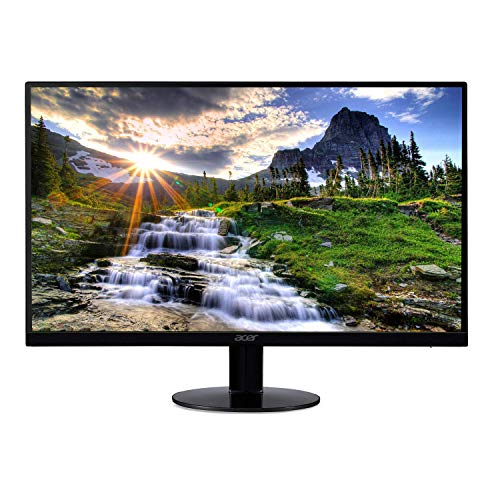
TL;DR: At just under $98, Acer’s SB220Q earns a strong 4.6‑star rating, praised for vivid colors and thin design while users note a wobbly stand and hidden OSD.
Acer markets the SB220Q as a budget‑friendly monitor from a well‑known brand, costs $97.99 and carries a 4.6‑out‑of‑5 rating from over forty‑two thousand reviewers. Its score places it solidly within the higher‑rated options in this thirteen‑product lineup.
Reviewers consistently highlight the lively color reproduction and wide viewing angles that make everyday tasks and casual streaming feel pleasant. Common complaints focus on the unstable stand that can detach, the OSD buttons hidden beneath the panel, and occasional backlight bleed in dark rooms. A few users also note that the box sometimes omits an HDMI cable.
Given its price and strong community feedback, the SB220Q serves as a well‑reviewed mainstream choice for students, home offices, or anyone needing a compact display without breaking the bank. It may not satisfy power users seeking extensive ergonomics or mounting flexibility, but it delivers solid visual quality for its cost.
Pros
Cons
Best for: Most users looking for a well‑reviewed, reliable mainstream option
“amazing for the price.”
“OSD button placement under the monitor is poor design.”
TL;DR: The Sceptre E275W-19203R offers a 27‑inch Full HD VA panel with 75 Hz refresh, 99% sRGB coverage, dual HDMI, and ENERGY STAR efficiency for under $100.
This monitor’s standout spec is its 27‑inch screen paired with a 75 Hz refresh rate and 3 ms gray‑to‑gray response, which together deliver smoother motion than the typical 60 Hz budget panel. The VA panel covers 99% of the sRGB gamut and reaches 250 nits of brightness, while the static contrast ratio sits at 3000:1, providing deep blacks for movies and games.
Compared with the other twelve contenders, the E275W‑19203R is heavier than the Acer SB220Q (5.6 lb) and the Philips 241V8LB, yet matches the weight of the Sceptre E279W‑19203R (8.8 lb). Its 75 Hz refresh lands between the 100 Hz of the Sceptre C275W‑1920RN and the lower‑rate panels found in many entry‑level models. Brightness ties with the Philips 241V8LB at 250 nits but falls short of the C275W‑1920RN’s 280 nits, while its dual HDMI ports give it an edge over the single‑HDMI setups of the Philips and Sansui units.
Users consistently praise the vivid colors that the 99% sRGB coverage delivers and the ultra‑thin three‑sided bezel that maximises screen real‑estate. Common complaints focus on the underpowered 2 × 3 W built‑in speakers, which many describe as tinny, and the tilt‑only stand that lacks height or swivel adjustment. A few reviewers also note occasional HDMI input lag and a delayed wake‑up of 5–10 seconds.
From a technical standpoint, the VA panel’s 3000:1 contrast ratio and 178° viewing angles make it suitable for both work and casual entertainment. ENERGY STAR certification keeps annual power draw to 44.02 kWh, while the monitor consumes just 0.12 W in off‑mode and 0.16 W in sleep mode, underscoring its energy‑saving design.
Pros
Cons
Best for: Most users looking for a well-reviewed, reliable mainstream option
Avoid if: You have limited desk space or need portability
“It can take 5–10 seconds to wake from sleep or switch inputs.”
“The speakers are tinny and quiet.”
TL;DR: The Sceptre E279W-19203R offers a 27‑inch 75 Hz TN panel with AMD FreeSync and 2 W speakers for just $89.97, making it a solid budget choice for casual gaming and office work.
The monitor’s standout spec is a 75 Hz refresh rate paired with a 3 ms (G‑to‑G) response time, which helps smooth motion compared with the typical 60 Hz panels you’ll find at this price point. It also includes AMD FreeSync, reducing screen tearing for compatible games.
Weighing in at 8.8 pounds, the E279W is heavier than the Acer SB220Q (5.6 pounds) and the Sceptre E248W (5.77 pounds), but matches the weight of the similarly sized Sceptre E275W‑19203R. It also provides two HDMI inputs, while the Philips 241V8LB offers only one, giving you a bit more connectivity flexibility.
Users appreciate the smooth 75 Hz gameplay and the plug‑and‑play setup, especially for console or PC gaming. However, several reviewers note that the built‑in 2 W speakers feel under‑powered for movies, and the TN panel shows noticeable color shift when viewed off‑center. Professional reviewers also point out that the TN technology sacrifices color fidelity, making the monitor less suitable for design work.
From a technical standpoint, the monitor delivers a static contrast ratio of 3000:1 and a dynamic contrast ratio of 1,000,000:1, which helps deepen dark scenes. Its LED backlight lasts over 30,000 hours, and the anti‑flicker and blue‑light shift features add eye‑comfort during long sessions.
Pros
Cons
Best for: Budget-conscious buyers seeking a reliable entry-level option
Avoid if: Reliability and user satisfaction are your top concerns
“Great image quality for the price”
“Perfect for Xbox and PC gaming”
TL;DR: The Sansui ES‑24F2 delivers a 24‑inch Full HD screen at 100 Hz with AMD FreeSync, eye‑care features and a single HDMI port, all for $79.99, making it a solid budget pick for casual gaming and office work.
The standout spec is its 100 Hz refresh rate, paired with AMD FreeSync, which helps keep motion smooth on a 24‑inch (610 mm) Full HD panel. The monitor also offers a response time of ≈4–8 ms and a brightness of 250 nits, giving a decent visual experience for everyday tasks.
At 7.70 lb, the ES‑24F2's heavier than the Sceptre E248W‑19203R (5.77 lb) but lighter than the Sceptre E279W‑19203R (8.8 lb). Its depth of 21.18 in makes it deeper than the Sceptre E248W‑19203R’s 179 mm stand depth, while its 75 mm × 75 mm VESA pattern is more compact than the 100 × 100 mm pattern on that same Sceptre model. Brightness matches the 250 cd/m² (equivalent to 250 nits) found on the Sansui ES‑22X3AH and Philips 241V8LB, and its 100 Hz panel runs faster than the typical 60 Hz found in many budget peers, though the ES‑22X3AH pushes 120 Hz.
Reviewers frequently praise the smooth motion from the 100 Hz panel and the vibrant colors of the IPS variant’s sRGB 110% gamut, while noting the lack of built‑in speakers and a stand that only tilts (‑5° to +22°). Professional reviewers highlight the monitor as a budget‑friendly alternative to higher‑priced brands, but they also point out that the USB‑C port supplies only 15 W, limiting its usefulness for charging laptops.
Pros
Cons
Best for: Casual gamers and home‑office users who want a smooth 100 Hz display without spending a lot.
Avoid if: You need professional‑grade color accuracy, high‑performance ergonomics, or a highly portable, space‑saving monitor.
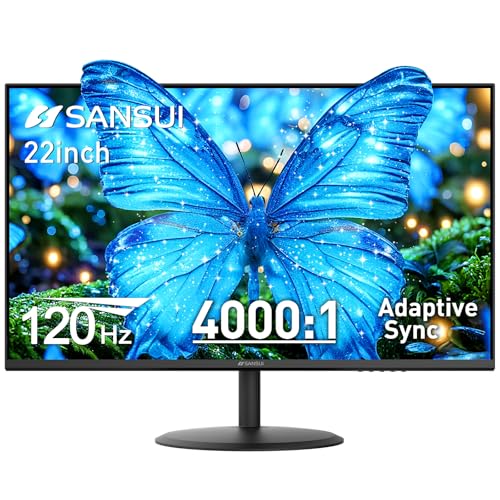
TL;DR: The Sansui ES-22X3AH delivers a 22‑inch Full HD VA panel with a 120 Hz refresh rate, 100 % sRGB coverage and Adaptive Sync at a very budget‑friendly price.
This monitor’s standout spec is its 120 Hz refresh rate, which is rare for a sub‑24‑inch budget screen. Paired with a Full HD 1920 × 1080 resolution and 100 % sRGB color gamut, it offers smooth motion and vibrant colors for everyday work and casual gaming. The panel is a VA type with a 4000:1 contrast ratio, and the stand provides a tilt range of –5° to +22°.
Compared with the other twelve entries, the ES‑22X3AH sits in the middle of the weight spectrum at 6.64914182192 pounds—lighter than the 8.8‑pound Sceptre 27‑inch model and the 7.70‑pound Sansui 24‑inch sibling, but heavier than the 5.77‑pound Sceptre 24‑inch option. It offers two HDMI 1.4 ports, matching the dual‑HDMI setup of the Sceptre 24‑inch and 27‑inch units, and surpasses the single‑HDMI offering of the Sansui ES‑24F2. The 75 × 75 mm VESA‑mount pattern aligns with the Sansui ES‑24F2, while the Sceptre 24‑inch uses a larger 100 × 100 mm pattern.
User feedback highlights the monitor’s “smooth, sharp visuals” and “solid build quality,” with many reviewers appreciating the plug‑and‑play experience and responsive customer service. Common complaints mention corner clouding in dark scenes and the lack of built‑in speakers, meaning you’ll need external audio for media playback. Professional reviewers also note that the HDR mode is not HDR10‑certified, so it behaves more like a dynamic contrast boost than true HDR.
Additional technical context includes a matte anti‑glare surface that reduces reflections, a VESA‑compatible 75 × 75 mm mounting interface for ergonomic setups, and an external power adapter. The monitor does not support height adjustment, pivot, or swivel, limiting physical ergonomics to tilt only.
Pros
Cons
Best for: Budget-conscious buyers seeking a reliable entry-level option
Avoid if: You have limited desk space or need portability
“Smooth visuals and sharp colors”
“Great value for the performance”
Breakdown
AOC 27G4H
Pros
Cons
Asus VG249QL3A
Pros
Sceptre E248W-19203R 24-inch
Pros
Sceptre E275W-FW100T
Pros
Cons
Based on scoring data and product specs
Personalized picks
Best Overall Pick
AOC 27G4H
Best OverallBest for: Audiophiles and enthusiasts seeking premium sound quality and advanced features
Asus VG249QL3A
Best for: Buyers willing to invest in a proven, high-quality option
$157.99+$18.00 vs winner
Skip Sansui ES-22X3AH if…
You have limited desk space or need portability
The AOC 27G4H wins the top spot. Its 27‑inch Fast IPS panel delivers a crisp 1920 × 1080 image with a blazing 200 Hz refresh rate and a 1 ms GTG response time, which keeps motion smooth for fast‑paced games. Add to that HDR10 support, 92 % DCI‑P3 coverage and a strong 4.6‑star rating from 9,018 reviewers, all for $139.99 – comfortably under the $200 ceiling.
The Asus VG249QL3A earns runner‑up honors, especially if you need a high‑speed 24‑inch monitor that fits a tighter desk. It pushes 180 Hz, pairs FreeSync Premium with NVIDIA G‑Sync compatibility, and offers built‑in 2 W × 2 stereo speakers for casual movies or chat‑rooms. Its 350 cd/m² brightness and 99 % sRGB coverage make colors pop, and it’s priced at $119.00.
For those who must stretch the budget further, the Sceptre E248W‑19203R is the best‑value pick at $77.97, delivering a solid 24‑inch Full HD panel for everyday tasks. If you want a step up without breaking the bank, the Sceptre C275W‑1920RN at $109.97 offers a larger 27‑inch screen and a smoother visual experience for work or play.
Pick the AOC 27G4H now and enjoy premium performance without overspending.
Both models list a 1 ms response time, but the AOC 27G4H pushes a 200 Hz refresh rate while the Asus tops out at 180 Hz, giving the AOC a slight edge for smoother motion. At $139.99 versus $119.00, the AOC costs about $21 more but is praised for its higher refresh capability.
Please sign in to leave a review
No reviews yet. Be the first to review!
