⚡ Quick Answer
At a list price of $21.99 and a 4.5‑star rating from 40,910 reviewers, the Tapo C201 packs a 12‑meter infrared night‑vision range, a 117° field of view and 30 fps 1080p video into a corded indoor unit. Its CMOS sensor, 2.0 f‑stop aperture and 3.15 mm focal length give surprisingly clear footage after dark, while motion detection and two‑way audio keep you in the loop without a subscription.
We compared nine indoor cameras that sit across three price tiers. The budget tier includes the Blurams 2K Security Camera, Tapo C201 and Kasa Smart EC71, all under $25. Mid‑range options are the Blink Mini, Reolink E1 and Vision Well CG6S, while the premium tier features Wyze Cam v4, eufy Security E220 and Ring Indoor Cam (2nd Gen), with prices climbing to $49.99. Each model brings a mix of field‑of‑view angles, night‑vision types and Wi‑Fi standards, from basic 2.4 GHz to Wi‑Fi 6.
Next, we’ll break down how these specs translate to real‑world performance, so you can match the right night‑vision camera to your home’s needs.

Tapo C201
Its 117° horizontal field of view captures a wide scene, making it a solid entry‑level choice.

Reolink E1
Value‑conscious buyers who want solid 4MP quality will appreciate the Reolink E1 at $25.49, just $3.50 more than the Tapo C201.

Kasa Smart EC71
The Kasa EC71 runs on a wired power source and offers a 9‑meter night‑vision range, distinguishing it from the battery‑free, longer‑range Tapo and Reolink models.
Also considered
TL;DR: At $21.99, the Tapo C201 delivers 1080p video, 30‑40 ft night‑vision and two‑way audio, earning a 4.5‑star rating from over 40 k reviewers.
The camera’s standout spec is its infrared night‑vision range of 30‑40 ft (9‑12 m), which lets you see clearly in a dark bedroom or nursery. Coupled with a 117° horizontal field of view and a 3.15 mm lens at f/2.0, it captures a broad scene in crisp 1080p resolution at up to 30 fps.
At 0.93 pounds, the C201 is lighter than the Kasa Smart EC71 (about 1.10 pounds) but heavier than the Blink Mini, which weighs only 48 grams. Its 117° view outstrips Kasa’s 83° and Reolink’s 87.5°, while the 30‑40 ft night‑vision range matches or exceeds the 30 ft range of Kasa and the 33 ft range of Vision Well’s CG6S. In other words, you get a wider, brighter picture for a similar or lower price point.
Everyday owners rave about the camera’s “crystal‑clear” 1080p footage and the reliability of motion alerts, especially for baby or pet monitoring. Professional reviewers also highlight the privacy mode and the two‑way audio with built‑in noise cancellation as strong deterrents and communication tools. The device plugs into a wall, streams over a 2.4 GHz Wi‑Fi network, and works with Alexa and Google Assistant for voice‑controlled checks.
Under the hood, the C201 uses a 1/3″ progressive‑scan CMOS sensor and supports digital zoom, delivering smooth video at 30 fps. You can expand storage with a microSD card up to 512 GB, and optional cloud storage is available through Tapo Care. Encryption follows WPA/WPA2‑PSK with 128‑bit AES, keeping your footage secure.
Pros
Cons
Best for: Budget‑conscious buyers seeking a reliable entry‑level option — the Tapo C201 offers Night Vision Range: 30‑40 ft (9‑12 m)
Avoid if: You want the best value‑per‑dollar in its price range
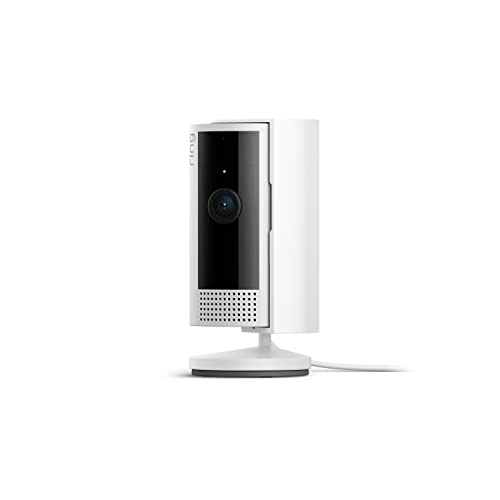
TL;DR: The Ring Indoor Cam (2nd Gen) delivers 1080p color night vision, a 143° diagonal view and a manual privacy cover, but its $49.99 price and plug‑in design place it above many budget rivals.
This camera’s standout spec is its 143‑degree diagonal field of view, giving you a wide‑angle look at any room while keeping the device compact at just 0.16 lb. The 24 fps frame rate ensures smooth motion capture, and the built‑in siren can be heard up to 1 m away at 72 dB, adding a deterrent layer for intruders.
Compared with the eight other indoor cameras in this roundup, the Ring model sits at the higher end of the price spectrum and offers a richer feature set than many plug‑in‑only options. While the Tapo C201 and Wyze Cam v4 focus on ultra‑low cost, the Ring cam provides a dedicated manual privacy cover and color night vision—features that are either missing or only optional on the cheaper models. Its 2.4 GHz Wi‑Fi connection and 2 Mbps minimum upload speed are on par with the network specs of its peers, but it lacks the pan‑and‑tilt flexibility found in a few competitors.
Users consistently praise the camera for its clear 1080p video and the tangible control offered by the swivel privacy shield, especially when monitoring pets or babies. Professional reviewers highlight the reliable two‑way audio with noise cancellation and the seamless integration with the Ring app and Alexa. However, several reviewers note the inconvenience of a constant plug‑in power source and occasional connectivity hiccups on crowded 2.4 GHz networks. The 1.9 m power cable and 7 W adapter give you a stable power connection, but they also limit placement options compared to battery‑run cameras.
Pros
Cons
Best for: Buyers willing to invest in a proven, high‑quality option — the Ring Indoor Cam (2nd Gen) offers Siren Distance: 1 m
Avoid if: You're shopping on a tight budget — it's priced at $49.99
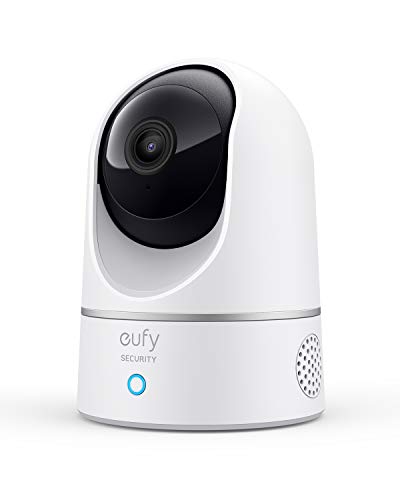
TL;DR: The eufy Security Indoor Cam E220 delivers 2K video, 125° diagonal view and 10 m night‑vision range, but its $44.99 price is higher than many budget indoor cams.
The standout spec is its 2K (2304 × 1296) resolution paired with an F2.0 aperture and a 2.8 mm lens, which together give sharp detail even in low light. Its infrared array of eight 840 nm LEDs reaches 32.8 ft (10 m) at night, and the 8X digital zoom lets you focus on distant activity without moving the camera.
Compared with the eight other cameras in this roundup, the E220’s 125° diagonal field of view sits between Ring’s 143° and Wyze’s 115.8°. It is heavier than Ring (0.16 lb) and Wyze (0.49 lb) but lighter than Kasa (1.10 lb) and Tapo (0.93 lb). Its night‑vision range matches Vision Well’s 33 ft and exceeds Kasa’s 30 ft, while offering a wider view than Blink’s 110°.
Professional reviewers praise the on‑device AI that flags humans, pets and crying sounds without a subscription, and they note the seamless HomeKit, Alexa and Google Assistant integration. Users appreciate the 360° pan and 96° tilt for covering entire rooms, though they mention that HomeKit limits streaming to 1080p despite the camera’s 2K capability. The camera runs on a 5V/2A USB adapter and supports up to 128 GB microSD for local storage, eliminating ongoing cloud fees.
Pros
Cons
Best for: Buyers willing to invest in a proven, high-quality option — the eufy Security E220 offers Field of View: 125° diagonal
Avoid if: You're on a tight budget or only need basic functionality
TL;DR: At just $16.98, the Blurams 2K Security Camera gives indoor users 2K resolution, 360° pan‑tilt coverage and 5 m night‑vision, making it the most affordable option with solid smart‑home integration.
The camera’s standout spec is its 2K super‑HD picture quality paired with a full 360° pan and 180° tilt range, letting you watch every corner of a room without blind spots. It packs this capability into a compact body that measures 83 mm × 83 mm × 110 mm (3.27 in × 3.27 in × 4.33 in) and weighs about 0.73 lb, so it sits discreetly on a shelf or ceiling mount.
Compared with the other eight cameras in this roundup, the Blurams unit is lighter than the Blink Mini (48 g) and far lighter than the Kasa Smart EC71 (1.10 lb). Its night‑vision range of 5 m trails the Tapo C201’s 9‑12 m range and the Vision Well CG6S’s 33 ft range, but it still outperforms many budget models that list no night‑vision distance at all. The 360° field of view dwarfs the 98° diagonal view of the Kasa EC71 and the 110° view of the Blink Mini, giving it a clear advantage in coverage.
Users consistently praise the razor‑sharp 2K image and the camera’s ability to swivel smoothly while tracking motion. Professional reviewers note the reliable IR‑CUT color night vision and the straightforward app setup. On the downside, several owners mention that the camera only supports 2.4 GHz Wi‑Fi, which can be a bottleneck in crowded networks, and that the motion‑tracking sensitivity sometimes triggers false alerts.
Beyond video, the Blurams 2K offers two‑way audio with an anti‑noise microphone, a built‑in siren, and activity‑zone alerts. Cloud storage is optional, and a microSD card up to 128 GB provides local backup. It integrates with Alexa, Google Assistant and IFTTT, and the indoor‑rated IP rating means it’s safe for home use. Power comes from a USB‑A to Micro‑USB adapter, keeping setup simple.
Pros
Cons
Best for: Shoppers on a tight budget who want the most for their money — the Blurams 2K Security Camera offers Night Vision Range: 5 m
Avoid if: You need outdoor coverage or 5 GHz Wi‑Fi connectivity
TL;DR: The Kasa Smart EC71 delivers 1080p video, 30 ft infrared night vision and full 360° × 113° pan‑tilt coverage for just $24.99, making it a solid budget pick for indoor monitoring.
The standout spec is its 360° horizontal pan combined with a 113° vertical tilt, letting you sweep an entire room without blind spots. It records in 1080p (1920 × 1080) at 15 fps and its infrared LEDs illuminate up to 30 ft, so low‑light detail stays clear. At 499 g the camera feels sturdy yet compact enough for a shelf or corner mount.
Compared with the other eight cameras, the EC71 matches Vision Well CG6S’s 360° pan but offers a longer night‑vision reach than the Tapo C201’s 30‑40 ft range and a wider vertical tilt than the Blink Mini’s 110° field of view. It also provides a larger local storage ceiling (up to 512 GB microSD) than the Blurams 2K camera’s 330 g body, while staying lighter than the Reolink E1’s 0.44 lb chassis.
Users consistently praise the camera’s sharp daytime video and the ability to talk to pets or babies through the built‑in two‑way audio. Professional reviewers note the low‑light detail as “excellent” for the price tier. On the downside, several owners report that the motion‑tracking feature sometimes loses the subject, and the app’s navigation can feel clunky, leading to occasional connectivity hiccups on a 2.4 GHz network.
Under the hood, the EC71 uses a 1/3″ progressive‑scan CMOS sensor with an f/2.0 aperture, 3DNR and WDR for balanced exposure. It supports cloud storage via AWS Kasa Care and local recording on a microSD card, and integrates with Alexa and Google Home for voice‑controlled live views.
Pros
Cons
Best for: Budget‑conscious buyers seeking a reliable entry‑level option — the Kasa Smart EC71 offers Night Vision Range: 30 ft
Avoid if: You want the best value‑per‑dollar in its price range
TL;DR: The Reolink E1 packs a 4MP sensor, 355° pan and 50° tilt into a 0.44‑lb indoor cam for $25.49, giving solid detail and AI alerts without a subscription.
The standout spec is its 4MP Super HD resolution (2560×1440) paired with an F1.6 aperture, which lets you capture fine indoor detail even in low light. The camera also swivels 355° horizontally and tilts 50°, so a single unit can watch most of a room. Two‑way audio and a tap‑to‑disable privacy mode round out the feature set, while AI can spot people, pets and even baby cries.
Compared with the other eight cameras, the E1 is lighter than the Tapo C201 (0.44 lb vs 0.93 lb) and the eufy E220 (0.44 lb vs 0.66 lb), but heavier than the Blink Mini (48 g) and Ring Indoor Cam (73 g). Its 355° pan is just shy of the Kasa Smart EC71’s full 360°, and its 87.5° field of view is narrower than Kasa’s 98° diagonal and Blink Mini’s 110°. The night‑vision capability is present, though the exact range isn’t listed, whereas Vision Well CG6S and eufy E220 both state ranges around 33 ft and 32.8 ft respectively. Storage up to 512 GB microSD and support for up to 10 invited users give it more local flexibility than many peers that only mention basic cloud options.
Professional reviewers praise the high‑resolution detail and reliable AI alerts, noting that the image clarity outshines many 1080p rivals. Users who have mentioned the camera highlight the convenience of the privacy lens cover and the ease of mounting on walls, ceilings or tabletops. The main criticisms revolve around its 2.4 GHz‑only Wi‑Fi, which can be a bottleneck in crowded networks, and the indoor‑only design that excludes outdoor placement. The 4.2‑star rating reflects a solid but not top‑tier satisfaction level.
Pros
Cons
Best for: Value‑conscious buyers seeking quality at $25.49 — the Reolink E1 offers a 4MP sensor and 355° pan coverage.
Avoid if: You need outdoor coverage or dual‑band Wi‑Fi connectivity.
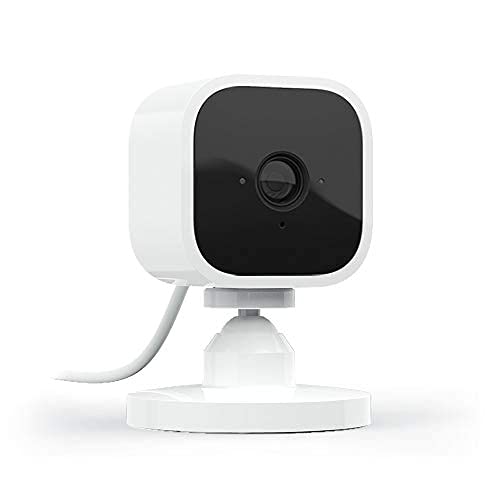
TL;DR: The Blink Mini delivers 1080p indoor video with a 110° field of view, two‑way audio and Alexa/Google integration for just $24.99, making it a solid budget pick despite modest night‑vision range.
The camera records in 1080p (1920×1080 px) and offers a 110° field of view, letting you see most of a room without blind spots. Its infrared LEDs operate at 850 nm, providing basic night‑vision, while a motion‑detection range of approximately 20 feet triggers recording. Two‑way audio lets you speak through the built‑in microphone and speaker, and the unit plugs directly into a USB‑Micro power source using a 6'7" (2 m) cable.
Compared with the other eight cameras, the Blink Mini’s 110° view is wider than the Kasa Smart EC71’s 98° and the Reolink E1’s 87.5°, yet narrower than the Tapo C201’s 117° horizontal coverage. At roughly 48 g (0.11 lb), it’s lighter than Kasa (≈1.10 lb), Reolink (0.44 lb), Tapo (0.93 lb), Blurams (0.73 lb) and Wyze (0.49 lb), though heavier than the Ring Indoor Cam (0.16 lb). Night‑vision range isn’t listed for Blink, while the Tapo C201 claims 30‑40 ft, Vision Well 33 ft, eufy 32.8 ft and Wyze up to 20 m, suggesting Blink may fall short in low‑light distance.
Reviewers frequently praise the easy plug‑in setup, clear 1080p picture and the convenience of Alexa and Google Assistant voice control. A common complaint is the limited night‑vision reach, especially when compared to rivals that advertise longer infrared ranges. Users also note that local storage isn’t built in; you need a Sync Module 2 or a Blink subscription, though a 30‑day free cloud trial is included.
Additional technical details include a 2.4 GHz Wi‑Fi connection, USB‑Micro power input (5 V / 1 A), and compact dimensions of 48 × 48 × 34 mm. The camera operates indoors from 32° to 95°F (0° to 35°C) and features LED status indicators for power, connectivity and errors.
Pros
Cons
Best for: Budget-conscious buyers seeking a reliable entry-level option — the Blink Mini offers Field of View: 110 degrees
TL;DR: The Wyze Cam v4 delivers 2.5K QHD video, color night vision and a 99 dB siren in a compact, IP65‑rated body for about $36, but it needs continuous wired power.
The standout spec is its 2560 × 1440 (2.5K QHD) video at 20 FPS during daylight, paired with a 115.8° diagonal field of view and color night vision illuminated by a 72‑lumens spotlight. A 99 dB siren and Edge AI detection round out a feature set that feels premium for the price.
Compared with the eight other cameras in this roundup, the Wyze Cam v4 is lighter than the Tapo C201 (0.93 lb) yet heavier than the Blink Mini, which tips the scales at just 48 g. Its diagonal FOV of 115.8° sits between the narrower 98° offered by the Kasa Smart EC71 and the wider 143° of the Ring Indoor Cam. While the Tapo C201 lists a night‑vision range of 30‑40 ft, Wyze does not publish a specific distance, leaving that metric unspecified.
Users consistently praise the razor‑sharp 2.5K footage and the vibrant color night vision, noting the siren’s loud 99 dB alert as a real deterrent. Professional reviewers highlight the WDR processing and the on‑device AI that powers motion detection, Smart Focus tracking and face recognition. The main complaints revolve around the need for a constant micro‑USB power source, the lack of 5 GHz Wi‑Fi, and the fact that advanced AI and cloud storage require a paid Cam Plus subscription.
Pros
Cons
Best for: Buyers willing to invest in a proven, high-quality option — the Wyze Cam v4 offers Siren Volume: 99 dB
Avoid if: You're on a tight budget or only need basic functionality
“crystal-clear 2.5K daytime/night video”
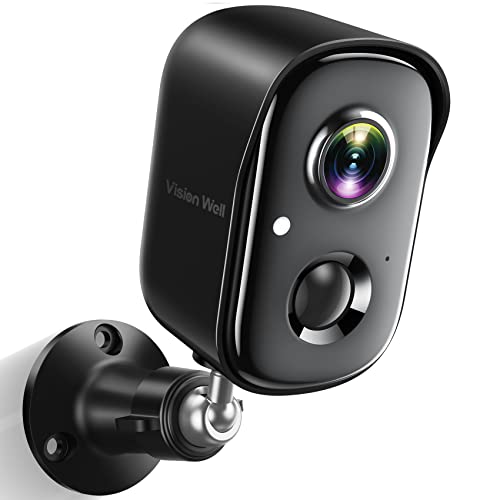
TL;DR: The Vision Well CG6S delivers a 33 ft color night‑vision range and 360° pan at $29.99, but its higher price and occasional motion‑detection lag may give budget‑focused shoppers pause.
The standout spec is the 33 ft night‑vision range combined with full 360° pan rotation, letting you monitor a whole yard without blind spots. It records in 2K resolution, so details remain clear even after dark, and the IP65 rating means it can handle rain or dust without a housing.
Compared with the eight rivals, the CG6S sits at a higher price point than the Tapo C201 ($21.99) and the Kasa Smart EC71 ($24.99), yet its night‑vision reach exceeds the Blurams 2K’s modest 5 m and matches the eufy Security E220’s 32.8 ft. Unlike many wired competitors, it’s truly wire‑free, running on a rechargeable battery that lasts 1–5 months, while cameras such as the Reolink E1 and Wyze Cam v4 rely on continuous power. Its 2.4 GHz Wi‑Fi only may limit range, a factor the Ring Indoor Cam also shares.
Professional reviewers praise the AI‑powered motion detection for distinguishing people, pets, vehicles and packages, which cuts down on false alerts. Everyday users echo this, noting the long battery life and clear footage, but several complain that the motion sensor can be sluggish, occasionally missing fast gestures, and that the Wi‑Fi connection drops in busy networks. The free three‑day cloud storage and optional 30‑day trial of advanced features add a layer of convenience for those who don’t want to manage SD cards.
Pros
Cons
Best for: Most users seeking a balanced, mainstream option — the Vision Well CG6S offers Night Vision Range: 33ft
Avoid if: Reliability and user satisfaction are your top concerns
Breakdown
Tapo C201
Pros
Cons
Reolink E1
Pros
Cons
Kasa Smart EC71
Pros
Cons

Wyze Cam v4
Pros
Based on scoring data and product specs
Personalized picks
Best Overall Pick
Tapo C201
Best Budget PickBest for: Budget-conscious buyers seeking a reliable entry-level option — the Tapo C201 offers Night Vision Range: 30-40 ft (9-12 m)
Reolink E1
Best for: Value-conscious buyers seeking quality at $25.49 — the Reolink E1 offers Field of View: 87.5 degrees
$29.99+$12.03 vs winner
Skip Blurams 2K Security Camera if…
You have limited desk space or need portability
The Tapo C201 takes the top spot. Its 12‑meter infrared night‑vision range lets you see clearly in total darkness, while the 117° field of view captures a wide scene without blind spots. It streams smooth 1080p video at 30 fps and includes built‑in motion detection and two‑way audio for real‑time conversation. Cloud storage is optional, and it plugs into any 2.4 GHz Wi‑Fi network—all for just $21.99.
The Reolink E1 lands as the runner‑up, ideal if you need higher resolution for detailed indoor monitoring. It records at 4MP (2560 × 1440) and offers an 87.5° view, plus 355° pan and 50° tilt for flexible placement. Its infrared night‑vision works alongside person, pet and baby‑cry detection, and auto‑tracking follows movement across the scene. With Wi‑Fi 6 connectivity and support for up to 512 GB microSD, it stays sharp day and night at $25.49.
Depending on your budget, here are the other solid choices:
Pick the Tapo C201 today and get premium night‑vision coverage without breaking the bank.
Tapo C201 offers an infrared night‑vision range of 12 meters, while Kasa EC71 lists a range of 9 meters. The extra three meters give the Tapo a slight edge for larger rooms.
No reviews yet — be the first to share your experience.
Please sign in to leave a review