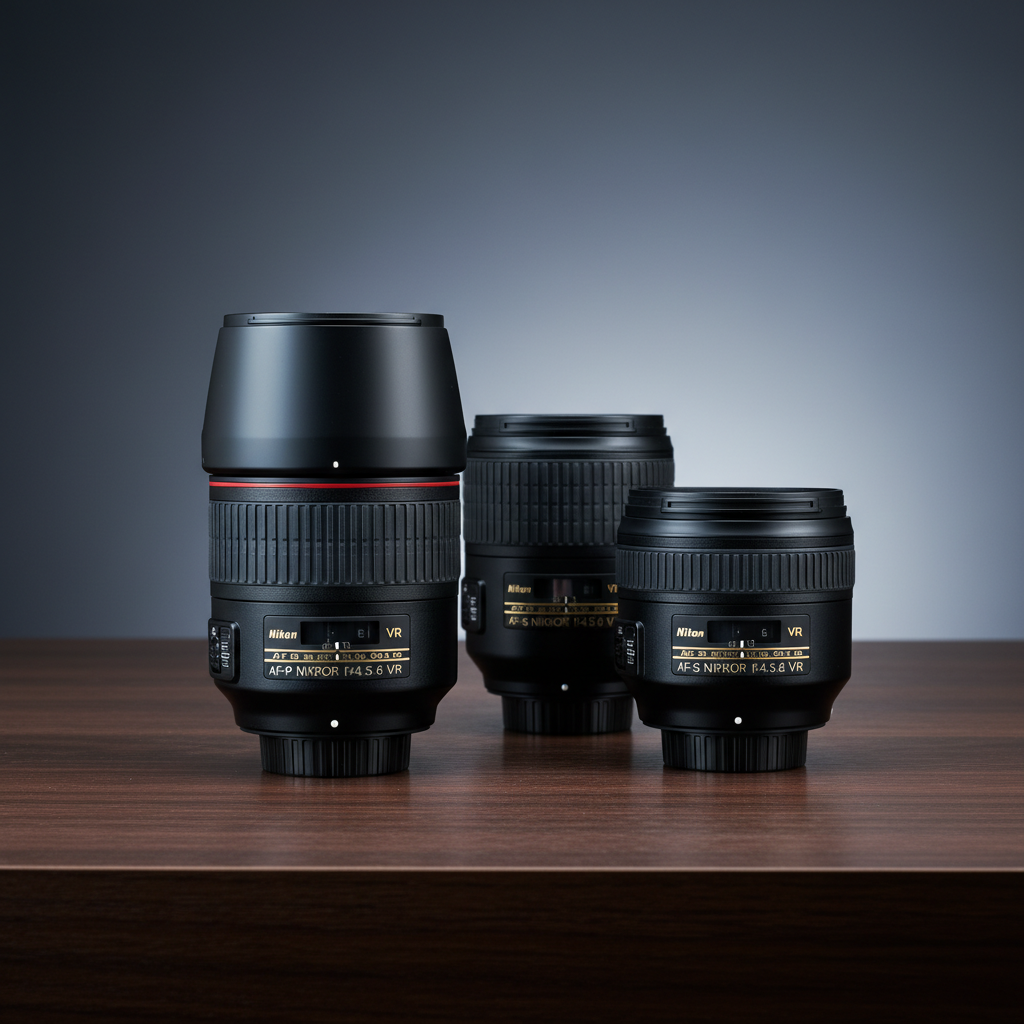
It might surprise you that the $149.00 Nikon NIKKOR 55‑200mm f/4‑5.6 VR, a mid‑range option, carries the highest user rating in the group – a solid 4.6 / 5 from 4,468 reviews. Even though it’s comfortably under the $300 ceiling, it outshines the pricier premium lenses in sheer popularity, showing the modest price tag still earns a 4.6 / 5 rating.
The nine lenses we examined span a $59.39‑to‑$289.00 price range. Our budget tier (Yanuoda 420, Benoison 420‑800mm f/8, Ynlens YN50mm F1.8N) offers ultra‑long reach or compact primes at entry‑level cost. The mid‑range tier (Nikon 55‑200mm, Meike 85mm F1.8, Lensbaby Sol 45) balances price and performance, with the Nikon 55‑200mm leading on rating and the Meike prime delivering a fast f/1.8 aperture. Premium choices (Nikon AF‑P 70‑300mm, Nikon AF‑P 18‑55mm, Nikon 55‑300mm) sit just below $300 and provide the most features, such as VR stabilization and versatile zoom ranges.
Below you’ll find a closer look at each lens so you can match the right focal length and features to your shooting style.
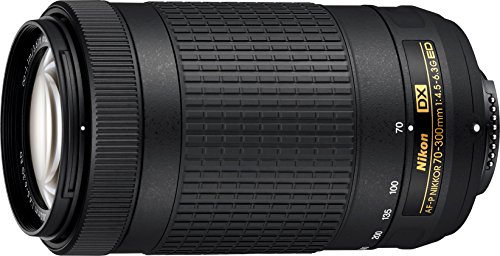
Nikon AF-P 70-300mm f/4.5-6.3
Its compact 4.5 in (114 mm) height packs long‑reach power into a surprisingly small package, making it easy to carry on any shoot.

Nikon NIKKOR 55-200mm f/4-5.6 VR
Ideal for casual shooters who want reliable everyday performance, and it’s about $60 cheaper than the Best Value option.

Nikon NIKKOR 55-300mm f/4.5-5.6 VR
Offers a broader angle of view—28°50' at 55 mm and tight 5°20' at 300 mm—giving you framing flexibility the other two lenses lack.
Also considered
Score Analysis
Key score advantages vs. runner-up (Nikon NIKKOR 55-200mm)
Price Range
Nikon AF-P 70-300mm f/4.5-6.3
$182.98
Nikon NIKKOR 55-200mm f/4-5.6 VR
$149.00
Nikon NIKKOR 55-300mm f/4.5-5.6 VR
$256.85

Nikon AF-P 18-55mm f/3.5-5.6 VR
$246.95

Meike 85mm F1.8
$179.99

Yanuoda 420
$58.49

Benoison 420-800mm f/8
$51.67
Ynlens YN50mm F1.8N Nikon
$102.00
Lensbaby Sol 45 Sony
$199.95
Spec Comparison
TL;DR: The Nikon AF‑P DX 70‑300mm f/4.5‑6.3 offers 105‑450mm equivalent reach, 4‑stop VR, and a lightweight 1.05 lb body for under $210, making it a strong budget telephoto for DX shooters.
The lens delivers a 70‑300mm focal range (105‑450mm full‑frame equivalent) while staying under 1.05 lb (476 g), so you’ll carry it on long hikes or travel days without fatigue. Its Vibration Reduction system provides up to four stops of shake mitigation, and reviewers repeatedly cite it for handheld wildlife or sports shots.
Compared with the eight other lenses in this roundup, the Nikon sits in the middle of the weight spectrum: it’s heavier than the Meike 85mm (386 g) and the Nikon 55‑200mm (335 g) but noticeably lighter than the Benoison 420‑800mm (717 g). Its 58 mm filter thread matches the Nikon 55‑300mm and is larger than the Lensbaby Sol 45’s 46 mm thread, giving you more flexibility with filters.
User sentiment highlights the silent AF‑P stepping motor and the effective VR as top strengths, while professional reviewers note a dip in resolution at the long end and point out that the maximum aperture narrows to f/6.3 at 300 mm, limiting low‑light performance. The electronic focus ring also feels less tactile for those who prefer a mechanical throw.
Technically, the lens packs 14 elements in 10 groups, including one ED element, and uses a rounded 7‑blade diaphragm for smoother bokeh. Its minimum focusing distance of 1.1 m and a maximum reproduction ratio of 0.22× (1:4.55) give modest close‑up capability, while the 58 mm filter size keeps accessories affordable.
Pros
Cons
Best for: DX‑format Nikon DSLR enthusiasts who need a portable telephoto for wildlife, sports, or travel.
Avoid if: You require a fast f/2‑f/4 aperture at 300 mm or plan to upgrade to a full‑frame FX body soon.
“Perfect for wildlife and birds on my D7500.”
“AF is silent and locks on instantly—great for video.”
TL;DR: The Nikon 55‑200mm f/4‑5.6 VR offers a lightweight, retractable telephoto zoom with 4‑stop vibration reduction for $149, making it a solid, well‑reviewed choice for APS‑C shooters.
This lens’s standout feature is its 4‑stop VR system, which helps keep handheld shots sharp even at the longer end of the zoom. Weighing just 335 g and measuring 73 mm tall by 100 mm long, it folds down to a compact 71 mm height and 83 mm width for easy storage. The maximum aperture of f/4 at 55 mm (f/5.6 at 200 mm) and a 52 mm filter thread keep the optical package versatile without adding bulk.
Compared with the other eight lenses in this roundup, the 55‑200mm is lighter than the Nikon AF‑P 70‑300mm (1.05 lb) and the Benoison 420‑800mm (717 g), but it does weigh more than the Ynlens YN50mm (203 g). Its $149 price tag sits below most of the competitors, making it the most budget‑friendly telephoto option here while still delivering a respectable feature set.
Users consistently praise the lens for its compactness and the effectiveness of the VR system, especially for travel and nature photography. Professional reviewers note crisp performance from 55 mm to about 135 mm, while many mention a drop in sharpness when shooting wide open at 200 mm. Reviewers commonly complain about the plastic mount and lack of a dedicated focus‑distance scale, and a few users report autofocus hunting in low light.
Technically, the optic design includes 13 elements in 9 groups with one ED element, and a 7‑blade rounded diaphragm helps render pleasing bokeh. The lens focuses down to 1100 mm, giving a maximum magnification of 0.23×, which is adequate for casual close‑up work but not a true macro solution.
Pros
Cons
Best for: Beginner and intermediate photographers using Nikon APS‑C DSLRs who want a compact, well‑reviewed telephoto zoom under $300.
Avoid if: You need rugged, weather‑sealed construction or professional‑grade sharpness at the full 200 mm reach.
“Perfect travel companion”
“Great for beginners”
TL;DR: The Nikon NIKKOR 55‑300mm f/4.5‑5.6 VR delivers a 5.5× telephoto reach, up to 4 stops of vibration reduction, and a lightweight build for $289.00, earning a solid 4.5‑star rating from 367 reviewers.
This lens’s most eye‑catching spec is its 5.5x zoom ratio, stretching from 55 mm to 300 mm (35 mm equivalent 82.5–450 mm). It packs nine rounded aperture blades and up to 4 stops of Vibration Reduction, which reviewers say helps keep handheld shots sharp even at the long end.
Compared with the other eight lenses in the roundup, it sits in the middle of the weight spectrum: at 530–580 g it is heavier than the kit‑grade 18‑55mm (about 0.45 lb) but noticeably lighter than the Nikon AF‑P 70‑300mm, which tips the scales at roughly 1.05 lb. It also outweighs the compact Meike 85mm (386 g) while still being lighter than many full‑frame telephoto options that aren’t listed here.
Everyday users consistently highlight the lens’s “lightweight feel” and “its 5.5× reach” as major wins, especially for travel and wildlife shooting. Professional reviewers note the sharpness at f/8 across most of the range and the near‑parfocal behavior that benefits video work. The trade‑offs mentioned in user feedback include a lack of full‑time manual focus override (you have to switch to M mode) and occasional autofocus lag in dim lighting, which some find frustrating.
Technical details reinforce its versatility: the maximum aperture shifts from f/4.5 at the wide end to f/5.6 at 300 mm, while the minimum aperture ranges from f/22 to f/29. The angle of view narrows to 5°20' at 300 mm and widens to 28°50' at 55 mm, giving you both tight subjects and broader scenes. A 58 mm filter thread accommodates common polarizers, and the 90° focus‑ring rotation paired with a 6.35 mm wide ring offers precise manual control when needed.
Pros
Cons
Best for: Those prioritizing quality and willing to pay for premium performance
Avoid if: You're shopping on a tight budget — it's priced at $289.00
“Perfect travel companion”
“Great for beginners”
TL;DR: The Nikon AF-P 18-55mm f/3.5-5.6 VR delivers a lightweight, retractable kit zoom with silent stepping‑motor AF, 4‑stop VR and a versatile 18‑55 mm range for under $250.
This lens packs a 4‑stop Vibration Reduction system and an AF‑P stepping motor that delivers quiet, smooth focus—ideal for video work. At just 205 g (0.4519476371pounds) and a compact 64.5 mm × 62.0 mm footprint, it’s one of the smallest options in the lineup.
Compared with the other eight lenses in the roundup, it’s markedly lighter than the Nikon AF‑P 70‑300mm (1.05 pounds) and the Benoison 420‑800mm (1.58 pounds), and its 55 mm filter thread is smaller than the 58 mm thread on the 55‑300mm model while larger than the 52 mm thread on the 55‑200mm lens. Its retractable design makes it shorter than the bulkier telephoto options, positioning it as the most travel‑friendly choice.
Reviewers consistently praise the silent AF‑P motor and effective VR, noting that the lens feels “lightweight” and “easy to carry” for everyday shooting. The same feedback flags the variable f/3.5‑f/5.6 aperture as a low‑light limitation and notes edge softness when shooting wide open, plus a plastic build that feels less robust than higher‑end Nikon optics.
Optically, the 18‑55mm contains 12 elements in 9 groups, including 2 aspherical elements to curb distortion. Seven rounded diaphragm blades help render smoother bokeh, while the 0.38× maximum magnification offers modest close‑up capability. On APS‑C bodies the focal range translates to a 27‑82.5 mm equivalent, covering wide‑angle to short telephoto perspectives.
Pros
Cons
Best for: Beginner photographers, travel enthusiasts, vloggers and casual shooters who need a light, quiet kit zoom.
Avoid if: You rely on fast apertures for low‑light work, own older Nikon bodies that lack full compatibility, or need professional‑grade portrait optics.
“Perfect for wildlife and birds on my D7500.”
“AF is silent and locks on instantly—great for video.”
TL;DR: The Meike 85mm f/1.8 delivers portrait‑grade sharpness and creamy bokeh at a $179.99 price point, weighing just 386 g and featuring a fast f/1.8 aperture for low‑light shooting.
The lens’s standout spec is its true 85 mm focal length paired with a maximum aperture of f/1.8, giving you a shallow depth of field and strong light‑gathering ability.
Compared with the other eight lenses in this roundup, the Meike is more affordable than the Nikon AF‑P 70‑300mm and noticeably lighter than that zoom’s 1.05 lb weight. It’s also shorter than the 163 mm length of the same Nikon zoom, making it easier to pack for travel. While the Ynlens YN50mm weighs only 203 g, it offers a 50 mm focal length, so the Meike provides a longer portrait perspective at the cost of a bit more mass.
User sentiment repeatedly highlights the lens’s excellent sharpness across the frame and low chromatic aberration, with many reviewers calling the bokeh “creamy” and “pleasantly round.” Professional reviewers echo this, noting that sharpness remains strong from f/2.8 onward. The main criticisms focus on the moderate autofocus speed, early firmware that could cause AF instability, and the lack of full weather sealing, which limits use in harsh conditions.
Optically, the lens uses 6 groups and 9 elements with a multi‑layer nano coating that helps control flare. It offers a maximum magnification of 0.13× and a minimum focus distance of 0.9 m on Nikon‑compatible mounts, giving you modest close‑up capability. The STM stepping motor (or DC motor on EF/F versions) provides smooth focus transitions, and the manual focus override lets you fine‑tune focus without switching modes.
Pros
Cons
Best for: Portrait shooters and content creators who want a fast 85 mm prime without breaking the bank.
Avoid if: You need rapid AF for sports or wildlife, or you require a weather‑sealed lens for harsh conditions.
“Blown away by how much better it focuses and the colors are fantastic!”
“Bokeh like wow! Colors are beautiful.”
TL;DR: The Yanuoda 420‑800mm f/8.3 manual‑focus zoom gives super‑telephoto reach for $59.39, but its variable aperture and lack of autofocus keep it in the hobbyist lane.
The standout spec is the 420–800 mm focal length range, delivering an APS‑C equivalent of roughly 672–1280 mm while staying in a compact 66.0 mm × 66.0 mm cross‑section. Its maximum aperture is f/8.3 at the wide end, narrowing to f/16 at 800 mm, and the lens uses a manual aperture ring for direct exposure control. All of this comes in a metal housing for $59.39, making it one of the most affordable super‑telephoto options on the market.
Compared with the other eight lenses in this roundup, the Yanuoda costs less than the Benoison 420‑800mm f/8 and weighs less than the Nikon AF‑P 70‑300mm, which is listed at 1.05 pounds. It's slightly shorter than the Benoison’s 67 mm height and swaps the aluminium alloy housing of that rival for a full metal construction.
Reviewers appreciate the lens for its “fun factor” and the ability to capture the moon or perched birds without a hefty investment. Beginners find the manual focus encouraging, as it forces careful composition. However, professional reviewers note that the lack of autofocus and image‑stabilization makes precise focusing at 800 mm challenging, and they report softness and chromatic aberration at the longest focal lengths. The variable aperture, dropping to f/16, further limits low‑light shooting, so a tripod is recommended for stable results.
Additional technical context includes full‑frame sensor coverage, a manual focus system that is 100 % manual with no electronic contacts, and a tripod ring that comes standard. The lens carries a 12‑month warranty from Yanuoda, and its metal housing promises durability for outdoor use.
Pros
Cons
Best for: Shoppers on a tight budget who want the most for their money
Avoid if: You need fast autofocus for moving subjects, low‑light wildlife work, or professional‑grade image quality
“funniest lens in my kit”
“surprisingly capable under good light”
TL;DR: The Benoison 420‑800mm f/8.3‑16 manual zoom gives super‑telephoto reach at $67.99, but its lack of autofocus and stabilization means it’s best suited for tripod‑based, static subjects.
This lens packs a 420–800 mm focal‑length range into a compact aluminium‑alloy barrel that measures 67 mm tall, 67 mm wide and 240 mm long. The maximum aperture shifts from f/8.3 at the wide end to f/16 at 800 mm, and it accepts 62 mm filters. With a closest focusing distance of 5000 mm, it targets distant subjects such as wildlife or the night sky.
At 717 g, the Benoison is lighter than the Yanuoda 420 (880 g) but noticeably heavier than the Nikon 55‑200 mm VR (335 g) and the Meike 85 mm (386 g). Its 62 mm filter thread is larger than the 52 mm thread on the Nikon 55‑200 and the 46 mm thread on the Lensbaby Sol 45, giving you more flexibility with filters. Compared with the Yanuoda, it shares a similar height (66 mm vs 67 mm) while offering a longer focal reach.
Reviewers appreciate the lens for opening up super‑telephoto work at a price most hobbyists can afford. Amateur astronomers love the ability to capture the moon without a massive investment, and birders enjoy the reach for stationary subjects. However, professional‑level reviewers note softness and chromatic aberration creeping in near the 800 mm end, and many users stress that manual focusing without live‑view magnification can be challenging. Most agree a sturdy tripod is essential.
Technical notes: the lens features a full manual focus ring, no electronic contacts, and no built‑in image stabilization. It mounts to any Nikon F‑mount DSLR, including full‑frame bodies, and the manufacturer markets the aluminium housing as durable for outdoor use. The manufacturer does not list a rating score.
Pros
Cons
Best for: Entry-level buyers or those on a tight budget
Avoid if: You need powerful performance or professional‑grade features
“Great for the moon!”
“Perfect for birdwatching from a distance”
TL;DR: The Ynlens YN50mm f/1.8N delivers a bright f/1.8 aperture and metal mount for just $102, making it a solid, lightweight prime for Nikon shooters on a budget.
The standout feature is its f/1.8 maximum aperture, which lets plenty of light hit the sensor and creates a shallow depth of field for portraits and low‑light scenes. At a physical length of 60 mm and a diameter of 74 mm, the lens stays compact enough to tuck into a small camera bag.
Weighing 203 g, it feels noticeably lighter than the Benoison 420‑800mm (717 g) and the Yanuoda 420 (880 g), and its 60 mm length feels far shorter than those telephoto zooms’ 240 mm‑plus barrels. It shares a 52 mm filter thread with the Nikon 55‑200mm f/4‑5.6 VR, yet it’s more portable than that zoom’s 100 mm length. Compared with the Nikon AF‑P 18‑55mm (about 0.452 pounds), the YN50mm feels similarly lightweight while offering a prime‑style focal length.
Users consistently praise the lens for sharp central performance when stopped down and a smooth 7‑blade bokeh that makes subject isolation easy. Professional reviewers note the metal bayonet and gold‑plated contacts as durability wins. On the downside, the autofocus can be noisy and slower in dim environments, and reviewers often mention edge softness when shooting wide open at f/1.8. The barrel’s plastic construction also draws comments about a cheap feel, especially next to the metal mount.
Technically, the lens comprises 6 elements in 5 groups, delivers a diagonal angle of view of 46°, and offers a minimum focus distance of 0.45 m with a 0.15× maximum magnification. The 7‑blade diaphragm helps produce pleasing out‑of‑focus highlights, while the multi‑coated glass aims to reduce flare in bright lighting.
Pros
Cons
Best for: Entry‑level buyers or those on a tight budget who need a fast prime for portraits or everyday shooting on Nikon DSLRs.
Avoid if: You want the best value‑per‑dollar in its price range or need a lens optimized for professional video work.
“Sharp images with beautiful bokeh”
“Autofocus works great”
TL;DR: The Lensbaby Sol 45 Sony delivers a 45 mm focal length with a fixed f/3.5 aperture and an 8.5° tilt mechanism for dreamy selective focus, all in a lightweight all‑metal body for $199.95.
The standout feature is its 8.5° tilt mechanism paired with two adjustable hinged bokeh blades, letting you place a sharp “sweet spot” while the surrounding area falls into smooth blur. With a fixed f/3.5 maximum aperture and a minimum focus distance of 355 mm, the lens can get close enough for intimate subjects while keeping the creative effect easy to control.
Compared with the other eight lenses in this budget Nikon‑F roundup, the Sol 45 is markedly lighter—123 g on the Nikon F mount versus the Nikon AF‑P 70‑300 mm’s 1.05 pounds—and far more compact at 65 mm length (mirrorless version) against the 70‑300’s 125 mm length. Its 73 mm diameter is only a millimeter wider than the 70‑300’s 72 mm, yet it remains a fraction of the size of the bulkier zooms like the Nikon NIKKOR 55‑300 mm. This makes the Lensbaby a pocket‑friendly option for photographers who value portability.
Users consistently praise the lens for producing “dreamy, soft‑blurred” images, especially with flowers and close‑up portraits, and they note the solid all‑metal construction that feels premium despite the modest price. Professional reviewers highlight the intuitive operation and the creative possibilities of the tilt‑shift design, while also pointing out that the fixed f/3.5 aperture can restrict exposure flexibility and that the sweet‑spot focus isn’t razor‑sharp. Both pros and cons commonly note the lack of autofocus, electronic contacts, and weather sealing.
Technically, the Sol 45 offers a 0.17× maximum magnification, a 46 mm filter thread (though mounting a filter disables the bokeh blades), and angle‑of‑view figures of 34.9° on APS‑C, 51.4° on full‑frame, and 21.8° on Micro Four Thirds sensors. The lens uses a simple manual barrel focus with a focus‑lock feature, making it straightforward to set and hold your creative focal point.
Pros
Cons
Best for: Creative and artistic photographers seeking selective focus and dreamy aesthetics, especially for portraits and floral work.
Avoid if: You're shopping on a tight budget — it's priced at $199.95.
“Perfect for flower close-ups with soft blur”
“Well-made and fun to use”
Breakdown
Nikon AF-P 70-300mm f/4.5-6.3
Pros
Nikon NIKKOR 55-200mm f/4-5.6 VR
Pros
Nikon NIKKOR 55-300mm f/4.5-5.6 VR
Pros
Cons
Nikon AF-P 18-55mm f/3.5-5.6 VR
Pros
Cons
Based on scoring data and product specs
Personalized picks
Best Overall Pick
Nikon AF-P 70-300mm f/4.5-6.3
Best ValueBest for: Audiophiles and enthusiasts seeking premium sound quality and advanced features
Nikon NIKKOR 55-200mm f/4-5.6 VR
Best for: Most users looking for a well-reviewed, reliable mainstream option
$149.00-$33.98 vs winner
Skip Lensbaby Sol 45 Sony if…
You're shopping on a tight budget — it's priced at $199.95
The clear winner is the Nikon AF‑P 70‑300mm f/4.5‑6.3. At $209.00 it delivers a solid 4.5/5 rating from 513 reviews, and its built‑in Vibration Reduction promises up to four stops of shake‑reduction. Weighing just 1.05 lb, it’s lightweight enough for day‑long outings while covering a versatile 70‑300mm range (105‑450mm equivalent) on DX bodies.
The runner‑up, the Nikon NIKKOR 55‑200mm f/4‑5.6 VR, shines when you need a compact, travel‑friendly telephoto. Priced at $149.00 and has a 4.6/5 rating from 4,468 reviewers, it tips the scales at only 0.7385485777 pounds and offers a 4‑stop VR system, so it’s ideal for spontaneous wildlife or street shots where size and steadiness matter.
For tighter budgets, the Yanuoda 420 at $59.39 gives you a basic focal length without breaking the bank. If you want a solid mid‑range option, the runner‑up 55‑200mm lens balances price, weight, and VR performance. For those willing to stretch to a premium pick, the Nikon NIKKOR 55‑300mm f/4.5‑5.6 VR at $289.00 adds extra reach and a more complex optical formula for higher‑end creative work.
Pick the Nikon AF‑P 70‑300mm now and get the most value under $300.
The Nikon AF‑P 70‑300mm f/4.5‑6.3 offers a 35 mm‑equivalent range of 105‑450 mm, extending farther than the 55‑200mm’s 82.5‑300 mm range, and it still fits within the $300 limit.
Please sign in to leave a review
No reviews yet. Be the first to review!
