
Finding a point‑and‑shoot that fits a tight budget used to feel like hunting for a needle in a haystack. In this roundup we’ve compared 12 cameras that sit under $200, split across three price tiers: pure‑budget models like the Aasonida DC506, mid‑range options such as the Duluvulu DC101, and premium picks including the Kodak PIXPRO C1 and Sony DSC‑H300/BM.
The most surprising find is that the cheapest camera, the Aasonida DC506 at just $29.99, carries a 4.3‑star rating from 911 reviewers – the same score the $99 Kodak PIXPRO C1 enjoys from 721 fans. Both score 4.3/5, yet the Aasonida squeezes a 48 MP sensor, 16× digital zoom and even a 32 GB microSD card into a pocket‑friendly body weighing 450 g. It shows that spending little still earns decent user approval.
Next, the guide breaks down each tier, spotlights strengths, quirks, and who each camera serves best, helping you pick the right shooter for your wallet and workflow.
Kodak PIXPRO C1
Offers a 700 mAh battery delivering about 1.5 hours of 1080p video, offering good value for the price.

Nikon COOLPIX P500
Ideal for enthusiasts who prioritize longer battery life, though it costs $20 more than the Kodak PIXPRO C1.

Kodak EKTAR H35
Provides 48 shots from a 24‑exposure roll (72 from 36), a film‑style capacity the digital PIXPRO C1 and COOLPIX P500 don’t offer.
Also considered
Score Analysis
Key score advantages vs. runner-up (Nikon COOLPIX P500)
Price Range
Kodak PIXPRO C1
$99.00
Nikon COOLPIX P500
$119.00
Kodak EKTAR H35
$49.99

Aasonida DC506
$19.99

Camkory DC403
$39.99
Kodak WPZ2
$159.00
Fjfjopk DC402
$64.99

Duluvulu DC101
$58.97
Camkory DC413
$49.99
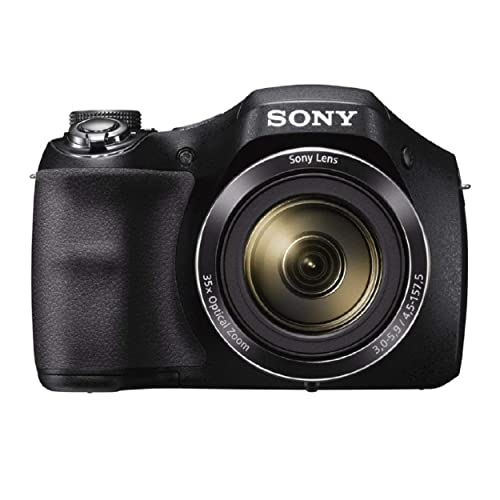
Sony DSC-H300/BM
$187.25
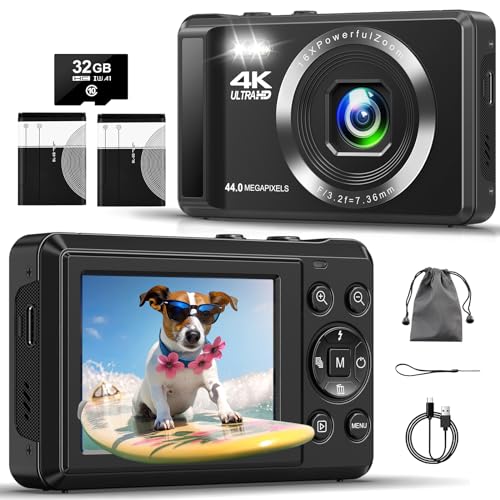
LinSewsy DC065
$49.99
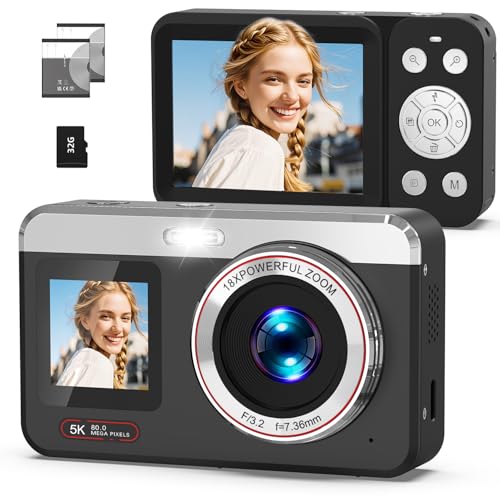
Hoorola CS05
$49.99
Spec Comparison
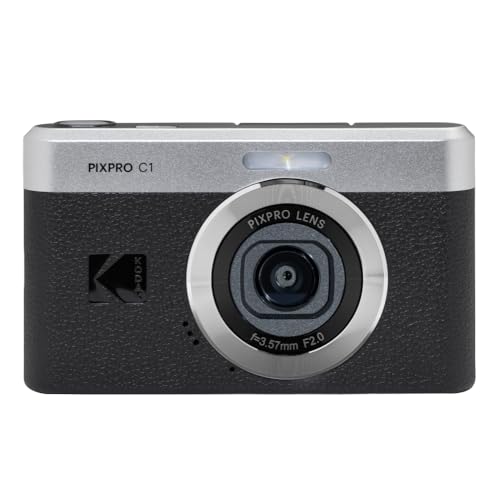
TL;DR: The Kodak PIXPRO C1 packs a 13.12 MP BSI sensor, f/2.0 26 mm lens and a 2.8″ flip‑up LCD into a 115 g pocket‑sized body for $99, making it a solid entry‑level option for casual shooters and vloggers.
At the heart of the C1 is a 13.12 MP 1/3″ backside‑illuminated CMOS sensor paired with a fixed f/2.0 aperture lens (3.57 mm focal length, 26 mm equivalent). The camera offers 4× digital zoom and records Full HD video at 1920×1080 px up to 60 fps. Its 2.8‑inch TFT LCD tilts 180° upward, turning the tiny body into a handy selfie‑vlog tool. The built‑in 700 mAh Li‑ion battery delivers roughly 1.5 hours of video recording and about 200 still shots per charge.
Compared with the other eleven contenders, the C1 is dramatically lighter than the Nikon COOLPIX P500 (1.09 lb) and slimmer than its 102.5 mm depth, yet it weighs a touch more than the Kodak EKTAR H35’s 0.22 lb frame. Its 4× digital zoom falls short of the Duluvulu DC101’s 16× zoom, and the 2.8‑inch screen is smaller than the Nikon’s 3.0‑inch display. The C1’s battery capacity is also lower than the Nikon’s 1100 mAh pack, but its USB‑C charging in just 2.5 hours keeps it ready for quick outings.
Reviewers consistently praise the flip‑up screen for making selfies and quick vlogs painless, and the f/2.0 lens delivers decent portraits in good light. Users love the pocket‑friendly 115 g weight, calling it “ideal for travel and kids.” However, the lack of any image‑stabilization system draws criticism for shaky video and blur in low‑light scenes. The LCD’s plastic hinge is fragile, and the absence of Wi‑Fi or Bluetooth means you’ll need a card reader to move files.
The C1’s technical toolbox includes ISO settings from 100 to 1600, shutter speeds from 1/10,000 sec to 2 sec, and a built‑in flash with auto, forced and off modes. It supports microSD cards up to 32 GB and features a standard 1/4″ tripod socket, giving you some flexibility for steady shots despite the missing stabilization.
Pros
Cons
Best for: Casual photographers, vloggers and social‑media creators who prioritize a tiny, retro‑looking camera with a flip‑up screen.
Avoid if: You need optical zoom, robust image stabilization, or built‑in wireless connectivity for fast sharing.
“Perfect for travel and daily memories — small and easy to carry.”
“Love the flip screen for selfies — makes vlogging so easy.”
TL;DR: The Nikon COOLPIX P500 packs a 36× optical zoom, 5‑way VR and a 3‑inch vari‑angle LCD into a 1.09‑lb body for $119, making it a solid budget bridge camera for reach‑hungry hobbyists.
The standout spec is its 36× optical zoom, covering a 22.5–810 mm 35 mm‑equivalent range, paired with 5‑way Vibration Reduction that helps keep images sharp even at full telephoto. The rear 3.0‑inch vari‑angle LCD offers 921,000 dots of resolution, so framing high‑zoom shots is easier than on many fixed‑screen rivals.
Compared with the other eleven cameras, the P500 is heavier than the ultra‑light Kodak PIXPRO C1 (0.247 lb) and Kodak WPZ2 (0.388 lb), but it's lighter than the Sony DSC‑H300 (1.31 lb). Its 36× optical zoom far exceeds the digital‑only 4× zoom of the Kodak PIXPRO C1, while the Sony H300 relies on extreme digital zoom that can reach 280× but sacrifices image quality. The P500’s digital zoom is modest at 4×, keeping the focus on its strong optical reach.
User feedback praises the long zoom and the effective stabilization, noting that the camera feels responsive with a 5 fps burst mode and a quick 5‑shot “full‑resolution” capture. Professional reviewers echo this, highlighting the “unmatched reach for its class” and the “fast operation with minimal shutter lag.” At the same time, many users point out that image quality drops at the extreme 810 mm end and at higher ISOs, and the 1/2.3‑inch sensor limits low‑light performance. The built‑in battery provides about 220 CIPA shots, which some consider modest for all‑day shooting.
Pros
Cons
Best for: Enthusiasts and hobbyists who need long reach for wildlife, sports, and travel photography, and who value a flexible LCD and built‑in stabilization.
Avoid if: You're a professional photographer demanding top‑tier image quality at extreme zoom or low‑light, or you need an ultra‑compact, lightweight camera for casual everyday shooting.
TL;DR: For $49.99 the Kodak EKTAR H35 delivers a lightweight, fully automatic half‑frame film experience with up to 72 shots per roll, but its acrylic lens and fixed focus limit creative flexibility.
The camera’s standout feature is its half‑frame 35 mm format, which squeezes 48 shots out of a 24‑exposure roll and up to 72 shots from a standard 36‑exposure roll. Priced at $49.99 and weighing just 0.220462262 pounds (about 100 g), it’s pocket‑sized enough to slip into a jean pocket. It uses a 22 mm fixed‑focus lens with a maximum aperture of f/9.5 and a shutter speed of 1/100 s, while the built‑in electronic flash fires when you twist the silver ring.
Compared with the other eleven cameras in this roundup, the EKTAR H35 is noticeably lighter than models such as the Camkory DC413, Fjfjopk DC402, and Camkory DC403, each of which tips the scales well above 0.5 pounds. It also carries fewer high‑tech specs—there’s no digital zoom, optical zoom, or screen—so it sits on the simpler end of the spectrum, which aligns with its fully automatic exposure control.
Reviewers consistently praise the camera for its beginner‑friendliness and the cost‑saving benefit of the half‑frame layout. Users love the retro look, the simplicity of a single‑button operation, and the built‑in flash that many find flattering for portraits. At the same time, professional opinions note that the acrylic plastic lens can produce soft images and flare, especially in back‑lit scenes, and the fixed focus limits creative control. Frequent flash use commonly drains the battery, another common complaint.
Technically, the camera supports ISO 200–400, a fixed focus range from 1 m to infinity (optimal 1–3 m), and manual film transport via a thumb wheel. The lack of a self‑timer or adjustable aperture means you’ll rely on the camera’s automatic exposure engine for most situations, which works best in well‑lit environments.
Pros
Cons
Best for: Beginners, students, teens, or anyone seeking an affordable, easy‑to‑use entry‑level film camera with high shot count per roll.
Avoid if: You need manual focus, adjustable aperture, or reliable low‑light performance, or if you’re an advanced photographer seeking higher optical sharpness.
“Perfect for film beginners”
“Love the 72 shots per roll”
TL;DR: The Aasonida DC506 delivers a 48 MP dual‑lens camera with instant black‑and‑white printing in just one second, all for a budget‑friendly $29.99.
Its 48 MP CMOS sensor paired with front‑ and rear‑facing lenses lets kids snap selfies and regular shots without swapping hardware. The built‑in thermal printer cranks out an 85 × 47 mm black‑and‑white photo in about 1 second, and the package even includes four rolls of non‑toxic paper plus a 32 GB microSD card that can hold over 2,500 images.
At $29.99, the DC506 is the most affordable option in this twelve‑product roundup. Its 16× digital zoom matches the Camkory DC403 and Fjfjopk DC402, but unlike those models it lacks an optical zoom stage. Weighing 450 g, it feels sturdier than the feather‑light Kodak EKTAR H35 yet it's lighter than the Camkory DC413, which tips the scales at over 0.7 lb. The 2.4‑inch fixed LCD also measures smaller than the 2.8‑inch IPS screen on the Fjfjopk DC402, making the Aasonida a truly ultra‑compact choice for small hands.
Professional reviewers praise the camera as a “creative educational tool” that combines photography, video, and instant printing, noting the carbon‑offset manufacturing as a sustainability plus. Everyday users echo this sentiment, highlighting the joy of on‑the‑spot prints and the rugged, child‑friendly design. Common complaints revolve around the black‑and‑white only output, the reliance on 16× digital zoom that can soften images, and a battery that lasts about 3–4 hours of continuous use.
Pros
Cons
Best for: Children aged 3–12 who want a hands‑on photography experience, parents seeking a screen‑free creative toy, and budget‑conscious families.
Avoid if: You need color prints, advanced connectivity like Wi‑Fi or Bluetooth, or professional‑grade image quality and optical zoom.
“"like a mini Polaroid."”
“"Parents and grandparents consistently rate it 4.4–5.0 stars across platforms."”
TL;DR: The Camkory DC403 packs a 44 MP sensor, 16× digital zoom and 1080p video into a 0.57‑lb body for just $39.99, making it a solid starter camera for kids and casual shooters.
The standout spec is the 44 MP CMOS sensor paired with a 12‑bit depth, which lets you capture highly detailed stills on a compact 1/1.8‑inch chip. It also offers 16× digital zoom, a 30 FPS burst mode, and 1080p Full HD video, and the 2.4‑inch color LCD displays them. The included 32 GB microSD card gives you plenty of room to experiment without buying extra storage.
At $39.99 the DC403 is cheaper than the Fjfjopk DC402, and its 0.57099724‑pound weight makes it lighter than that model’s 0.659‑pound build. It’s heavier than the ultra‑light Kodak EKTAR H35, but still easy to slip into a pocket. The 2.4‑inch screen is a touch smaller than Fjfjopk’s 2.8‑inch IPS panel, while the digital zoom matches the Aasonida DC506’s 16× capability. Compared with the LinSewsy DC065, the Camkory offers a larger sensor resolution (44 MP vs 44 MP but with more user‑friendly features) and a longer battery life of 30 days intermittent use.
Reviewers repeatedly praise the camera’s intuitive menu, the fun 20‑filter selection and the built‑in LED fill light that helps in modest lighting. Parents and teachers like the USB‑C rechargeable battery (20 g) and the fact that the device doubles as a webcam. On the downside, users note noisy, grainy images in dim settings and occasional freezes when toggling filters or zoom; professional reviewers label the low‑light performance “limited.” The single 1× optical zoom and lack of larger sensor size keep it firmly in the beginner category.
Pros
Cons
Best for: Children aged 5‑13, teens learning photography, families on travel, and educators needing a simple, portable camera.
Avoid if: You need professional‑grade performance, strong low‑light capability, or extensive optical zoom.
“Parents appreciate that it keeps kids off phones and fosters creativity.”
“The webcam function is praised for remote learning or video calls.”
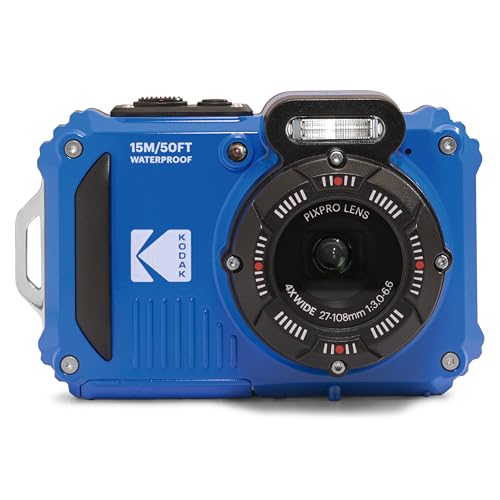
TL;DR: The Kodak WPZ2 delivers rugged waterproof performance to 15 m, a 16.35 MP sensor, and 4× optical zoom in a lightweight 176 g body for under $200.
The WPZ2 earns an IP6X dustproof rating, can survive drops from 2 m (6.56 ft), and stays operational down to 15 m (49 ft) underwater. Its 1/2.3‑inch BSI CMOS sensor captures 16.35 MP (4608 × 3456) stills, while the 4× optical zoom (27–108 mm equivalent) lets you frame subjects without sacrificing image quality.
At 0.388125 pounds (176 g), the camera is lighter than the Sony DSC‑H300 (1.31 lb) and Nikon COOLPIX P500 (1.09 lb), yet a touch heavier than the Kodak PIXPRO C1 (0.247 lb). This makes it comfortably portable for one‑hand use while still feeling solid enough for rugged activities.
Users praise the toughness and ease of snapping photos in wet conditions, but they note the 2.7‑inch LCD’s 230,000‑dot resolution can be dim in bright sunlight.
Battery life delivers roughly 200 shots per charge and 1 hr 10 min of video, which reviewers say feels short when Wi‑Fi is active. The camera records Full HD 1080 p video at 30 fps and can reach up to 120 fps at 640 × 480 for slow‑motion clips.
Pros
Cons
Best for: Casual travelers, families, and outdoor enthusiasts who need a waterproof, shock‑resistant point‑and‑shoot.
Avoid if: You need advanced features or professional‑grade performance.
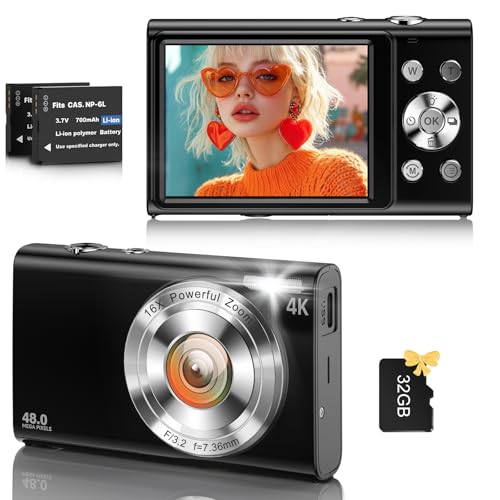
TL;DR: The Fjfjopk DC402 delivers 48 MP photos and 4K video at 30 FPS from a compact, lightweight body for just $46.99, making it a solid starter camera for vloggers on a budget.
What really sets the DC402 apart is its 48 MP effective still resolution paired with a 1/3.2‑inch CMOS sensor, letting you capture detailed images despite the modest price. The camera also records 4K video at 3840×2160 pixels and 30 FPS, and it also features optical image stabilization to smooth handheld shots.
Compared with the other eleven contenders, the DC402 sits in the middle of the weight range – it’s heavier than the ultra‑light Kodak EKTAR H35 (0.220 lb) and LinSewsy DC065 (0.24 lb), but lighter than the Camkory DC413 (0.730 lb) and a bit heftier than the Camkory DC403 (0.571 lb). Digital zoom appears across the lineup, with several peers also offering 16x digital zoom, so the DC402 doesn’t fall behind there. Where it shines is in the accessories bundle: a 32 GB SD card and two AA rechargeable lithium‑polymer batteries are included, giving it more out‑of‑the‑box power than the single‑battery Camkory DC413.
User feedback highlights the camera’s surprising image quality and the convenience of USB‑C webcam mode for live streaming. Reviewers love the lightweight 0.659 lb body and the ease of switching between stills and 4K video. However, many note that autofocus can be sluggish in low light, and the 16x digital zoom introduces noticeable softness. Reviewers describe the plastic enclosure as “cheap‑feel,” and the lack of an external microphone input or Wi‑Fi limits its flexibility for serious audio work.
Pros
Cons
Best for: Entry-level buyers or those on a tight budget
Avoid if: You want the best value‑per‑dollar in its price range
“really happy”
“Image and video quality described as “surprisingly good” for casual use”
TL;DR: The Duluvulu DC101 delivers 4K video, a 48 MP daylight photo mode, and a 180° flip screen at $58.97, packing dual batteries and a 32 GB SD card into a compact 0.59‑lb body.
What really stands out is the 4K video capability at 4096×2160 pixels and a maximum photo resolution of 48 MP, both driven by an 8 MP CMOS sensor that can be interpolated up to 44 MP. The 180° flip IPS LCD measures 3.0 in, making self‑recording effortless, while the camera ships with two rechargeable lithium‑ion batteries and a 32 GB SDHC card.
At 0.59 lbs, the DC101's heavier than the Kodak EKTAR H35 (about 0.22 lbs) but it's lighter than the Camkory DC413 (around 0.73 lbs). Its 16X digital zoom matches the zoom range of the Camkory DC413, LinSewsy DC065, Fjfjopk DC402, and Camkory DC403, yet none of those models list an optical zoom. The dual‑battery setup outpaces the Camkory DC413, which includes only one battery, and mirrors the Fjfjopk DC402’s two‑battery package. The included 32 GB SD card also mirrors the Fjfjopk DC402’s starter kit, while the 3.0‑in screen is slightly larger than the Fjfjopk’s 2.8‑in display.
Reviewers praise the camera’s ease of use, especially the flip screen for vlogging and the value of the all‑in‑one kit. They note that daylight shots look sharp, and the 4K footage holds up well for casual creators. Common complaints focus on noisy images in low‑light settings, noticeable quality loss when using the 16X digital zoom, and a basic digital anti‑shake that struggles with fast motion. Reviewers also describe the AVI video files as large and a bit unwieldy to edit.
From a technical standpoint, the lens offers a fixed aperture of F/3.2 and a 75° field of view, with exposure compensation of ±3.0 EV. The camera supports a range of photo resolutions—from 48 MP down to 7 MP—plus features like time‑lapse, slow‑motion, smile detection, and a 180° flip screen. Connectivity includes HDMI output, a standard 1/4‑inch tripod thread, and a USB‑C port for charging and webcam mode.
Pros
Cons
Best for: Beginner vloggers, TikTok creators, and travelers who want a ready‑to‑use 4K camera without extra accessories.
Avoid if: You need advanced low‑light capability, optical zoom, or professional‑grade video stabilization.
“Perfect for my 13-year-old daughter’s YouTube channel.”
“The flip screen makes vlogging so easy.”
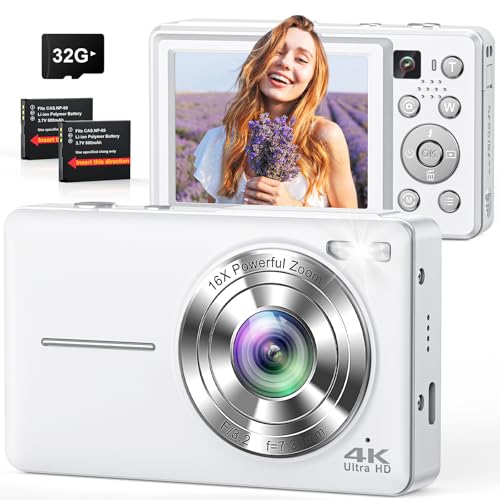
TL;DR: The Camkory DC413 delivers 64 MP photos and 4K video in a compact, lightweight body for under $50, making it a solid entry‑level option for beginners and casual vloggers.
At the heart of the DC413 is a 64 MP CMOS sensor paired with a macro lens, letting you capture highly detailed stills. It records video at 3840×2160 resolution and 30 fps, and the 3‑inch fixed LCD lets you frame shots easily. Weighing 0.72973008722 lb and measuring 84 mm × 90 mm, it’s small enough for a backpack but still feels solid in hand.
Price‑wise it sits in the same $49.99 tier as the Kodak EKTAR H35 and LinSewsy DC065, yet it’s noticeably heavier than the Kodak (0.220462262 lb) and LinSewsy (0.24 lb) models. Compared with the Fjfjopk DC402 (0.65918216338 lb) and the Camkory DC403 (0.57099724 lb), the DC413 weighs more than the others, which some users see as a trade‑off for its larger 64 MP sensor.
Reviewers appreciate the beginner‑friendly interface, the included 32 GB micro‑SD card and extra rechargeable battery, and the crisp daylight images. However, the lack of optical zoom (only 16× digital zoom) and the thin plastic construction attract criticism, especially in low‑light situations where grain and blurry video are common complaints.
Pros
Cons
Best for: Budget‑conscious buyers seeking a reliable entry‑level option
Avoid if: You need advanced features or professional‑grade performance
“made of paper‑thin plastic”
“Easy to use, especially for teens and first‑time camera owners.”
TL;DR: The Sony DSC‑H300/BM packs a 35× optical zoom (25–875 mm equivalent) and a 20.1 MP CCD sensor into a 1.31 lb body for $187.25, but it skips Wi‑Fi, a viewfinder, and RAW capture.
What really stands out is the 35× optical zoom that reaches 25–875 mm (35 mm‑equivalent) and the 20.1 MP CCD sensor. Optical SteadyShot helps keep images sharp even at the tele end, and the camera can still crank out stills at up to 280× digital zoom when you need extra reach.
At $187.25 it sits above the Kodak WPZ2’s $159.00 price tag and is heavier than the Nikon COOLPIX P500’s 1.09 lb chassis, but it offers far more zoom power than the Kodak PIXPRO C1, which only lists a 4× digital zoom and no optical zoom. Compared with the ultra‑light Kodak EKTAR H35 (around 0.22 lb), the H300 is noticeably bulkier, which is typical for a bridge‑style camera with a large lens assembly.
Reviewers consistently praise the long zoom range and the built‑in Optical SteadyShot, noting that the camera delivers decent 20 MP prints for casual trips. The downside that shows up again and again is the lack of wireless options—no Wi‑Fi, Bluetooth, or NFC—making photo sharing a manual process. Users also mention that the 2.95‑in LCD can be hard to read in bright sunlight, and the absence of RAW files limits post‑processing flexibility.
On the practical side, the H300 runs on four AA cells (alkaline, Ni‑MH, or lithium), giving you 175 minutes of shooting time or about 350 shots before you need to recharge or replace them. Internal memory holds roughly 55 MB, so a memory card is essential for longer outings. Video recording tops out at 1280×720 px for up to 29 minutes, and the continuous‑shoot mode reaches 0.80 fps for a maximum of 100 shots.
Pros
Cons
Best for: Casual travelers, hobbyists, and beginners who want a long‑reach zoom camera and don’t mind manual sharing.
Avoid if: You need fast burst shooting, RAW files, or built‑in wireless connectivity for quick sharing.
TL;DR: The LinSewsy DC065 delivers a 44 MP sensor, 16× optical zoom and 2160p video in a compact body for $49.99, making it a solid entry‑level option for kids and beginners.
The standout spec is the 44 MP effective still resolution paired with a 1/2.5‑inch CMOS sensor, letting you capture detailed photos even at the budget tier. It also records 2160p (4K UHD) video at 24 fps and offers a full 16× optical zoom, which is rare for cameras under $200. Dual lithium‑ion batteries (2 cells, each 10 g) and a built‑in 32 GB SD card mean you can shoot for longer without scrambling for extra power or storage.
Compared with the other eleven cameras in this roundup, the DC065 is a bit heavier than the Kodak EKTAR H35 (0.24 pounds vs 0.220462262 pounds) and noticeably larger than Kodak’s 65 mm height and 45 mm width. It is lighter than the Camkory DC413, which tips the scales at about 0.73 pounds, and also slimmer than the Fjfjopk DC402 that weighs roughly 0.66 pounds. In terms of screen size, its 2.4‑inch IPS display is smaller than Fjfjopk’s 2.8‑inch panel, but still adequate for framing shots.
Reviewers appreciate how the camera’s simple menus and physical buttons make it kid‑friendly, and the included accessories—especially the 32 GB SD card and lanyard—add real value. However, users consistently note that the digital‑only image stabilization can produce blurry results when shooting moving subjects, and the single autofocus point struggles in low‑light scenes, leading to grainy images. Professional reviewers also point out that the lack of optical stabilization limits the high‑resolution sensor.
Technical details round out the picture: an ISO range that expands to 25600, a shutter speed as fast as 1/10,000 s, and a continuous shooting burst of 30 fps give you flexibility in bright conditions. The camera also supports a range of shooting modes—portrait, macro, time‑lapse and slow‑motion—plus smile recognition and creative filters, which can keep younger users engaged.
Pros
Cons
Best for: Entry-level buyers or those on a tight budget
Avoid if: Reliability and user satisfaction are your top concerns
“low quality”
“great gift for children”
TL;DR: The Hoorola CS05 costs $49.99, carries a 4.8‑star rating from 178 reviewers, and is praised for its ease of use and dual screens, though users note limited low‑light performance and a confusing “5K” label.
Hoorola offers the compact CS05, placing it at the budget end of the twelve‑product roundup. Priced at $49.99, it’s the most affordable option, and its 4.8‑star rating puts it near the top of the consumer sentiment chart despite its low ranking in the total score.
Reviewers appreciate the beginner‑friendly interface, the rear and front screens that simplify solo shooting, and the fact that it arrives with batteries, a memory card and a cable ready to go. Common criticisms target the lack of optical zoom, a small sensor that struggles in dim environments, marketing that suggests “5K” video even though the actual output is lower, and a storage limit that feels restrictive for longer recordings. Battery life varies depending on how you use the camera.
Within the lineup, the CS05 stands out for its low price and strong user rating, but it sits at the bottom of the total scoring, indicating that while it delivers good value for entry‑level users, more advanced shooters may look elsewhere.
Pros
Cons
Best for: Entry-level buyers or those on a tight budget
“No reviews yet”
Breakdown
Kodak PIXPRO C1
Pros
Nikon COOLPIX P500
Pros
Aasonida DC506
Pros
Based on scoring data and product specs
Personalized picks
Best Overall Pick
Kodak PIXPRO C1
Best OverallBest for: Audiophiles and enthusiasts seeking premium sound quality and advanced features
Nikon COOLPIX P500
Best for: Audiophiles and enthusiasts seeking premium sound quality and advanced features
$119.00+$20.00 vs winner
Skip Hoorola CS05 if…
You're shopping on a tight budget — it's priced at $49.99
The Kodak PIXPRO C1 takes the top spot with a solid 4.3‑star rating from 721 reviewers, a compact 0.247‑pound body and a budget‑friendly $99.00 price tag. Its 13.12 MP backside‑illuminated sensor paired with a fast f/2.0 aperture delivers bright stills, while the built‑in 700 mAh Li‑ion battery gives roughly 200 shots per charge and recharges via USB‑C in just 2.5 hours. The 2.8‑inch TFT LCD (230,000‑dot resolution) tilts upward for easy framing, making it a well‑rounded choice for everyday shooting.
The Nikon COOLPIX P500 lands as the runner‑up, perfect if you need serious reach for travel or action photography. Its 36× optical zoom (22.5–810 mm equivalent) and 5 fps burst mode let you’ll capture distant subjects with clarity, and the 3.0‑inch vari‑angle LCD (921,000‑dot resolution) makes composing from odd angles a breeze. With a 12.1 MP BSI sensor, 5‑way VR image‑sensor shift stabilization, and a 4‑hour‑50‑minute charge time for the 1100 mAh battery, it balances power and flexibility for the $119.00 price.
For shoppers who want alternatives at different price points, consider these options:
Pick the Kodak PIXPRO C1 for the best value and you’ll start shooting today.
The Kodak PIXPRO C1, priced at $99, offers a solid 13 MP sensor, f/2.0 aperture, 4× digital zoom and a lightweight 115 g body, making it the most cost‑effective choice in the lineup.
Please sign in to leave a review
No reviews yet. Be the first to review!
