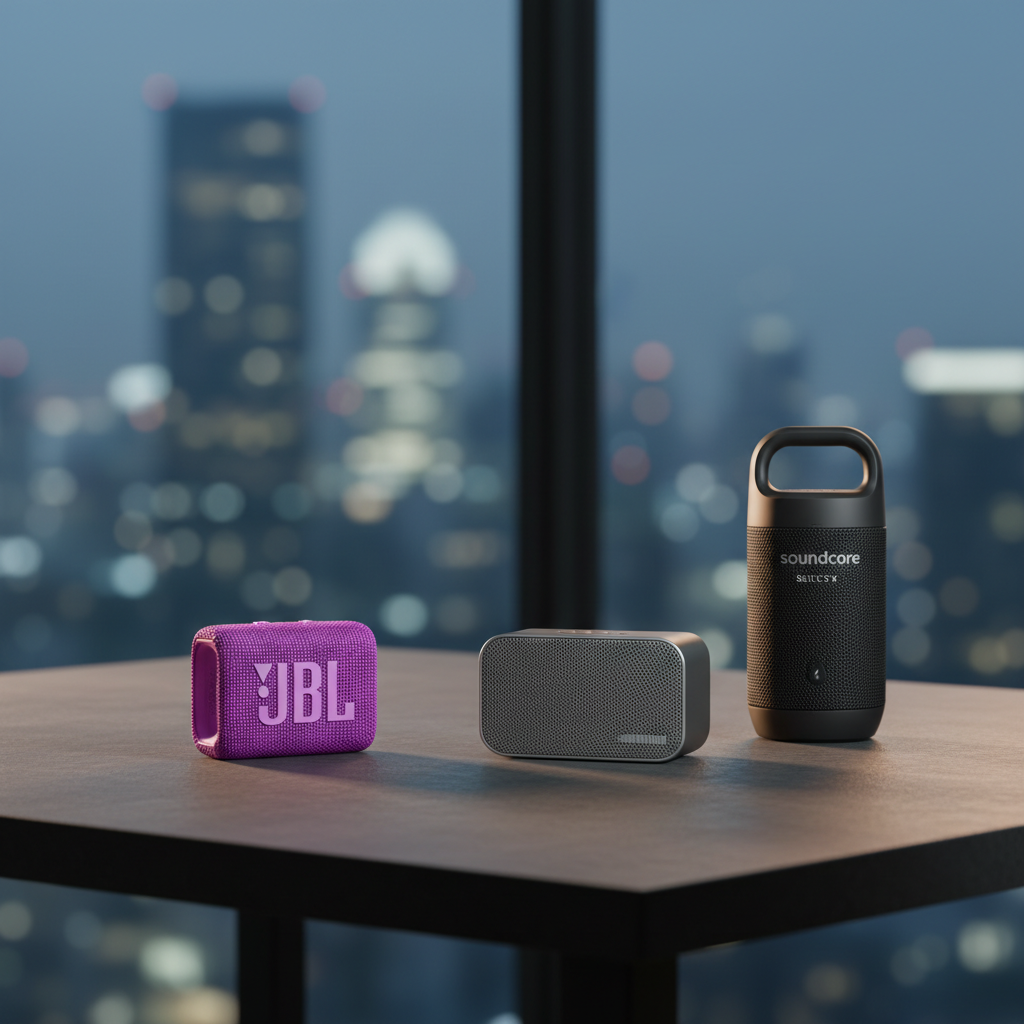
If you’re hunting for a portable speaker that won’t bust your budget, you’ve come to the right place. We’ve lined up 11 Bluetooth speakers that sit under $100, spanning three price tiers so you can see how the budget, mid‑range and premium options differ. Whether you need a pocket‑size companion for a commute or a rugged little box for the campsite, there’s a model here that matches the use‑case.
At the low end, the Soundcore Select 4 Go grabs attention with a $24.99 price tag, a 4.6‑star rating from over 9,000 reviewers and a claimed 20‑hour battery life, enough for a full day of hiking. The Anker Soundcore A3102 pushes that endurance to 24 hours for $22.99, while the JBL Go 4 Purple offers JBL Pro Sound, an IP67 rating and up to 9 hours of playtime for $44.95, and it earned a 4.8‑star score. If you’re willing to stretch to $89.00, the Bose SoundLink Micro brings IP67 protection and a 4.7‑star rating, but its 6‑hour battery ranks as the shortest among the group.
Below you’ll find a quick look at each speaker’s strengths and the scenarios where they shine, so you can pick the right sound companion without guessing.

JBL Go 4 Purple
Its 45 mm driver provides clear mids and punchy sound, giving a solid audio experience for the price.

Soundcore Select 4 Go
Ideal for students packing a dorm bag, it’s $24.99—about $20 less than the JBL Go 4, keeping basics simple.
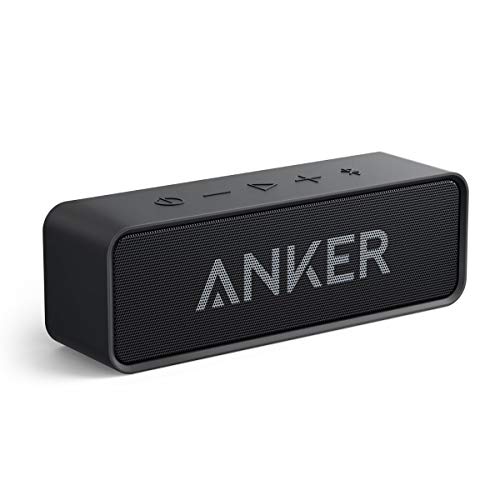
Anker Soundcore A3102
With its 6 W RMS output and 4400 mAh battery, you can play louder longer, a stamina edge the other two lack.
Also considered
Score Analysis
Key score advantages vs. runner-up (Soundcore Select 4)
Price Range
JBL Go 4 Purple
$49.95
Soundcore Select 4 Go
$24.99
Anker Soundcore A3102
$24.99

Soundcore Anker 3
$59.99

Bose SoundLink Micro
$87.69

Tribit XSound Go
$29.98

Tribit StormBox Micro 2
$59.99

Soundcore Motion 300
$79.99

Sony SRS-XB100 Wireless Bluetooth Portable Lightweight
$63.00
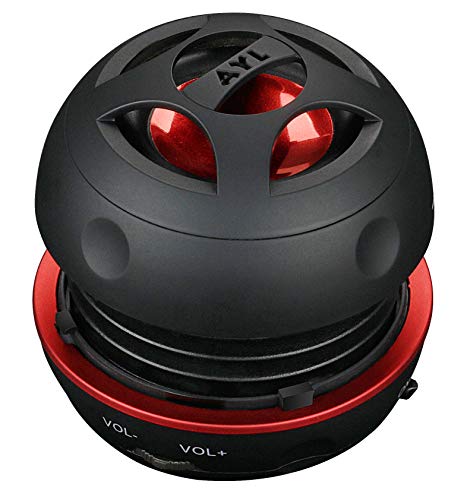
AYL Mini Speaker
$19.99

Sony ULT Field 1 Waterproof Portable Bluetooth Speaker, Enhanced Bass
$69.95
Spec Comparison
TL;DR: For $44.95, the JBL Go 4 delivers JBL Pro Sound with a 45 mm driver, IP67 durability, 7 hours of playtime, and a feather‑light 190 g body, earning 4.8‑star praise from over 14 k reviewers.
The Go 4’s standout spec is its IP67 waterproof and dustproof rating, a rarity in the sub‑$100 segment, paired with a 45 mm driver that outputs 4.2 W RMS and a signal‑to‑noise ratio of >85 dB. Its 850 mAh Li‑ion polymer battery provides 7 hours of standard playback, and a USB‑C charger tops up the unit in just 3 hours.
Compared with the other ten speakers, the Go 4 is lighter than the 0.84‑lb Tribit XSound Go, the 0.82‑lb Soundcore Anker 3, the 0.79‑lb Anker Soundcore A3102, and the 0.6‑lb Tribit StormBox Micro 2, weighing in at only 190 g (0.4188782978 lb). Its depth of 94.0 mm is slightly shallower than Sony’s 96.52 mm SRS‑XB100, and its width of 43.2 mm is far narrower than Sony’s 112.14 mm. Battery life at 7 hours trails Sony’s 16 hours, Tribit’s 24 hours, Soundcore’s 24 hours, and Soundcore Select 4 Go’s 20 hours, but the Go 4 charges faster than Sony (4.5 h), Tribit (5 h), Soundcore (4 h), and StormBox Micro 2 (3.5 h). Bluetooth 5.3 matches Sony and Tribit, while most rivals use 5.0.
Reviewers consistently applaud the Go 4’s rugged build and surprisingly full sound for its palm‑sized frame, noting the enhanced bass punch that exceeds expectations for a 45 mm driver. The JBL Portable app adds EQ customization and Auracast™ multi‑speaker linking; professional reviewers cite this as a modern connectivity perk. Common complaints focus on the lack of a 3.5 mm auxiliary input, a modest 7‑hour battery compared with longer‑lasting rivals, and occasional Bluetooth hiccups when Playtime Boost runs.
Pros
Cons
Best for: Travelers, commuters, outdoor enthusiasts, students, and eco‑conscious buyers who need a compact, rugged speaker with solid sound.
Avoid if: You need to fill large rooms, require a 3.5 mm aux input, or want longer than 7 hours of battery life.
TL;DR: The Soundcore Select 4 Go packs a 45 mm driver, IP67 waterproofing and a 20‑hour battery into a 0.58125‑pound, floatable speaker that stays affordable at $24.99.
At the heart of the Select 4 Go is a 45 mm dynamic driver delivering 5 W of mono power, while the 85 dB signal‑to‑noise ratio keeps hiss to a minimum. The speaker’s IP67 rating means you can dunk it up to 1 meter for 30 minutes and it will float if it lands in water – a rare combination for a budget model. Weighing just 0.58125 pounds and measuring 48 mm × 120 mm × 82 mm, it’s small enough to slip onto a backpack strap without adding bulk.
Compared with the other ten entries, the Select 4 Go is lighter than the Anker Soundcore A3102 (0.79 pounds) and Tribit XSound Go (0.84 pounds) but a bit heftier than the ultra‑light AYL Mini (0.1875 pounds). Its 20‑hour battery outlasts the AYL Mini’s 10 hours while falling just short of the A3102 and Tribit’s 24‑hour claims. The 30‑meter Bluetooth range matches the Tribit’s reach and beats the A3102’s 20 m and Sony’s 10 m, thanks to Bluetooth 5.4. The driver is larger than the AYL’s 40 mm unit, giving it a fuller low‑end punch.
Reviewers consistently praise the speaker’s ruggedness – the floatable design and IP67 rating earn high marks for shower, pool‑side and camping use. Users love the 20‑hour playtime and the ability to fine‑tune sound with the 9‑band EQ in the Soundcore app. Professional reviewers note the long battery and waterproofing as standout features, though they flag the rubber feet that can detach and the unlit physical buttons as minor annoyances. The mono output limits true stereo immersion, which audiophiles may find disappointing.
The battery is a 2400 mAh rechargeable lithium‑ion cell that reaches full charge in 4.5 hours via the included 30 cm USB‑A‑to‑USB‑C cable. Bluetooth 5.4 ensures a stable connection, and TWS pairing lets you link two speakers for a pseudo‑stereo setup. The 9‑band EQ and bass‑boost options give you control over the sound profile without needing external gear.
Pros
Cons
Best for: Shower enthusiasts, hikers, campers, travelers, gym‑goers and students who need a rugged, long‑lasting speaker on a budget.
Avoid if: You prioritize premium build quality, backlit controls, or a true stereo soundstage for high‑fidelity listening.
TL;DR: The Anker Soundcore A3102 delivers 24‑hour playback, IPX5 splash protection, and BassUp‑enhanced sound for just $22.99, making it a solid entry‑level Bluetooth speaker.
This compact speaker packs a 4400 mAh lithium‑ion battery that the manufacturer says lasts up to 24 hours of continuous music, and it recharges in a full 24 hours via its 5 V micro‑USB port. Its 6 W RMS output pairs with dual high‑sensitivity drivers and a patented spiral bass port, which BassUp technology uses to boost low‑end response without enlarging the chassis. At 48 mm tall, 165 mm long, and 53 mm wide, the unit weighs just 380 g (0.79 lb), and it meets an IPX5 water‑resistance rating, so a spill or light rain won’t shut it down.
Compared with other budget options in this roundup, the A3102 is heavier than the Soundcore Select 4 Go (which weighs 0.58125 lb) but lighter than the Tribit XSound Go (0.84 lb). Its 24‑hour battery life exceeds the Select 4 Go’s 20 hour claim, matching the Tribit’s 24‑hour figure. However, its Bluetooth range of 20 m falls short of the 30 m range listed for both the Select 4 Go and the Tribit XSound Go. The speaker’s 6 W RMS output also edges out the Select 4 Go’s 5 W, though it sits below the higher‑output models like the Soundcore Anker 3.
Users consistently praise the A3102’s “rich, clear stereo sound” and the durability that comes with its IPX5 rating. Professional reviewers highlight the sub‑1 % total harmonic distortion even at higher volumes, noting the spiral bass port’s ability to deliver “deep, satisfying bass.” The most common complaint is the very slow 24‑hour charging cycle, which many describe as “impractical for frequent use.” Reviewers also mention that the BassUp effect can sound “over‑processed” for some listeners, and the reliance on a micro‑USB charger feels dated in a USB‑C world.
Beyond sound, the speaker includes a built‑in microphone for hands‑free calls and offers touch or physical button controls. The 12‑month limited warranty adds a layer of confidence from the Anker brand, which is well‑known for reliable accessories.
Pros
Cons
Best for: Budget‑conscious buyers seeking a reliable entry‑level option
Avoid if: You need fast charging, USB‑C connectivity, or premium‑level sound fidelity for high‑volume listening.
“Battery life is impressive and reliable for camping trips.”
“Charging takes forever – 24 hours is impractical.”
TL;DR: The Soundcore Anker 3 delivers 16 W stereo sound, IPX7 waterproofing and a 24‑hour battery life for $59.99, making it a solid mid‑range portable speaker.
What really sets this speaker apart is its 16 W total output power combined with a 6,700 mAh battery that promises up to 24 hours of continuous play. Bluetooth 5.0 gives a reliable 10 m range, and the 4 Ω impedance helps keep the sound clear even at higher volumes. The rectangular prism measures 175 mm tall, 61 mm long and 56 mm wide, and it weighs 0.82 pounds (372 g), giving it a sturdy feel without being bulky.
Compared with the other ten entries, the Anker 3 is heavier than the Tribit StormBox Micro 2 (0.6 lb) but still lighter than the Soundcore Motion 300 (1.71 lb). Its 24‑hour playtime dwarfs the JBL Go 4’s 7‑hour standard runtime and the Sony SRS‑XB100’s 16‑hour claim. It also outlasts the Sony SRS‑XB100’s 10 m Bluetooth range, matching the Tribit StormBox Micro 2’s 30 m range only in connectivity stability, not distance. In height, it is taller than the Sony model’s 3.0 in, and its width exceeds the Tribit StormBox Micro 2’s 3.870 in, giving it a more substantial acoustic cavity.
Reviewers consistently praise the IPX7 waterproof rating and the BassUp technology that adds noticeable low‑end punch for a speaker of this size. Professional reviewers highlight the rugged silicone finish and the ease of touch‑button control. The only recurring complaint is audio distortion when cranking the volume, especially on bass‑heavy tracks. Users also note that the speaker’s Bluetooth latency is low enough for casual video watching, which aligns with the “reduced latency” comment from experts.
On the technical side, the unit features dual passive radiators, a pure‑titanium diaphragm, and a frequency response that spans 120 Hz to 13 kHz. The Soundcore app lets you tweak a custom EQ, and PartyCast lets multiple speakers sync for a bigger soundstage. The USB‑C port handles charging, and a full charge takes 4 hours.
Pros
Cons
Best for: Home and office users seeking a balance of features and value
Avoid if: You're shopping on a tight budget — it's priced at $59.99
“Great sound for the price”
“Battery lasts forever”
TL;DR: The Bose SoundLink Micro delivers rich, bass‑forward sound in a rugged, IP67‑rated pocket size, but its $89 price and six‑hour battery may feel premium for budget shoppers.
This speaker’s standout spec is its IP67 waterproof and dustproof rating, meaning it can survive full submersion up to 1 meter for 30 minutes while keeping the rubberized silicone exterior intact. Combined with a built‑in microphone and voice‑assistant access, it doubles as a speakerphone for on‑the‑go calls.
Compared with the other ten entries, the SoundLink Micro is lighter than the 1.71‑pound Soundcore Motion 300 but heavier than the 0.6‑pound Tribit StormBox Micro 2 and the 0.418 pound JBL Go 4. Its six‑hour battery life is shorter than the Motion 300’s 13 hours, the Tribit’s 8 hours, and the Sony ULT Field 1’s 12 hours, yet matches the lower end of the range for this price tier. Bluetooth range sits at up to 30 ft (9 m), which is comparable to the Tribit’s 30 m claim and shorter than the Sony ULT’s 30 m specification.
Users repeatedly praise the speaker’s “surprisingly rich, bass‑forward sound” given its single mono driver and dual passive radiators, noting that it outperforms many larger rivals in clarity. The integrated tear‑resistant silicone strap earns frequent mentions for keeping the unit secure on bikes, backpacks, or beach coolers. Professional reviewers echo these points, highlighting the sound quality as “strong for its size.” On the downside, reviewers flag the $89 price as high relative to cheaper options, the six‑hour playtime as modest, and the mono output as limiting for stereo‑seeking listeners. The Micro‑USB charging port also feels dated compared with newer USB‑C solutions.
Technical details round out the picture: the speaker measures 99 mm × 99 mm × 35 mm (3.9 × 3.9 × 1.4 in), weighs 0.75 lb (340 g), and stores up to eight paired devices. It offers Bluetooth A2DP connectivity with a range of up to 30 ft, and a charging time of roughly 3–4 hours. Bose backs the unit with a one‑year warranty.
Pros
Cons
Best for: Buyers willing to invest in a proven, high‑quality option
Avoid if: You're shopping on a tight budget — it's priced at $89.00
“very fantastic”
“portable”
TL;DR: The Tribit XSound Go packs an IPX7 waterproof rating, 24‑hour battery life and Bluetooth 5.3 into a compact 0.84‑pound speaker, making it a solid budget pick for on‑the‑go listening.
The standout spec is its IPX7 waterproof certification, meaning the speaker can be fully submerged for short periods without damage. Coupled with a 4000 mAh battery that the manufacturer claims lasts up to 24 hours, you can take it from the shower to a day‑long hike without worrying about power.
Compared with the other ten entries, the XSound Go is a bit heavier than ultra‑light options like the JBL Go 4 and Soundcore Select 4 Go, but its weight is comparable to the Soundcore Anker 3 and only slightly above the Anker Soundcore A3102. Its 24‑hour runtime matches the two Anker models that also claim 24 hours, and it exceeds the Sony SRS‑XB100 (16 hours) and JBL Go 4 (7‑9 hours). The 5‑hour charging time is quicker than the Anker Soundcore A3102’s 24‑hour charge but slower than JBL Go 4’s 3‑hour charge. With Bluetooth 5.3 and a 30 m open‑space range, it reaches farther than the Sony and Soundcore Anker 3, and it ties the range of the Soundcore Select 4 Go.
Users consistently praise the speaker’s durability and the convenience of the built‑in lanyard, especially for shower or outdoor use. Professional reviewers note the “strong audio output for its size and price” and “clean audio at high volumes,” while also calling out thin bass and modest maximum loudness. The built‑in microphone is functional, but several reviewers mention that speakerphone clarity may sound muffled.
Pros
Cons
Best for: Budget-conscious buyers seeking a reliable entry-level option
Avoid if: You want the best value-per-dollar in its price range
“Lasts all day at the beach — I used it for 18 hours straight and still had battery.”
“Perfect for the shower — sounds great and survived full submersion.”
TL;DR: The Tribit StormBox Micro 2 packs a rugged IP67‑rated, 9 W mono driver into a 0.6 lb shell, offering 8 hours of playback, Bluetooth 5.0 multipoint and a built‑in strap for outdoor use.
The standout spec is its IP67 waterproof and dustproof rating, meaning it can survive full submersion and sandy conditions while still delivering up to 90 dB SPL from a single 9 W full‑range driver. At just 0.6 lb, it’s light enough to clip onto a bike or backpack, and the USB‑C port refills the battery in 3.5 hours.
Compared with the other ten speakers, the StormBox Micro 2 sits in the middle of the power spectrum: its 9 W output outpaces the JBL Go 4’s 4.2 W but falls short of the Soundcore Anker 3’s 16 W and the Motion 300’s 30 W. It’s lighter than the 0.82‑pound Soundcore Anker 3 and the 1.71‑pound Motion 300, yet a bit heavier than the 0.42‑pound JBL Go 4. Its 8‑hour battery lasts shorter than the 24‑hour playtime of the Soundcore Anker 3 and the Tribit XSound Go, but lasts longer than the 7‑hour baseline of the JBL Go 4. Its 30 m Bluetooth range matches the Sony ULT Field 1 and exceeds the 10 m range of the Soundcore Anker 3 and Sony SRS‑XB100.
Professional reviewers praise the speaker’s “rich, balanced sound with deep bass for its size,” and users frequently mention the handy built‑in stretchy strap for hikes or bike rides. The consensus is that the audio punches above its compact dimensions, though several users note distortion when cranked to maximum volume and wish for AAC codec support on iOS devices. Consumers also note the lack of a 3.5 mm auxiliary jack.
Pros
Cons
Best for: Outdoor enthusiasts who need a rugged, waterproof speaker with a built‑in strap and solid sound in a pocket‑sized package.
Avoid if: You demand ultra‑long battery life, high‑resolution codecs, or a wired 3.5 mm input for audiophile‑level listening.
TL;DR: The Soundcore Motion 300 packs 30 W of stereo output, 48 mm drivers and IPX7 waterproofing into a 1.71‑pound, 13‑hour battery‑powered package for under $100.
The standout spec is its 30 W total output powered by dual 15 W full‑range 48 mm drivers and a 100 mm passive radiator, delivering loud sound for its compact size. The built‑in LDAC codec lets you stream Hi‑Res audio, and a 220 ms audio latency keeps video sync decent for casual viewing.
At 1.71 pounds (776 g), the Motion 300 is heavier than the Bose SoundLink Micro (0.75 lb) and Tribit StormBox Micro 2 (0.6 lb), yet still portable enough for a backpack. Its 13‑hour battery life outlasts the Bose’s 6‑hour claim and the Tribit’s 8‑hour runtime, though it doesn’t reach the Soundcore Anker 3’s 24‑hour playtime. Wireless range of 100 meters exceeds Sony’s listed 30‑meter range for the ULT Field 1 and the Soundcore Anker 3’s 10‑meter range, giving you more freedom to move around.
Reviewers consistently praise the Motion 300’s loud, clear audio and reliable IPX7 waterproof rating, noting it survives beach trips and showers without a hiccup. Professionals highlight the LDAC support as a rare feature at this price tier, while everyday users love the Soundcore app’s 9‑band EQ and the on‑device BassUp button—though many mention the bass can get thin or distorted when cranked too high. The lack of an auxiliary input and occasional LDAC dropouts in crowded Bluetooth environments are the most common complaints.
Pros
Cons
Best for: Buyers willing to invest in a proven, high-quality option
Avoid if: You're shopping on a tight budget — it's priced at $79.99
“Loud and clear sound for such a small speaker.”
“Love the waterproof feature—use it in the shower daily.”
TL;DR: The Sony SRS‑XB100 packs a 16‑hour battery, IP67 waterproofing, and a 5 cm driver into a 275‑gram, ultra‑portable speaker for just $43, making it a solid budget pick for travel.
The standout spec is its IP67 rating, letting it survive up to 1 meter of water for 30 minutes while staying dust‑proof. Combined with a 16‑hour battery life and a 4.5‑hour charging time, you can keep it running all day on a single charge.
At 275 grams, it’s lighter than the Tribit XSound Go (0.84 Pounds) but a bit heavier than the JBL Go 4 (0.4188782978 pounds). Its 16‑hour playtime sits between the shorter 7‑hour run of the JBL Go 4 and the 24‑hour endurance of the Tribit XSound Go and Soundcore Anker 3. The 10‑meter Bluetooth range matches the Soundcore Anker 3 but falls short of the 30‑meter ranges listed for the Tribit XSound Go, Soundcore Select 4 Go, and Tribit StormBox Micro 2.
Users consistently praise the tiny speaker’s rich, crisp sound and the clear speakerphone with echo cancellation, while noting the lack of a companion EQ app and a short 1‑foot charging cable. Professional reviewers also highlight the balanced audio and durable design, though they point out limited low‑end bass below 100 Hz.
Under the hood, the SRS‑XB100 runs Bluetooth 5.3 with SBC and AAC codecs, features an upward‑firing 5 cm dynamic driver, and delivers 2 Watts of power. Review aggregators typically rate it around 4 out of 5, underscoring its solid performance for the price.
Pros
Cons
Best for: Travelers and backpackers who need a lightweight, waterproof speaker that delivers solid sound without breaking the bank.
“So small but sounds amazing for its size”
“Perfect for travel, beach, or shower”
TL;DR: For just $19.99, the AYL Mini Speaker offers a 40 mm driver, 10‑hour battery life, and a twist‑out bass resonator in an ultra‑light 85 g, pocket‑sized package.
The AYL Mini’s most distinctive feature is its accordion‑style bass resonator that expands from a 37 mm collapsed height to 70 mm when twisted, giving a modest boost to low‑end response. It packs a 40 mm driver and delivers 3 Watts of power, while the 400 mAh battery promises up to 10 hours of playback after a quick 2‑hour charge. At just 85 g (0.1875 lb) and with a depth of 58.4 mm, it truly fits in a pocket or a small backpack.
When you line it up against the other ten speakers in this roundup, the AYL is the lightest option and the most affordable, undercutting models that weigh several hundred grams. However, it also lacks Bluetooth connectivity that most peers provide, and its 3 W output is lower than the 5‑6 W found in several competitors. In short, you get a simpler, wired experience at a budget‑friendly price.
Reviewers consistently praise the speaker’s clear mids and highs, noting that the sound feels surprisingly clean for its size. Professional reviewers highlight the long 10‑hour battery life and the three‑year warranty as confidence‑boosters. On the flip side, users frequently mention that the bass stays thin even with the resonator fully extended, and charging each unit individually when daisy‑chaining can be a hassle. The lack of water‑resistance also means it’s best kept dry.
Pros
Cons
Best for: Travelers, backpackers, and digital nomads who need a pocket‑sized speaker with long battery life and clear mids.
Avoid if: You prioritize deep bass, require Bluetooth or water‑resistance, or need a speaker for high‑energy EDM and hip‑hop listening.
“Sounds great for its size”
“Bass is weak even when extended”
TL;DR: The Sony ULT Field 1 packs a dedicated bass‑boost button, IP67 ruggedness and up to 12 hours of playtime in ULT mode for $87.98, making it a solid mid‑range portable speaker.
What really sets the Field 1 apart is the ULT bass‑boost button paired with a two‑way driver system – an 83 × 42 mm woofer, a 16 mm tweeter and two passive radiators. The speaker draws power from a 2900 mAh battery, delivering up to 12 hours of playback when the ULT mode is active, and a quick‑charge burst of 3 hours after just 10 minutes on the USB‑C cable.
At $87.98 the Field 1 sits just under the Bose SoundLink Micro’s $89.00 price tag, but it weighs about 646–650 g, roughly double the 340 g of the Bose. Its Bluetooth 5.3 connection reaches 30 meters, noticeably farther than the Bose’s 30 ft (9 m) range and the Soundcore Anker 3’s 10 m range. Compared with the Soundcore Motion 300, the Sony’s battery capacity is smaller (2900 mAh vs 3350 mAh) and its ULT‑on playback time is shorter than the Motion 300’s 13‑hour battery life.
Reviewers consistently praise the Field 1’s “strong bass” and the durability of its IP67 rating and 1.22 m drop resistance. Users also love the 10‑minute quick‑charge feature for on‑the‑go moments. The downsides mentioned include the drop to roughly 12 hours when ULT is enabled, a companion Sony Music Center app that offers limited EQ control, and the absence of aptX or other high‑resolution codecs.
Pros
Cons
Best for: Buyers willing to invest in a proven, high‑quality option
Avoid if: You're shopping on a tight budget — it's priced at $87.98
Breakdown
JBL Go 4 Purple
Pros
Soundcore Select 4 Go
Pros
Anker Soundcore A3102
Pros
Soundcore Anker 3
Pros
Cons
Based on scoring data and product specs
Personalized picks
Best Overall Pick
JBL Go 4 Purple
Best Mid-Range PickBest for: Most users looking for a well-reviewed, reliable mainstream option
Soundcore Select 4 Go
Best for: Budget-conscious buyers seeking a reliable entry-level option
$24.99-$24.96 vs winner
Skip Sony ULT Field 1 Waterproof Portable Bluetooth Speaker, Enhanced Bass if…
You're shopping on a tight budget — it's priced at $87.98
The JBL Go 4 Purple takes the top spot thanks to its solid 4.8/5 rating from 14,177 reviewers, an IP67 water‑dust rating, and a respectable 7‑hour battery life that stretches to 9 hours with Playtime Boost. Its compact 0.4188782978‑pound frame and 45 mm driver deliver clear sound, while Bluetooth 5.3 and a quick 3‑hour charge keep it ready for spontaneous playlists.
Soundcore’s Select 4 Go lands as the runner‑up, especially if you need marathon‑length playback for a day‑long outing. At $24.99 it offers a 20‑hour battery life, IP67 protection, and Bluetooth 5.4 connectivity, plus a 5 W output and 9‑band EQ that you can tweak in the Soundcore app.
For the tightest budget, the AYL Mini Speaker at $19.99 provides the lowest entry price, making it the best value pick. If you’re willing to stretch a bit for premium features, the Bose SoundLink Micro at $89.00 stands out as the top‑tier option, delivering the most refined build and sound quality among the alternatives.
Pick the JBL Go 4 Purple today and you’ll enjoy reliable, portable sound without breaking the bank.
The JBL Go 4 Purple and the Bose SoundLink Micro both carry an IP67 rating, meaning they can survive full submersion up to 1 meter for 30 minutes, and they’re lightweight enough for backpacks. The JBL Go 4 offers up to 9 hours of playtime with its Playtime Boost mode, while the Bose model provides around 6 hours, so the JBL may keep the music going a bit longer on a day‑long adventure.
Please sign in to leave a review
No reviews yet. Be the first to review!
